-
-
-
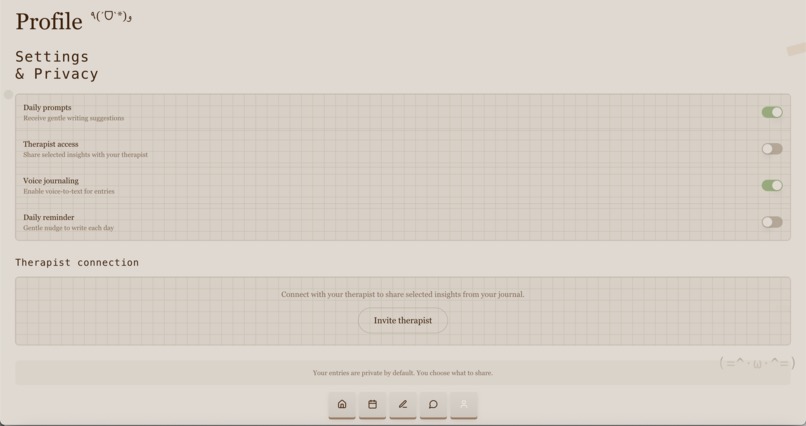
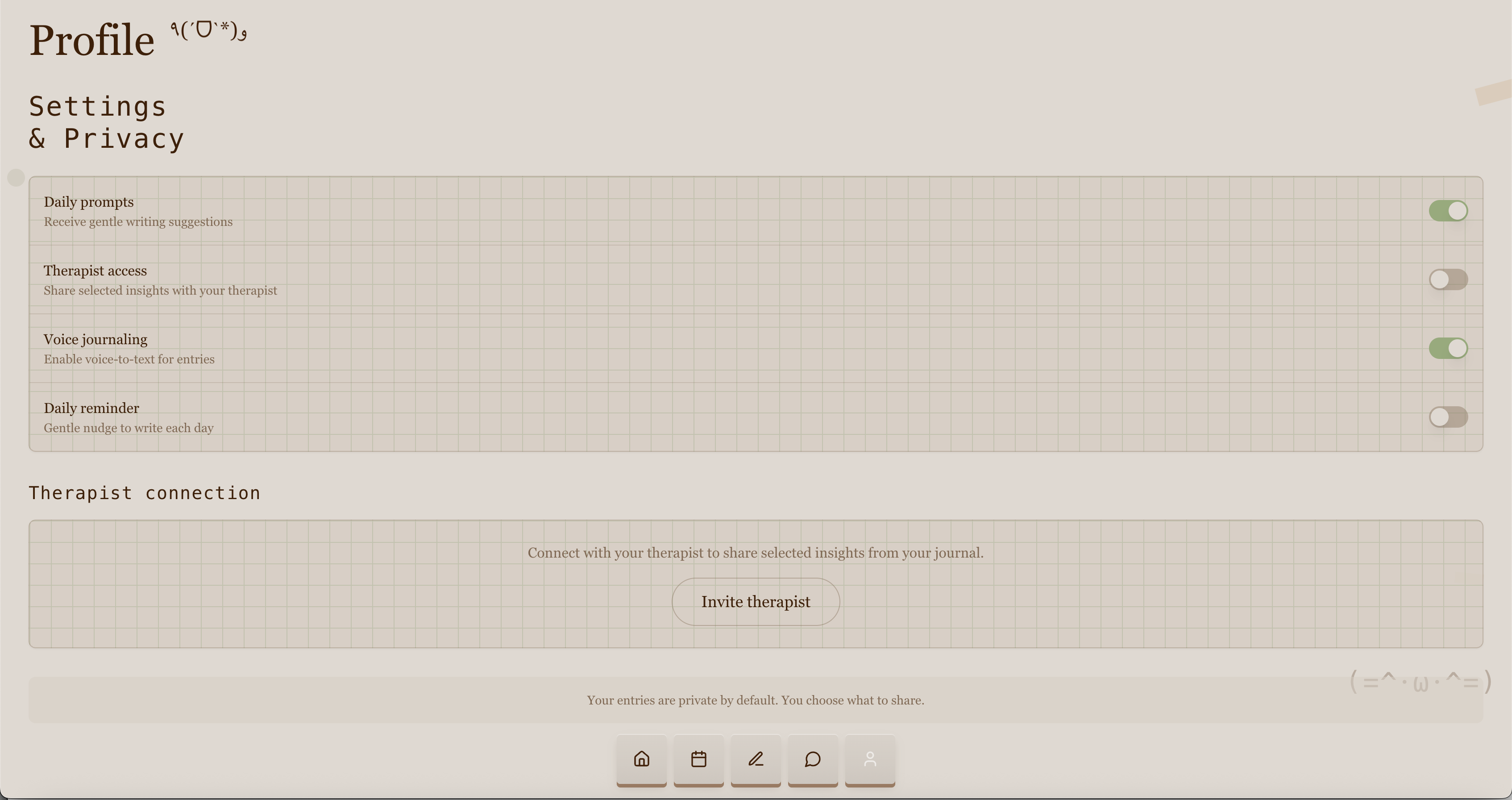
Profile
-
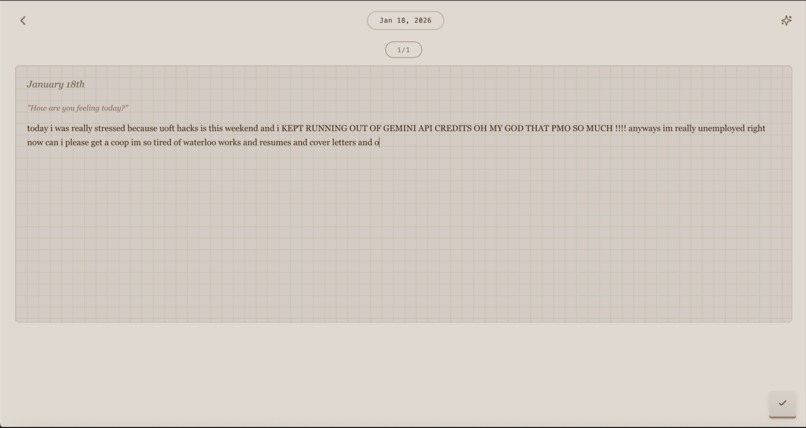
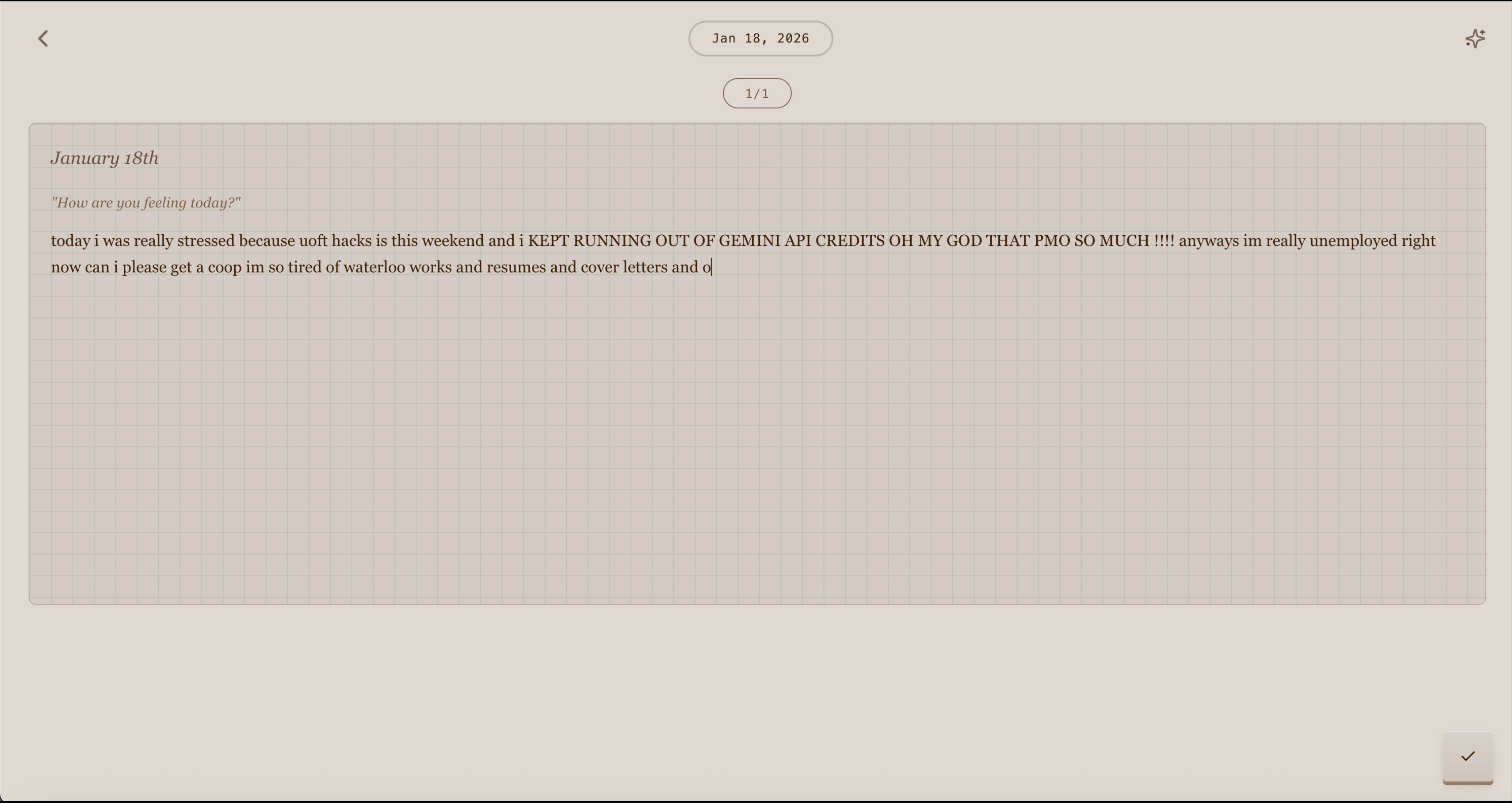
Journal Space
-
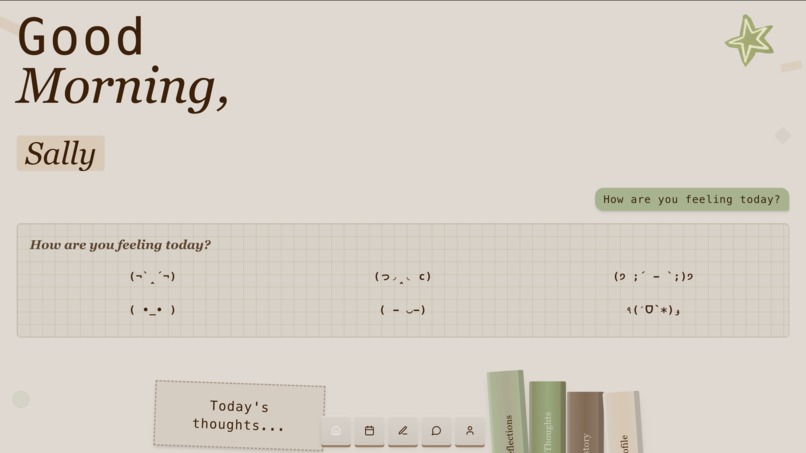
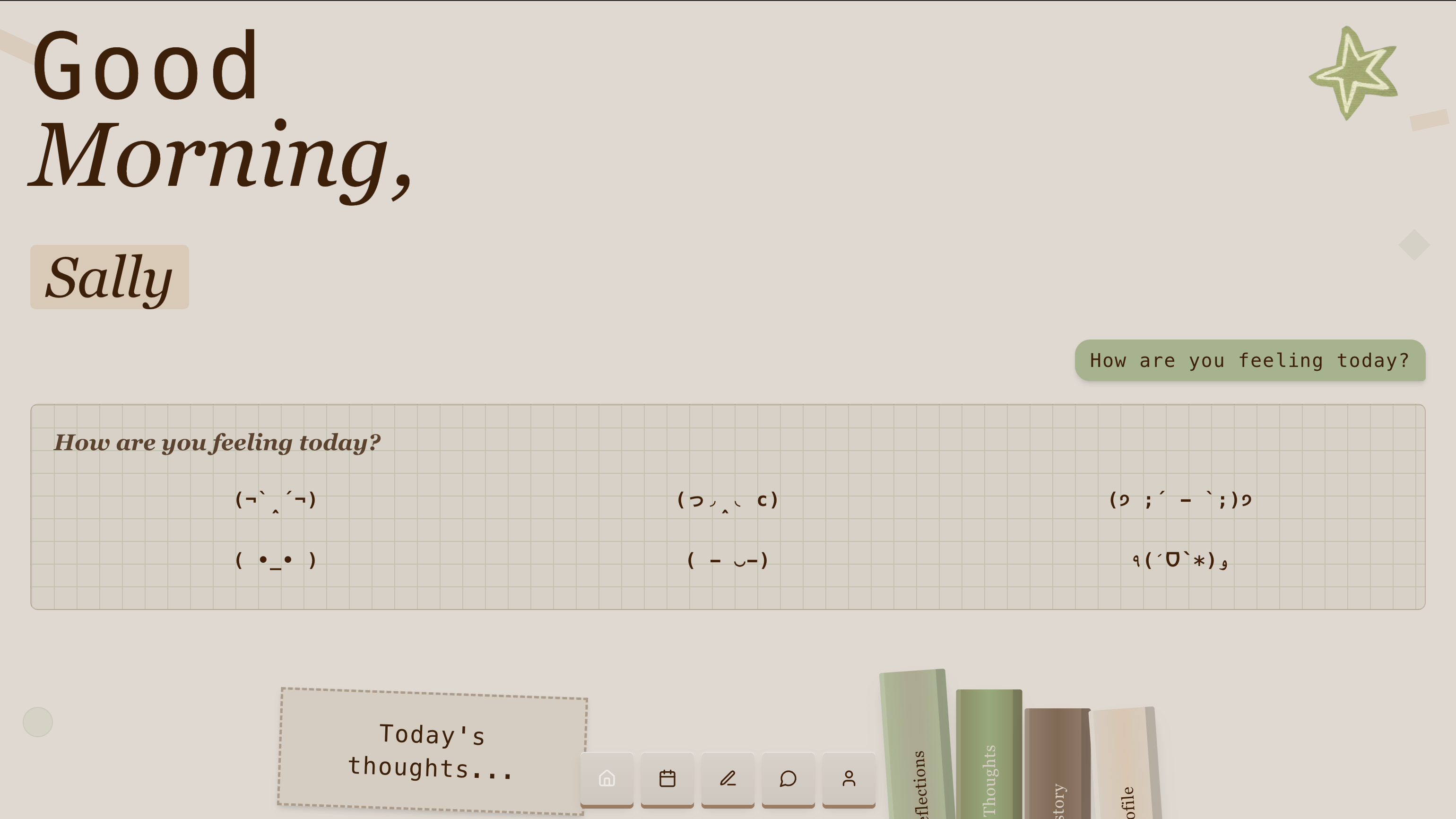
Home Page
-
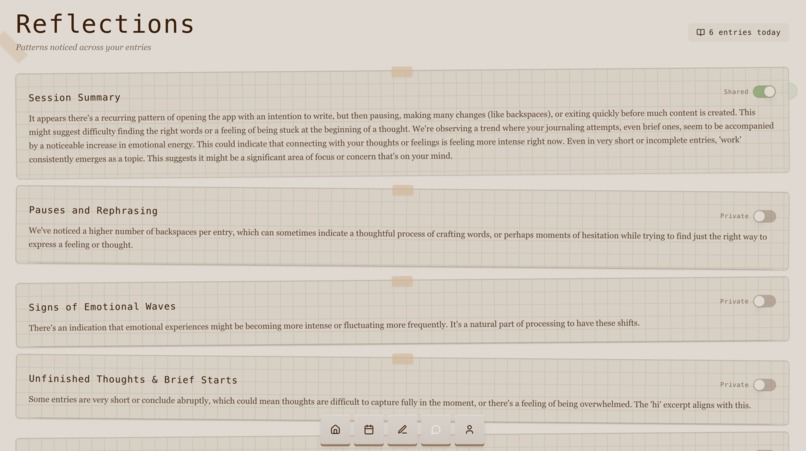
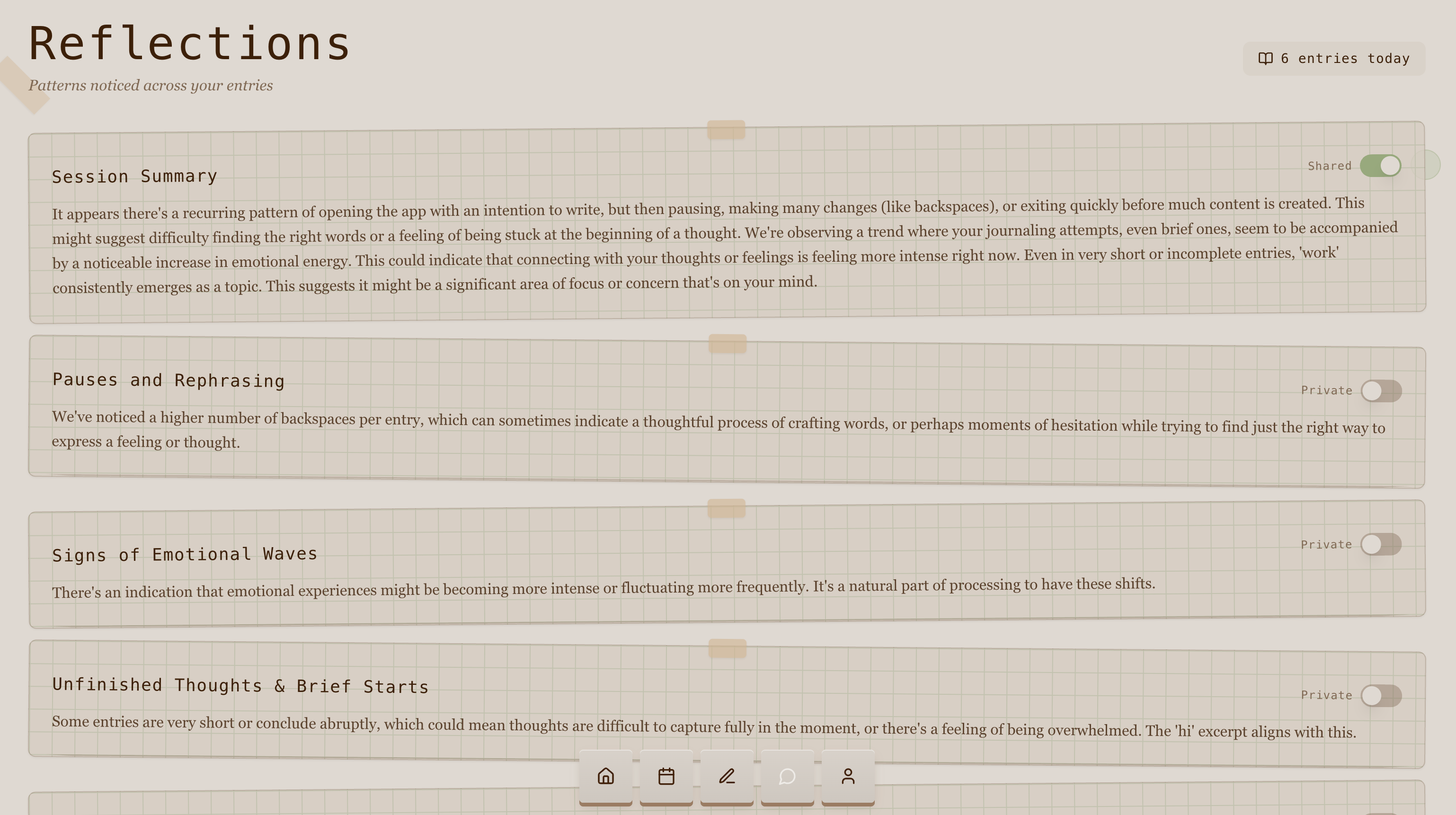
Reflections
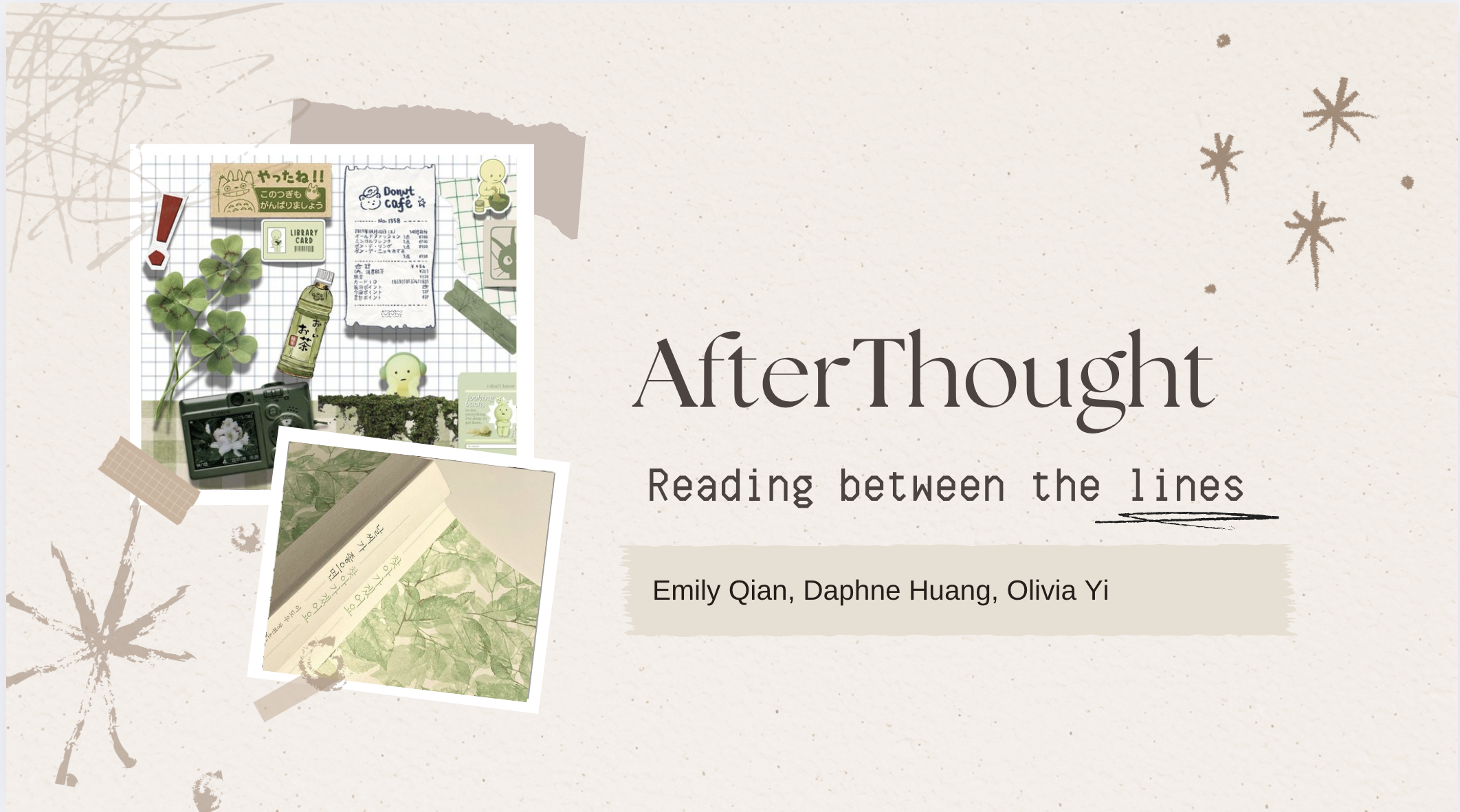
Inspiration
Mental health tools ask people to articulate their emotions when they're overwhelmed—the exact moment articulation is hardest. We've done tech for social good before and kept thinking: what if we could capture what people can't say?
The most important mental health moments don't happen in therapy. They happen at 3 AM. In the 20 minutes it takes someone to type "I'm fine." In the patterns, people don't even notice themselves.
What it does
AfterThought reads between the lines of your journal entries.
While you're journaling, we track:
- How long you hesitate before answering
- Typing, deleting, retyping patterns
- When you journal (late night = something's up)
- What you avoid talking about
- How you interact with prompts
The AI spots patterns across days and weeks. It records recurring themes, emotional shifts, avoidance behaviours and generates insights. You toggle what your therapist sees.
Advancing the Quintuple Aim
Improved patient experience: supporting patients whenever they need a safe space to let their thoughts out. Providing insight on implicit behavioural signals while aggregating data to further self-understanding and create starting points for therapy sessions. Patients are more prepared, less overwhelmed and know what they would like to discuss during sessions.
Better patient outcomes: providing physicians with greater data and insight on the day-to-day lives of patients in between therapy sessions, allowing for more effective allocation of session time to target specific reflection and create more productive therapy sessions.
Advancing Health Equity: destroying barriers for patients that struggle with verbal expression, experience anxiety with live sessions, have a tendency to write minimally, and lack access to consistent care. Whether you're actively in therapy or looking for independent self-improvement, AfterThought supports your journey of growth and self-understanding.
How we built it
We built an AI that acts like a real-time emotional pattern detector using behavioural metadata and LLMs.
Behavioural Tracking: We instrument the journaling interface to capture implicit signals: keystroke timing, deletion patterns, session duration, and entry timing. This creates behavioural data points for every journaling moment.
AI Pattern Recognition (Gemini API): We feed the behavioural metadata + journal text into Gemini to generatea semantic understanding of emotional patterns. The AI maps hesitations, avoidances, and intensity changes into observations—never diagnoses.
The Insight Agent As you journal over time, our Agent identifies:
What topics make you hesitate
When your emotional intensity spikes
What you're circling around but not saying
How you respond to different prompt styles
It dynamically generates personalized prompts and aggregates insights into a dashboard. You control what gets shared.
Challenges we ran into
Balancing observant vs. invasive. We had to figure out which behaviours to track without making people feel surveilled.
Training AI to observe, not diagnose. Getting Gemini to say "you seem to avoid this topic" instead of "you have anxiety" took a lot of prompt engineering.
Cross-platform behavioural tracking. Capturing typing patterns consistently across mobile/desktop/voice was tricky.
Making AI feel human. Writing prompts that feel supportive, not clinical, required tons of iteration.
Accomplishments that we're proud of
We built technology that listens to hesitation. When someone takes 20 minutes to type "I'm fine,"
AfterThought notices. And that hesitation becomes data that their therapist can actually use.
Also: patient control from day one. Every insight shared is user-toggled. No surveillance, just support.
What we learned
Implicit data is everything in mental health. What people do reveals more than what they say.
Therapists are detectives. They spend so much time reconstructing what happened between sessions. We can give them actual behavioural data.
User agency is the foundation. In mental health tech, people need to feel in control, not monitored.
What's next for AfterThought
Short-term:
- Clinical validation with real therapists and patients
- Enhanced crisis detection (3 AM entries + intensity spikes = check-in prompt)
- Therapist dashboard for collaborative insights
Long-term:
- Learn user personas organically (Do you respond better to short prompts? Direct questions? When do you journal most?)
- Predictive patterns (Can we spot a rough week before it happens?)
- EHR integration for seamless clinical workflow
The vision: Mental healthcare that's proactive, not reactive. Where therapists arrive to sessions already knowing what happened in the thousands of minutes since they last met. Where support shows up before crisis does.
Resumes:
Built With
- express.js
- framer
- gemini-api
- node.js
- react
- sqlite
- tailwind
- typescript


Log in or sign up for Devpost to join the conversation.