Aftertake — Devpost Submission
Inspiration
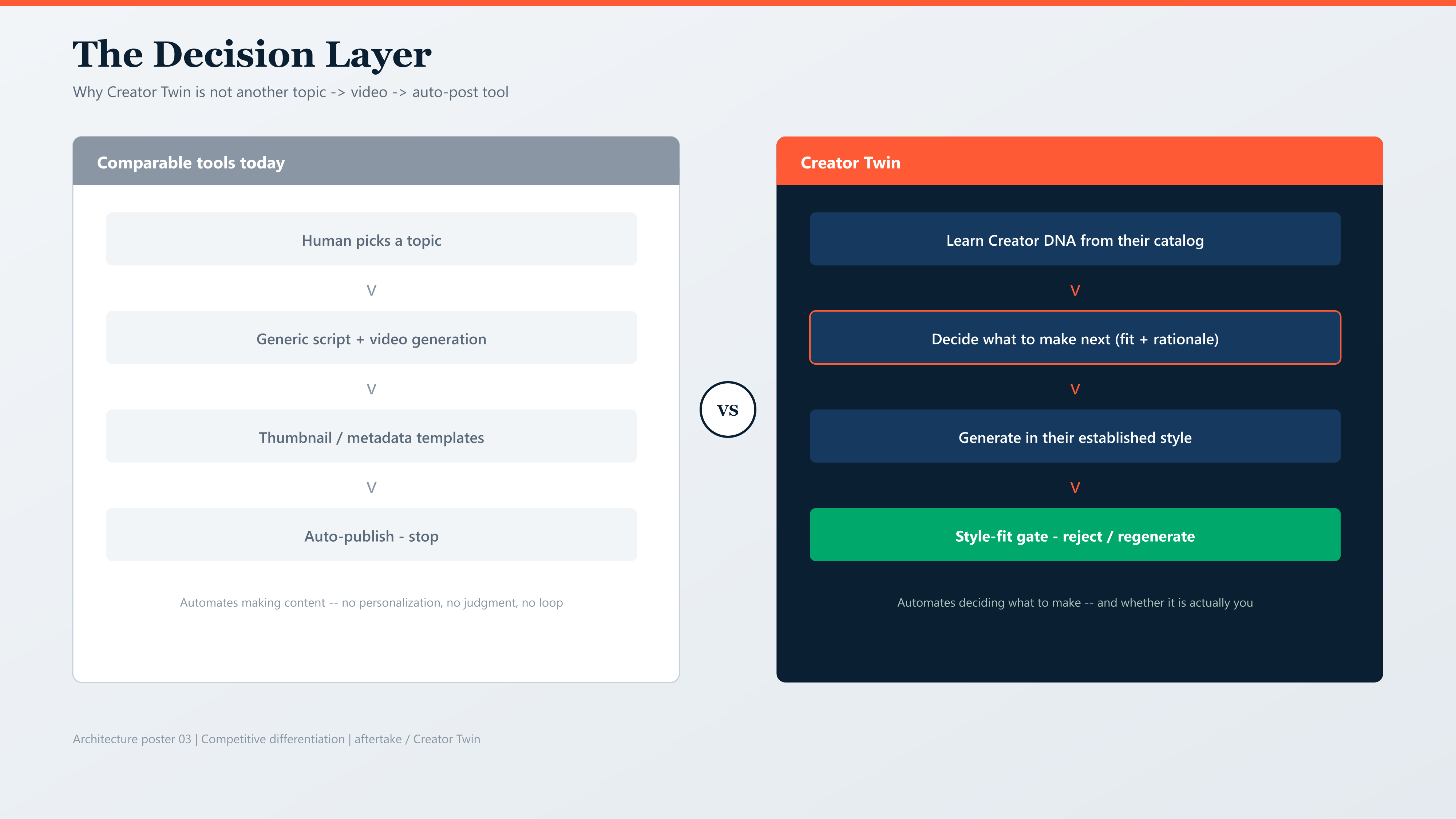
Every creator we talked to described the same loop: come up with an idea, write it, shoot it, edit it, make three thumbnails, write a title, post it, and repeat — with almost none of that time going toward actual creative work. There's no shortage of AI tools that automate pieces of this. But when we looked closely, every one of them does the same thing: you give it a topic, it generates something, and it publishes it. The output is generic. It doesn't sound like you, it doesn't look like your channel, and it has no idea whether the topic was even a good idea in the first place. We wanted to build something that didn't just automate the making — we wanted it to actually understand a specific creator well enough to think like their editor.
What it does
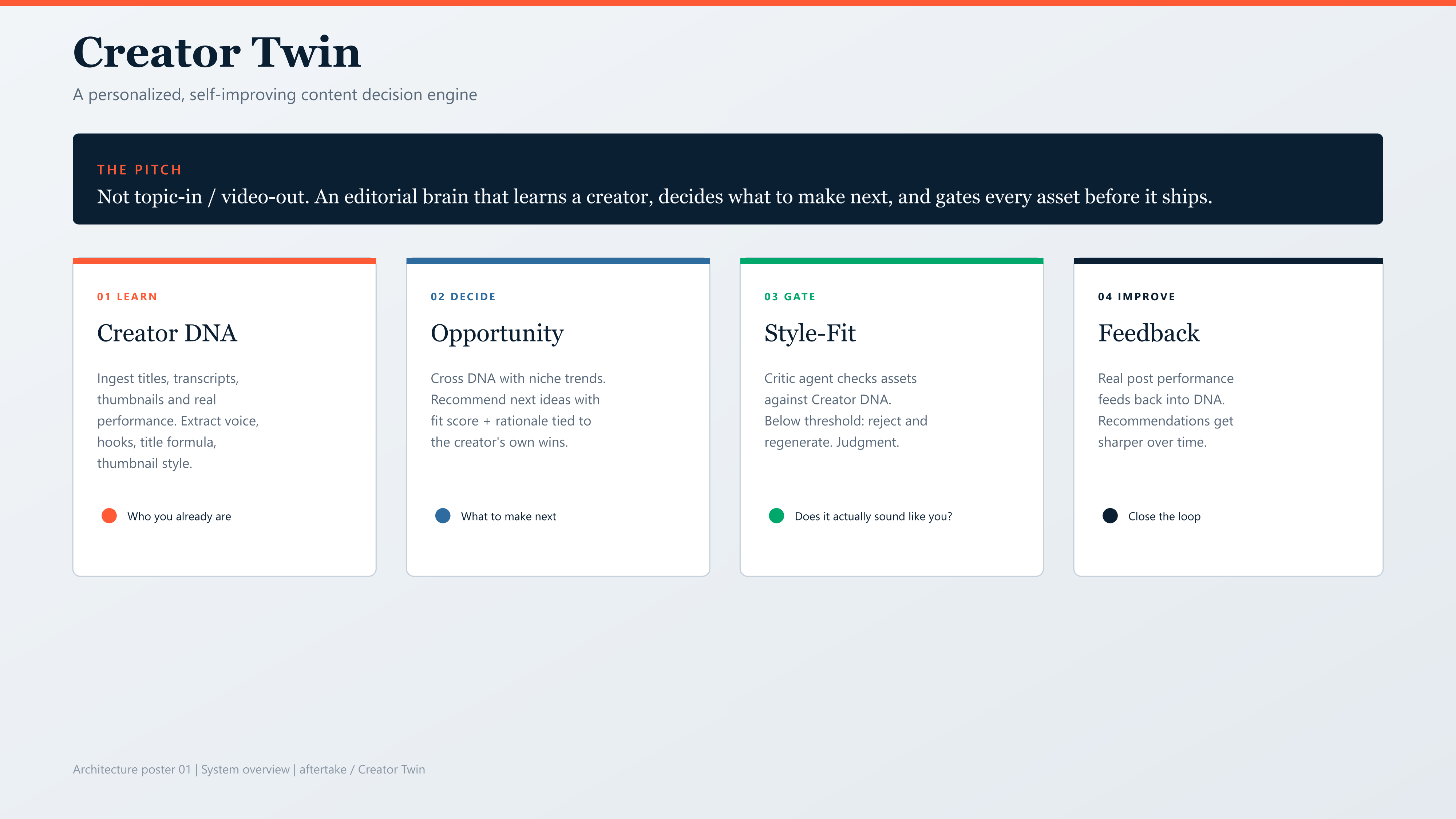
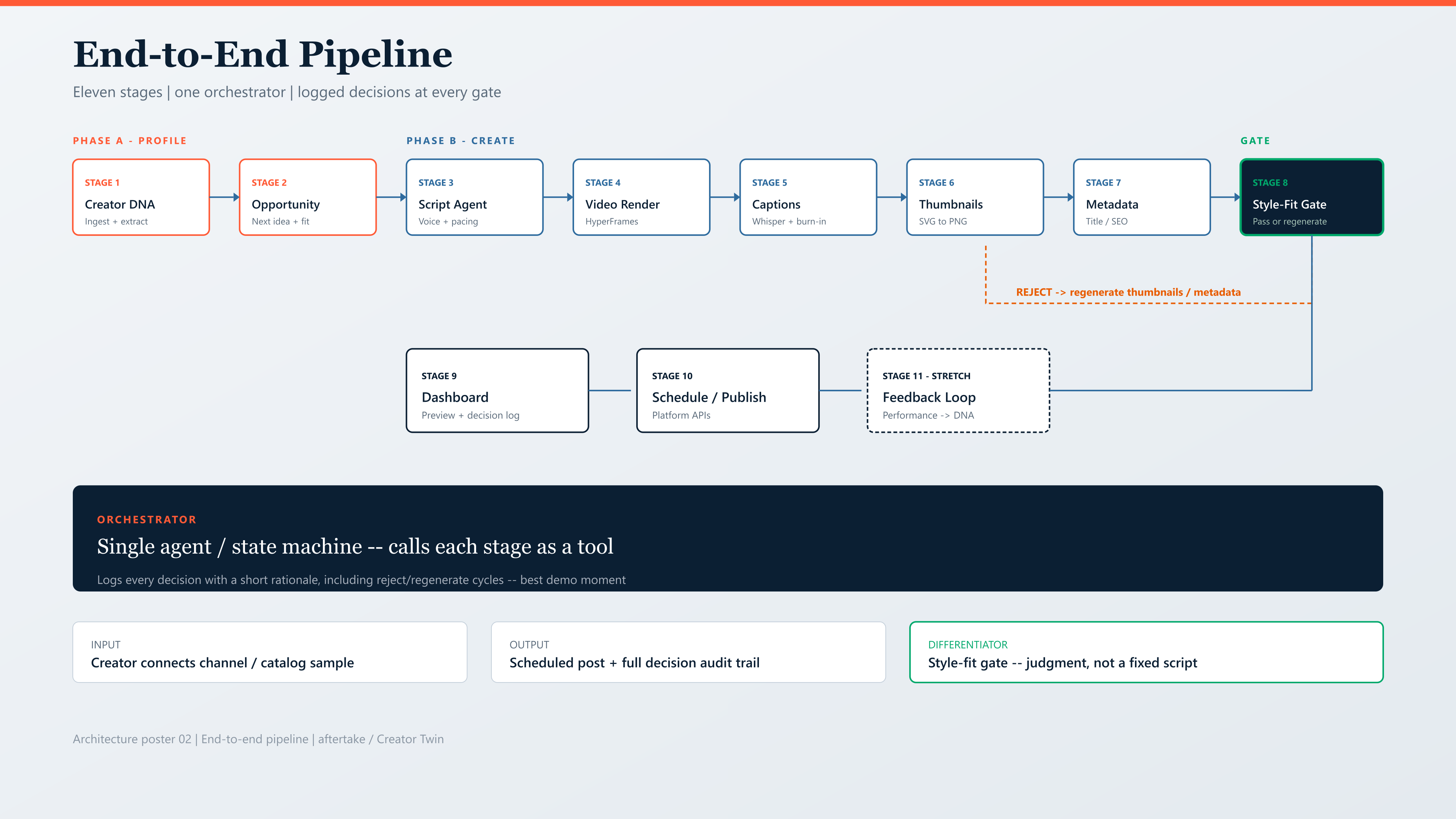
Aftertake studies a creator's existing catalog — their titles, scripts, thumbnails, and real performance data — and builds a profile of their actual voice, hook style, title formula, and thumbnail conventions. From there, it acts as an editorial partner end to end:
- Recommends what to make next, based on what's genuinely worked for that specific creator, not generic trending topics
- Writes the script in their voice and pacing
- Generates the video and thumbnail options matching their established style
- Writes SEO-ready titles, descriptions, and tags following their own proven title formula
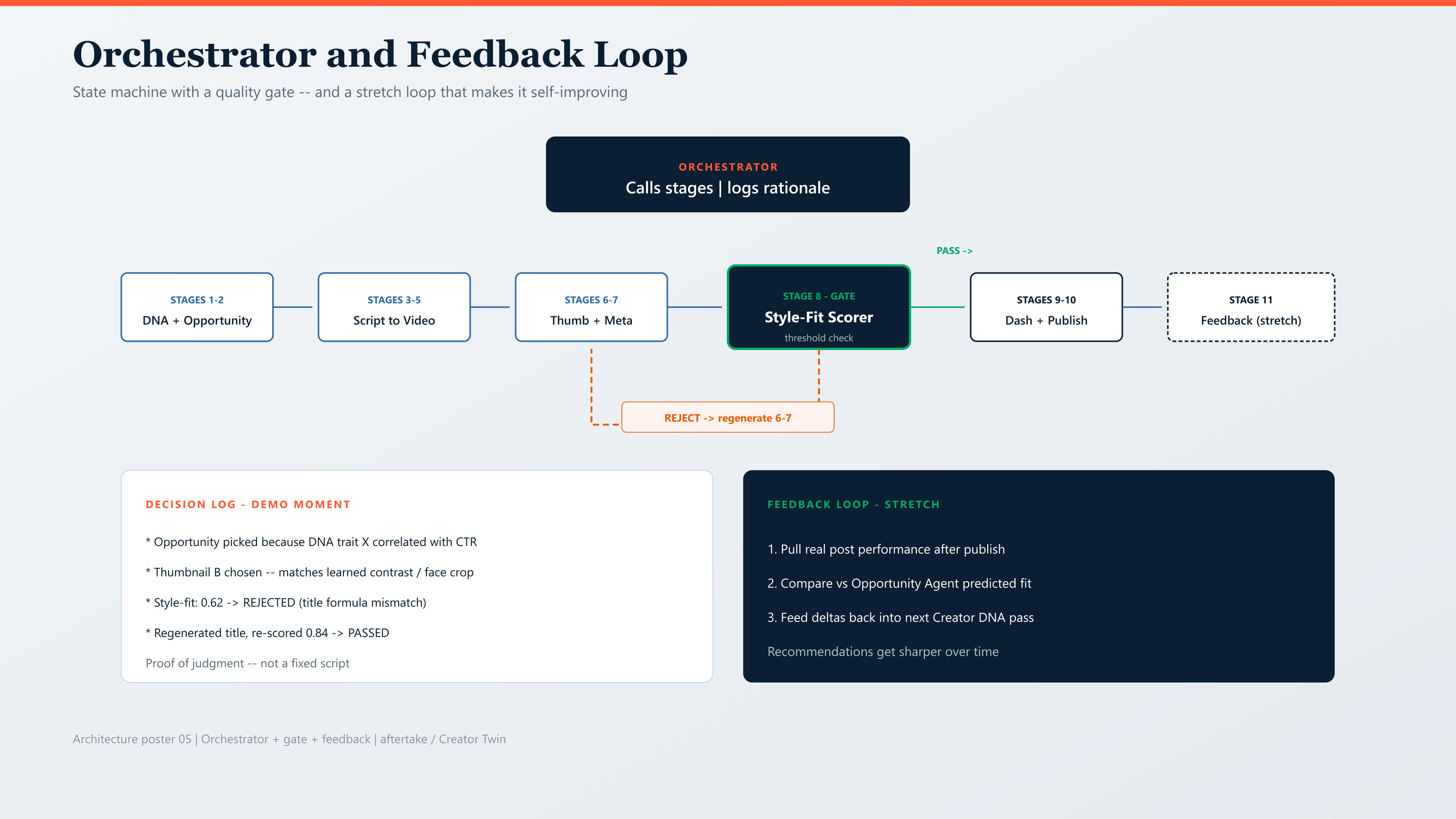
- Gates every asset through a style-fit check before it's allowed to ship — if a generated thumbnail or title doesn't actually sound/look like the creator, Aftertake rejects it and regenerates, live, with a visible reason why
Every decision the system makes — what to make, why this thumbnail beat the others, why a draft was rejected — is logged and shown to the creator, so it never feels like a black box.
How we built it
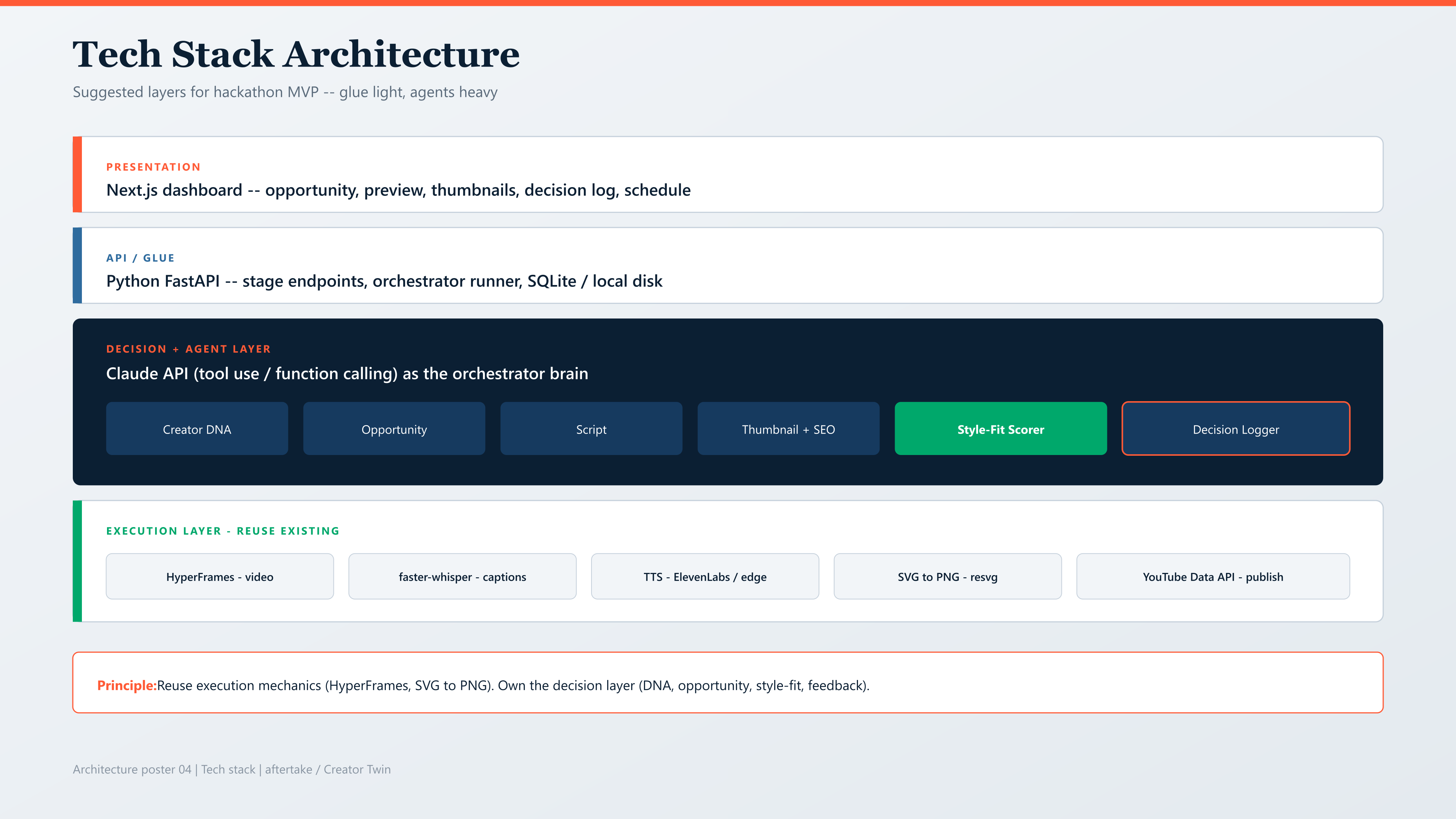
We split the system into an agent pipeline sitting behind a FastAPI backend: a profile-learning agent, a recommendation agent, a script-writing agent, a thumbnail agent, a metadata agent, and a style-fit critic agent that can reject and trigger a regenerate pass. Each agent is a focused Claude API call with a strict JSON output contract, so we could build and test them independently before wiring them together.
For visuals, we generate thumbnails as raw SVG (fast, deterministic, and directly writable by an LLM as text) and render them to PNG. For video, we used an HTML-to-video rendering approach so scenes could be written as markup by the script agent rather than requiring a custom video engine. An orchestrator ties every stage together and builds a decision log as it runs, which became the centerpiece of the dashboard — it's the one thing that makes the system feel like it's actually reasoning, not just filling in a template.
Challenges we ran into
Getting agents to stay personalized instead of drifting back into generic AI-output voice took real prompt iteration — early versions technically referenced the creator's style but didn't actually sound like them. We fixed this by forcing every generation prompt to explicitly quote back specific traits from the learned profile, not just reference it loosely.
Wiring the style-fit gate was trickier than expected: too strict, and it rejected almost everything; too lenient, and it never rejected anything, which made for a boring demo and a pointless feature. We spent real time tuning the threshold and the rejection reasoning until it caught genuinely off-brand output without being pedantic.
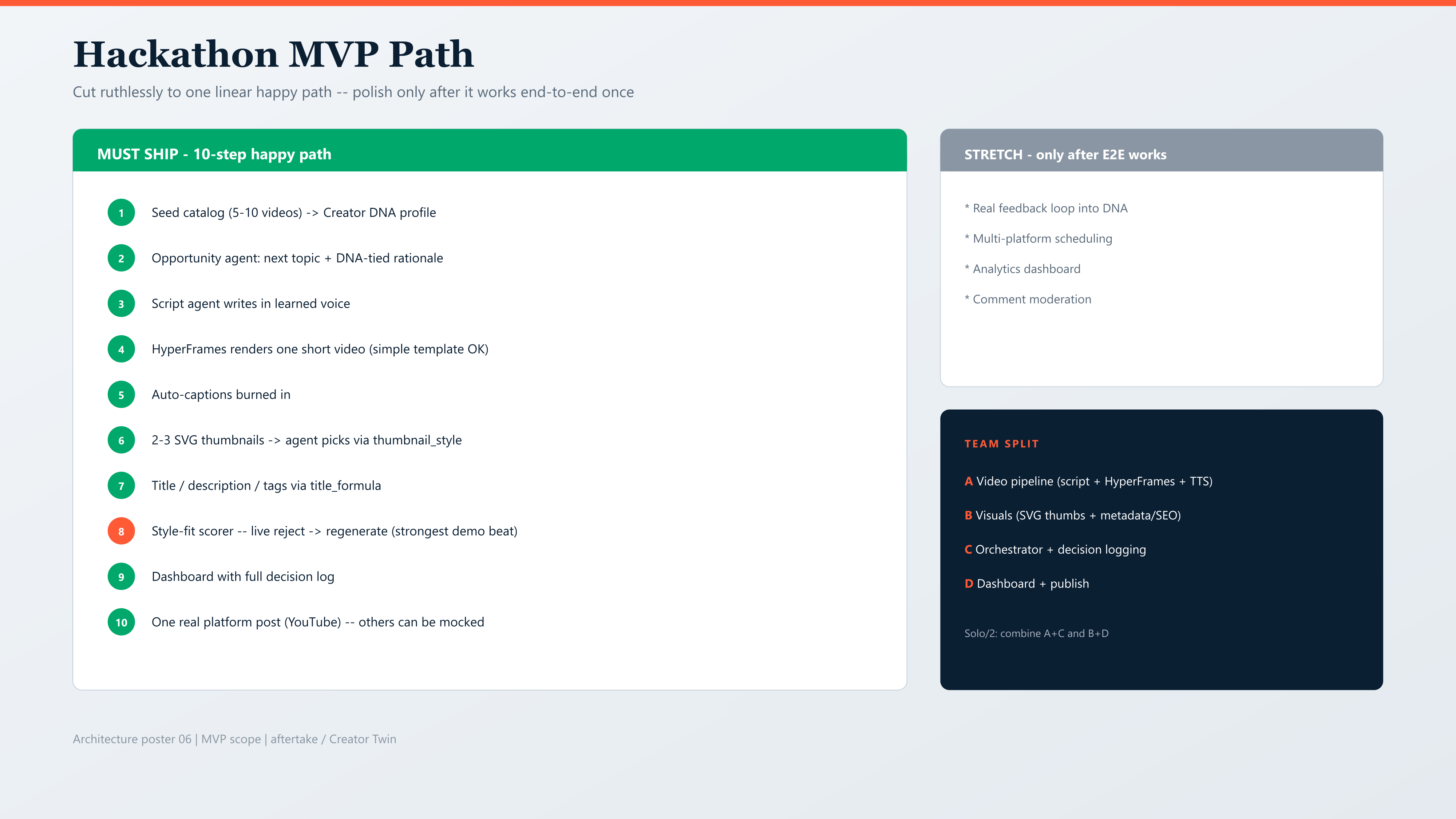
We also had to make hard scope calls given the time available — full multi-platform publishing and a live feedback loop from real post performance were both cut in favor of getting the personalization and style-gate loop rock solid, since that's the actual differentiator.
Accomplishments that we're proud of
We're proud that the style-fit rejection loop actually works and is visible — being able to show a generated thumbnail get rejected for not matching the creator's brand, then watch it regenerate and pass, is the moment that makes the whole idea click for people watching the demo. We're also proud that the recommendation agent gives a real, specific rationale tied to the creator's own data rather than generic "this topic is trending" advice — it genuinely surfaces ideas we wouldn't have thought to suggest for a given profile.
What we learned
We learned that "personalization" in AI content tools is mostly still unclaimed territory — almost every existing tool in this space optimizes for generation speed and volume, not for actually sounding like a specific person. We also learned firsthand how much of building a trustworthy AI agent comes down to the critic/quality-gate layer, not the generation layer — the generation was the easy part; teaching the system to know when its own output was wrong was the hard, valuable part.
What's next for Aftertake
- Real feedback loop: pull actual post-performance data after publishing and feed it back into the creator's profile, so recommendations keep improving instead of staying static
- Multi-platform publishing: real, non-mocked connections beyond a single platform
- Richer style modeling: move beyond text-derived style traits toward analyzing thumbnail images and video pacing directly, not just transcripts and titles
- Collaborative mode: let a human editor accept, tweak, or override any agent decision inline, with those edits feeding back into the creator's profile over time
Team
Bhuwan B - Full Stack Development Padmanaban G - ML Architect

Log in or sign up for Devpost to join the conversation.