-
-
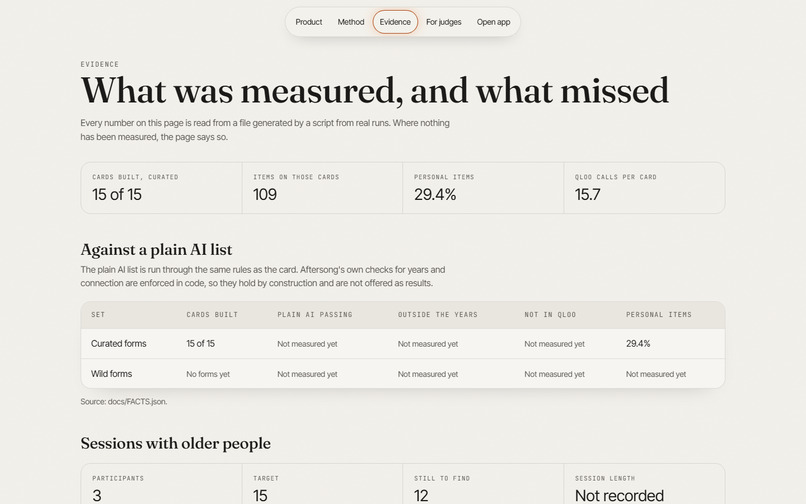
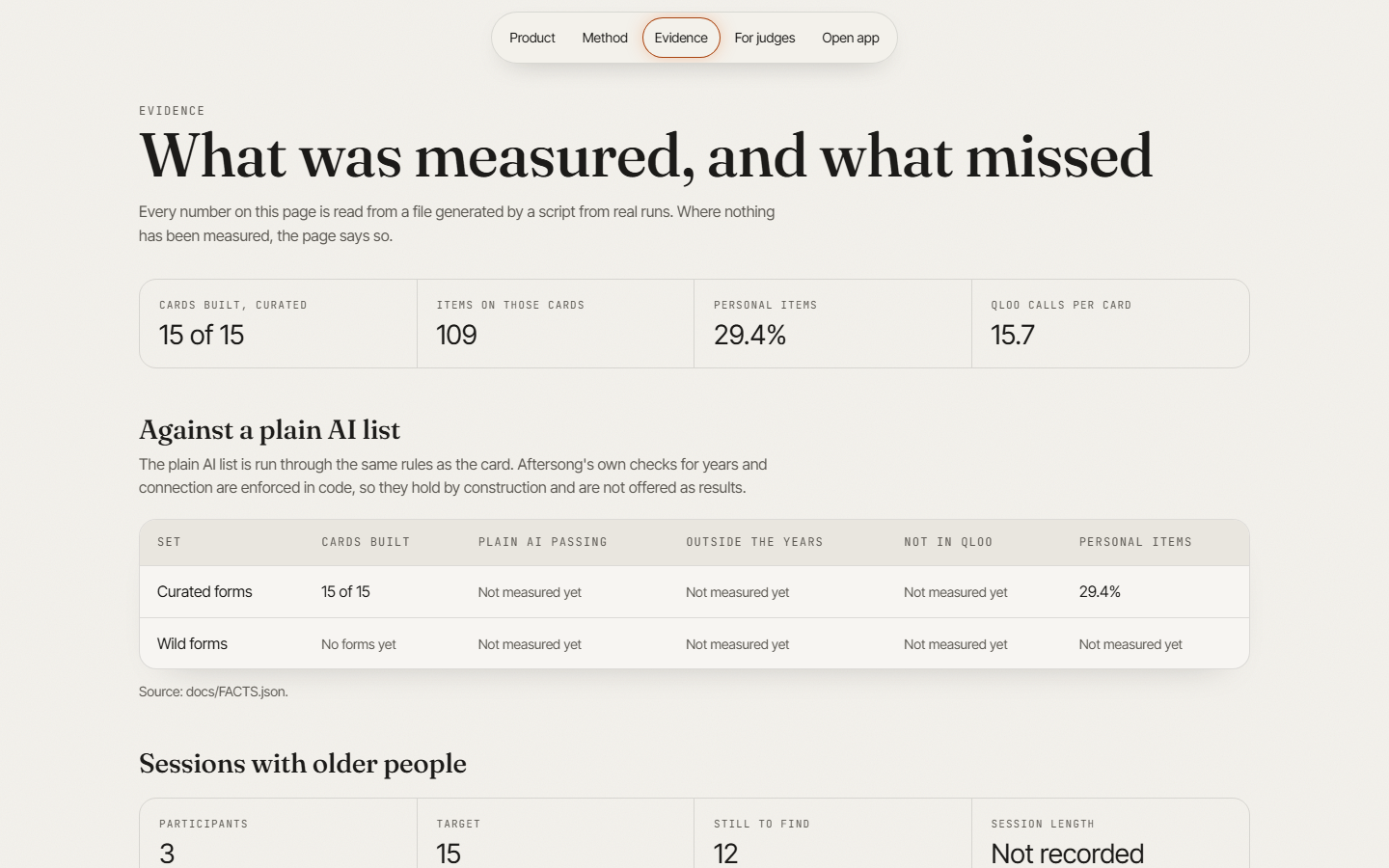
Evidence Page
-
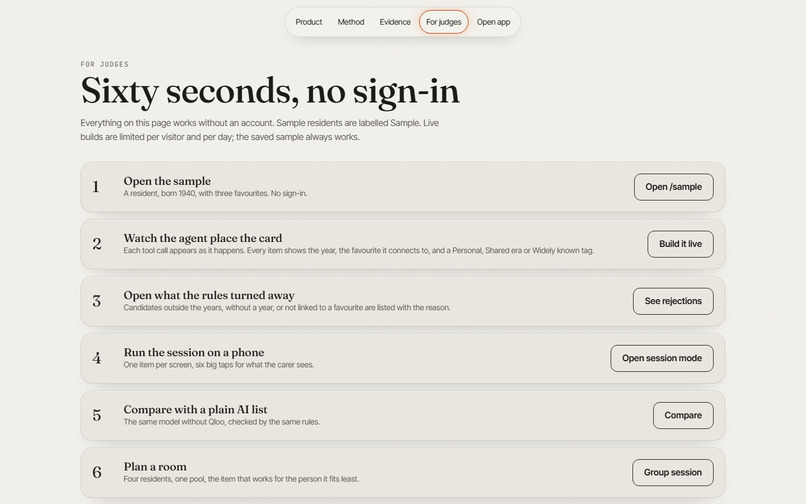
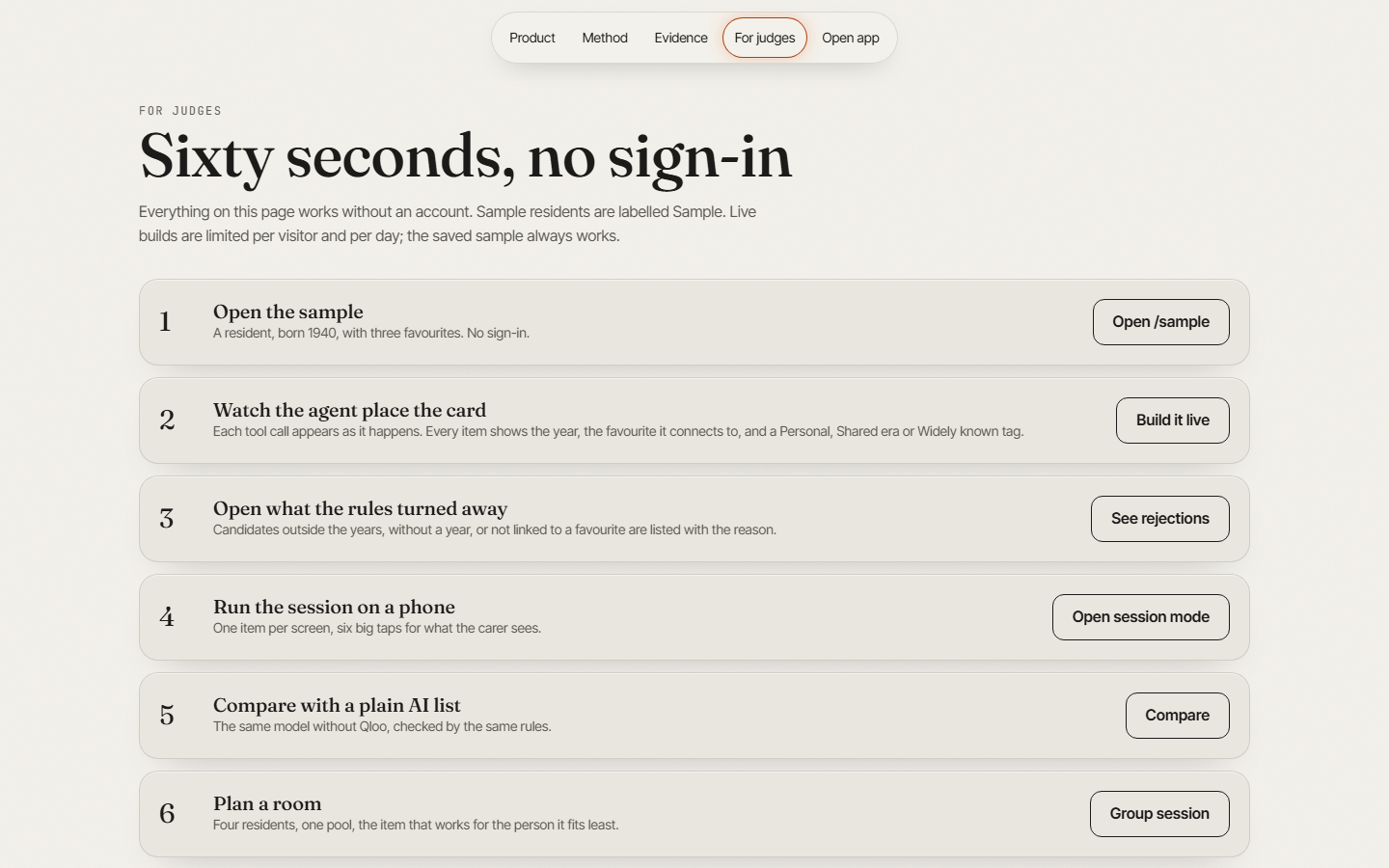
Judges page
-
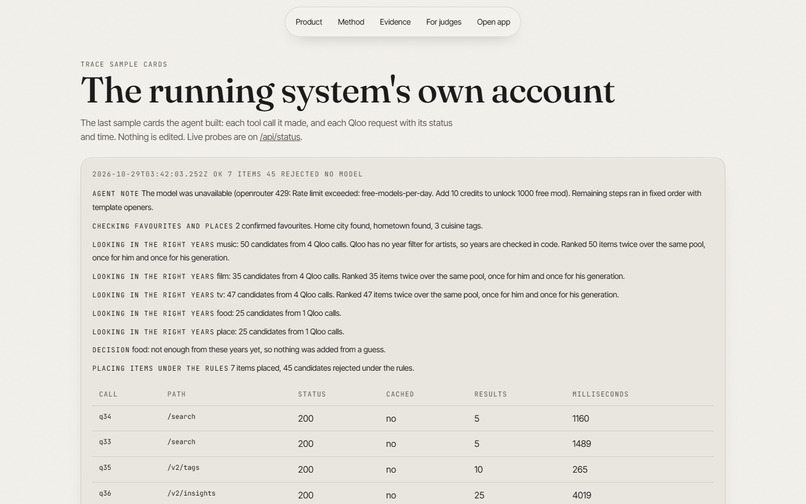
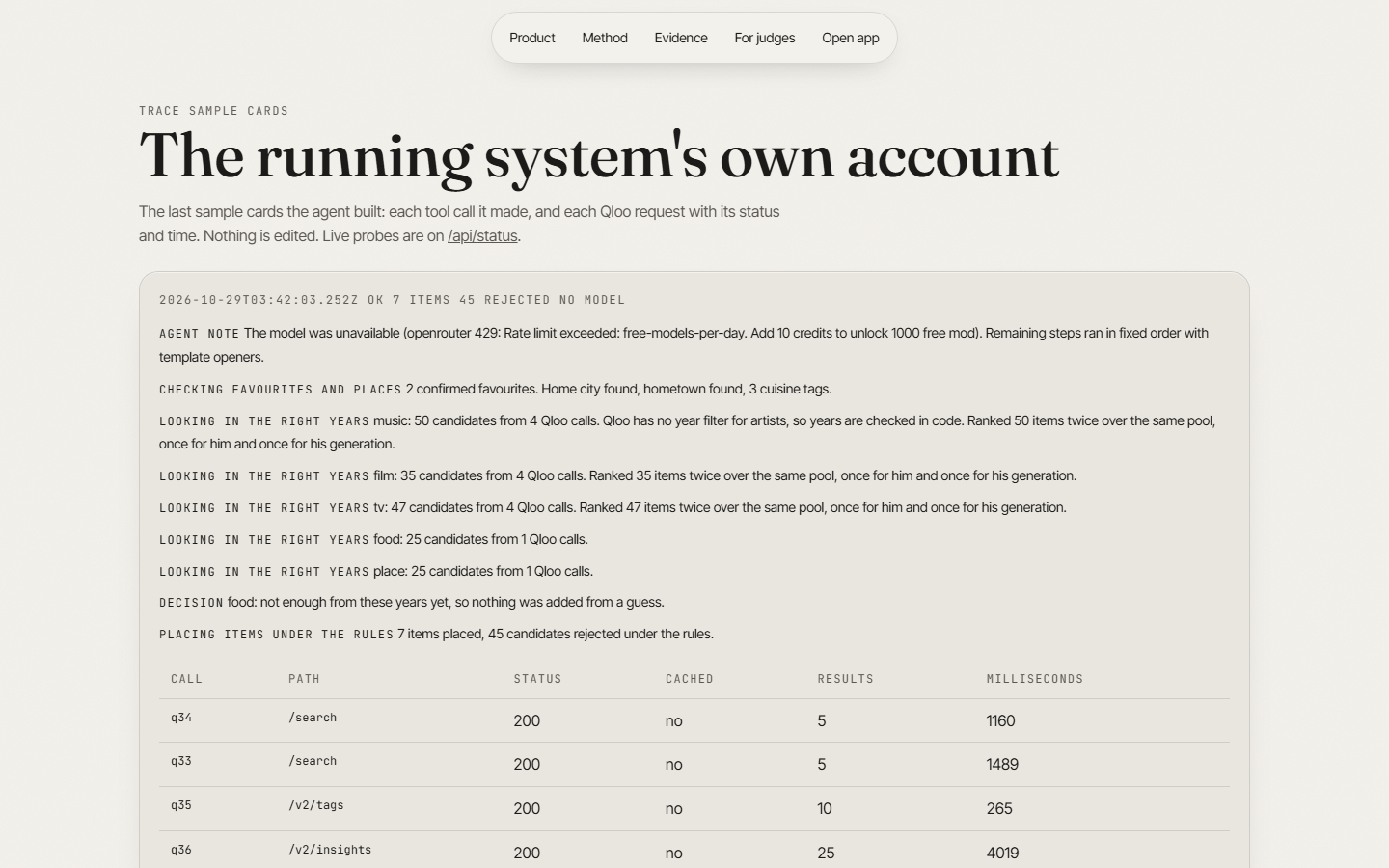
Trace page
-
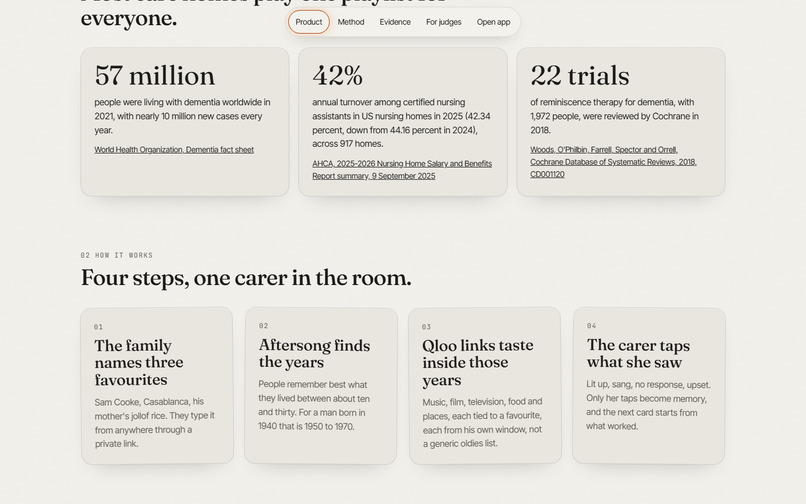
Landing problem page
-
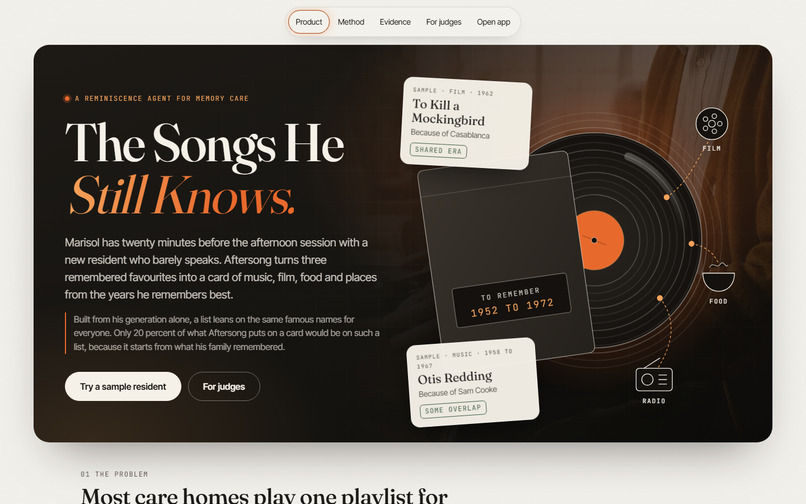
Landing page
Inspiration
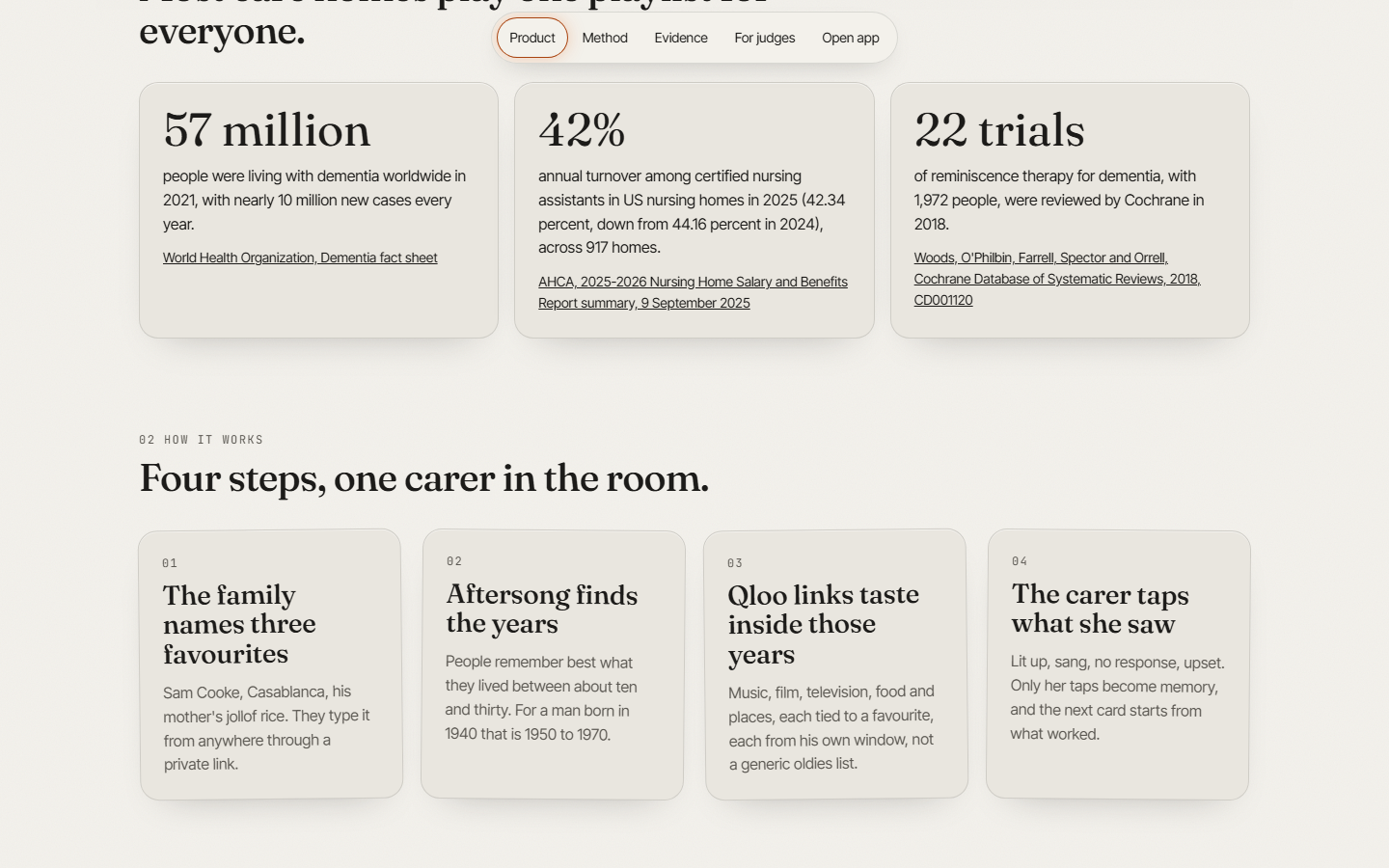
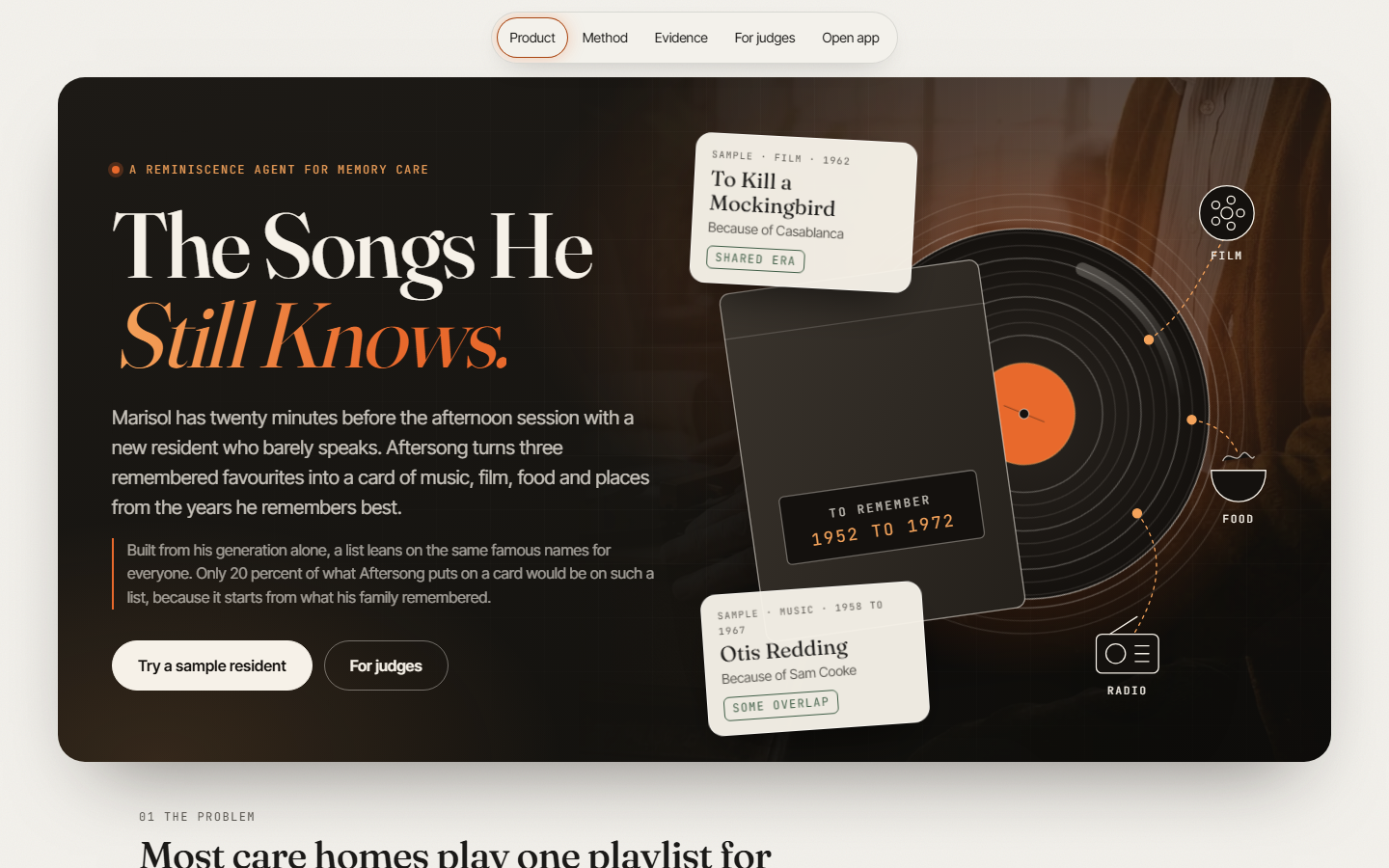
In dementia care, music is often the last thing to go. Most care homes play one playlist for everyone, because the person running the session has twenty minutes and three lines from an intake form. We built for that carer, someone caring for a person. The brief's own test is "if your submission would work the same without Qloo, you're building the wrong thing." We chose the use where "actually good" matters most.
What it does
An activities coordinator confirms up to five favourites for a resident. Aftersong works out the years the resident remembers best (ages 10 to 30) and asks Qloo for music, film, television, food and places inside those years, each tied to a favourite and tagged Personal, Shared era or Widely known by comparing his favourites with Qloo's 55 and older audience, which is today's audience and a proxy for his generation, not the generation itself. The carer runs the session on a phone and taps one of six reactions per item. Only her taps become memory: what lit up becomes the next signal, what upset is never shown again. The family sees a weekly note and can delete anything logged. A one page "about me" sheet goes to the next carer. A plain AI list for the same resident is checked by the same rules beside the card, and a group planner finds items for a room of two to eight.
How we built it
Next.js on Vercel, a Node service on Render that holds the Qloo key, Supabase for storage and carer sign-in. The agent chooses which tools to call and writes one opener per item; rules in code decide what goes on the card. Qloo calls: /search, /v2/tags, /entities, and /v2/insights with year windows, a cohort signal, same-pool re-scoring with filter.results.entities, explainability, locality signals and exclusions. Every call site with file and line is in SDK_SURFACE.md. Calls are spaced 250 ms apart, never retried on a rate limit, cached for a day, and checked against an allowlist so only IDs, tags, years, an age bracket and a place leave the server.
Challenges we ran into
Qloo has no year filter for artists, so music years are checked in code from whatever year data comes back, and the probe records which strategy worked. Invalid Qloo parameters are ignored silently, so every filter is also enforced in code. The developer guide forbids storing Qloo responses in a public repository, so our offline verifier runs on a card exported from the live app and the repository's fixtures are synthetic.
Accomplishments that we're proud of
See docs/FACTS.json and the evidence page for the measured numbers, with misses. A fault switch
lets a model try to put an off-card name on a card; the rules block it and the test shows the block.
What we learned
Rules in code are what make a taste graph safe to use with people at the end of life: what the model may say, what Qloo may receive, and what the carer alone may record.
What's next for AFTERSONG
Group sessions across a floor, a family app to add memories, and an export for care plan software. A pilot with three care homes, one session a week for a month.

Log in or sign up for Devpost to join the conversation.