-
-
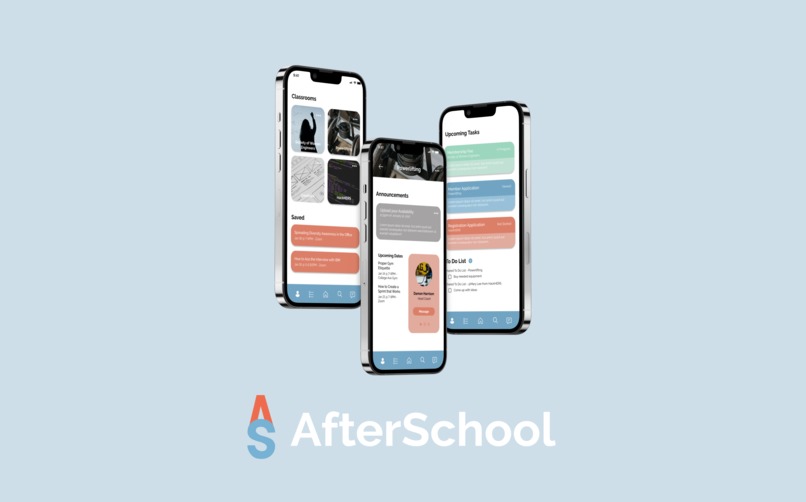
CoverPage
-
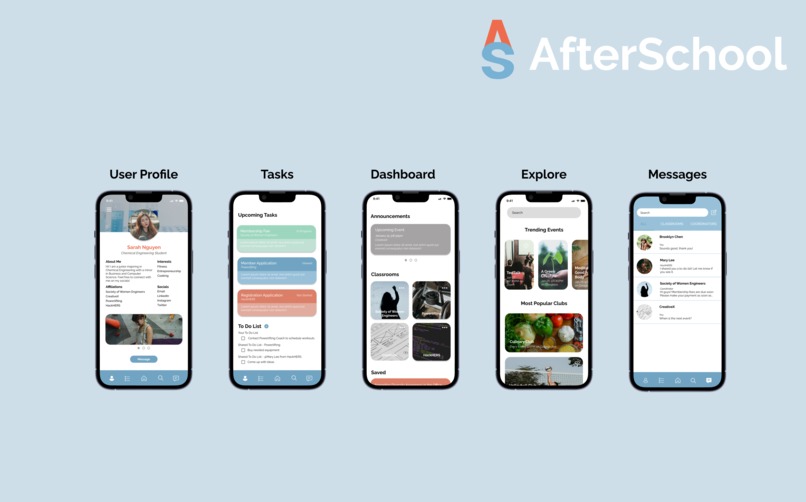
App Features
-
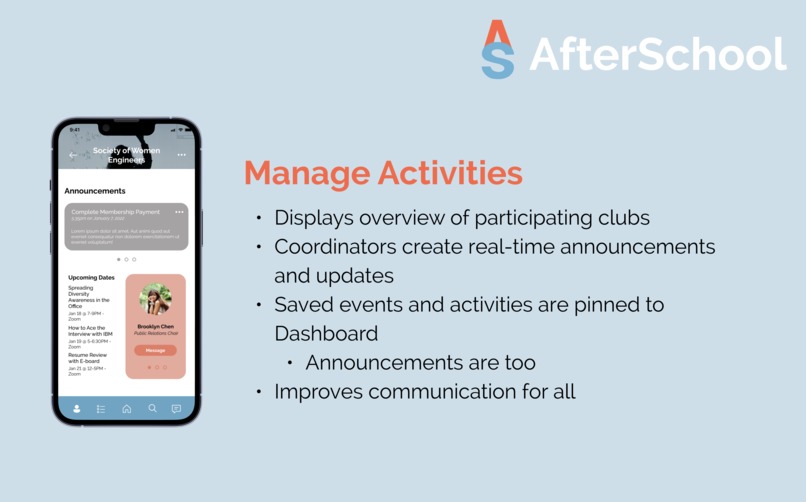
Feature 1
-
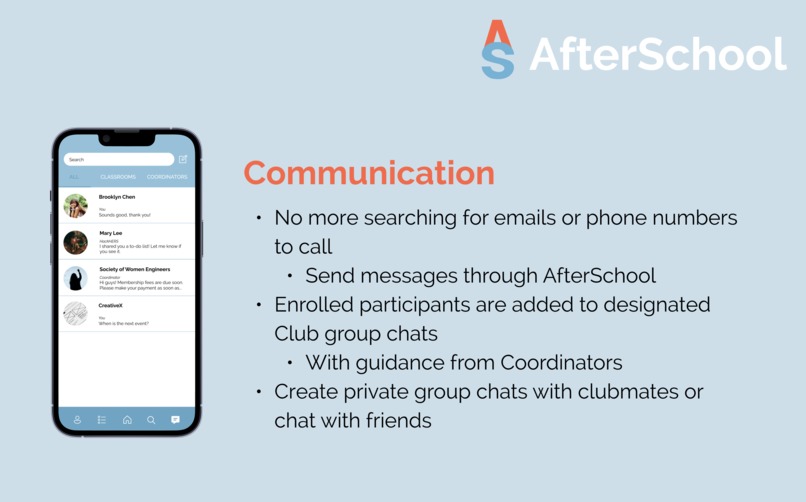
Feature 4
-
Feature 2
-
Feature 5
-
Feature 3
-

Website Landing Page
-
Website Login Page
-
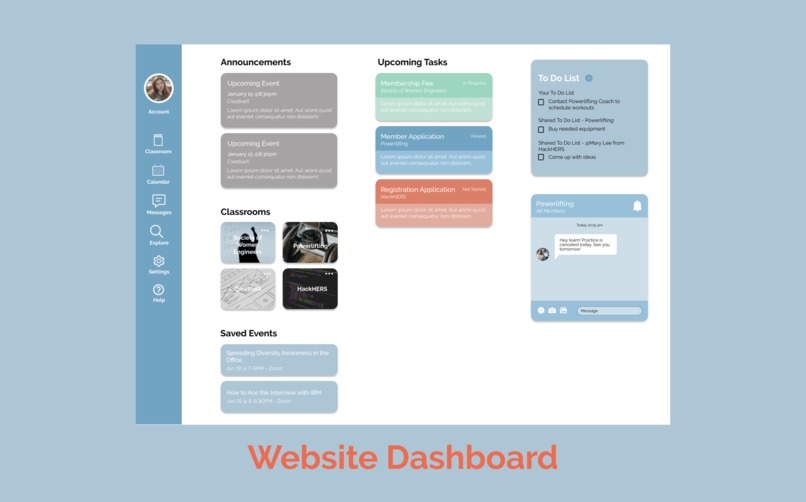
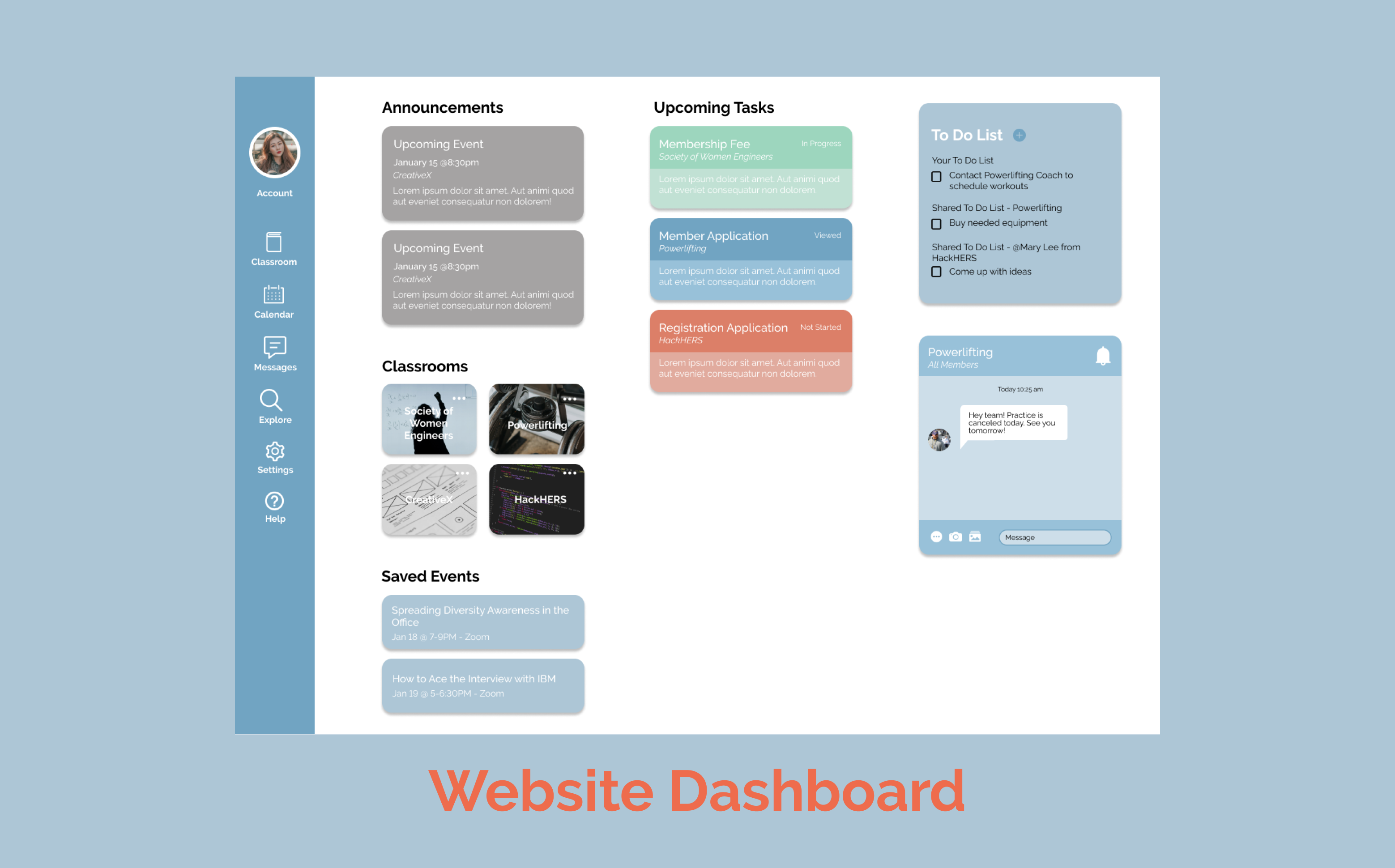
Website Dashboard


Inspiration
Staying on top of everyday school work can be draining. Students are often bombarded with homework and assignments and projects, and are often overwhelmed with due dates. Because lots of energy and time is spent on school work, managing extracurriculars should be effortless.
From middle school, high school, university and beyond, there are hundreds of thousands of student organizations ranging from academic, professional, and recreational. The wide range of communication creates a disconnect between students and coordinators, and results in a higher chance of miscommunication. When communication between members is unreliable and unorganized, a club loses its leisurely atmosphere and can feel more demanding than courses being taken.
For students in grades K-12, participating in extracurriculars has been suggested to improve the overall school experience for them regardless of socioeconomic status. Taking part in an afterschool club is shown to enhance students’ attachment and engagement towards their school. This lowers the chance of failure and decreases the dropout rate. In a study done by the USDE, “It was revealed that students who participate in extracurricular activities are three times more likely to have a grade point average of a 3.0 or higher. This is higher than students who did not participate in extracurricular activities. This is regardless of their previous background or achievement.” It is important for students to form a voluntary connection with their school and peers as those who do are more willing to attend and have a higher self-concept.
Extracurriculars also teach students important developmental skills at a young age. These activities expose students with opportunities that instill discipline, leadership, critical and analytical thinking, teamwork, and organization; all while exploring their talents and interests.
Student organizations can be a hassle when dealing with many channels of communication at university. Coordinators of these clubs cycle between using apps, email, and social media to communicate with and inform members of key events. Group chats between members are flooded with spam messages, making useful information difficult to reach. University websites and organization databases are either out of date or not properly maintained. This makes finding contact information on current organizers and coordinators stressful and nearly impossible.
It is beneficial for students of all ages to feel connected and experience extracurricular activities in a leisurely yet structured way. Providing students with an accessible communication tool, like AfterSchool, will provide them with life-changing experiences.
https://dc.cod.edu/cgi/viewcontent.cgi?article=1370&context=essai https://web.ebscohost.com/Legacy/Views/static/html/Error.htm?aspxerrorpath=/detail#d%20b=eric&AN=EJ683351
What it does
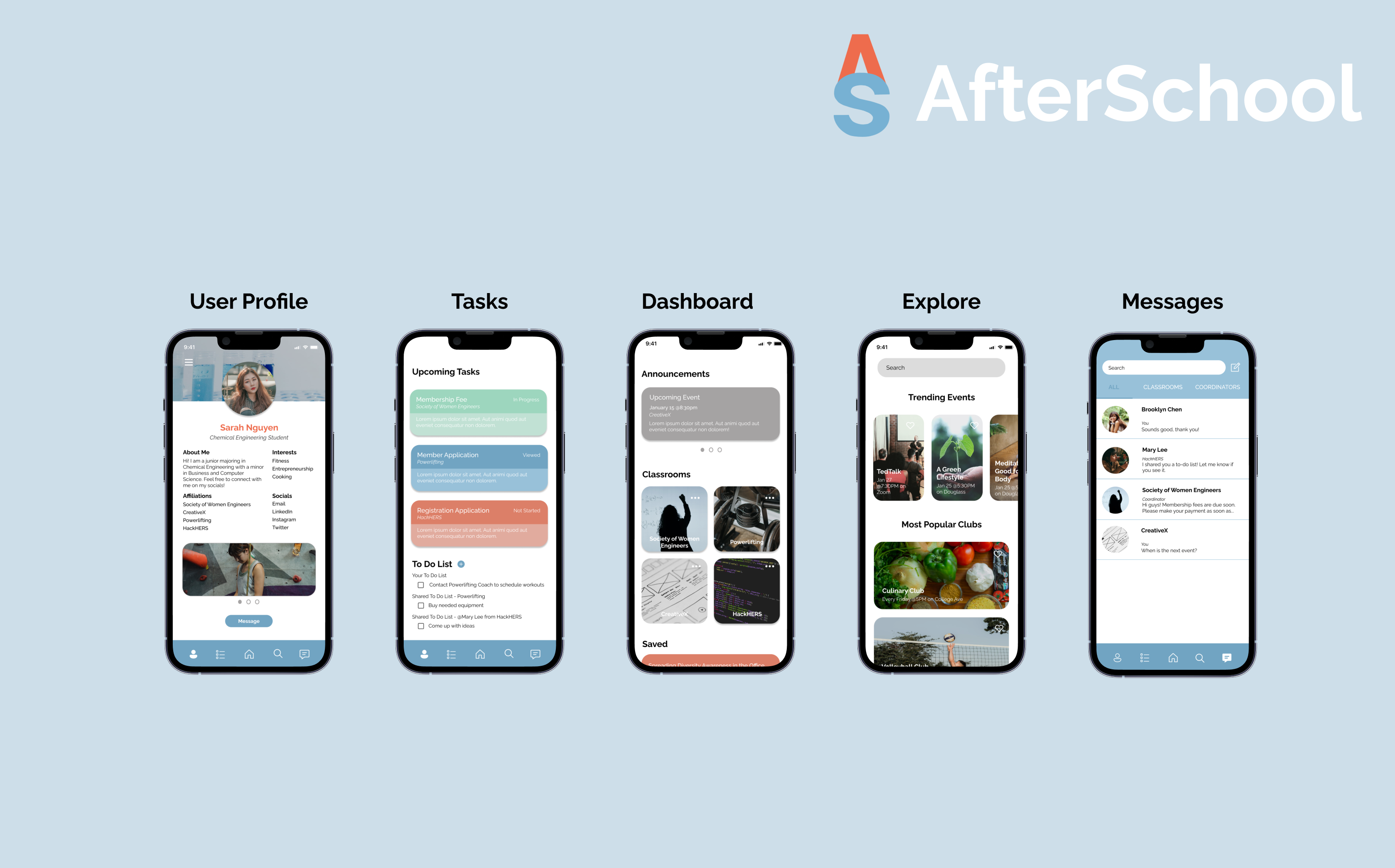
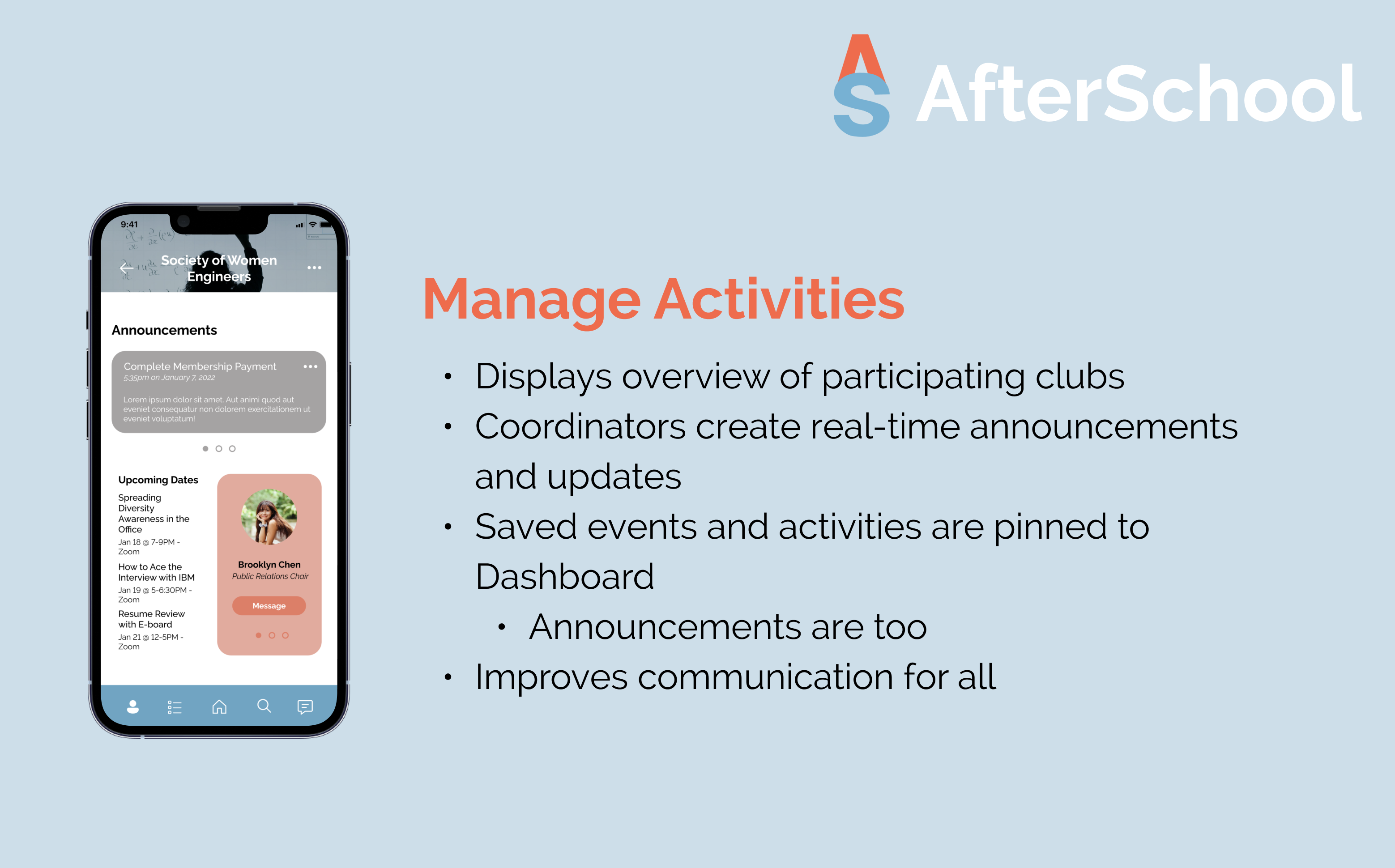
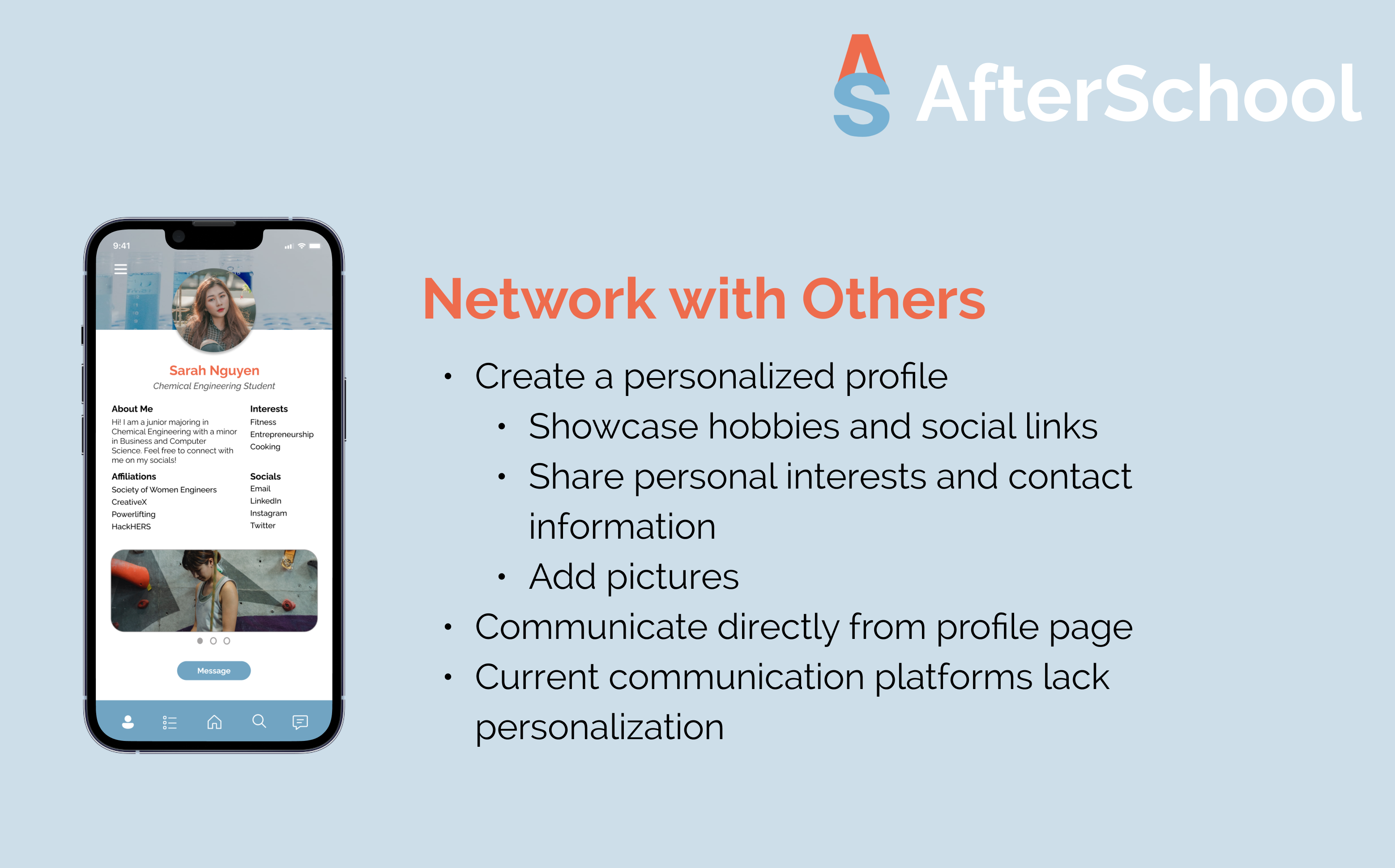
AfterSchool is a time management, task management, and communication tool for students and club coordinators to use. Students are able to message club coordinates directly. No need to search for an email or attend office hours ever again. Send a quick message through AfterSchool, wait for your club coordinator to respond, and receive a notification.
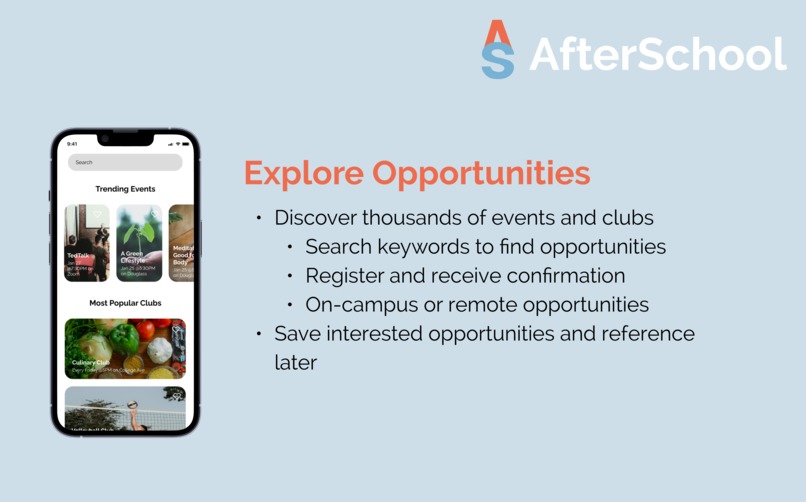
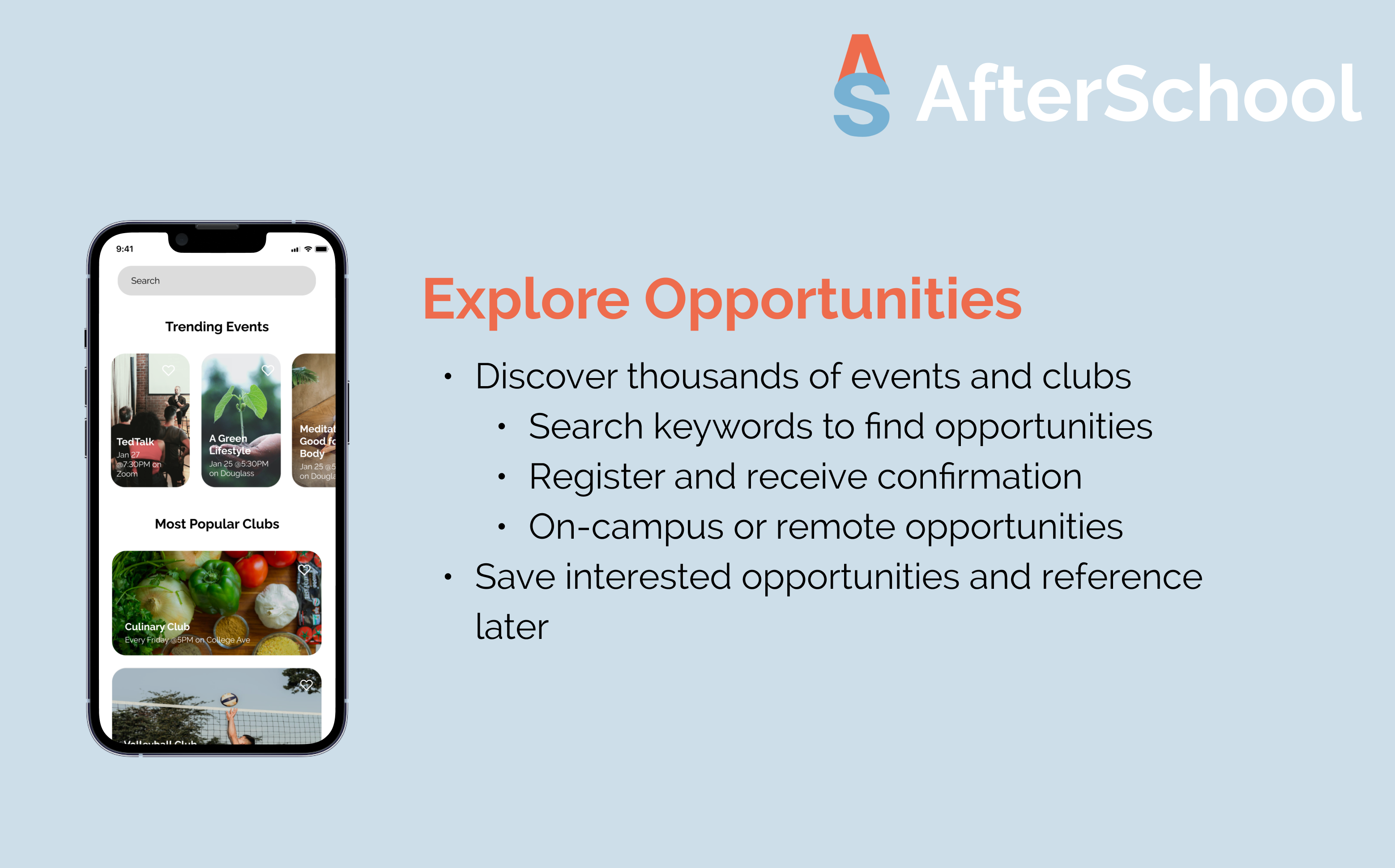
Your school has opportunities to offer, but with our network of clubs and events, you can explore more opportunities outside of your network remotely.
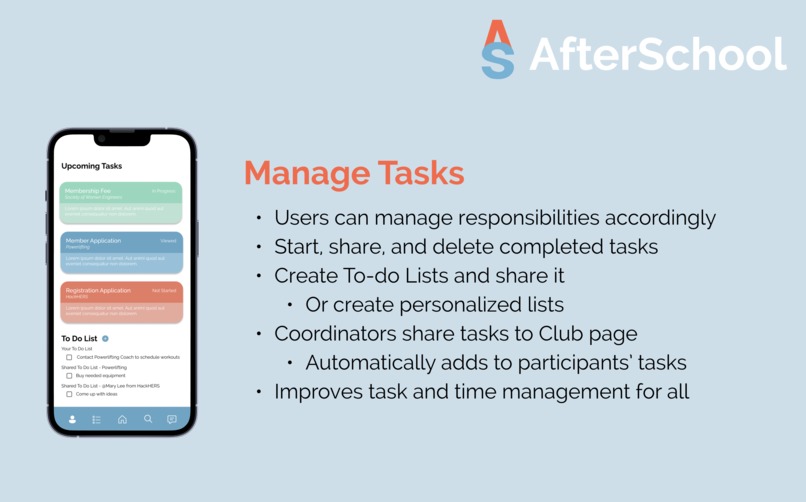
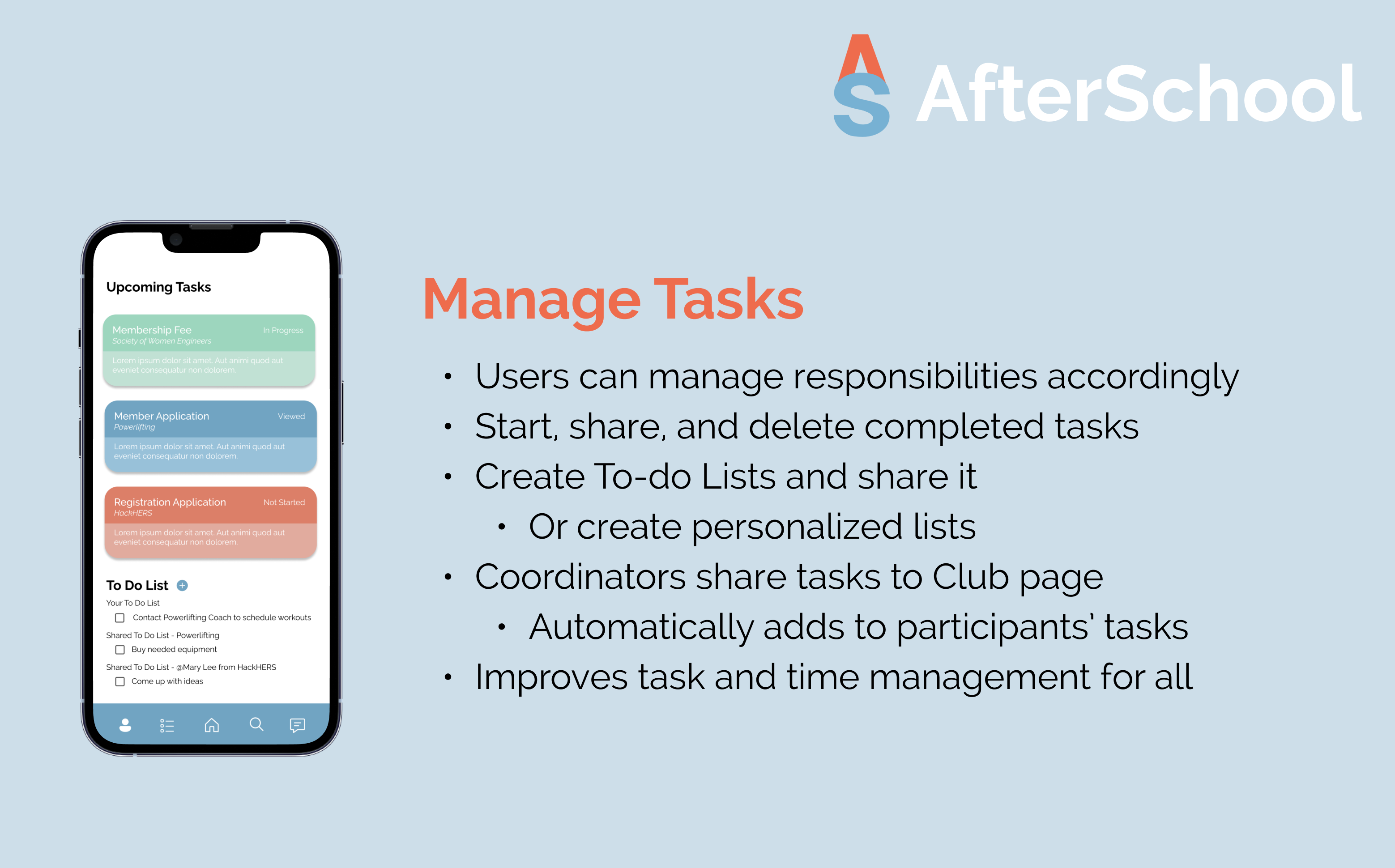
Managing your after school responsibilities can be difficult but it’s made easier with Shared To Do Lists and personalized Lists on the AfterSchool app. You can start lists, share them with your friends, and delete completed tasks.
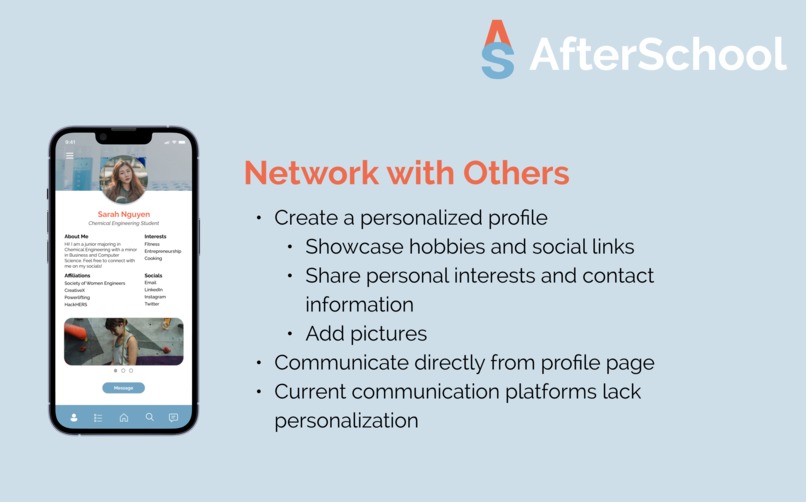
Lastly, networking with other students is easy peasy! When you enroll in a club, you’re automatically added into a group chat with participating members with the guidance of your club coordinator. You can also create personal group chat with friends and chat individually.
How we built it
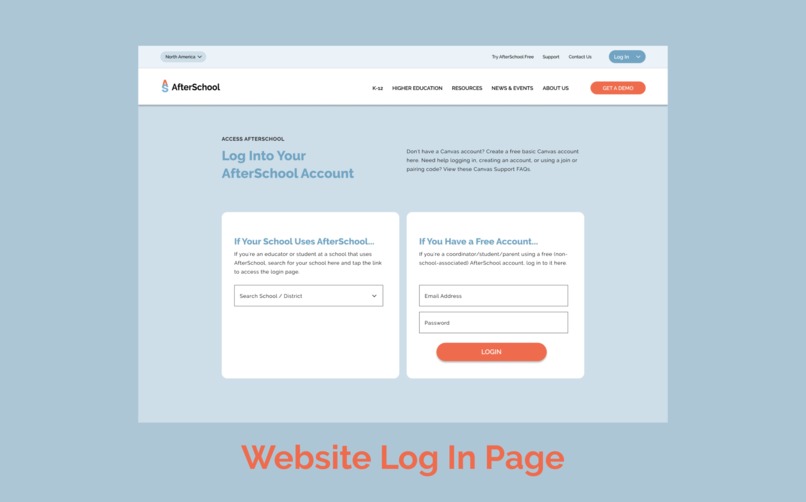
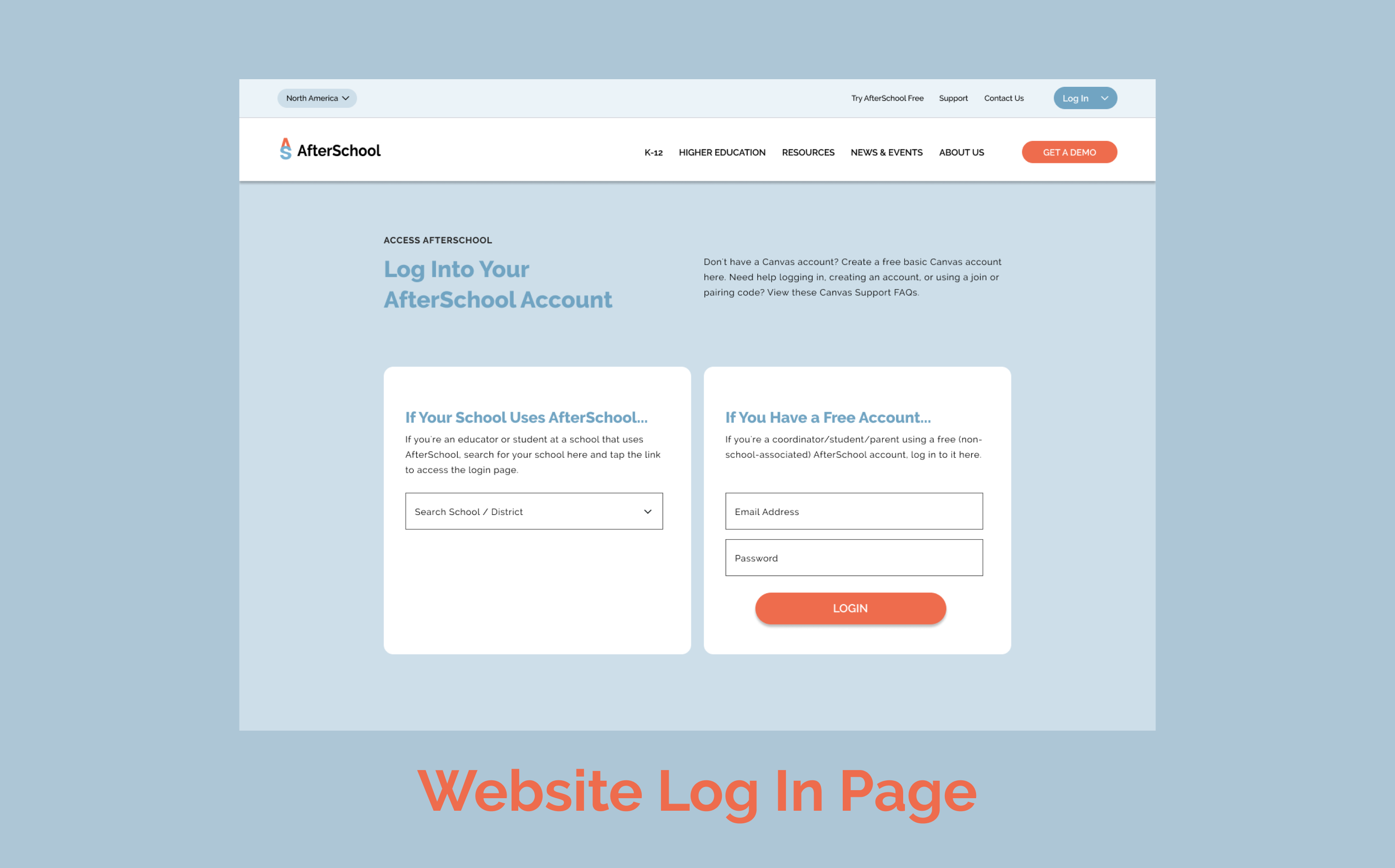
Figma was used to create the user interface of the app prototype. HTML, CSS, and JavaScript programming languages were used to develop the website from scratch. It was then uploaded onto Github and domain.
Challenges we ran into
Learning how to build a learning management system in the form of an application and web-app was challenging. It’s something new and we’re still learning and making improvements in our design.
Accomplishments that we're proud of
I’m proud of how far we came in creating web applications. Today, we were able to create a website and app prototype for students and club coordinators to utilize and optimize their time and task management.
What we learned
Learned how to create a web application.
What's next for AfterSchool
The next steps we’re going to take for AfterSchool is refining the app prototype and website from bugs. The app will need to be user tested and the website needs to be fine tuned a bit more before user testing.
Built With
- css
- figma
- html
- imovie
- javascript


Log in or sign up for Devpost to join the conversation.