Inspiration
After someone dies, the people closest to them are expected to handle an unfamiliar combination of documents, accounts, bills, debts, benefits, taxes, deadlines and government processes—often while grieving.
Information exists, but it is fragmented across institutions and government websites. A generic checklist cannot determine what applies to a particular family, what evidence is missing or what must happen next.
We created AfterLoss to explore whether an autonomous but carefully bounded agent could turn this fragmented process into a structured, reviewable case workflow.
What it does
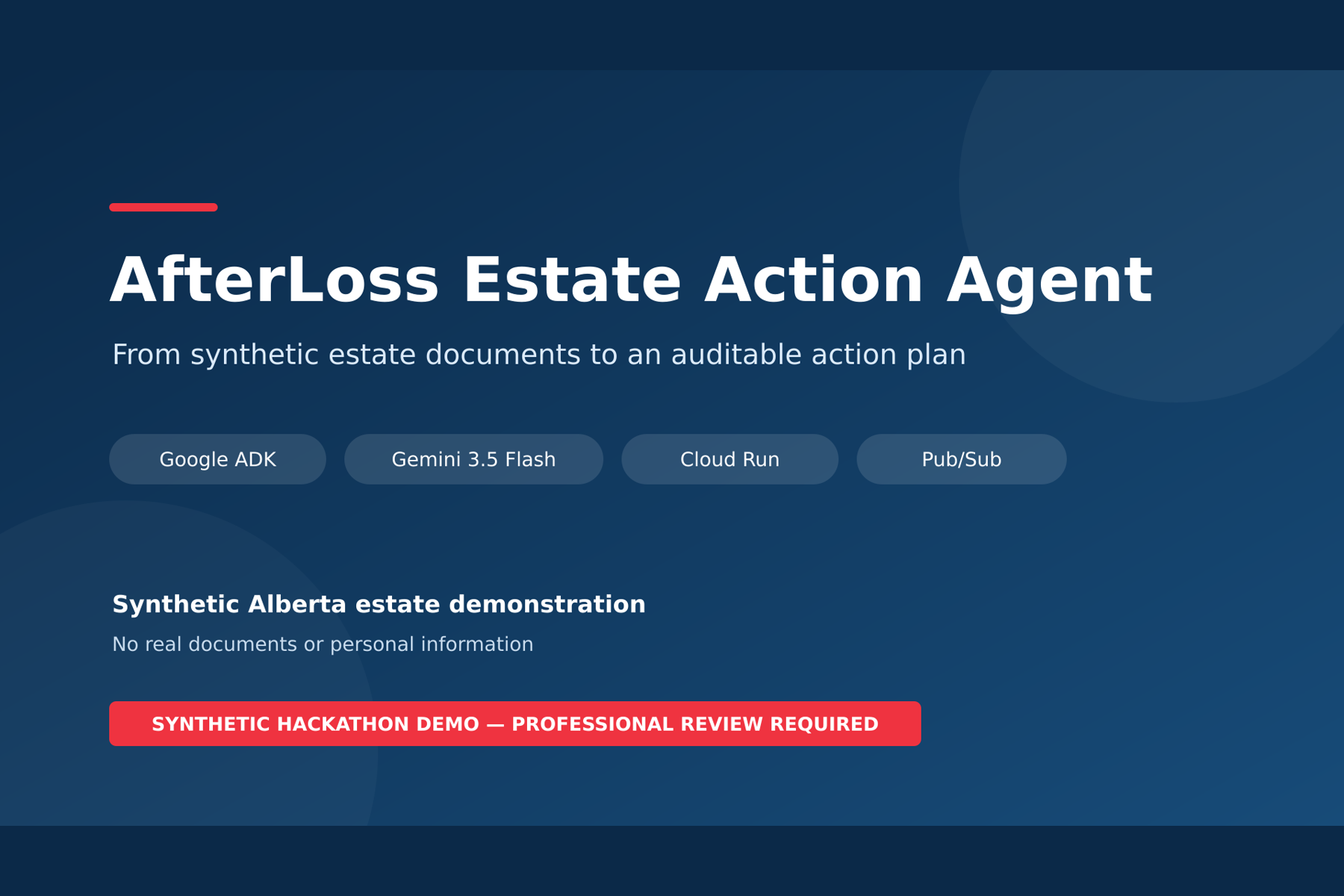
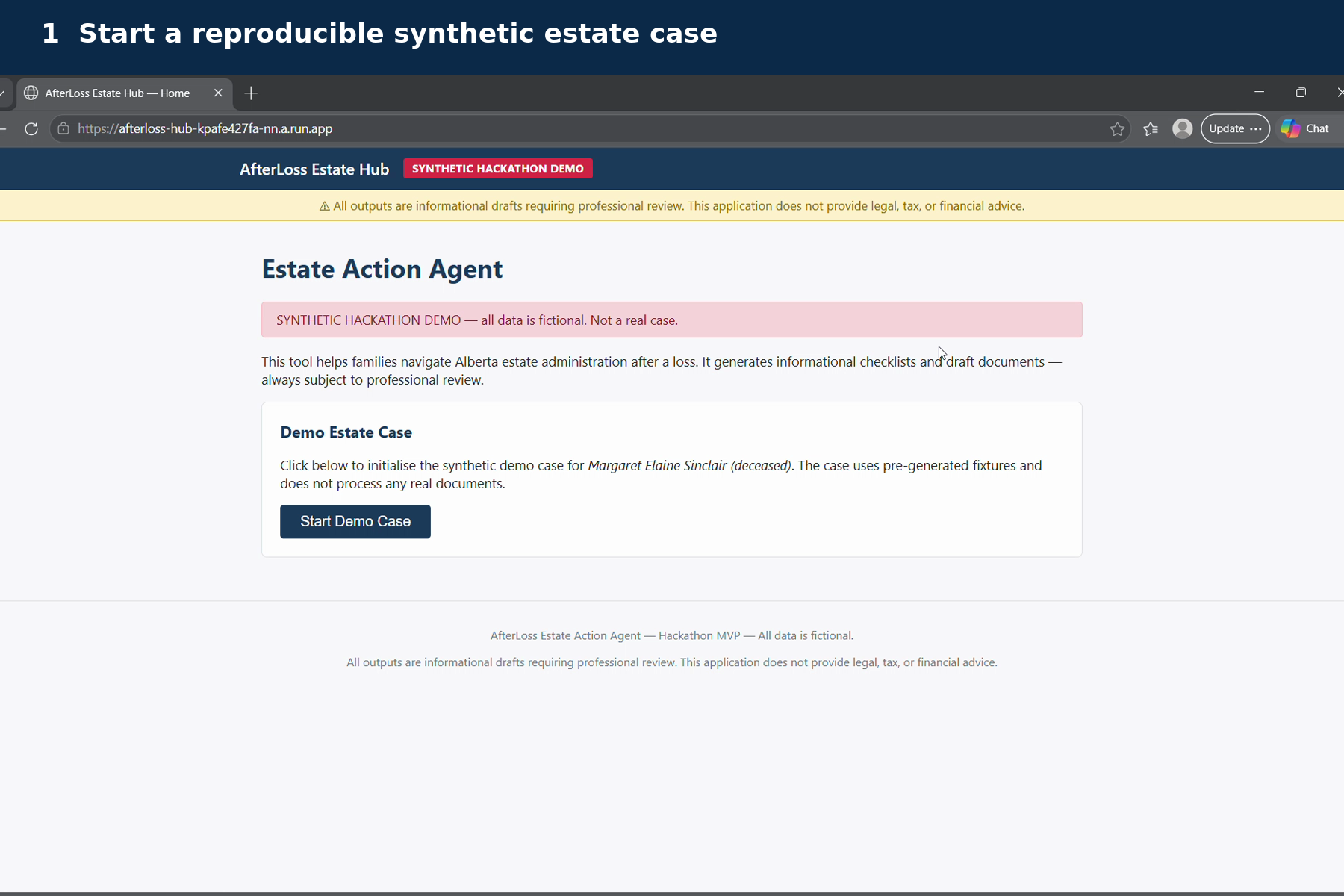
AfterLoss is an Alberta-first estate administration agent. It converts uploaded estate documents and family-provided facts into a persistent, evidence-backed case workspace.
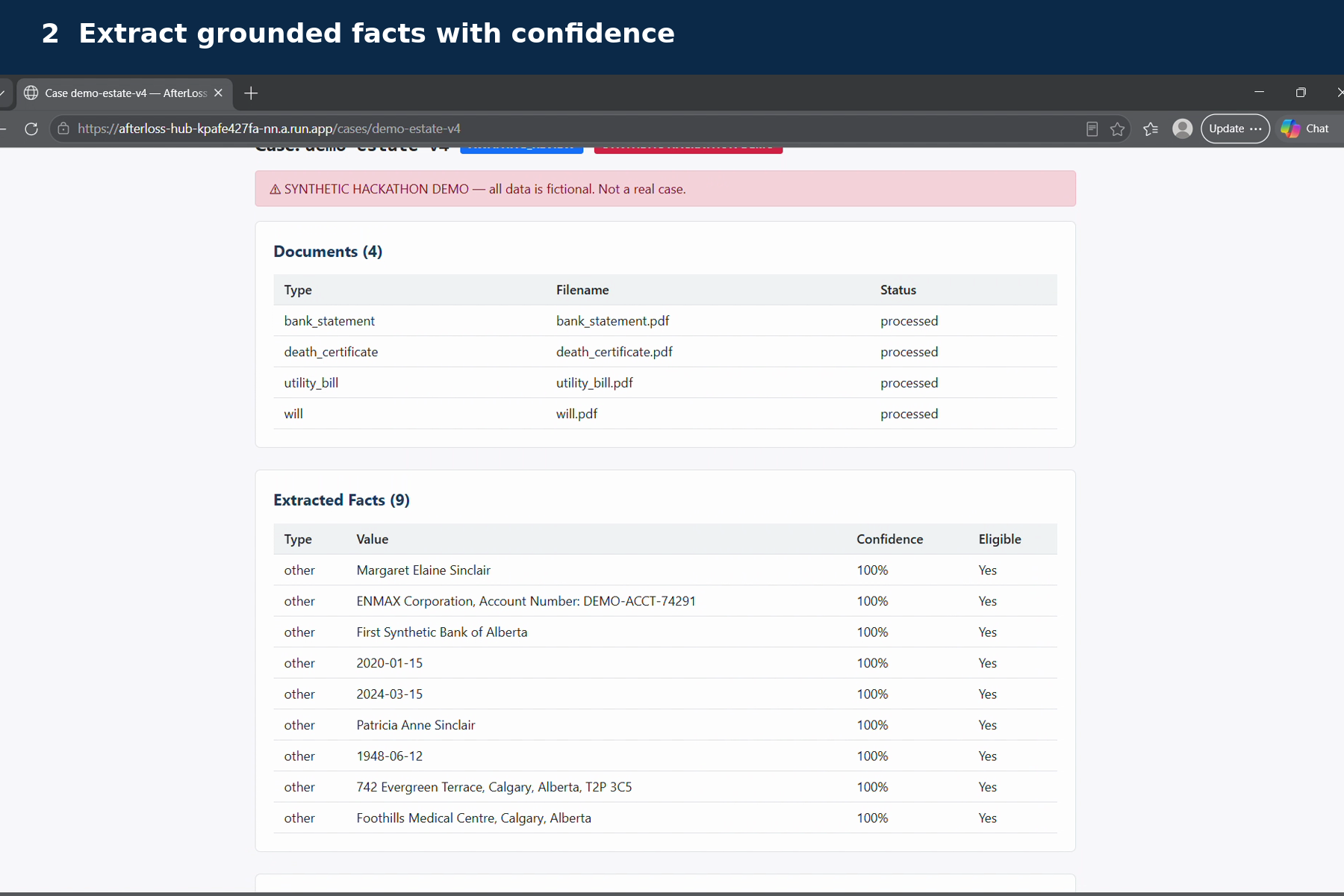
For the hackathon demonstration, the user creates a synthetic estate case and uploads sample documents such as a death certificate, will, utility bill and account statement.
The agent then:
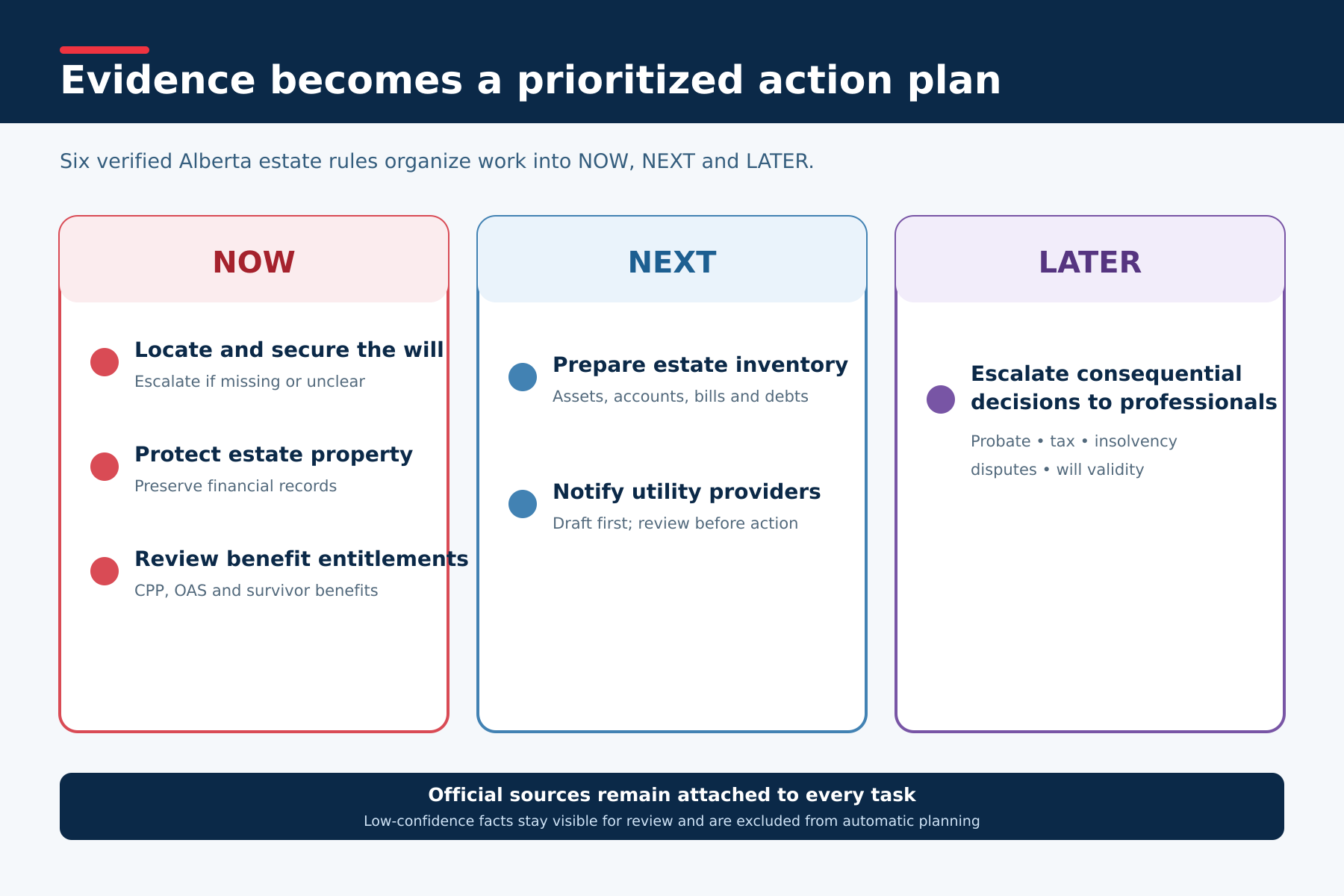
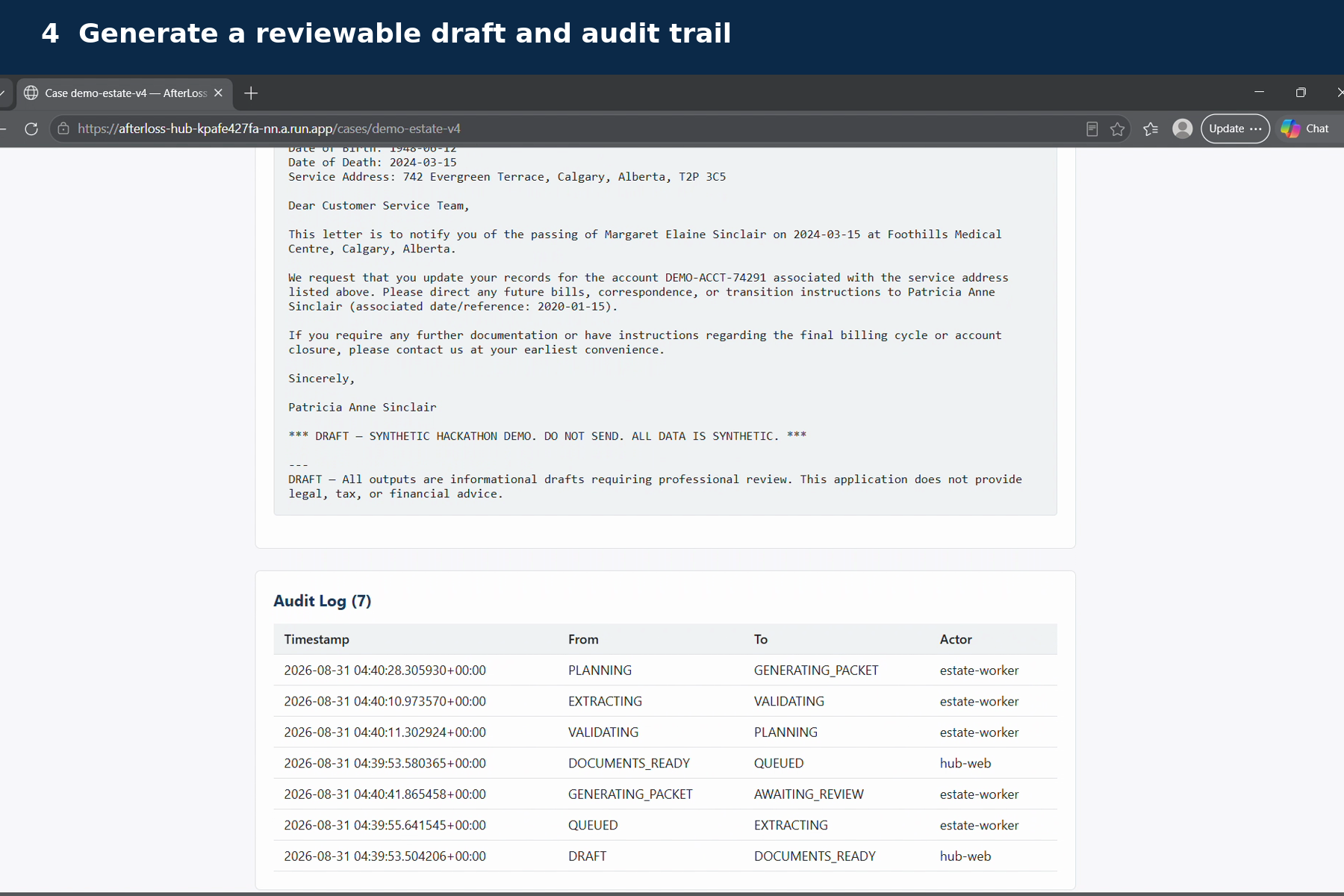
1- Extracts people, dates, accounts, assets, debts and recurring obligations. 2- Records each extracted fact with its source document and confidence level. 3- Creates an ordered action plan based on the estate’s facts and versioned Alberta rules. 4- Identifies missing evidence, upcoming deadlines and situations requiring professional assistance. 5- Monitors new case events and revises the plan when additional documents are uploaded. 6- Produces a review-ready notification packet and professional handoff report. 7- Records actions, approvals and generated artifacts in an audit trail. AfterLoss is not a substitute for an executor, lawyer or tax professional. It does not move money, access the deceased person's accounts, submit court or tax filings, or make unsupported legal conclusions. High-risk or ambiguous situations are escalated for human review.
How we built it
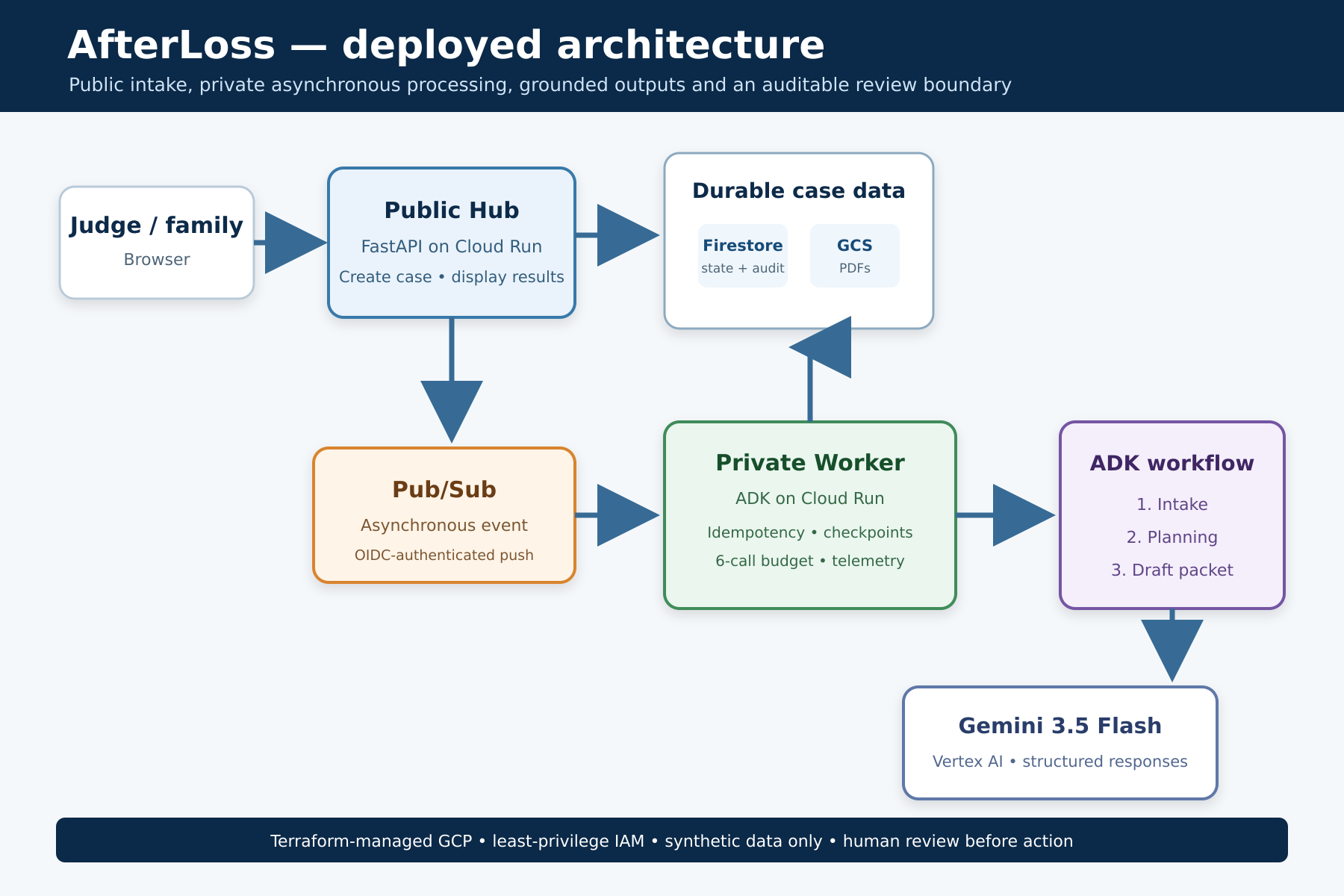
AfterLoss uses Gemini 3.5 Flash through Vertex AI for multimodal document understanding, fact extraction and grounded case-plan generation.
Google Agent Development Kit coordinates specialized intake, planning and document-preparation tools. Structured Pydantic schemas constrain model output and validate extracted facts before they enter the case record.
The Python and FastAPI application runs on Cloud Run. Firestore stores durable case state, tasks, evidence references, workflow status and idempotency records. Documents and generated artifacts are stored in Cloud Storage.
Pub/Sub provides the event-driven layer. When a document is added, an event triggers the background case worker, which extracts new information, recalculates affected tasks and saves the updated plan without requiring the user to remain connected.
The application uses scoped Cloud Run service identities instead of embedded service-account keys. Cloud Logging records workflow events and errors, while consequential outputs require explicit approval.
Challenges we ran into
The greatest challenge was balancing autonomy with safety. Estate administration is too consequential for an agent to take unrestricted action, but requiring approval for every small step would eliminate most of its value.
We addressed this by separating low-risk administrative work from consequential external actions. The agent can autonomously extract, classify, reconcile, prioritize and draft. It pauses before sending, filing, paying or distributing anything.
Other challenges included grounding every recommendation in evidence, handling inconsistent document layouts, preserving workflow state across asynchronous events and preventing duplicate processing.
Accomplishments that we're proud of
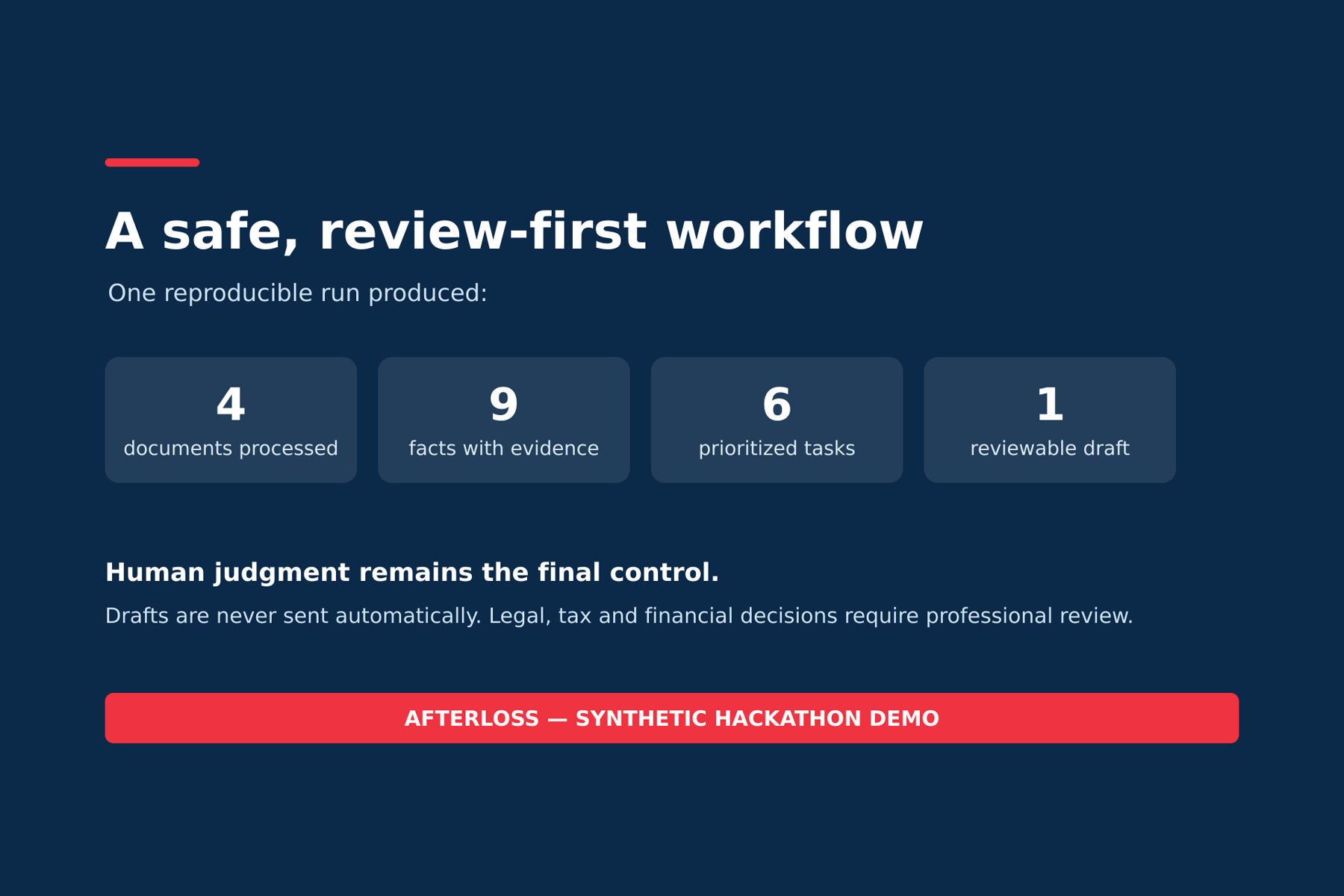
We built a working vertical slice in which an uploaded estate document triggers an asynchronous workflow, updates a persistent case record, generates a source-linked action plan and prepares a reviewable notification artifact.
The demonstration uses synthetic information only and shows the complete path from document intake through Firestore state changes to the generated case output.
What we learned
Agent reliability depends on much more than model quality. High-stakes agents need durable state, narrowly scoped tools, deterministic validation, source provenance, idempotent event handling and clear human-approval boundaries.
We also learned that the most useful estate agent is not one that pretends to replace professionals. Its value comes from organizing evidence, maintaining continuity and ensuring professionals and family members receive a complete, auditable case record.
What's next for AfterLoss: Estate Action Agent
The next phase would add formal review by Alberta legal, tax and privacy professionals, secure family collaboration, institution-specific notification templates, bilingual support and rule packs for additional Canadian provinces.

Log in or sign up for Devpost to join the conversation.