-
-
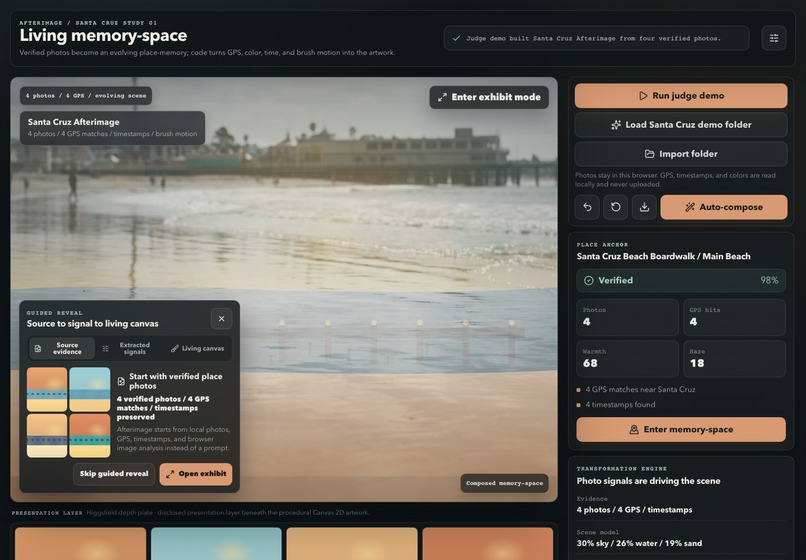
The complete one-click judge path
-

Source photos become a transparent render recipe
-
One human gesture changes the evolving composition
-
A finished Santa Cruz memory-space in Exhibit mode
-
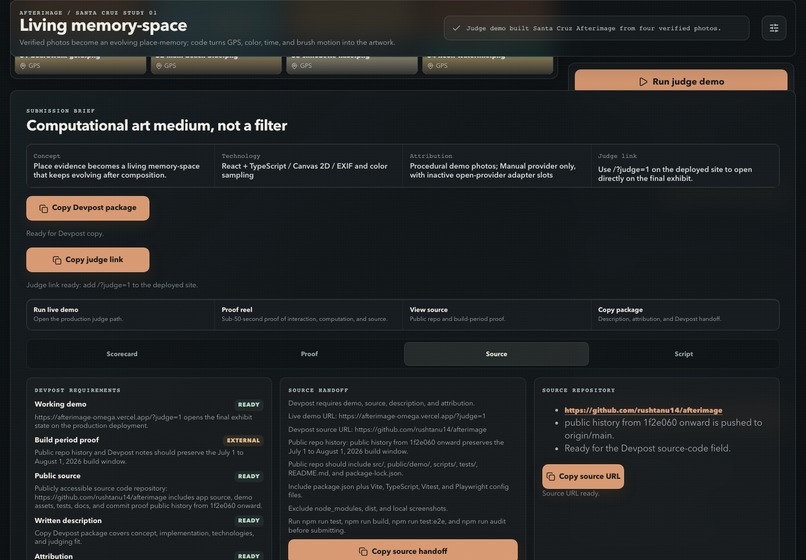
Implementation, source, and attribution stay inspectable
-
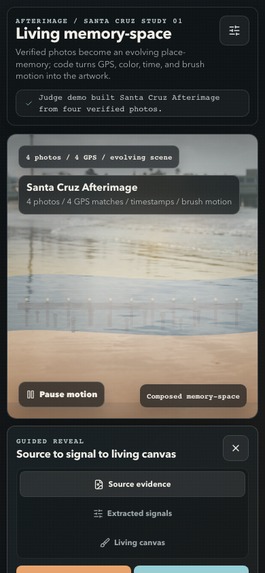
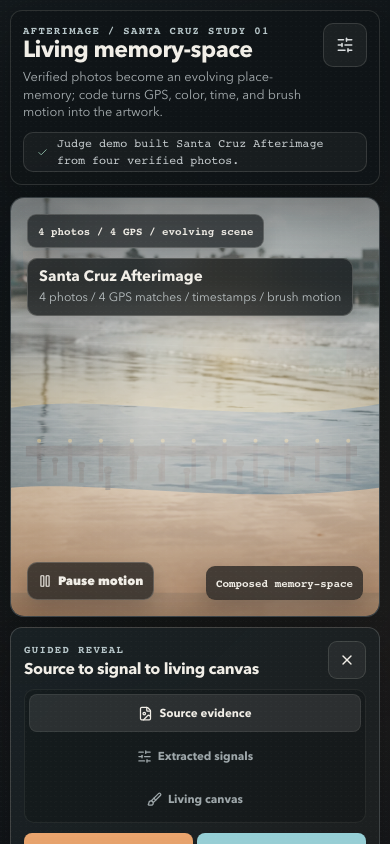
The complete judge path remains usable on mobile

Inspiration
Photo folders preserve what a camera saw, but rarely preserve how a place felt as light, weather, time, and memory changed. I wanted to build an artwork that does not merely display photos. It reads a small set of visual signals, lets a person leave a gesture, and turns both into an image that keeps evolving.
What it does
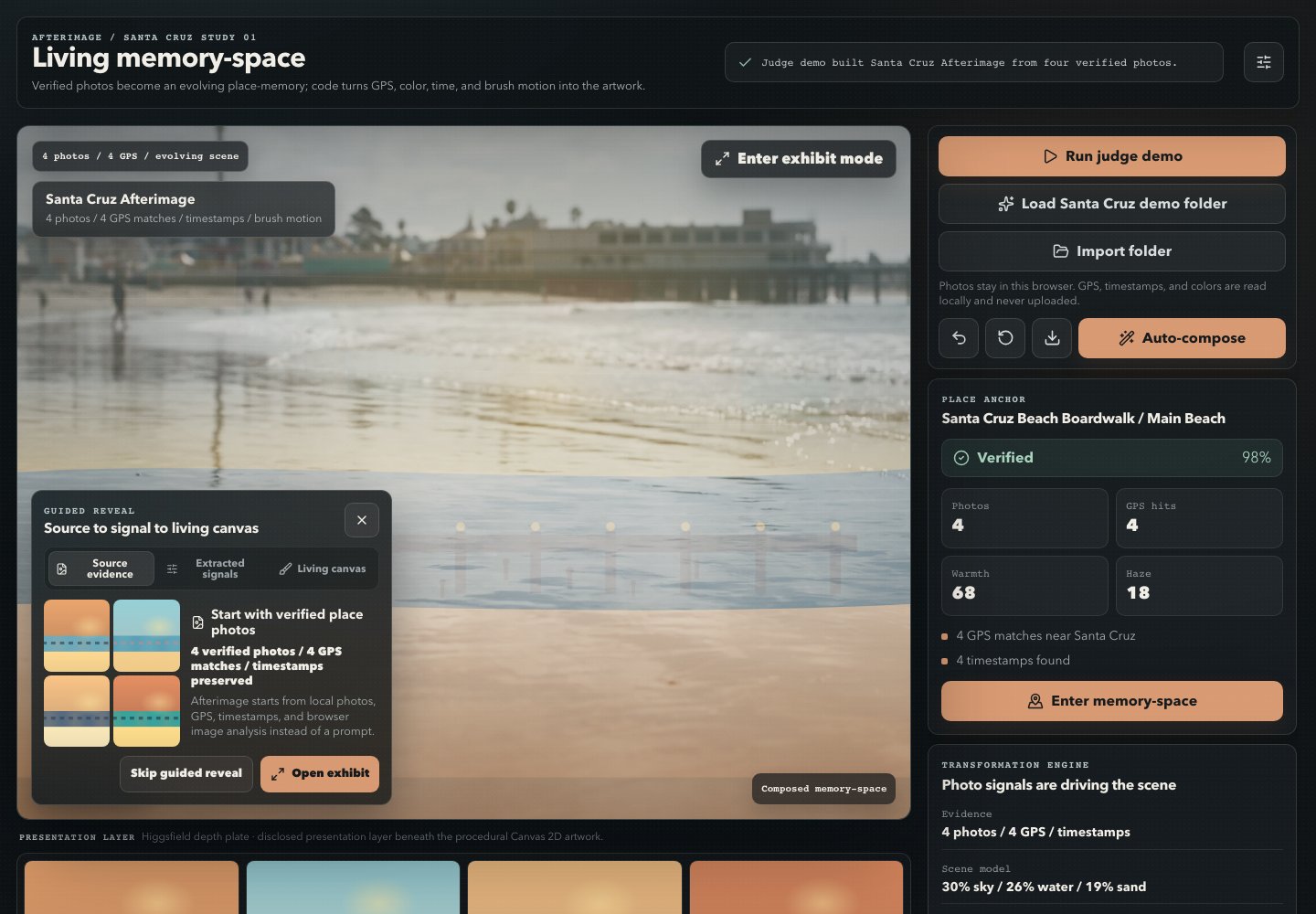
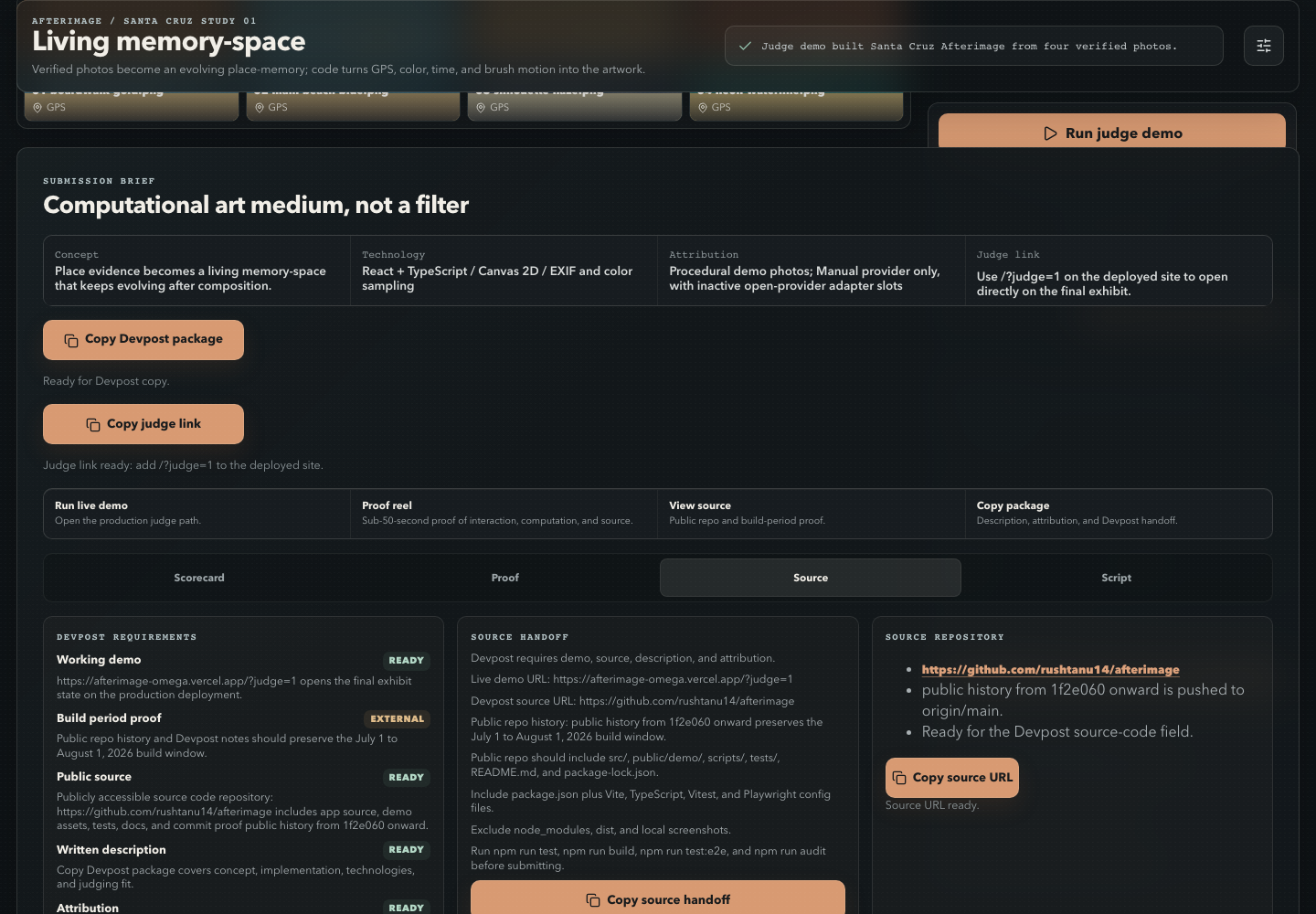
Afterimage transforms a local photo folder into a living browser artwork. It samples the images for palette and scene ratios, reads available time and location metadata, derives a render recipe, and uses a visitor's brush gesture as part of the composition. The result continues moving in Exhibit mode and can be exported as a PNG with an evidence and computation receipt.
The one-click judge path loads four clearly labeled procedural Santa Cruz demo images. A guided reveal shows the source photos, extracted signals, render recipe, and final canvas. The visitor can then leave an afterimage and see the gesture alter the composition.
How I built it
The interface uses React, TypeScript, and Vite. Local browser APIs and exifr read image pixels and available metadata without uploading the folder. A deterministic analysis engine aggregates color and scene ratios into a memory signal. Canvas 2D turns that signal plus pointer input into layered strokes, motion, and exportable artwork. Vitest covers the analysis engine; Playwright verifies the judge path, keyboard flow, responsive layout, export, hosted submission pack, and proof assets.
Challenges
The hardest problem was making the transformation legible without reducing the art to a dashboard. The guided reveal and computation receipt expose enough of the source-to-canvas chain for a judge to verify the technology, while Exhibit mode removes the proof UI and lets the work stand as art. I also built a reduced-motion path and a deterministic demo so the experience remains reliable.
Accomplishments
- A single continuous path from photo evidence to human gesture to living artwork.
- A judge can point to the palette and scene signals that changed the render recipe.
- The final artwork remains interactive and can be exported with its receipt.
- The judge demo, proof reel, source, and submission handoff are public and require no account.
- The demo remains local-first and makes no runtime AI or map-provider request.
What I learned
Creative technology feels most convincing when the computation is visible but not dominant. Provenance also matters in digital art: generated presentation assets, procedural demo inputs, human interaction, and deterministic code should remain distinguishable.
What's next
I would test Afterimage with artists using their own rights-cleared photo series, add more accessible ways to shape motion and color, and explore multi-person exhibits only after the single-person authorship model is well understood.
Built With
- canvas-2d
- exif
- exifr
- higgsfield-cinema-studio
- playwright
- react
- typescript
- vercel
- vite
- vitest

Log in or sign up for Devpost to join the conversation.