-
-
-
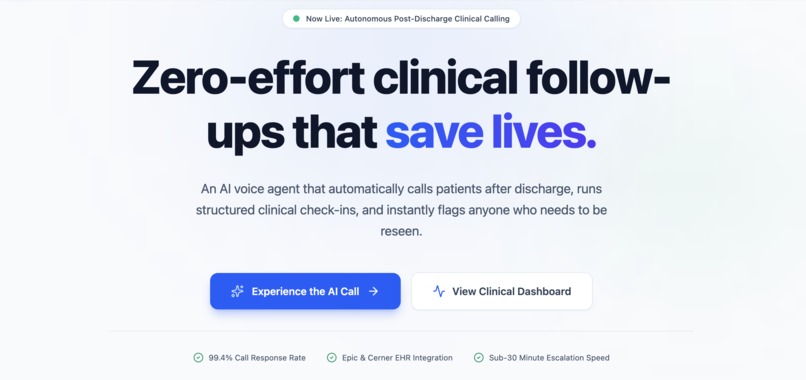
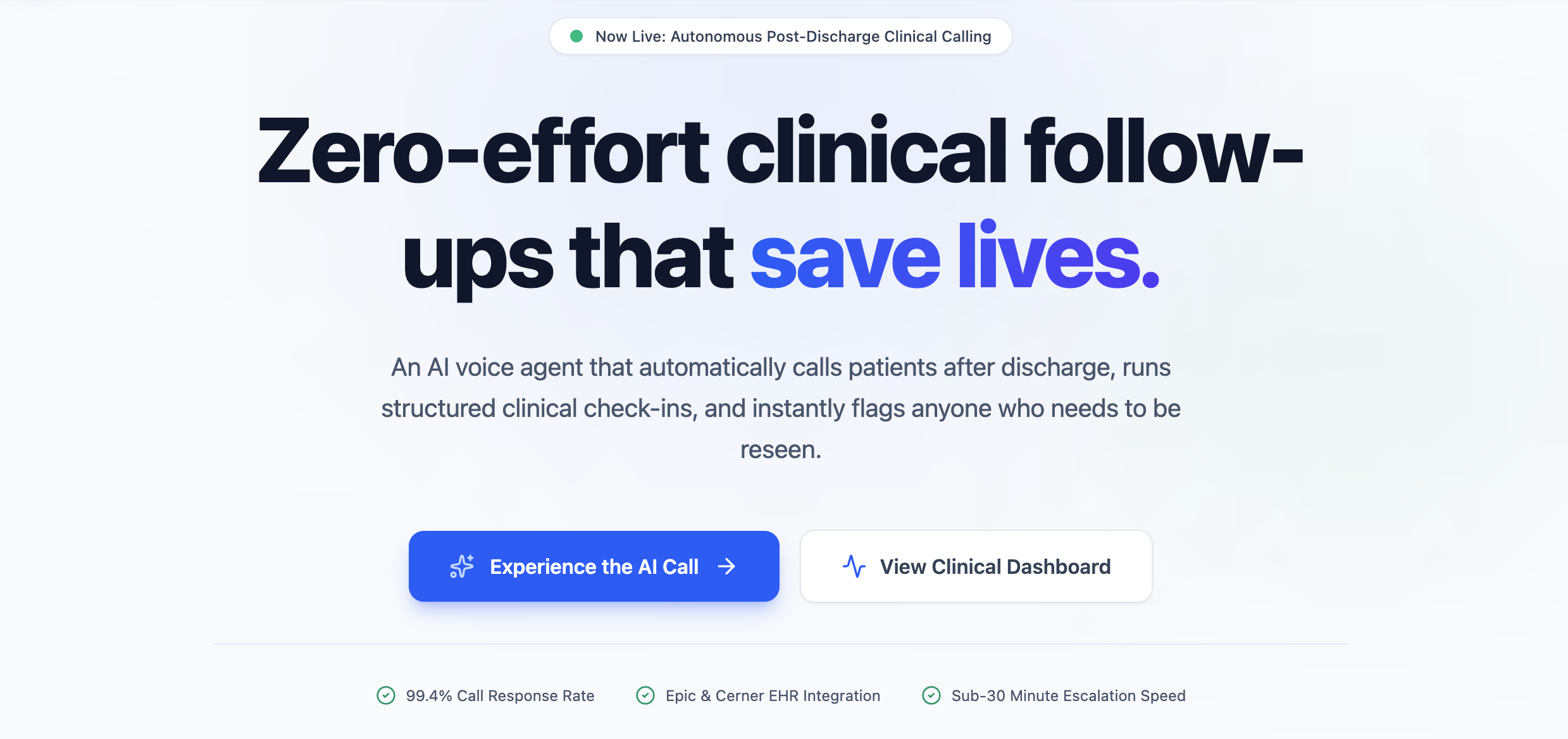
landing page
-
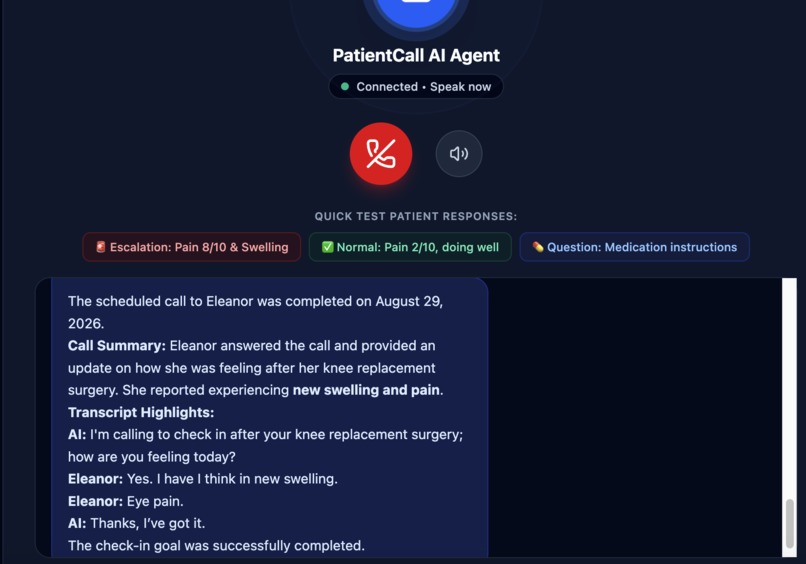
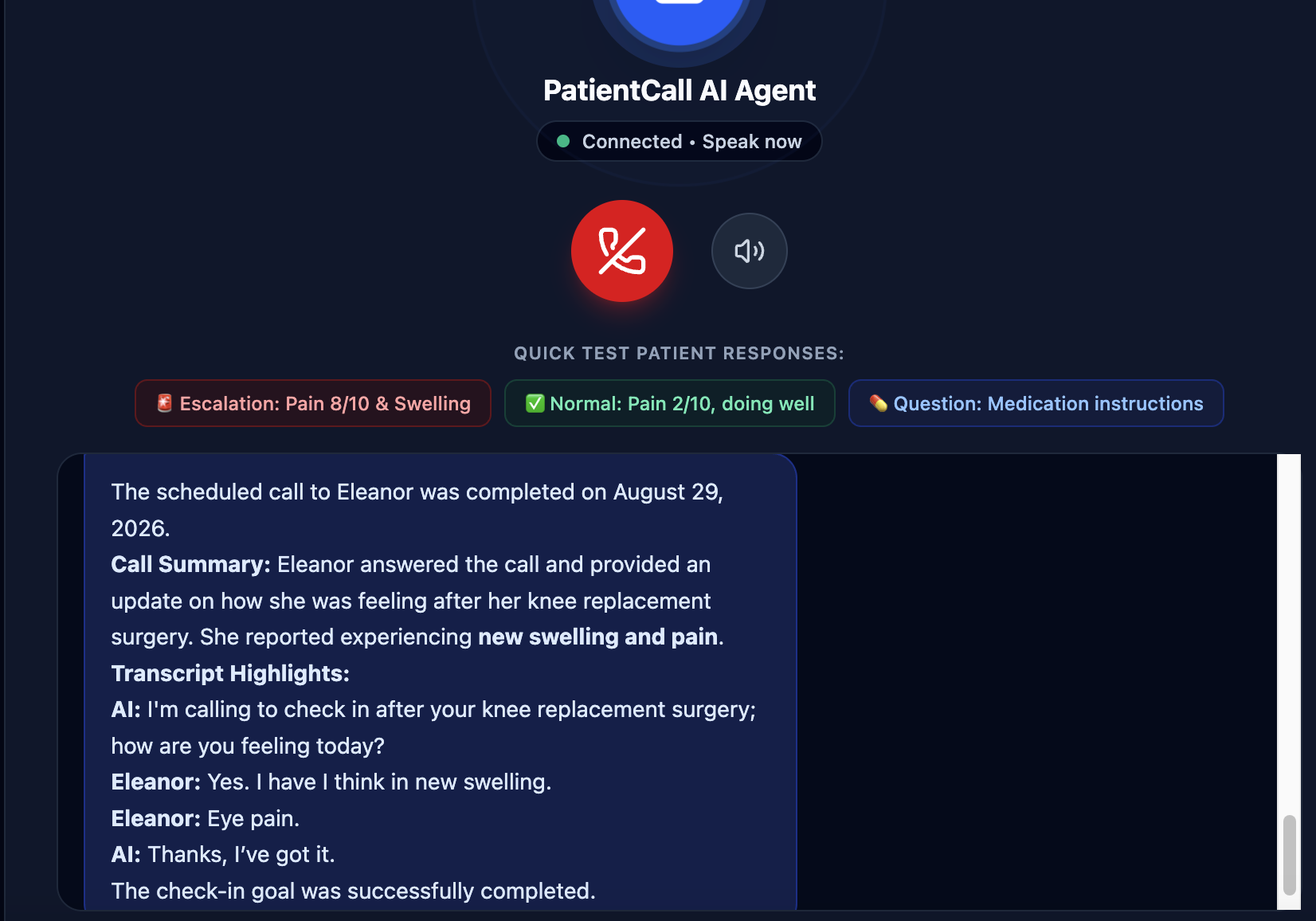
ai voice call
-
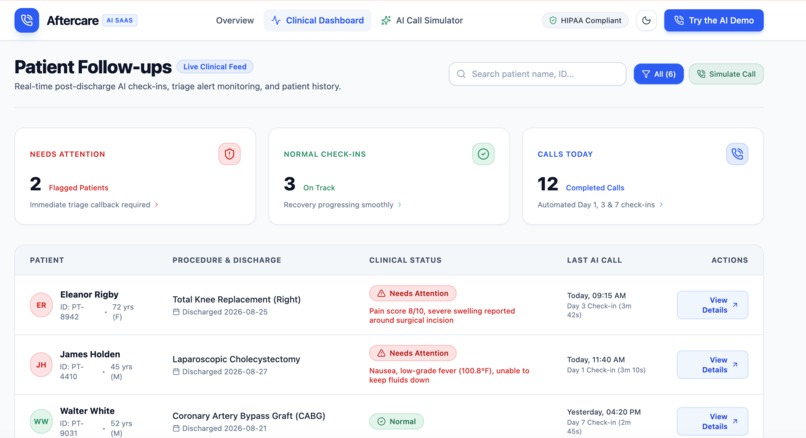
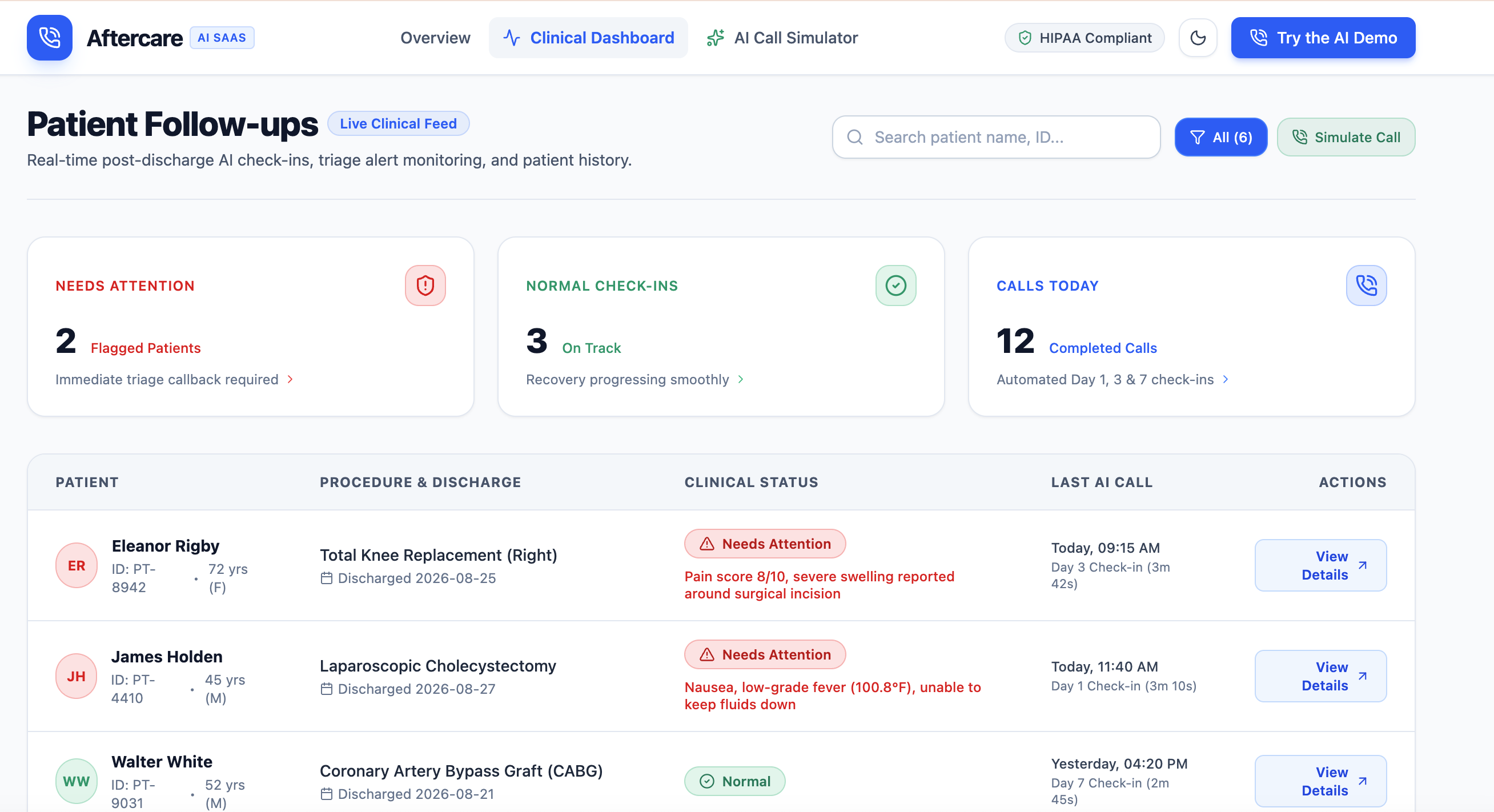
dashboard
Inspiration
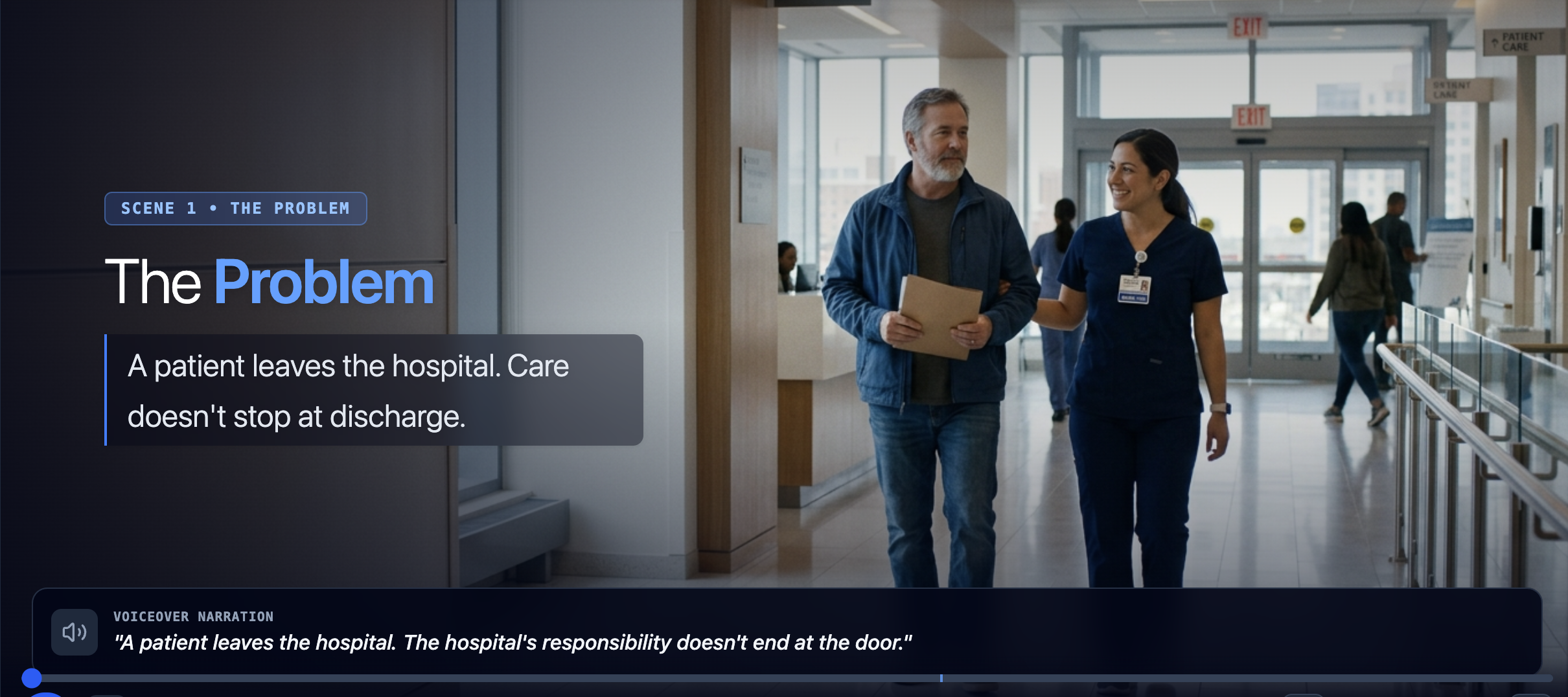
1 in 5 hospital patients are readmitted within 30 days of leaving the hospital, and Medicare has been fining hospitals for it since 2012. The fix is obvious: just call patients after they leave. After discharge, someone still needs to Identify patients who need follow-up.
What it does
Once a patient is discharged - the AI calls with a follow-up call on day 1, day 3, and day 7, asking structured questions shaped to their specific procedure. A knee replacement patient gets asked different questions than a cardiac patient. If we hear any red flags—like a patient mentioning chest tightness, scoring their pain an 8, or saying they've stopped their medication—that's where we bring in the professionals for an immediate callback. For everyone else, it’s a smooth and reassuring check-in, all neatly logged in their record, without using up any staff time. Every call syncs to the hospital's software - giving clinical teams a complete post-discharge picture.
How we built it
Created Backend Agent in google Cloud run
- Call scheduling agent: - . Used Gemini, and the tools available from the Call-E MCP server
- end call transcription gemini and call-e, conversation agent
Challenges we ran into
enrolling patients in a follow-up sequence. Dockerization of agents on cloud run was tricky .coordination of real time response to app layer involved managing agents get run call . Turning discharge int follow-up calls.
Accomplishments that we're proud of
A working prototype with a full frontend. backend deployed on cloud run deploy.
What we learned
Building taught us that healthcare AI lives or dies on followups.

Log in or sign up for Devpost to join the conversation.