-
-
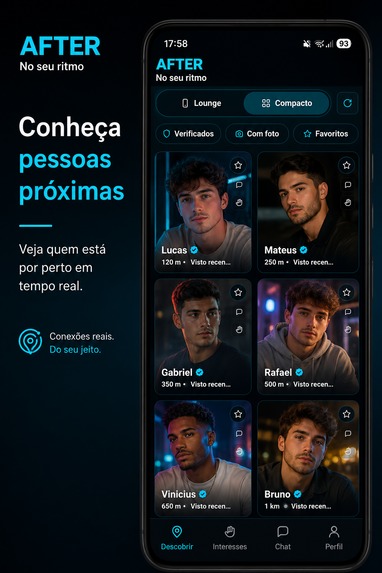
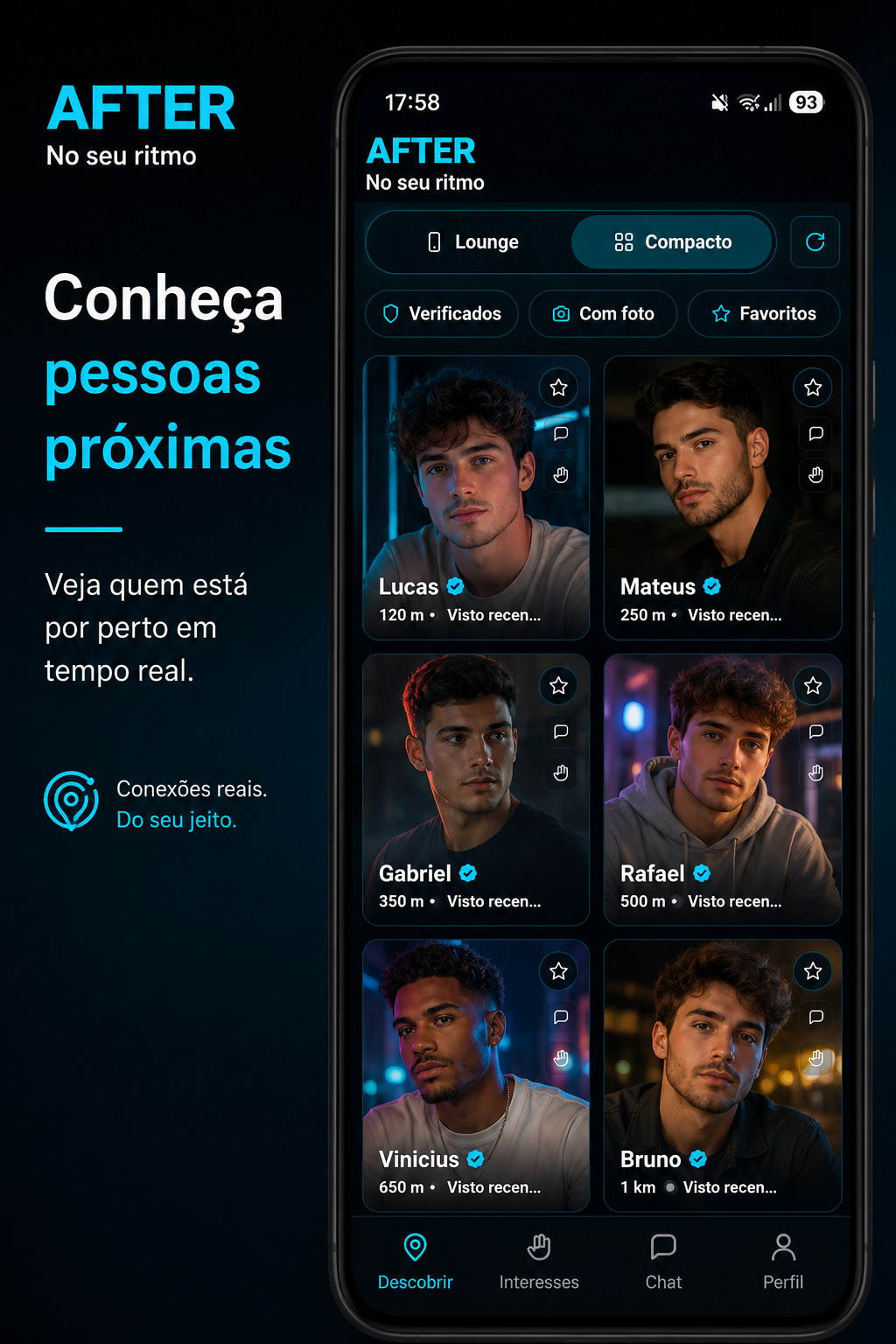
Discover nearby people with filters, presence signals and privacy-aware distance.
-
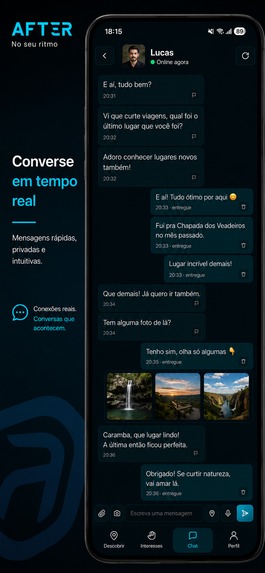
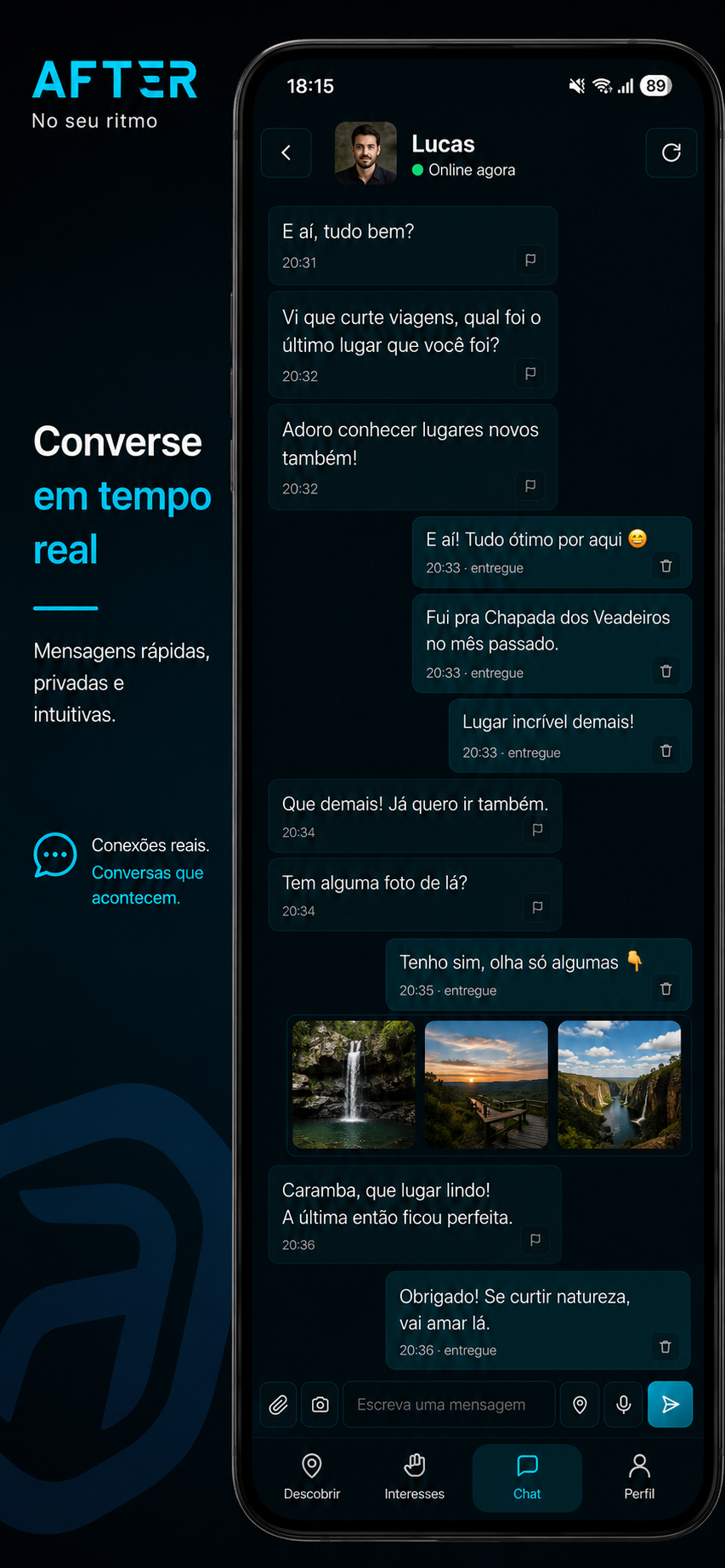
Real-time chat with text, photos, voice messages and location sharing.
-
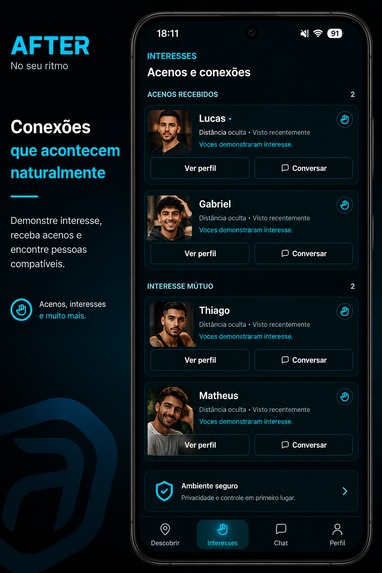
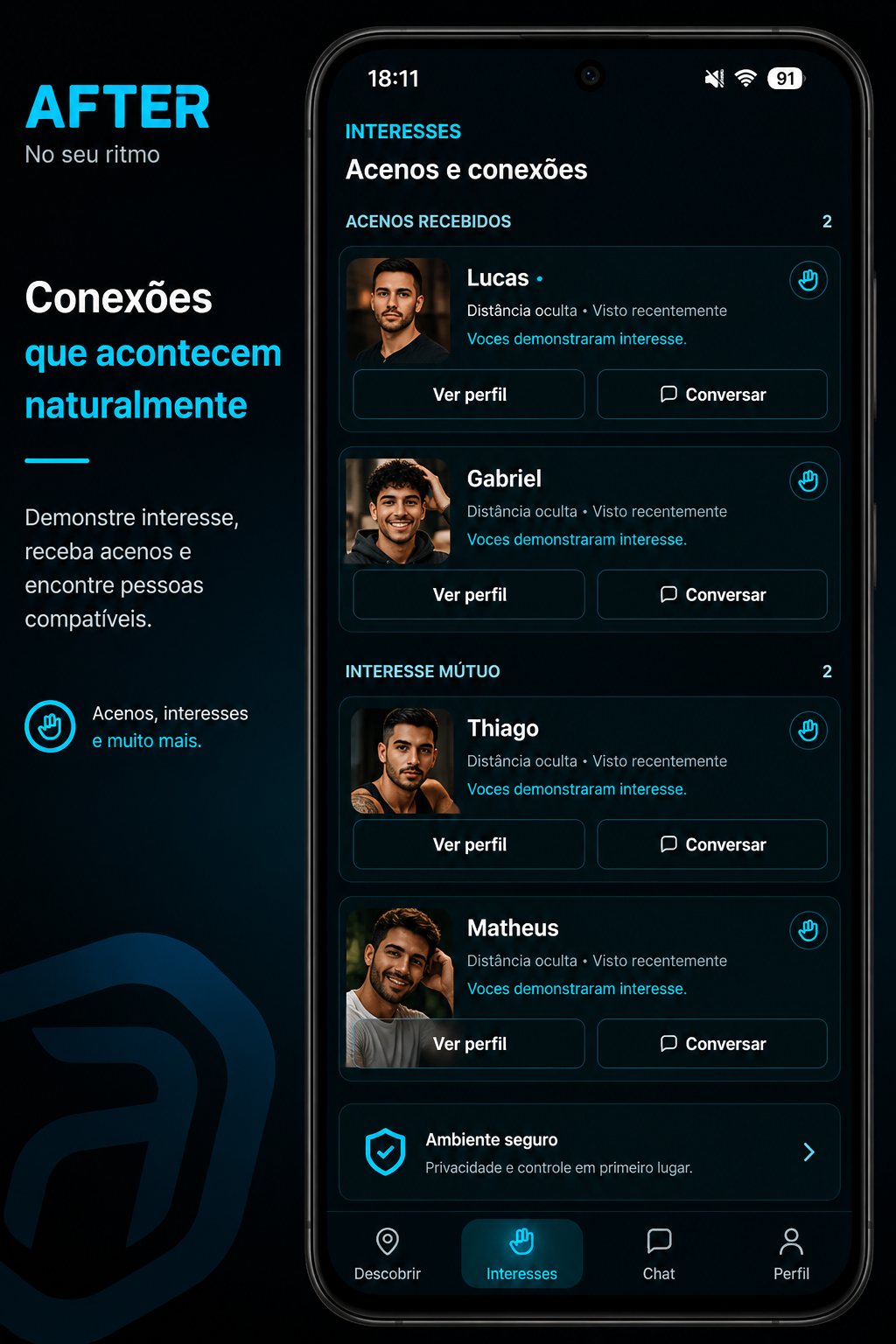
Waves, mutual interests and meaningful connections in one place.
-
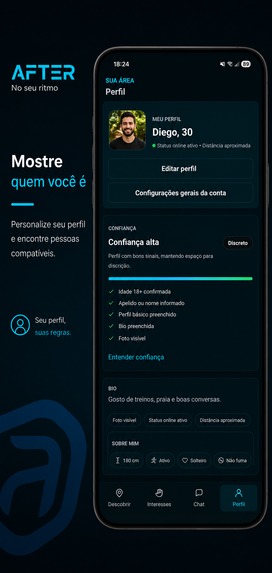
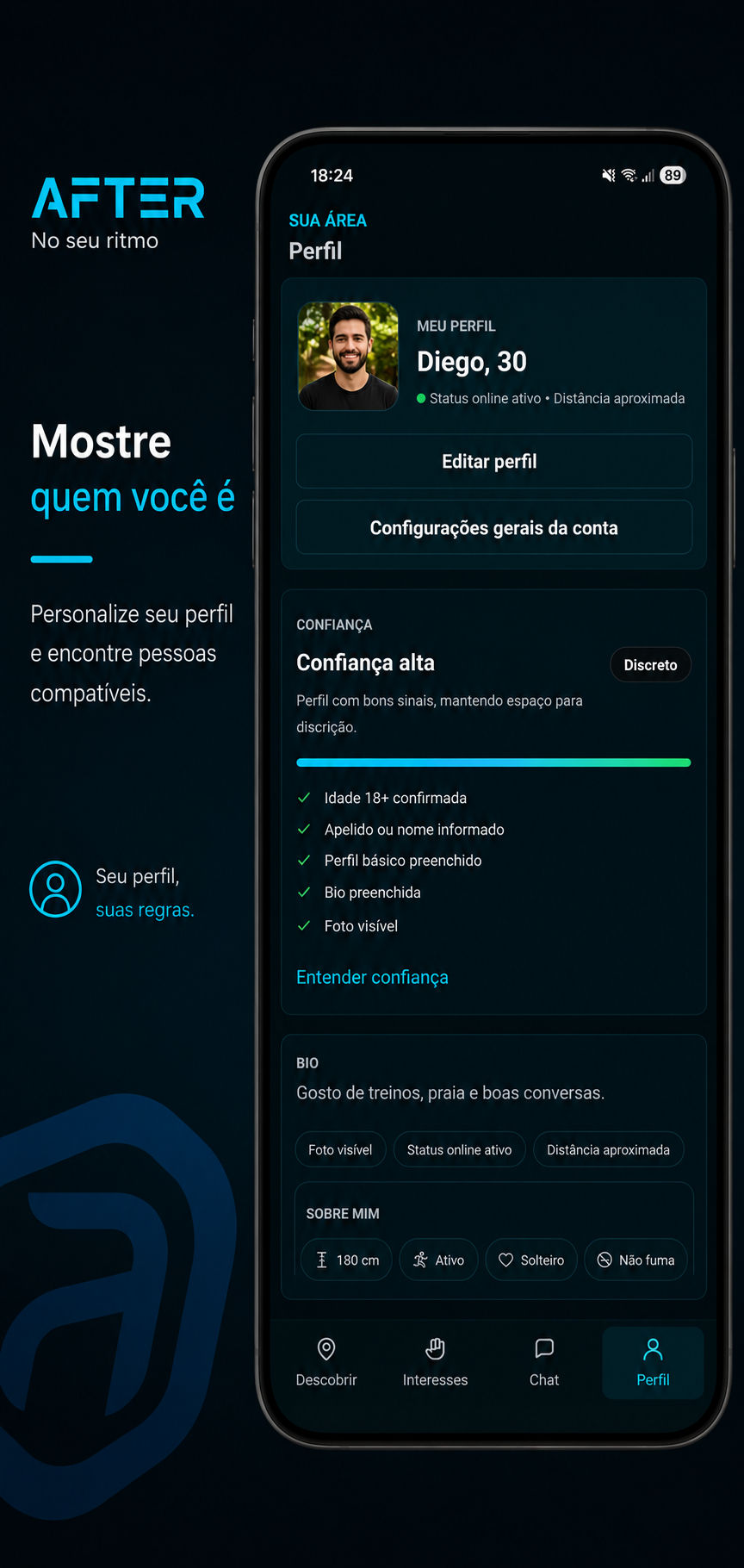
Profiles with bio, interests, privacy controls and moderated galleries.
-
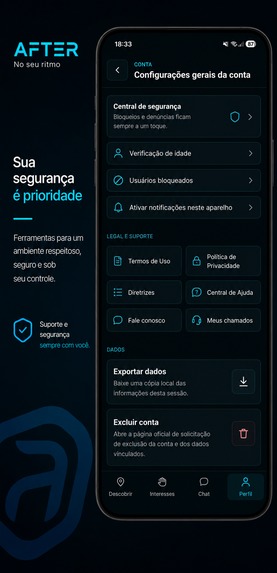
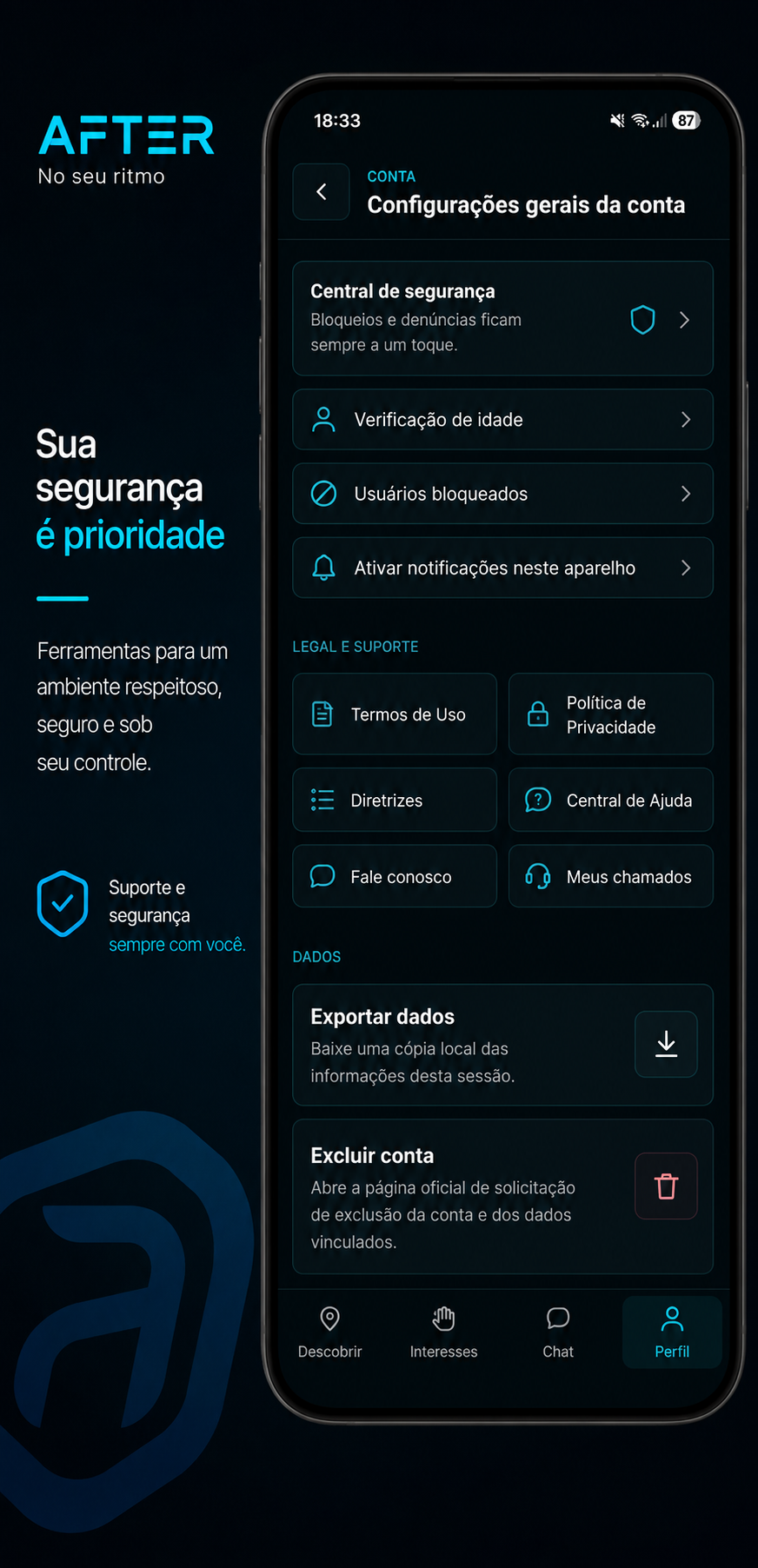
Photo moderation, reporting, blocking and secure-screen protection.
-
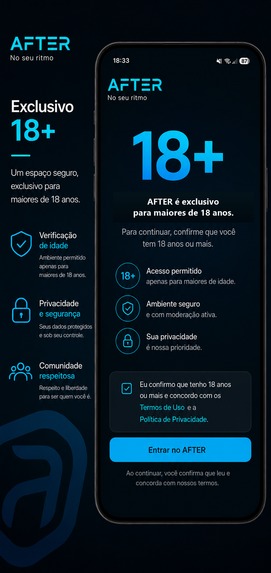
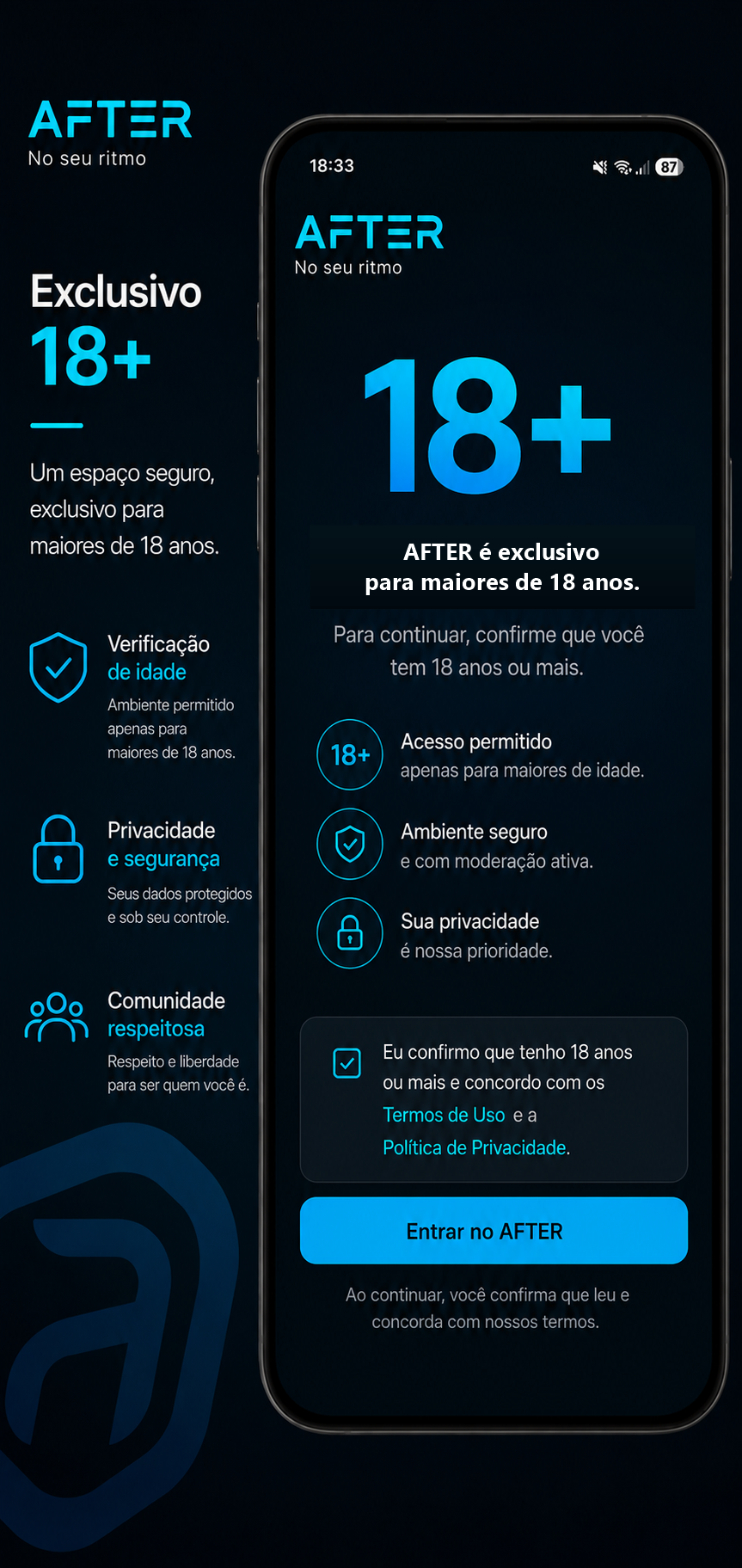
An 18+ confirmation flow designed to protect the AFTER community.
Devpost Copy-and-Paste Package
Project name
AFTER: From Idea to Production with Codex
Tagline
A real Android relationship app built by an independent Brazilian creator with Codex as an engineering partner.
Category
Apps for Your Life
Inspiration
AFTER began with a personal question: could someone without a traditional software-engineering background build a real, safe, production Android app with an AI engineering partner? Relationship apps can be expensive, noisy, and impersonal. I wanted to create a Brazilian alternative focused on proximity, discretion, safety, and direct human connection, while keeping core interactions accessible and free from aggressive advertising.
What it does
AFTER helps gay men discover nearby people and start meaningful conversations. It includes Lounge and Compact discovery views, profiles and galleries, favorites and connections, real-time chat with text, photos, audio, and location, recent-presence signals, blocking and reporting, age safeguards, push notifications, photo moderation, and a separate administrative dashboard.
The Android application is already distributed through Google Play and the web experience is publicly available.
How we built it
I made the product decisions and tested every important workflow on real Android devices. Codex acted as my engineering partner: it inspected the evolving codebase, explained unfamiliar concepts, proposed scoped changes, implemented them, ran builds, diagnosed regressions, and helped prepare signed Android releases.
The client uses React and Capacitor 8. Supabase provides Auth, Postgres, Storage, Realtime, Row Level Security, and Edge Functions. Firebase Cloud Messaging powers Android notifications, and Google Cloud Vision SafeSearch assists with conservative profile-photo moderation. Vercel hosts the web experience.
During Build Week, Codex with GPT-5.6 audited the production implementation, validated technical claims, identified and removed credential risks from the judging snapshot, reconstructed the development story, and prepared the documentation and demo.
Challenges
The hardest work was not producing a prototype. It was making many systems agree under real device conditions: Android content URIs and photo formats, crop and compression, optimistic chat state versus Supabase Realtime, microphone permissions, push tokens, native back navigation, presence, moderation, RLS, and release signing. Regressions had to be traced to their actual causes without erasing features users already relied on.
Accomplishments
- Shipped a working Android relationship app instead of a concept-only demo.
- Migrated the installed app to Capacitor 8 while keeping the web experience functional.
- Built a shared mobile photo pipeline for profile, gallery, and chat flows.
- Stabilized real-time messaging with text, images, voice messages, and location cards.
- Added native notifications, secure-screen support, moderation, and administrative controls.
- Turned an independent creator's product vision into a maintainable, testable system through sustained collaboration with Codex.
What we learned
AI does not remove the need for product judgment, testing, or responsibility. It changes who can participate in engineering. The most valuable part of Codex was not one generated block of code; it was continuity: reading the existing system, investigating failures, explaining tradeoffs, and staying with a problem until the real app worked.
Artificial intelligence did not build AFTER for me. It made me believe I was capable of building it.
What's next
The next stage is focused growth in Brazilian cities, deeper safety and moderation operations, stronger onboarding analytics, and optional premium value that never depends on disruptive advertising. The technical foundation is ready to support those experiments without abandoning the accessible core experience.
Links
- Live app: https://after-github-fix.vercel.app
- Google Play: https://play.google.com/store/apps/details?id=br.com.afterapp.app
- Demo video: https://www.youtube.com/watch?v=NqfTXpNx1cM
- Source repository: https://github.com/mersonsilva/after-build-week
Codex session
019ee61b-1ba3-78c3-b219-f16947cad37d
Built With
- android
- capacitor
- chatgpt
- codex
- github
- google-cloud
- gpt-5.6
- openai
- react
- sql
- supabase
- typescript
- vercel
- vscode

Log in or sign up for Devpost to join the conversation.