-
-
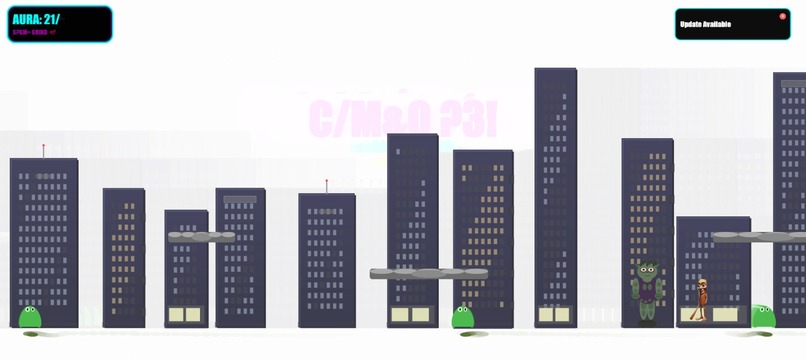
glitch 1
-
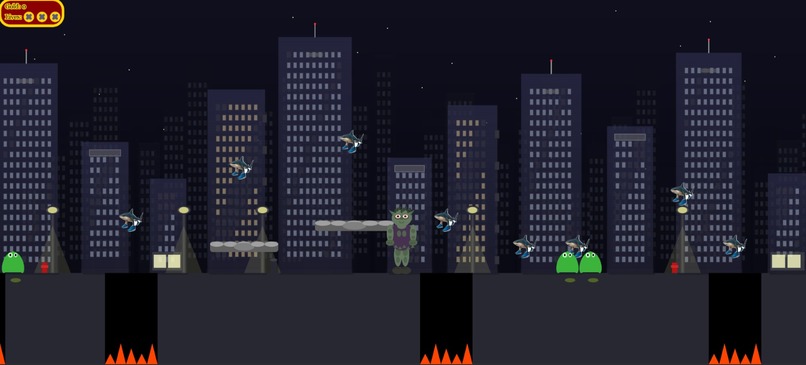
version 1
-
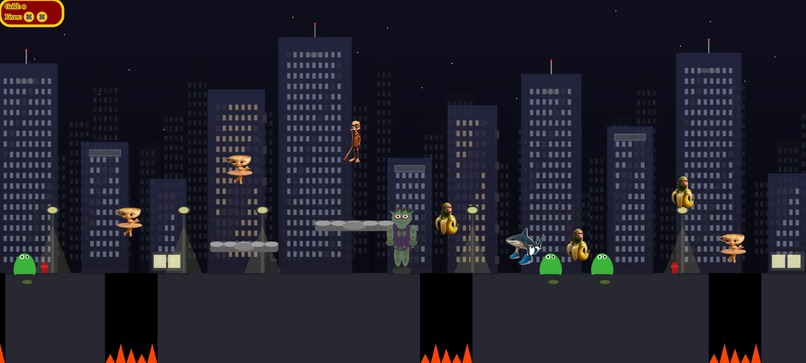
version 2
-
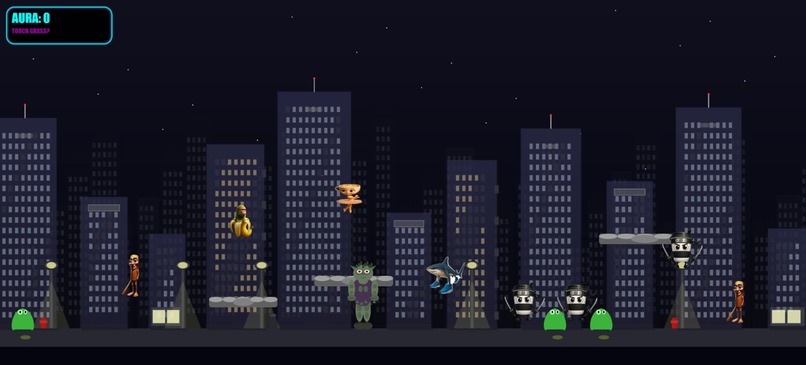
version 3
-
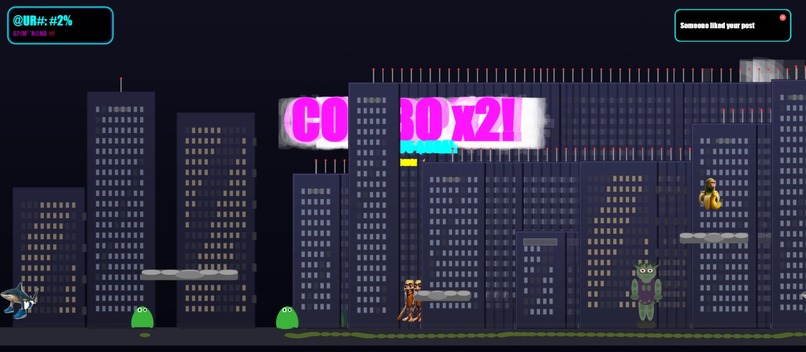
glitch 2
-
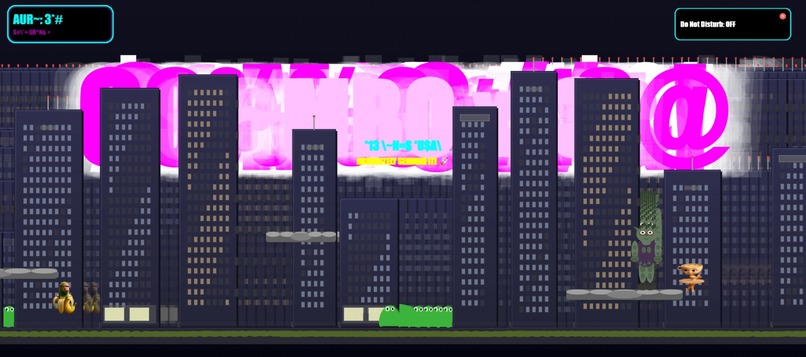
glitch 3
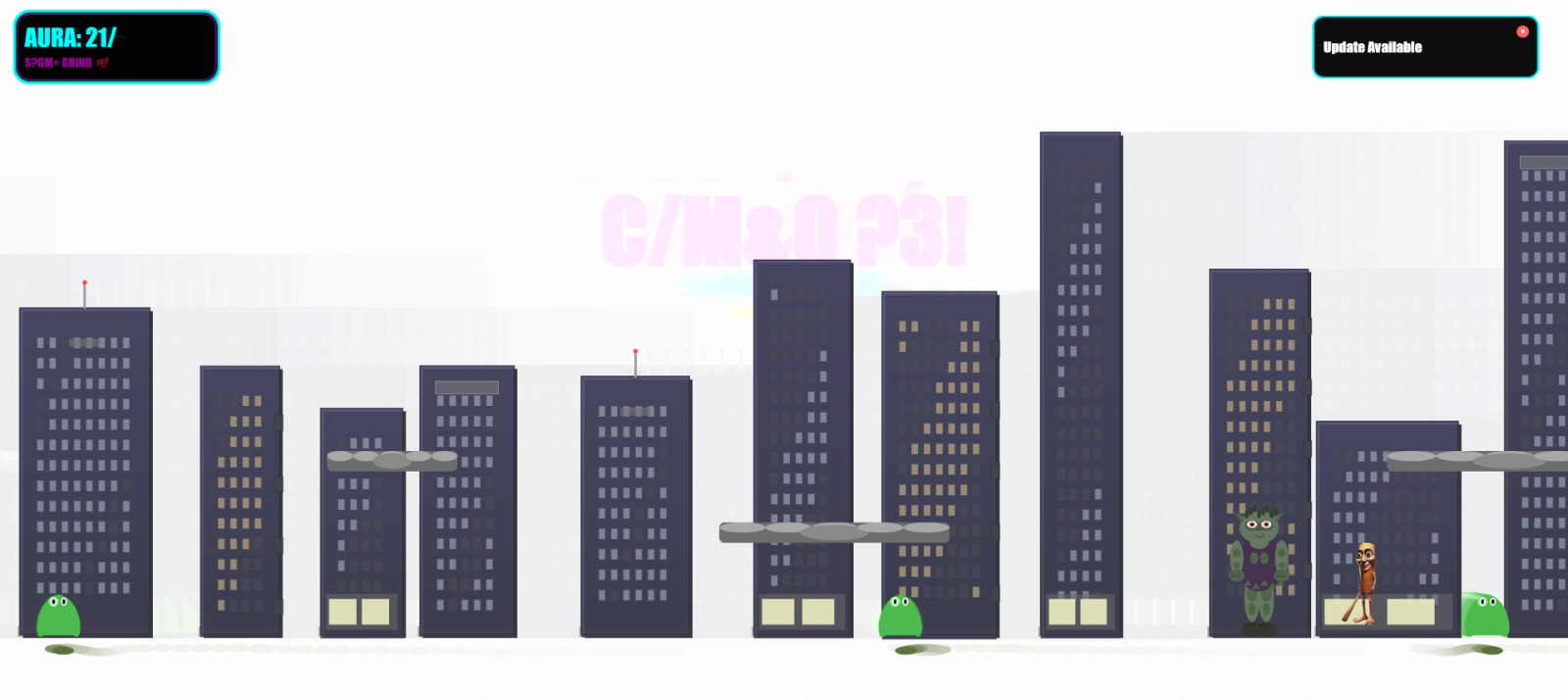
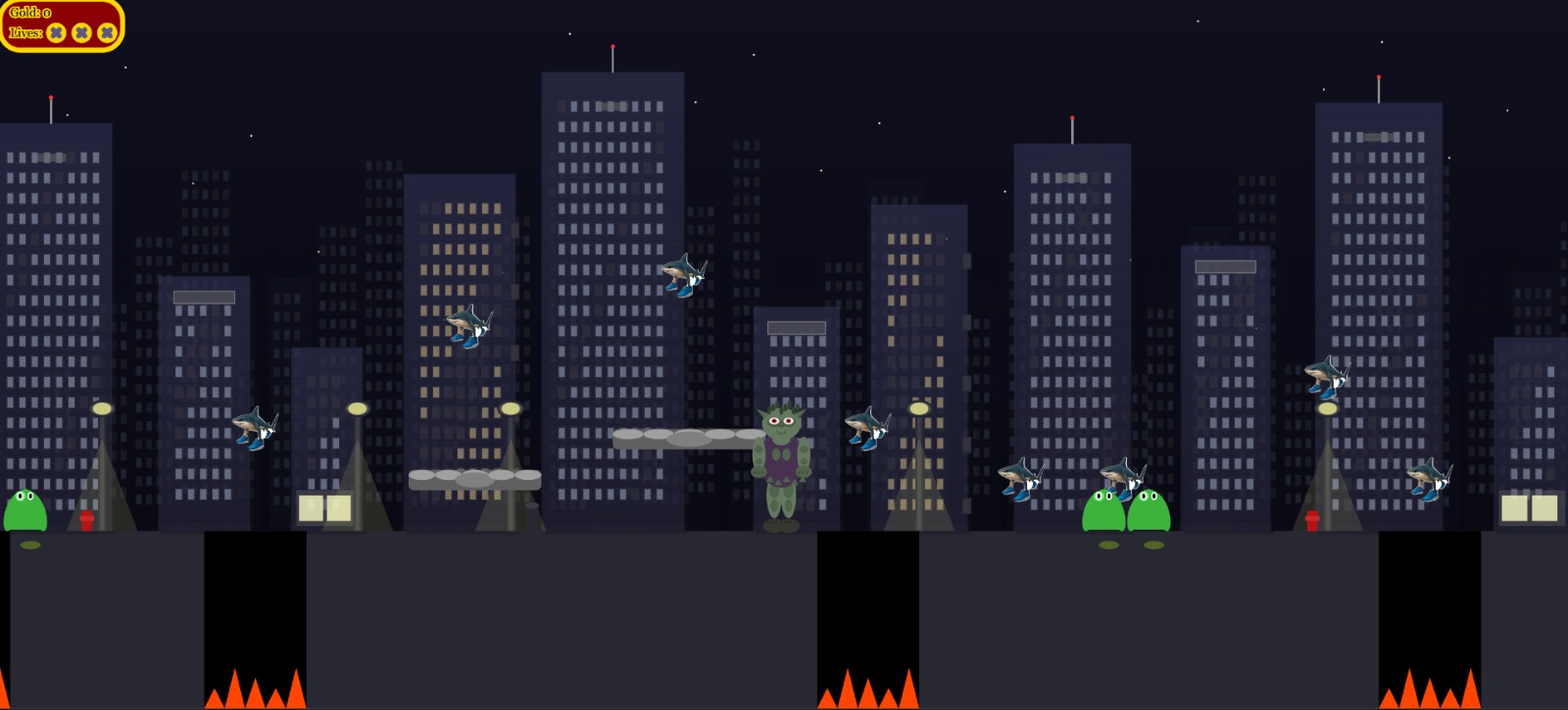
Inspiration
The inspiration for this game came from a creative block we faced during the competition. We felt like all our ideas were safe and predictable, and not truly “thinking outside the box.” During one of our brainstorming sessions, we joked, “This is why we should stay away from brainrot.” That comment made us realise something: the very thing that was distracting us and ruining our focus could actually become our source of creativity.
Brainrot content is popular because it’s intentionally dumb, chaotic, and repetitive. When you consume enough of it, it becomes funny in a strange way, whether it’s to entertain yourself, annoy your friends, or just pass the time. We wanted to create a game for people whose humour is shaped by this kind of internet culture.
The game is designed to mimic how the brain works when doomscrolling late at night: shorter attention span, constant distractions, reduced focus on detail, and a growing apathy toward content quality. By interrupting normal gameplay with sudden, chaotic “After Hours” moments, the game mirrors how random videos and notifications constantly break your flow.
Our goal is for players to slowly realise that the game is reflecting their own behaviour; that the way it disrupts, distracts, and overwhelms them is the same way the internet affects their minds when they scroll after hours.
What it does
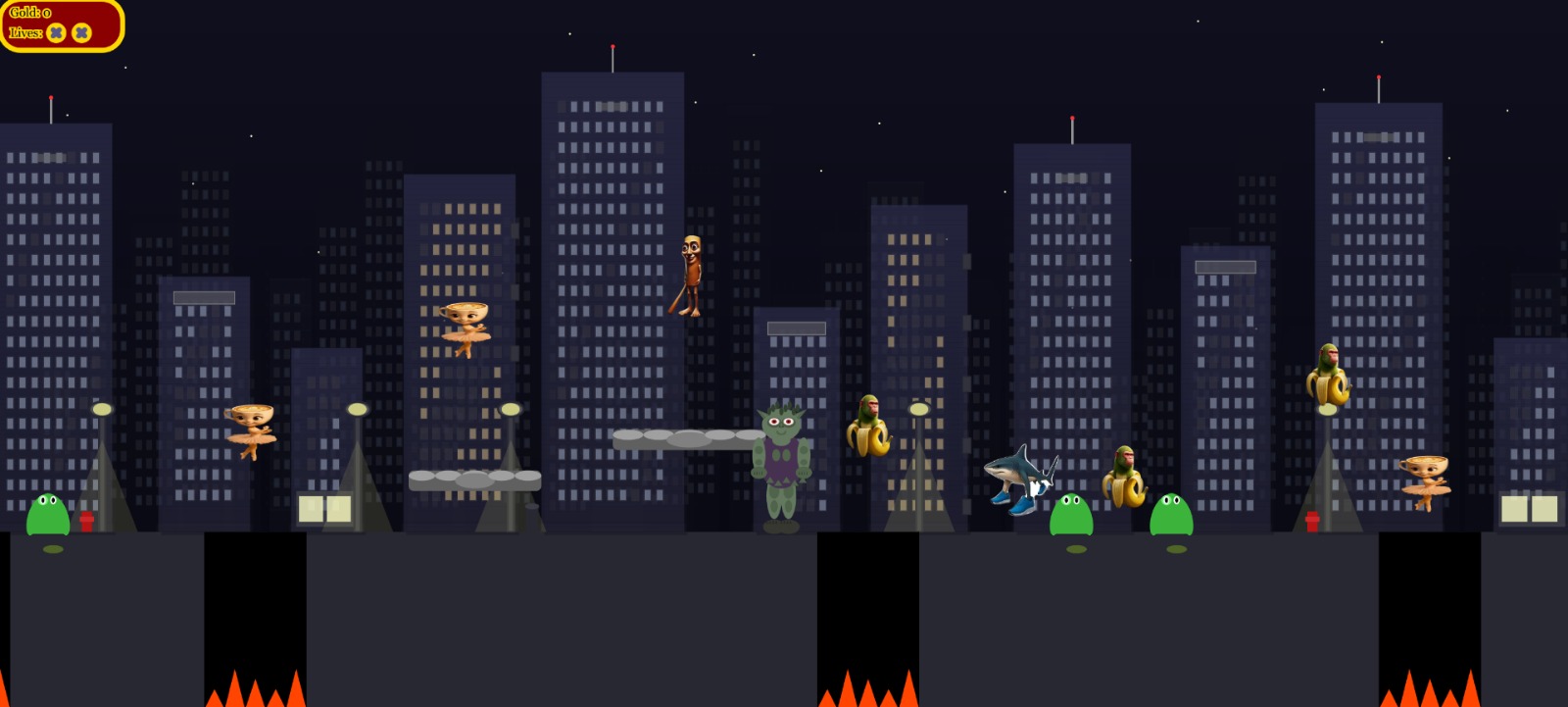
At its core, the game is a simple 2D platformer. The player controls a character who must move through levels, avoid obstacles and enemies, and collect items to progress. On the surface, it plays like a normal game, but the twist is in what you collect and how the game reacts to it.
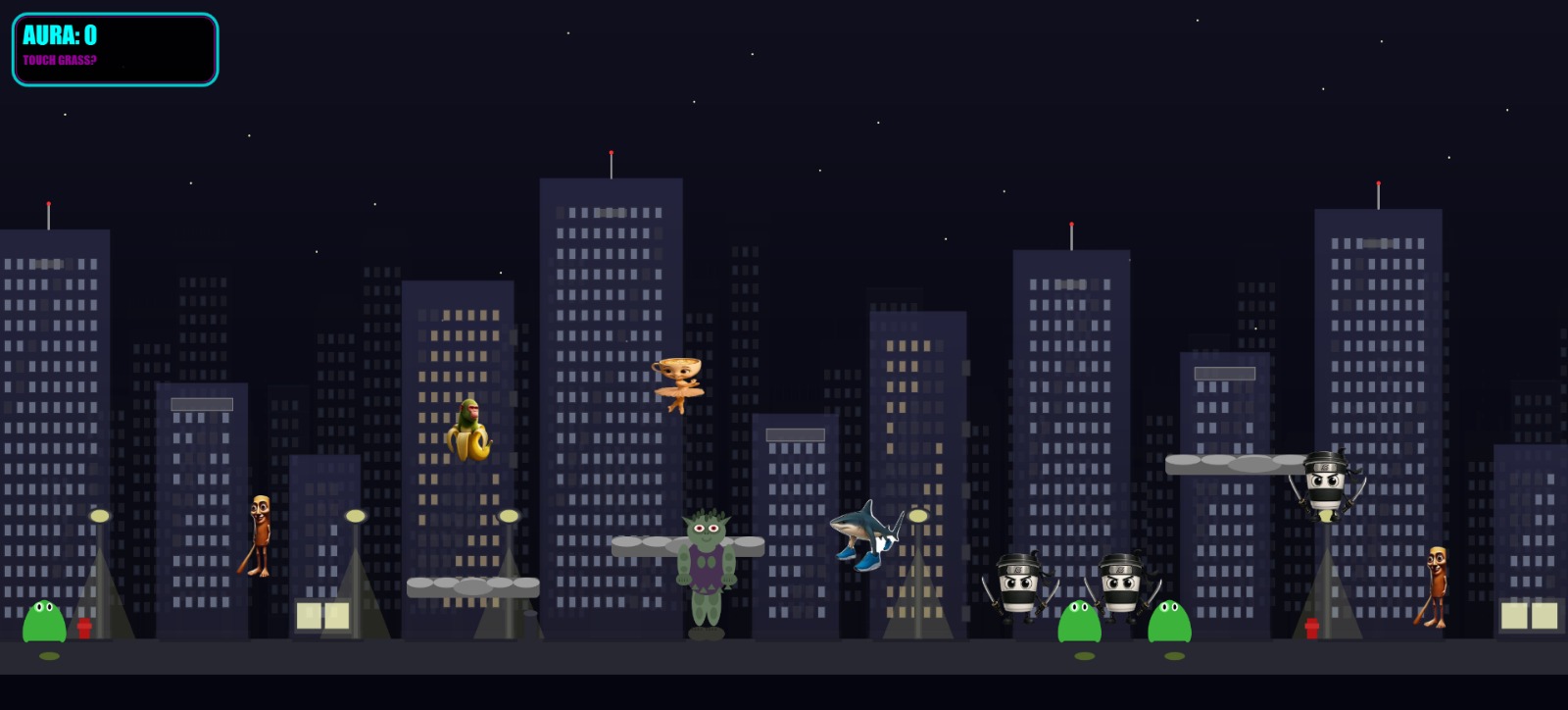
- Instead of regular gems or coins, the collectibles are Italian brainrot characters such as Crocodillo Bombardillo and Bananani Chimpanzini. Each character represents a piece of chaotic internet humour, and collecting them feels like picking up fragments of memes while scrolling online
- The scoring system is called “Aura.” The more brainrot characters you collect, the more Aura you gain.
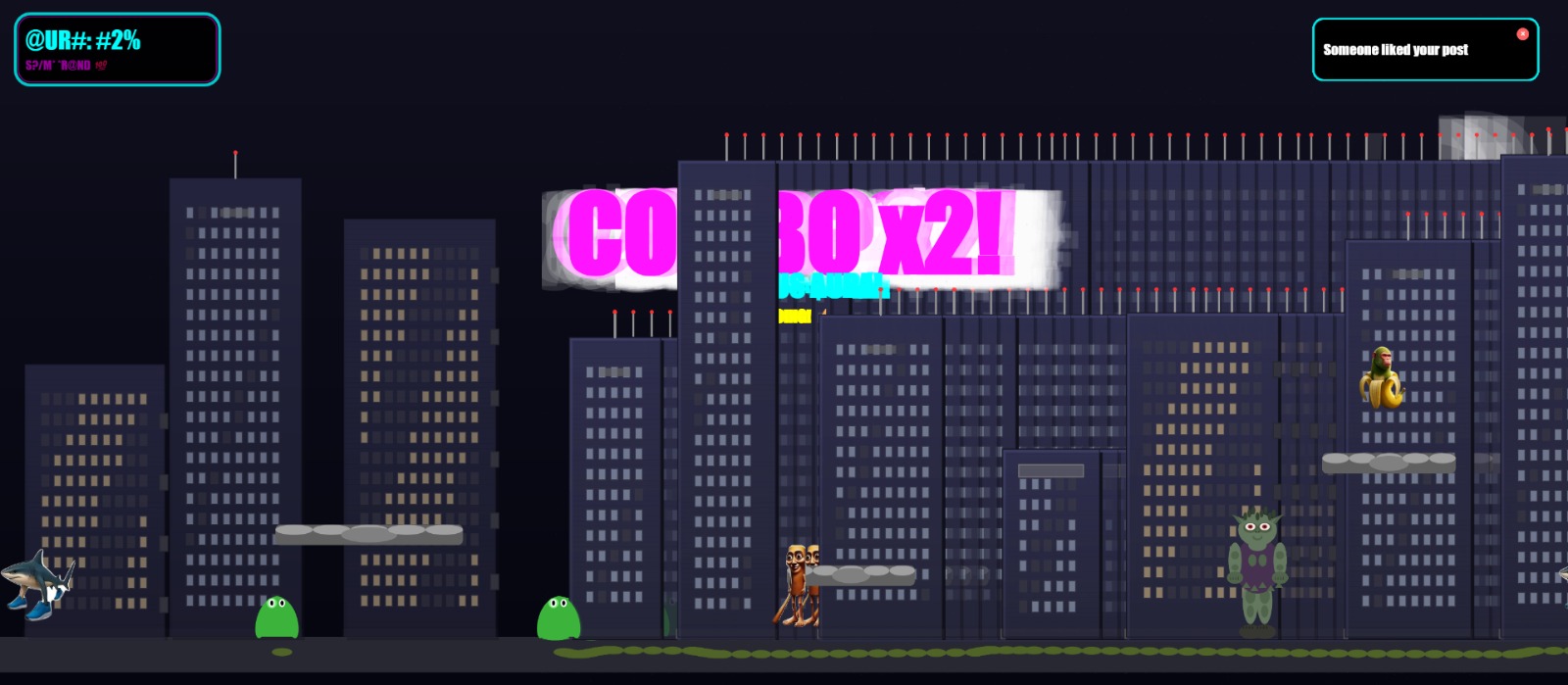
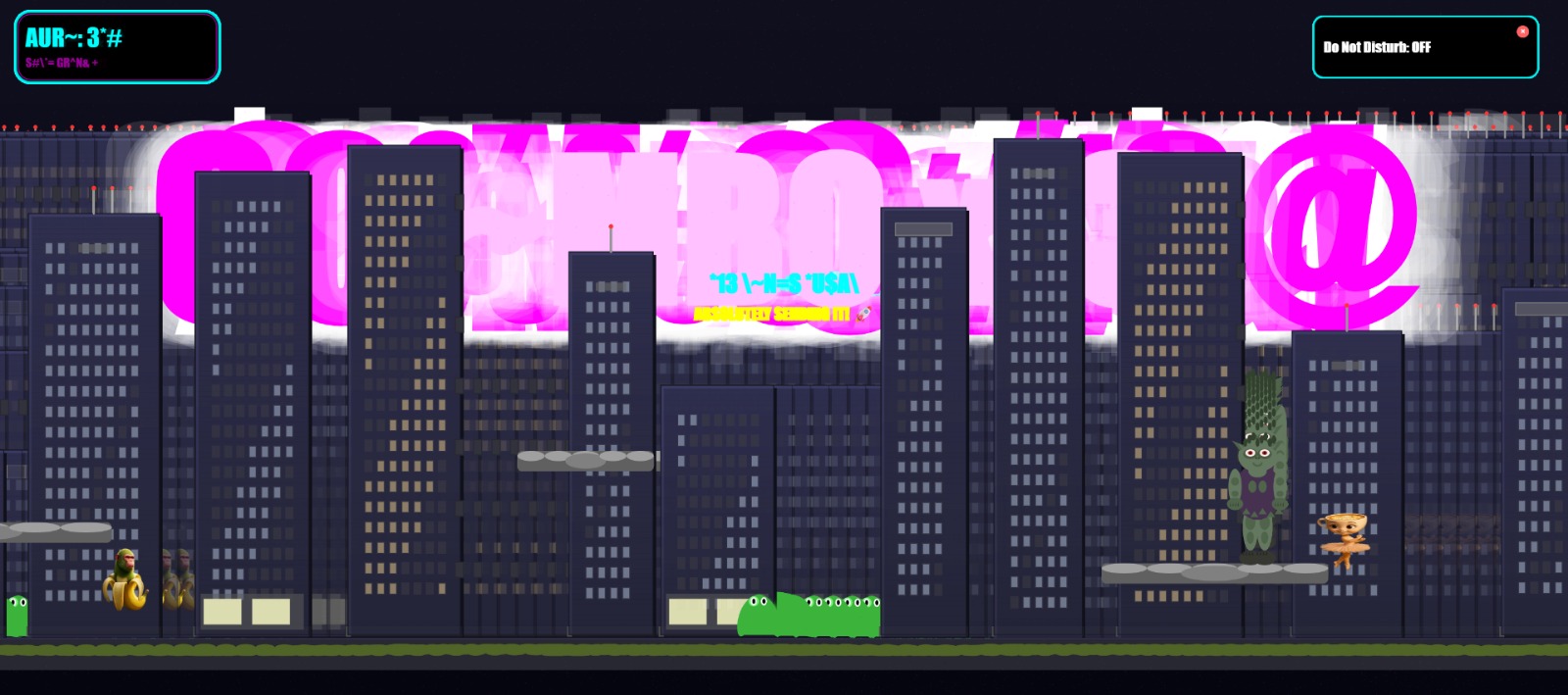
- As Aura increases, the game world subtly changes: the visuals become glitchier, the atmosphere feels more distorted, and short “After Hours events” begin to interrupt gameplay. These interruptions mimic how attention is constantly broken while doomscrolling late at night.
- At certain Aura thresholds, the game triggers short disruptions such as screen flickers, distorted text, audio glitches, or brief physics hiccups. These are designed to feel like sudden, pointless but attention-grabbing internet interruptions, while still allowing the game to remain playable.
- The main signature moment happens when the player’s Aura reaches exactly 67. At that moment, the entire game freezes, and a full-screen “67 Brainrot Break” appears. This references the popular, meaningless “67” meme and represents a complete break in focus, just like when a random viral clip suddenly hijacks your attention while scrolling. After a few seconds, the overlay disappears and the game resumes as if nothing happened, reinforcing the feeling that your flow was interrupted for no logical reason.
How we built it
To build the game, we first researched current popular brainrot and meme culture to understand what type of content people recognise and find funny, such as Italian brainrot characters and the “67” meme. For development, we used Visual Studio Code as our main coding environment and programmed the game in JavaScript. The game was designed and rendered using the p5.js library, which allowed us to create the 2D platformer, animations, and visual effects. Our development process was structured in layers:
- We started by designing the base environment and user interface, choosing a night-city aesthetic to reflect the “After Hours” theme.
- Next, we created the player character and basic platformer mechanics such as movement, obstacles, and collision.
- We then designed and added the Italian brainrot characters as collectibles, replacing traditional gems or coins.
- After that, we implemented the Aura point system, which tracks progression and corruption.
- Finally, we built the “After Hours” effects, including glitch visuals, short interruption events, and the special 67 Brainrot Break that pauses the game and displays the meme when the Aura reaches 67. This step-by-step approach allowed us to start with a normal, playable game and gradually transform it into a new experience
Challenges we ran into
The biggest challenge we faced was working with p5.js. We often had a clear visual and gameplay idea in our heads, but translating that exactly into code was difficult. The output would not always match what we imagined, so we had to constantly tweak values, adjust positions, and manually hard-code many elements such as character placement, UI, and visual effects. Because p5.js requires a lot of things to be positioned and animated through code rather than visual editors, even small changes took time and careful testing. This made the process slower, but it also helped us understand how the game systems, visuals, and interactions were built from the ground up.
Accomplishments that we're proud of
One accomplishment we are proud of is successfully turning an abstract internet concept like “brainrot” into a fully playable and coherent game mechanic. Instead of using memes only as decoration, we integrated them into the core systems of the game through the Aura progression, After Hours interruptions, and the 67 Brainrot Break. We are especially proud that the game starts as a normal platformer and gradually transforms into a distorted, attention-breaking experience, which clearly reflects our original idea of simulating late-night doomscrolling.
What we learned
Through this project, we learnt how to translate a creative concept into an actual playable system. We realised that a strong idea only becomes meaningful when it is supported by clear mechanics, such as turning “brainrot” into the Aura system and After Hours events instead of just visual jokes. We also learnt the importance of iteration and problem-solving when working with tools like p5.js. Since many elements had to be hard-coded, we had to test, adjust, and refine our game repeatedly until the gameplay and visual effects felt right. Finally, we learnt how to work as a team under creative pressure, taking a chaotic theme and shaping it into a structured, presentable game that communicates a message about attention, distraction, and internet culture.
What's next for AFTER HOURS: Brainrot Break
If we had more time to continue developing this project, we would expand both the gameplay and the After Hours system. This could include adding more levels with increasing difficulty, more varieties of brainrot characters, and additional After Hours events that trigger at different Aura thresholds. We would also like to polish the narrative layer, giving more personality to the After Hours entities and adding small story hints that suggest the player is being “watched” by the internet itself, making the experience even more immersive and memorable.

Log in or sign up for Devpost to join the conversation.