-
-
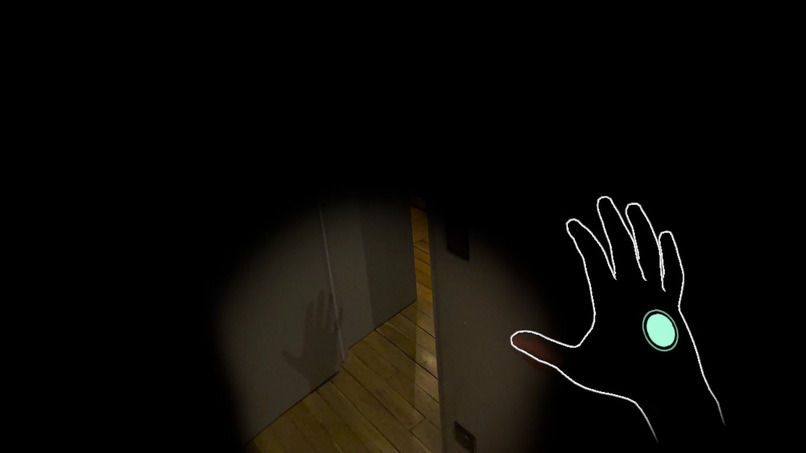
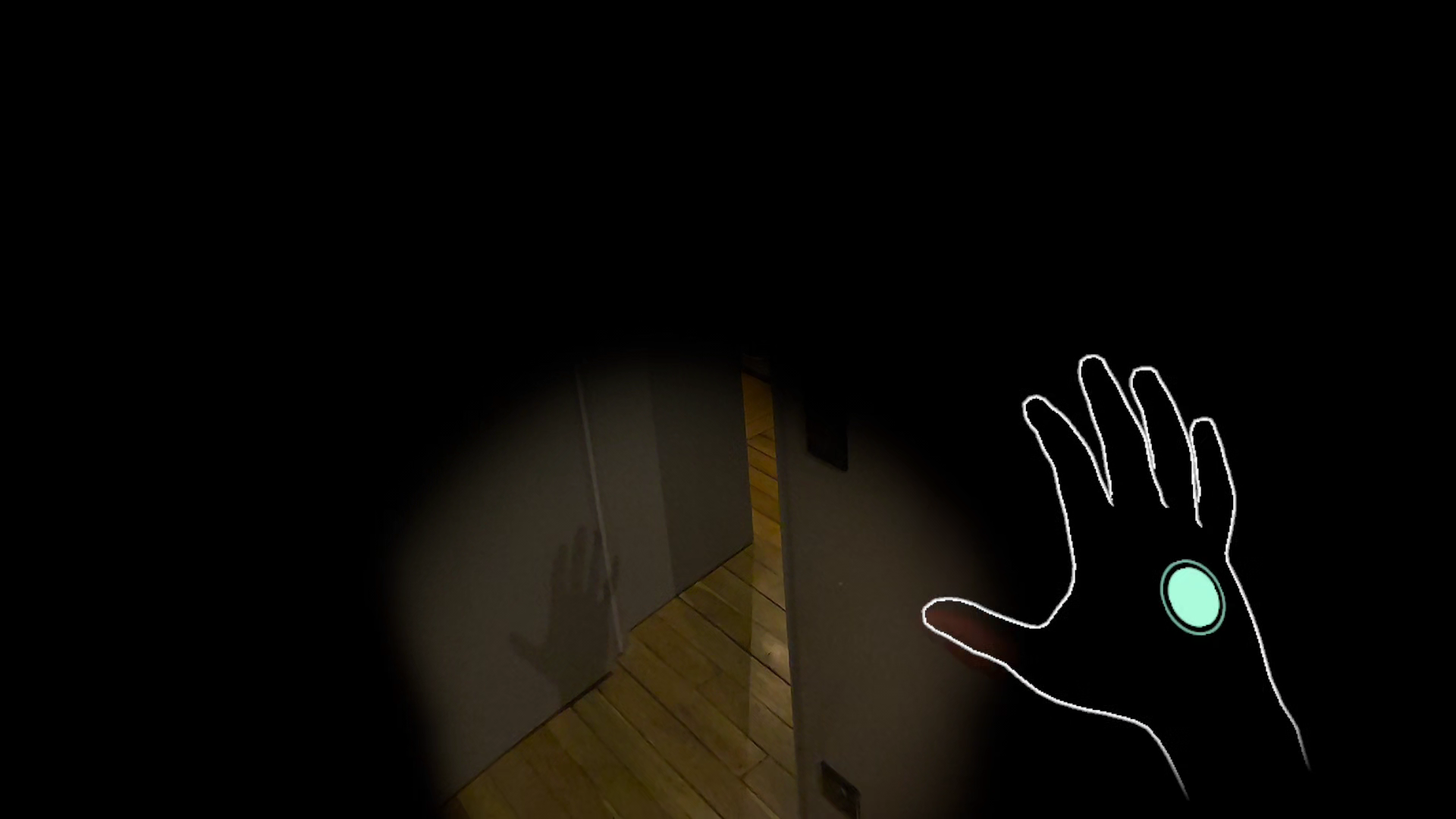
Your flashlight lights up the wall in front of you. Captured on Meta Quest.
-
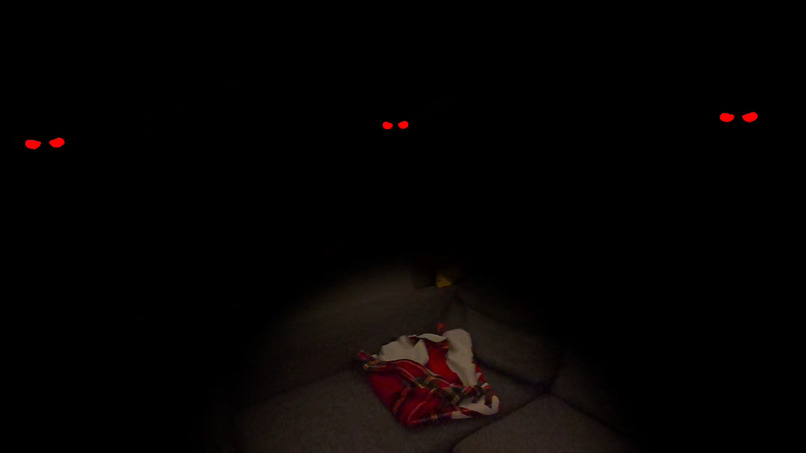
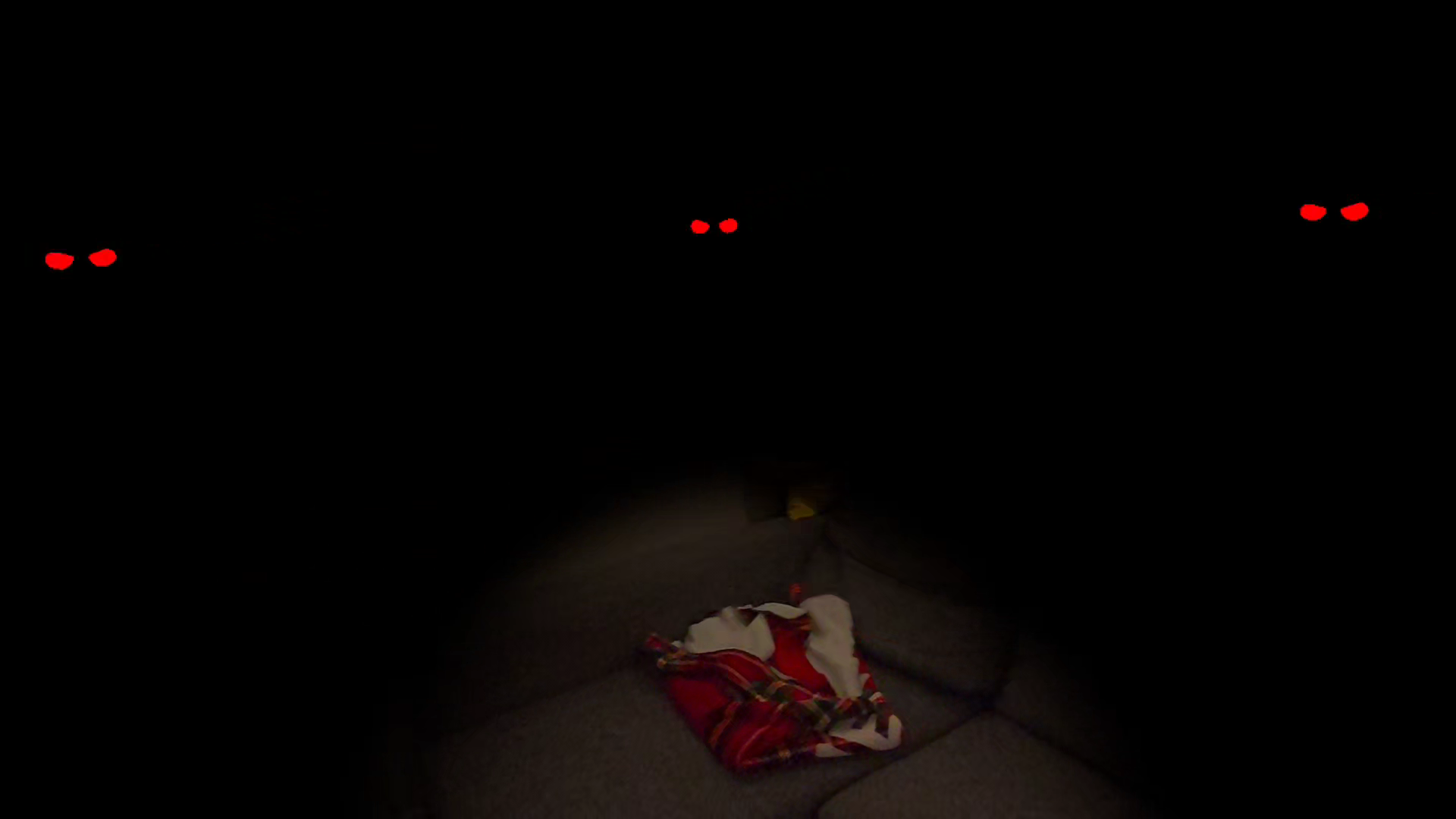
Threats waiting beyond the light. Captured on Meta Quest.
-
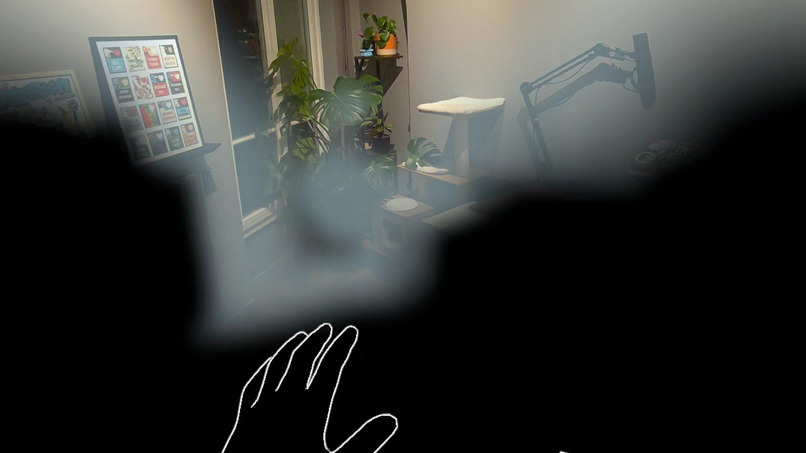
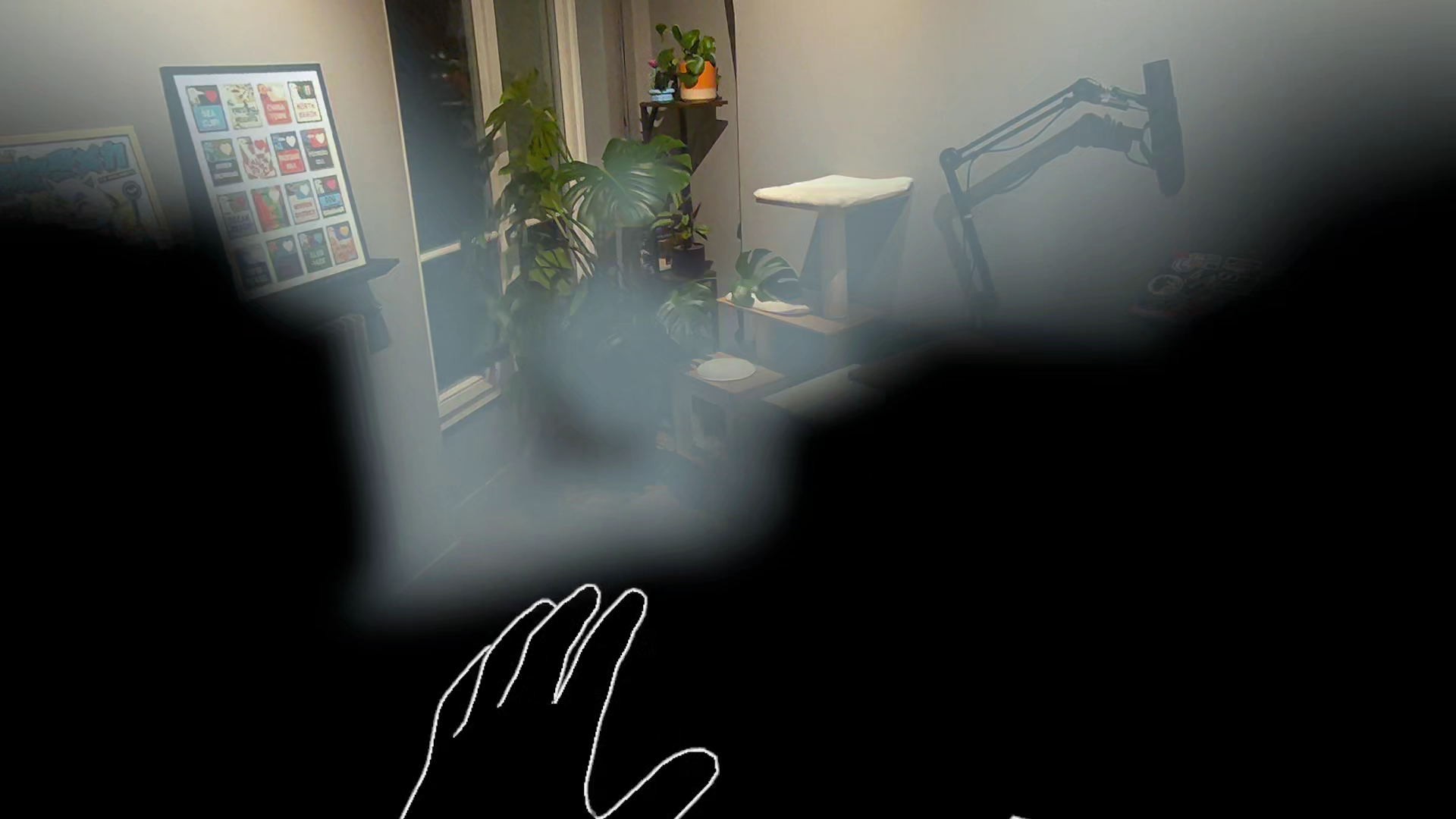
The real room transitions into darkness. Captured on Meta Quest.
-
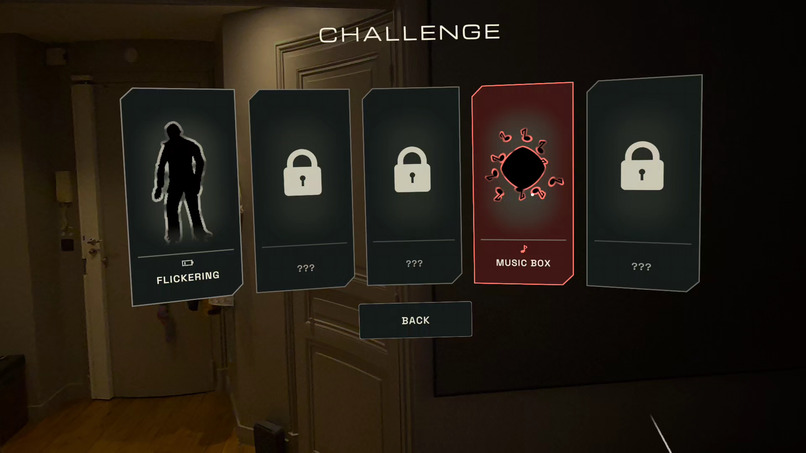
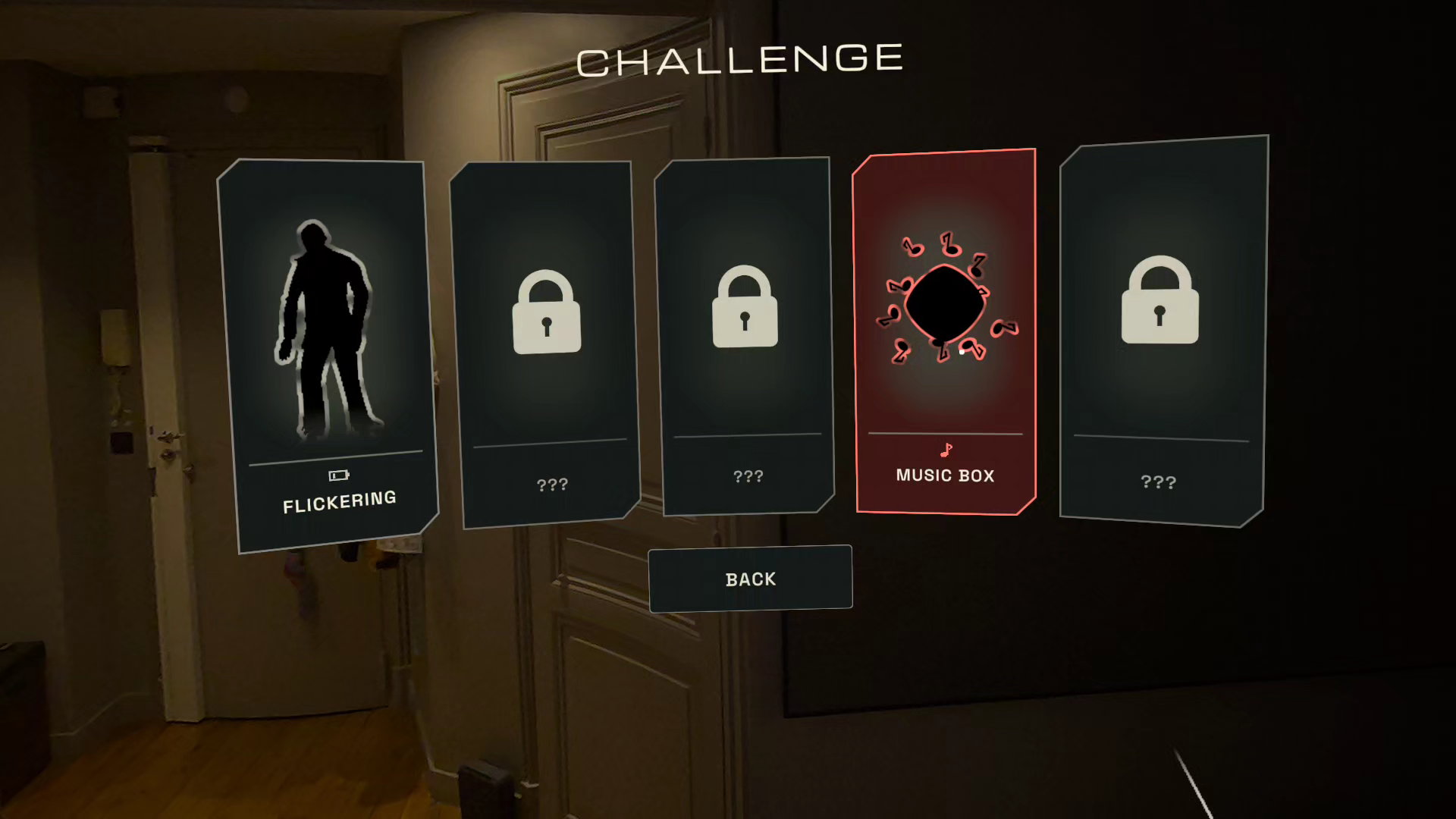
Hand-tracked Challenge selection, including Music Box. Captured on Meta Quest.
-
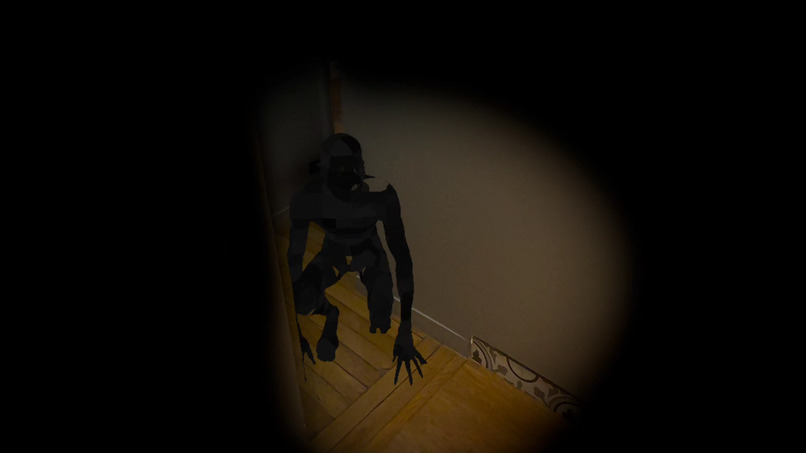
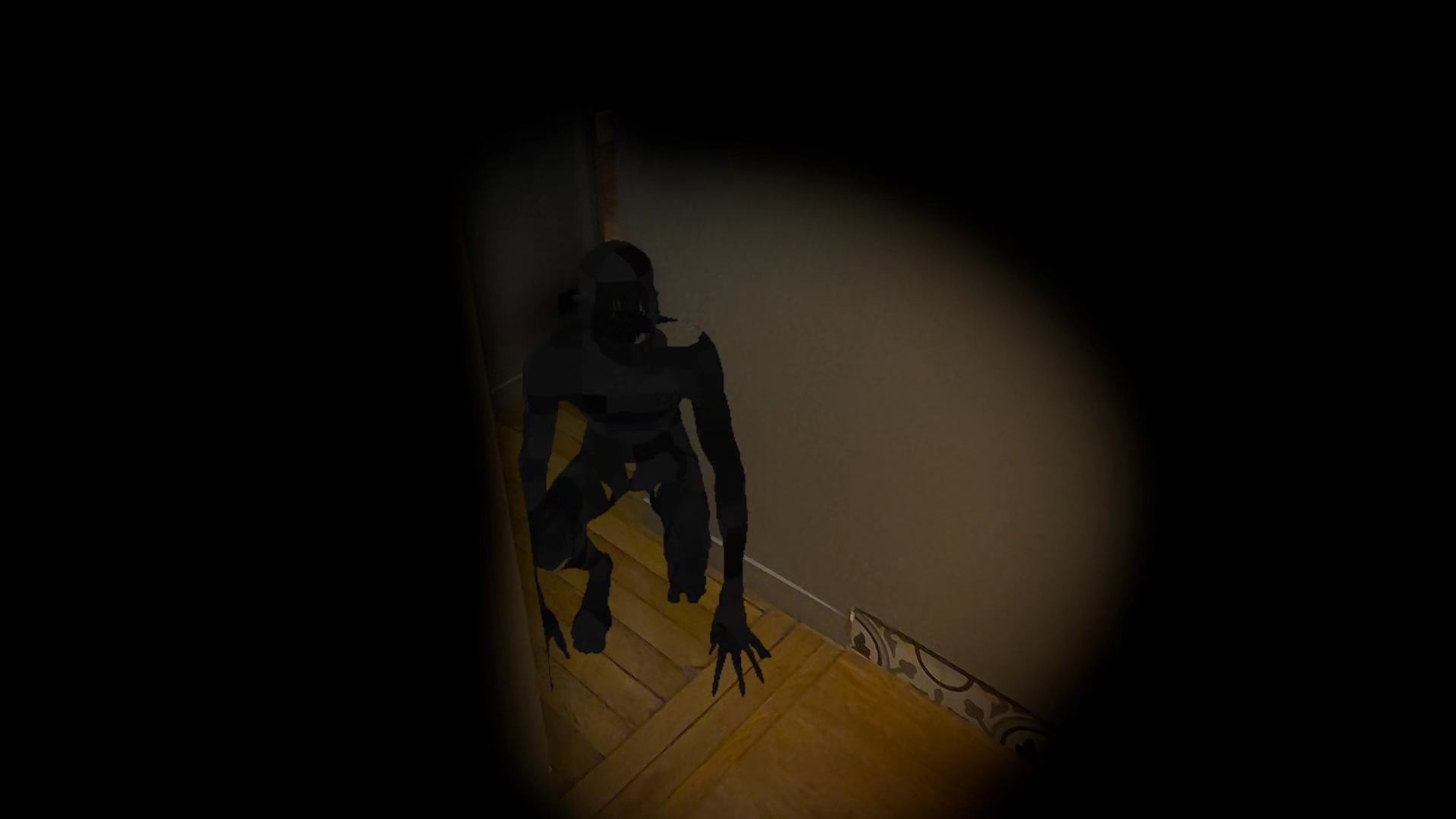
A crouching enemy revealed by the torch. Captured on Meta Quest.
Inspiration
A hallway you know by heart feels different when the lights go out. I wanted to explore that feeling on Quest and see how far I could take survival horror in a room the player already knows.
Real-time room reconstruction had felt out of reach for me as a solo developer, but working with coding agents made it practical to experiment. The moment it clicked was when I opened my hand and used it as a flashlight. The mesh of my room was still rough, but as I moved my hand, the beam caught the edge of the furniture and fell across the wall behind it. That was when I felt there was a game worth building around it.
Hand tracking is a big part of why I like making games for Quest. You’re playing as just you, in your own home, and the only light you have is the one you aim with your hand. That makes the choice to look down that hallway feel a little more personal.
What it does
AfterCorp is a mixed-reality survival horror game that turns your home into a paranormal investigation. Your operator gives you a simple assignment. Close the portals and put an end to the haunting. Open your hand to light your way, and keep an eye out for creatures lurking in the shadows. Surely it’s just a routine inspection?
The story follows that assignment across four chapters. You can also unlock five Challenges. Each takes something you’ve learned to do during an inspection and changes the rules. In Flickering, your flashlight starts to fail. Making a fist recharges it, but leaves you in the dark. In Music Box, you still have portals to find, only now you have to keep winding a music box as you search. Something gets closer when the music stops.
In Custom, you build your own inspection. Choose how many portals to close, which creatures can appear, and how difficult the run will be. There’s also a pacifist mode if you just want to play with the flashlight in your own room.
How it was built
I built AfterCorp in C++20 using Vulkan and native OpenXR. As you move, the headset measures the depth of nearby surfaces. The game uses those measurements to build a 3D mesh of your room and keeps it as you look around. The mesh gives the flashlight beam a surface to fall on. Live depth fills in gaps, and passthrough lets you see the real wall or piece of furniture where the light lands.
For the creatures, I use the floor you’ve actually walked across to work out where they can move. Their footsteps come from wherever they are in the room. I use Valve’s Steam Audio SDK for binaural 3D audio rendering, so if you hear a creature behind you and turn toward it, you can follow its footsteps with your flashlight.
All of this runs on the headset. You can start playing without scanning and saving your room in Space Setup beforehand.
Challenges and lessons
The flashlight was where I felt the tradeoff between mesh quality and performance most clearly. A more detailed reconstruction gave the beam a better surface to fall on, but rebuilding it as you move costs time on every update. Distance made that harder. Across a small room, the beam might catch a wall the headset has seen from several angles. Point it across a warehouse and there might only be a few depth readings, or none at all. A lot of the work went into making the flashlight feel like the same flashlight in both cases.
Room size was just as much a gameplay problem. An encounter that gives you a fair chance to move in a warehouse can leave you with nowhere to go in a small bedroom. I spent a lot of time tuning where portals and creatures appear, how far you need to walk, and how much room you have to react. I wanted a player with a small space to get the same tension out of an inspection as someone with a whole floor to explore.
The performance budget on Quest was tight. Reconstructing the room and rendering the flashlight already took a good share of each frame. I had to leave enough time for enemies to move, their footsteps to sound like they came from the right place, and the camera effects to distort the room without breaking the frame rate.
Release
AfterCorp - Routine Inspection launched on November 5, 2026, and is available now on Meta Quest 3 and 3S. The competition build is version 2.2.2. You play entirely with hand tracking and need enough clear space to walk around safely.
I’d like to bring AfterCorp to Meta VR Glasses as well. I still need to test how the flashlight feels with a different field of view and how reliably the glasses track your hands in play.
Built With
- c++
- openxr
- vulkan
