-
-
Thumbnail for Ku Mukeka Project
-
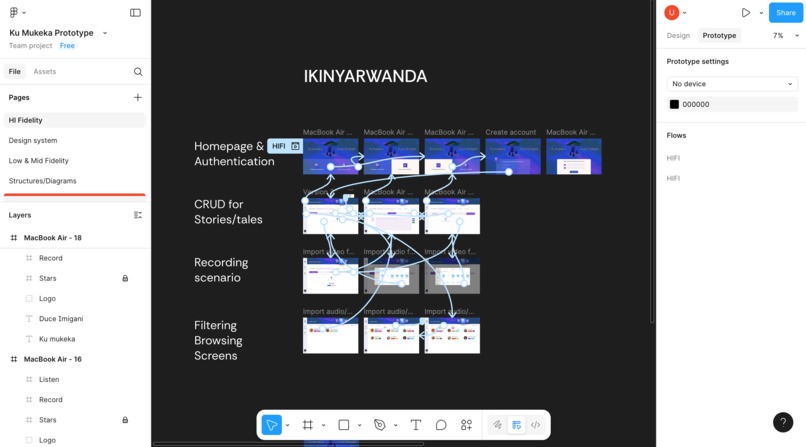
Figma prototype for Ku Mukeka digital platform
-
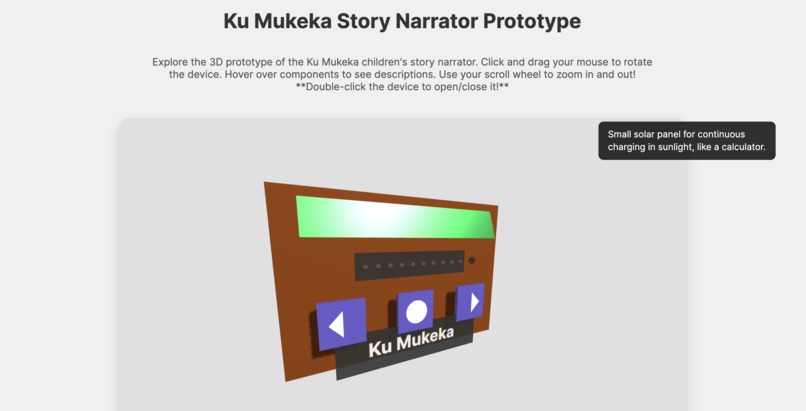
3D MVP for Kida Narration Device


Inspiration
The "Ku Mukeka Initiative" is deeply rooted in a cherished childhood memory. I was inspired by my mom and aunt, who used to narrate old African tales while I sat on a mat, and they fed me. As a picky and poor eater, the distinct memory I have is that I would unknowingly finish my dinner on candlelight (because power wasn't stable back then) as I was so engrossed in listening to their stories. This experience instilled in me a love for reading and writing, which later led me to start personal blogs(private ones). Realizing the growing disconnect of today's African youth from our own rich literature, I reflected on what made me love reading so much. This reflection led to the concept of "Ku Mukeka," which fittingly means "on a mat," symbolizing the traditional setting of storytelling and the warmth of shared heritage I grew up with.
What it does
The aim is to fulfill a critical need in the lives of African children, echoing the sentiment of Carr.C. (1957) who stated, "Folk tales have a special place in children's lives and fortunate are the children who have a wealth of collections from which to read." I want to extend this by striving to ensure that all children are "lucky... with the same wealthy collections of our ancestral folktales" I believe that the absence of such rich literary exposure for many African families, particularly those with low incomes, may explain the scarcity of budding authors and literature enthusiasts from our continent.
My solution primarily focuses on those in underserved communities or on the streets who lack access to traditional digital tools or books. Ku Mukeka will ensure they can access a world of tales that can transport them to their dreams or awaken hidden talents in storytelling and oral literature.
A Digital Storytelling Platform: An online library where African oral traditions (folktales, proverbs, riddles, songs) can be contributed, archived, and consumed in audio, video, and text formats, connecting a broader audience to this heritage. A Portable Narrator Device: A low-power, solar-powered physical device preloaded with curated stories, designed for offline access in areas with limited electricity and connectivity, bringing stories directly to children who need them most. Non-Smartphone Access (USSD/GSM): A feature enabling users with basic mobile phones to listen to stories via simple mobile codes, ensuring inclusivity regardless of smartphone ownership or internet access. An IoT Baby-Soothing Feature: An addition to the device that will detect a baby's cry and automatically play traditional lullabies, offering relevant comfort using edge computing.
How I built it
I followed a human-centered and agile approach to address the unique challenges of resource-constrained environments in Africa. My methodology blends Agile (Scrum and Kanban) for iterative development and progress tracking, with Design Thinking principles to ensure the solutions are deeply empathetic to user needs and their constraints. This is what I did:
Empathize and Define: Centering on children in underserved communities, non-smartphone users, and experts to define the core problem of cultural loss and digital disconnect. For this phase, I did extensive research into Rwandan oral traditions by going to institutions that hold oral literature and conducting online research to understand the prevalent infrastructural realities across Africa.
Ideation and Design Prototyping: For the web application, I used Figma to create a fully clickable prototype for the Progressive Web App (PWA) I will implement later. This allowed for rapid ideation, wireframing, and interactive high-fidelity designs, enabling me to visualize the user journey and get quick feedback cycles for validating my design choices early on.
For the physical narrator device: I built an interactive 3D Minimum Viable Product (MVP) using Three.js. This digital prototype just provides a tangible representation of the device's external design, internal hardware components, with user interactions (rotation, zoom, hover descriptions, and the double-click "open" feature to view hardware component layout. This is deployed on GitHub pages.
Challenges I ran into
Designing for Extreme Resource Constraints: My foremost challenge has been to consistently balance the need for the cheapest, most functional, and realistic technologies within the design phase. This involved continuously optimizing the architecture for power efficiency (e.g., solar charging, battery life prediction), ensuring seamless offline content management, and conceptualizing a small-data AI model for edge computing (baby crying detection) on a low-power microcontroller. Each decision required careful trade-offs to ensure the solution's viability without relying on stable power grids or constant internet access.
Anticipating Hardware Implementation Hurdles: As a software engineering student, the future physical assembly and fabrication of the durable narrator device pose a significant, anticipated challenge. This includes identifying and collaborating with other people, paying for/finding the hardware.
Accomplishments that I'm proud of
- Developing a Fully Clickable Web Application Prototype in Kinyarwanda, but also being able to perform A/B testing with 5 users so far, which gave me insights into screens that were user-friendly.
- Conducting interviews in 2 institutions in Rwanda related to cultural and literary preservation. This made me do a lot of informed additions and changes to my prototype.
- Creating and Deploying an Interactive 3D Device MVP on GitHub Pages.
What I learned
I gained significant insights into the fundamental components that make up embedded systems, from the microcontroller to the solar panel integration; everything was refreshing. Beyond technical components, I learned the importance of designing with resource constraints in mind. For every decision, I had to weigh functionality against cost, power consumption, and durability, and make trade-offs. For example, I had to trade real-time records of stories on the device for the baby soothing feature because it was less resource-intensive.
What's next for Ku Mukeka Initiative
First, secure funding to transition from the prototyping phase to full-on testing, launching, and manufacturing.
Second, building and refining the physical device by sourcing components and collaborating with hardware experts to bring the 3D digital prototype to life, but also doing the actual product design and testing to ensure it is ergonomic, durable, and child-friendly.
Third, implementing and launching the progressive web application (PWA) with offline access and GSM protocol that will allow users to download and access stories even without a continuous internet connection, further addressing connectivity constraints.
Last but not least, marketing: My initial marketing efforts will focus on my home country, Rwanda. This will allow for direct engagement with target communities, gather immediate feedback, and build a strong foundation before considering broader expansion across Africa.
Built With
- ai
- css3
- figma
- html5
- javascript


Log in or sign up for Devpost to join the conversation.