-
-
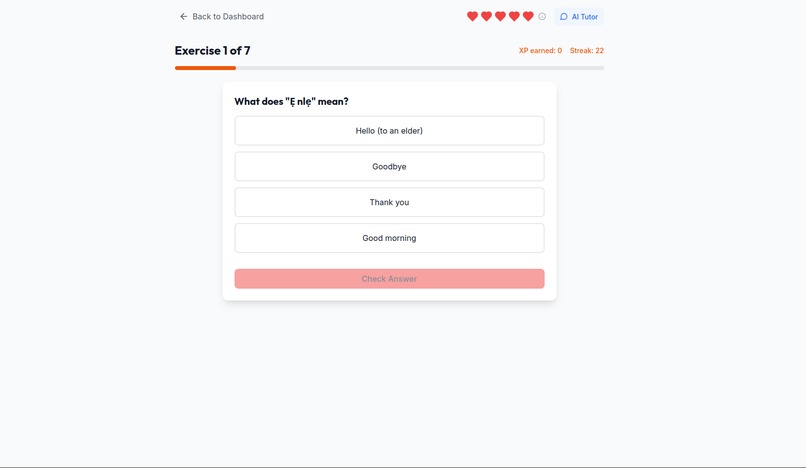
Lesson
-
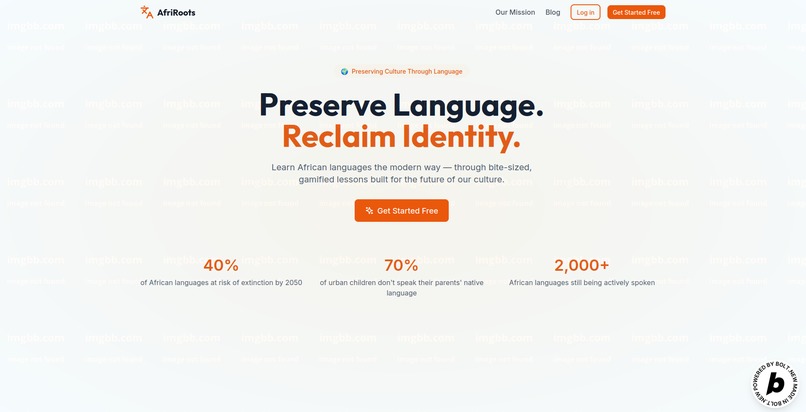
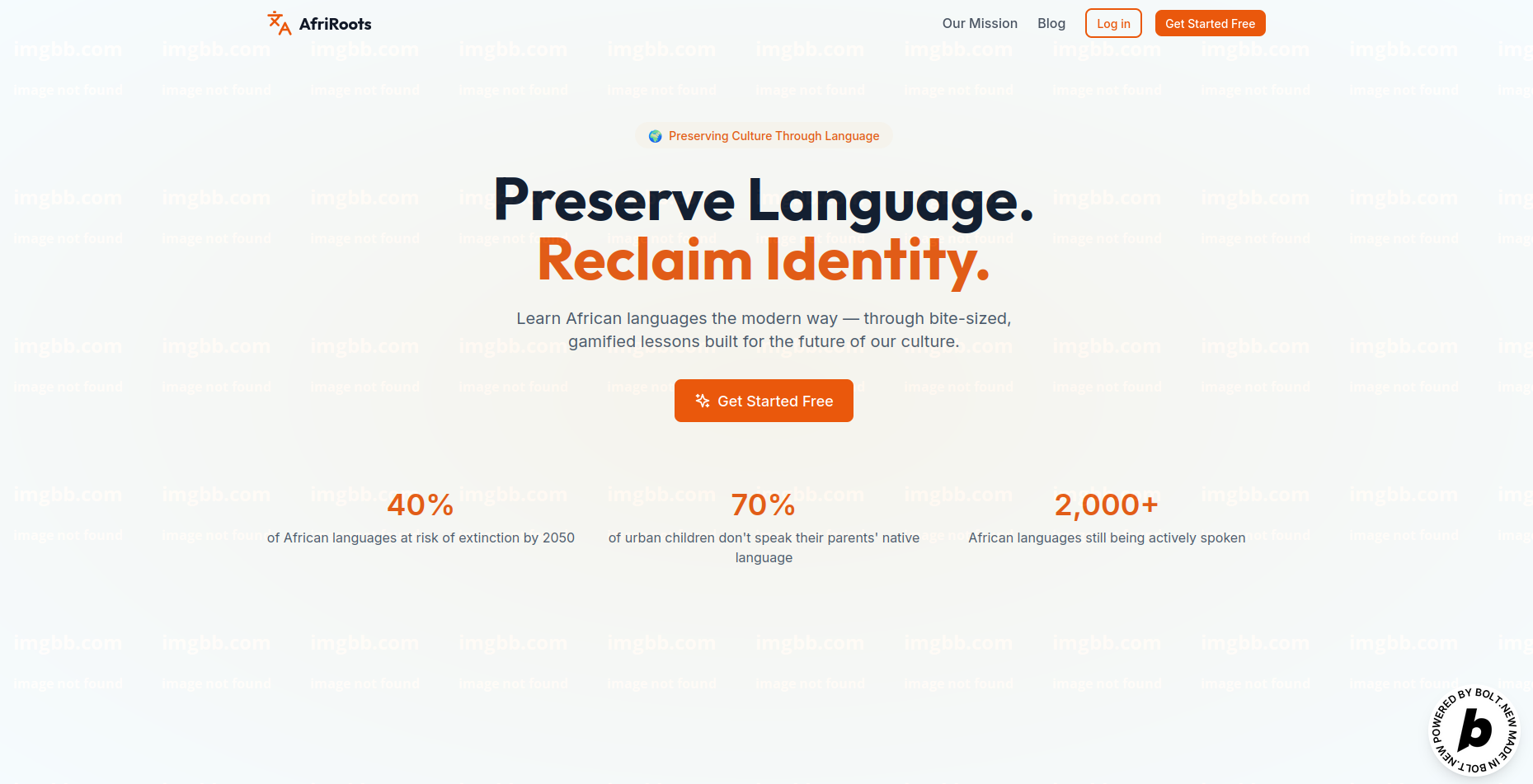
Homepage
-
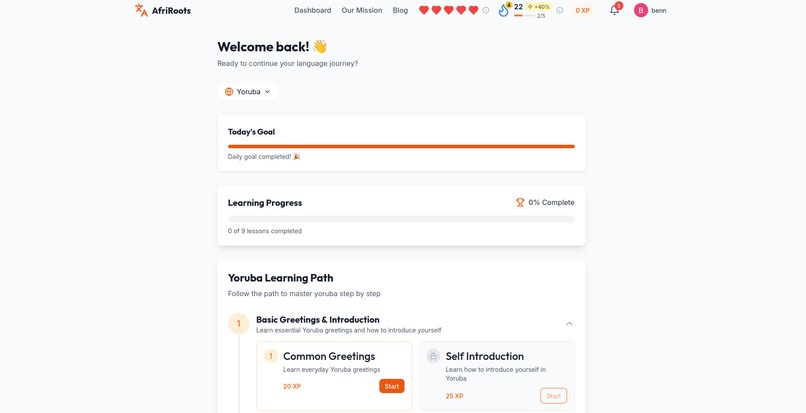
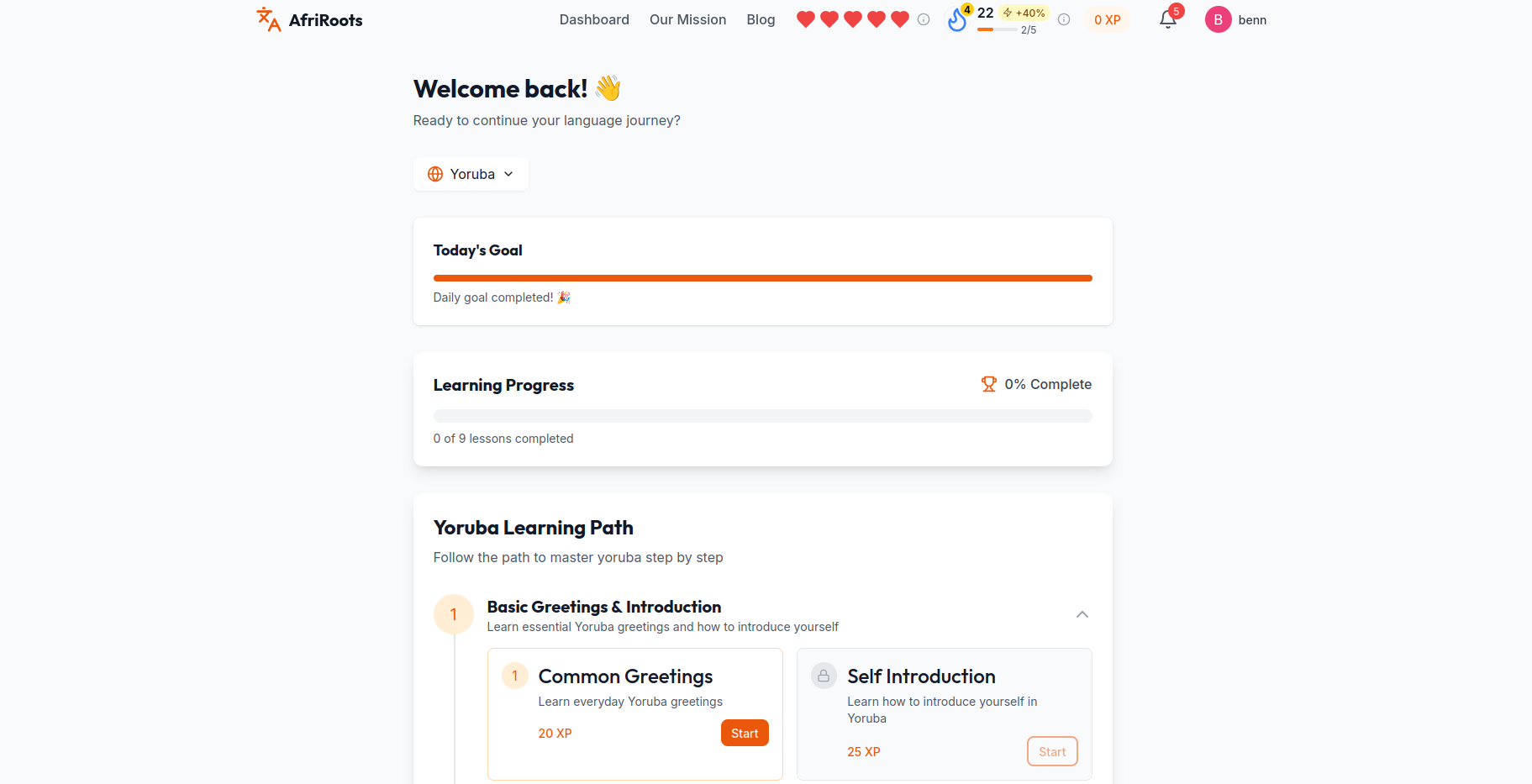
Dashboard
Inspiration
This started from a personal place. When I moved to Nigeria two years ago, I couldn’t speak my language fluently. I understood parts of it because that’s what my parents spoke at home, but the moment I opened my mouth, people could instantly tell I wasn’t from here.
I wanted to learn, but quickly realized there were little to no resources online especially for my dialect. That got me digging deeper. I found out a scary stat: many African languages are going extinct, and almost no one is doing anything serious about it.
I made a Reddit post asking if others faced the same thing, and the response blew up. People from different parts of the world some even willing to pay were all struggling with the same issue. That’s when I knew this was bigger than me.
What it does
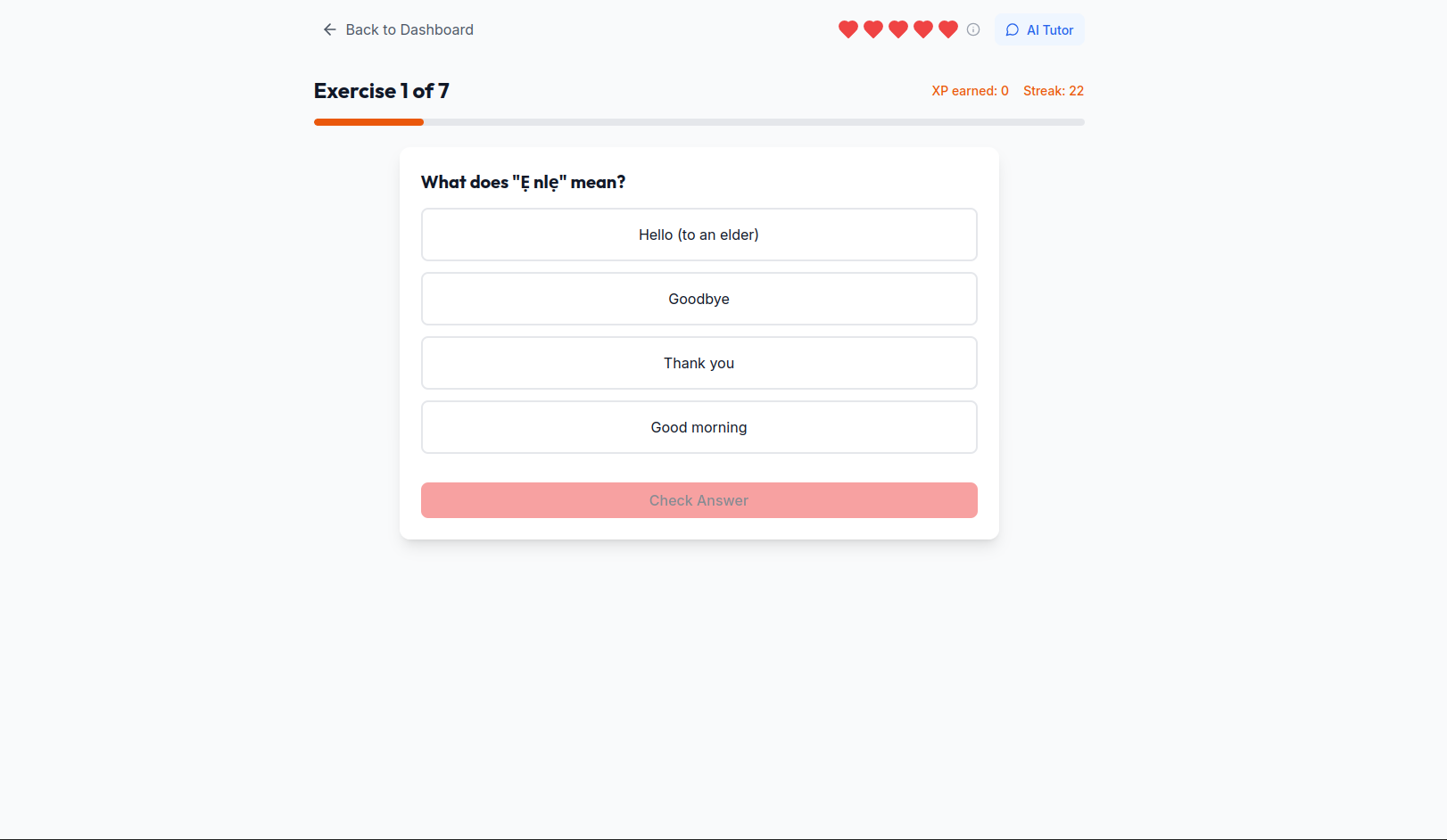
AfriRoots helps people learn African languages in a simple, gamified, and structured way. It's built with units, lessons, and interactive exercises like:
- Multiple choice
- Fill-in-the-blank
- Reorder-the-sentence
- Build-a-sentence
It’s fully text-based for now, and helps users understand grammar, vocabulary, sentence construction, and cultural context.
AI + Language Preservation
One thing we noticed while researching was that most AI systems—like Google Assistant, Siri, Alexa—have almost zero understanding of African languages. They can’t respond in them, can’t translate them properly, and in many cases, don’t even recognize them.
That’s a huge problem. Language is culture, and if AI doesn’t understand our languages, we’re literally erasing ourselves from the future.
So we’re also building a structured African Language API.
As users go through lessons, we collect and organize clean, high-quality language data (with consent). The goal is to make that data available through an API that tools like Google Translate, ChatGPT, voice assistants, or even government websites can plug into so people can interact with tech in their mother tongue.
How we built it
I used bolt.new using ChatGPT, Supabase and Vite.
Bolt made it easy to set up auth, database, API routes, and frontend in minutes. From there, we focused on designing the language curriculum and building different types of exercises.
Challenges we ran into
Bolt is great, but sometimes it makes weird assumptions, and context things quickly. There was one bug where it thought a function had been deleted and recreated it under a different name. Took hours of debugging (and thousands of tokens) to figure out what was wrong.
Another challenge was designing lesson flows that are both useful for learners and clean enough for machines to learn from. Balancing the two was tricky.
Accomplishments we’re proud of
I validated a real need, people are literally asking for this.
We built structured content for African languages and made it interactive, trackable, and machine-readable.
We didn’t just make an app we started a movement around preserving language and making AI more inclusive.
What we learned
- African language data is incredibly scarce online.
- Most apps treat learning as a feature. We treated it like a mission.
- Sometimes, the biggest problem is not technical it’s just that no one has tried solving it properly yet.
What’s next
- Add audio support and pronunciation features.
- Expand to 15+ units per language.
- Release a public African Language API.
- Partner with schools, diaspora groups, and governments.
- Build tools that let people write, speak, and interact in African languages online from chatbots to voice assistants to websites.
This isn’t just an app. It’s a step toward making African culture visible, digital, and preserved for generations.
Built With
- bolt
- postgresql
- react
- supabase
- typescript
- vite

Log in or sign up for Devpost to join the conversation.