Inspiration
AfriPulse.AI was born from a personal experience. Hypertension runs in my family, and I saw how difficult it was for my parents to consistently keep track of their blood pressure readings over time. Readings were often recorded separately, making it harder to see trends and understand whether their condition was improving or getting worse.
That raised a question for me: What if people had an intelligent health companion that could help them understand and track their cardiovascular health, even without internet access?
That question became the foundation of AfriPulse.AI.
What it does
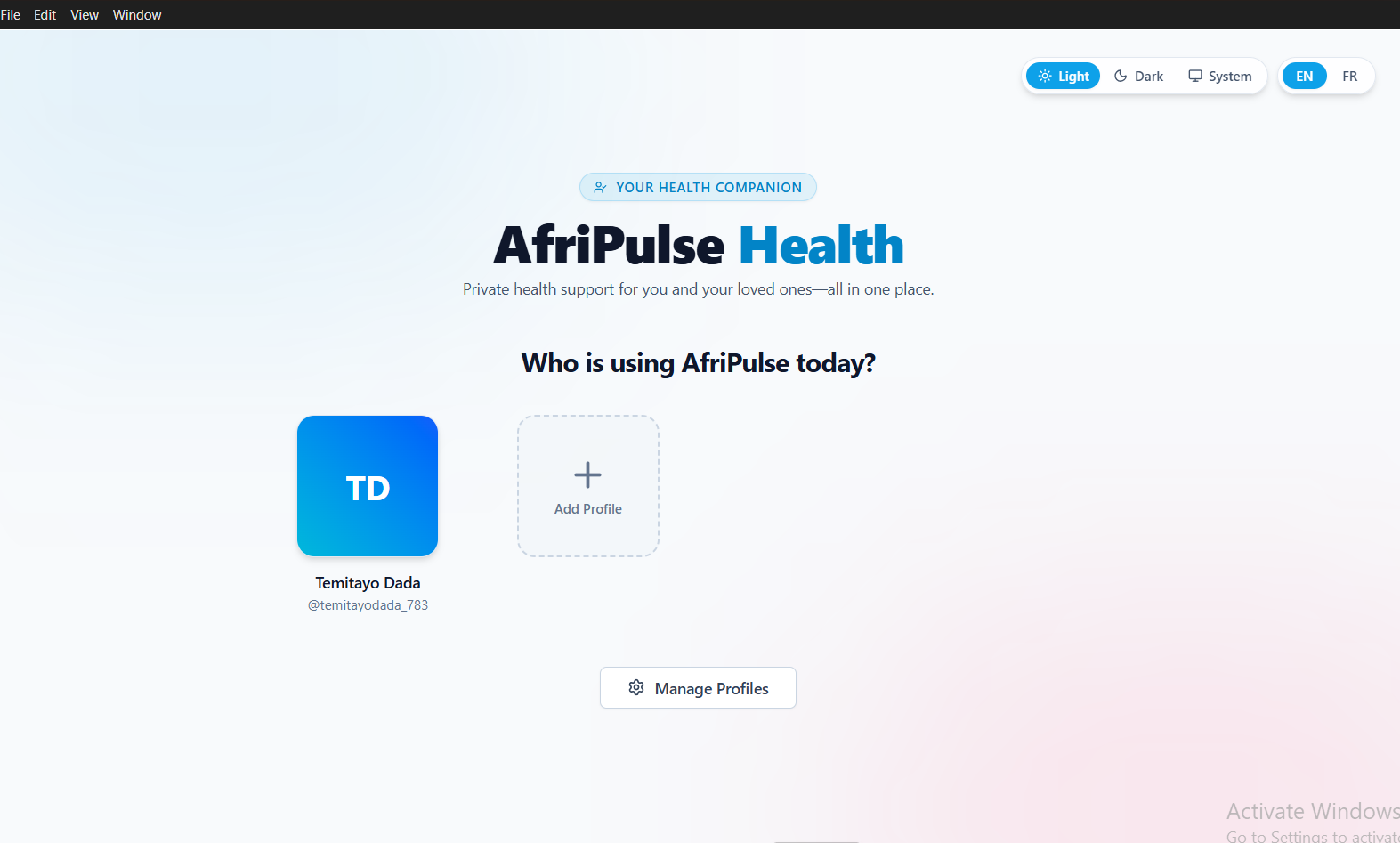
AfriPulse.AI is an offline-first, multilingual cardiovascular health AI platform designed for African users.
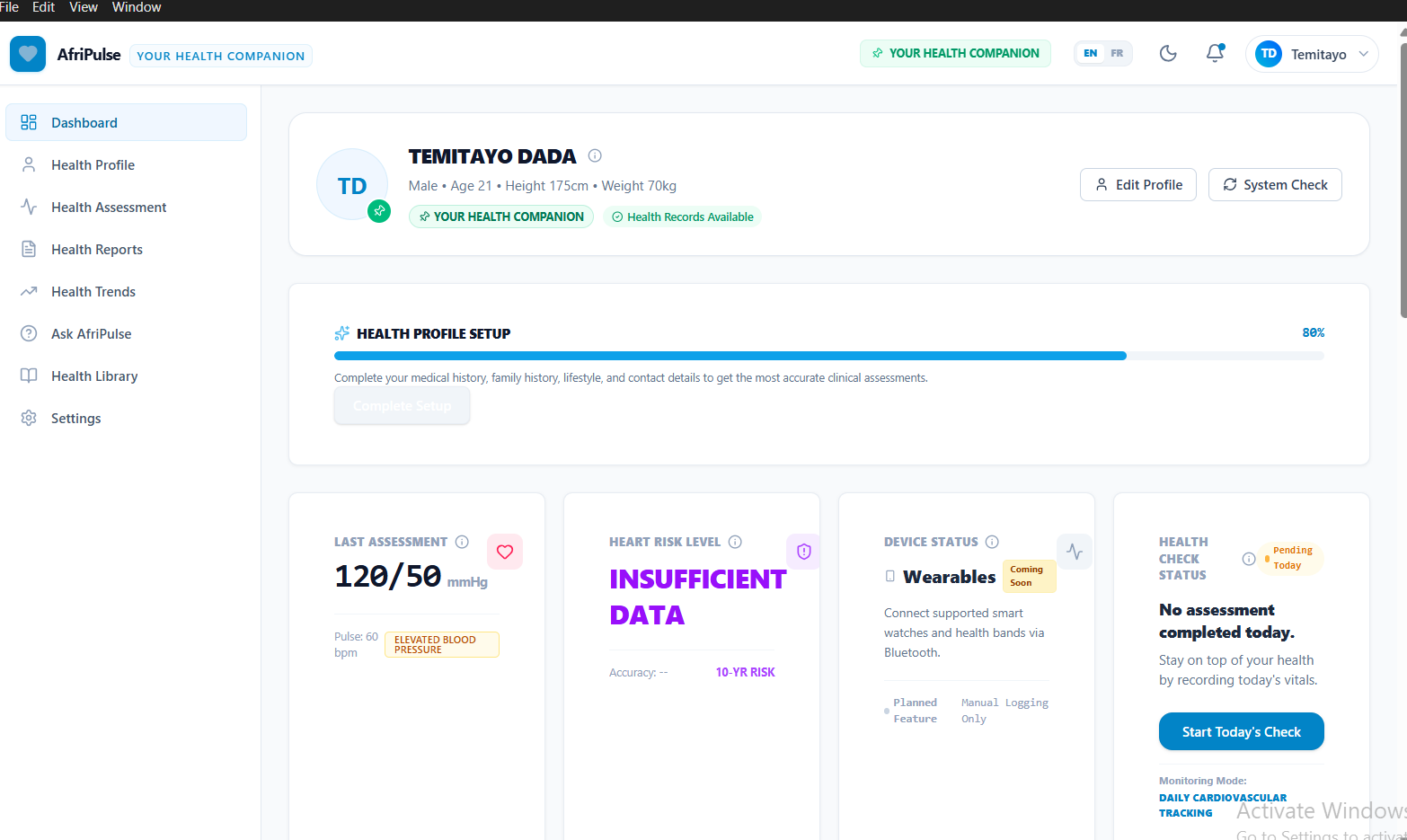
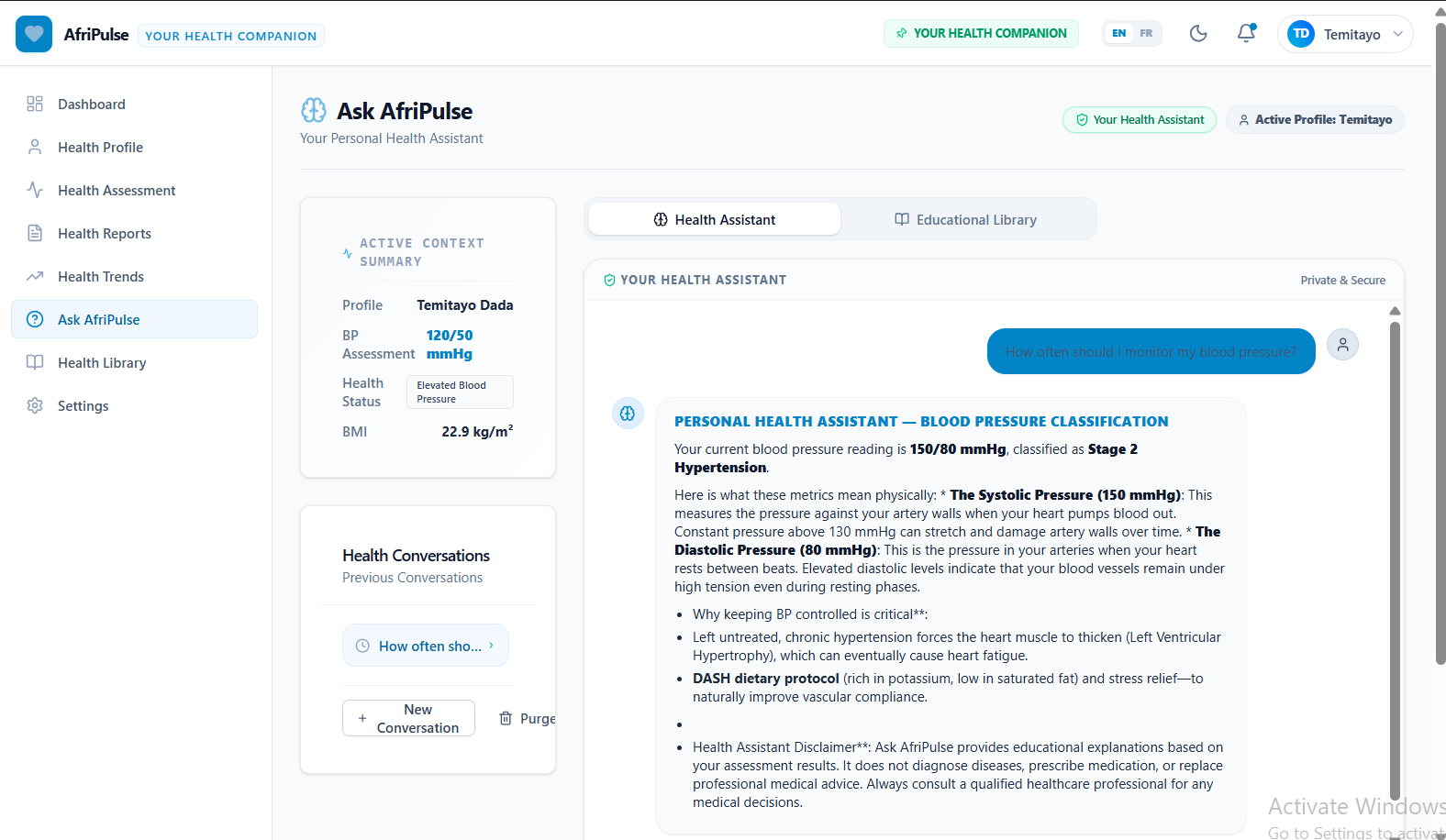
It helps users assess cardiovascular risk factors, understand blood pressure, track health readings and trends, access health education, and receive AI-powered health guidance. It supports English and French and is designed to run locally without requiring continuous internet connectivity.
How we built it
We built AfriPulse.AI around a lightweight Llama 3.2 3B Instruct model, quantized to Q4_K_M and running locally through llama.cpp.
The application uses an Electron and React-based architecture with TypeScript, local data storage, health assessment logic, reports, trend visualization, multilingual support, and an integrated local AI inference layer.
We designed the system around the ADTC 8 GB laptop constraint, prioritizing low memory usage and CPU-based inference.
Challenges we ran into
Our biggest challenge was making useful AI run within limited hardware resources.
Running a local LLM on an 8 GB RAM laptop required careful model selection and quantization. We also had to balance inference speed, memory consumption, and application functionality while ensuring that the system could operate offline.
Another challenge was designing healthcare features responsibly—making the system useful for education and decision support without presenting it as a replacement for qualified healthcare professionals.
Accomplishments that we're proud of
We successfully built and profiled a working offline healthcare AI system on a budget laptop.
Our final profiler run achieved 72% ARC-Easy accuracy, approximately 7.74 tokens/second, and a 3.15 GB peak memory footprint, with no detected CPU throttling.
Most importantly, we turned a personal family problem into a functional technology solution designed around African realities.
What we learned
We learned that building AI for real-world environments is about much more than choosing a powerful model. Hardware limitations, connectivity, privacy, usability, and the actual needs of users all matter.
We also learned how much optimization is required to make local AI practical on everyday hardware.
What's next for AfriPulse.AI
We want to expand AfriPulse.AI beyond basic cardiovascular assessment by improving the AI's medical reasoning, expanding its health knowledge base, supporting more African languages,and improving long-term health trend analysis.
Our goal is to make AfriPulse.AI a practical offline health intelligence platform for underserved communities, helping people better understand and manage their health wherever reliable internet access is not guaranteed.

Log in or sign up for Devpost to join the conversation.