-
-
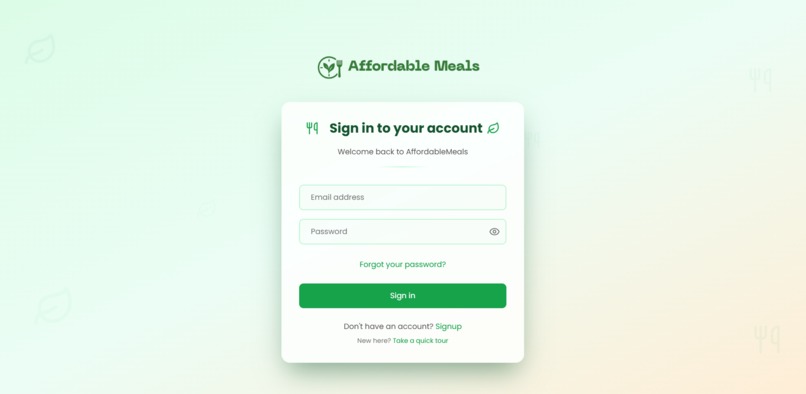
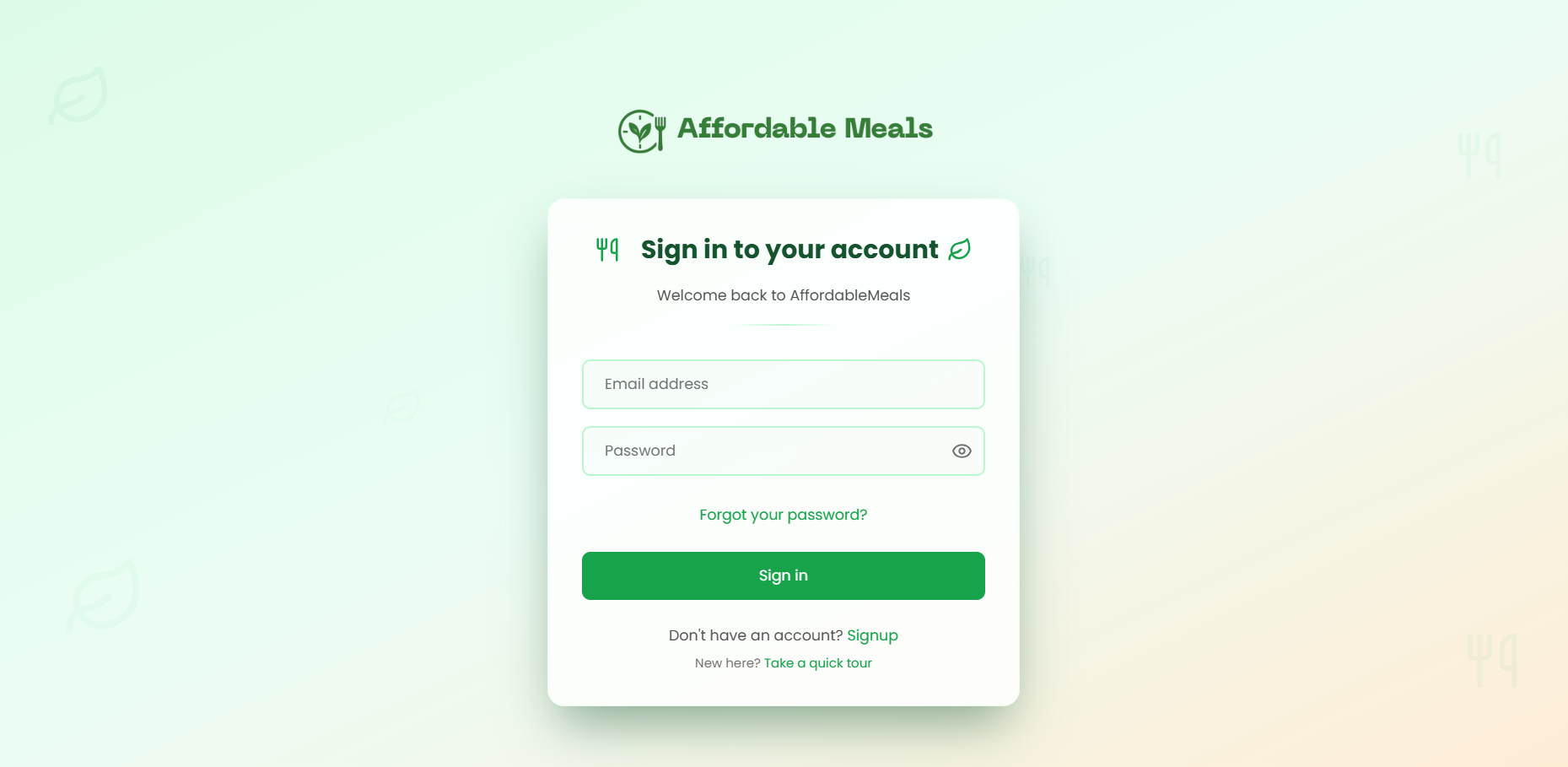
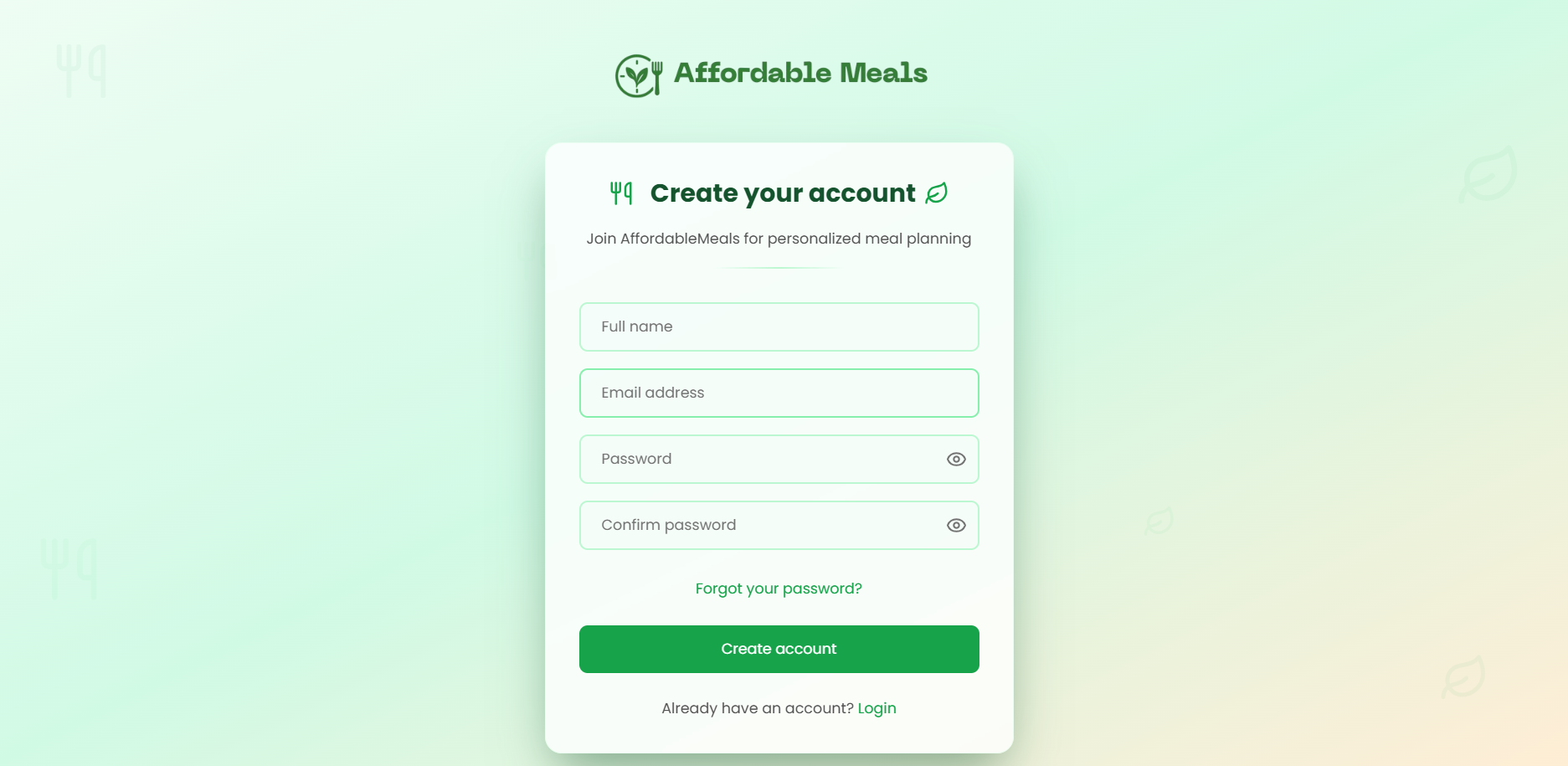
Sign In
-
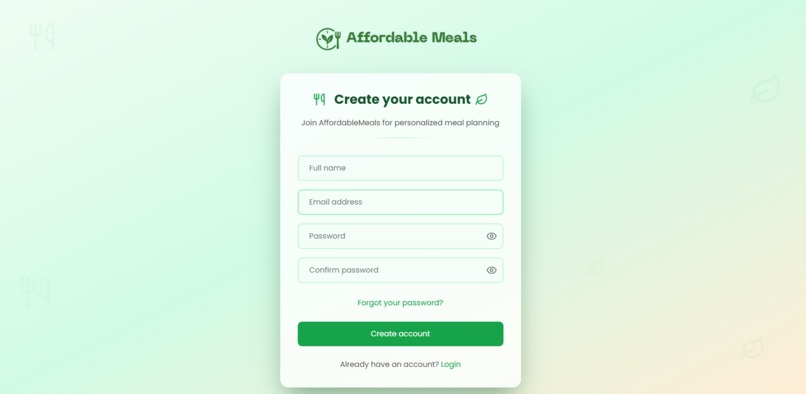
Create Account
-
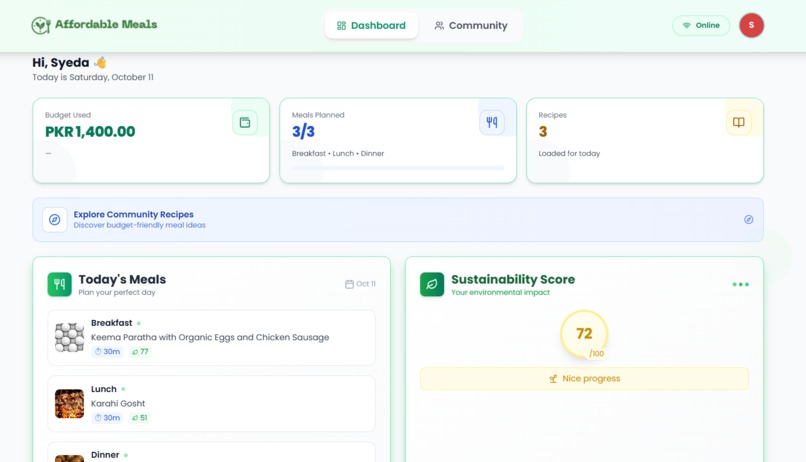
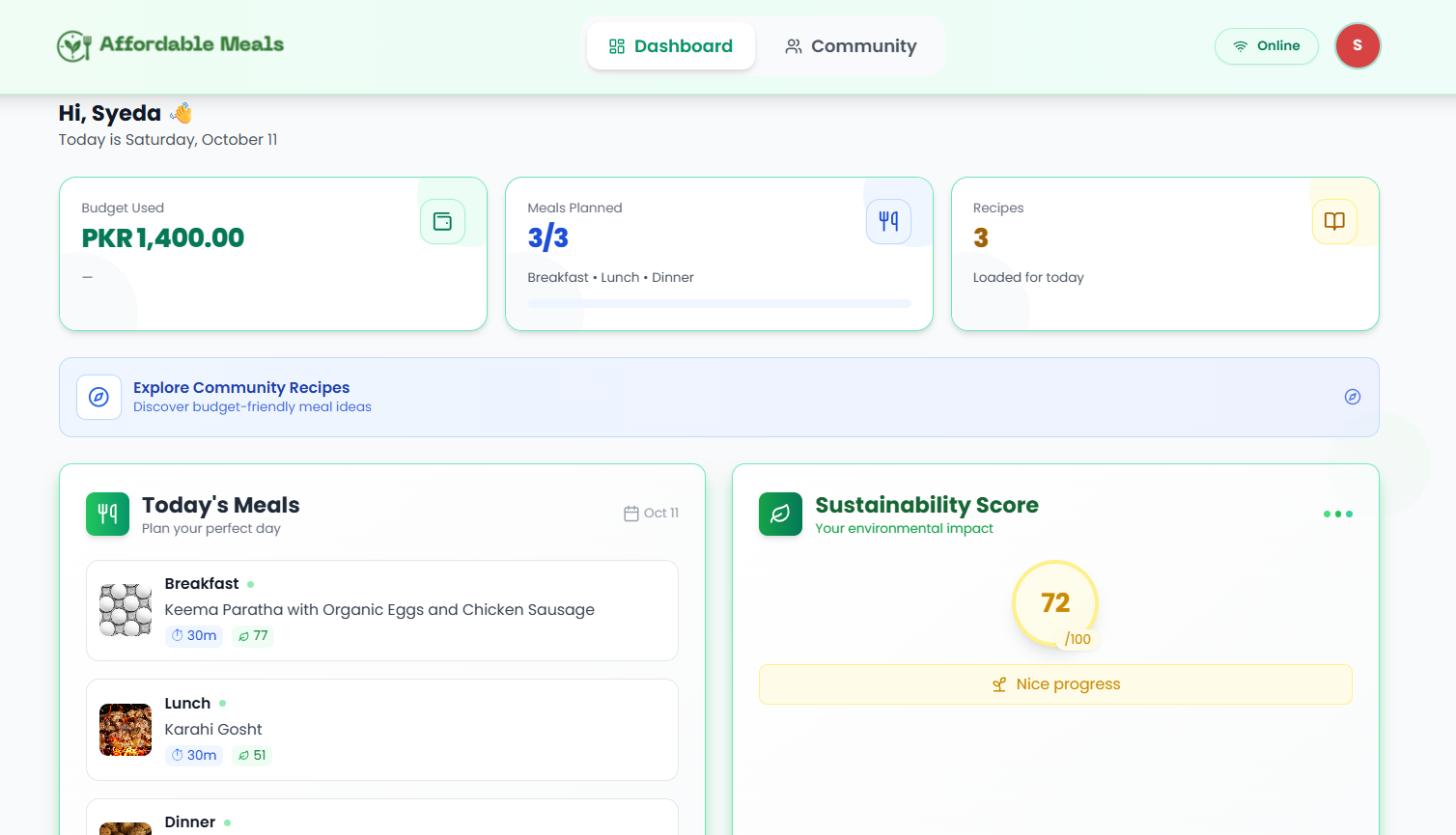
Dashboard
-
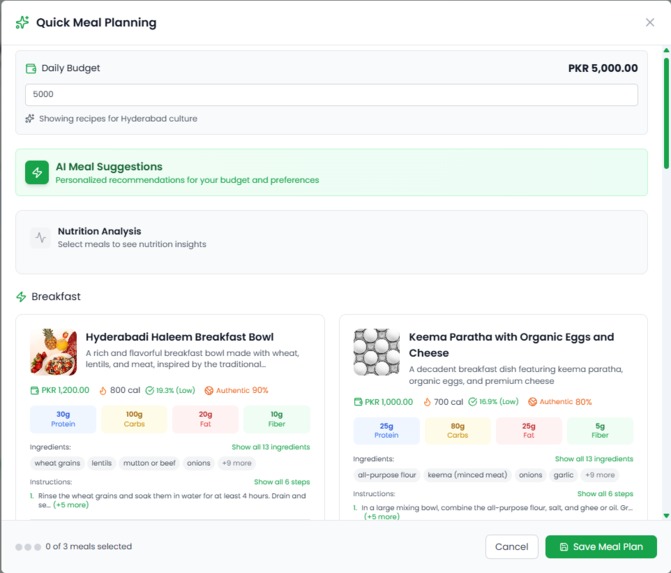
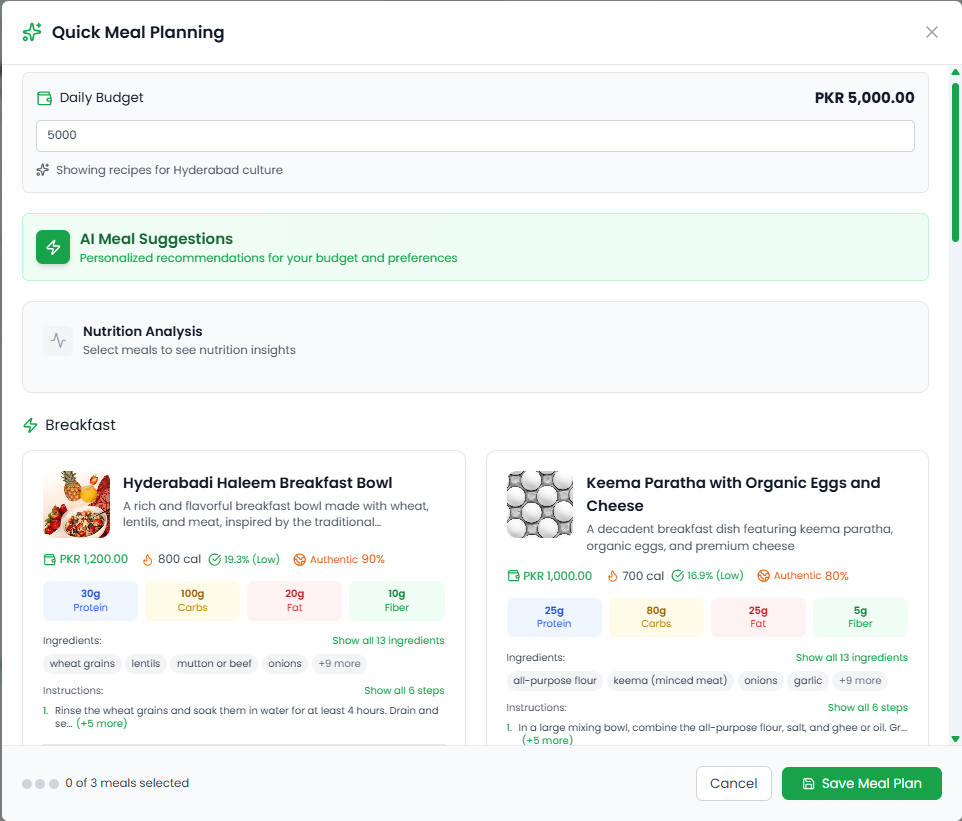
AI Meal Planning
-
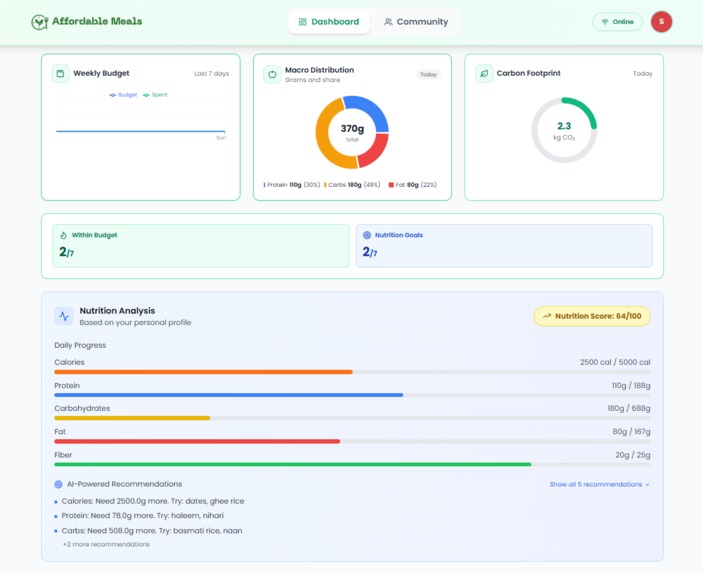
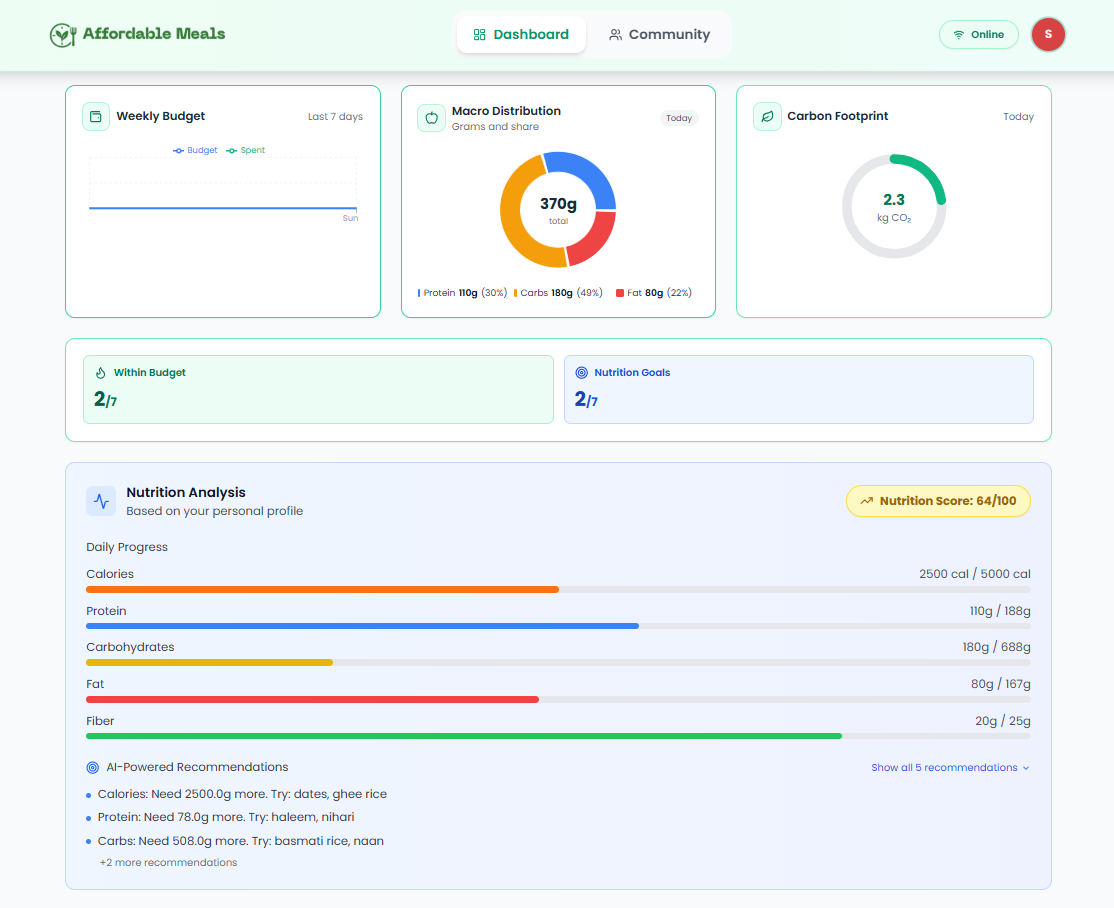
Nutrition & Other Analysis - Dashbaord
-
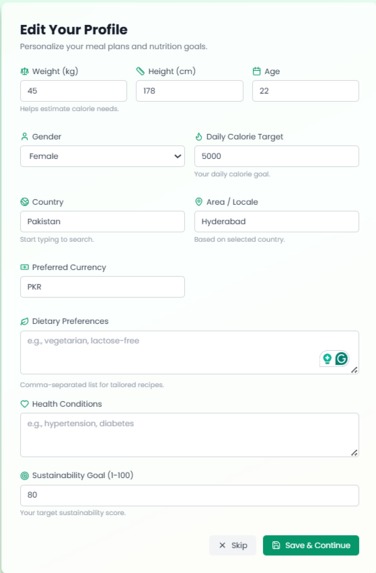
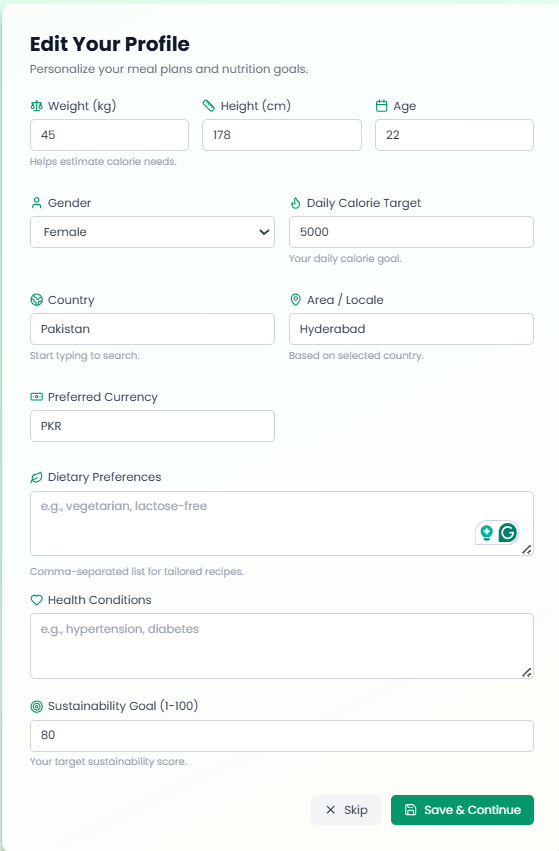
Edit Profile
-
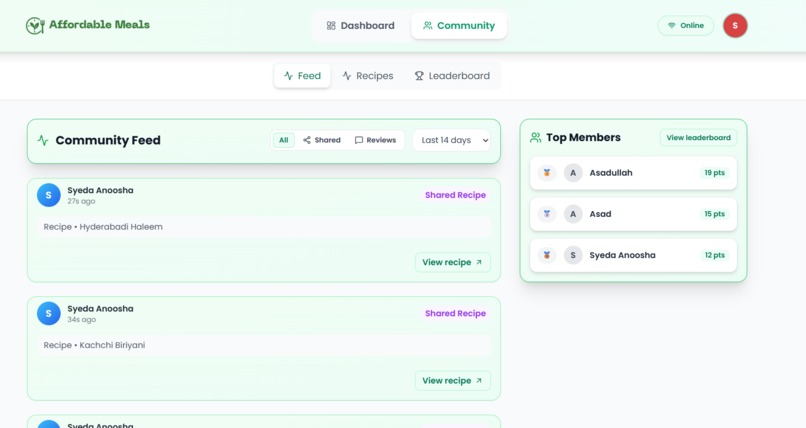
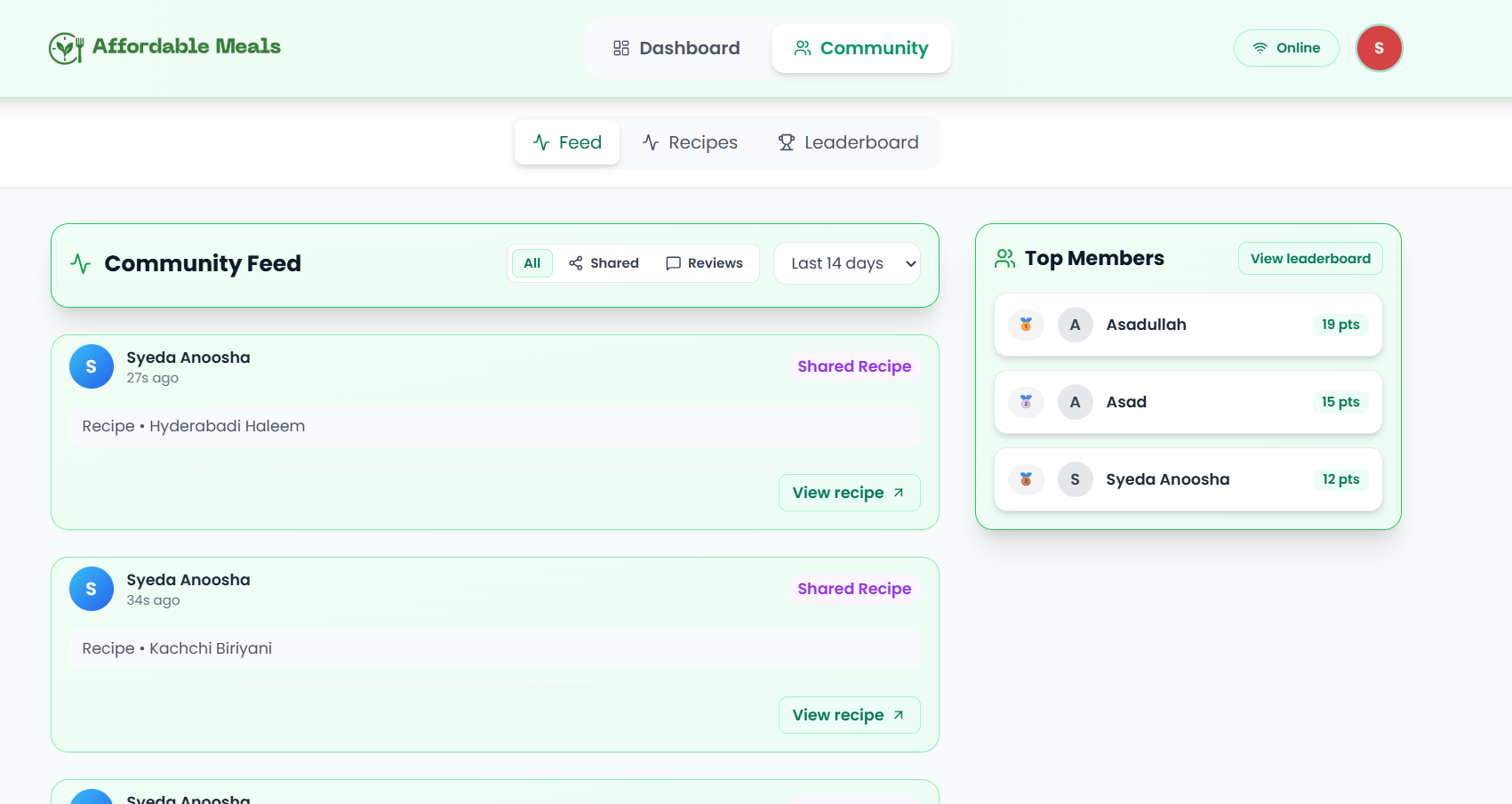
Community Feed
-
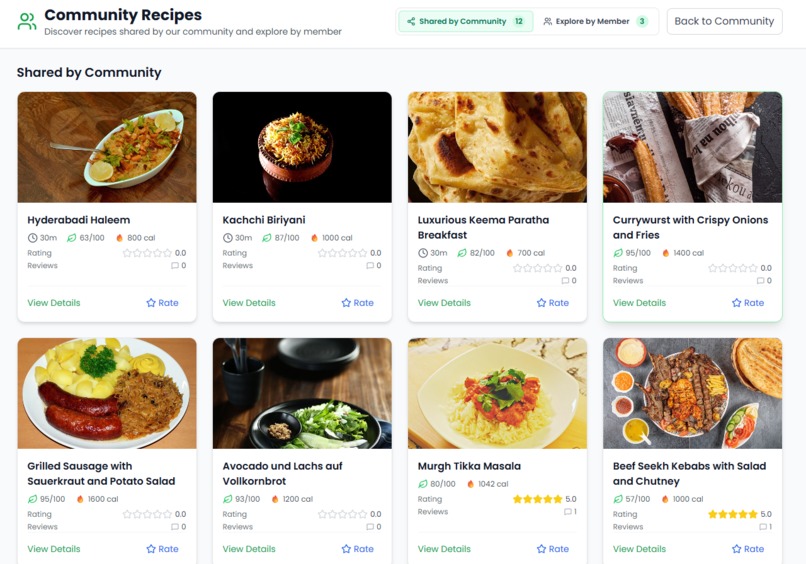
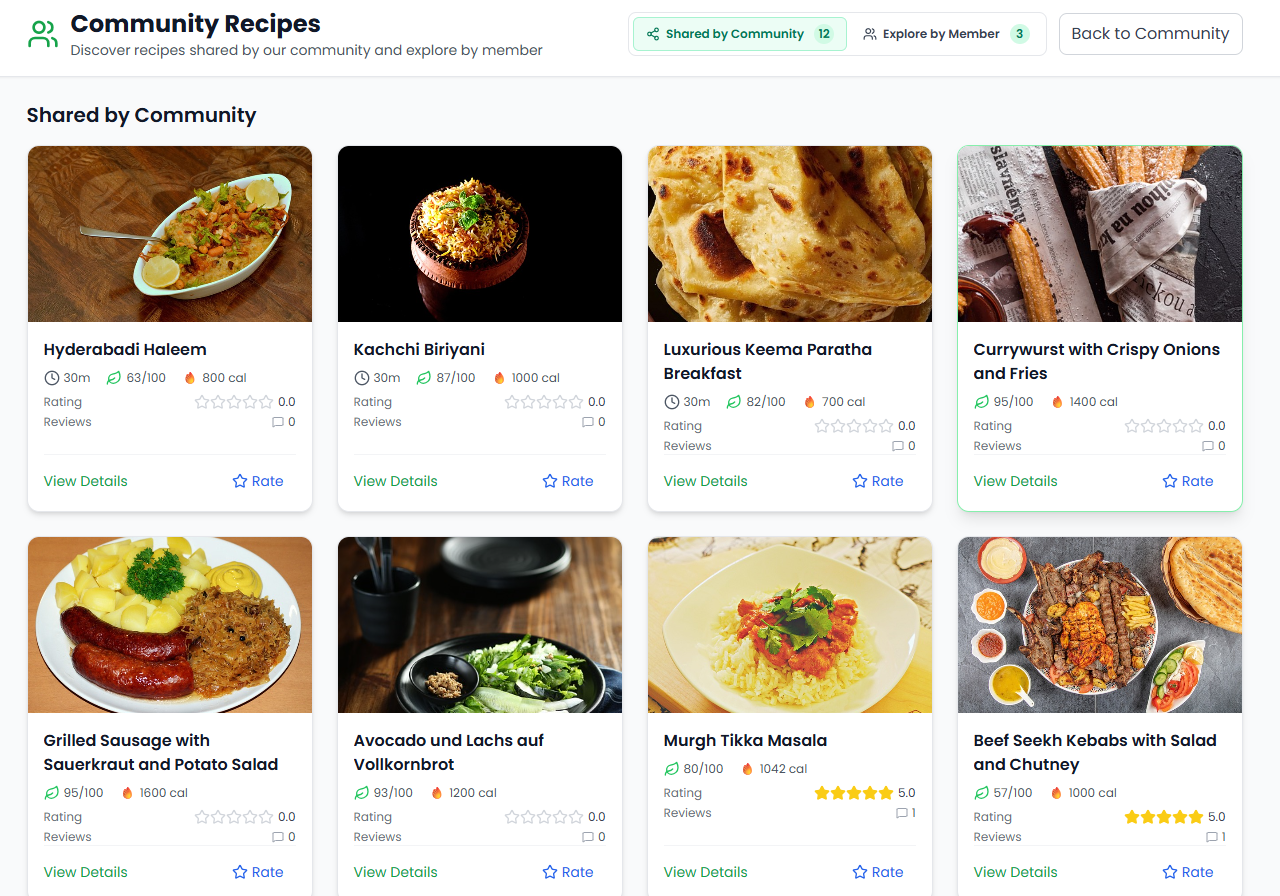
Community Shared Recipes
-
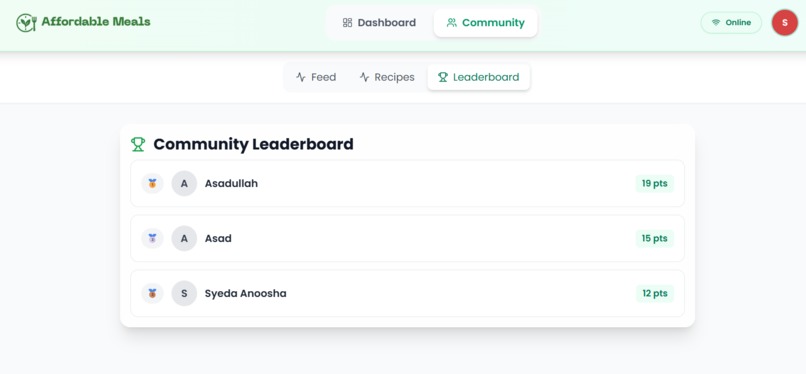
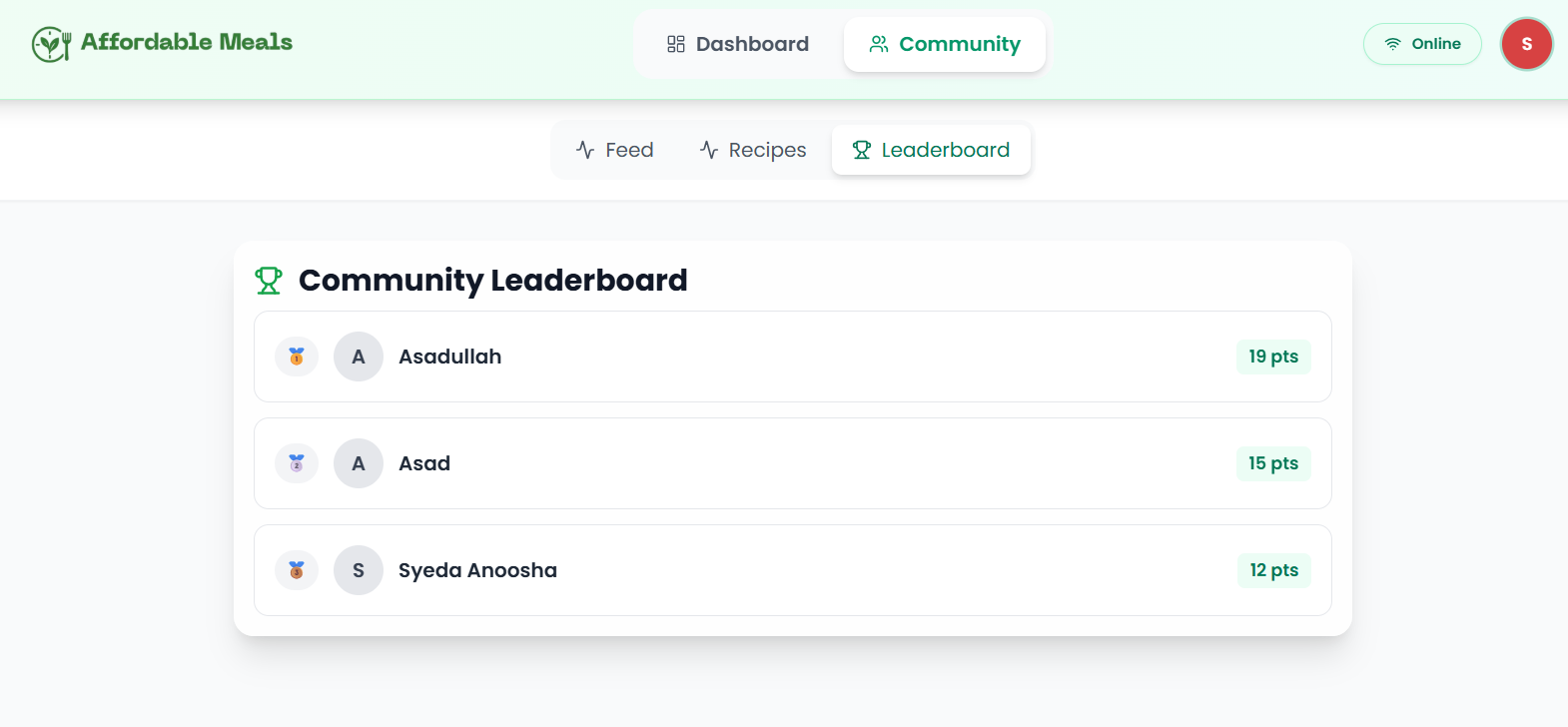
Leaderboard
-
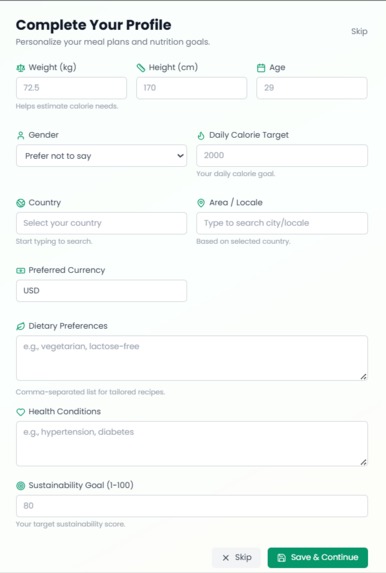
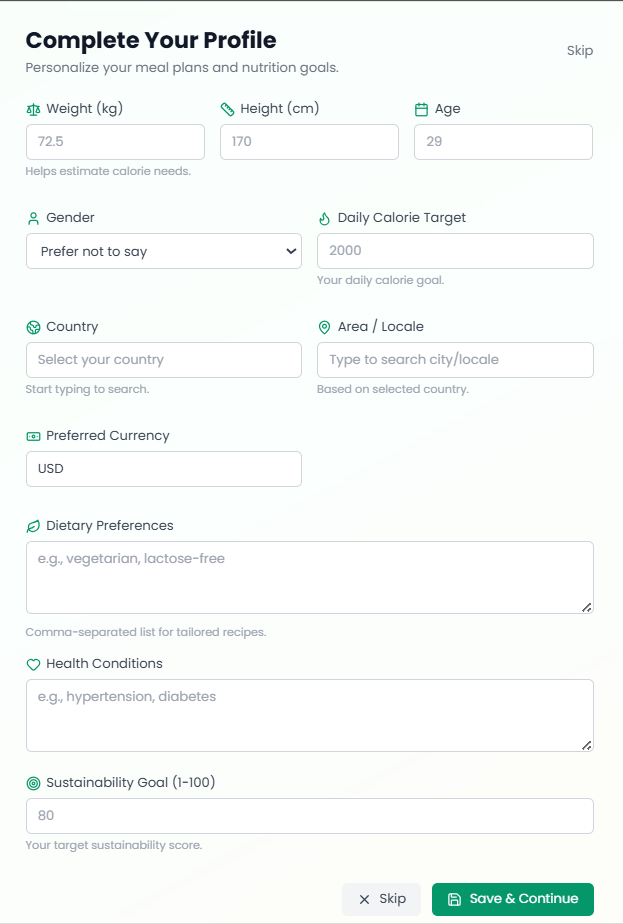
Profile Completion Form
-
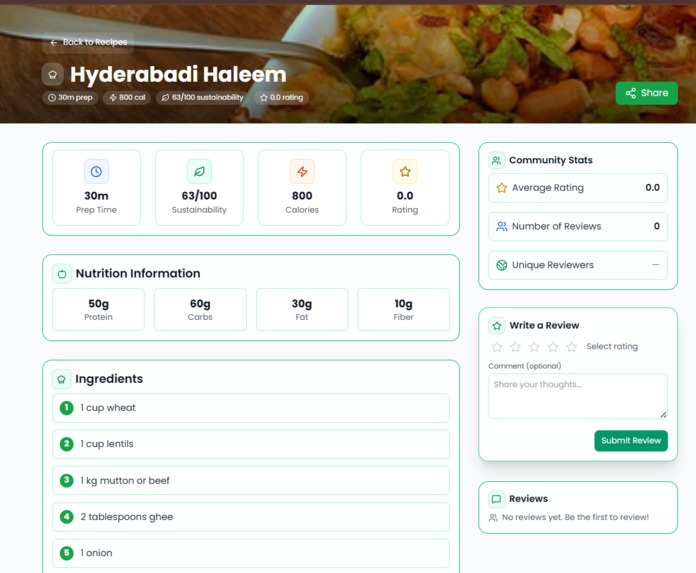
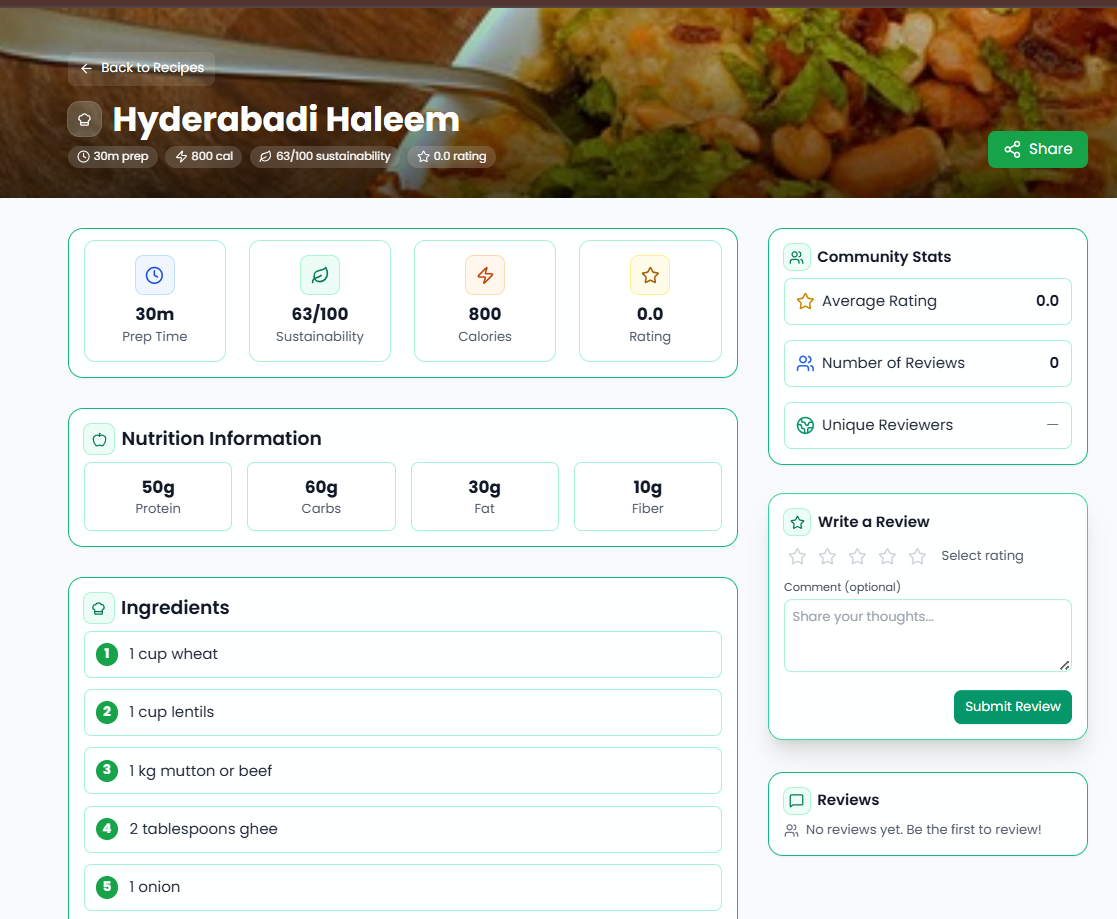
Recipe View
Affordable Meals
Inspiration
Access to nutritious, affordable, and culturally relevant meals is still out of reach for many. Our team asked a simple question: Why is eating well so expensive and disconnected from local food culture?
In 2024, an estimated 8.2% of the global population, about 1 in 12 people, faced hunger. Nearly 2.3 billion people were moderately or severely food insecure. Food inflation exceeds 5% in over half of low-income countries, while 65% of countries report food prices rising faster than overall inflation, forcing millions to trade nutrition for price. Meanwhile, the global food system produces 34% of all greenhouse gas emissions.
We built Affordable Meals to close that gap. Inspired by UN SDG 1 (No Poverty) and SDG 2 (Zero Hunger), our goal is to make healthy eating practical, affordable, and culturally meaningful while raising awareness about cost transparency and sustainability.
What it does
Affordable Meals is an AI-powered meal planning and nutrition app that balances affordability, sustainability, and cultural relevance. Users enter their budget, region, health goals, and dietary preferences, and the system generates personalized daily plans complete with local ingredients, prices in their currency, and balanced nutrition.
Core features
- Smart Meal Planning: AI creates cost-aware, locally adapted meal plans.
- Sustainability Scoring: Every recipe and ingredient gets a 0–100 score for environmental impact.
- Nutrition Insights: Tracks calories and macros with deficiency alerts.
- Affordability Metrics: Converts costs to local currency for full transparency.
- Community Sharing: Lets users post, rate, and review meals.
- Gamified Motivation: Rewards users for consistent tracking and sustainable choices.
Together, these features connect personal health with social and environmental responsibility.
How we built it
- We built Affordable Meals with a modular Node.js (Express) backend and PostgreSQL (Neon) managed through Drizzle ORM for clean, type-safe queries. Each service, from recipes to achievements, is isolated for scalability.
- A custom Sustainability Engine aggregates ingredient-level data to assign normalized carbon footprint scores. Feature flags let us test new AI and sustainability modules safely.
- On the frontend, we used React 19, TypeScript, Zustand, and Tailwind CSS for predictable performance and a clean UI. Recharts powers data visualizations for nutrition and sustainability.
- AI runs through OpenRouter APIs for natural-language meal generation, with automatic fallback to Groq API for reliability. Integrations include Pixabay (imagery) and Rest Countries + CountriesNow for region and currency data.
- We deployed the backend on Render, frontend on Vercel, and database on Neon, with continuous testing using Jest, Supertest, Vitest, and React Testing Library.
Challenges we ran into
We ran into several key challenges during development. First was finding generous AI APIs after testing Groq, Gemini, and OpenAI. We settled on OpenRouter with Groq as backup. Then came community integration, where we added sharing, rating, reviews, and leaderboards after careful evaluation. Choosing the right database was another hurdle; we compared SQL and NoSQL before selecting Neon for its balance of scale and simplicity. Social sharing also proved tricky due to SPA link previews, so we enabled in-app sharing with optional external URLs. Under heavy AI traffic, we managed performance using caching, rate-limiting, and smooth loaders. And to build trust in our sustainability scoring, we made our full formula public for transparency.
Accomplishments that we're proud of
Affordable Meals demonstrates how AI can support global well-being without losing cultural or economic context. The project closely aligns with the UN Sustainable Development Goals, primarily SDG 1 (No Poverty) and SDG 2 (Zero Hunger), while also contributing to SDG 3 (Good Health and Well-Being), SDG 12 (Responsible Consumption and Production), and SDG 13 (Climate Action). It successfully links affordability, nutrition, and sustainability to these global goals. We developed a transparent sustainability model from ingredient to recipe level, embedding regional context directly into AI prompts for real-world relevance. We added multi-currency support to make the platform accessible in emerging markets. The system also includes a cost-health-impact substitution engine, gamified sustainability features that reward positive behavior, and a community review system that promotes shared learning and collaboration.
What we learned
Building Affordable Meals taught us that simplicity and context drive user trust and that AI can be use for the greater social good by improving access to nutritious, affordable, and sustainable meals. People don’t want abstract nutrition data; they want clear, relatable insights that match their habits, culture, and budget. When we let users describe their needs in plain language and receive structured, practical meal plans in return, engagement rose sharply. We also learned that localisation is non-negotiable. Meal planning feels personal only when it respects regional cuisines, ingredient availability, and cultural preferences. On the engineering side, feature flags proved invaluable. They allowed us to test ambitious ideas without breaking production, helping us balance innovation with stability. Most importantly, we learned that transparency, showing how costs and sustainability scores are calculated, builds far more trust than hiding complexity behind AI.
What's next for Affordable Meals
Next, we’ll add nutrition plausibility checks, AI-based substitution explanations, and expanded sustainability tracking to include water and land use. We’re also developing smart grocery lists, real-time price updates, and personalized nutrition goals to make the app part of daily life. On the community side, we’ll launch challenges and progress campaigns for engagement. Long-term, we aim to create a global recipe knowledge base and open APIs for NGOs and sustainability partners.
Built With
- bcryptjs
- countries-now
- drizzle-orm
- express.js
- groq
- javascript
- jsonwebtoken
- neon
- node.js
- openrouter
- pixabay
- postgresql
- react
- recharts
- render
- rest-countries
- tailwindcss
- typescript
- vercel
- vite
- zustand


Log in or sign up for Devpost to join the conversation.