
Inspiration
As students, we understand the challenges and pressures that come with pursuing a higher education. From academic stress, to social pressures and personal responsibilities, the journey through college can often feel overwhelming. These moments of stress highlight the lack of mental health support within academia. Mental health issues affect more than the individuals, impacting academic performance, relationships, and overall quality of life. Driven by a desire to support those in need and promote mental well being on a larger scale, affirmi aims to lessen mental pressures by actively listening and supporting users through AI-generated affirmations.
What it does
Affirmi has journaling, personalized advice, and mood tracking features that nurture the mental well-being of students, creating a safe space where students can find encouragement, and support on their mental health journey.
How we built it
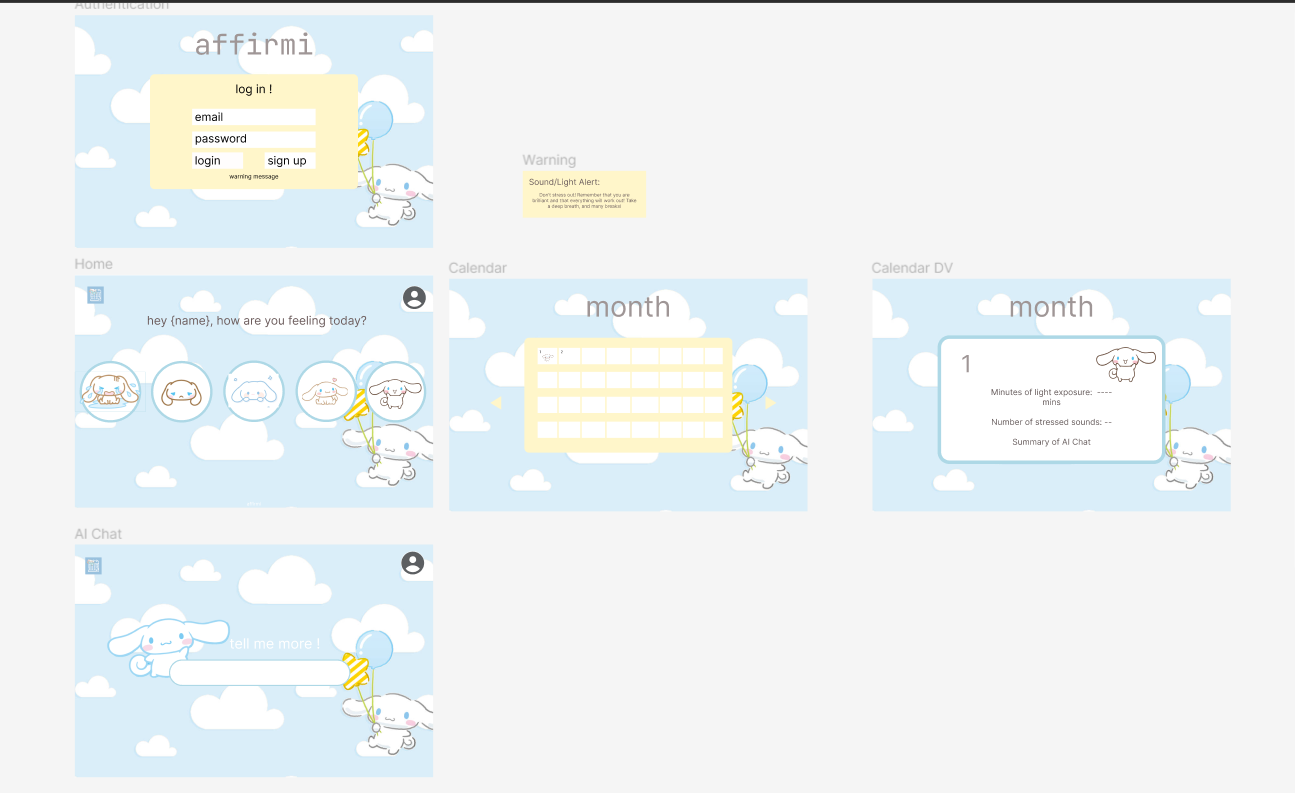
We first wireframe Affirmi using Figma. The frontend is built with React.js and CSS to create a user-friendly interface. The backend uses Node.js to handle OpenAI API requests and data management. More specifically, we used OpenAI’s chat completions API to parse users’ input about their feelings and return a model generated message with affirmations and advice. Firebase Realtime Database is integrated to authenticate users and enable real-time data synchronization and storage of mood logs. To incorporate aspects of IoT and immerse the user into the application, we utilized the beginner Grove Arduino Kit to read the duration of light exposure the user experiences, as well as trained a model on Google’s Teachable Machine to detect noises of distress coming from the user.
Challenges we ran into
One of the primary challenges we faced was implementing the chatbot feature using the OpenAI API. As it was our first time working with AI technology and integrating an external API, we encountered difficulties in understanding the API documentation and configuring the chatbot to provide relevant and helpful responses. Additionally, we also struggled in maintaining consistency with our initial Figma model. With the hardware, we ran out of time connecting it to our application. With the model, we ran into a server-side error that inhibited the usage of the model.
Accomplishments that we're proud of
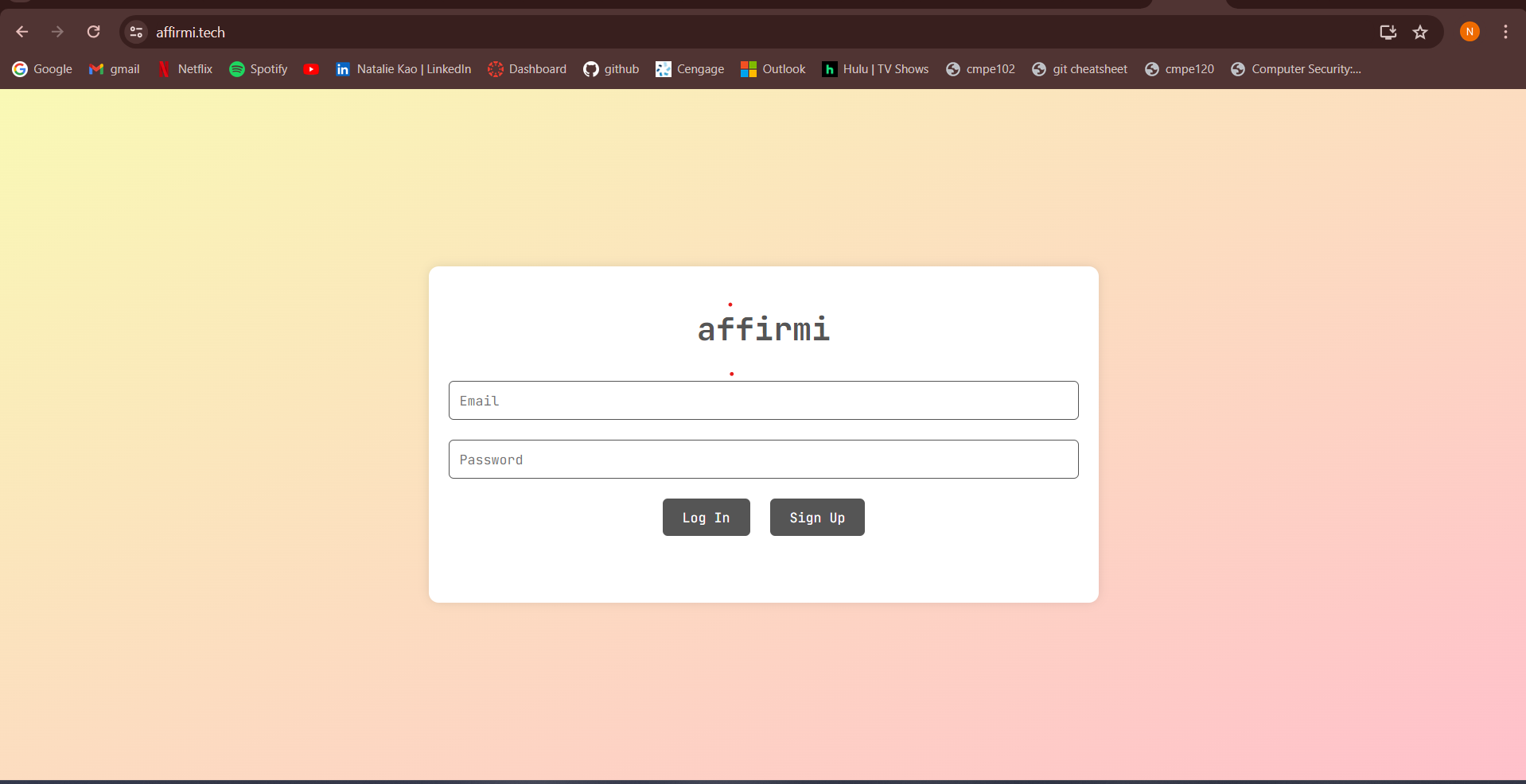
Despite the challenges, we successfully achieved several milestones that we're proud of. Firstly, we implemented a robust user authentication system, ensuring secure access to affirmi's features through email and password verification. Furthermore, we successfully obtained our DotTech domain name. Our greatest accomplishment was integrating the OpenAI API to develop the chatbot feature, allowing us to provide personalized feedback and affirmations to users, enhancing the overall user experience. This hackathon was a great method of exposure to many fields and technologies in CS. We may not have been able to complete the app fully, but we were able to grow and experiment with new tools.
What we learned
Our journey with affirmi provided us with invaluable learning experiences. Working with AI technology for the first time deepened our understanding of its potential applications and challenges. We gained proficiency in integrating external APIs into web applications, honing our skills in documentation interpretation and API utilization. Furthermore, navigating the complexities of user authentication and real-time data synchronization broadened our knowledge of backend development and database management. We were able to work with hardware and learning models to make our app more engaging and accessible.
What's next for affirmi
In the future, we aim to refine affirmibot's capabilities with specific instructions to specialize its interactions for diverse user needs and preferences. We would also like to expand affirmi's capabilities to store and remember user's data and information from previous responses to better personalize the user's experience. With the mission of making affirmi interactive, we plan to further train and implement the sound detection system, collecting user data to predict trends of distress. With this, we hope to send a notification at those points of the day to lighten their mood. In addition, our rudimentary hardware can be scaled to a larger ecosystem, providing the user with ambient lighting and detecting user habits to make them more aware of possible life improvements.


Log in or sign up for Devpost to join the conversation.