-
-
Title Slide.
-
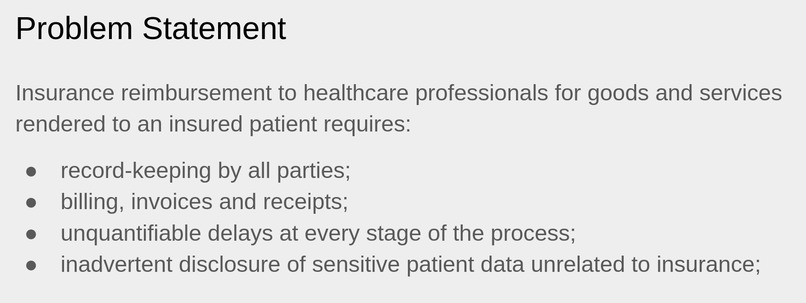
Problem Statement.
-
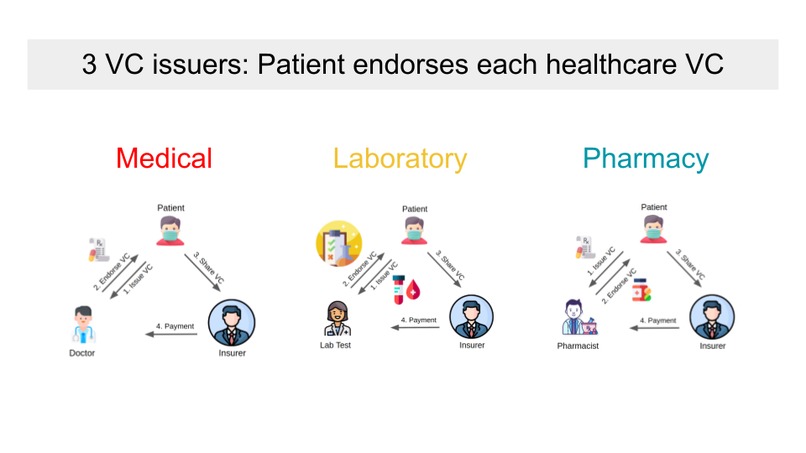
3 VC Issuers (medical, laboratory, pharmacy) and 1 Verifier (insurer).
-
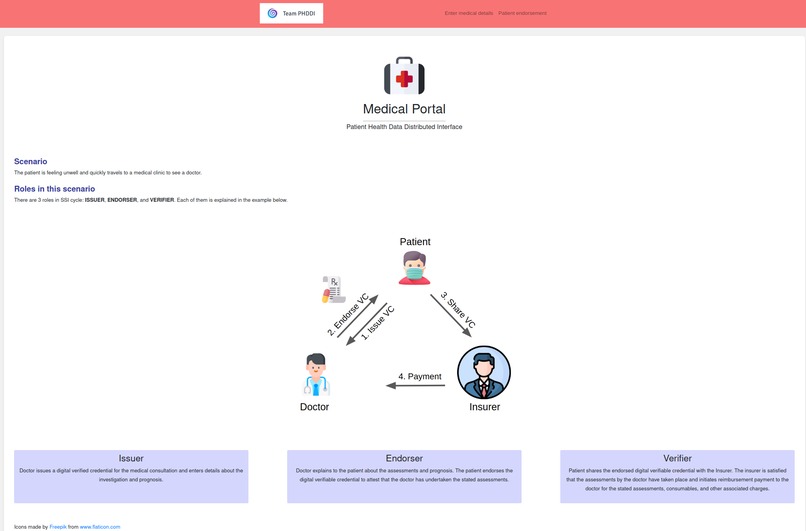
Medical Portal (VC Issuer).
-
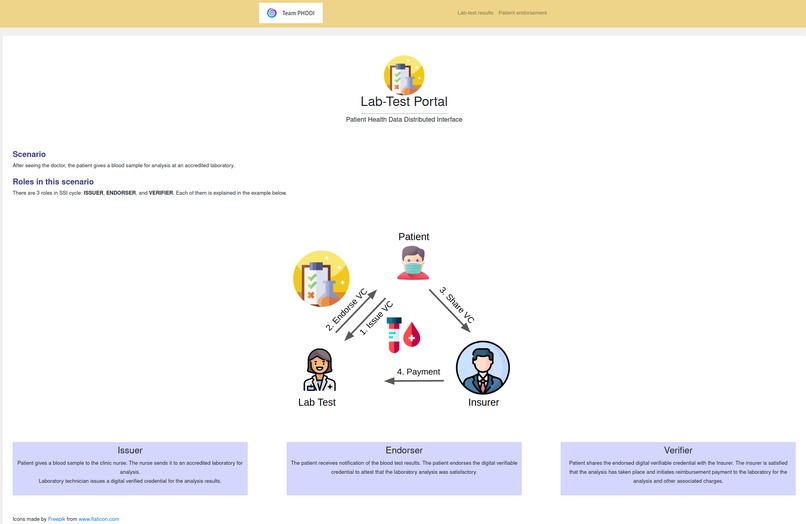
Laboratory Portal (VC Issuer).
-
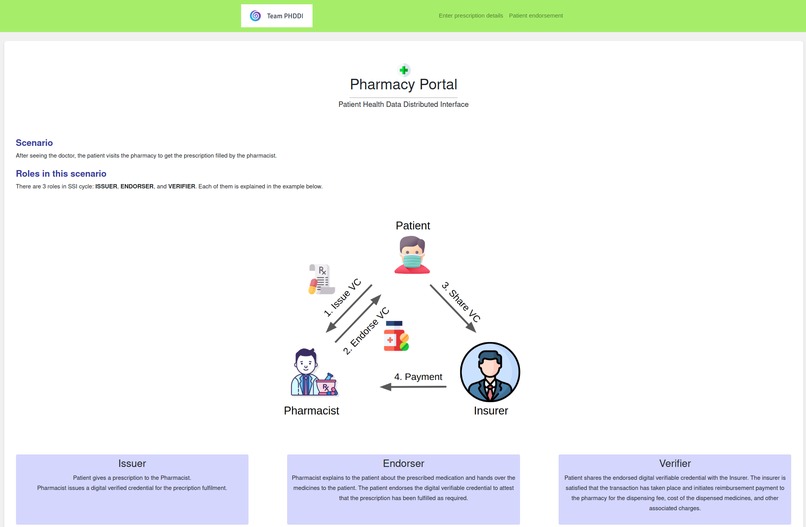
Pharmacy Portal (VC Issuer).
-
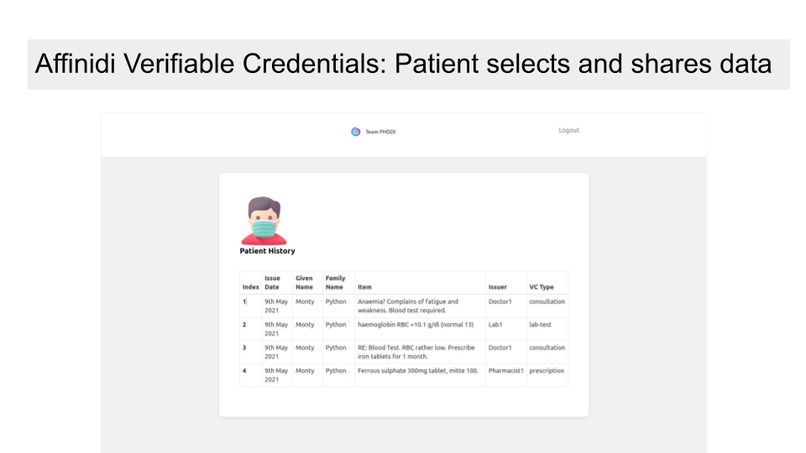
Patient wallet (VC holder).
-
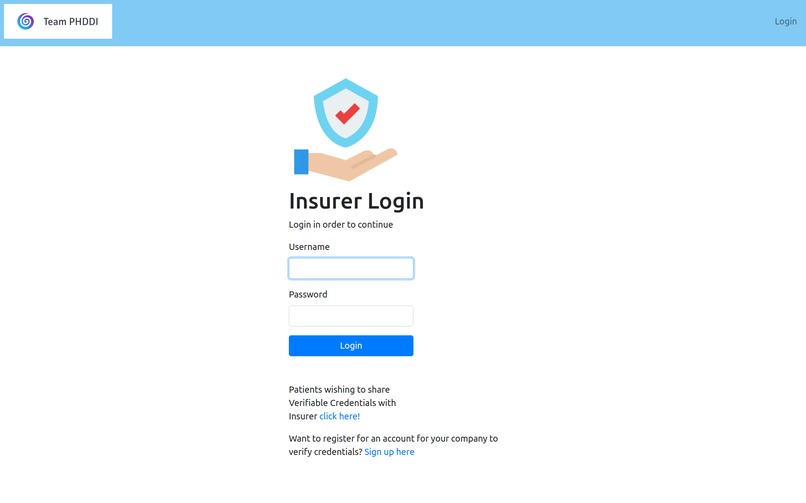
Insurer Portal (VC Verifier).
-
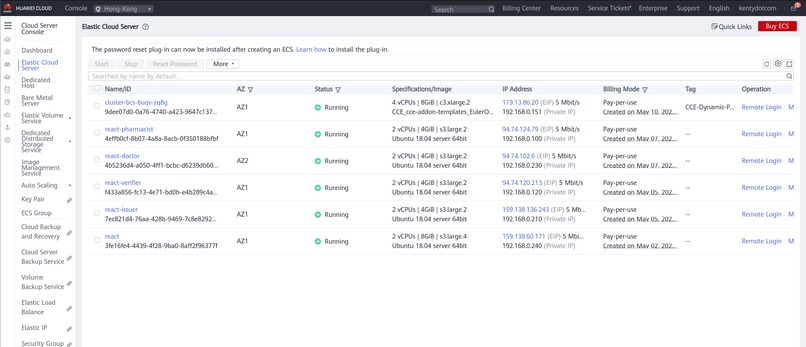
One server (ECS) for each portal, plus kubernetes cluster (CCE) for blockchain (BCS), all on Huawei Cloud.
-
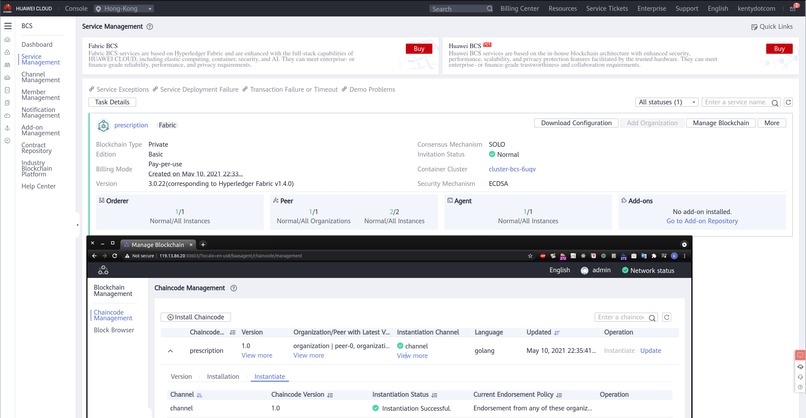
Successful installation and instantiation of Hyperledger Fabric chaincode in Huawei Cloud BCS


Inspiration
Verifiable Credentials complement the use of blockchains in healthcare. Affinidi has a working API and React templates for easy integration, even by newbies. This is a great chance to try it out and win some Eth!
What it does
A simple scenario involved a patient interacting with several healthcare professionals (Issuers), who would be reimbursed by the health insurer (Verifier). The patient holds the VCs in a wallet and decides whether to share them with the insurer.
How we built it
The working templates for a driving licence VC were bootstrapped into the above scenario. Added more Issuers to create a more realistic patient journey.
Challenges we ran into
Difficult to understand all the API requests and responses, even with Postman.
Accomplishments that we're proud of
My first React app. Quite good fun, actually!
What we learned
There are a lot of moving parts under the React hood. Kudos to the Affinidi dev team :)
What's next for Patient Health Data Distributed Interface (PHDDI)
Interoperability with Hyperledger Fabric using Hyperledger Cactus to crossover Eth x Fabric. Add database for the images. High availability with kubernetes.
Built With
- bash
- chrome-dev-tools
- huawei-cloud
- postman
- react
- screen
- typescript
- ubuntu
- vscode


Log in or sign up for Devpost to join the conversation.