-
-
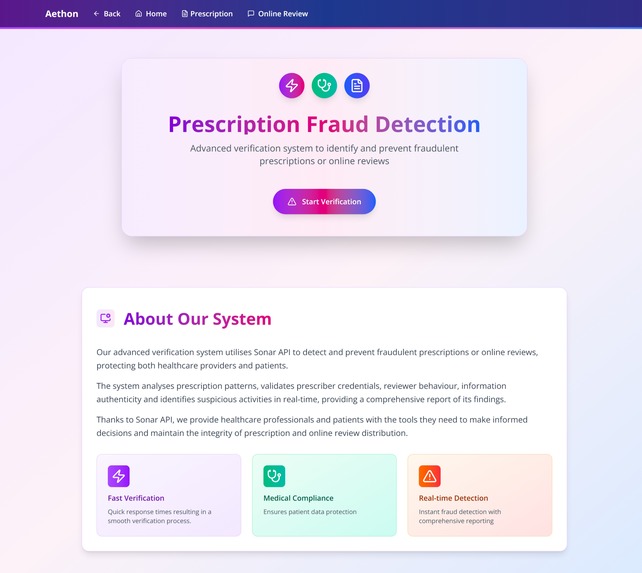
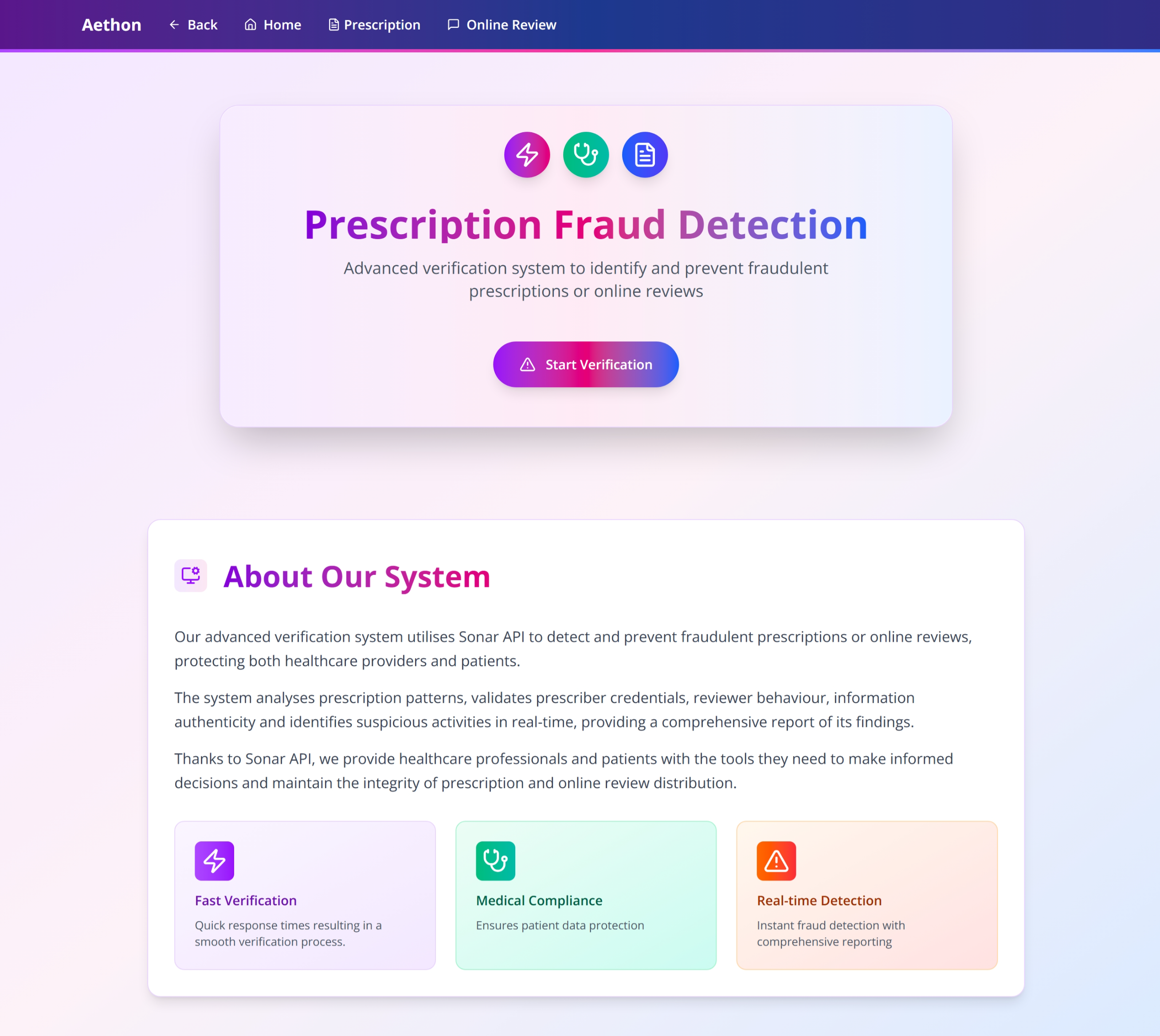
Home Page
-
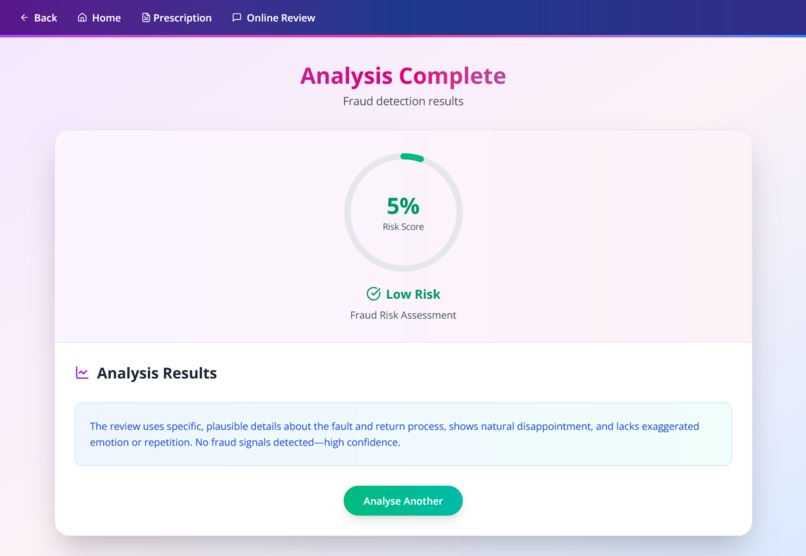
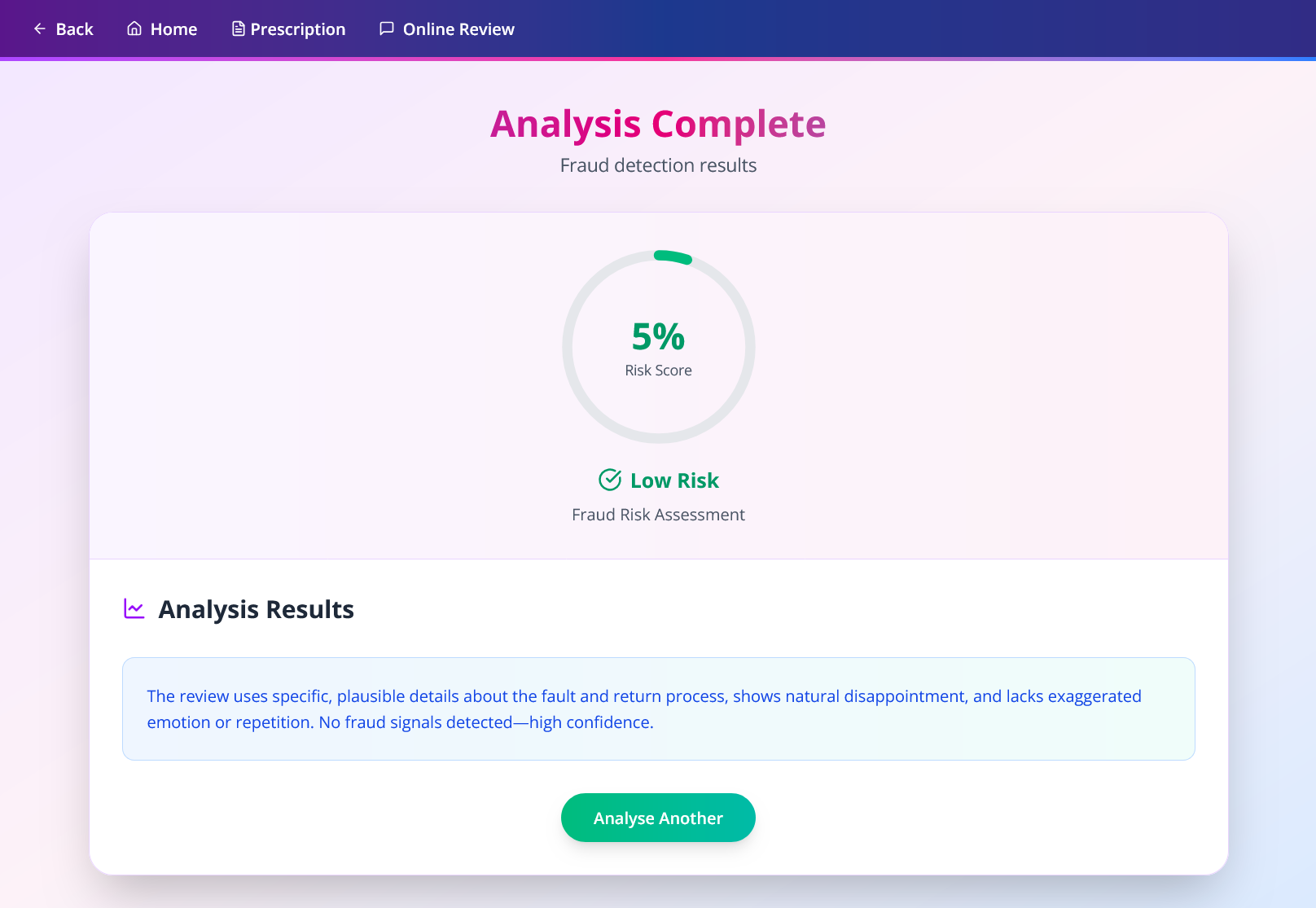
Result after online review from Trustpilot is deemed trustworthy
Inspiration
If a person has a serious medical condition and has overdosed on medication, is there someone at fault? If so should we blame? who is it? etc. There are many questions to ask but ultimately it boils down to how can we trust this data. With so much uncertainty in today's digital evolution, the subject of ethics and trust is critical. Thus, we decided to create Aethon. An application that is designed to show users whether a review is valid and authentic, show pharmacies whether the dosage and prescription is authorised and valid. So now it means you can go to your favorite hotel knowing that there are real people who have been there and have validated it.
But how can an AI system know it's authentic?
Thanks to perplexity's SONAR reasoning model, we are able to provide web scraped information from a url provided by a user or an iamge sent by a user to the model and get an output.
Is this it?
Nope! We have much more work to do! Unfortunately we were pressed for time in this hackathon, but we plan to spend the next weeks working on this, using a rag system to make the trust scores better with each input, using streaming inputs and curating a better user experience.
How does it work?
We built a system composed of a next.js frontend (because it looks awesome with tailwind css) and a flask server at the backend with an endpoint for data transmission. As the user provides a live picture from their webcam, or uploads a photo we encode it with base64 and enhance it so that the ai model is able to analyse it and provide a response. If a url is provided, we can web scrape and get the information.
Challenges we ran into
Memory Allocation, as always, is a challenge. Especially to ensure no details are lost in vital prescriptions, we need to ensure that high resolution, base64 encoded image data is optimised carefully. Then balancing the image quality with the file size and looking at many different compression ratios until we found a sweet spot, one that maintained clarity and prevented errors. Integration was also an issue. By using many different technologies, we needed to ensure that data flows consistently, which took careful planning and continuous testing.
What we learned
We learned more about multimodel processing, handling high res images and varied text format. Using asynchronous and streamning processes in Python (Flask) with real time feedback on the frontend in Next.js to assess system performance and how we can balance it to ensure enough time for processing and a fantastic user experience.
Built With
- api
- base64
- beautiful-soup
- flask
- github
- next.js
- pytesseract
- react
- robot.txt
- sonar
- tailwind-css
- toml
- yml

Log in or sign up for Devpost to join the conversation.