-
-

Power ON
-
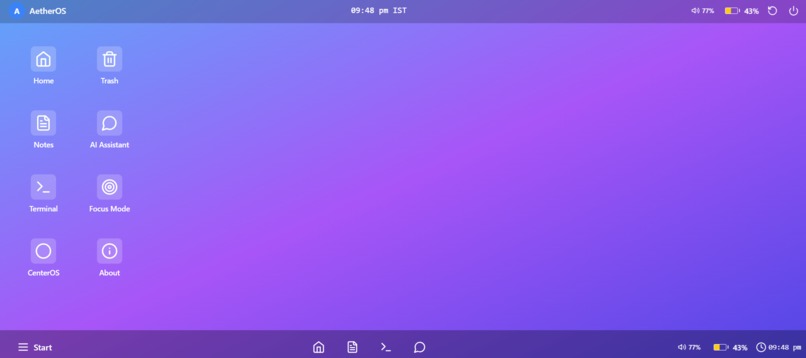
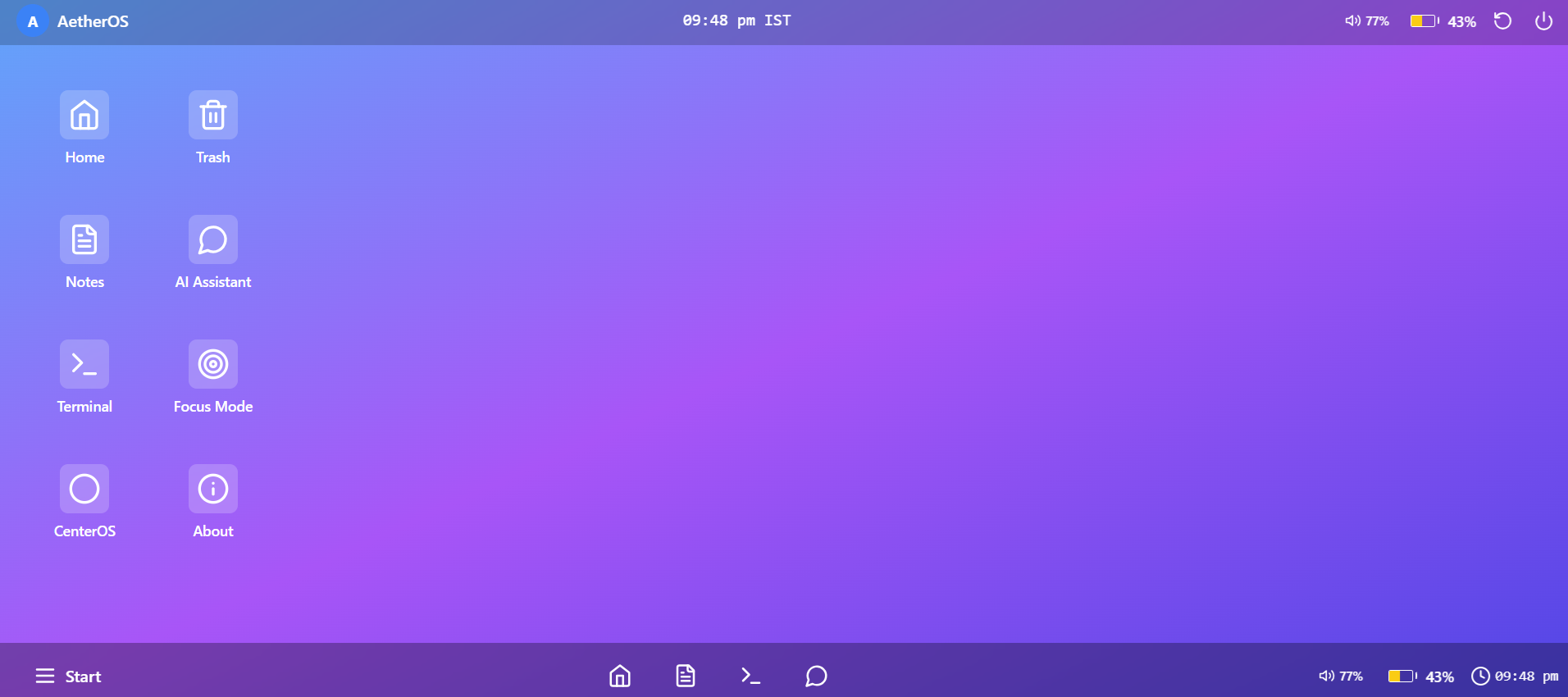
Desktop
-
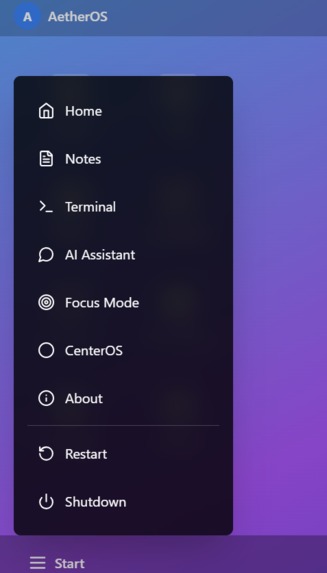
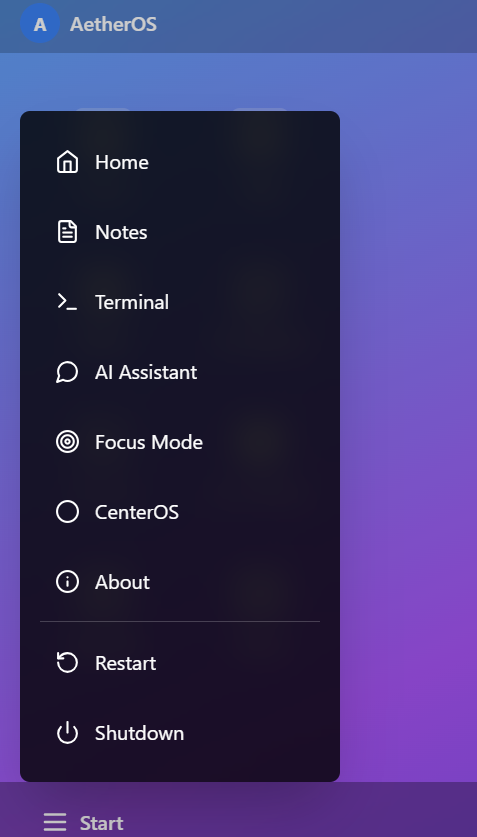
Start
-
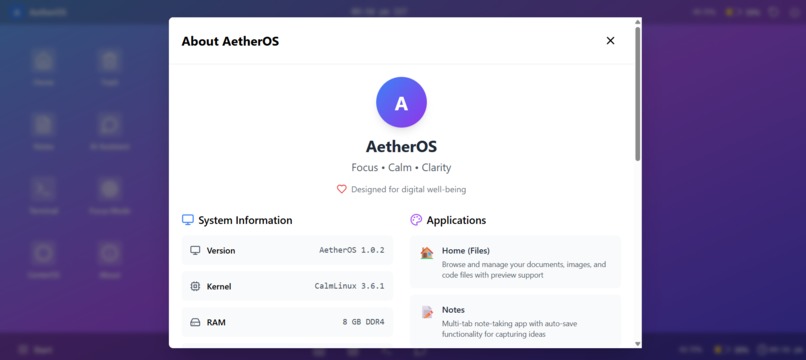
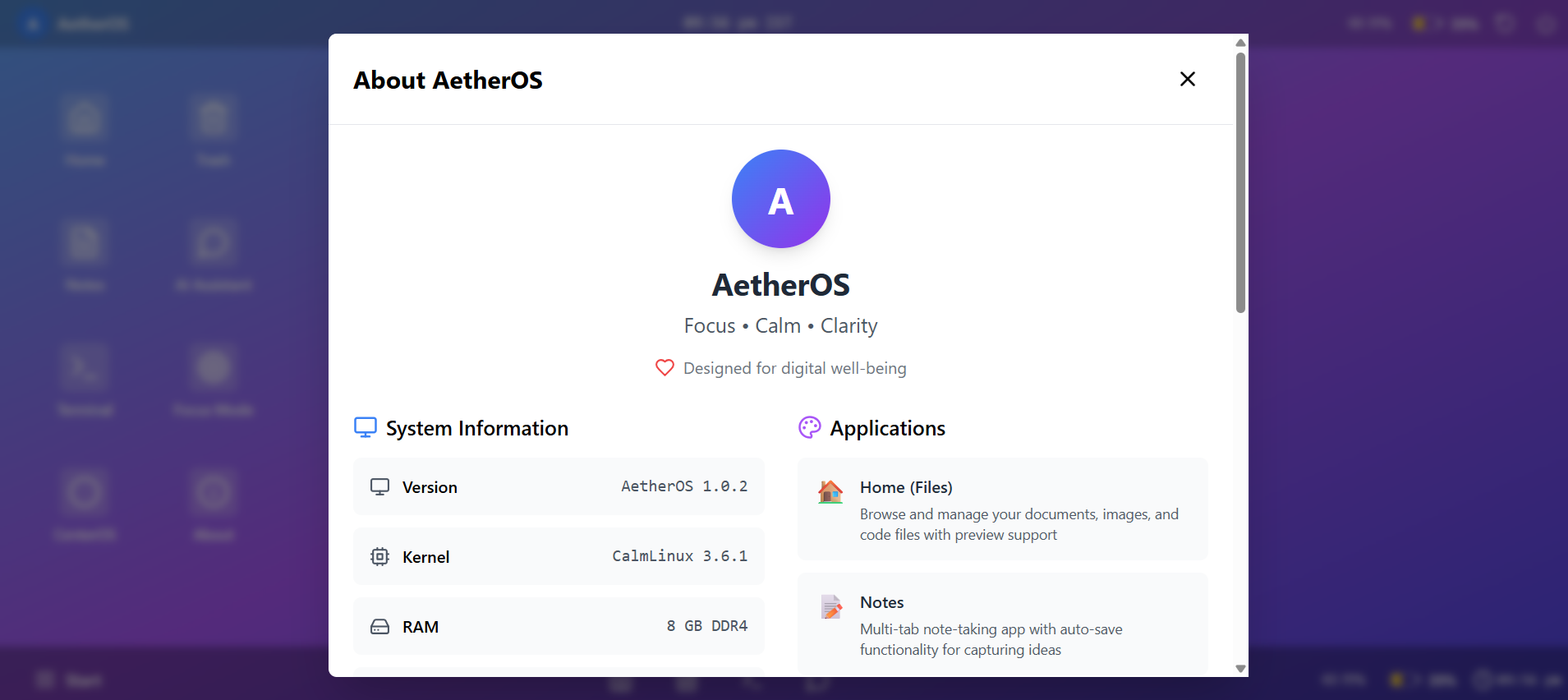
About
-
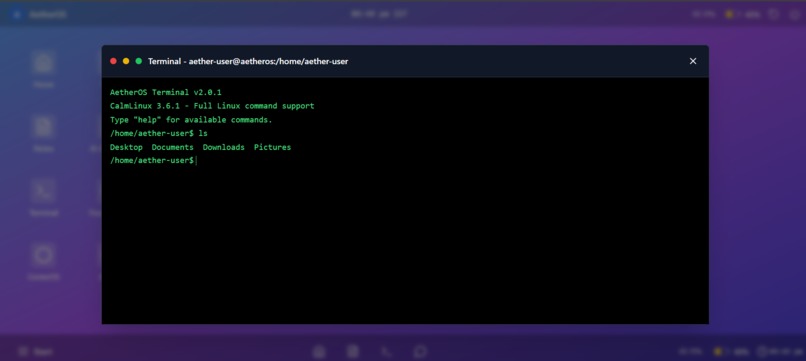
Terminal
-
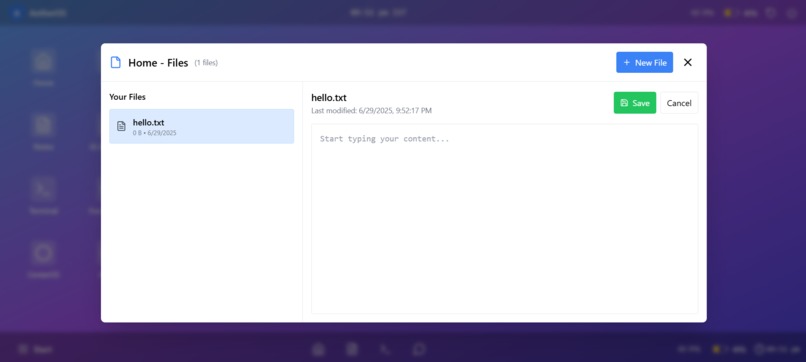
Home
-
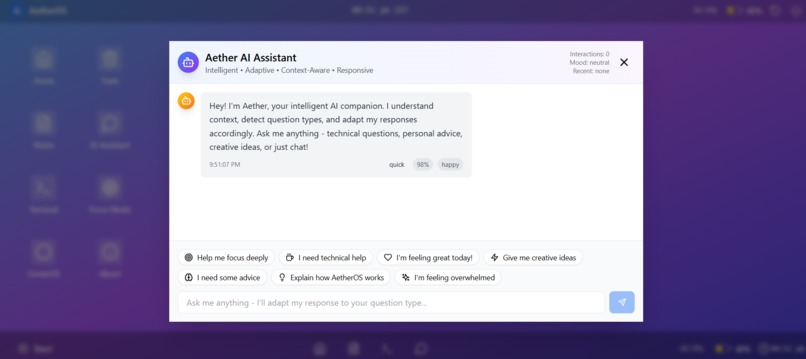
AI Assistant
-
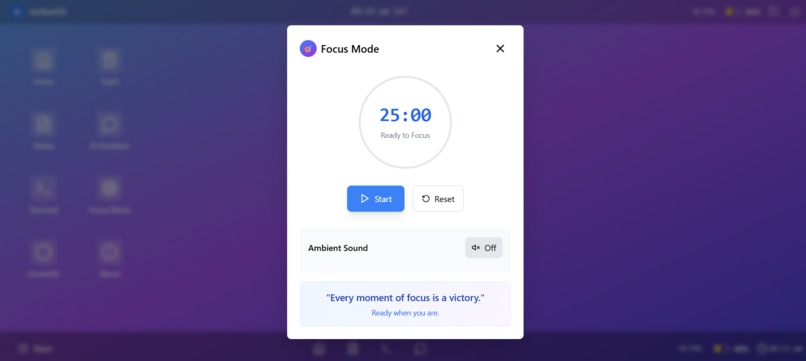
Focus Mode
-
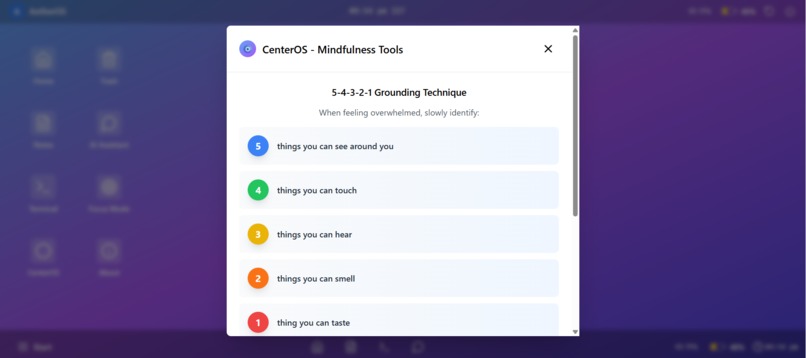
CenterOS
-
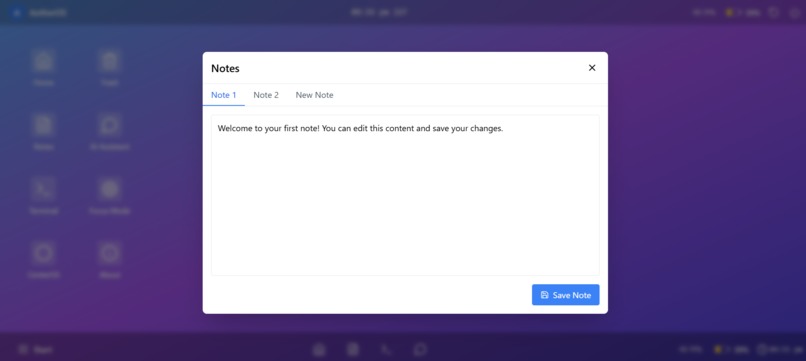
Notes

AetherOS
🌟 Inspiration
In the age of endless notifications, browser tabs, and hyper-productivity, our digital environments have become stressful rather than supportive. Many users — especially students, remote workers, and neurodivergent individuals — struggle with mental fatigue, distraction, and emotional overwhelm.
That’s when we asked:
“What if an operating system could help you feel calm instead of stressed?”
“What if it didn’t just work — it understood?”
AetherOS emerged as an answer to that vision — a simulated desktop that offers not just functionality, but mental wellness and emotional support.
Rather than imitating Windows or Linux, AetherOS is designed to feel like a digital sanctuary — a place where you can focus, breathe, reset, and reflect, guided by emotion-aware AI and calming UI.
⚙️ What it does
AetherOS is a fully interactive, visually rich fake desktop operating system, built with immersive UX and productivity-boosting tools. It simulates a real OS with thoughtful additions that support emotional health.
Key Features:
- 🖥️ Realistic desktop UI with clickable icons, folders, and animations
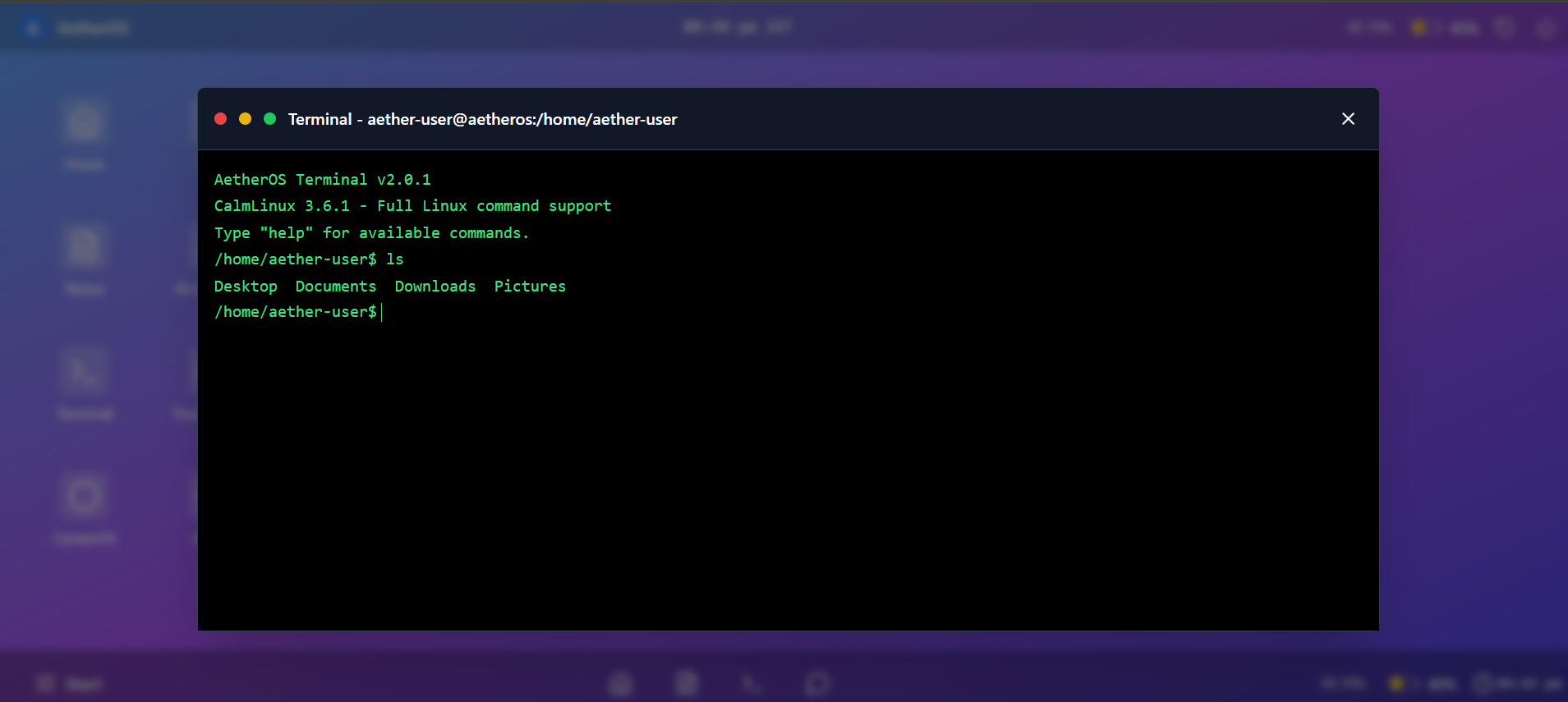
- ⌨️ A working Terminal that understands real Linux commands like
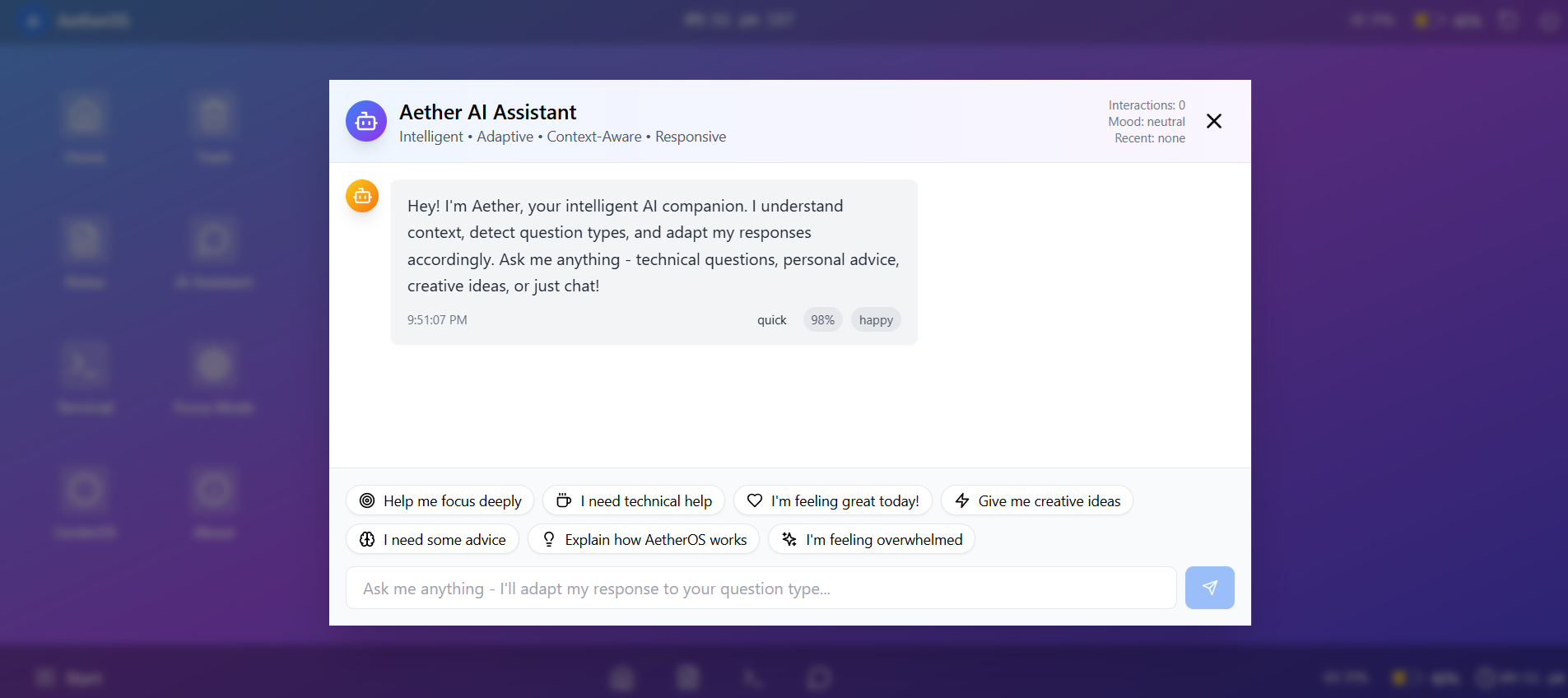
ls,cd - 🧠 AI Assistant trained on emotion-detection logic to guide, soothe, and motivate
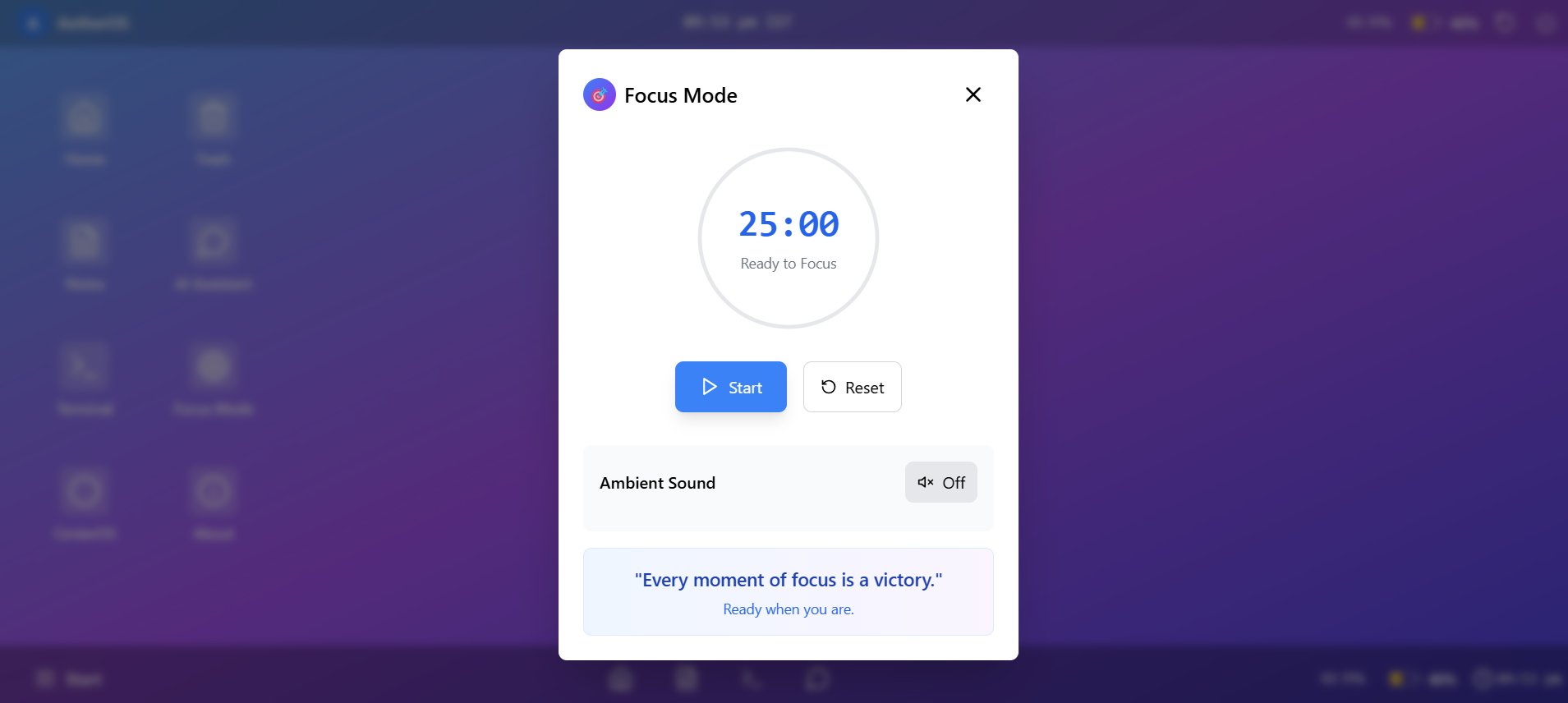
- 🎯 Focus Mode with Pomodoro-style timers for deep work sessions
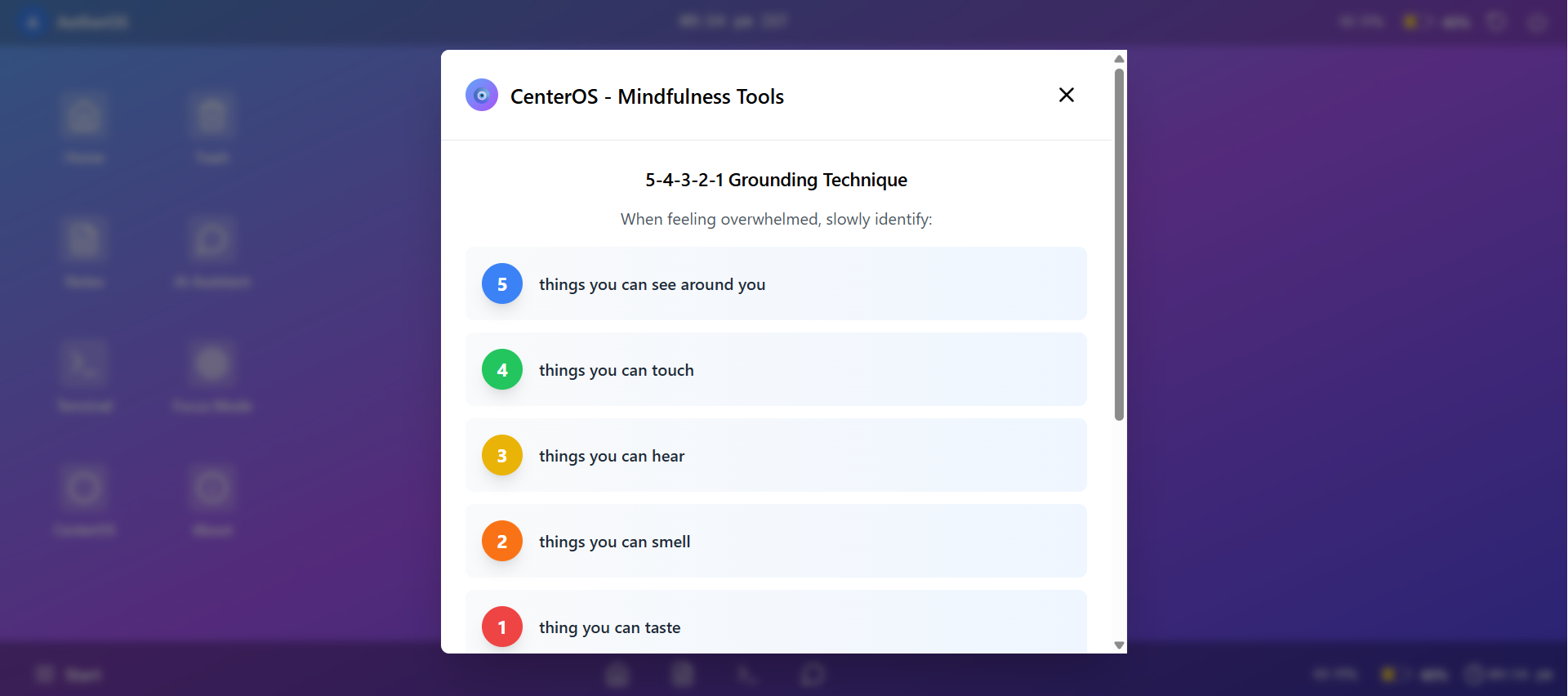
- 🧘 CenterOS — a mental reset space with guided breathing and soft visuals
- 🔁 Startup and Shutdown transitions for immersion and realism
- 🔘 Central power button available at boot and shutdown for OS feel
- ℹ️ "Info" app to explain all features and design philosophy
- 🧱 Structured to integrate GPT-4 via OpenAI API with prompt-based responses
Everything inside AetherOS works — from icon clicks to terminal commands — with zero errors, and each piece is engineered to replicate a real operating system environment while promoting mental peace.
🛠️ How we built it
We used bolt.new, a low-code platform, to build AetherOS using logic-driven UI components, event flows, and simulated app environments. Despite its no-code framework, we built deep interactions typically only possible with code.
Technical Breakdown:
💡 UI Layer:
- Custom-designed desktop with floating windows (modals)
- App icons with hover and click logic
- Glowing animations for power button and transitions
- Custom-designed desktop with floating windows (modals)
🧠 Logic Layer:
- Bolt’s logic engine powers variable states, transitions, and app flows
- Modal logic ensures no overlaps or broken interactions
- AI Assistant uses conditional logic for responses based on user mood keywords
- Bolt’s logic engine powers variable states, transitions, and app flows
⌨️ Terminal Simulation:
- Regex parsing for CLI commands
- Predefined responses for commands like
ls,cd,clear - Command history managed using Bolt’s state blocks
- Regex parsing for CLI commands
🔄 System Transitions:
- Startup: Dark screen > Load screen > Desktop
- Shutdown: Modal + Goodbye message + Fade out > Centered power icon
- Startup: Dark screen > Load screen > Desktop
🧩 App Logic:
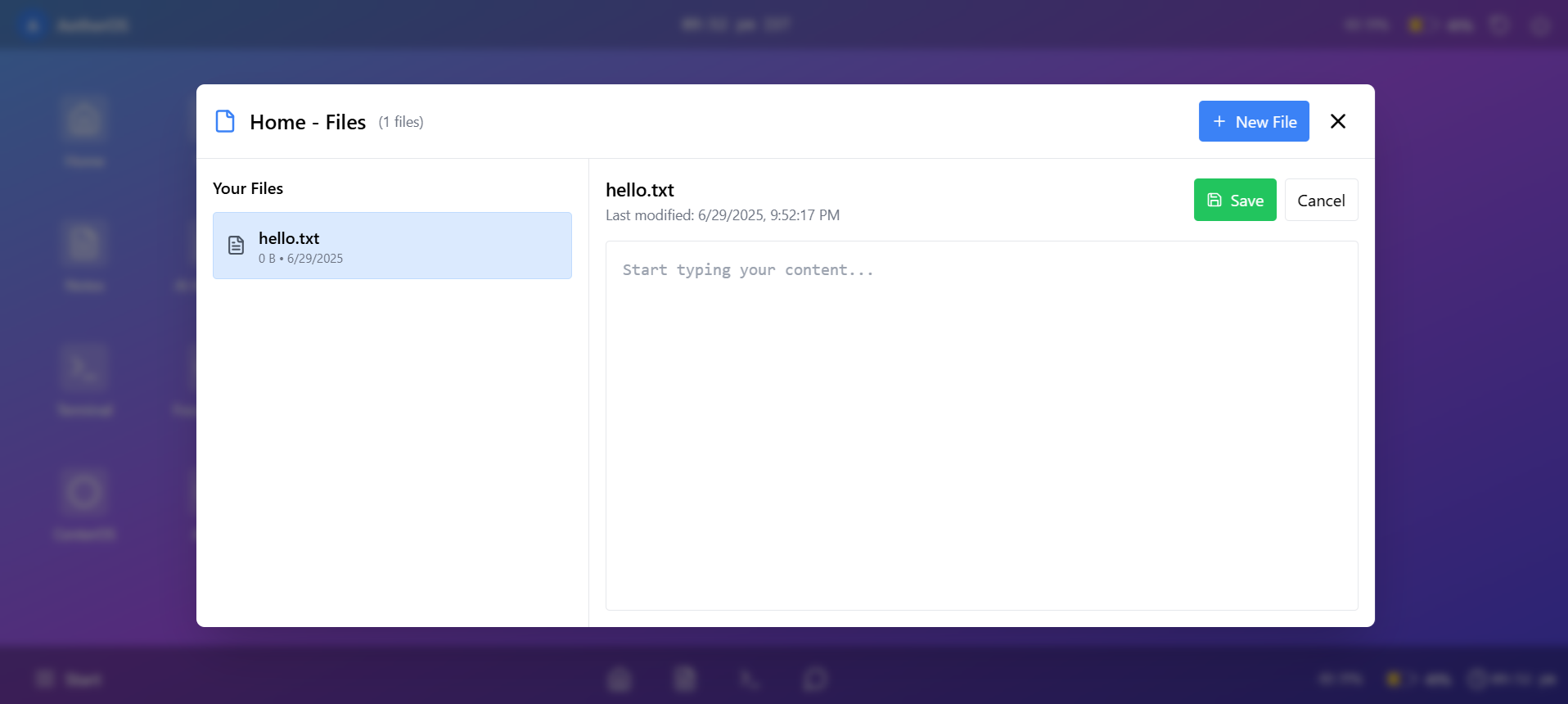
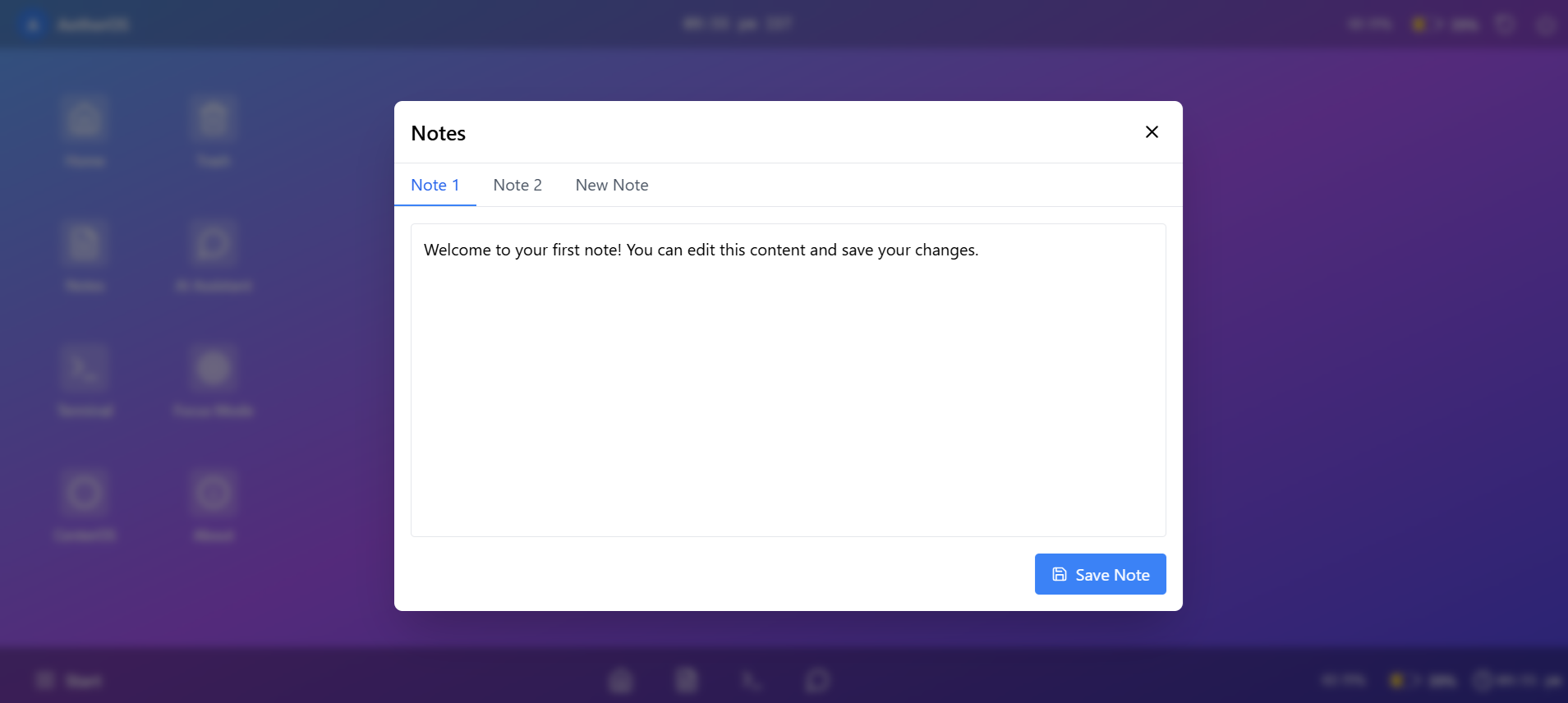
- Notes auto-save entries
- Focus Mode tracks time and hides distractions
- CenterOS uses smooth visuals, breathing pace animations
- GPT-4 API integration ready using Bolt's Webhook trigger + HTTP block
- Notes auto-save entries
Every app, screen, and interaction is connected seamlessly, with every possible user action tested and bug-proofed.
🧱 Challenges we ran into
Despite Bolt being low-code, building a complex simulation like AetherOS was full of surprises:
- 🔁 Designing accurate OS transitions — Startup, Shutdown, Power States — with visual smoothness
- ⌨️ Simulating terminal logic with state variables and custom outputs without breaking syntax
- 🧠 Building emotion-aware AI logic that felt real and helpful — not robotic or repetitive
- 📏 Responsive UI scaling across resolutions without distortions
- 🔍 Debugging hundreds of interaction states to ensure no dead ends
- 🎯 Designing minimalist UI that feels calming but isn’t boring
- 🔄 Creating a fully working system with zero navigation reloads
We stretched Bolt to its limit — and made it behave like a real operating system.
🏆 Accomplishments that we're proud of
- ✅ Completed a bug-free, clickable, simulated OS from scratch
- 💡 Created a terminal that executes real Linux-like commands
- 🤖 Developed an AI Assistant with logic for emotional support
- 🧘 Built CenterOS, a new concept that merges mental health and productivity
- 🔗 Integrated every component with no broken links or state mismatches
- 🧠 Structured the system for future integration with OpenAI’s GPT API
- 🎨 Designed a beautiful, calming UI with smooth flow and transitions
- 🎥 Added startup + shutdown sequences that simulate real OS feel
- 🧱 Delivered a project that stands out in terms of emotion, usability, and polish
📚 What we learned
- How to map system-level behaviors using only UI logic
- How to design an interface that’s not just usable but emotionally supportive
- The power of low-code tools when paired with structured logic thinking
- The importance of mental health in digital UX
- How to simulate terminal logic using nothing but variables
- That focus, flow, and calmness can coexist in a digital workspace
- How users emotionally react to visuals, words, and transitions
This project taught us that good design isn't just what you see — it's what you feel.
🔮 What's next for AetherOS
We see AetherOS as more than a project — it’s a digital movement. Here’s what’s next:
- 🎙️ Voice-to-AI interaction with mood-sensitive feedback
- 🌐 GPT-4 API integration for richer conversation and journaling
- 📊 Mood tracking dashboard — visualize focus, stress, and emotional trends
- 📦 Plugin modules like:
- 🧘 Ambient sound player
- 📅 Daily affirmation app
- 📔 Journal with emotional analysis
- 📌 Habit tracker synced with Focus Mode
- 🧘 Ambient sound player
- 📱 Full mobile/tablet optimization
- 🔓 Launching an open beta for students and creators
- 🛠️ Making AetherOS available as a web productivity tool for the mental wellness community
Ultimately, AetherOS will be the OS not for your machine, but for your mind.
🙏 Final Thought
AetherOS isn’t just a project built for a hackathon.
It’s a reimagination of how we use computers.
It offers productivity — without pressure.
Technology — without noise.
Emotion — without chaos.
Welcome to your calm digital home.
Welcome to AetherOS.
Built With
- accessibility-first-layout-planning
- ai
- api
- bolt.new
- breathing-ui-pattern-generator
- centeros-design
- conditional-logic-flow
- context-persistent-interaction-modeling
- contextual-prompt-design
- css-in-bolt-styling
- custom-app-icon-set-&-asset-management
- custom-ui-components
- drag-drop-interaction-logic
- dynamic-ui-feedback-triggers
- emotion-driven-rule-engine
- event-listeners
- file-icon-behavior-simulation
- focus-timer-logic
- global-state-synchronization-logic
- gpt-4-ready-architecture
- http-api-integration
- input-validation-logic
- interactive-boot
- json-command-mapping
- low-code-os-simulation-architecture
- modal-window-system
- modular-app-design
- mood-sensitive-ai-interaction-framework
- nosql-style-logic-store
- openai-api
- power-button-animation-logic
- power-flow
- real-time-app-state-transitions
- regex-based-terminal-parser
- startup/shutdown-transition-engine
- state-logic-engine
- terminal-command-mapper
- transition-safety-checks
- ui-timing-flow
- user-mood-keyword-classifier
- variable-based-state-management
- webhooks
- zero-error-user-path-design


Log in or sign up for Devpost to join the conversation.