-
-
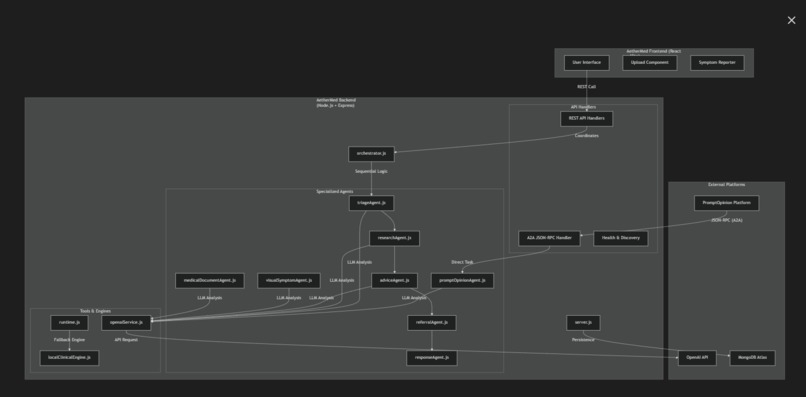
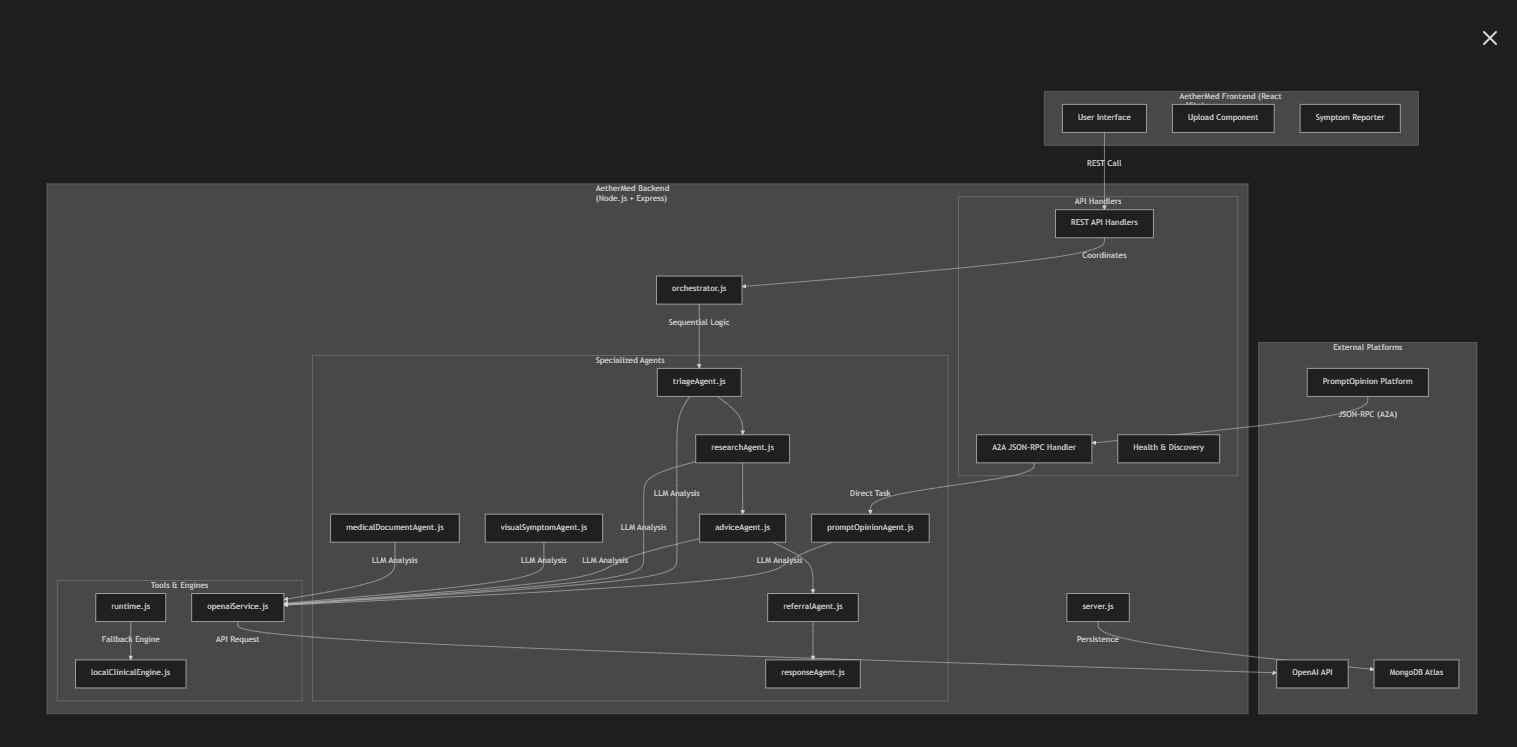
Project Architecture
-

Logo
-
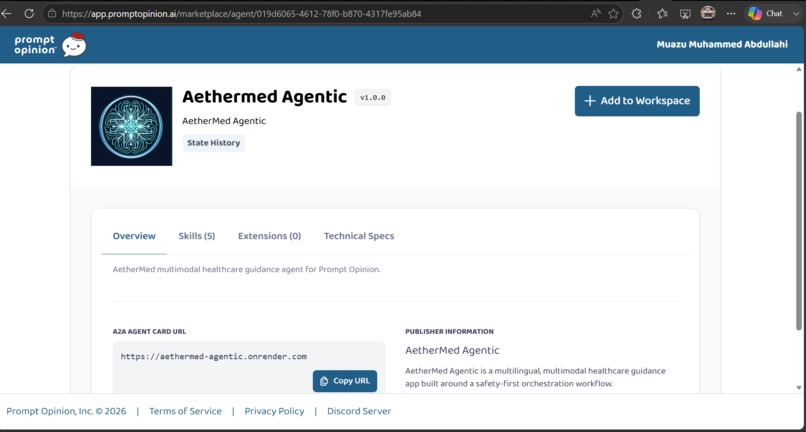
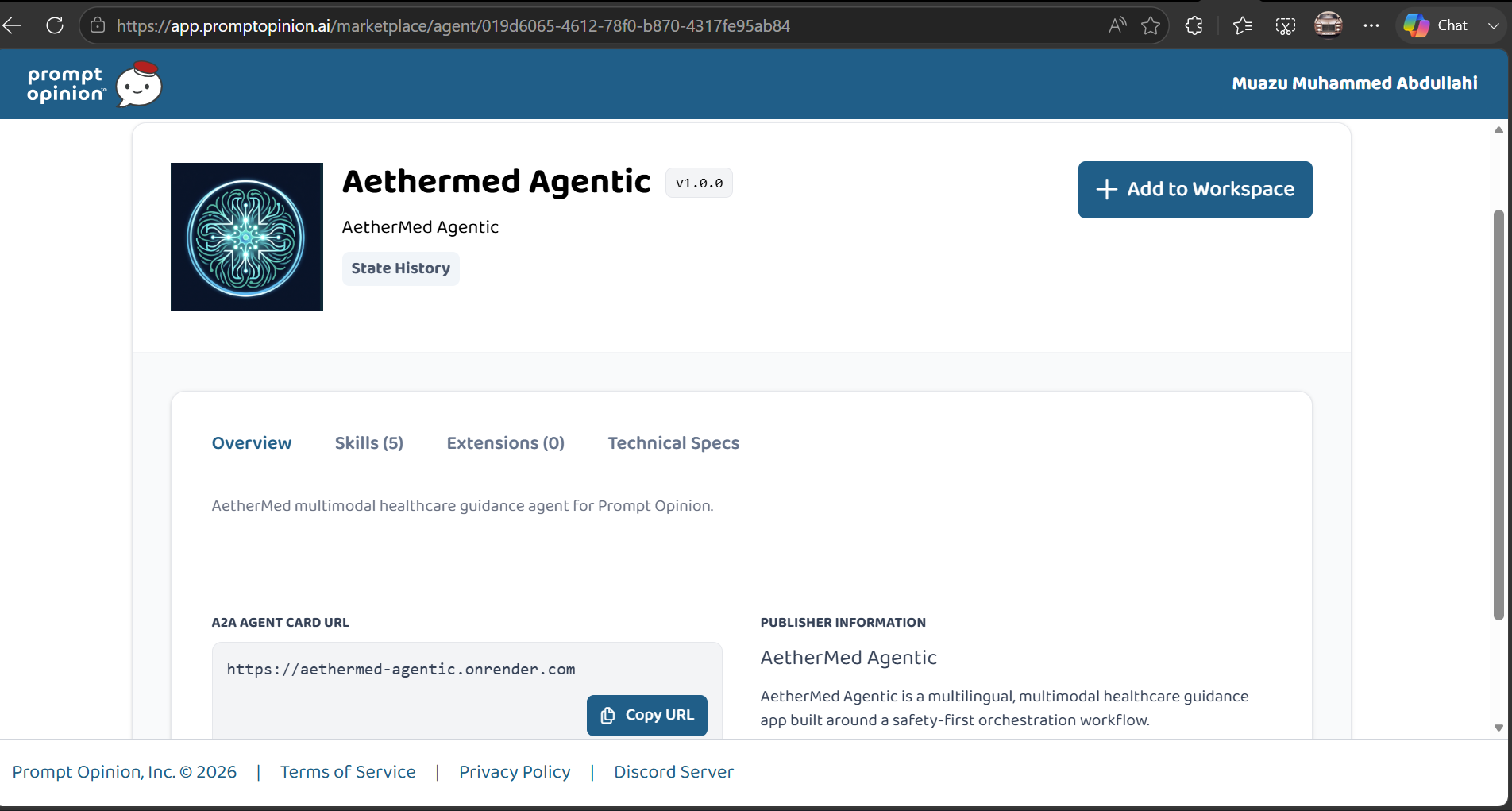
publish on Prompt Opinion

Inspiration: Access to timely and reliable healthcare guidance remains a major challenge, especially in regions where medical resources are limited or delayed. Many individuals struggle to interpret symptoms correctly or decide when to seek urgent care. We were inspired to build a system that doesn’t just respond like a chatbot, but thinks, analyzes, and guides users through healthcare decisions using coordinated AI agents.
What it does: AetherMed Agentic is a multi-agent AI healthcare assistant that:
- Analyzes user symptoms
- Assesses risk level (low, moderate, emergency)
- Retrieves relevant medical insights
- Provides safe, actionable recommendations
- Suggests next steps (home care, clinic visit, emergency action) Unlike traditional AI tools, it operates as a collaborative system of agents that work together to deliver structured, decision-based outputs.
How we built it: We designed AetherMed Agentic using a modular, agent-based architecture: Frontend: React-based interface for symptom input and result display Backend: Node.js server handling API requests and orchestration AI Layer: Multiple specialized agents:
- Triage Agent (risk classification)
- Research Agent (medical insights)
- Advice Agent (recommendations)
- Referral Agent (next steps)
Orchestrator: Coordinates communication between agents (A2A flow) Tools Layer (MCP-style): Custom APIs for symptom analysis, risk scoring, and response formatting This structure ensures the system behaves like a real decision engine, not just a single-response model.
Challenges we ran into: Designing true agent-to-agent communication instead of a simple linear chatbot. Ensuring safe and responsible outputs without making medical diagnoses Structuring responses in a way that is both clear and clinically meaningful Balancing technical complexity with hackathon time constraints Creating a system that feels realistic while using simulated healthcare data
Accomplishments that we're proud of Successfully built a multi-agent AI system, not just a chatbot Implemented a clear triage and decision-making workflow Designed a scalable architecture aligned with real-world healthcare systems Delivered a working end-to-end prototype within hackathon constraints Prioritized user safety, clarity, and practical usability
What we learned: The power of agent-based architecture in solving complex real-world problems. How to structure AI systems for decision-making rather than conversation The importance of safety, disclaimers, and ethical AI design in healthcare. How to rapidly prototype and deliver under pressure The value of modular design for scalability and future improvements
What's next for AetherMed Agentic Integrating real healthcare APIs and datasets Adding location-based hospital and pharmacy recommendations Supporting voice input and multilingual interaction Improving AI accuracy with better medical knowledge sources Enhancing privacy with secure data handling and compliance standards Expanding into a full digital health assistant platform
Built With
- express.js
- html/css
- javascript-(node.js)
- mongodb
- multimodal-ai-(vision)
- openai-api-(gpt-4o-mini)
- react
- rest-apis
- tailwind

Log in or sign up for Devpost to join the conversation.