-
-
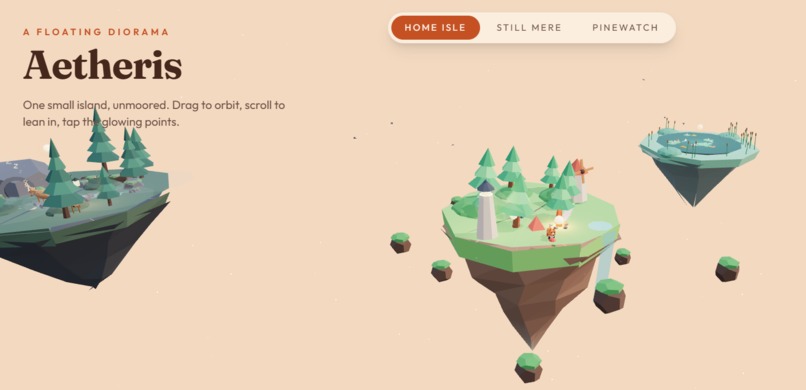
Aetheris
-
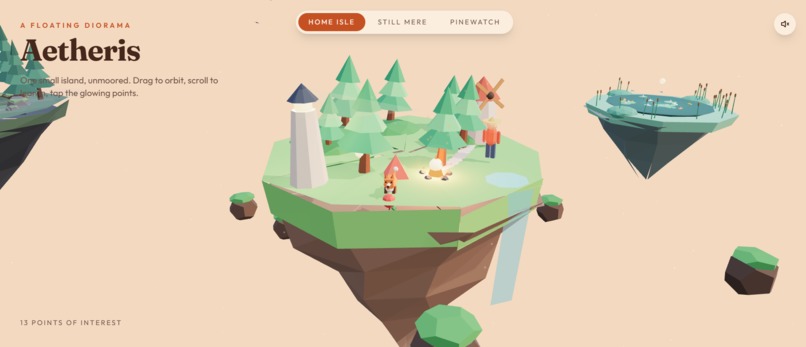
Home Isle
-
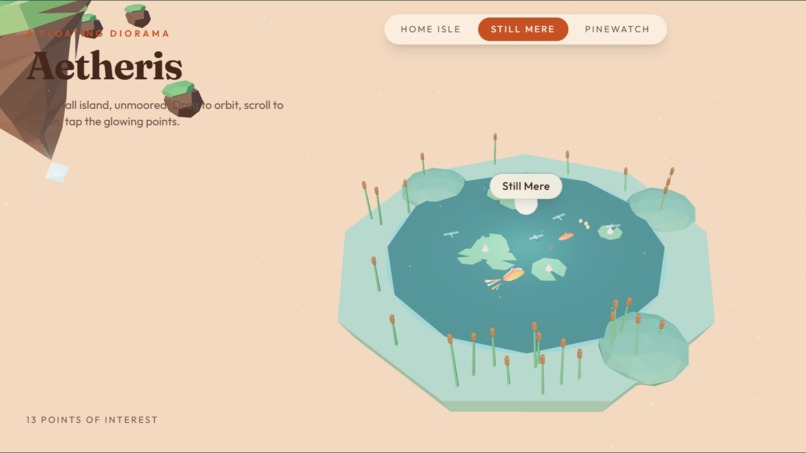
Still Mere
-
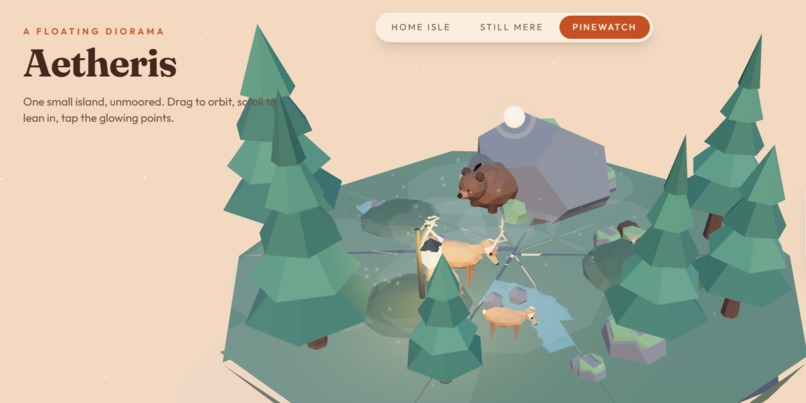
Pine Watch
Inspiration
We wanted to build something that felt less like a "website" and more like a small world you could hold in your hands — the feeling of looking into a diorama or a snow globe, except you can orbit around it, lean in close, and find things.
What it does
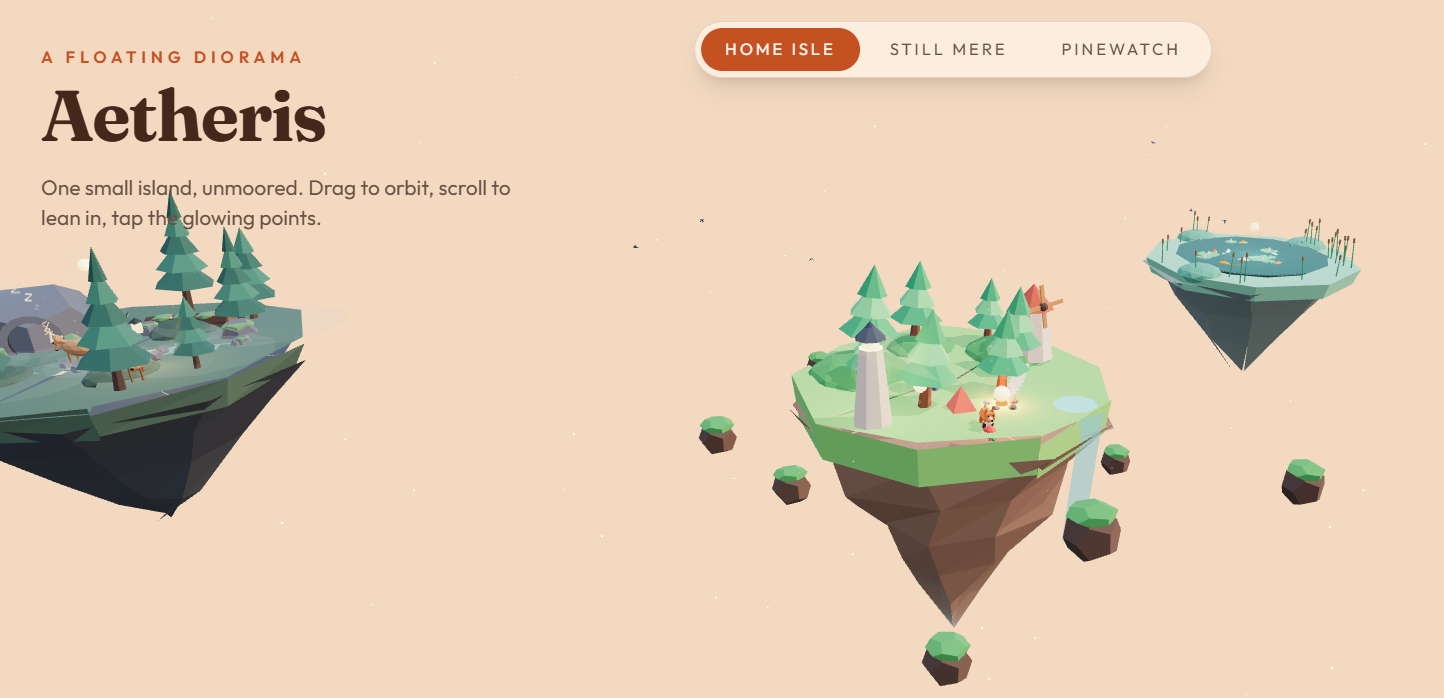
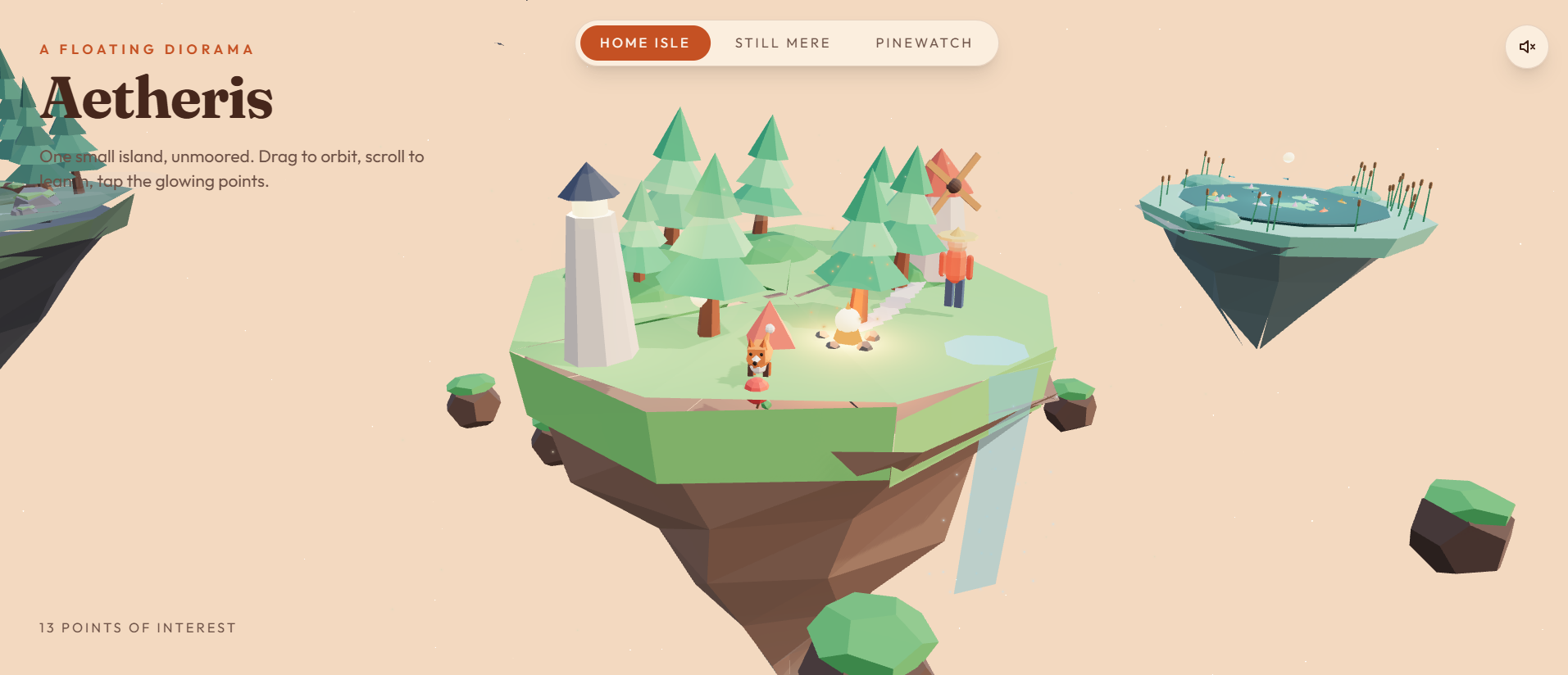
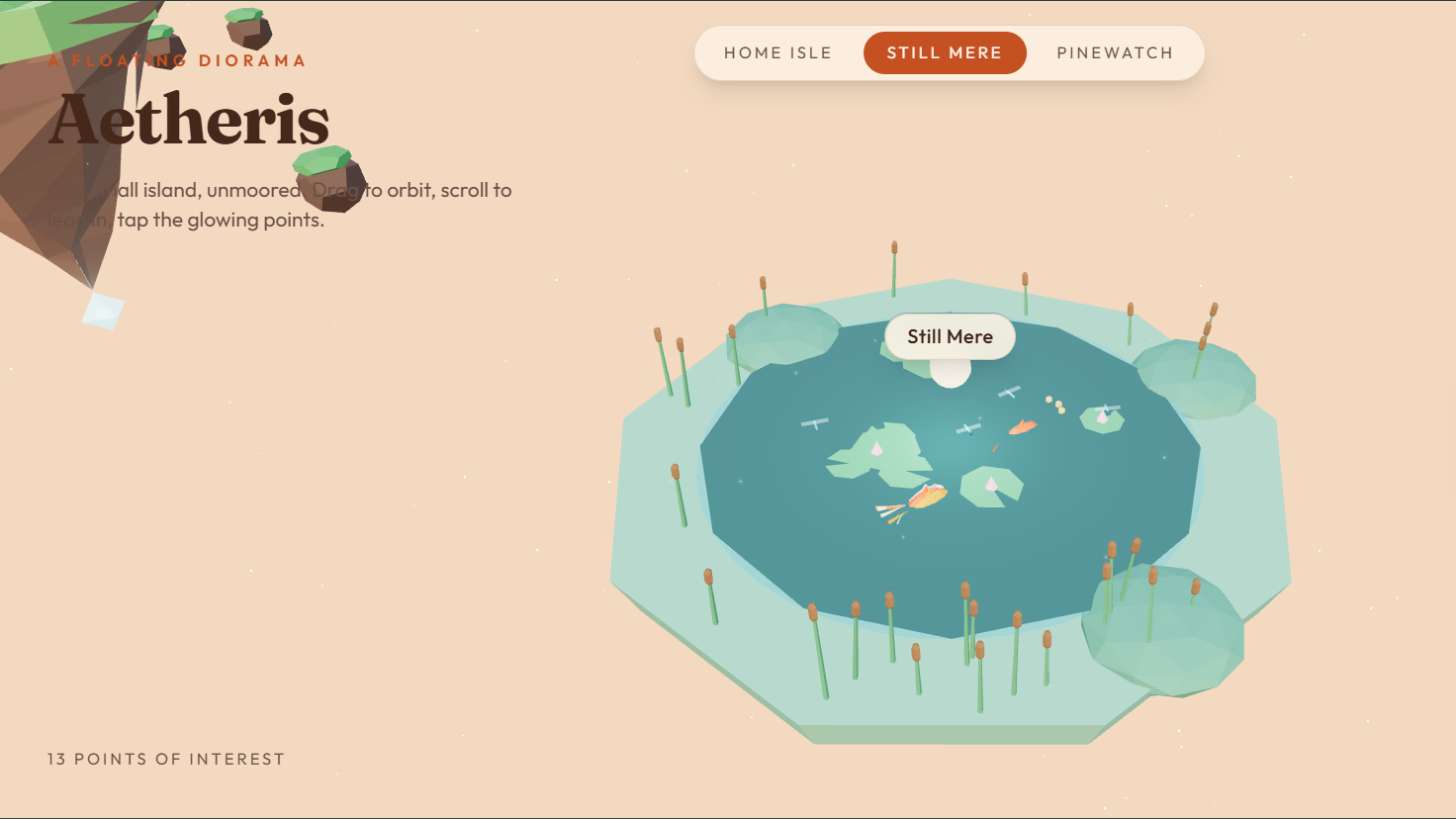
Aetheris is a collection of floating islands ("isles"), each with its own terrain, mood, and inhabitants. Right now the atlas holds Home Isle (the anchor world — windmill, campfire, forest, a resident fox) and Still Mere (a quiet lake isle with lily pads and dragonflies), with more isles planned. Every isle shares the same interaction language — drag to orbit, scroll to zoom, click to discover — so exploring a new one always feels familiar within seconds.
How we built it
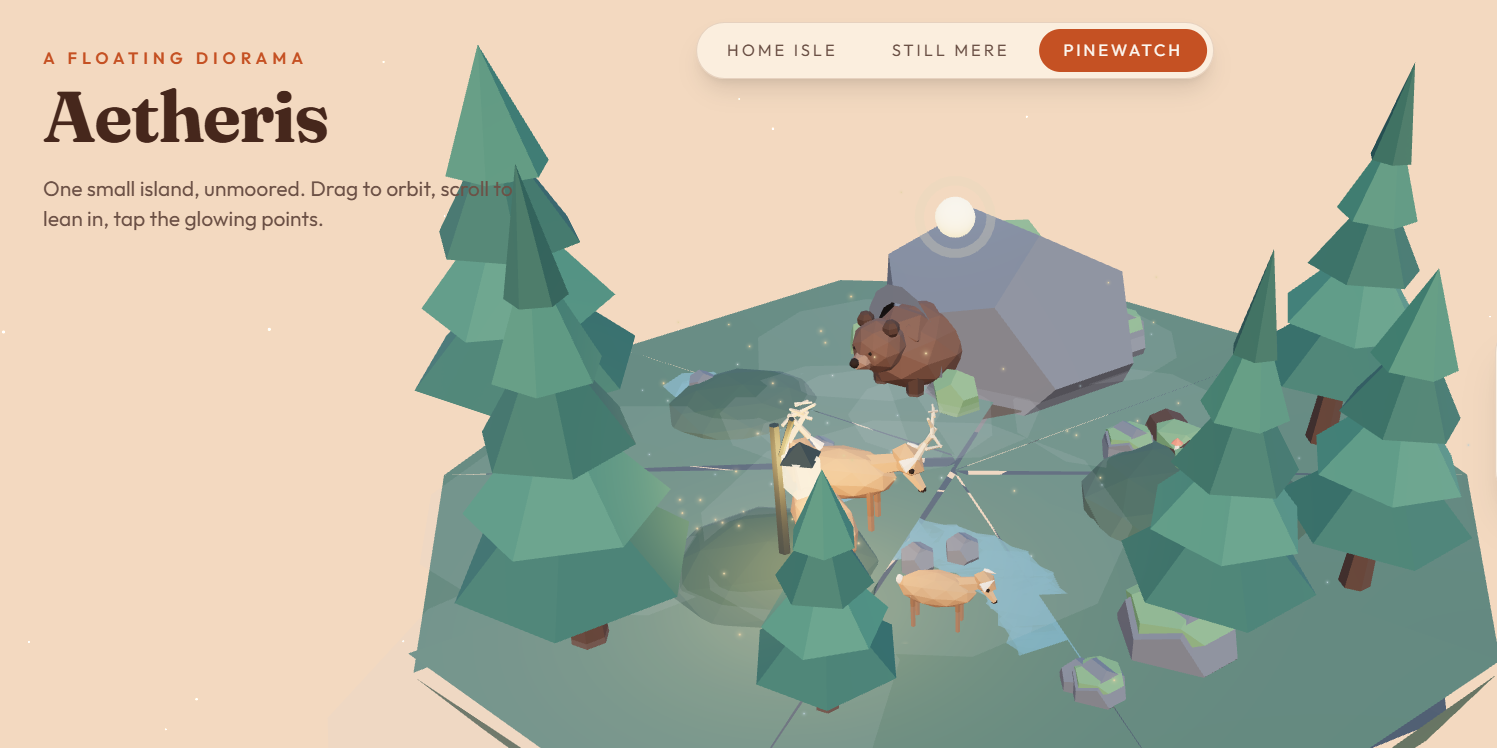
Built with Next.js and Tailwind CSS, with the 3D scenes rendered in Three.js. Each isle is a low-poly, hand-modeled floating landmass with faceted geometry and flat shading — we leaned hard into a consistent "storybook diorama" art style rather than photorealism, since that let us prioritize mood and charm over raw geometric complexity.
Challenges we ran into
Getting low-poly creatures to read as charming rather than unfinished took real iteration — proportions, silhouette, and eye placement mattered far more than polygon count. Keeping a consistent visual and interaction language across multiple isles (so the atlas feels like one product, not a pile of demos) was the other big design constraint we kept coming back to.
What we learned
Constraint is a feature. Committing to a small, deliberate color palette and a strict low-poly style per isle made everything — lighting, animation, even camera framing — easier to get right, and gave the whole atlas a coherent identity.
What's next for Aetheris
More isles, a wider camera-based navigation shell to fly between them, and deeper small interactions within each one.
Built With
- framer-motion
- gsap
- nextjs
- tailwindcss
- three.js
- typescript
- webgl

Log in or sign up for Devpost to join the conversation.