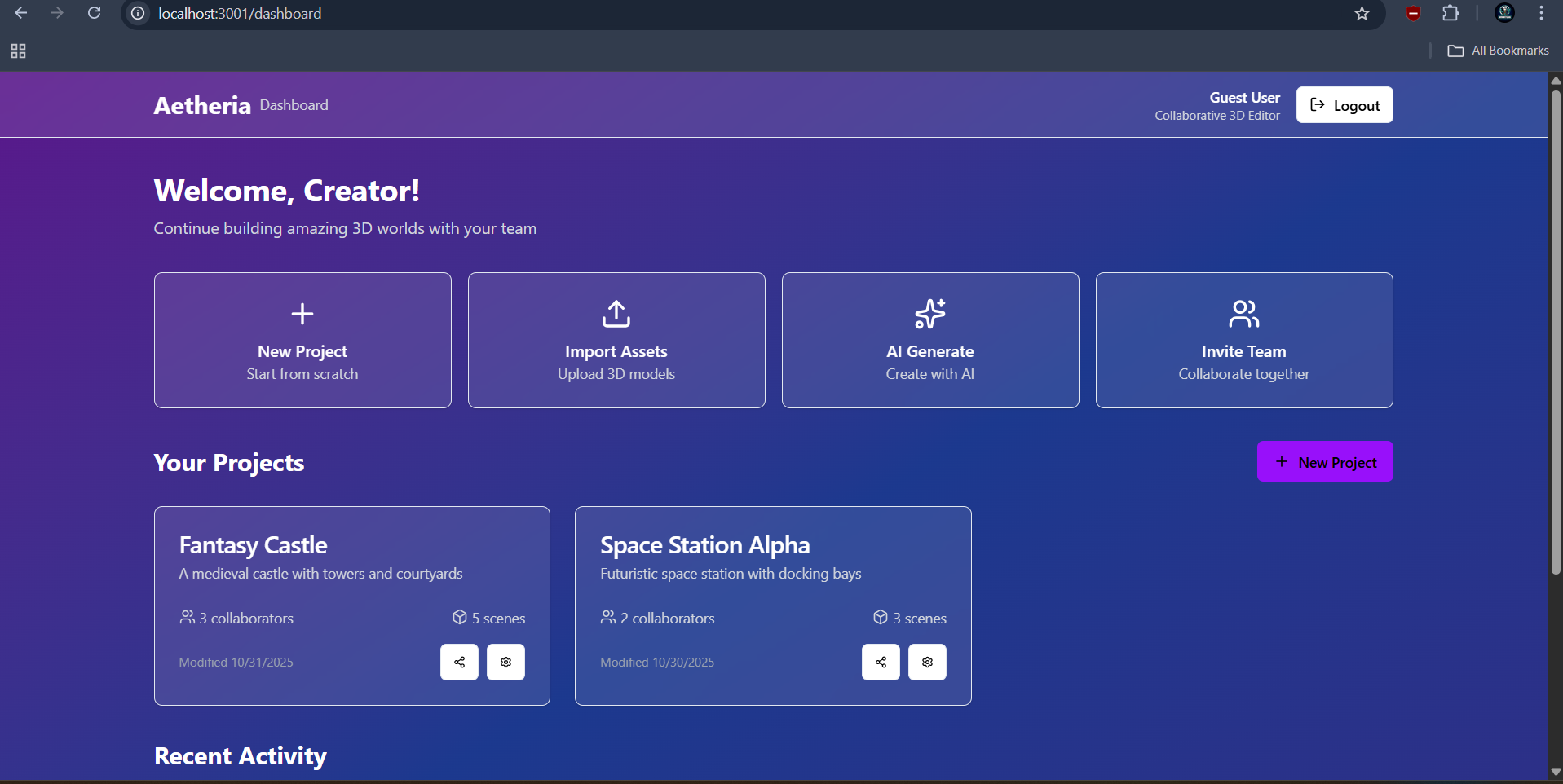
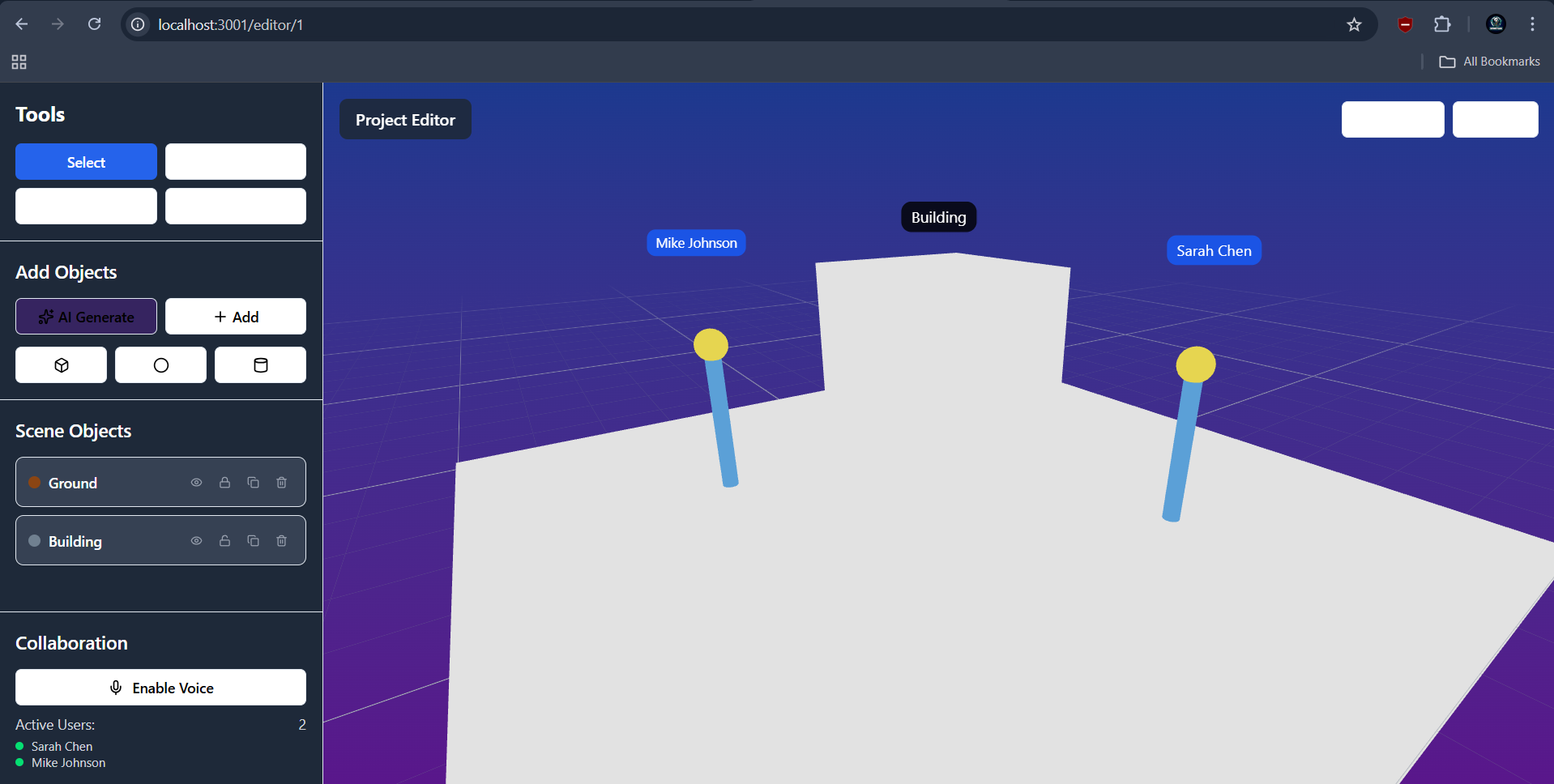
The idea for Aetheria emerged during a complex project in which I collaborated with architects and designers from different continents. Despite everyone’s talent and enthusiasm, we were constantly hindered by technical and logistical obstacles: syncing large 3D files, waiting for feedback cycles, and struggling with incompatible tools. Our creativity kept running into walls built by version conflicts, hardware limits, and network latency. Coordinating true real-time collaboration, not just file sharing, felt almost impossible.
Determined to break these barriers, I set out to design a platform that would let teams create and modify 3D worlds together—live, in their browsers—no matter where they were or what device they used. The journey was far from easy. I had to integrate cloud-hosted physics engines, learn real-time networking, and experiment with generative AI for model creation. Every solution seemed to uncover new challenges, especially around latency, asset synchronization, and preserving the “flow” of shared creativity.
Through countless prototypes and setbacks, I learned to prioritize not only technical performance, but also the user experience—streamlining workflows, making interfaces intuitive, and ensuring feedback felt immediate. The biggest realization was that technology must dissolve into the background to let creativity and collaboration thrive. Ultimately, Aetheria became more than just a technical achievement; it’s a testament to perseverance, adaptability, and the shared desire to make digital world-building as accessible and interactive as possible for teams everywhere.
Built With
- firebase
- gemini
- github
- javascript
- next
- react
- tailwind
- typescript
- vercel

Log in or sign up for Devpost to join the conversation.