Inspiration# AetherGrid – Offline-First AI Operating System for Urban Traffic Management
Inspiration
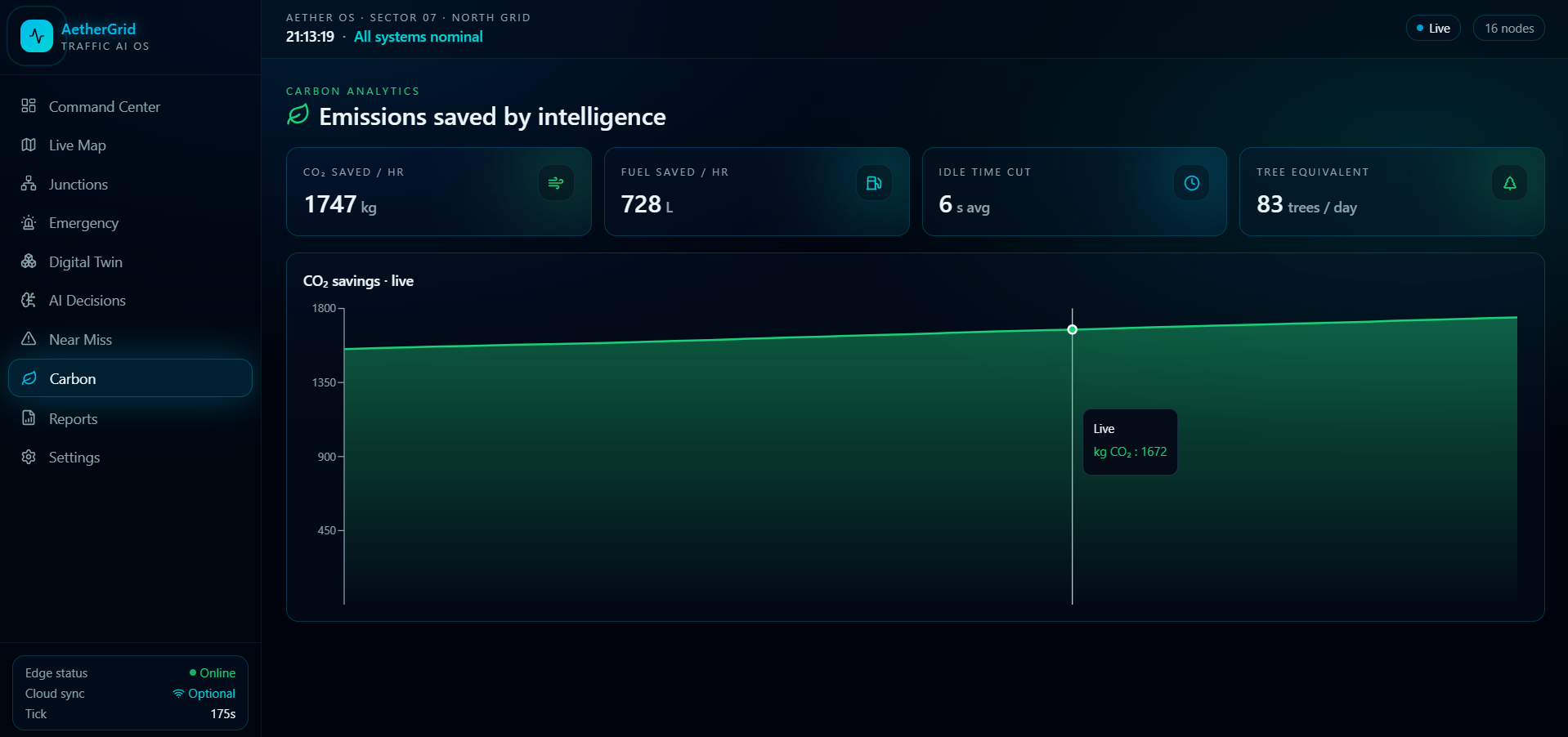
Traffic congestion is one of the biggest challenges faced by modern cities. Fixed-time traffic signals often fail to adapt to real-time road conditions, leading to longer travel times, unnecessary fuel consumption, delayed emergency services, and increased carbon emissions.
Most existing smart traffic systems rely heavily on cloud connectivity. We wanted to answer a simple question:
What if an entire city's traffic management system could continue operating intelligently even without the internet?
This idea inspired us to build AetherGrid, an offline-first AI-powered traffic management platform designed to make cities safer, smarter, and more resilient.
What it does
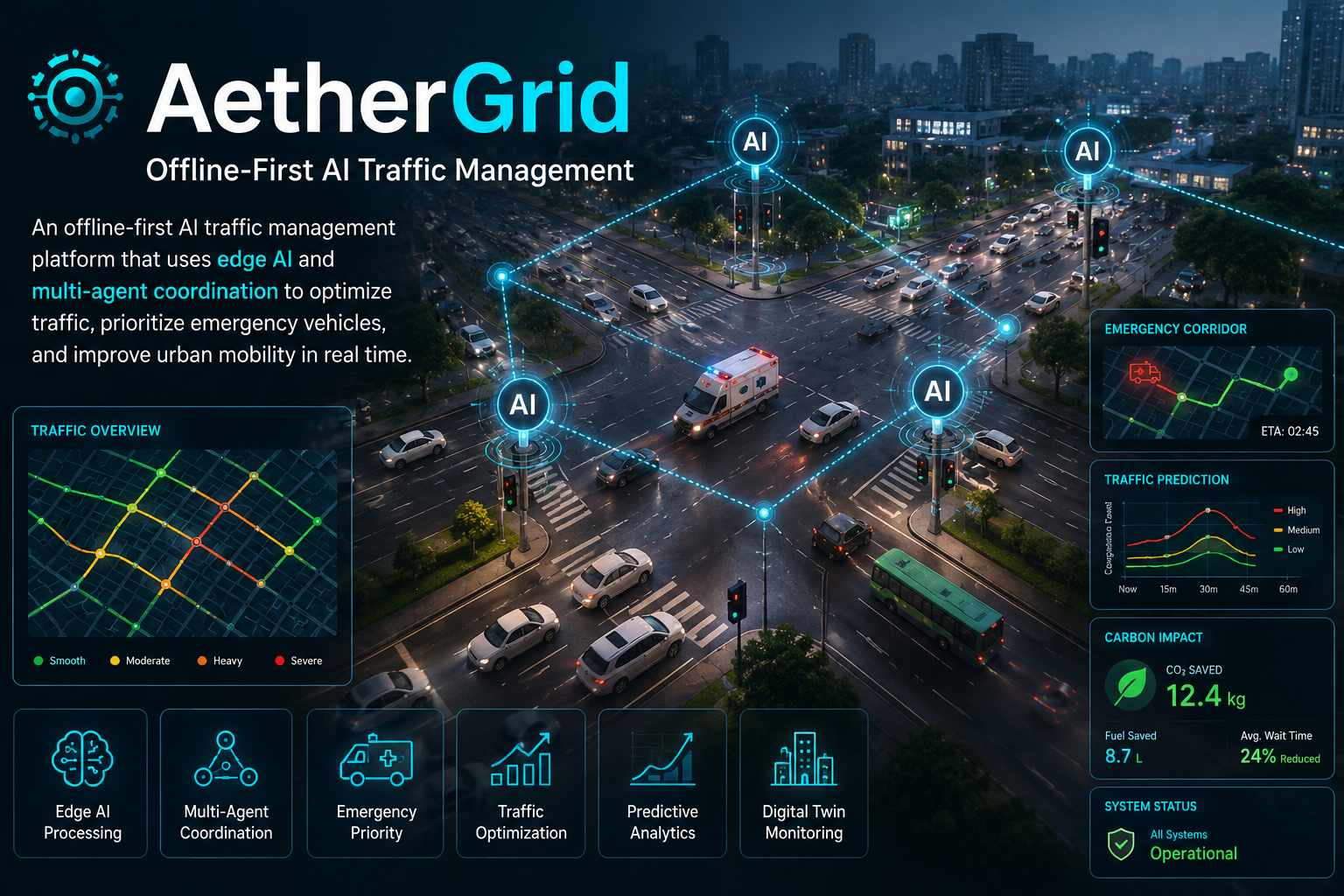
AetherGrid transforms traditional traffic signals into intelligent AI-powered intersections.
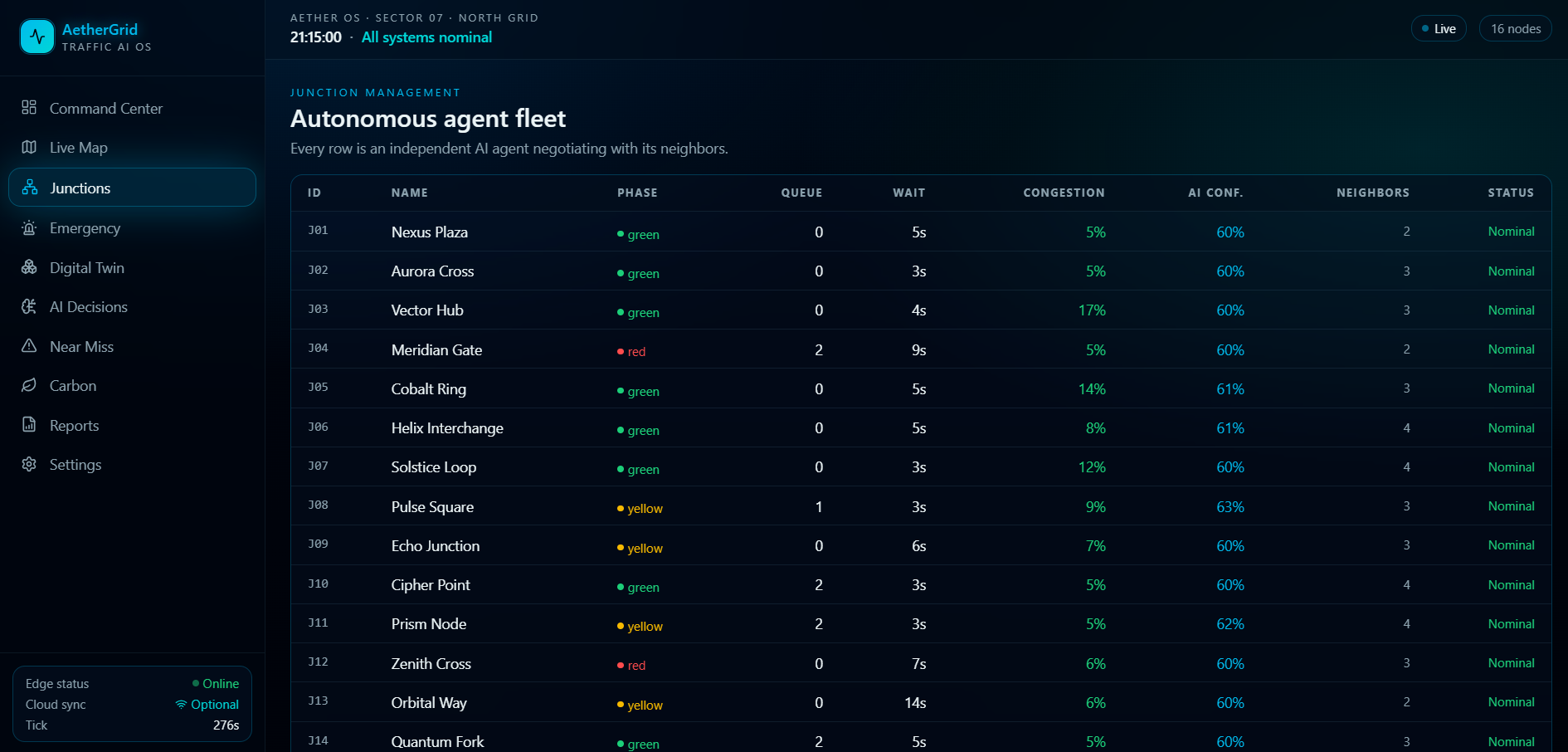
Each junction acts as an independent AI agent capable of:
- Detecting vehicles using computer vision
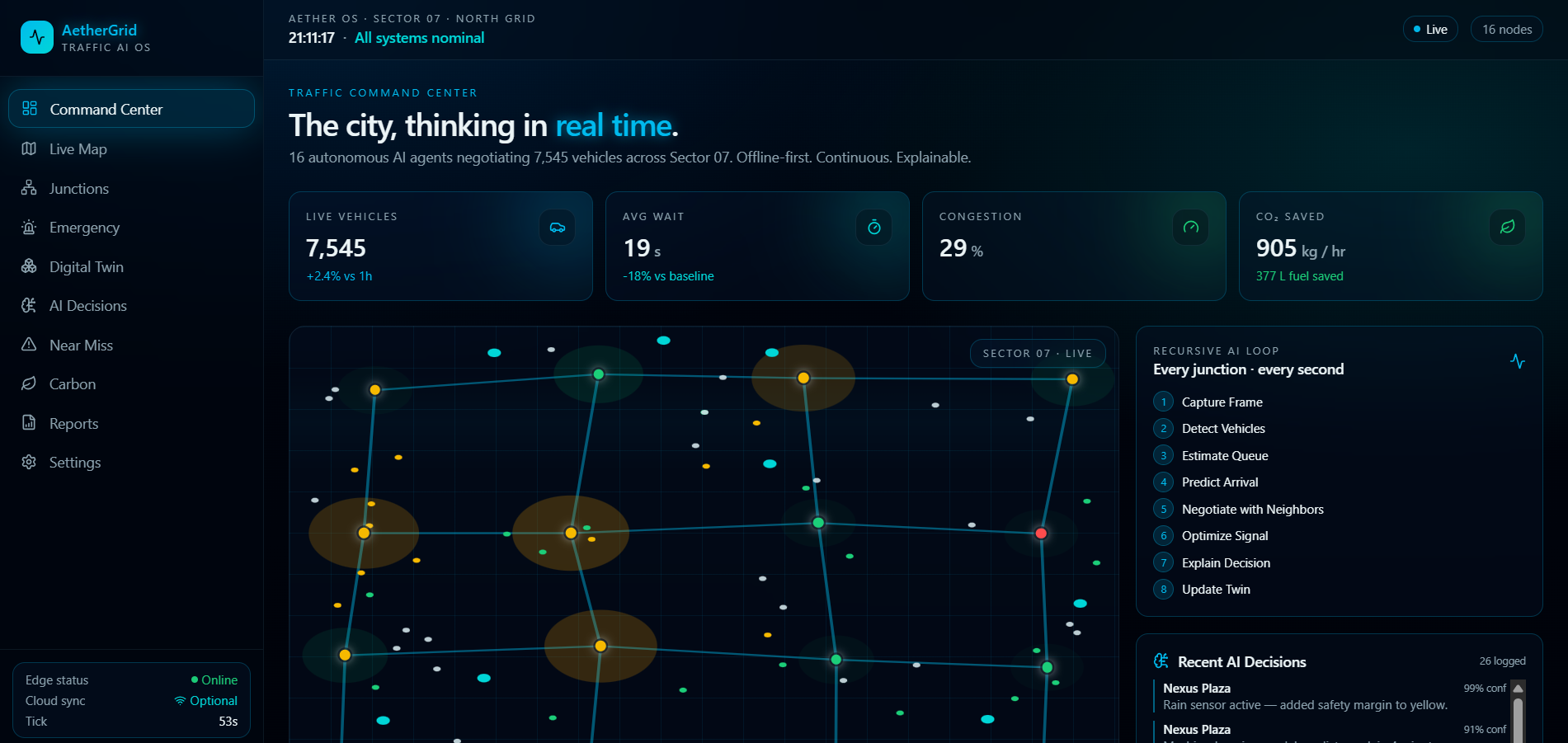
- Monitoring traffic density
- Optimizing traffic signals in real time
- Coordinating with neighboring intersections
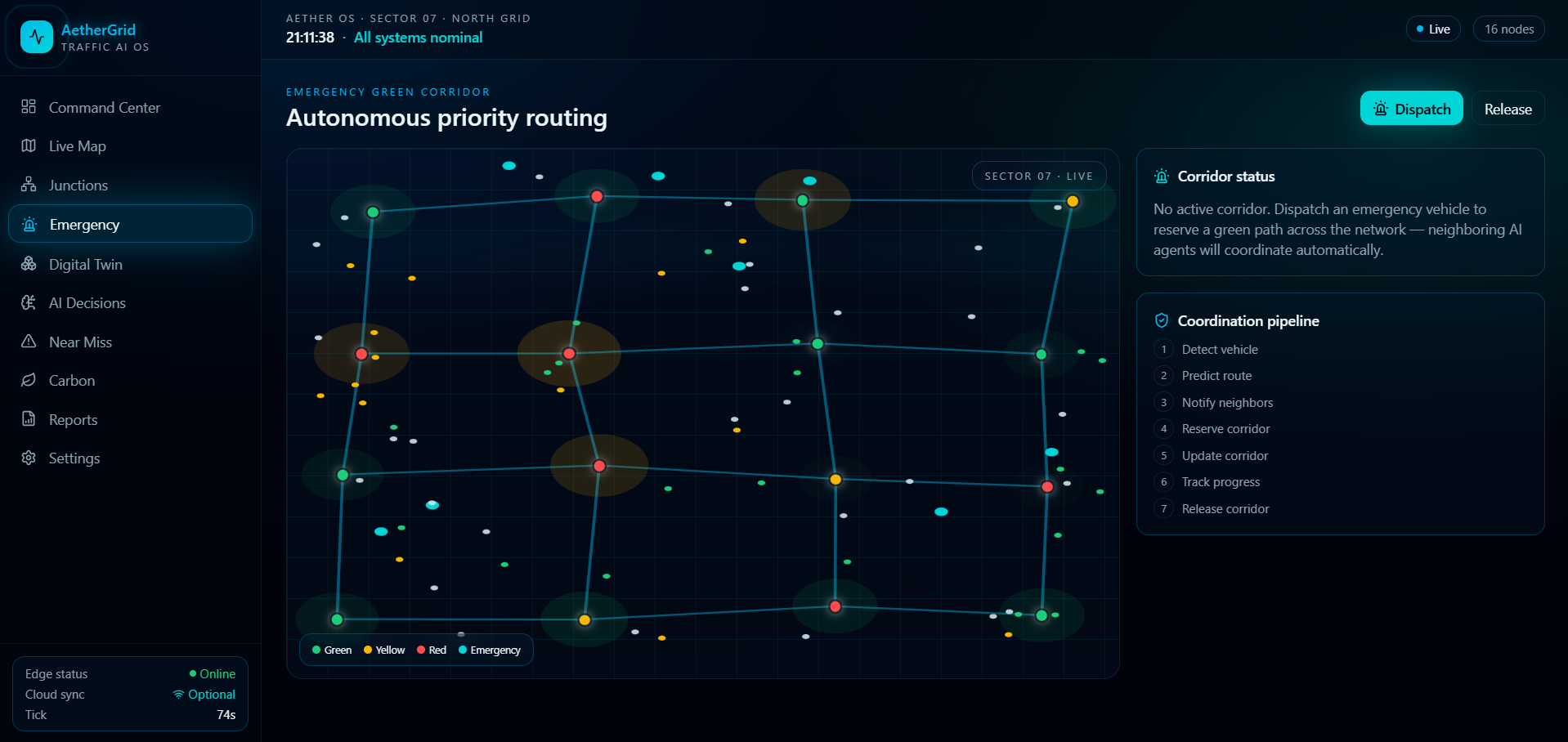
- Prioritizing emergency vehicles through Green Corridors
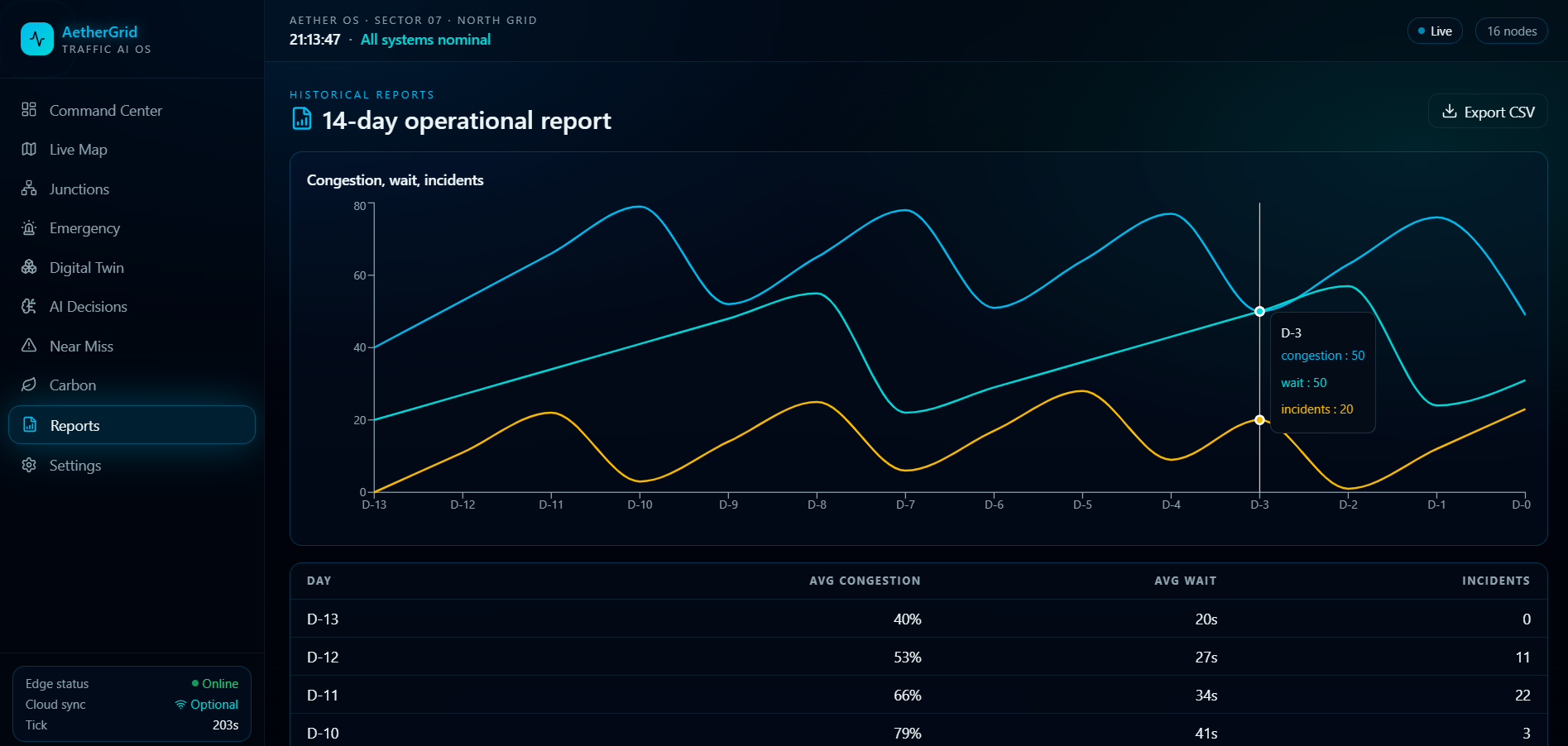
- Predicting congestion before it occurs
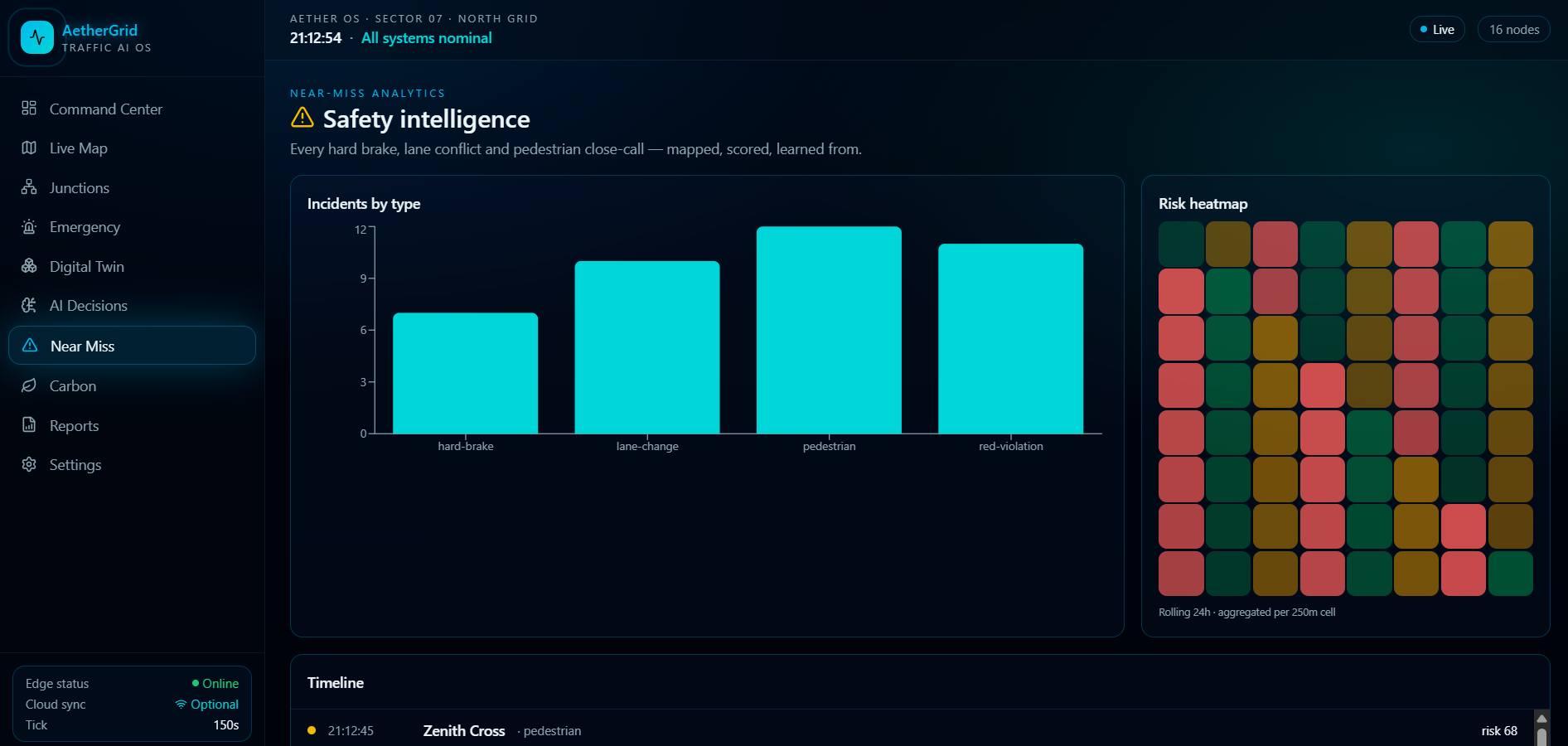
- Detecting near-miss incidents
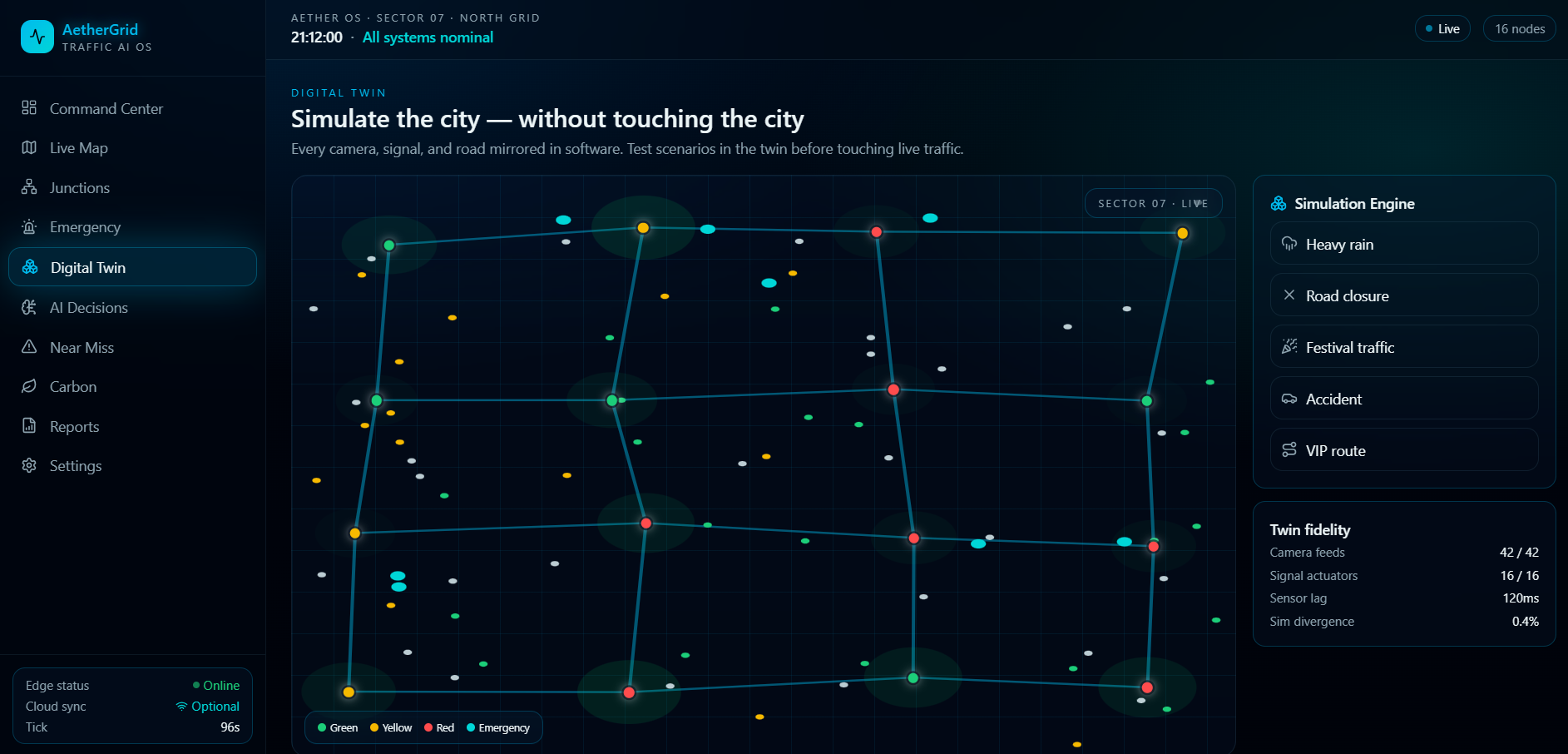
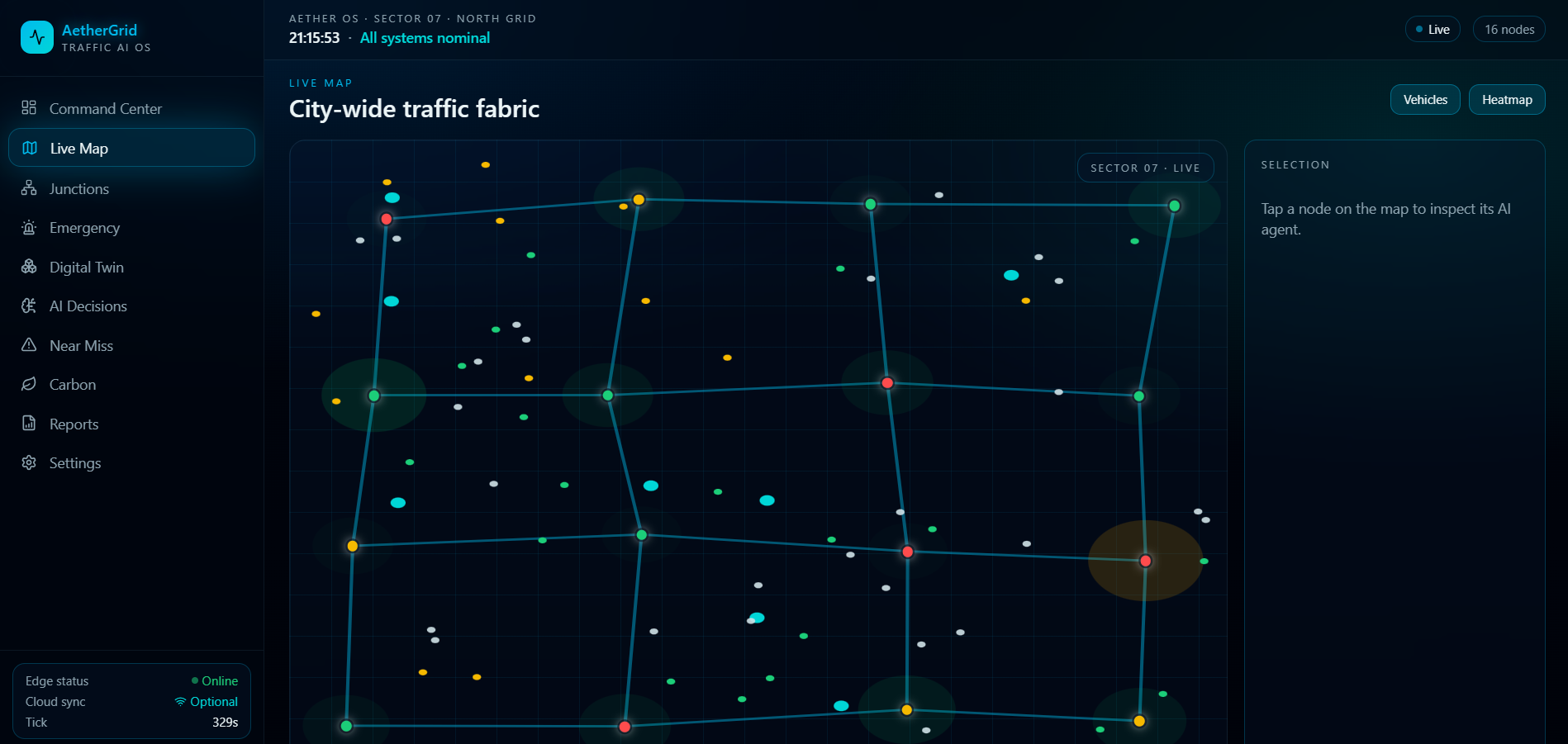
- Providing a Digital Twin for traffic visualization
- Explaining every AI decision through an Explainable AI dashboard
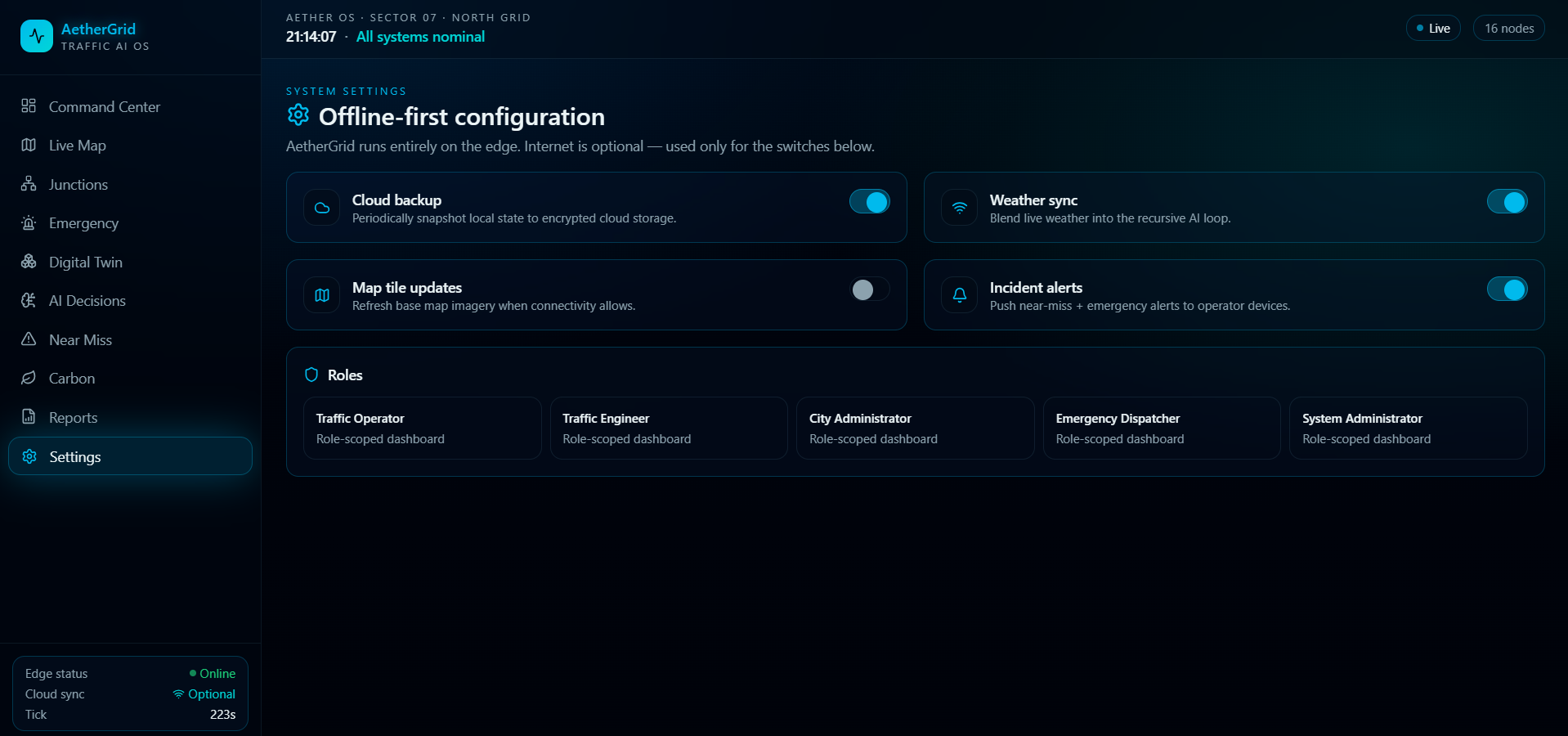
The system is designed to work even when internet connectivity is unavailable by using edge computing and local communication between intersections.
How we built it
We designed AetherGrid as a modular intelligent traffic platform.
Frontend
- React.js
- Vite
- Tailwind CSS
Backend
- FastAPI (Python)
AI & Computer Vision
- OpenCV
- YOLO
- Scikit-learn
Data & Storage
- SQLite (Offline)
- Local Edge Database
Visualization
- Interactive Dashboard
- Digital Twin
- Traffic Heatmaps
The architecture follows an offline-first approach where every intersection processes traffic locally while communicating with neighboring intersections over a local network.
Challenges we ran into
Some of the biggest challenges included:
- Designing a decentralized multi-agent architecture
- Simulating realistic traffic movement
- Coordinating neighboring intersections
- Building an offline-first workflow
- Creating a scalable system architecture suitable for future smart cities
- Balancing prediction accuracy with real-time performance
Accomplishments that we're proud of
- Built an offline-first smart traffic architecture
- Designed a multi-agent AI coordination model
- Implemented emergency Green Corridor planning
- Created a Digital Twin concept for traffic monitoring
- Developed a scalable architecture suitable for future smart city deployment
- Integrated AI prediction, visualization, and explainability into one platform
What we learned
Throughout this project, we learned that smart traffic management is not only about optimizing traffic lights but about coordinating an entire transportation ecosystem.
We gained experience in:
- Edge AI
- Intelligent Transportation Systems (ITS)
- Multi-Agent Systems
- Computer Vision
- AI Decision Making
- Real-time System Design
- Smart City Architecture
What's next for AetherGrid
Future development includes:
- Integration with real CCTV cameras
- Live deployment on embedded edge devices
- Reinforcement Learning for adaptive signal optimization
- Vehicle-to-Infrastructure (V2I) communication
- IoT sensor integration
- Smart parking guidance
- Weather-aware traffic prediction
- Smart city deployment across multiple intersections
AetherGrid aims to become an intelligent, resilient, and scalable traffic operating system capable of supporting the next generation of smart cities.
What it does
How we built it
Challenges we ran into
Accomplishments that we're proud of
What we learned
What's next for AetherGrid
Built With
- ai
- city
- computer
- css
- digital
- edge
- fastapi
- html
- javascript
- learning
- machine
- management
- multi-agent
- opencv
- python
- react
- scikit-learn
- smart
- sqlite
- systems
- tailwind
- traffic
- vision
- vite
- yolo


Log in or sign up for Devpost to join the conversation.