-
-
GOLD AND SILVER
-
-
HIT OF QUANTUM
-
INTO THE STROM
-
BEAM OF PARTICLES
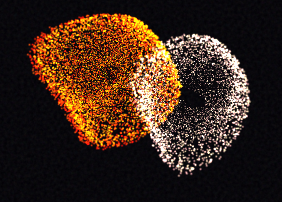
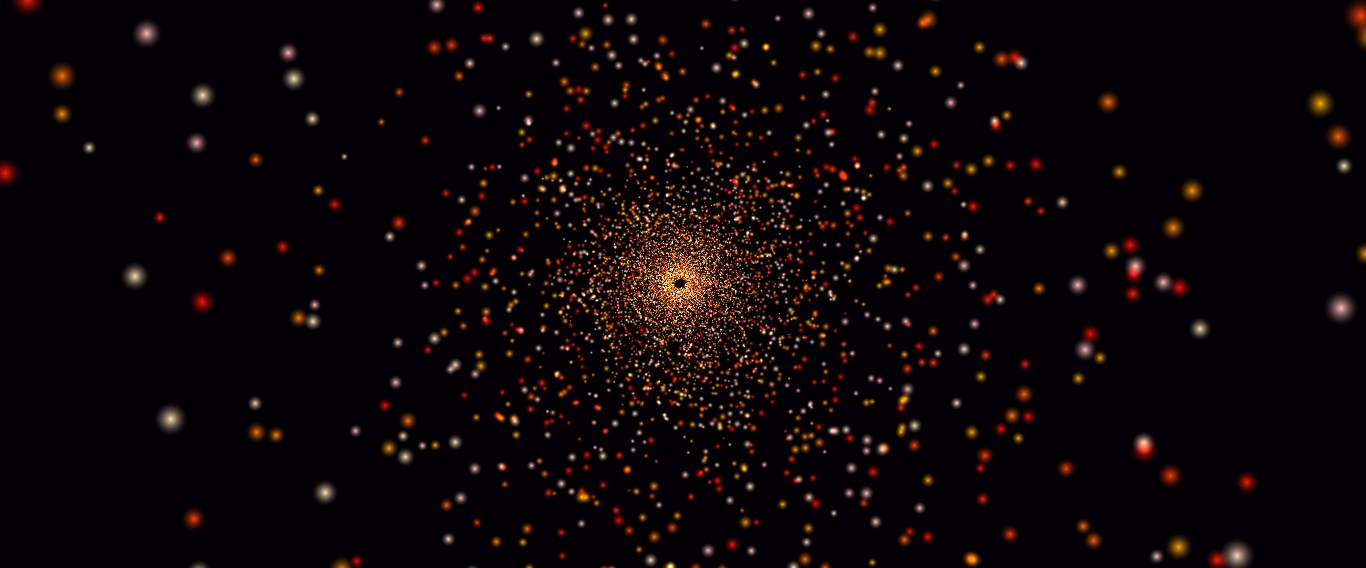
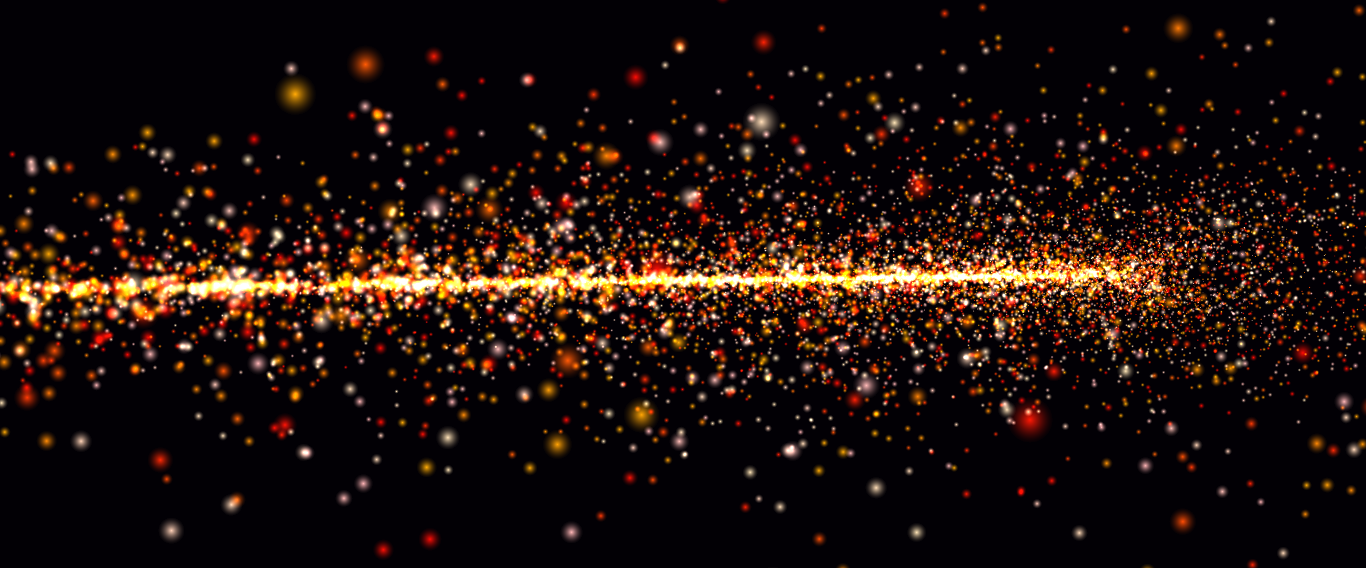
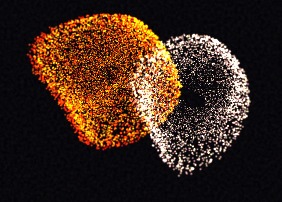
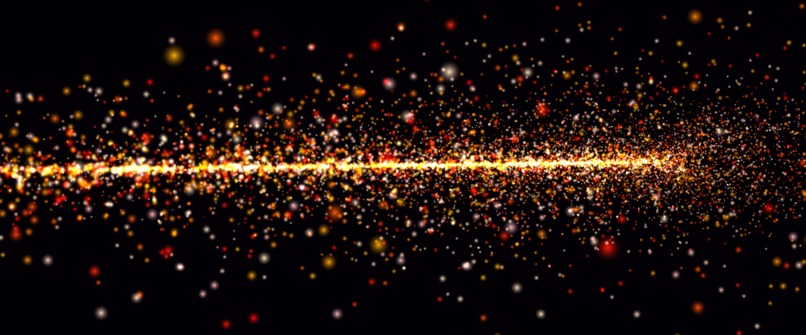
Inspiration The world around us is made of matter, but the deeper we look, the stranger reality becomes. We wanted to explore a simple question: What would it feel like to step inside the invisible world beneath ordinary matter? Instead of creating another traditional website that explains quantum concepts through static text and diagrams, we wanted to turn those abstract mathematical ideas into a breathtaking, interactive 3D visual experience. AETHER was inspired by the realization that the quantum world cannot be represented as familiar objects moving through familiar space. Concepts like probability fields, energy states, and particle wave-functions are profoundly abstract. We chose to represent them through procedural particle systems, flowing mathematical structures, and dynamic light, creating a living environment that visitors can physically explore rather than simply read about. While these are artistic visualizations rather than literal simulations, they are deeply inspired by real quantum mechanics.
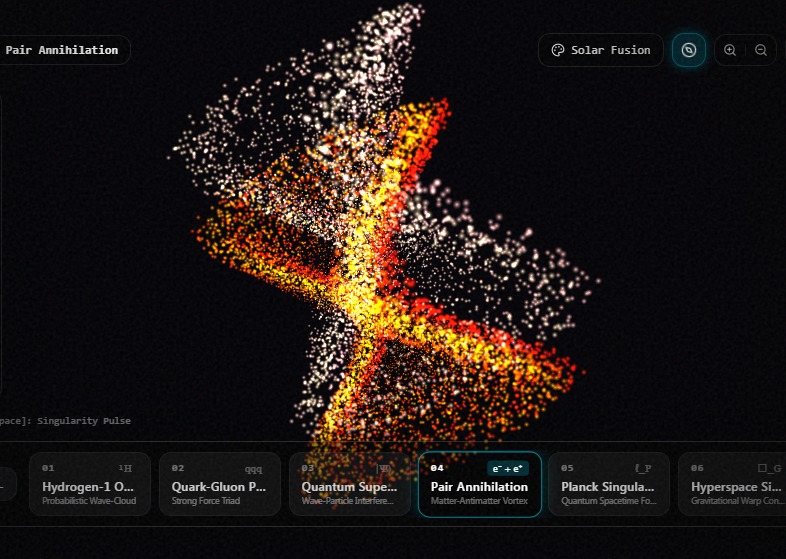
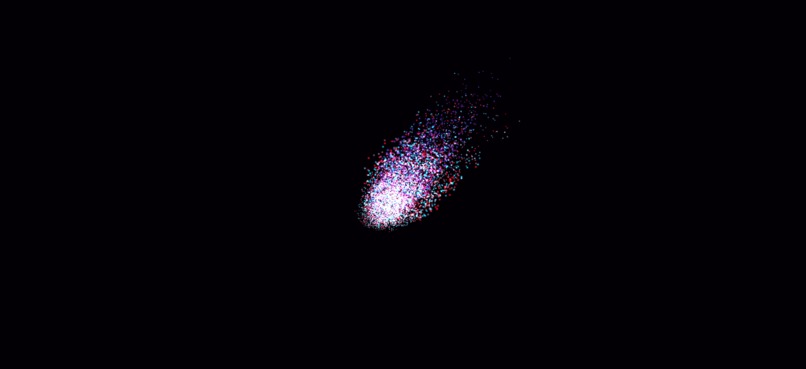
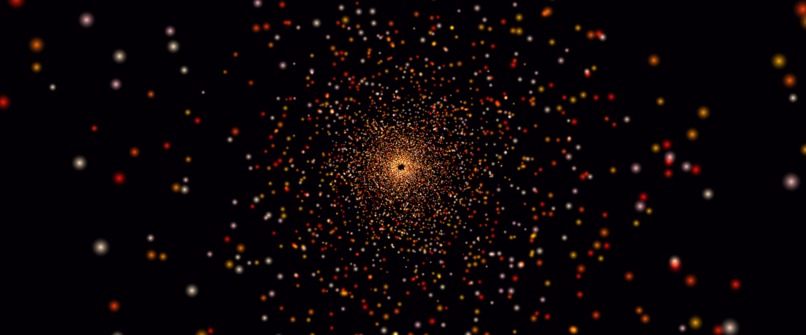
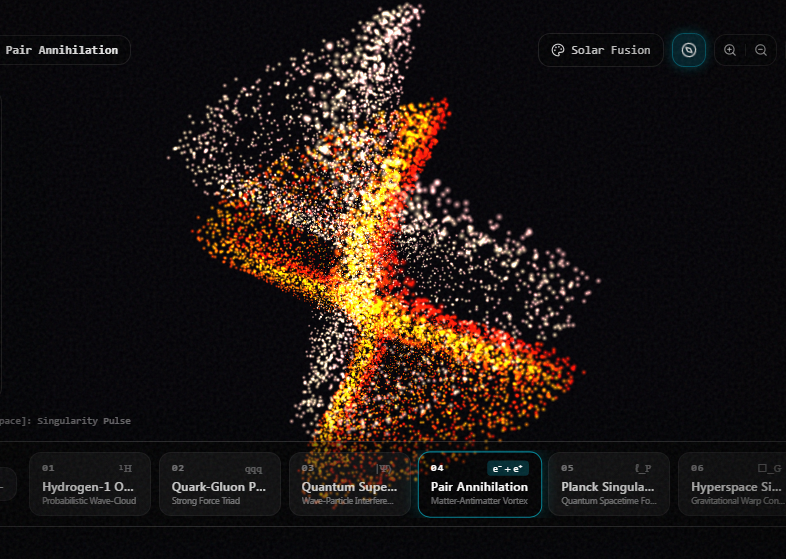
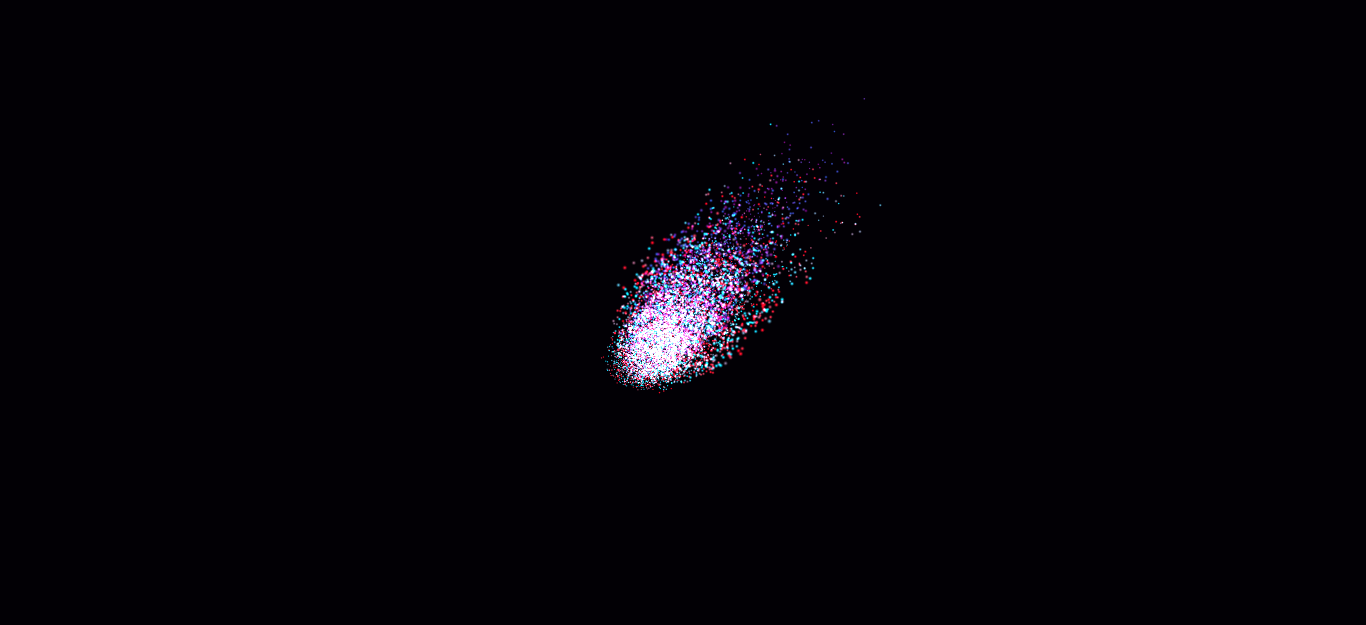
What it does AETHER is a real-time, interactive 3D quantum-inspired environment running directly in the browser. Visitors can explore different visual states of the subatomic world and watch a field of 16,000+ particles morph seamlessly into completely different topological structures—from a Schrödinger Hydrogen electron cloud to a dense Quark-Gluon Plasma, and even a Hyperspace Singularity. The experience features: Procedural Quantum States: Flowing formations representing probability densities, wave interference, and high-energy vortices. Black Hole Gravity Cursor: An interactive cursor that warps local spacetime, allowing users to physically pull, twist, and bend the particle fields in real-time. Audio-Reactive Telemetry: A procedural ambient synthesizer generates a sci-fi soundscape, while the visual particles pulse and react to the audio frequencies. Holographic Snapshots: Users can capture their unique discoveries as stylized scientific "Holo-Cards." AETHER isn't a fixed story; it is an open-ended exploration space. Explore → interact → discover → experiment → explore again.
How we built it AETHER is built on a modern web stack using React, TypeScript, Vite, Three.js, and React Three Fiber. To achieve our vision without melting the user's computer, we adopted a strict architectural principle: offload everything to the GPU. Instead of creating thousands of individual 3D objects, we used instanced meshes and wrote custom GLSL Vertex and Fragment Shaders. The particle movements, transitions, audio-reactivity, and even the Black Hole cursor math are calculated per-vertex directly on the graphics card. This allows us to render massive amounts of particles with bloom, atmospheric depth, and cinematic camera movements while maintaining a silky-smooth 60 FPS in the browser.
Challenges we ran into Our biggest challenge was the eternal battle between visual complexity and hardware performance. A quantum environment naturally invites huge numbers of particles and expensive post-processing effects. But we wanted this to run flawlessly even on low-end hardware (like older dual-core laptops with 2GB of RAM). This constraint forced us to abandon standard CPU-based animations and learn how to write complex mathematical formulas directly into GPU shaders. Another major challenge was scientific translation: how do we visualize quantum concepts without presenting artistic abstractions as literal reality? We had to find the sweet spot where the visuals feel mathematically grounded (like representing electrons as probability clouds rather than orbiting planets) while still being aesthetically mesmerizing. Accomplishments that we're proud of
Our biggest accomplishment is successfully turning an abstract, highly technical idea into a tangible, beautiful, and interactive 3D experience in the browser. We are incredibly proud of our custom shader architecture. By using a single foundational particle language, we created a system that smoothly morphs between radically different forms and atmospheres without dropping frames. The addition of the "Black Hole" cursor and real-time audio synthesis makes the environment feel truly alive and responsive. Most importantly, we achieved our original goal: We made the invisible feel visually tangible.
What we learned
We learned that creating a stunning 3D web experience is not just about throwing more effects at the screen. Composition, motion, interactive feedback, and strict performance optimization must work in perfect harmony. We discovered the immense power of procedural generation and GPU-friendly shader techniques for creating complex visuals efficiently. We also learned that scientific visualization requires a delicate touch—it can be beautiful and artistic while still clearly communicating that it is an abstraction. Finally, we learned how to effectively leverage AI-assisted development. We used AI not just as a code generator, but as a collaborative partner for reasoning, architectural planning, visual exploration, and troubleshooting complex 3D math.
What's next for AETHER AETHER is designed to be a foundation rather than a finished endpoint. Future versions could expand the quantum environment with more procedural topologies, richer interactive physics, and deeper educational overlays that document the real scientific equations inspiring each visual state. We also plan to implement an adaptive rendering engine—a system that automatically detects the user's device capabilities and adjusts particle counts and post-processing resolution on the fly, ensuring maximum accessibility across all devices from high-end desktops to mobile phones.
Built With
- glsl
- react
- react-three-fiber
- tailwind-css
- three.js
- typescript
- vite
- webgl


Log in or sign up for Devpost to join the conversation.