Inspiration
In the modern tech ecosystem, large corporations increasingly outsource critical software development to remote freelancers or agile teams. However, two core friction points persist: the massive manual overhead required by senior engineers to verify deliverables against strict KPIs, and mutual trust issues regarding project milestone completions.
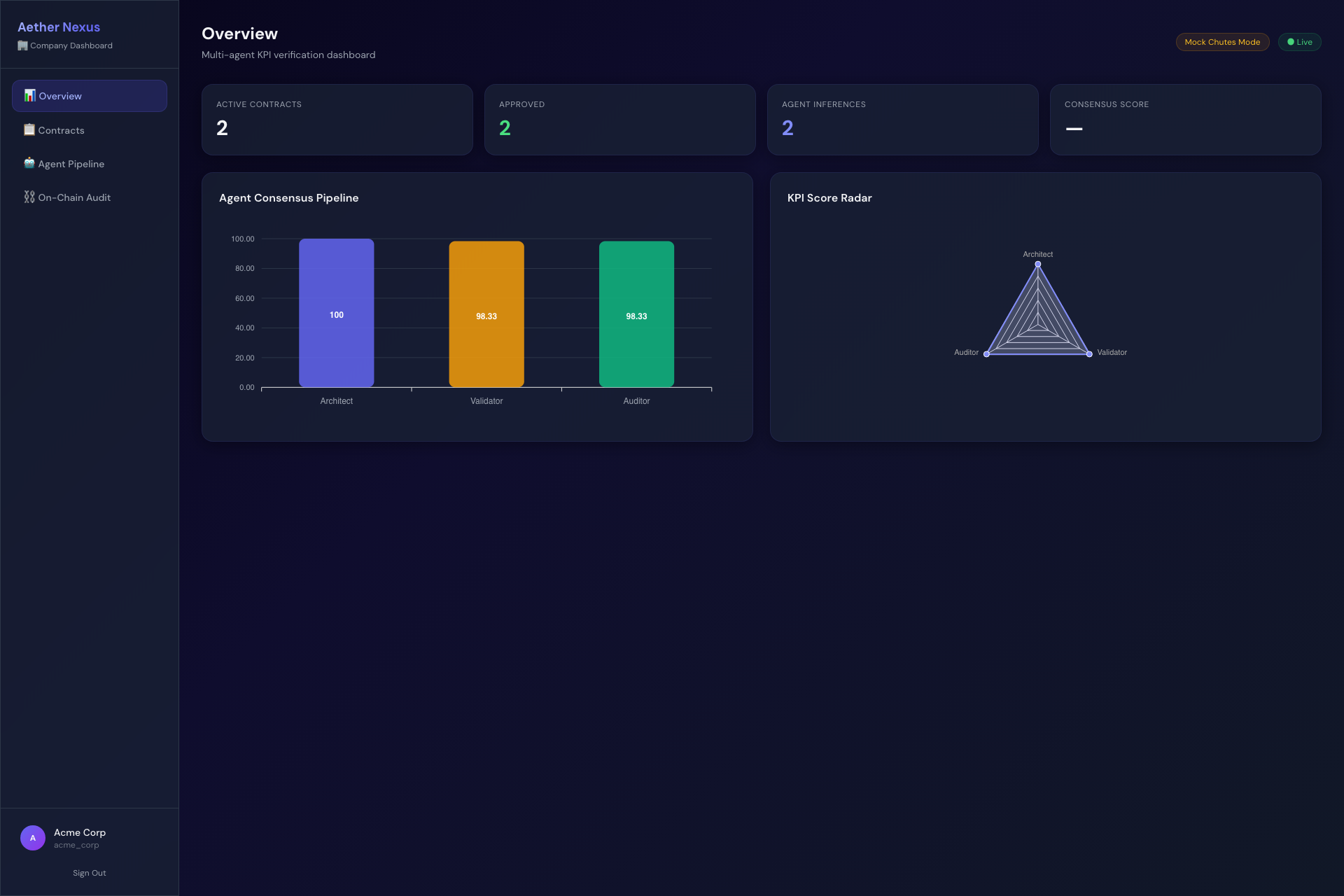
Aether Nexus AI solves this by establishing a decentralized, automated, and unchangeable verification environment that acts as an objective validator between enterprises and independent execution talent.
What it does
Aether Nexus AI is a robust, two-sided B2B SaaS platform powered by Chutes decentralized AI compute:
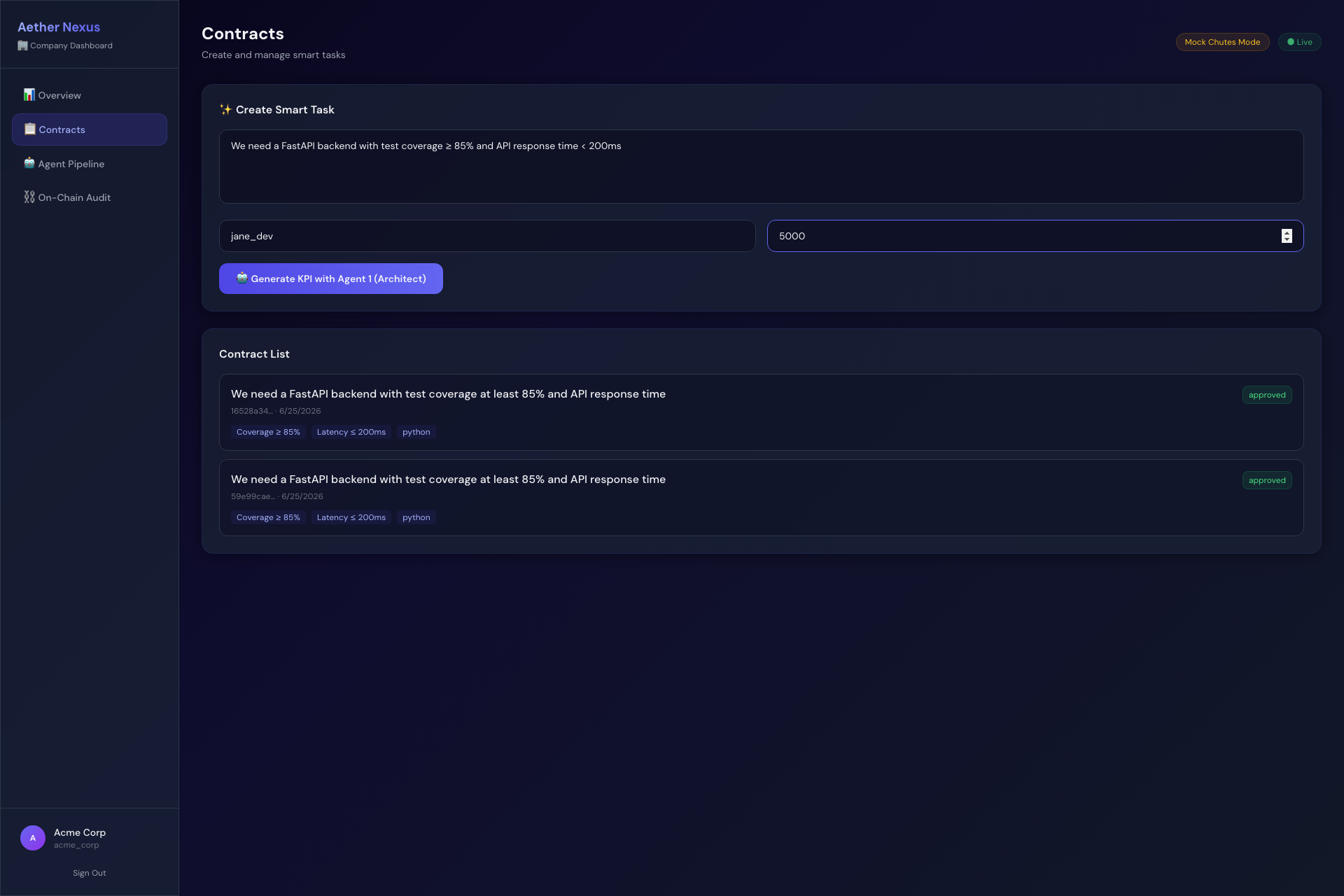
- For Corporations: Managers input project requirements and milestone objectives in plain natural language. The engine digitizes these rules into concrete, structured verification metrics.
- For Freelancers: Developers securely log in, view objective programmatic targets (e.g., performance speeds, code coverage requirements), and submit deliverables via repository hooks.
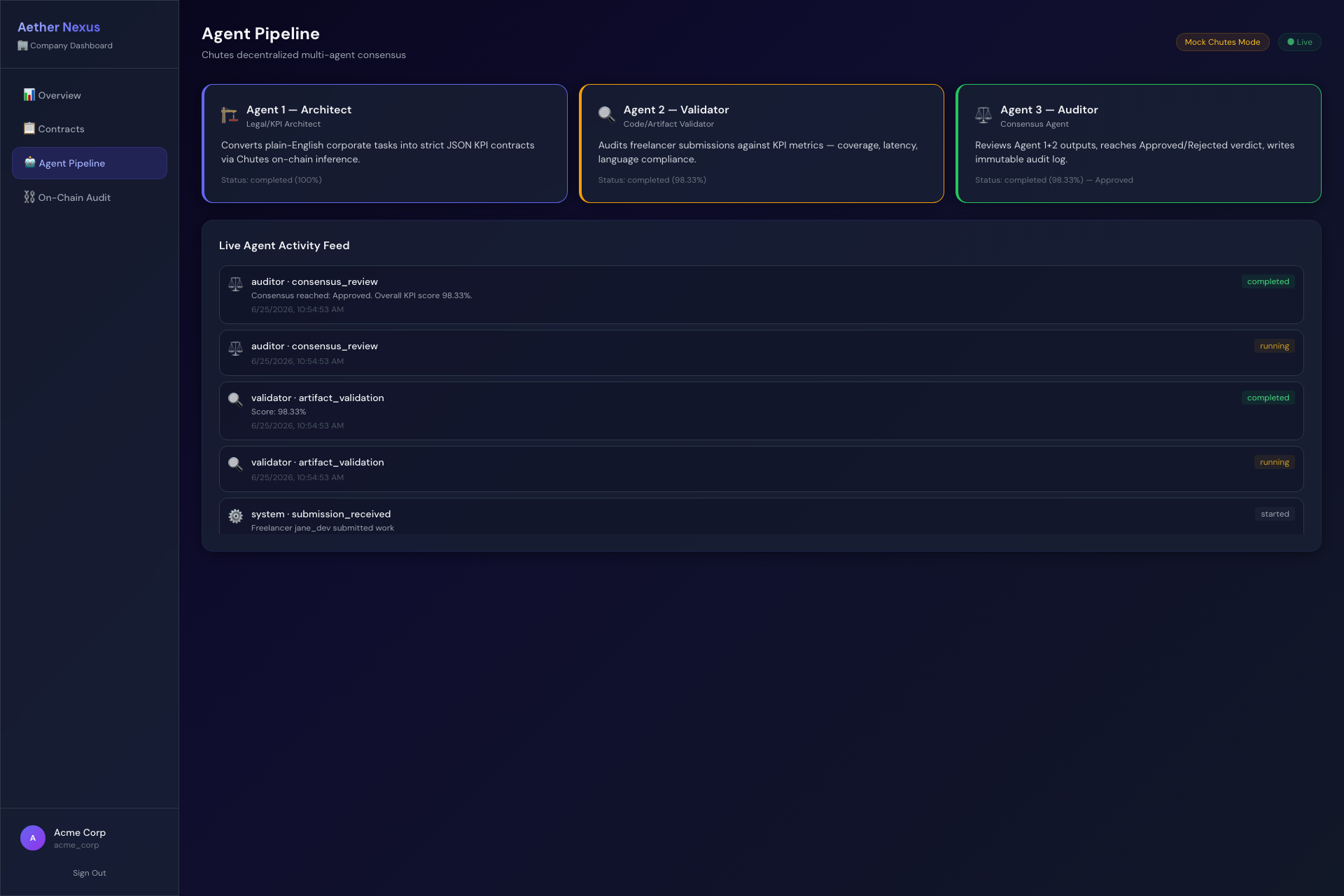
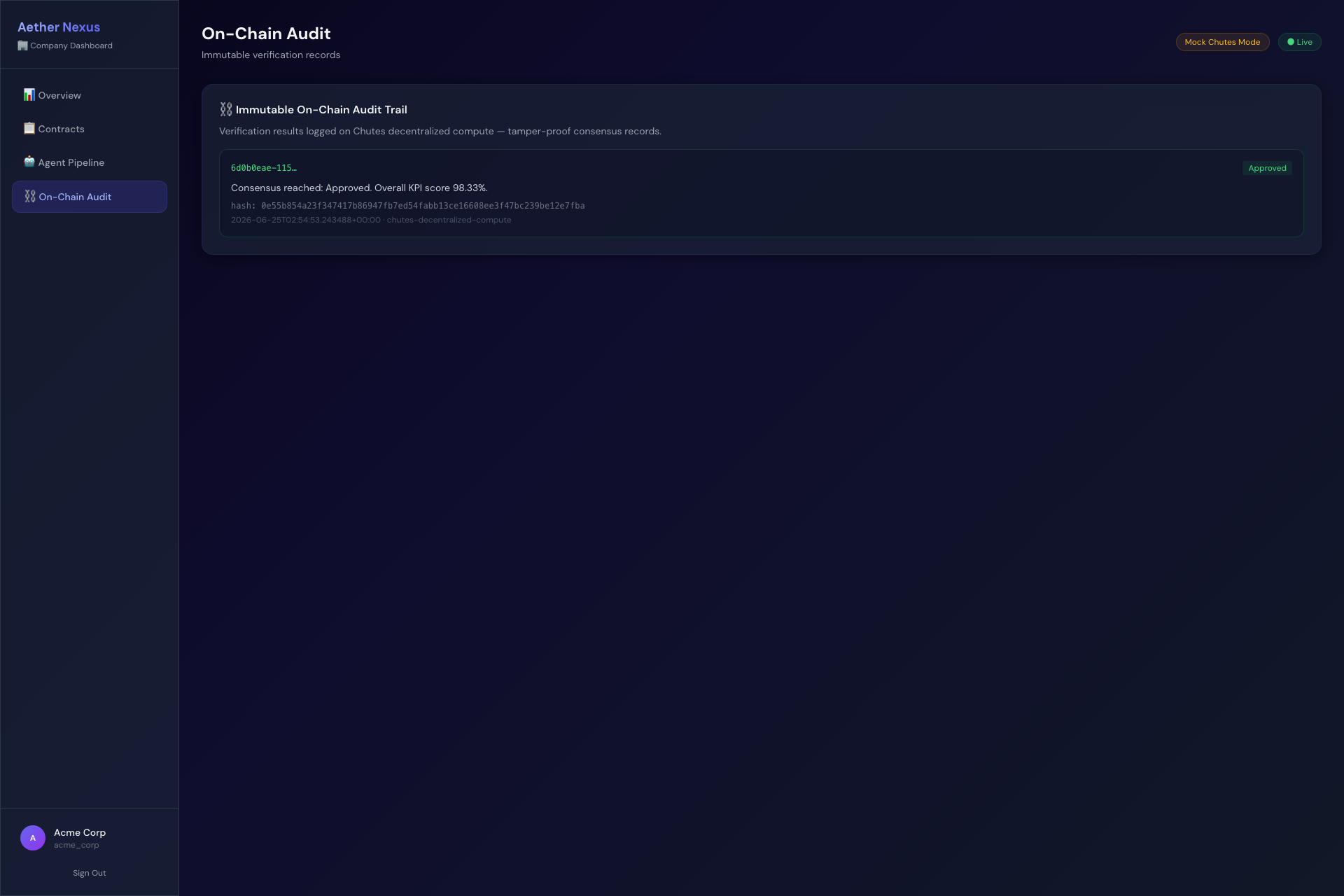
- The Consensus Core: Once a task is submitted, a multi-agent orchestration workflow is triggered natively on Chutes. Multiple independent AI agents independently audit the technical artifact, run specialized compliance checks, reach a consensus, and issue an unalterable verification log.
How we built it
The platform architecture is designed with high-performance execution patterns:
- Asynchronous Engine: A scalable Python backend driven by FastAPI to manage heavy polling and computational payloads without thread blockage.
- Multi-Agent Coordination: Orchestrated agentic logic distributed directly onto Chutes decentralized infrastructure to secure decentralized AI inference pipelines.
- Secure Identity: Native authentication leveraging the Sign In with Chutes framework to enforce secure cryptography for corporate and freelance accounts.
Challenges we faced
- Orchestrating Consensus: Ensuring deterministic JSON structural outputs from distributed, decentralized LLM layers on Chutes required meticulous prompt alignment and strict schema guardrails.
- Real-time Synchronization: Building reactive state updates on the frontend while the multi-agent system processes technical artifact auditing across distributed infrastructure nodes.
What we learned
We deeply understood how decentralized compute structures can entirely mitigate human mediation bias in corporate contract verification, effectively establishing a modern framework for automated trust.
Built With
- chutes-ai
- decentralized-compute
- fastapi
- multi-agent-systems
- postgresql
- python
- sign-in-with-chutes
- tailwind-css


Log in or sign up for Devpost to join the conversation.