-
-
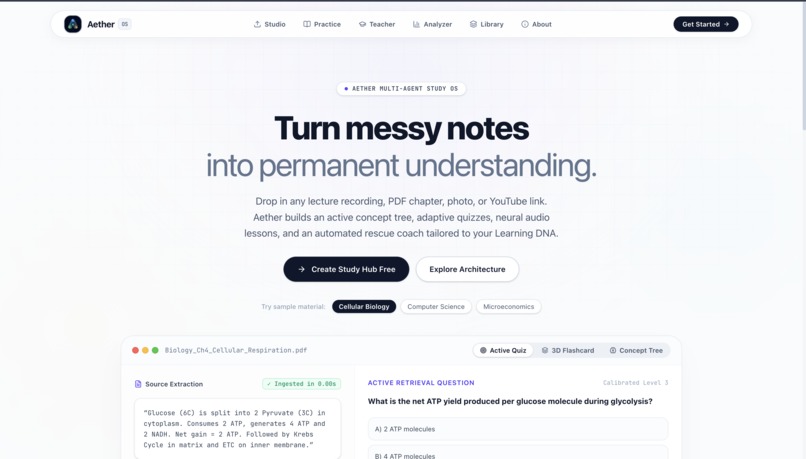
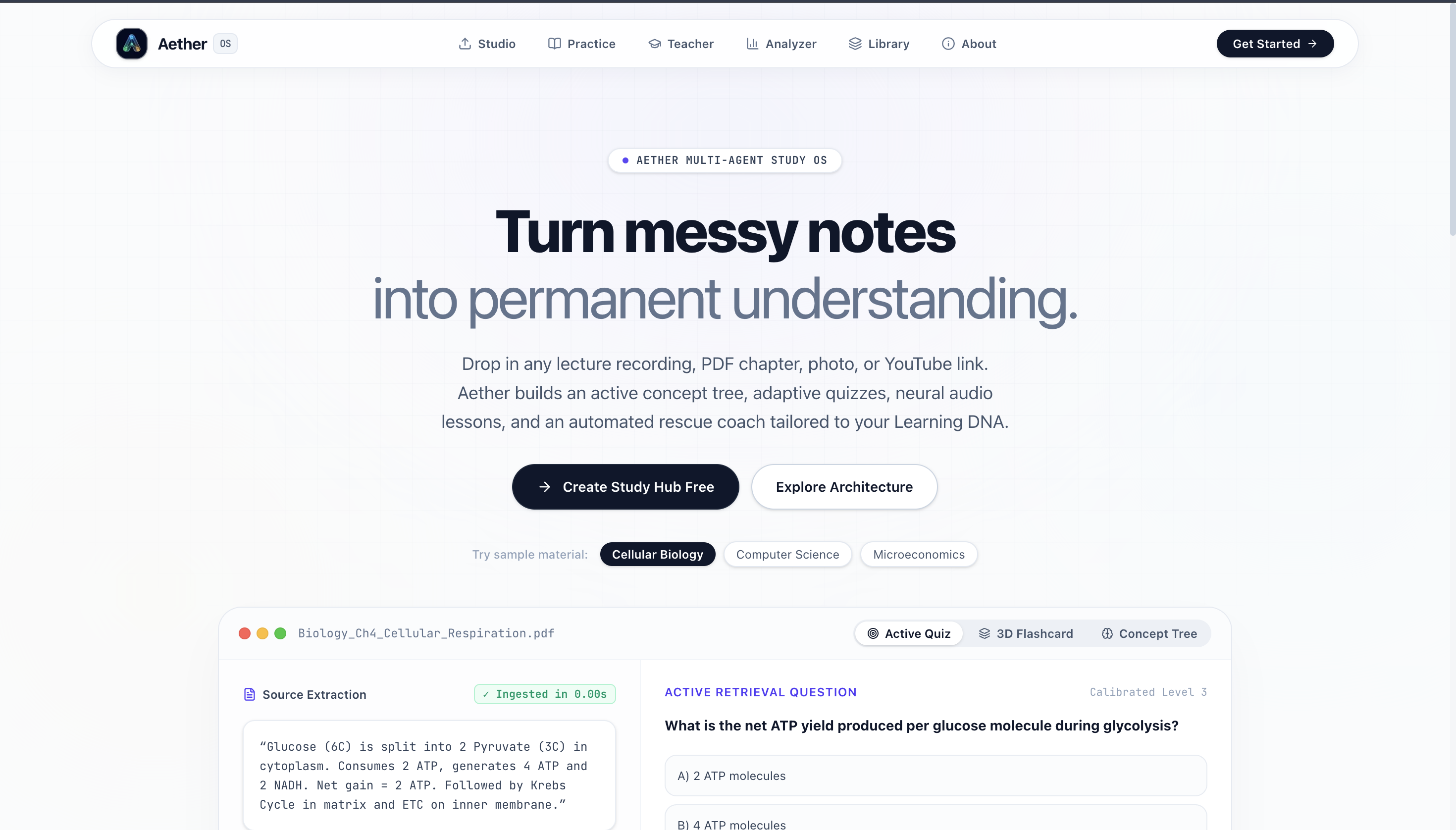
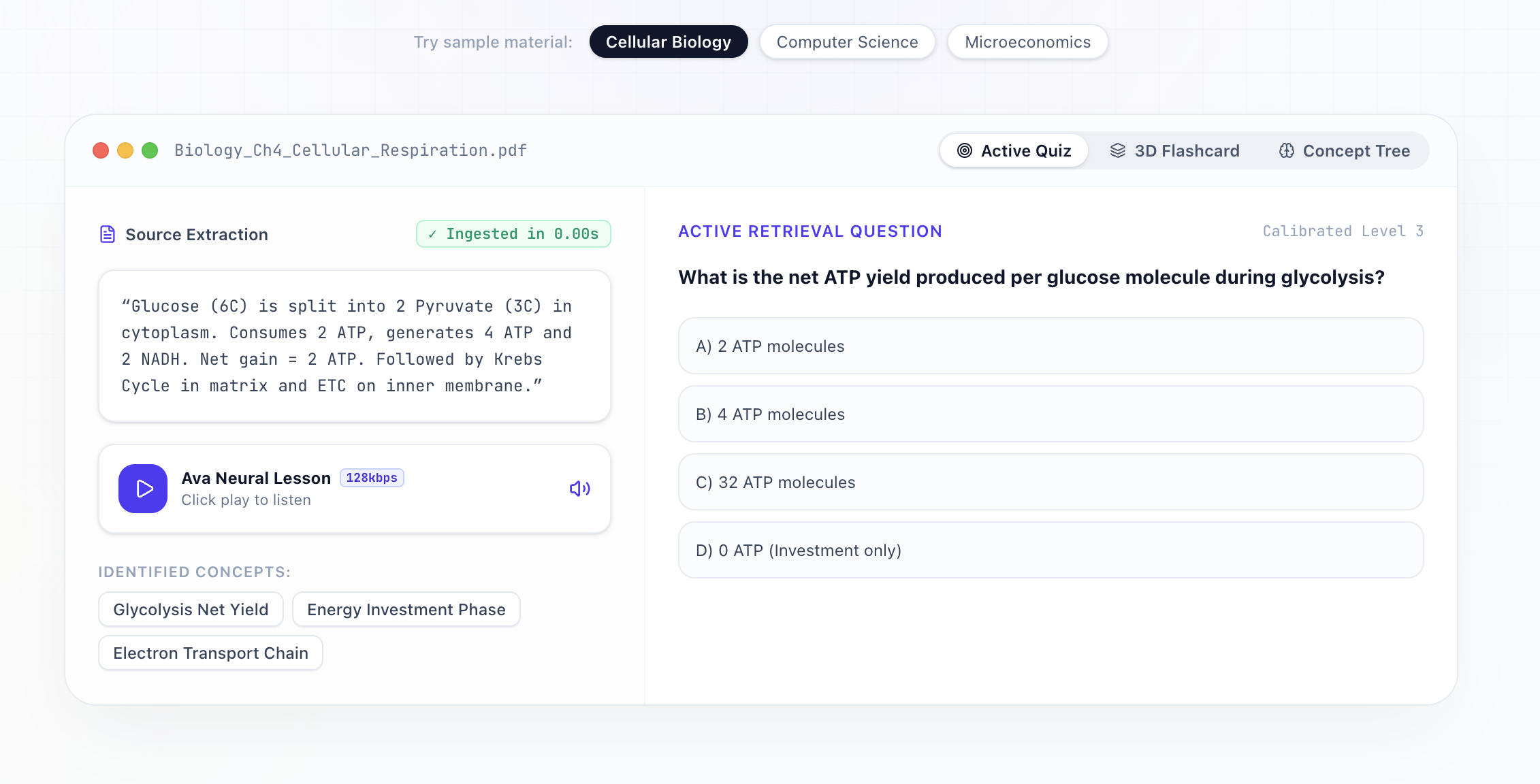
Landing Page
-
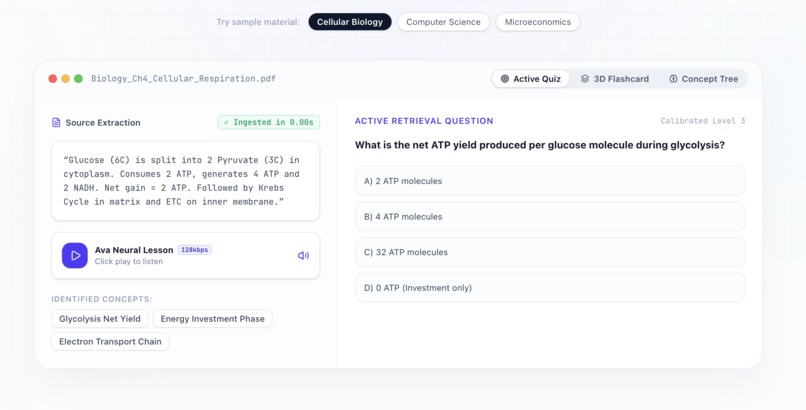
Samples
-
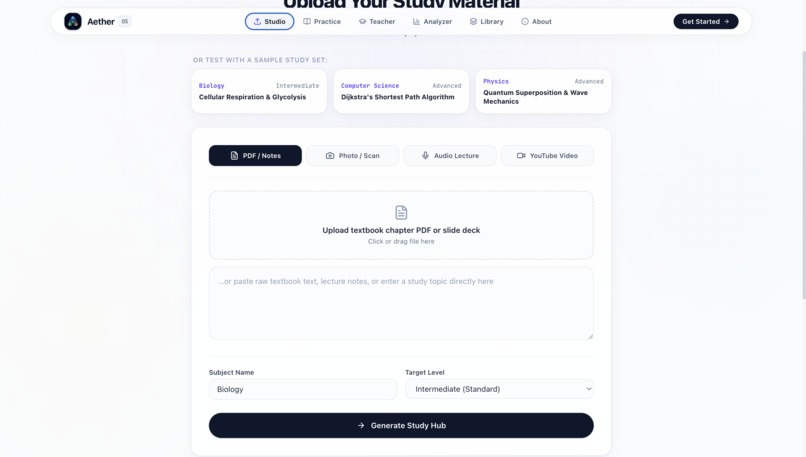
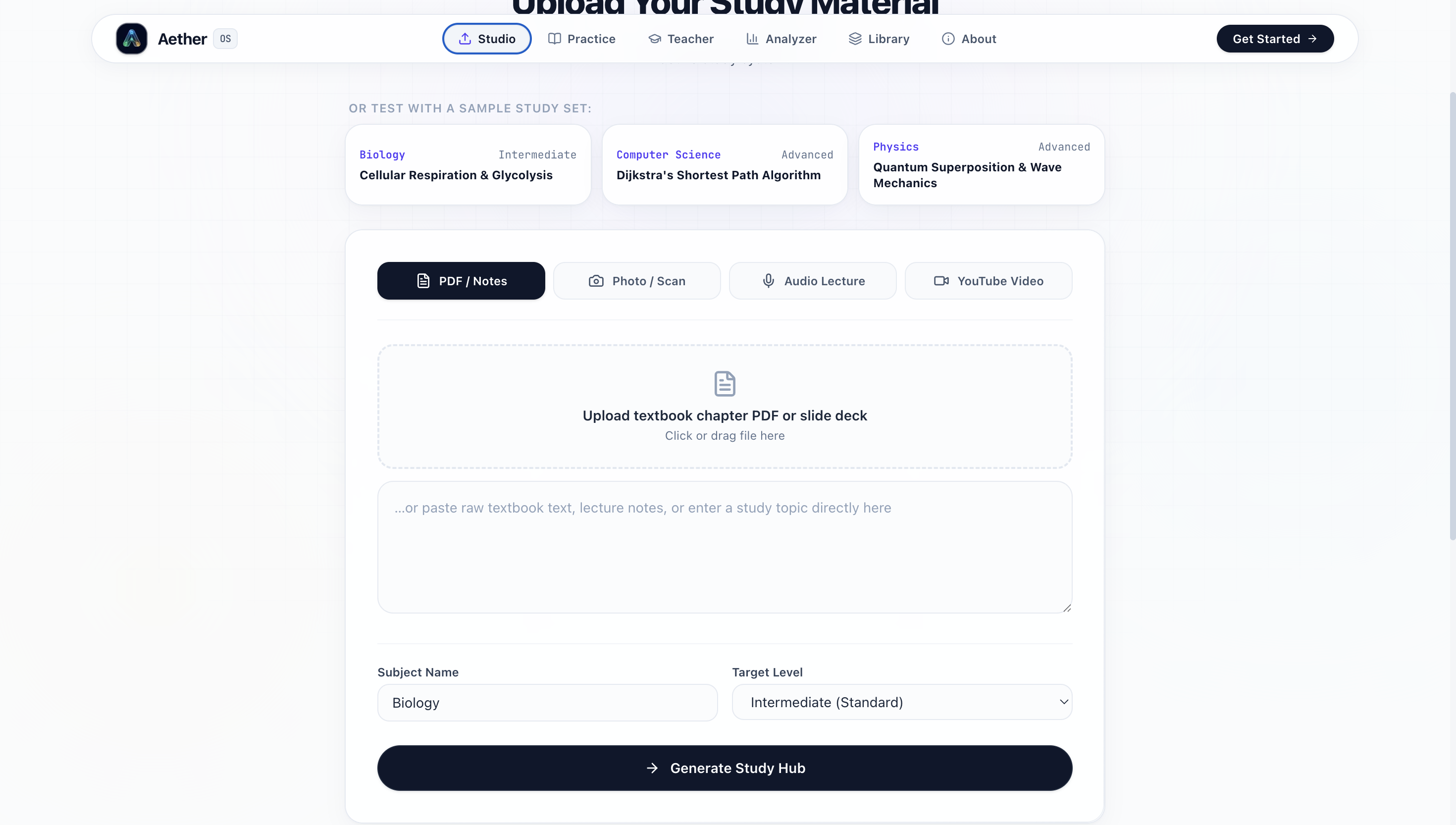
Upload Page
-
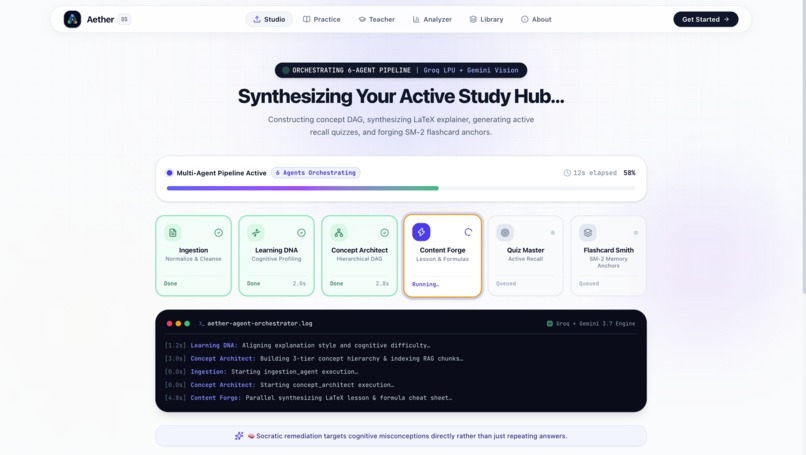
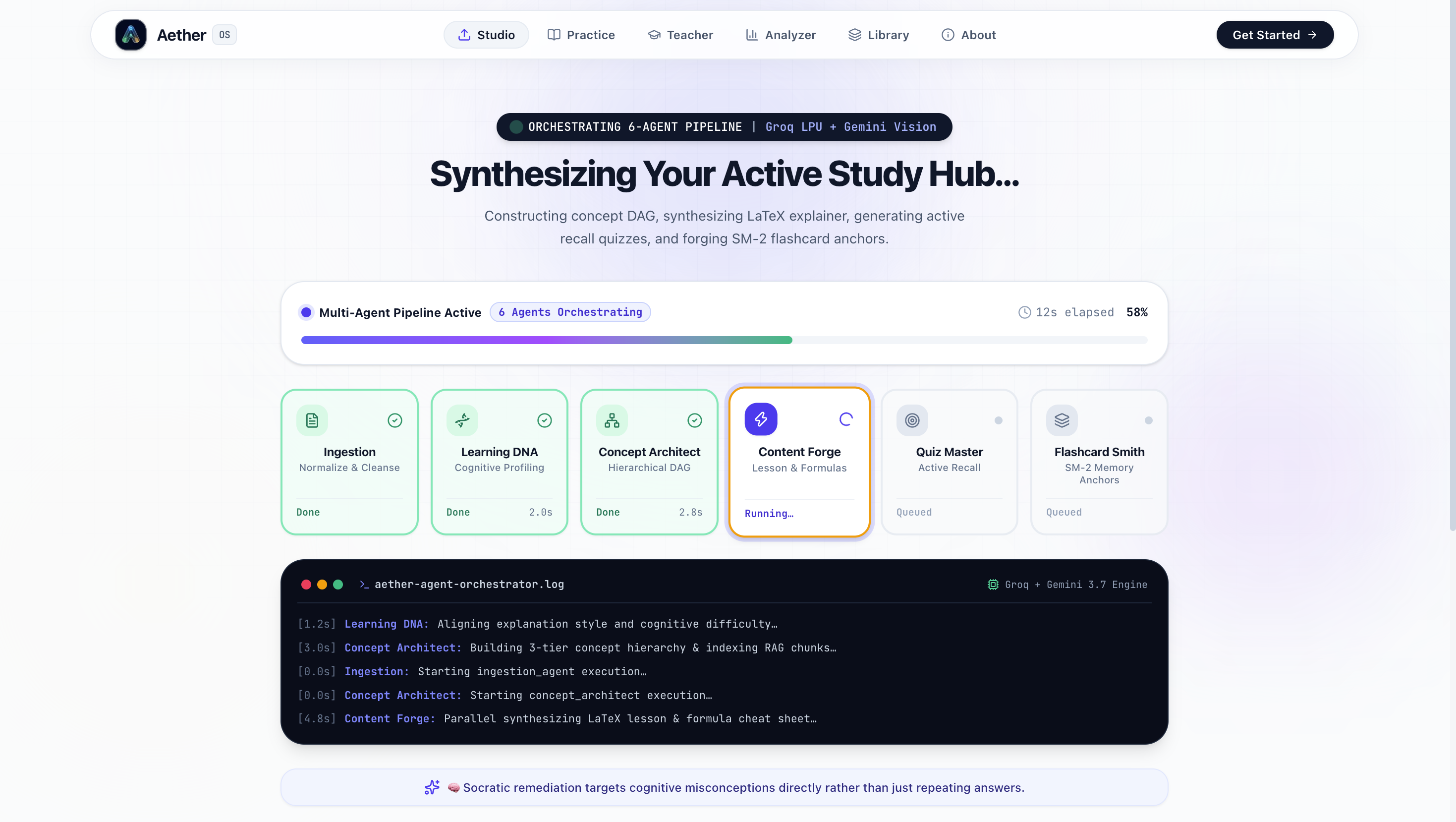
Loading - AI pipeline
-
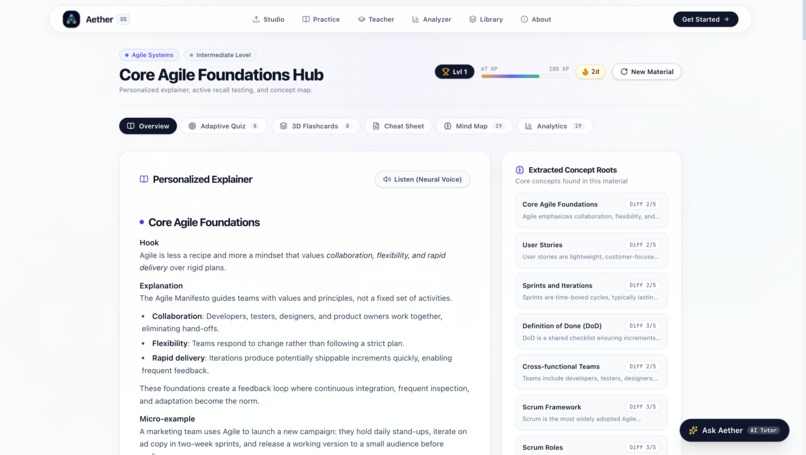
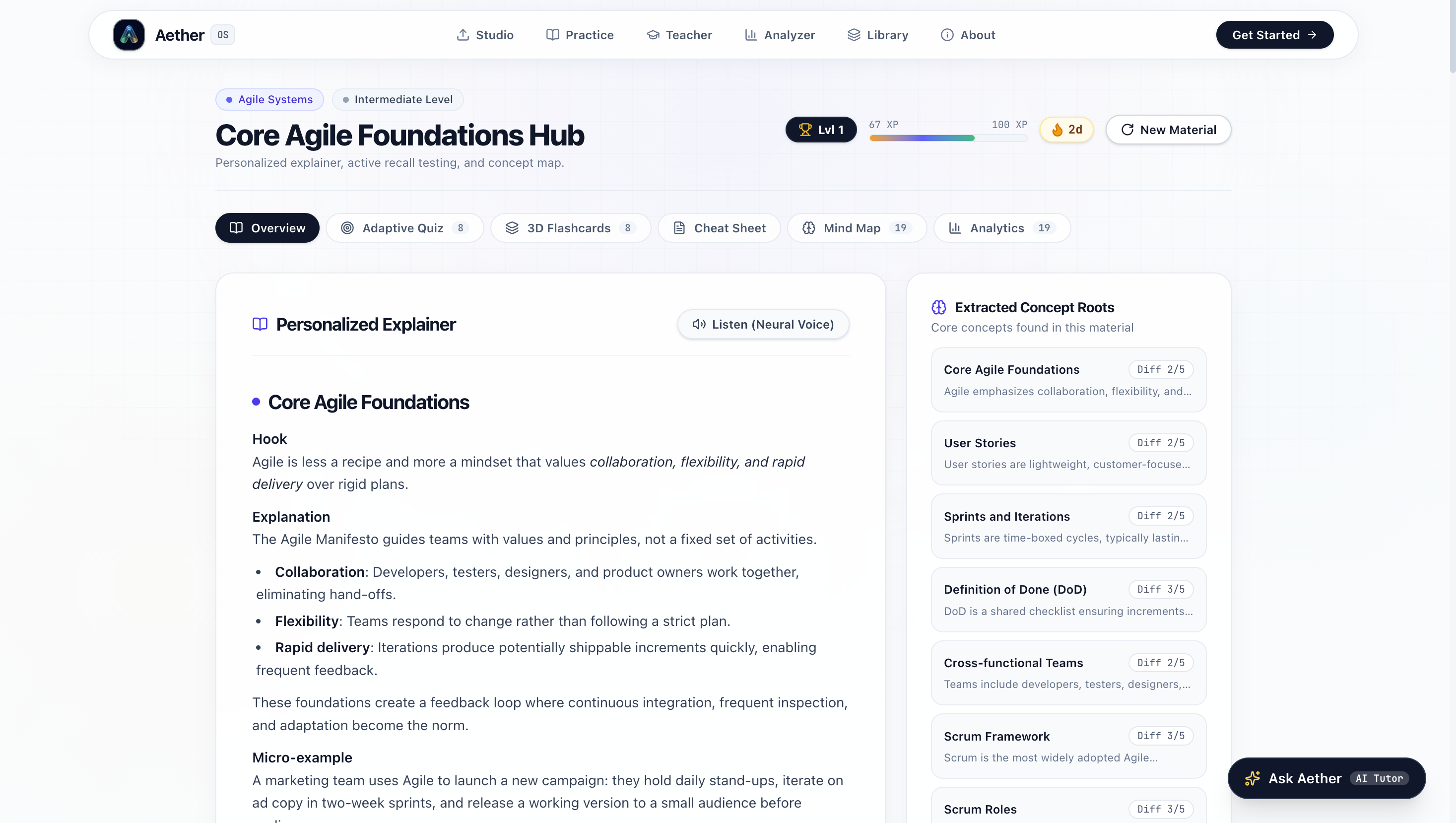
Result - Study material overview
-
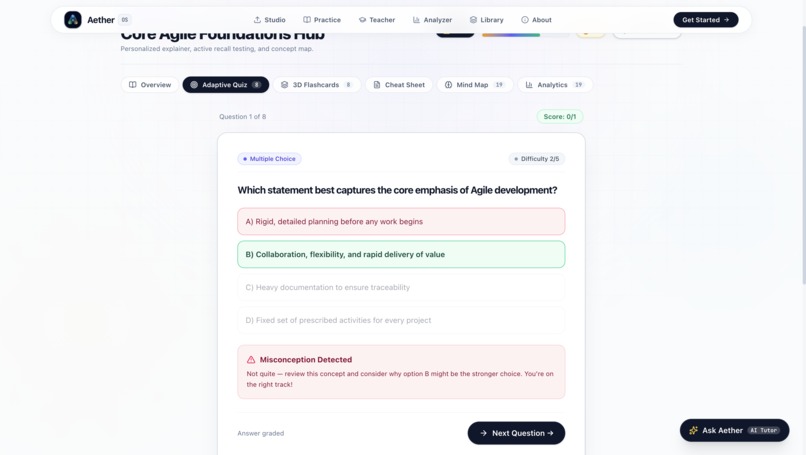
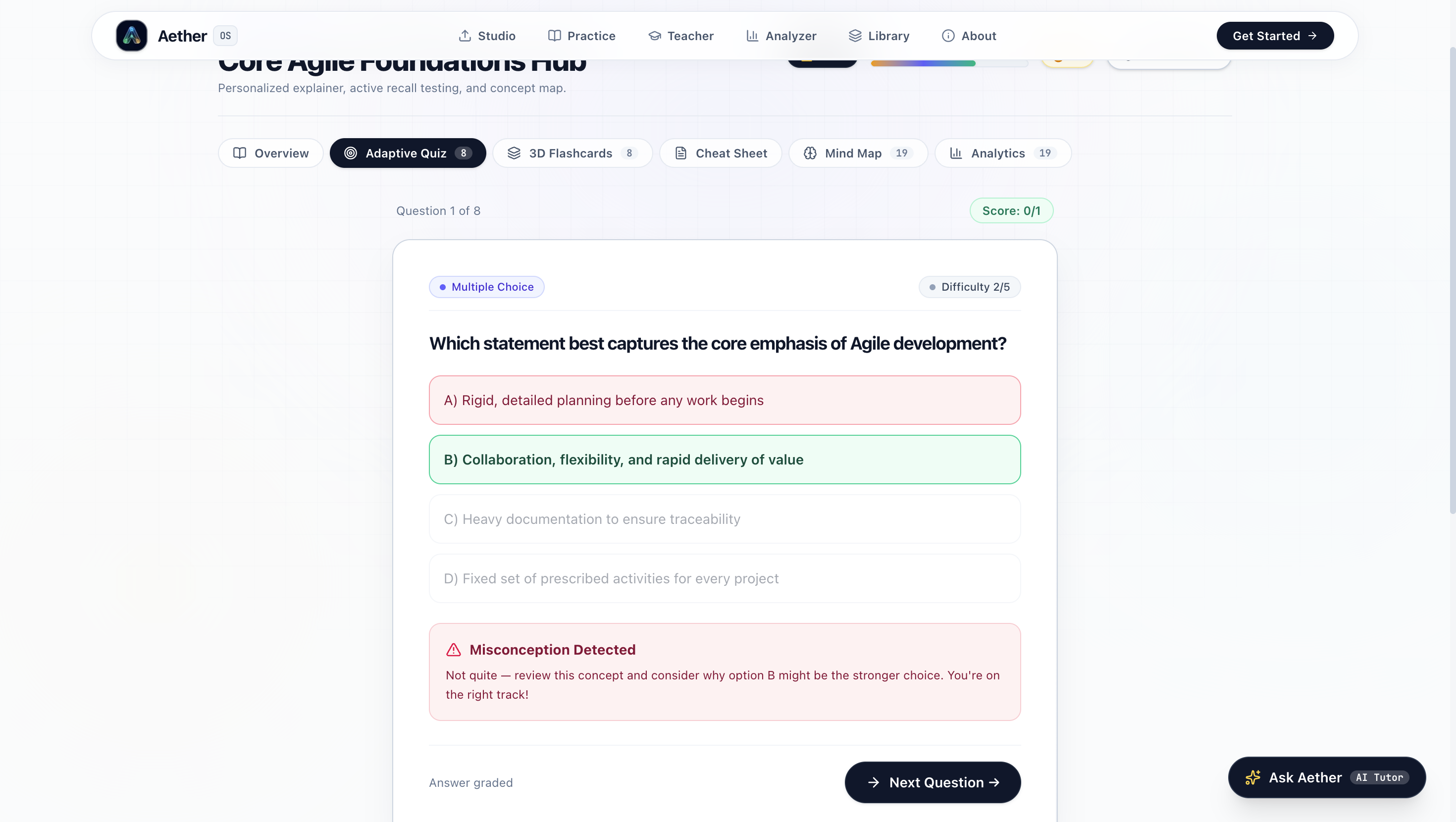
Result - Quiz section
-
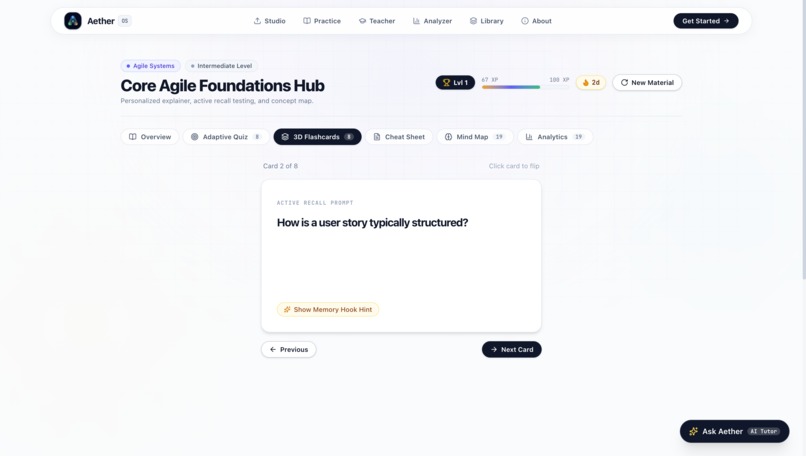
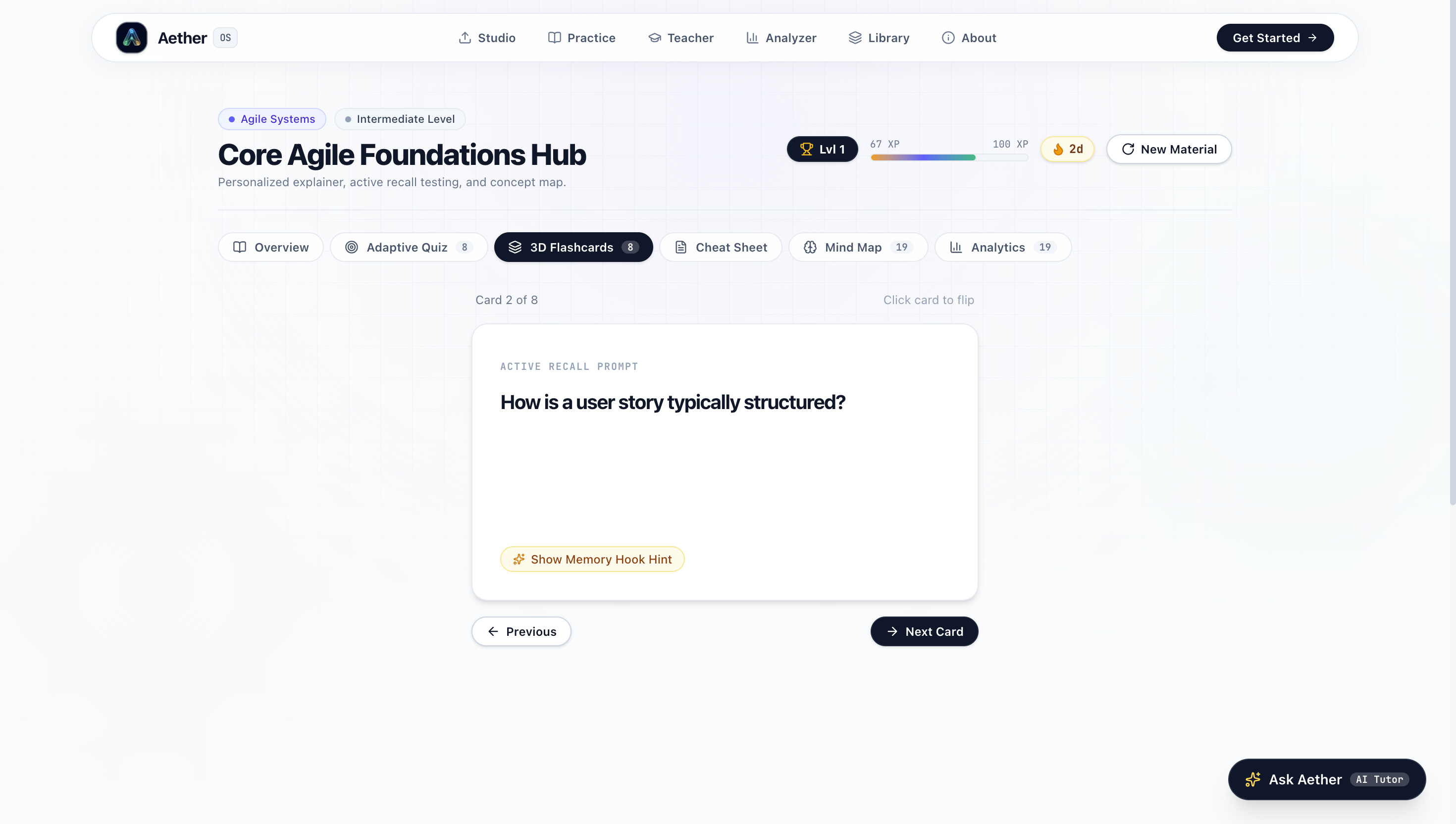
Result - Flashcards section
-
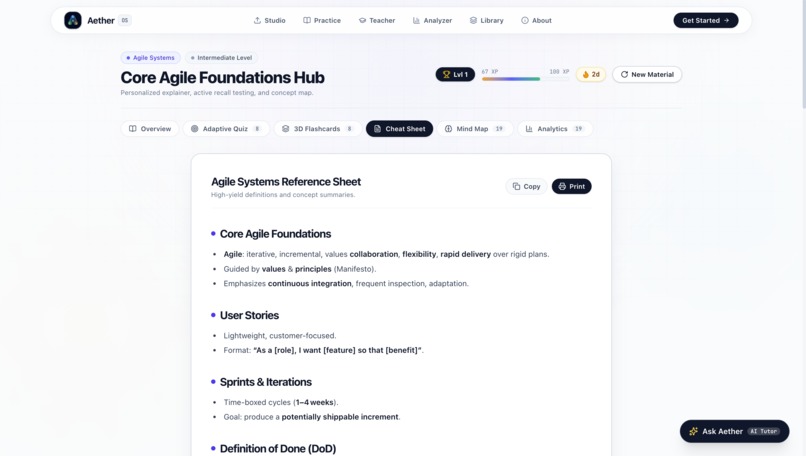
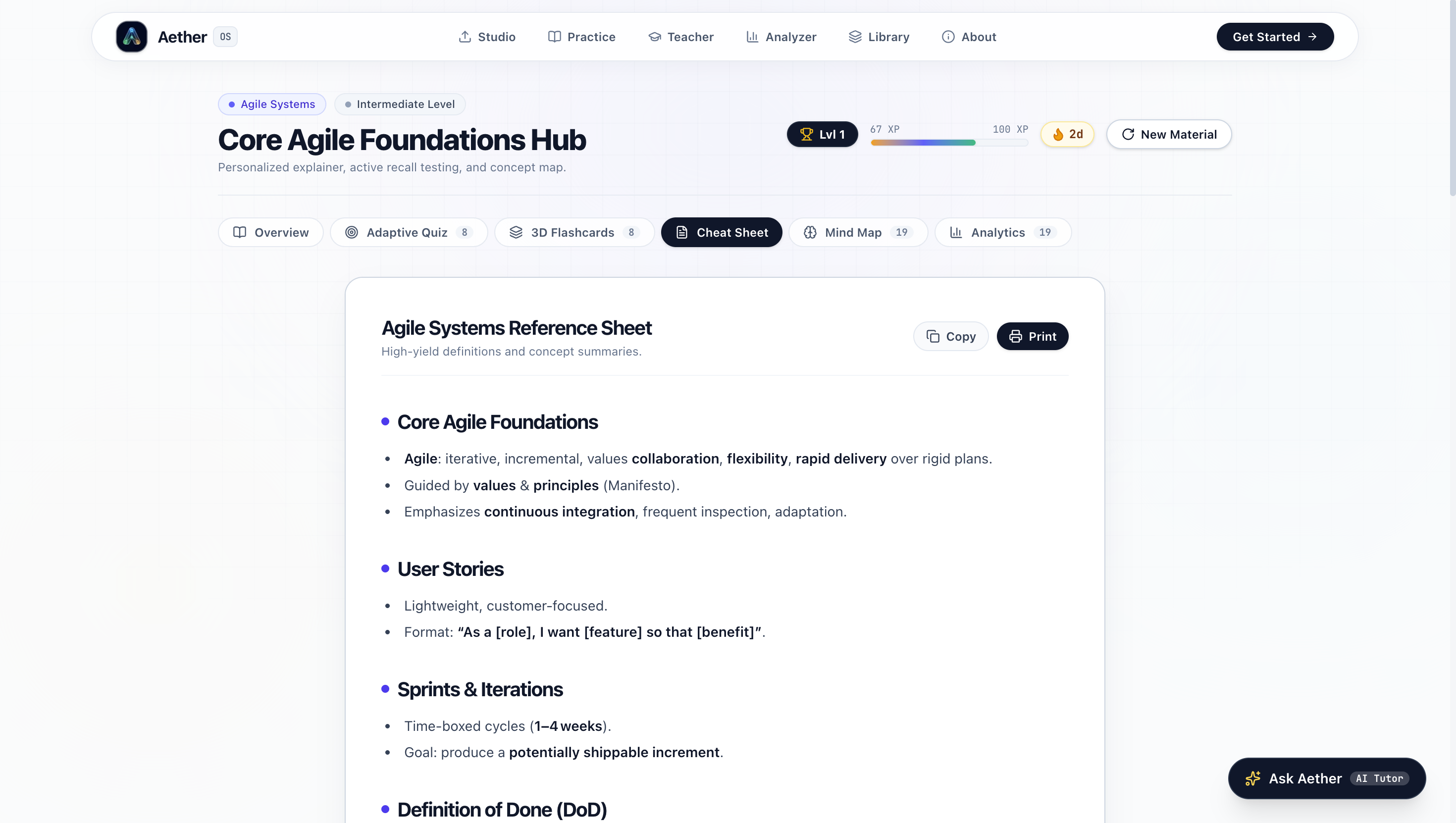
Result - Cheatsheet section
-
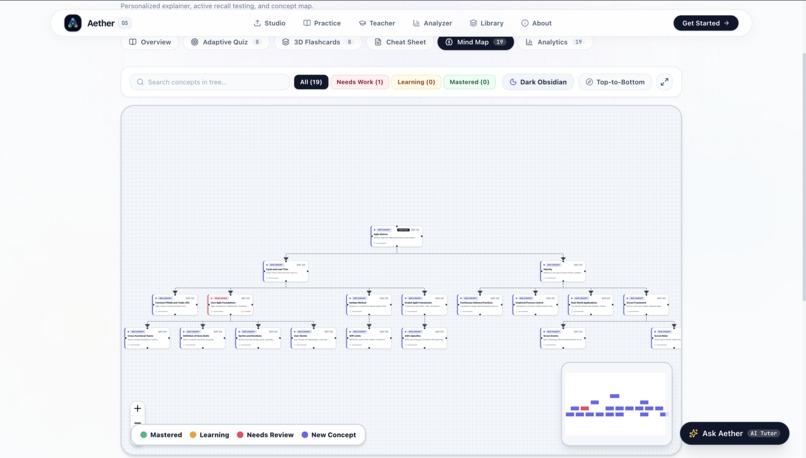
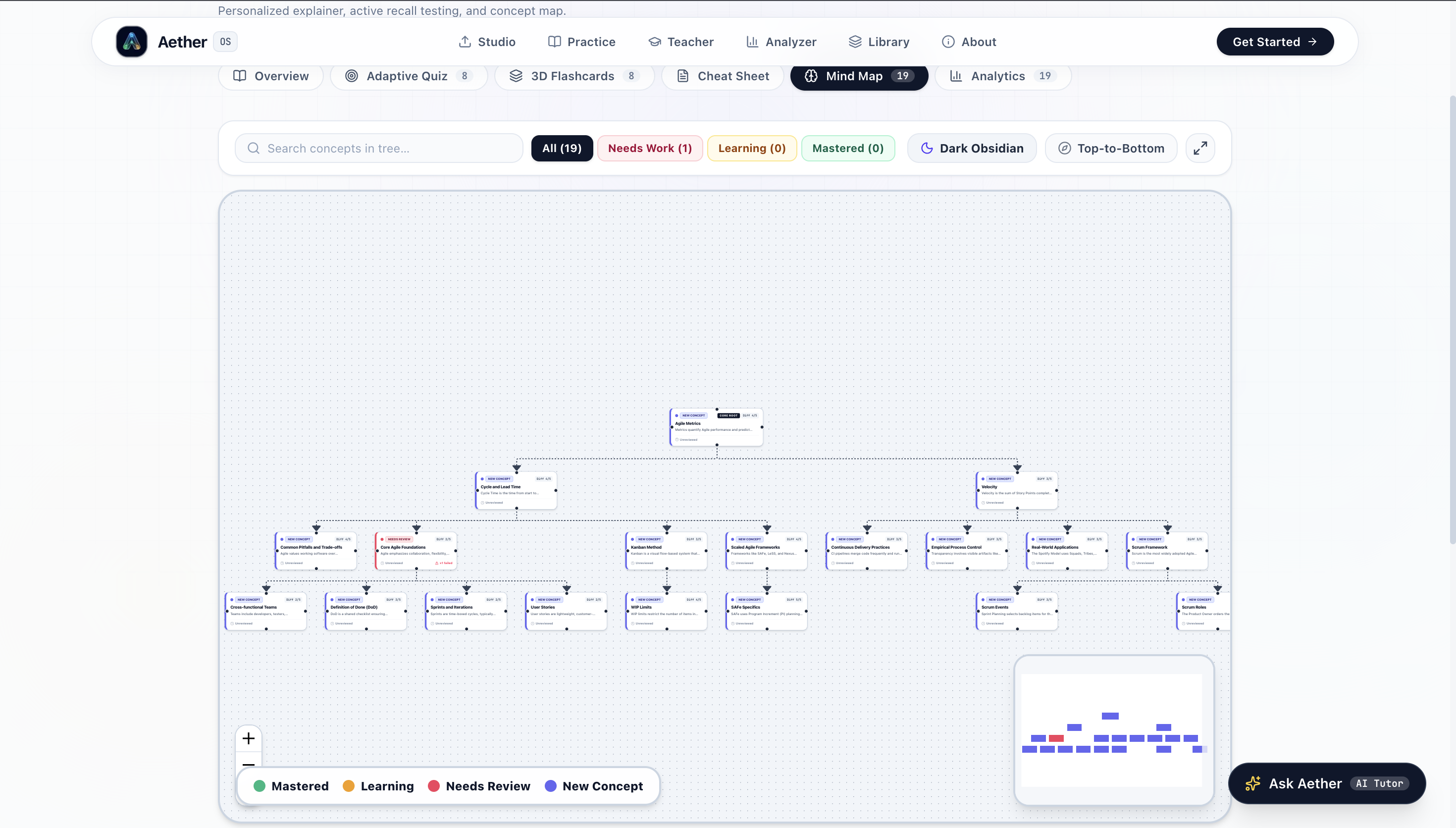
Result - Mindmap
-
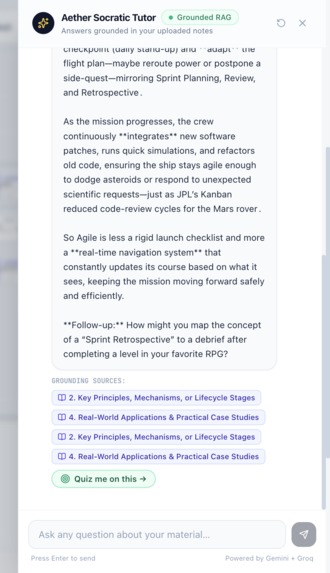
Result - Chat feature - RAG
-
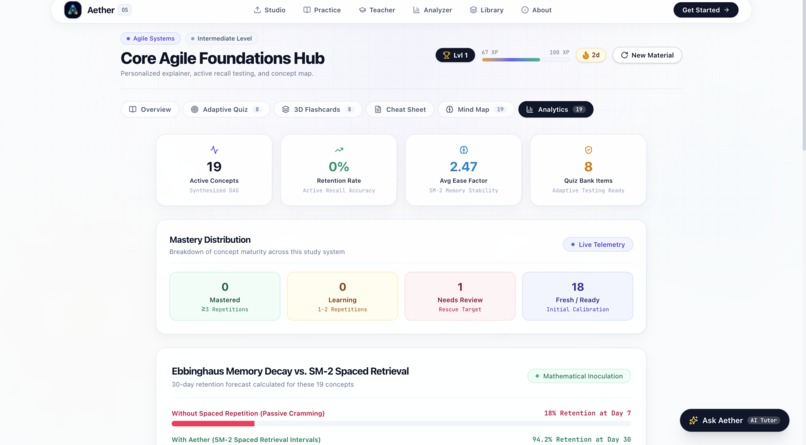
Result - Analytics
-
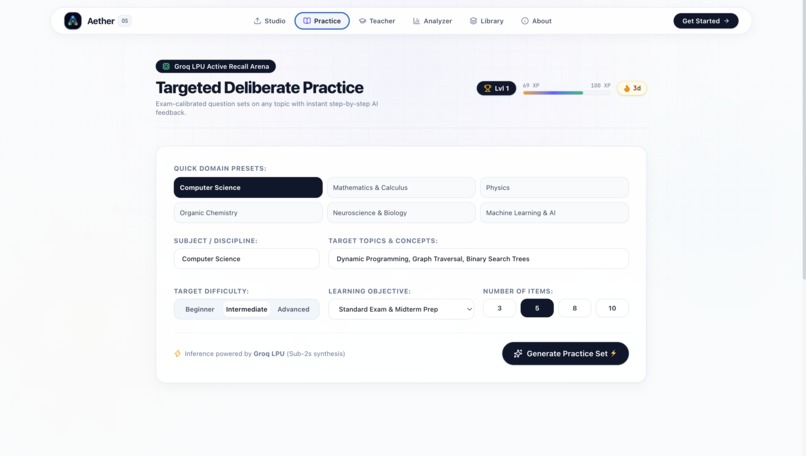
Practice Page
-
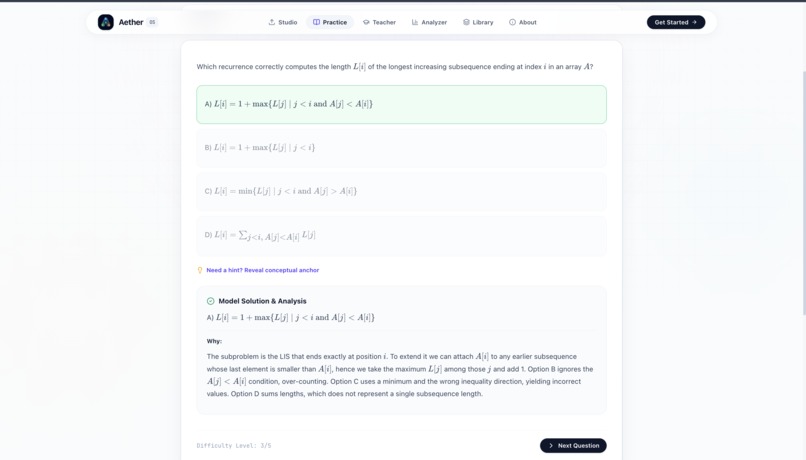
Practice - Result
-
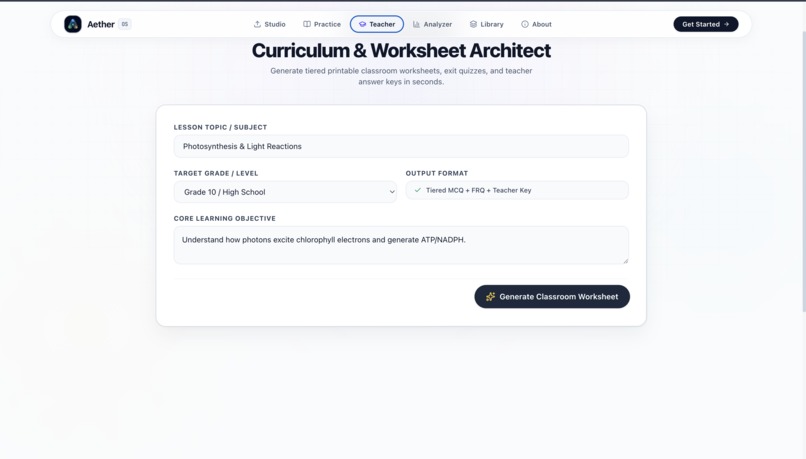
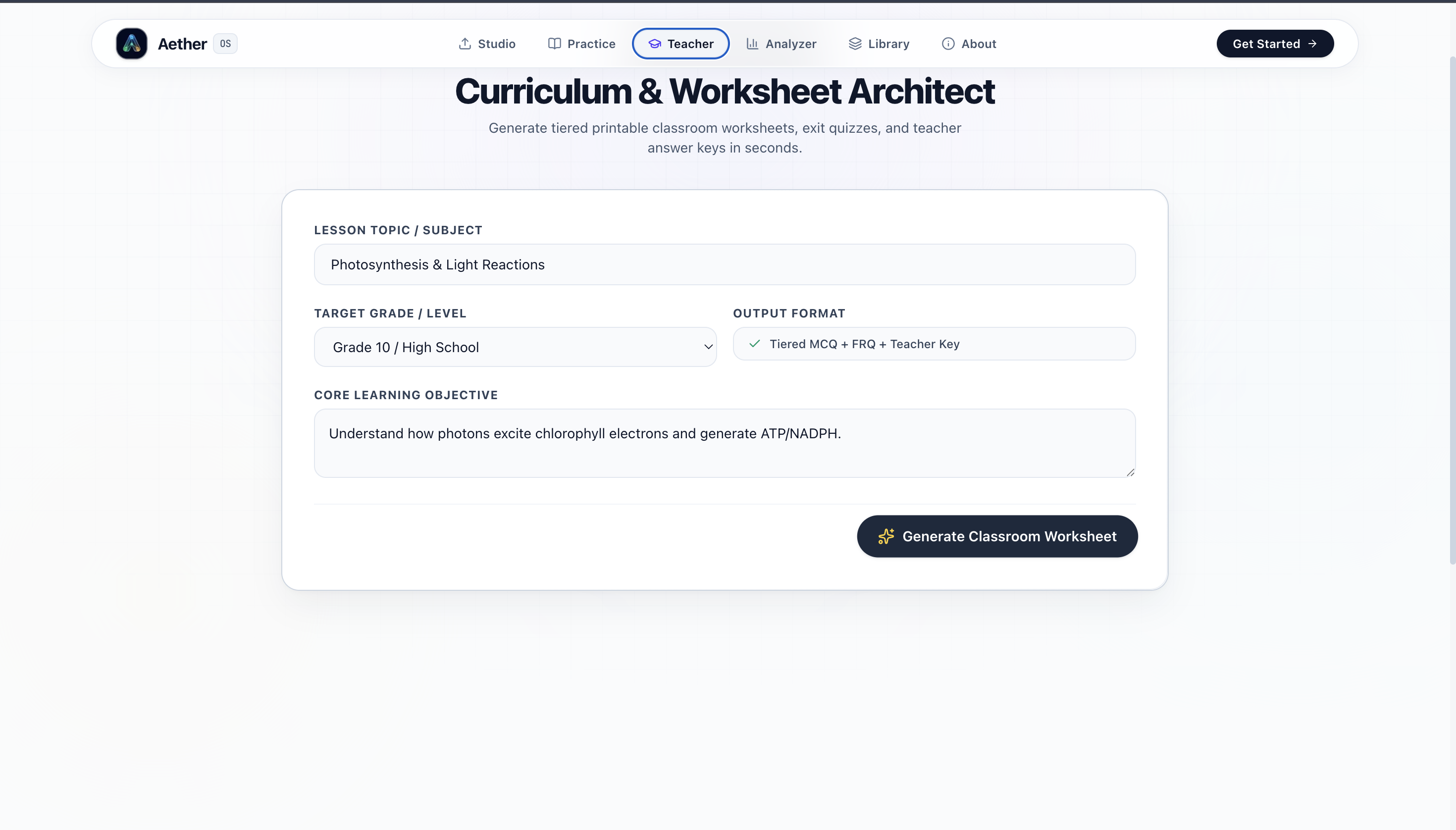
Teacher Page
-
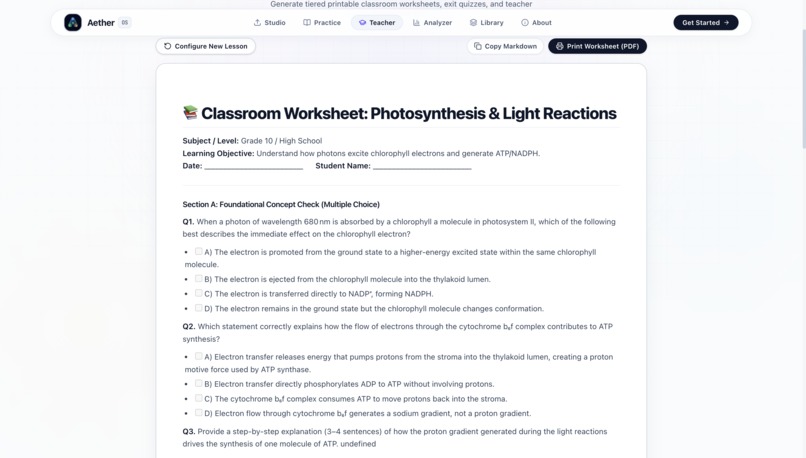
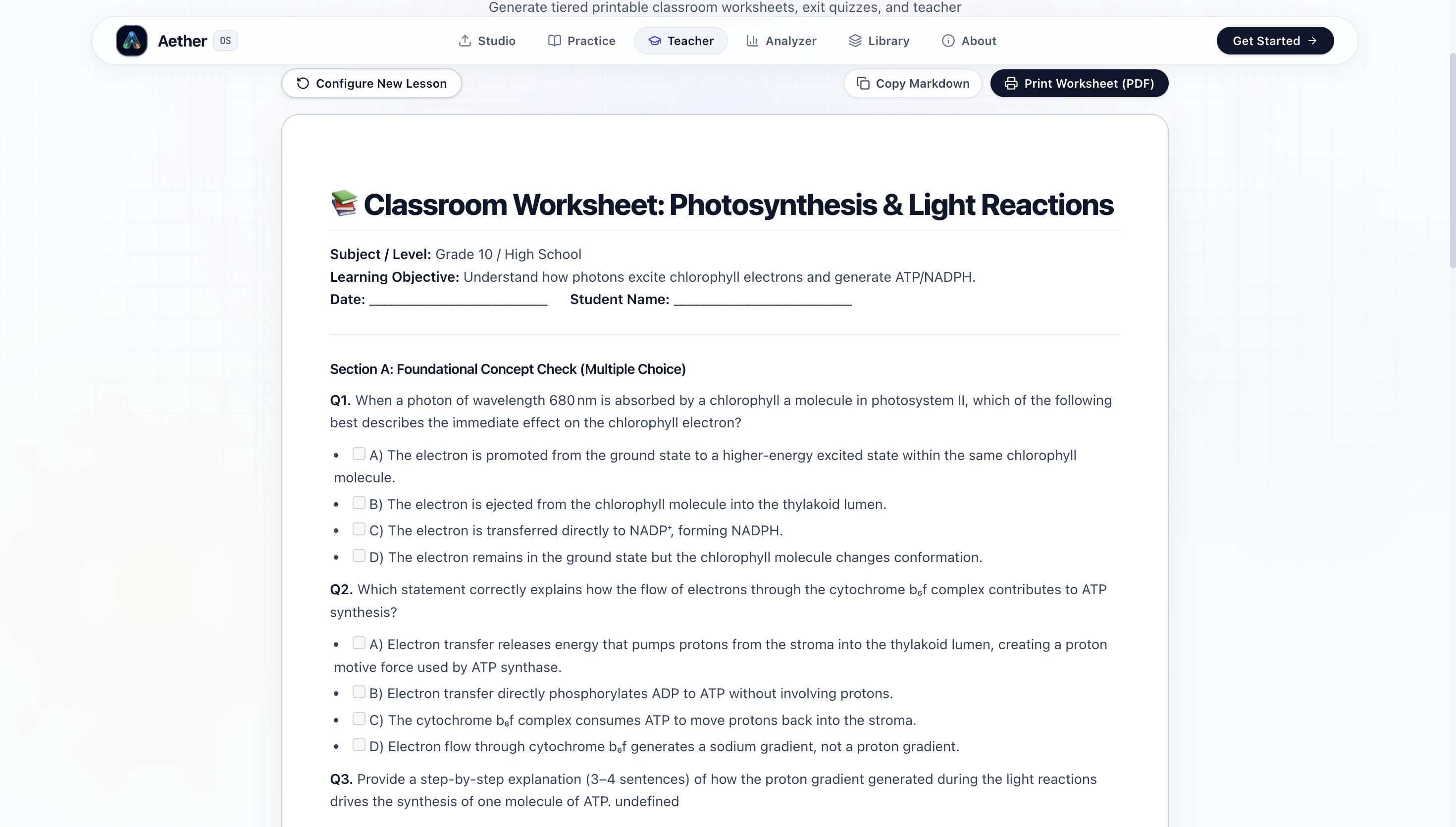
Teacher Page - Result - Student worksheet
Inspiration
Maya studied harder than anyone in her class. She read the biology chapter four times, filled three notebooks with multicolored highlights, and went to bed confident.
The next day, she scored a 54%.
When her mother asked what happened, Maya broke down and said the nine words every student knows:
"I knew it yesterday. It just… went away."
Maya was never bad at studying. Traditional studying was failing her.
In 1885, German psychologist Hermann Ebbinghaus discovered a harsh reality of human cognition: the Forgetting Curve. Within 24 hours, the human brain discards up to 70% of newly learned information unless it is actively recalled at mathematically spaced intervals. Passive reading and highlighting give students an "illusion of competence" that completely evaporates on exam day.
We built Aether to ensure that hard work finally pays off. We asked ourselves: What if an AI study system didn't just summarize notes, but understood how your individual brain learns, tracked every concept’s memory decay, and stepped in to re-teach you the exact moment you get stuck?
What it does
Aether is an intelligent, multi-agent cognitive study OS. Photograph a messy textbook page, upload a 50-page PDF, drop in an audio lecture, or paste a YouTube link—and in under 15 seconds, a team of 10 autonomous AI agents builds a complete, personalized active study ecosystem:
- Learning DNA Personalization: Analyzes the student's hobbies and cognitive profile to explain complex topics through analogies they already love (e.g., explaining cellular respiration through football tactics or gaming mechanics).
- Knowledge Graph DAG: Deconstructs source materials into a hierarchical concept tree (15–25 concepts) with strict prerequisite dependencies and difficulty ratings.
- Adaptive Active-Recall Quizzes: Generates concept-mapped retrieval questions with semantic rubric grading and instant misconception detection.
- The Adaptive Rescue Loop (⭐ Core Innovation): If a student fails a concept twice, Aether halts the quiz. The Remediation Coach steps in with a 6-step pedagogical ladder (Analogy → Spatial Visual → Step-by-Step → First Principles) to re-teach the concept from a completely fresh angle until comprehension is verified.
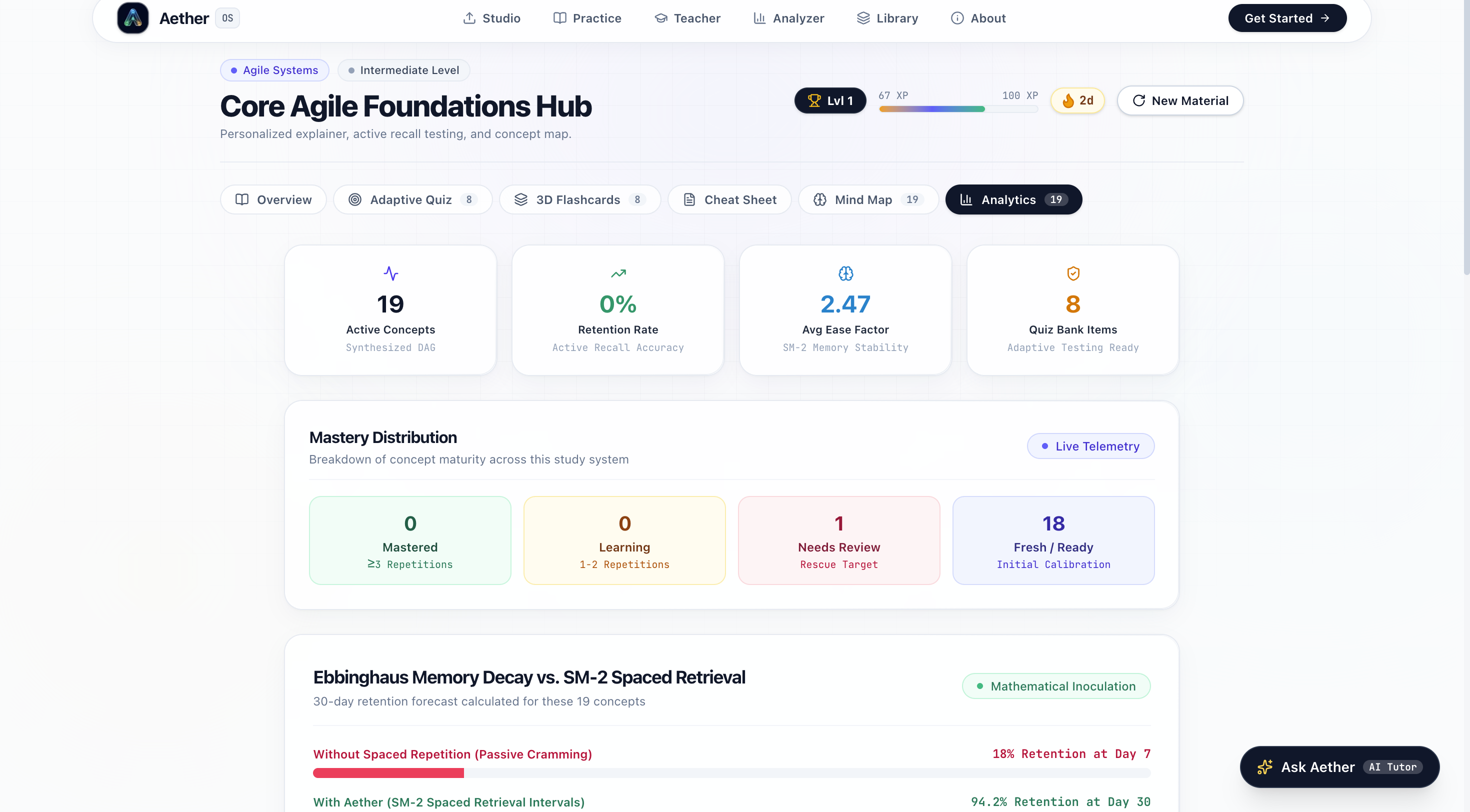
- Mathematical Memory Modeling (SuperMemo SM-2): Every answer updates a per-concept mathematical decay model: $$\text{EF}' = \text{EF} + \left(0.1 - (5 - q) \times (0.08 + (5 - q) \times 0.02)\right)$$ Aether calculates optimal review dates and schedules daily retrieval sessions to permanently flatten the forgetting curve.
- Neural Audio Lessons: Generates 128kbps crystal-clear voice lessons with Microsoft Azure Neural Voice for auditory learners.
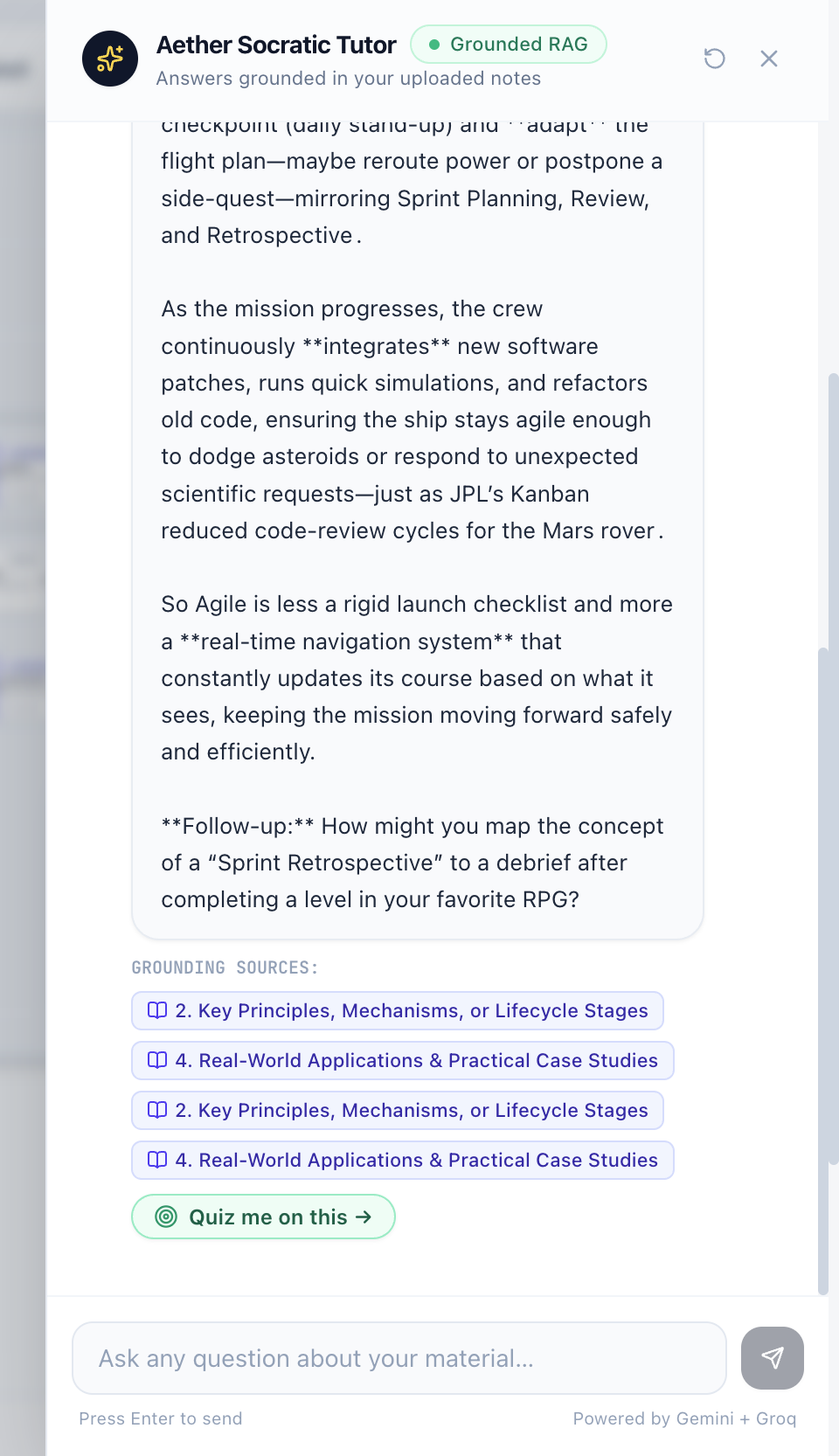
- Socratic Chat Tutor: A floating contextual tutor backed by
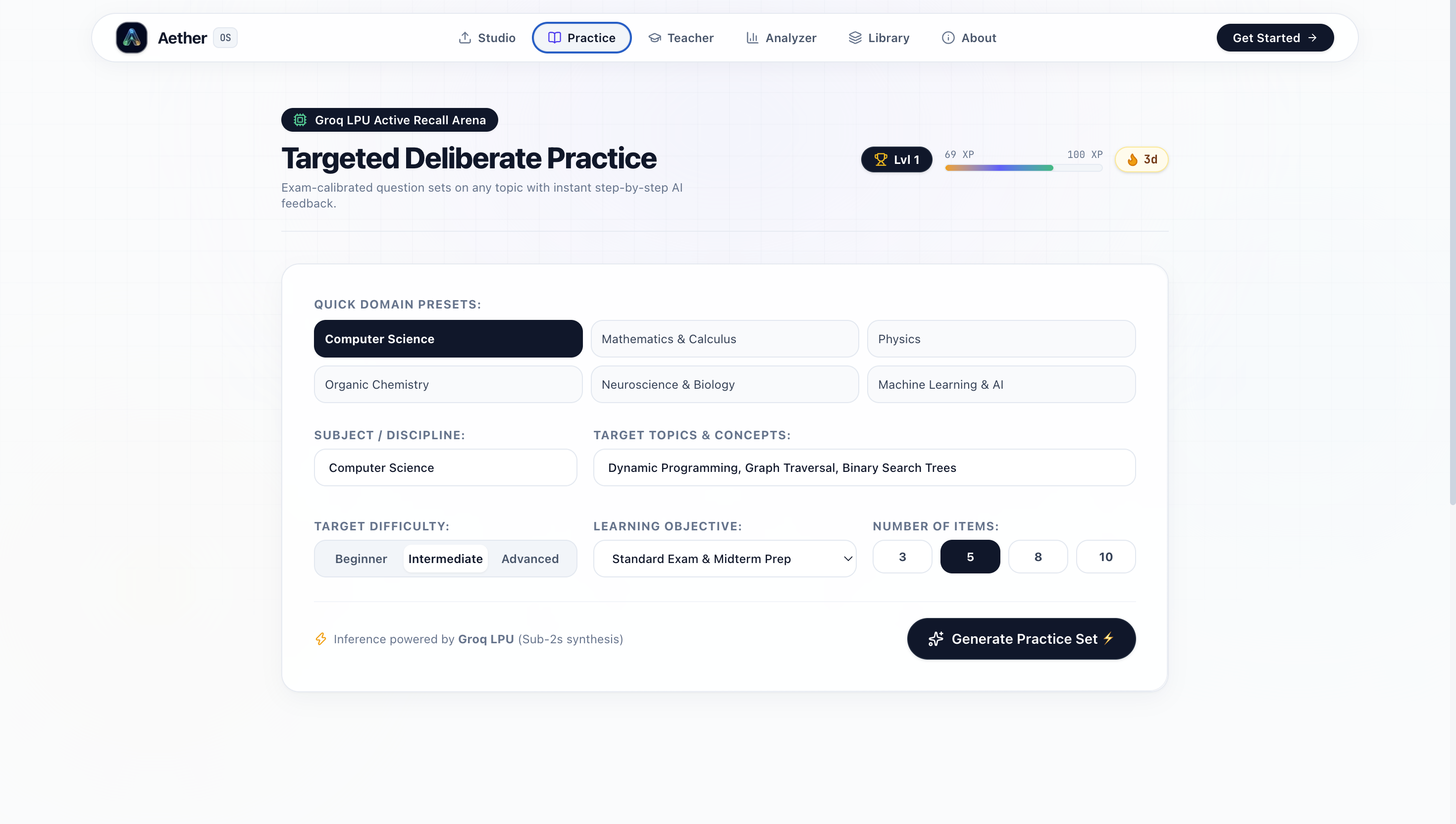
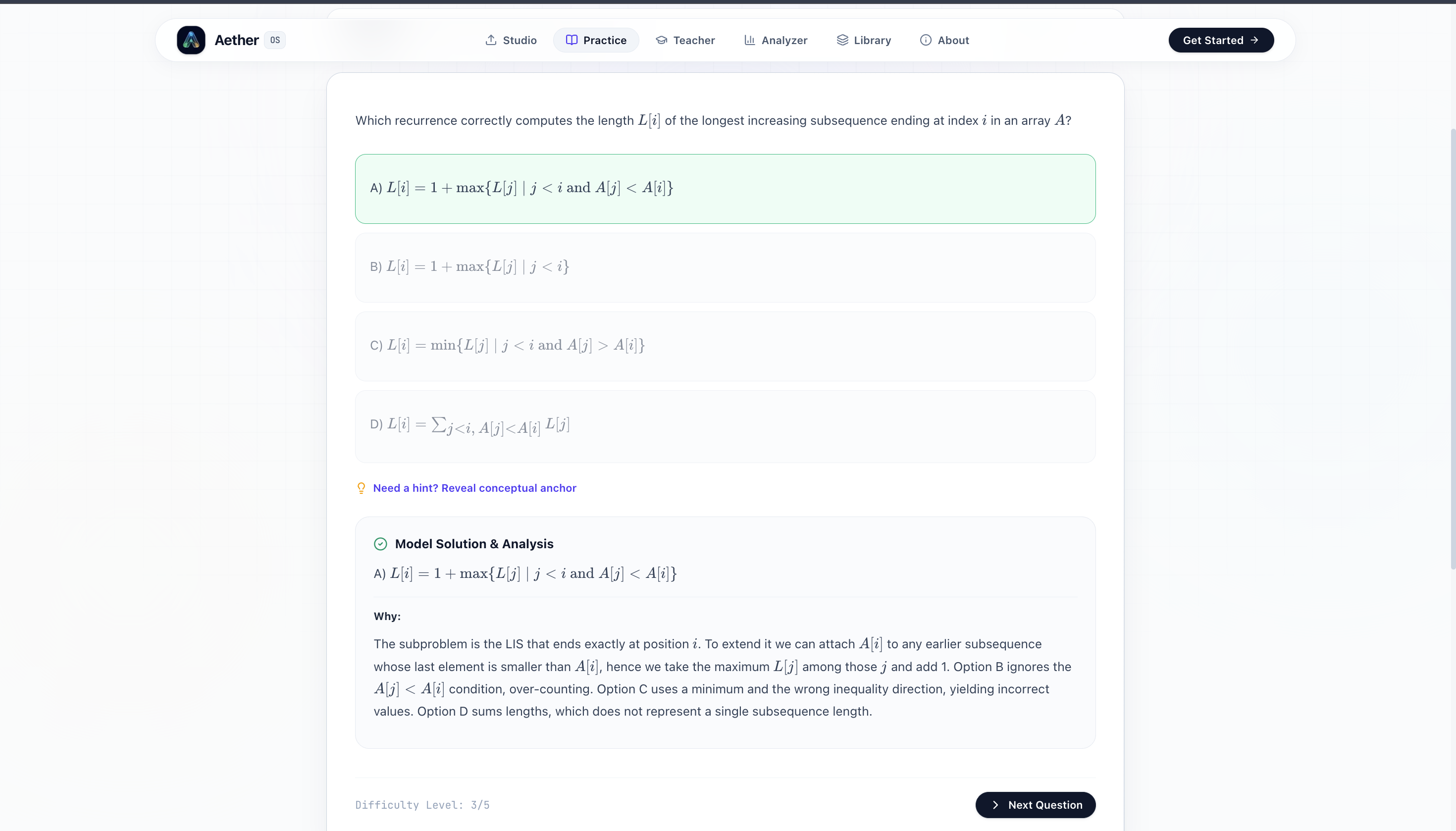
pgvectorRAG search with verbatim document citations. - Teacher Mode & Practice Arena: Enables educators to generate differentiated 3-tier worksheets and students to spin up on-demand mock exams.
How I built it
Aether was engineered with a production-grade, multi-agent architecture prioritizing sub-second latency and zero hallucination:
- Multi-Agent Orchestration (LangGraph): We implemented a centralized Supervisor pattern coordinating 10 specialized agents: Ingestion Agent, Concept Architect, Learning DNA Profiler, Content Forge, Quiz Master, Flashcard Smith, Semantic Grader, Remediation Coach, SM-2 Scheduler, and Chat Tutor.
- High-Velocity Parallel Fan-Out: Using distributed model endpoints, Content Forge, Quiz Master, and Flashcard Smith run concurrently, slashing full study hub generation from 120+ seconds down to 14.26 seconds.
- Dual-Model Strategy:
- Google Gemini 3.6 Flash: Handles multimodal vision OCR for messy handwriting, audio lecture transcription, and PDF parsing.
- Groq (Llama 3.x / GPT-OSS): Powers sub-second structured generation, real-time rubric grading, and instant Socratic tutoring.
- Frontend & Design System: Built with Next.js 16 (Turbopack), Tailwind CSS, and Framer Motion. We designed a custom dark-first "Liquid Glass" design system featuring frosted glassmorphism, aurora mesh gradients, and spring-physics micro-interactions.
- Data & Vector Storage: Supabase PostgreSQL with
pgvectorfor semantic document chunking, full SM-2 user progress persistence, and row-level security.
Challenges I ran into
- The 8,000 TPM Rate Limit Wall: When three generators fanned out simultaneously on a single Groq model, rate limits spiked latency over 2 minutes. We solved this by architecting a distributed model routing strategy (
openai/gpt-oss-120bfor deep explainer synthesis +openai/gpt-oss-20bfor instant quiz/grading), achieving an astonishing 14.26s total pipeline speed. - Preventing the "Louder AI" Trap: Standard LLMs often remediate mistakes by simply repeating the original explanation word-for-word. We engineered a strict pedagogical state machine with a 6-step rescue ladder and persistent attempt memory, ensuring the AI never repeats a failed explanation strategy.
- Strict Grounding: To eliminate hallucinations, our agents execute a two-pass verification step comparing extracted key facts against the raw vector chunks before rendering explainers.
Accomplishments that we're proud of
- 14.2s End-to-End Pipeline: Orchestrating 10 agents, concept extraction, 3D flashcards, quizzes, audio synthesis, and database indexing in under 15 seconds.
- A Truly Adaptive Remediation Loop: Watching an AI detect a student's exact misconception, discard its current teaching plan, switch to a sports analogy, and turn a red concept node into emerald green.
- Production Polish: A fully responsive, accessible web app with 15 optimized routes, custom brand icon assets, zero build warnings, and mobile PWA support.
What I learned
- Cognitive Science in Software: Building SM-2 algorithms taught us how mathematical spacing transforms passive information consumption into lasting cognitive memory.
- Agentic Supervisor Topologies: Stateful multi-agent graphs with conditional branching are vastly superior to linear prompt chains for complex user workflows.
What's next for Aether - Multi-Agent Study OS
- Live Voice Socratic Mode: Real-time, hands-free conversational tutoring via WebSockets and ultra-low latency voice agents.
- Classroom Heatmaps for Teachers: Live telemetry dashboards allowing professors to pinpoint which concepts 80% of their lecture hall struggled with during homework.
- Local-First Mobile App: Offline-first mobile client with on-device SQLite caching for studying on subways and flights.
Built With
- edge-tts
- fastapi
- framer-motion
- gemini-api
- groq
- langchain
- langgraph
- llama-3
- next.js
- pgvector
- postgresql
- python
- rag
- react
- render
- supabase
- typescript
- vercel


Log in or sign up for Devpost to join the conversation.