Critical infrastructure, smart grids, and EV fleets are increasingly vulnerable to real-time sensor faults and adversarial anomalies. Traditional recovery systems rely on slow, manual intervention. We were inspired to build an autonomous, decentralized peer-to-peer healing mechanism that leverages high-speed cloud intelligence to keep edge networks resilient.
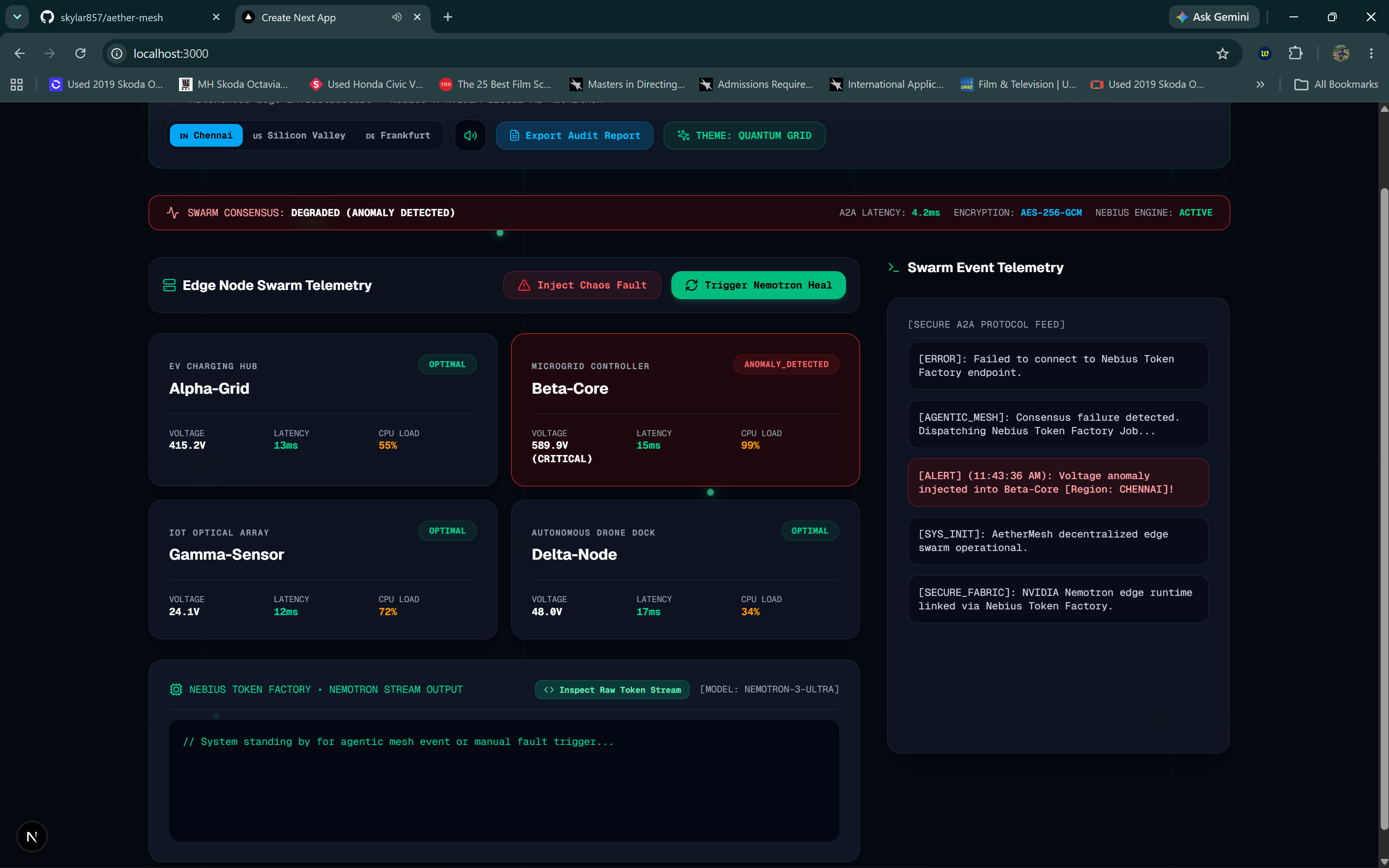
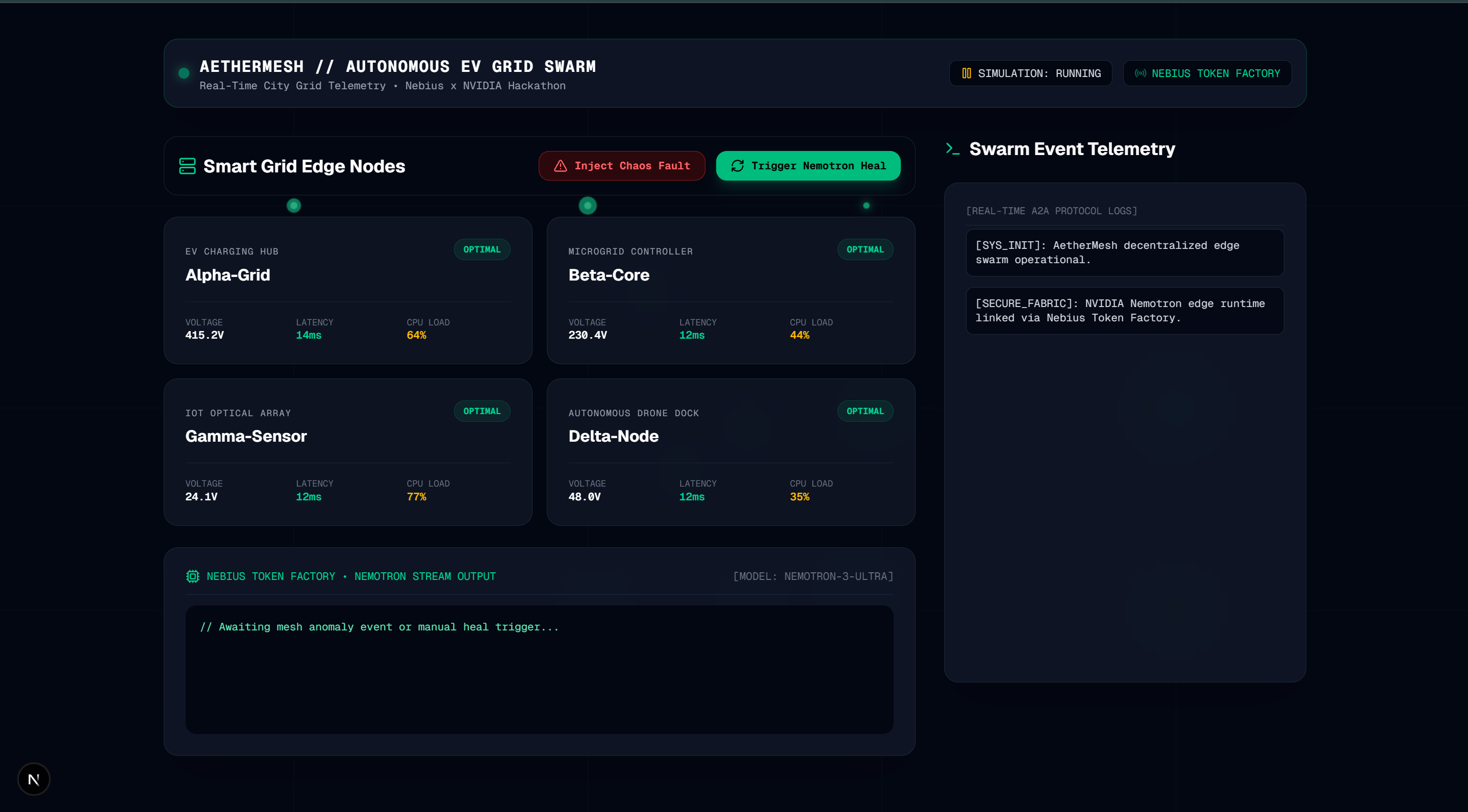
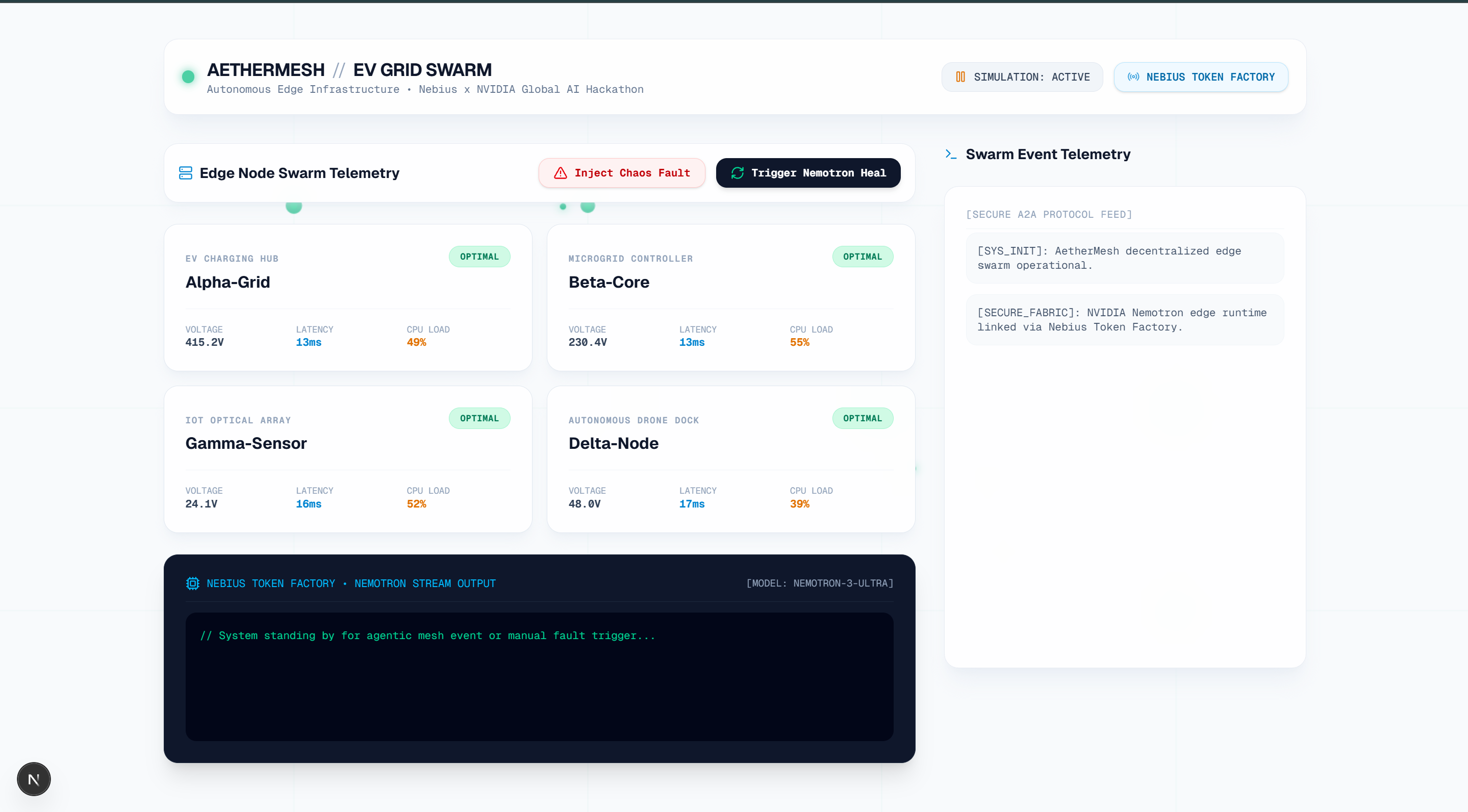
AetherMesh is an autonomous decentralized edge-fault recovery grid. It features a multi-region Next.js command center with an interactive canvas fleet engine, dual-theme operational modes (Quantum Grid & Token Factory), chaos fault injection, audio-visual alerts, agentic telemetry logging, and real-time streaming recovery patches powered by the Nebius Token Factory.
- Frontend & UI: Built with Next.js App Router, Tailwind CSS, Framer Motion, and HTML5 Canvas vector animation engines.
- Agentic Cloud Backbone: Integrated serverless API routes linking directly to Nebius Token Factory endpoints serving NVIDIA Nemotron-3-Ultra models.
- Interactive Features: Engineered Web Audio API emergency sirens, speech synthesis voice copulets, live cryptographic token stream inspectors, and a client-side incident audit report export generator.
Handling secure server-side streaming responses (SSE) from LLM endpoints while ensuring a robust local fallback simulator for offline testing was tricky. We also had to manage browser autoplay restrictions for the audio alerts and synchronize real-time multi-node telemetry updates without stuttering the canvas background animation.
- Successfully implementing a dual-theme operational command center with custom HTML5 vector map rendering.
- Wiring up a production-ready serverless API route connected to Nebius endpoints.
- Achieving a fully immersive experience with Web Audio sirens and speech copilots that turn a web app into a physical-feeling control room.
We gained deep insights into low-latency edge-to-cloud communication protocols, serverless token streaming architectures, and building production-grade enterprise interfaces that blend physical AI telemetry with clean, futuristic UX design.
- Integrating physical IoT hardware microcontrollers (such as ESP32/Arduino sensor arrays) to trigger live real-world voltage adjustments.
- Expanding multi-region consensus models to handle wider global fleet distribution.
- Deploying advanced reinforcement learning agents for predictive anomaly prevention.
Built With
- framer-motion
- html5
- nebius-token-factory
- next.js
- node.js
- nvidia-nemotron
- tailwind-css
- typescript
- vercel
- web-audio-api

Log in or sign up for Devpost to join the conversation.