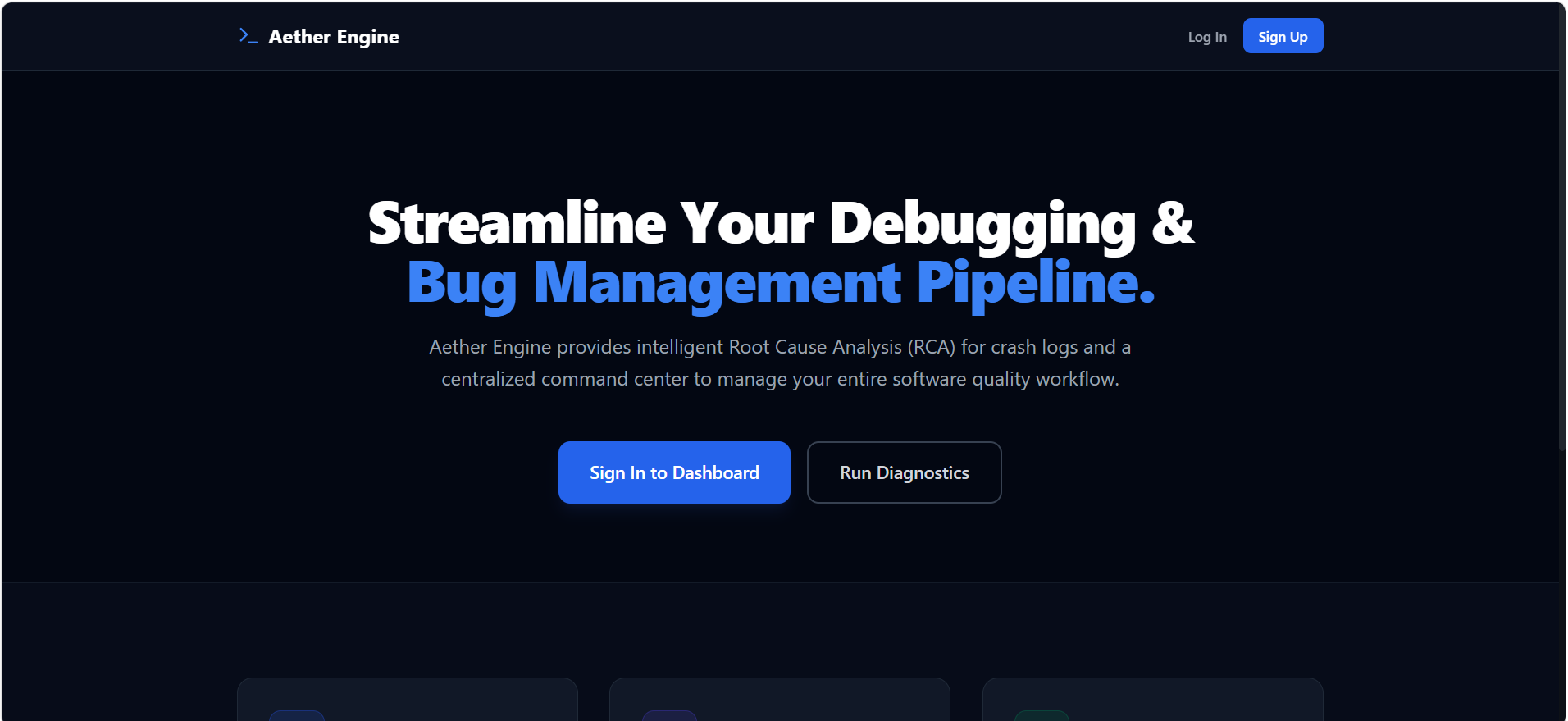
💡 Inspiration Software development is often bogged down by the repetitive cycle of bug discovery, triage, and manual patching. QA engineers and developers spend countless hours going back and forth over simple fixes. We wanted to build a bridge between bug reporting and issue resolution, creating an autonomous pipeline that not only identifies the issue but writes the code to fix it. We built Aether Engine specifically for the OpenAI Build Week Challenge to showcase how autonomous agents can act as enterprise-grade junior developers while keeping data privacy intact.
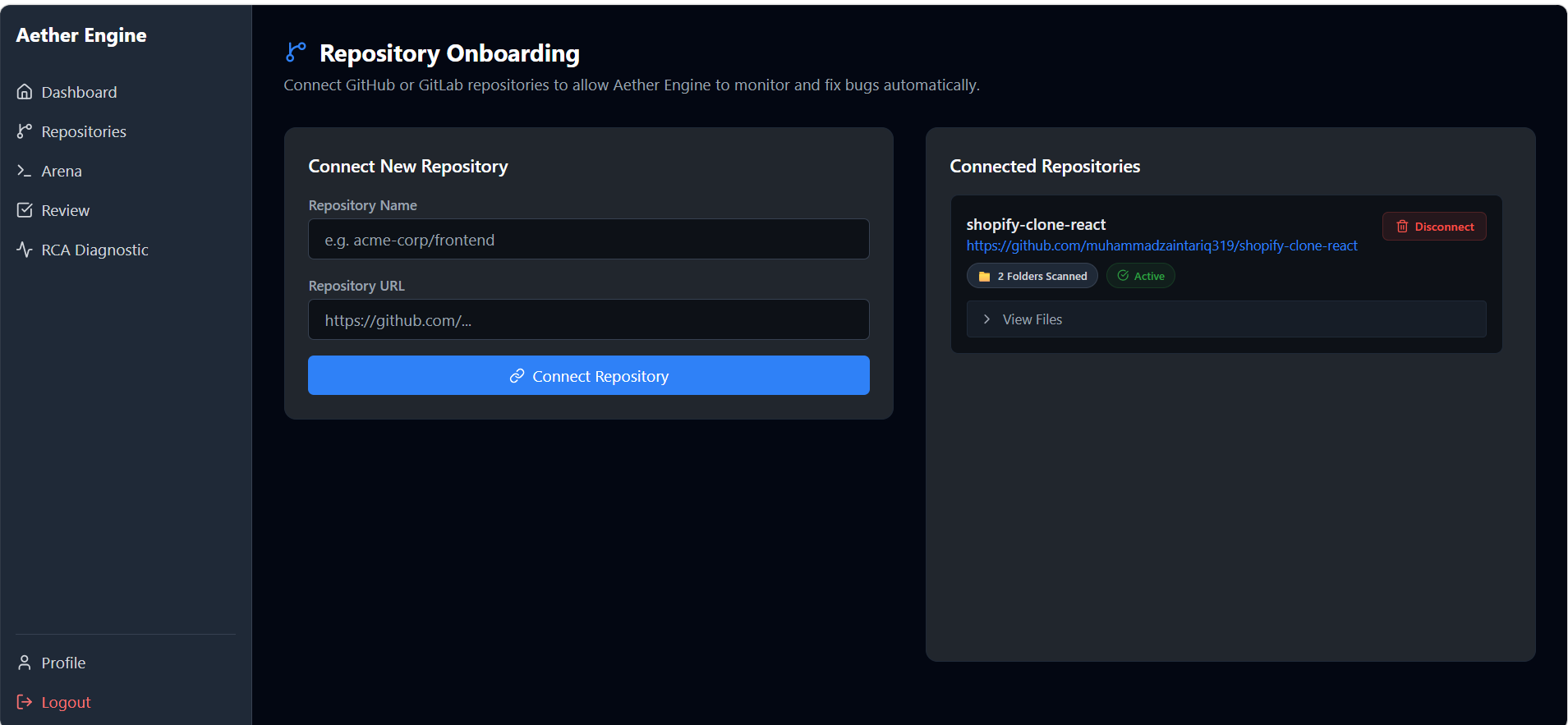
⚙️ What it does Aether Engine is an Autonomous AI Orchestration Pipeline. When connected to a repository, it automatically fetches open issues and bugs. Using a multi-agent AI workflow, it:
Triages the issue to understand the required fix.
Scrubs sensitive data using a Zero-Trust PII scrubber before sending code context to the AI.
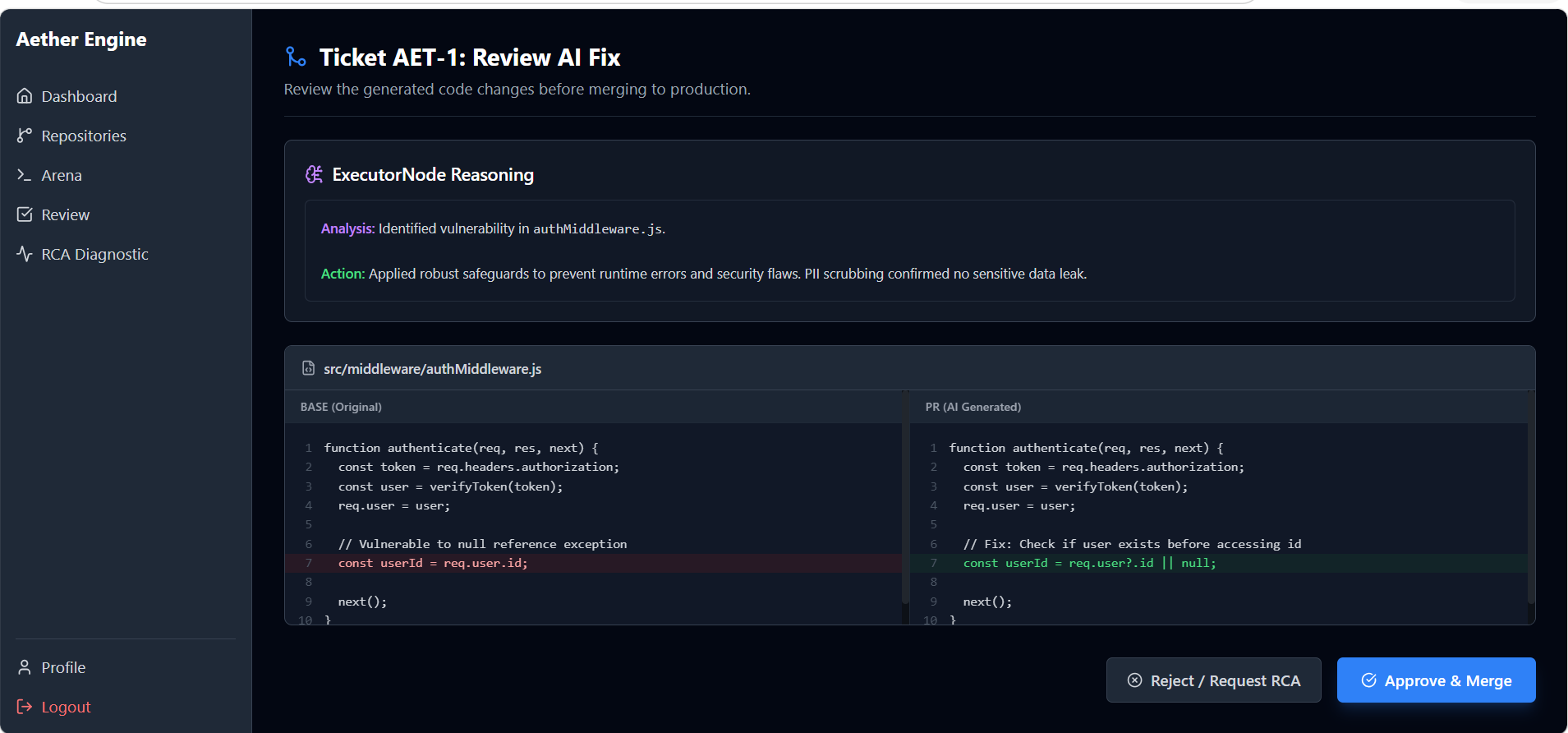
Generates the code fix (Draft PR) through an Executor Node.
Presents the solution in a Human-in-the-Loop (HITL) Review dashboard, allowing developers to approve and merge the code directly from our UI.
🛠️ How we built it The architecture is split into a robust backend and an interactive frontend:
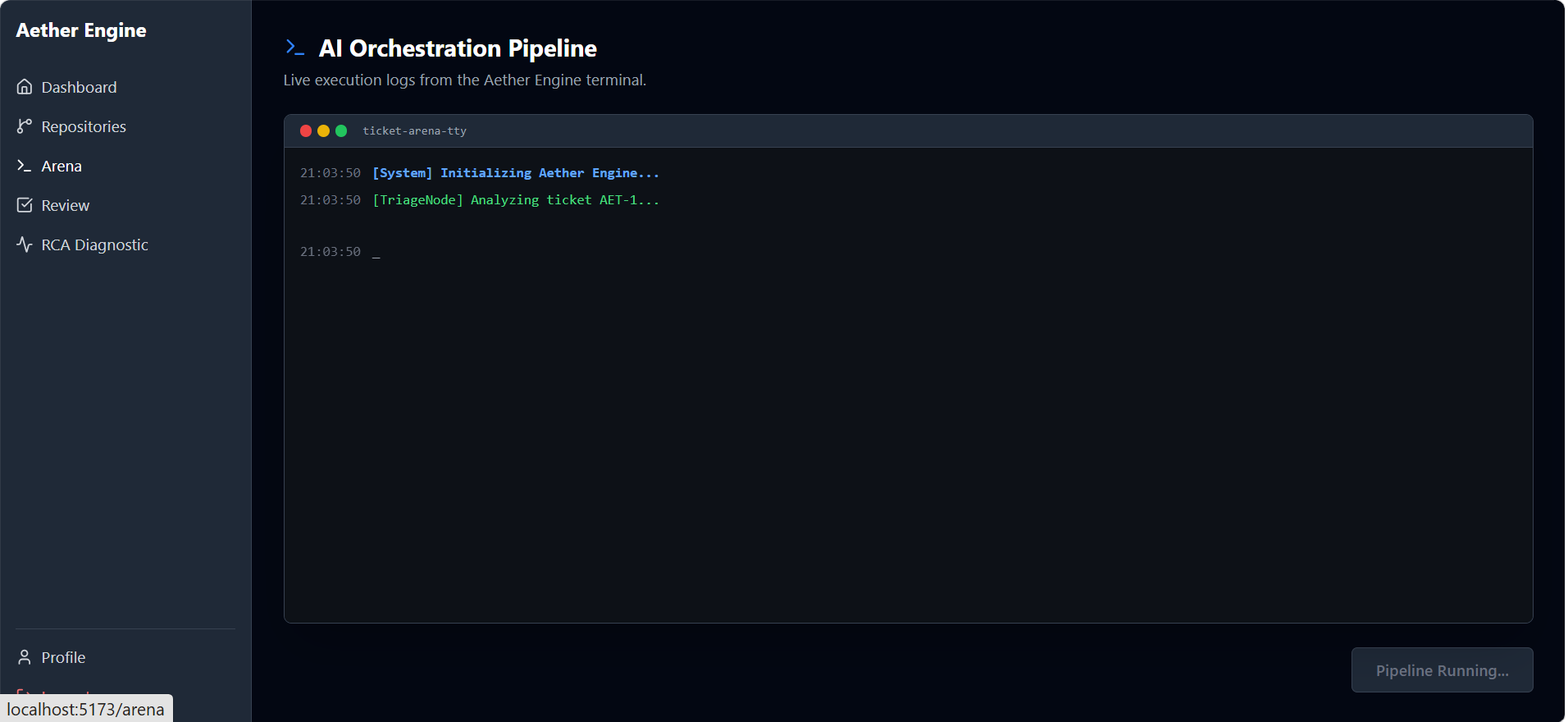
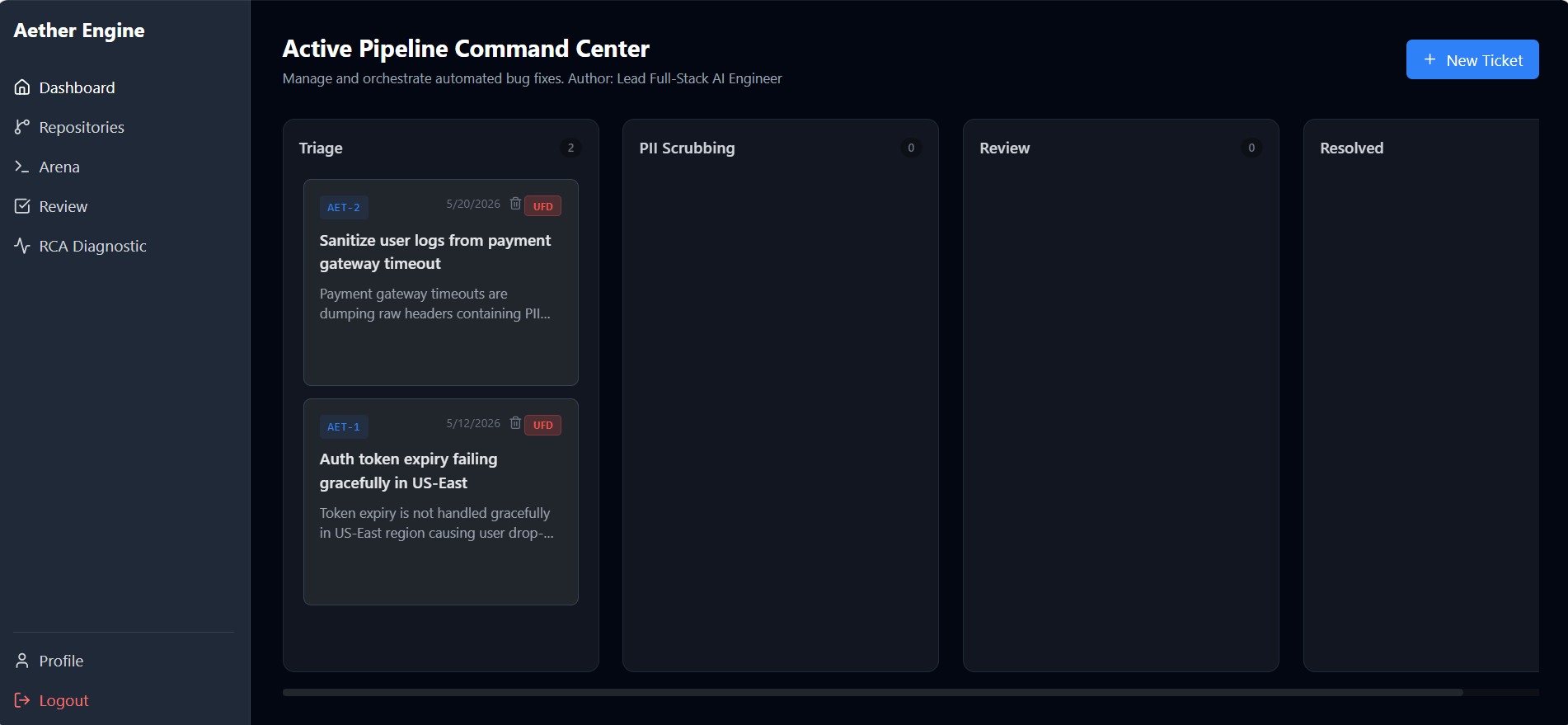
Frontend: We used React.js and Tailwind CSS to build the dashboard. The interface includes a Kanban-style "Command Center" for tracking active pipelines and a "Ticket Arena" that uses WebSockets to stream live execution logs directly to a dark-themed terminal UI.
Backend: We built the API using Python and FastAPI. The core intelligence is powered by LangGraph, which orchestrates the multi-agent workflow (Triage -> PII Scrubbing -> Code Execution).
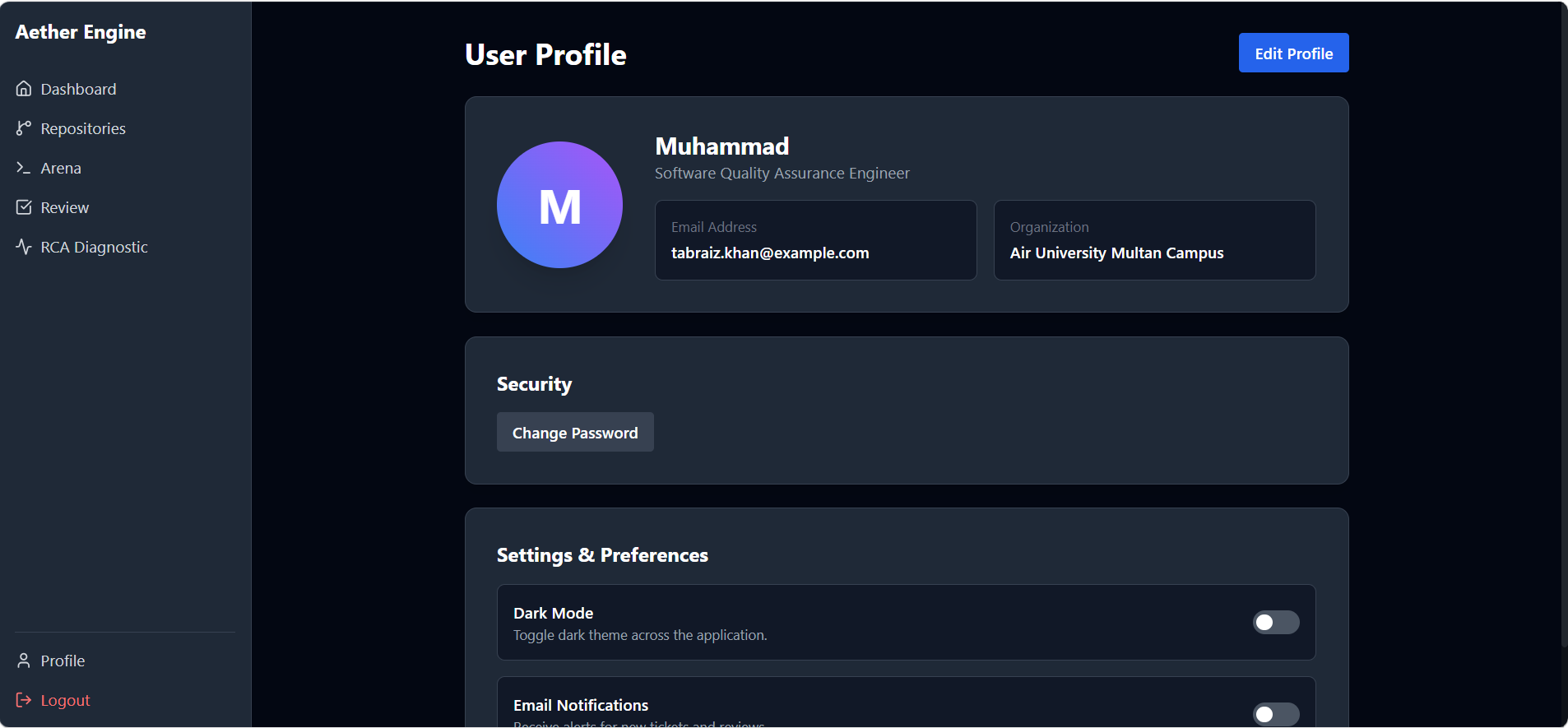
Database: We utilized MySQL (via SQLAlchemy) to store user configurations, repository details, and ticket histories.
🚧 Challenges we ran into One of the biggest hurdles was managing the real-time WebSocket connection between the FastAPI backend and the React frontend. Ensuring that the LangGraph execution states streamed accurately to the "Live Terminal" without connection drops required careful state management. Additionally, designing the Zero-Trust PII scrubber was challenging; we had to ensure it masked sensitive data without breaking the underlying code structure (AST) that the AI needed to write an accurate fix.
🏆 Accomplishments that we're proud of We successfully integrated a complex LangGraph state machine with a modern React frontend. Seeing the "New Ticket" flow seamlessly pass through the triage stage and stream live terminal logs before presenting a side-by-side code diff in the HITL Review screen was a massive win for the project.
📚 What we learned Building Aether Engine deepened our understanding of agentic AI frameworks. We learned how to manage multi-step AI reasoning loops, handle real-time data streaming over WebSockets, and architect a secure, user-friendly dashboard for autonomous code deployment.
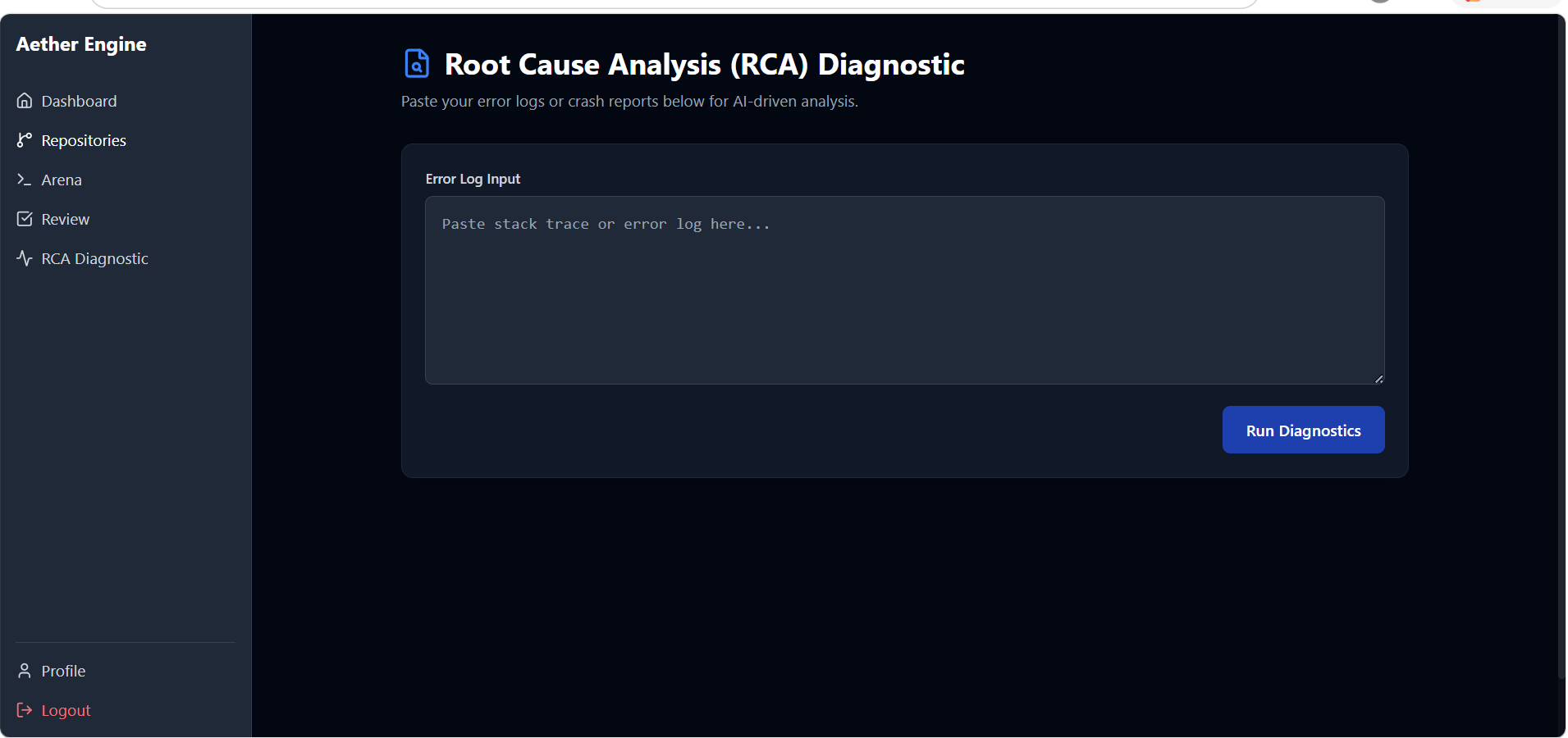
🚀 What's next for Aether Engine Our next step is to introduce Root Cause Analysis (RCA) visualization for highly complex bugs that span multiple files. We also plan to integrate native GitHub/GitLab webhooks so the pipeline triggers instantly the moment a new issue is opened in a connected repository.
Built With
- artificial-intelligence
- automation
- fastapi
- javascript
- langgraph
- mysql
- openai
- python
- react
- tailwindcss
- vite
- websockets

Log in or sign up for Devpost to join the conversation.