-
-
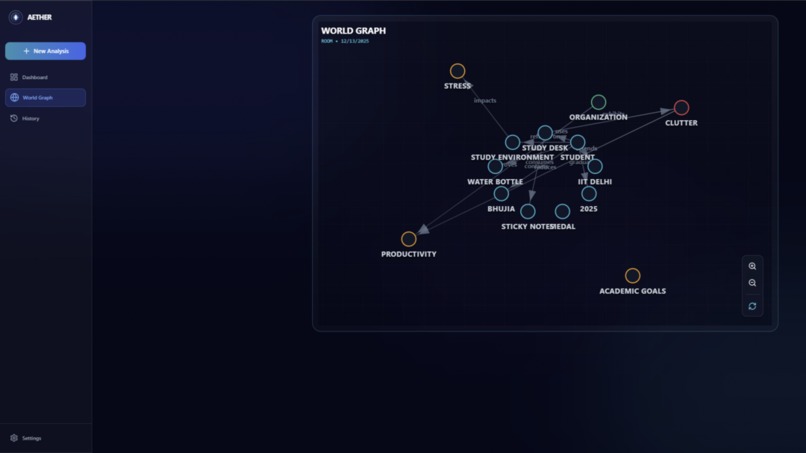
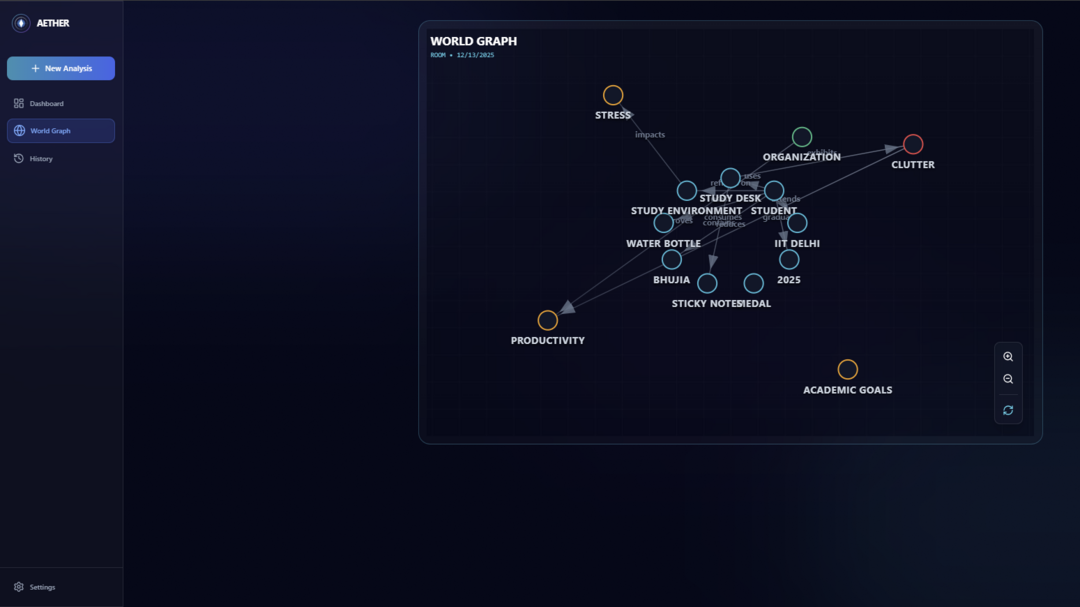
World graph entities
-
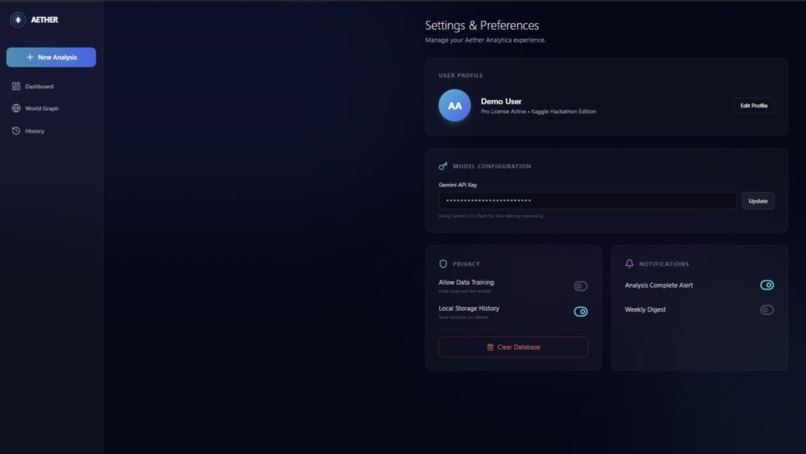
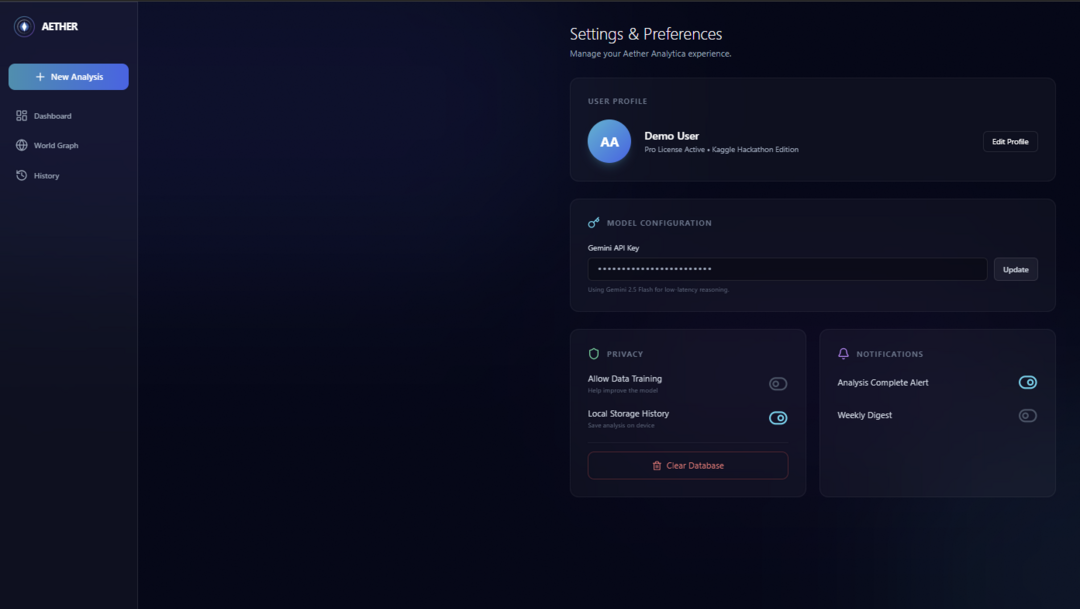
Profile and setting page
-

Full chat history and download as pdf
-
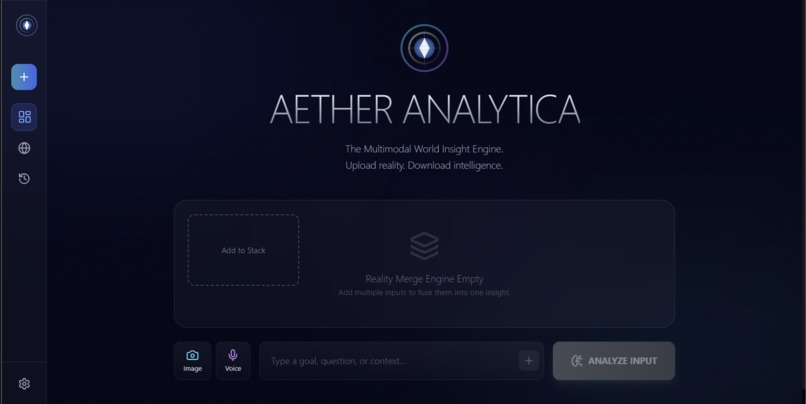
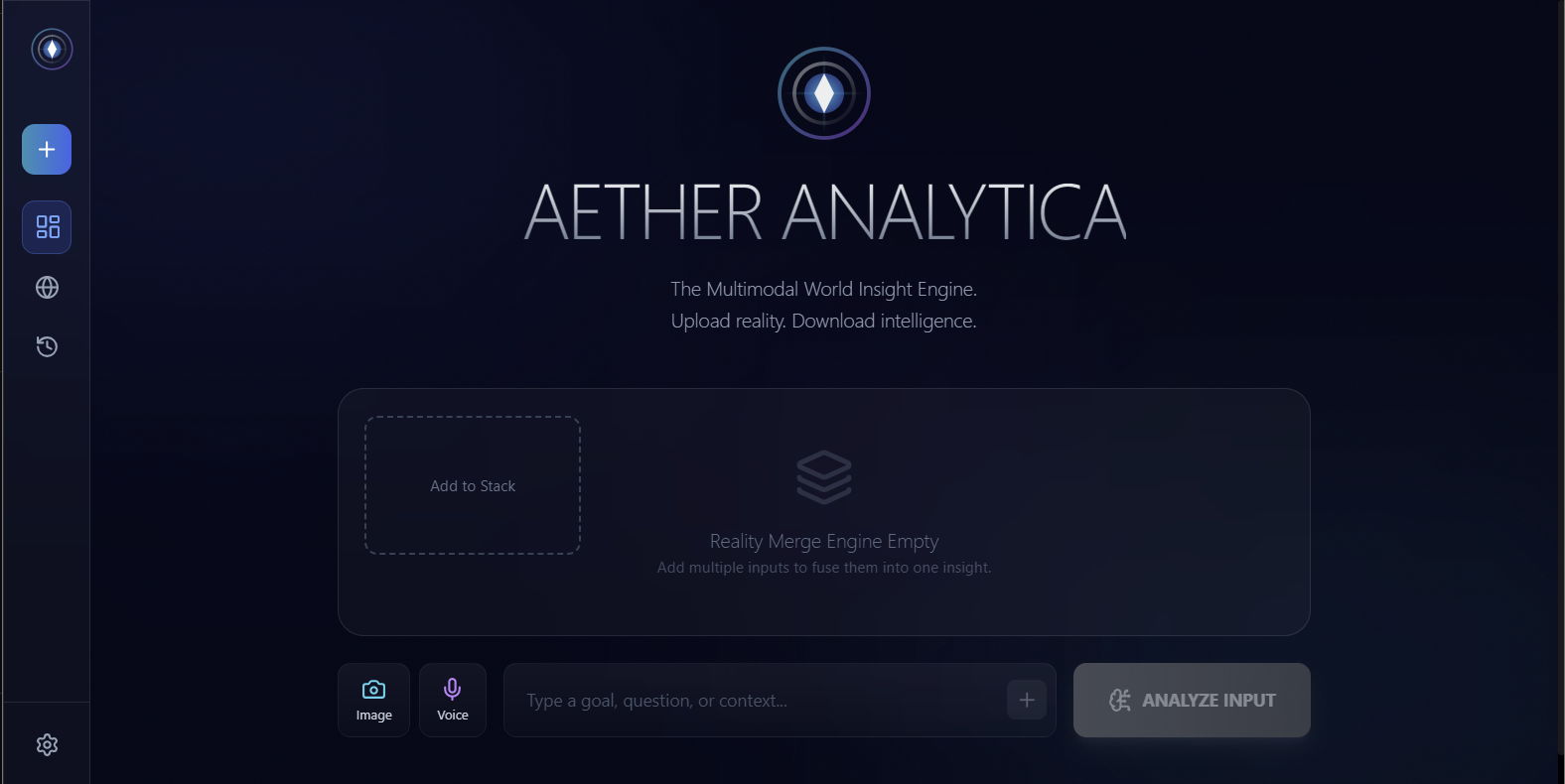
Home page
-
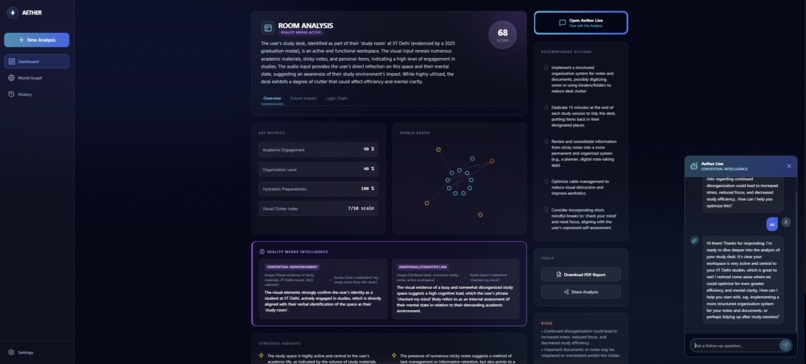
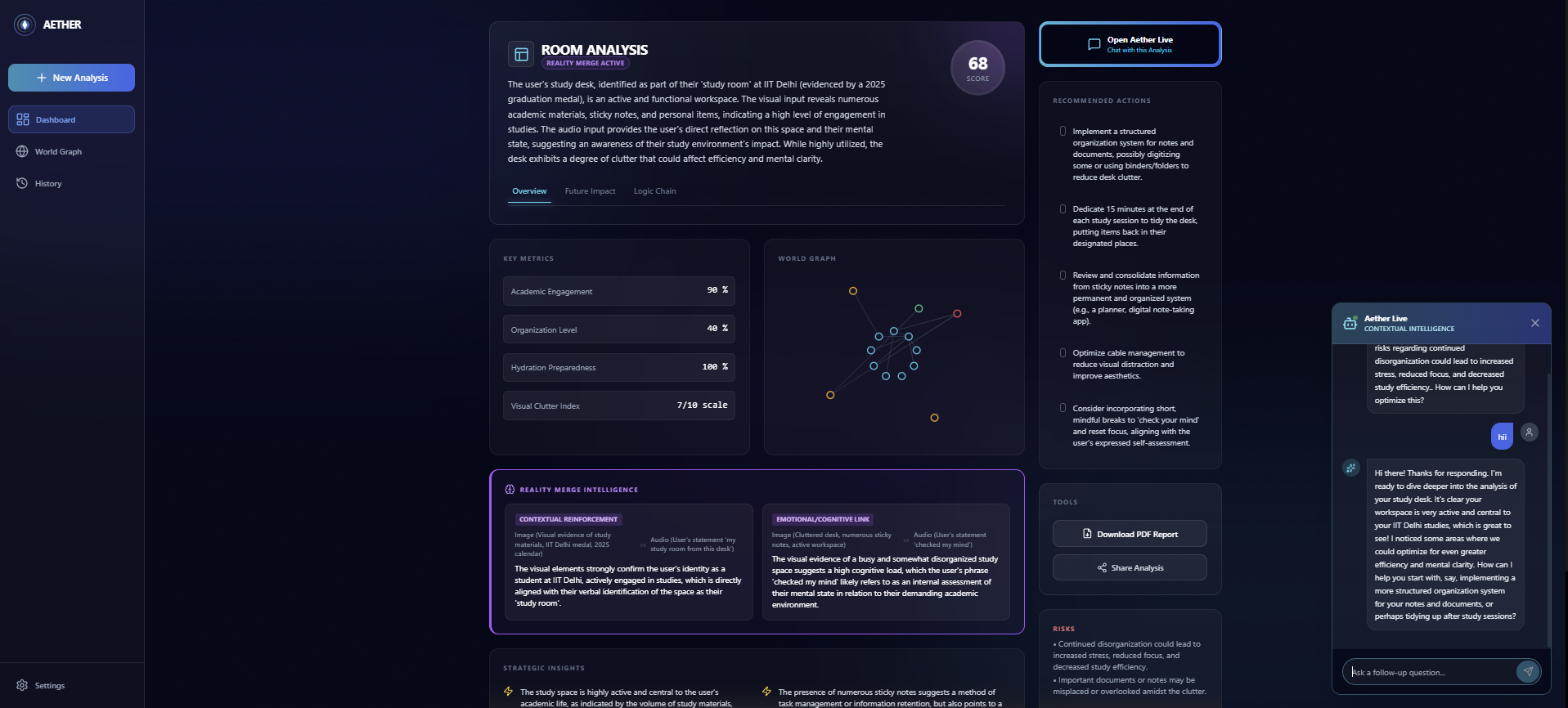
Full report generated

Inspiration
We live in a world drowning in fragmented data.
Your expenses live in receipts. Your stress lives in voice notes. Your habits live in photos. Your intentions live in text lists.
But no system actually connects them into a single intelligence layer.
Most AI tools answer isolated questions. We wanted to build something radically different:
A system that understands your reality as a whole — and predicts what your current habits will lead to.
Aether-Analytica was inspired by a simple question:
What if AI could simulate the consequences of your life decisions before you make them?
What it does
Aether-Analytica is a Multimodal World Insight Engine.
It acts as a personal intelligence layer between the user and their real-world data.
Core Capabilities 1️⃣ Reality Merge Engine
Users upload:
Photos (meals, rooms, receipts)
Voice notes (stress reflections, goals)
Text inputs (budgets, plans, intentions)
The system fuses all modalities into a single structured context instead of analyzing them independently.
2️⃣ Consequence Simulation Engine
The system predicts future outcomes across five domains:
🏃 Lifestyle
💰 Financial
❤️ Emotional
⏳ Time
🧬 Health
It generates:
1-week projections
1-month projections
1-year simulations
This transforms passive analysis into predictive intelligence.
3️⃣ World Knowledge Graph
Outputs are visualized as an interactive graph:
Entity → Action → Consequence
Users can zoom, explore logic chains, and understand cause-effect structures visually instead of reading static reports.
4️⃣ Aether Live (Contextual AI Overlay)
A live conversational layer that retains the full analytical state. Users can “talk to the report” and explore alternative scenarios.
5️⃣ PDF Intelligence Reports
Professional downloadable reports summarizing simulations, insights, and recommendations.
How we built it
🖥 Frontend
React (SPA architecture)
Interactive SVG-based graph rendering
Concentric node layouts for visual reasoning clarity
🧠 AI Layer
Google Gemini (Multimodal reasoning)
Structured JSON schema enforcement
Response schema validation for graph nodes & consequence chains
🔍 Multimodal Fusion Pipeline
Base64 image ingestion
Audio blob processing
Text fusion
Unified prompt orchestration
📊 Structured Reasoning
Instead of free-form responses, we enforced:
{ "lifestyle": {...}, "financial": {...}, "emotional": {...}, "time": {...}, "health": {...} }
This ensures predictable, machine-readable outputs that power the visualization engine.
Challenges we ran into
1️⃣ Multimodal Context Coherence
Feeding image + audio + text into one prompt without losing relational meaning required careful system prompt engineering.
2️⃣ Structured Output Stability
Ensuring strict JSON schema compliance under complex reasoning required iterative refinement.
3️⃣ Visualizing Abstract Reasoning
Translating AI logic chains into an intuitive graph required experimentation with node hierarchies and layout algorithms.
4️⃣ State Retention in Conversational Overlay
Maintaining context across follow-up queries while preserving original analysis integrity was non-trivial.
Accomplishments that we're proud of
Built a fully working multimodal reasoning engine Achieved structured predictive outputs across five domains Implemented dynamic consequence simulations Created an interactive knowledge graph UI Enabled contextual AI conversation layered over analysis Delivered downloadable intelligence-grade PDF reports
Most importantly: We moved beyond “chat-based AI” into decision-aware predictive AI.
What we learned
Multimodal AI is powerful, but orchestration matters more than raw capability. Structured outputs dramatically increase reliability. Visualization transforms trust in AI systems. Prediction frameworks require domain abstraction, not just generative text.
We also learned that users resonate more with: “What will happen if I continue this?” than “What is happening right now?”
What's next for Aether-Analytica
🚀 1. Personalized Risk Scoring Habit risk quantification and trend tracking over time.
📈 2. Historical Memory Layer Longitudinal learning from repeated uploads.
🧩 3. Scenario Comparison Mode Compare “If I continue” vs “If I change” projections.
🏢 4. Enterprise & Social Good Applications Financial wellness tools Mental health support systems Lifestyle optimization dashboards Smart city citizen planning tools
🌍 5. Scalable API Version Allow developers to plug consequence simulation into external applications.

Log in or sign up for Devpost to join the conversation.