-
-
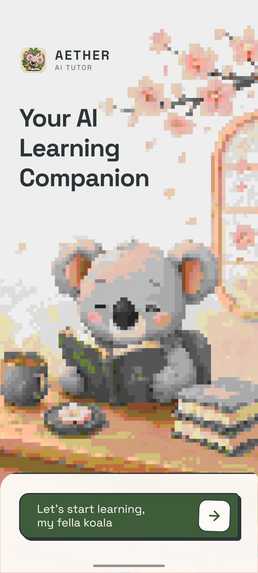
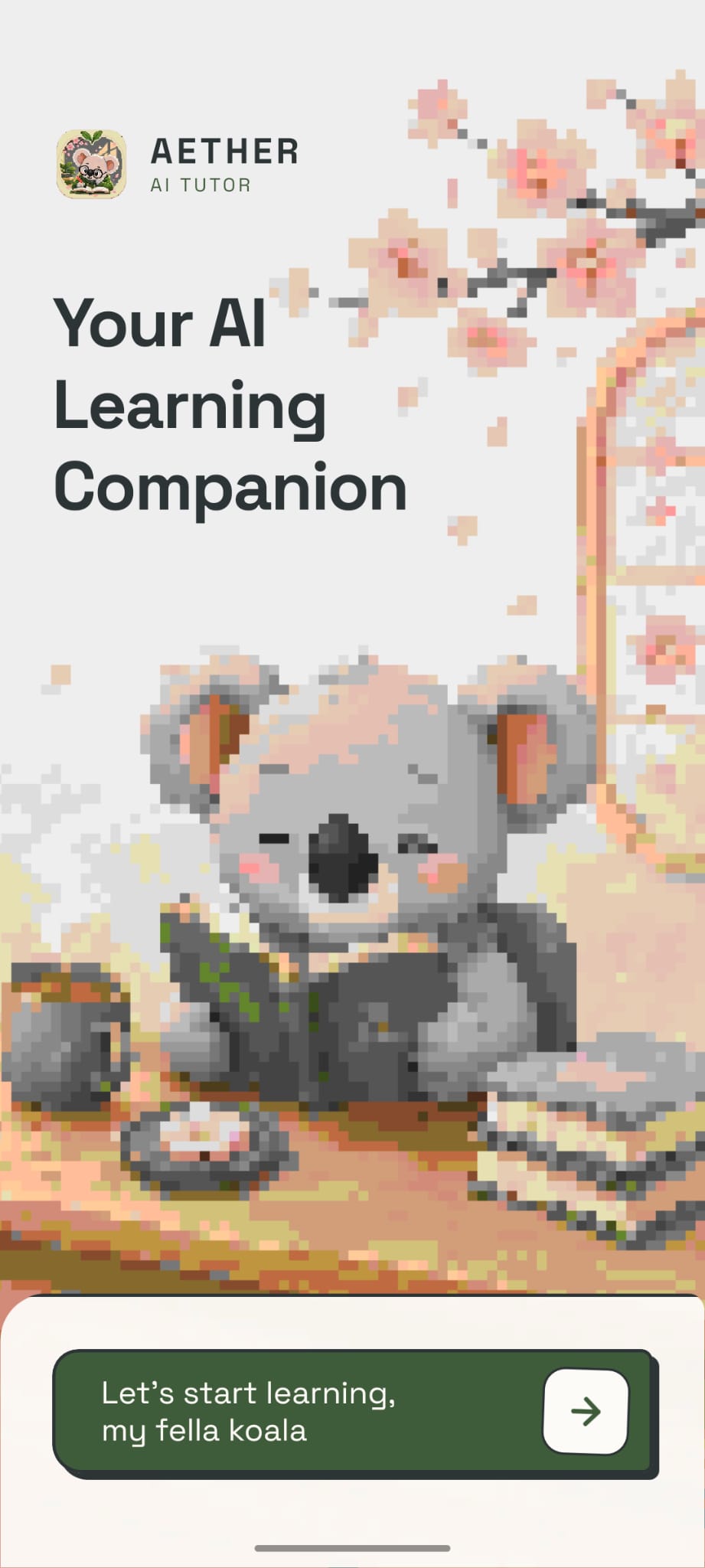
launch_screen
-
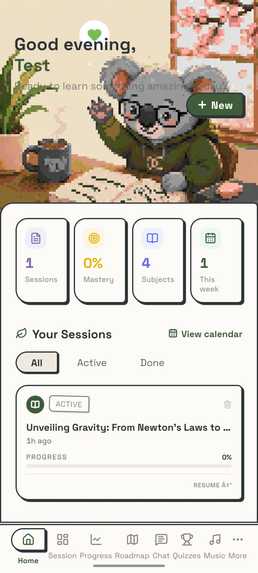
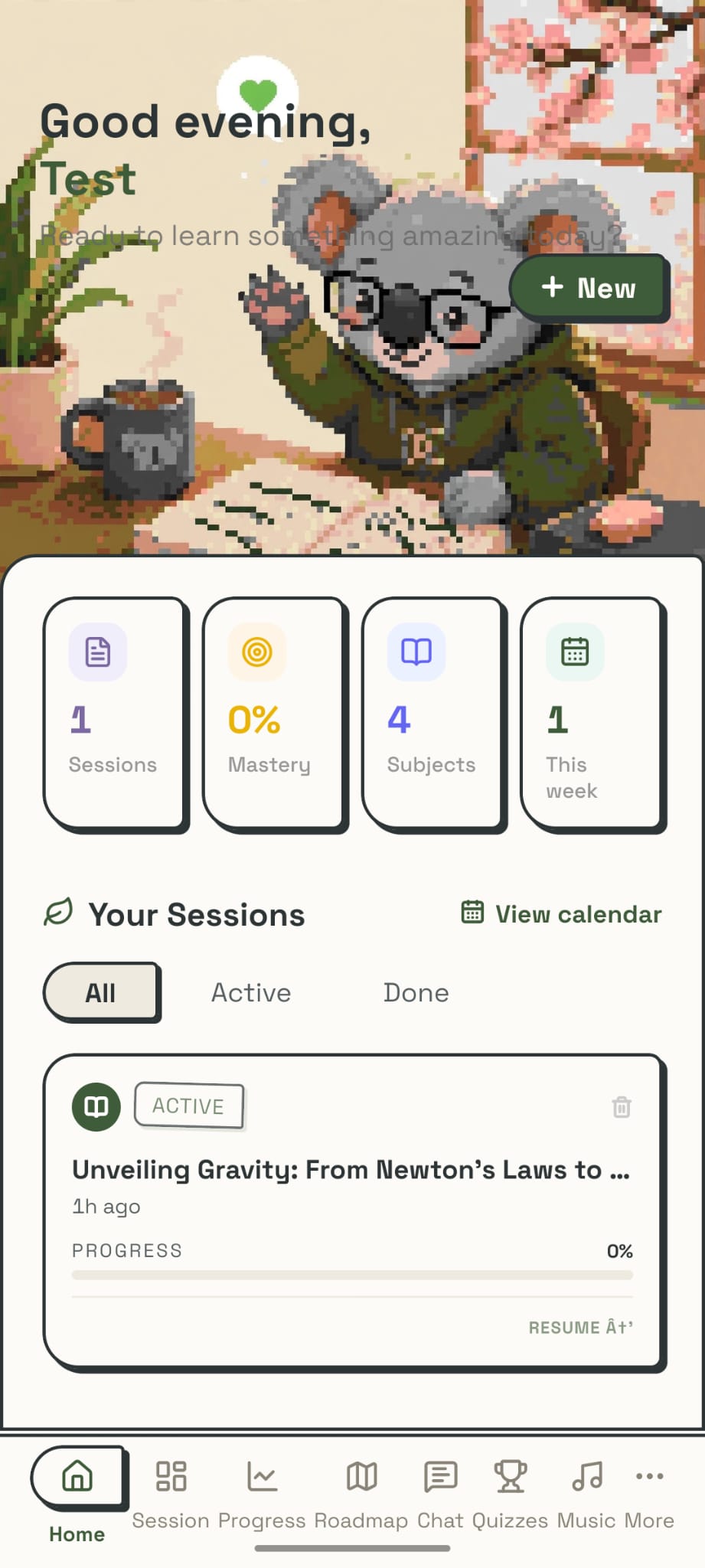
hub_screen
-
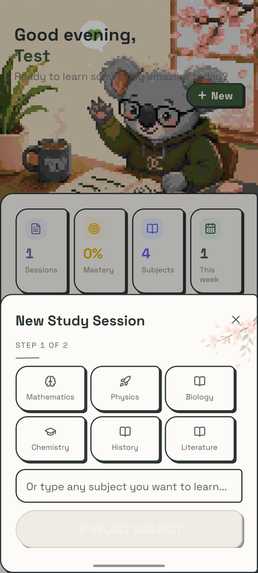
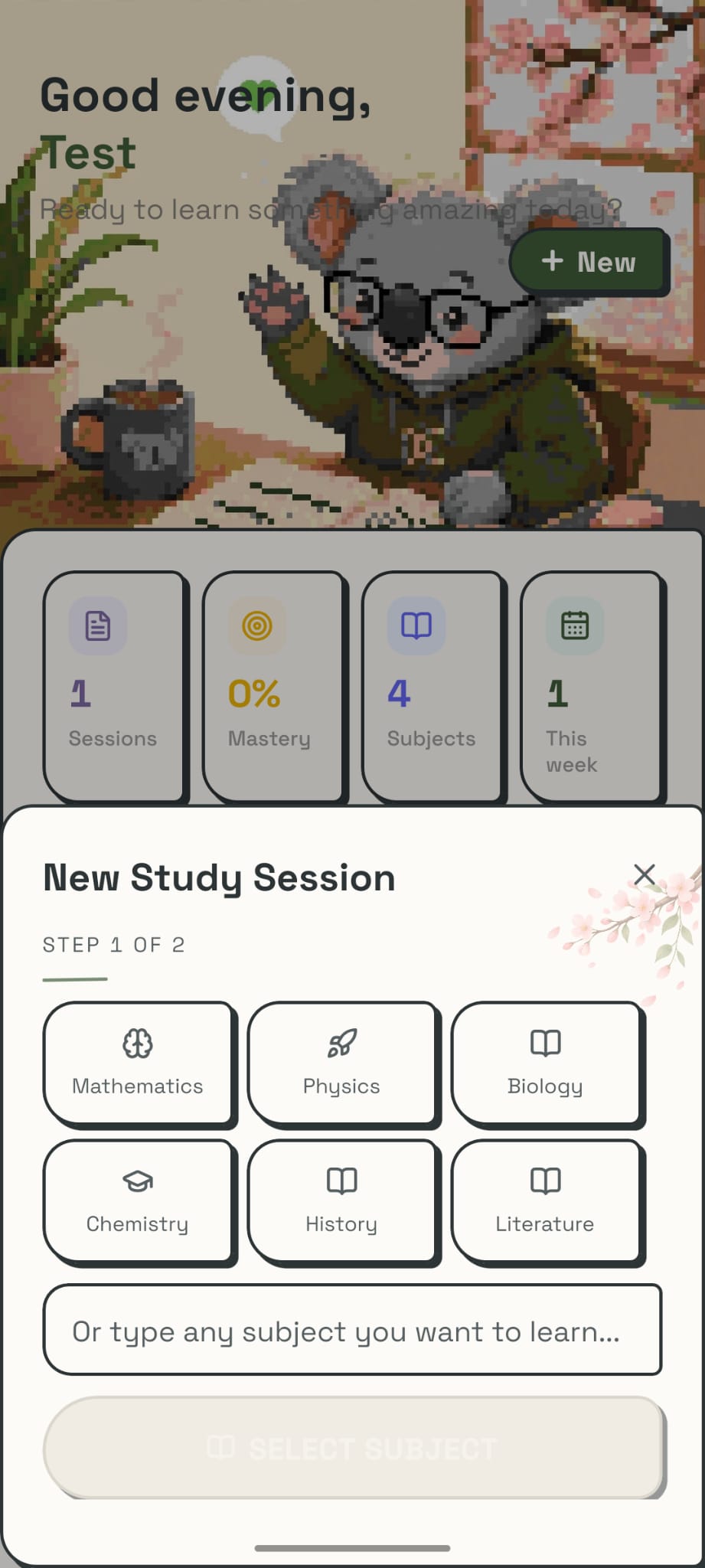
session_creation
-
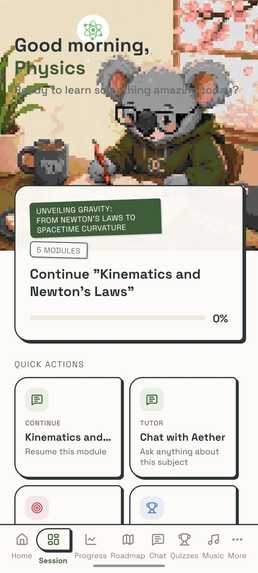
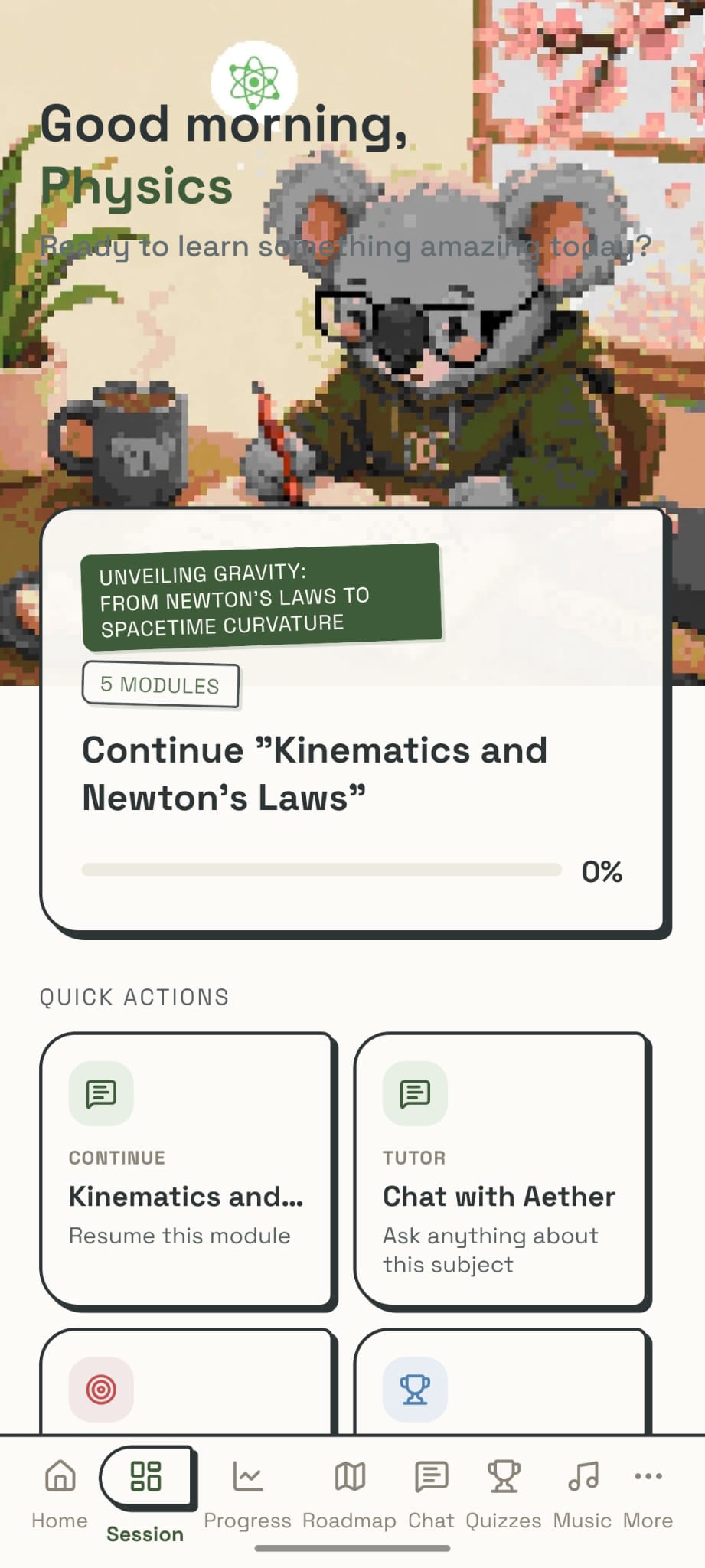
test_session_physics(gravity)
-
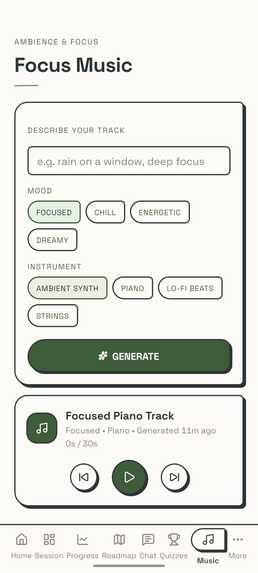
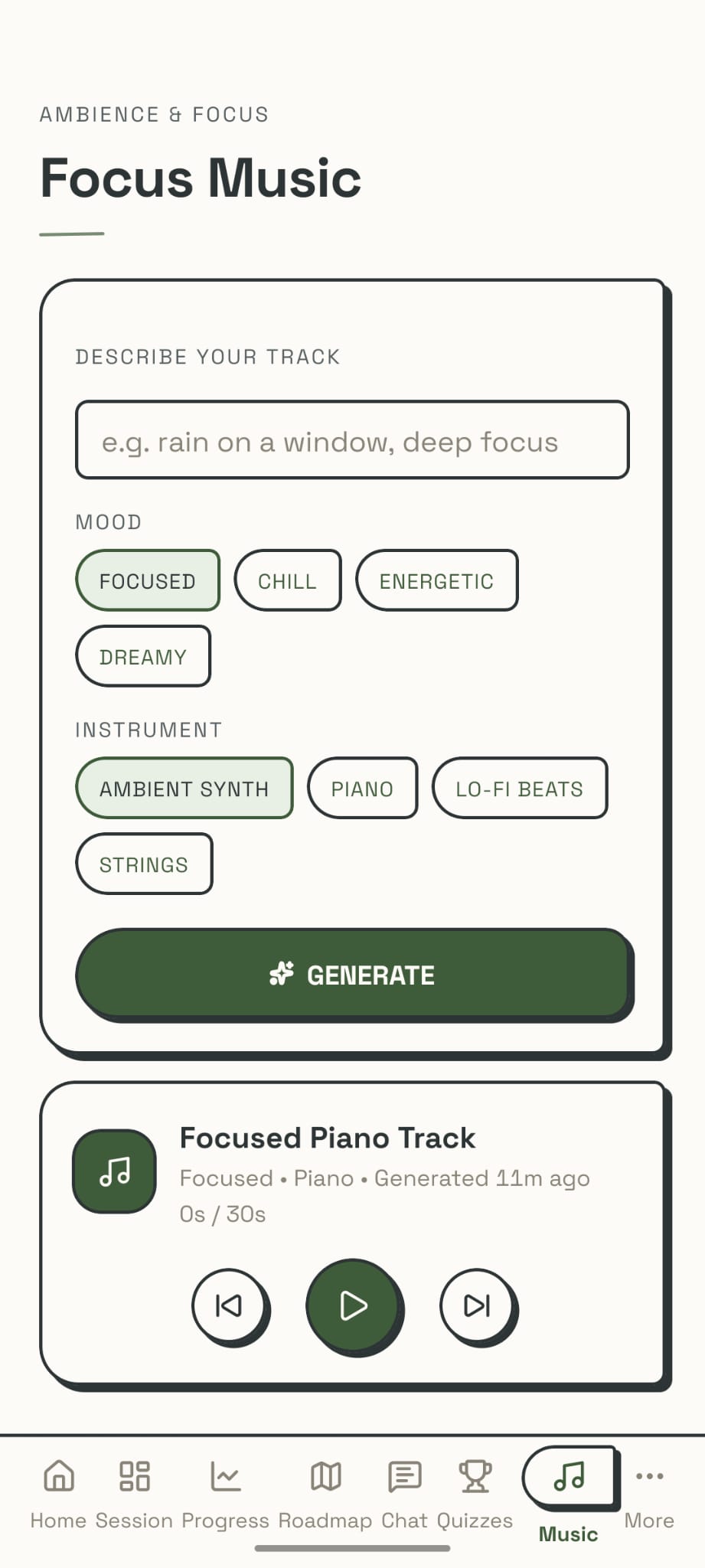
music_screen
-
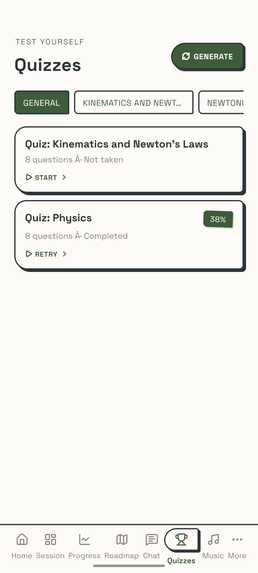
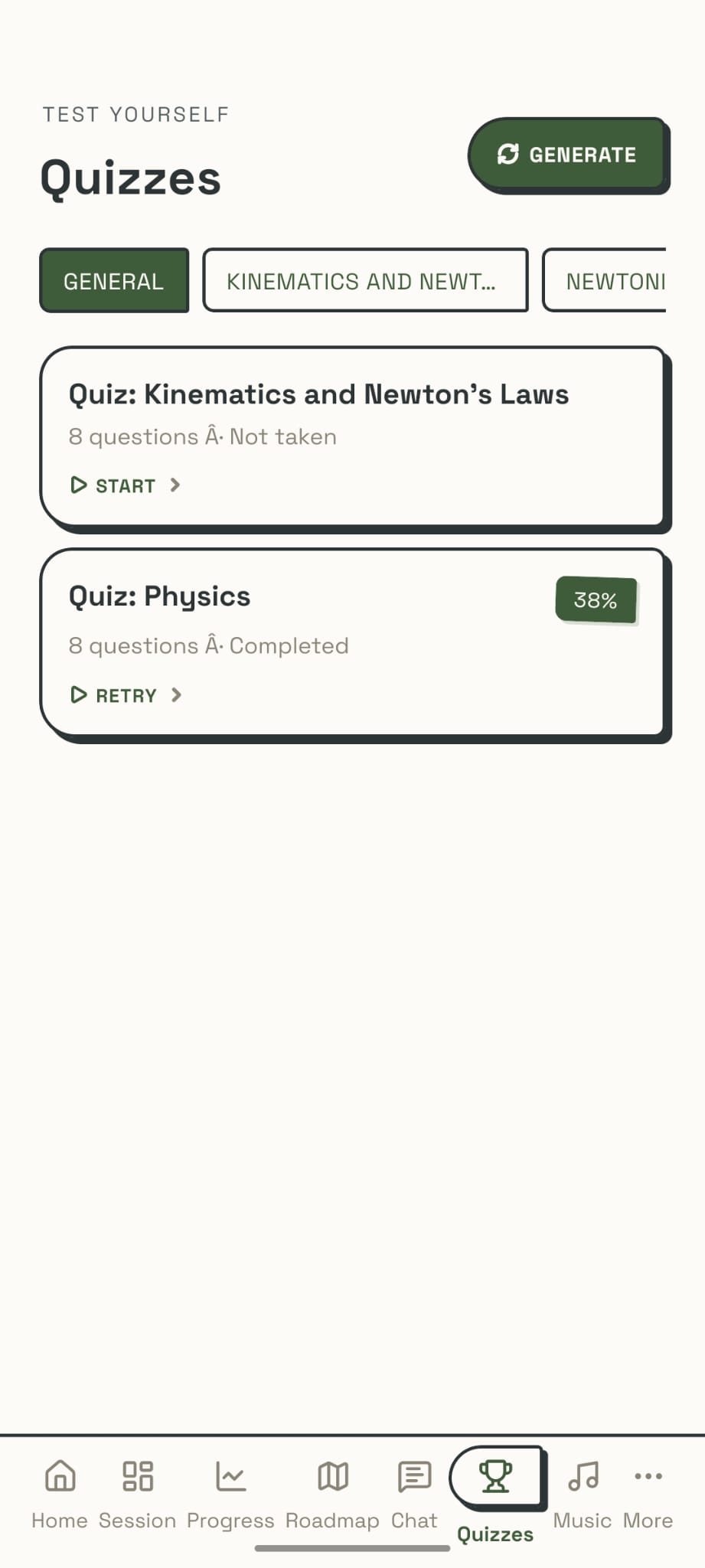
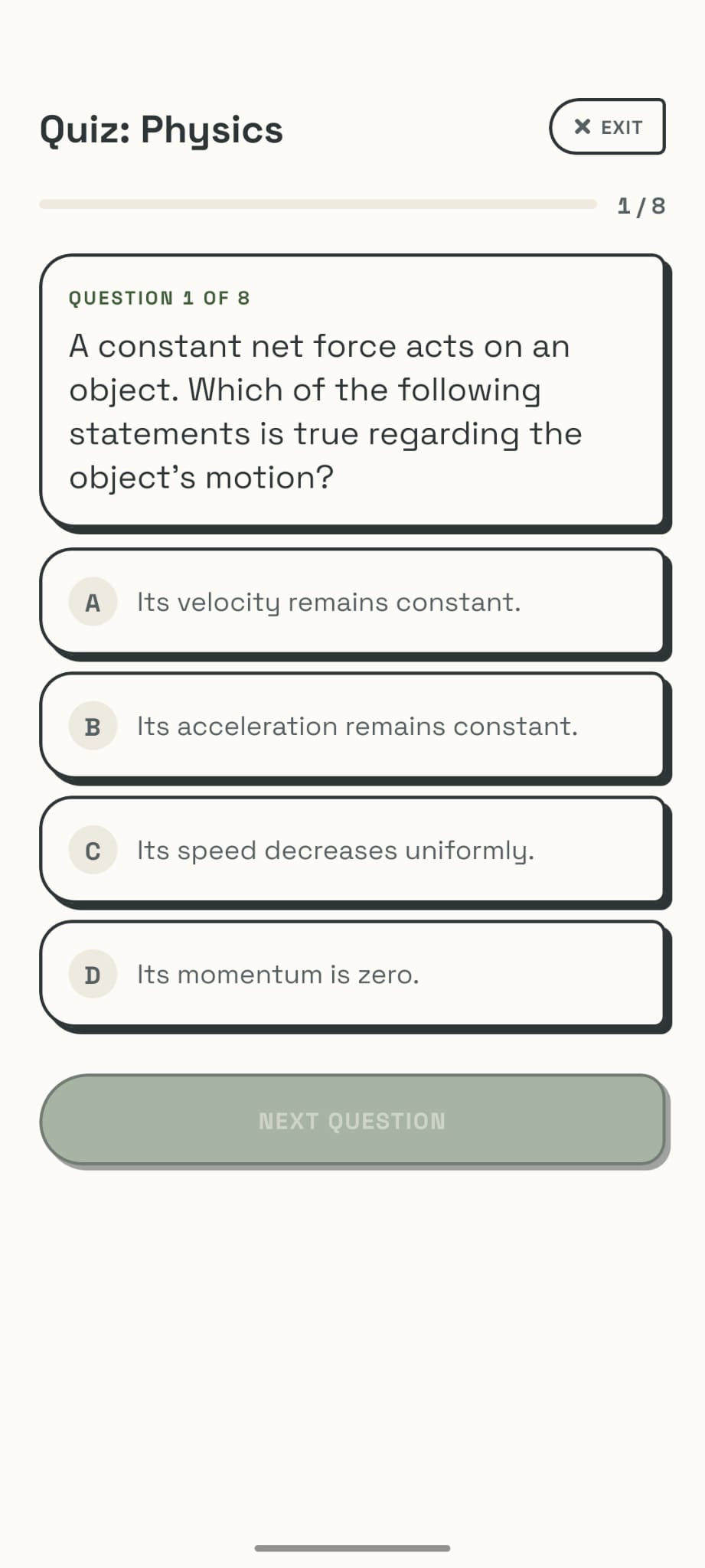
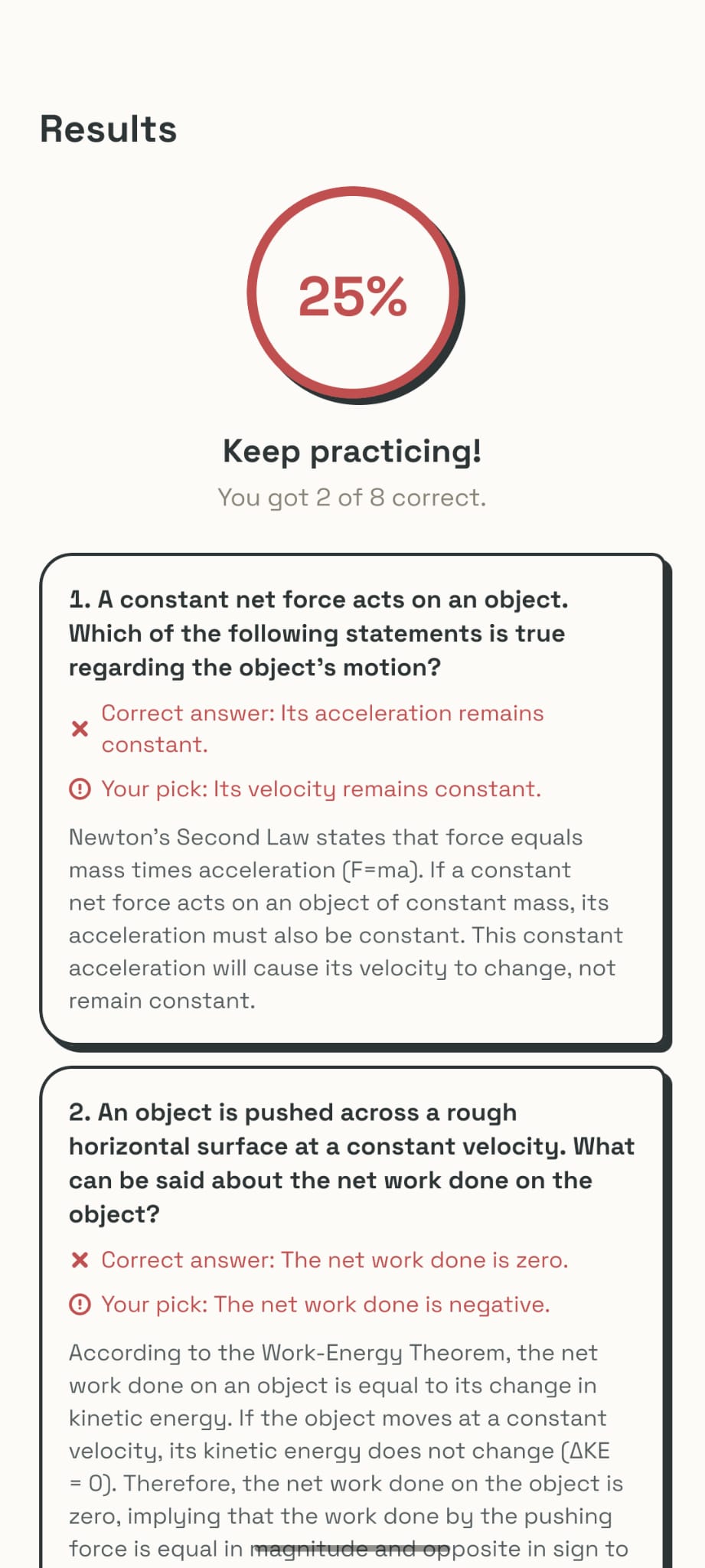
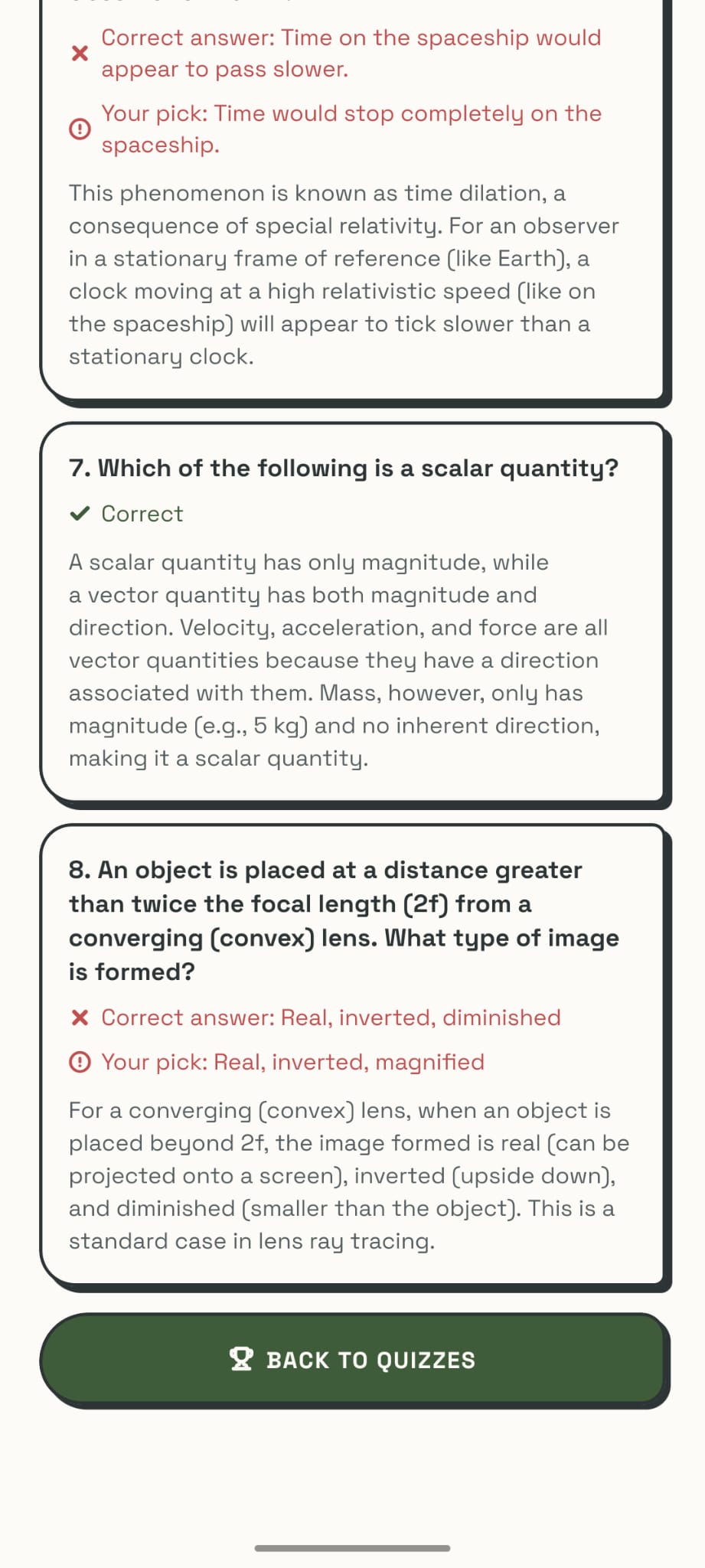
quiz_screen
-
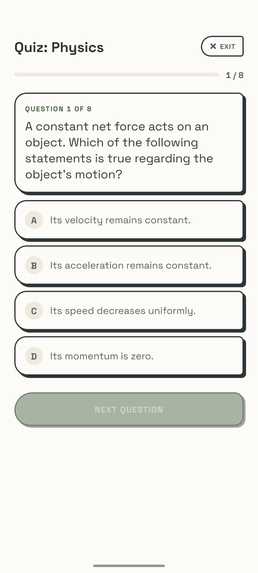
quiz_screen
-
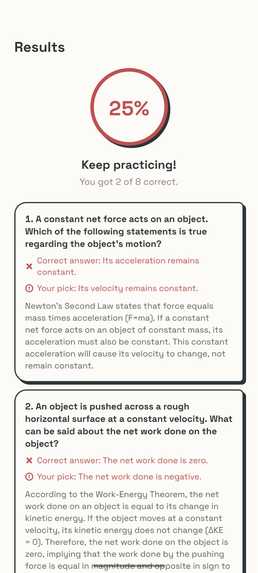
quiz_screen
-
quiz_screen
-
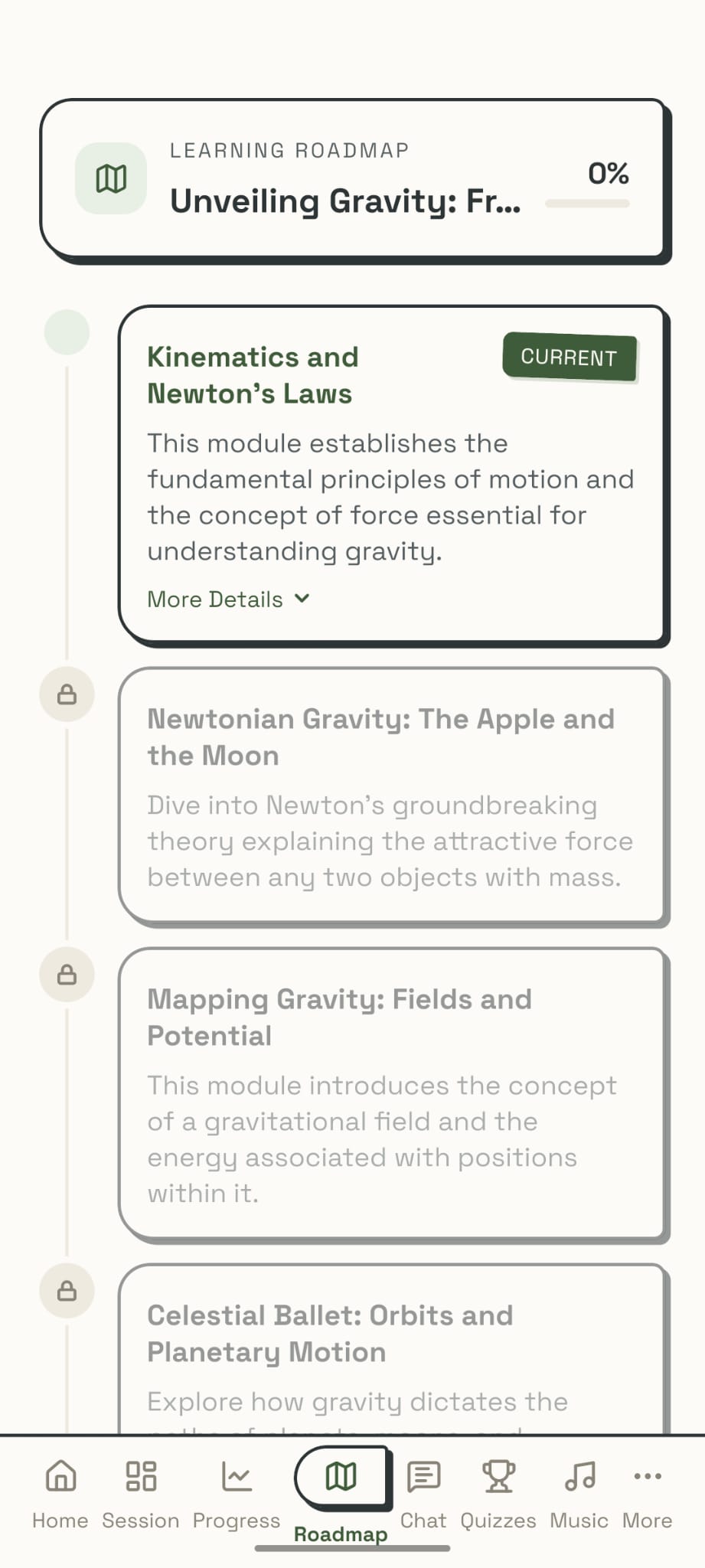
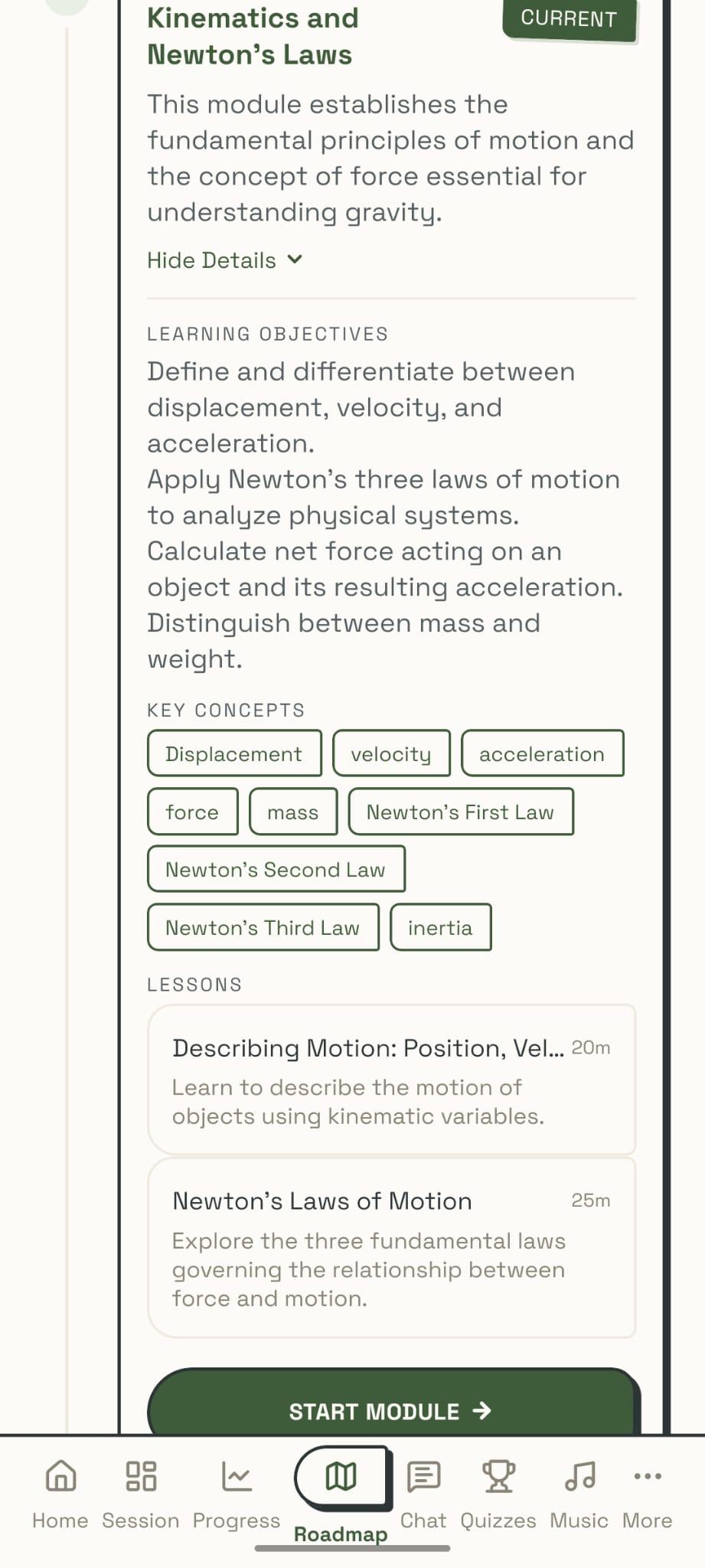
roadmap_screen
-
roadmap_screen
-
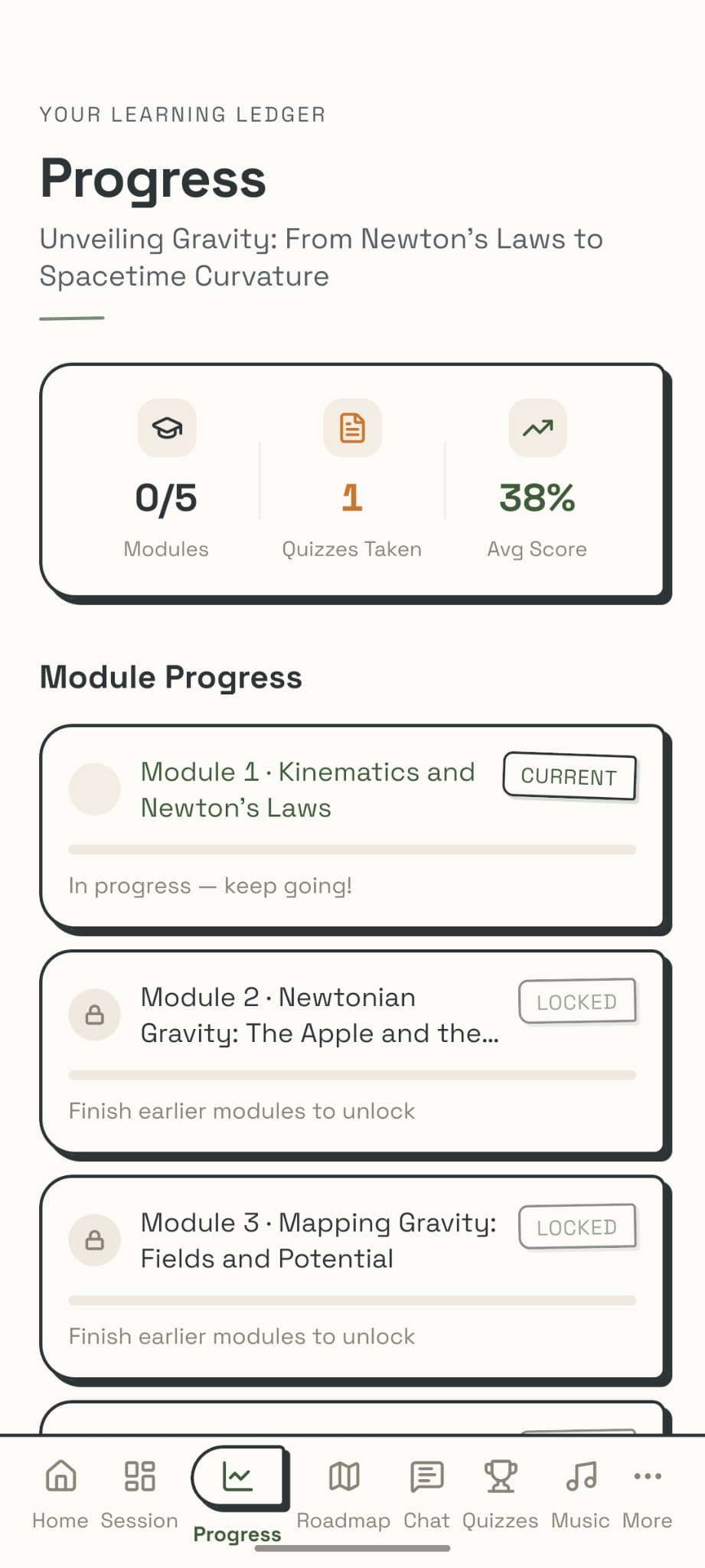
progress_screen
-
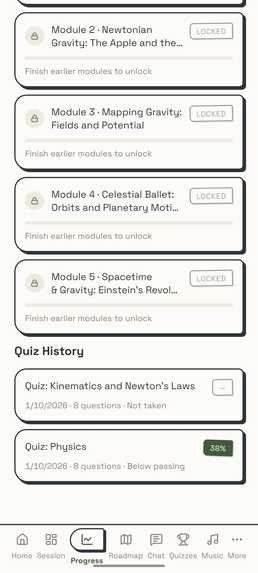
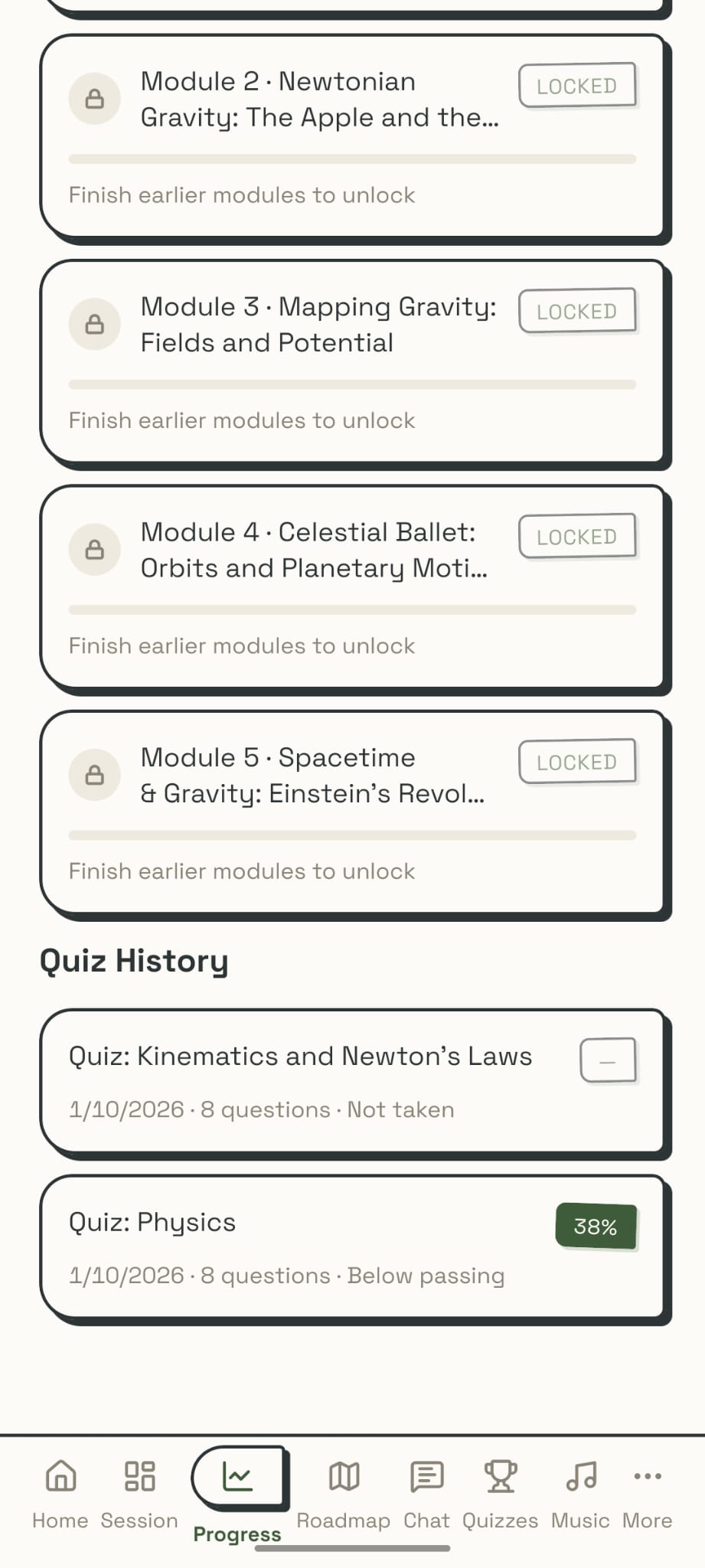
progress_screen
-
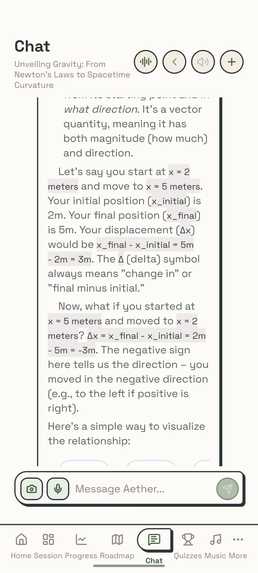
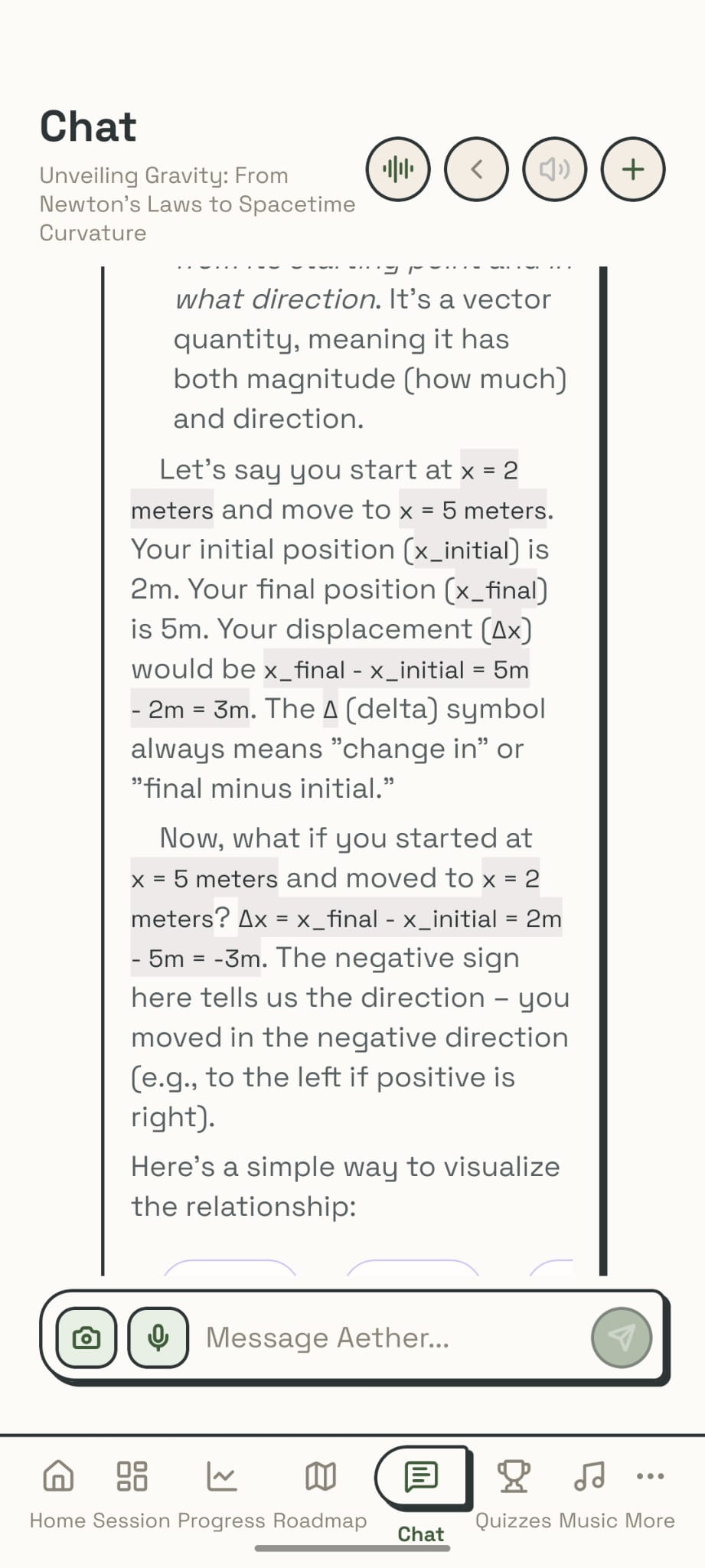
chat_screen
-

logo

Aether — Your AI Learning Companion
The AI tutor that never forgets—Aether transforms your documents into personalized learning with RAG, voice tutoring, adaptive roadmaps, quizzes, and AI focus music.
Learning shouldn't feel like opening 15 different tabs and trying to figure out what to do next.
I built Aether, an AI-powered learning companion designed to turn scattered study material into a personalized learning experience.
Instead of simply asking an AI a question and getting an answer, Aether builds a learning system around the student.
Inspiration
I wanted to solve a problem I kept seeing with AI education tools:
They can explain almost anything, but they don't necessarily know how to teach you.
A student might upload a PDF, watch a lecture, ask a few questions, and still have no idea:
- What should I learn next?
- What concepts do I actually understand?
- What am I struggling with?
- How should I revise?
- Am I making progress?
That led me to the idea of an "OS for learning."
Aether combines AI tutoring, personal knowledge, adaptive quizzes, learning roadmaps, challenges, and progress tracking into one environment.
What Aether Does
Learn from your own knowledge
Students can bring their own learning material into Aether — including PDFs, slides, notes, and YouTube content.
Aether processes the material and creates a searchable knowledge base that can be used by the AI tutor.
This allows explanations and questions to stay grounded in the student's actual study material rather than relying only on generic answers.
AI Tutor
Aether provides an interactive AI tutor that students can talk to while learning.
Instead of only giving an answer, the system is designed around explanations, follow-up questions, examples, and guided learning.
The goal is to make the AI feel more like a learning companion than a chatbot.
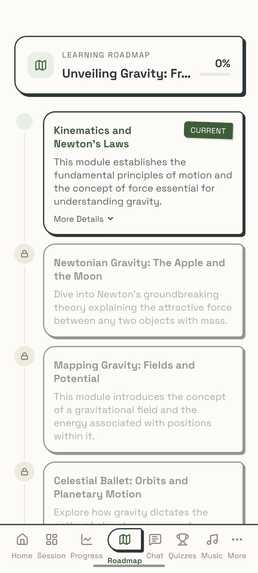
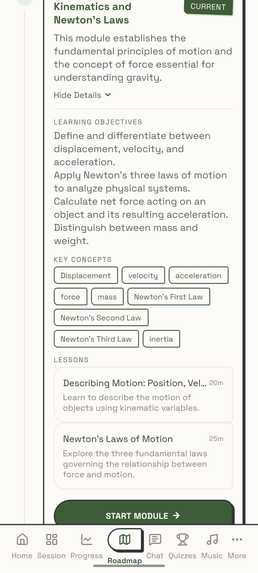
Adaptive Learning Roadmap
When a student starts a topic, Aether can break it into a structured learning path.
For example:
Physics → Gravitation → Kinematics → Newton's Laws → Free Fall → Orbits
The roadmap gives students a clear sense of where they are and what comes next.
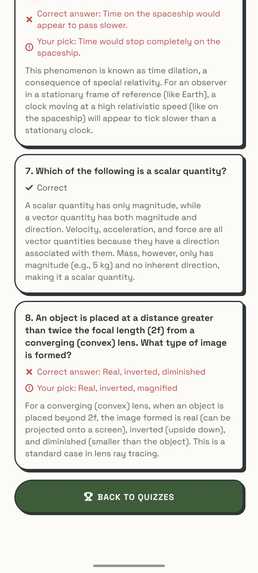
Quizzes & Knowledge Checks
Aether generates quizzes to test understanding rather than simply measuring how much content a student has viewed.
The learning experience can then adapt around the student's performance.
Interactive Challenges
I also wanted learning to go beyond reading and answering questions.
Aether includes interactive challenges where appropriate, including programming and mathematical exploration.
For example, coding exercises can run directly in the browser using Pyodide, while mathematical exploration can use interactive tools such as Desmos.
Progress & Mastery
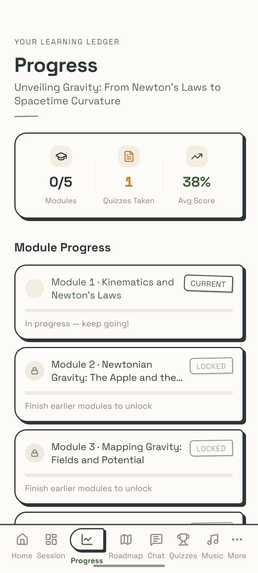
Aether keeps track of learning progress through dashboards, mastery indicators, milestones, modules, and study activity.
The idea is to make progress visible without turning learning into a collection of meaningless numbers.
Focus Mode
Learning is also about maintaining attention.
Aether includes a dedicated focus experience with study music and a distraction-free environment designed to help students stay in the flow.
How I Built It
Aether combines several systems into one application.
AI & Knowledge
- Retrieval-Augmented Generation (RAG)
- Vector embeddings
- PostgreSQL + pgvector
- Document chunking and retrieval
- AI-generated quizzes and learning paths
- AI tutoring
Backend
- Supabase
- PostgreSQL
- pgvector
- Row Level Security
- Authentication
- User profiles and learning data
Frontend
- React
- TypeScript
- Tailwind CSS
- Responsive UI
- Interactive learning components
Voice
Aether supports voice-based learning using:
- Deepgram speech recognition
- Browser Speech APIs for text-to-speech
This lets students interact with their tutor without always having to type.
Interactive Learning
- Pyodide for browser-based Python execution
- Desmos for mathematical exploration
- Interactive quizzes and challenges
The Technical Challenge
One of the biggest challenges was figuring out how to make all of these pieces behave like one learning system instead of a collection of AI features.
A simple chatbot is relatively straightforward:
Question → AI → Answer
But education requires a much larger loop:
Learn → Practice → Measure → Identify gaps → Adapt → Learn again
That meant building systems for documents, retrieval, user progress, quizzes, roadmaps, and tutoring that could all work together.
Another challenge was keeping the experience simple despite the complexity underneath.
I didn't want students to feel like they were using an AI laboratory.
I wanted it to feel like opening a calm, friendly study environment.
That's where the visual direction of Aether came from: soft colors, glass-like surfaces, natural elements, and the koala learning companion.
Why the Koala?
Aether's koala isn't just decoration.
I wanted the product to feel less intimidating than traditional educational software.
The koala acts as a visual companion throughout the experience, giving the application a recognizable identity while keeping the interface friendly.
The overall design combines:
AI + education + nature + calm
rather than the typical "futuristic AI dashboard" aesthetic.
What I Learned
Building Aether taught me that the difficult part of an AI product isn't necessarily connecting an LLM.
The difficult part is designing everything around it.
I learned how important it is to:
- Ground AI responses in reliable context.
- Structure information before asking AI to reason over it.
- Design feedback loops instead of isolated AI features.
- Make complex systems feel simple to users.
- Treat UI/UX as part of the learning experience.
- Think about AI as a component inside a product rather than the product itself.
Most importantly, I learned that personalization isn't just changing the AI's response.
It's changing what the system does next.
What's Next
Aether is still just the beginning.
Future versions could include:
- More advanced mastery modeling
- Better long-term memory of learning behavior
- Spaced repetition
- More interactive simulations
- Collaborative learning
- More programming environments
- Richer voice conversations
- Deeper personalization of learning strategies
My long-term goal is simple:
Build an operating system for learning — one that understands what you're trying to learn, where you are, what you're struggling with, and what you should do next.
Built with the belief that AI shouldn't replace learning.
It should make learning more personal, interactive, and understandable.
This is Aether.
Built With
- api
- react-native
- sdk
- typescript


Log in or sign up for Devpost to join the conversation.