-
-
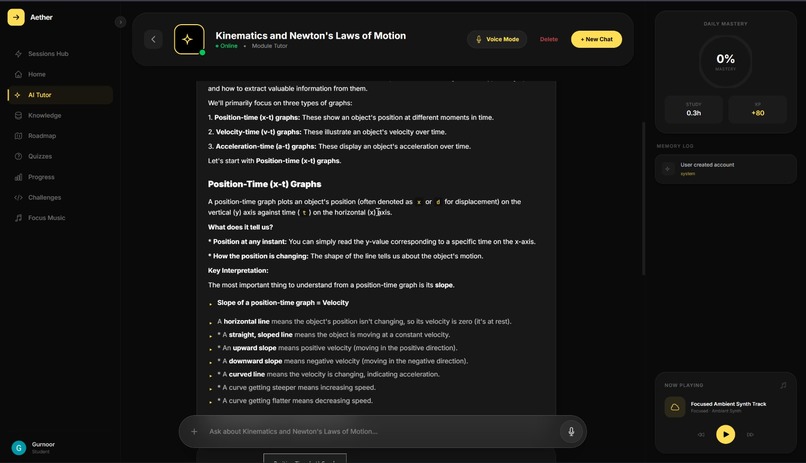
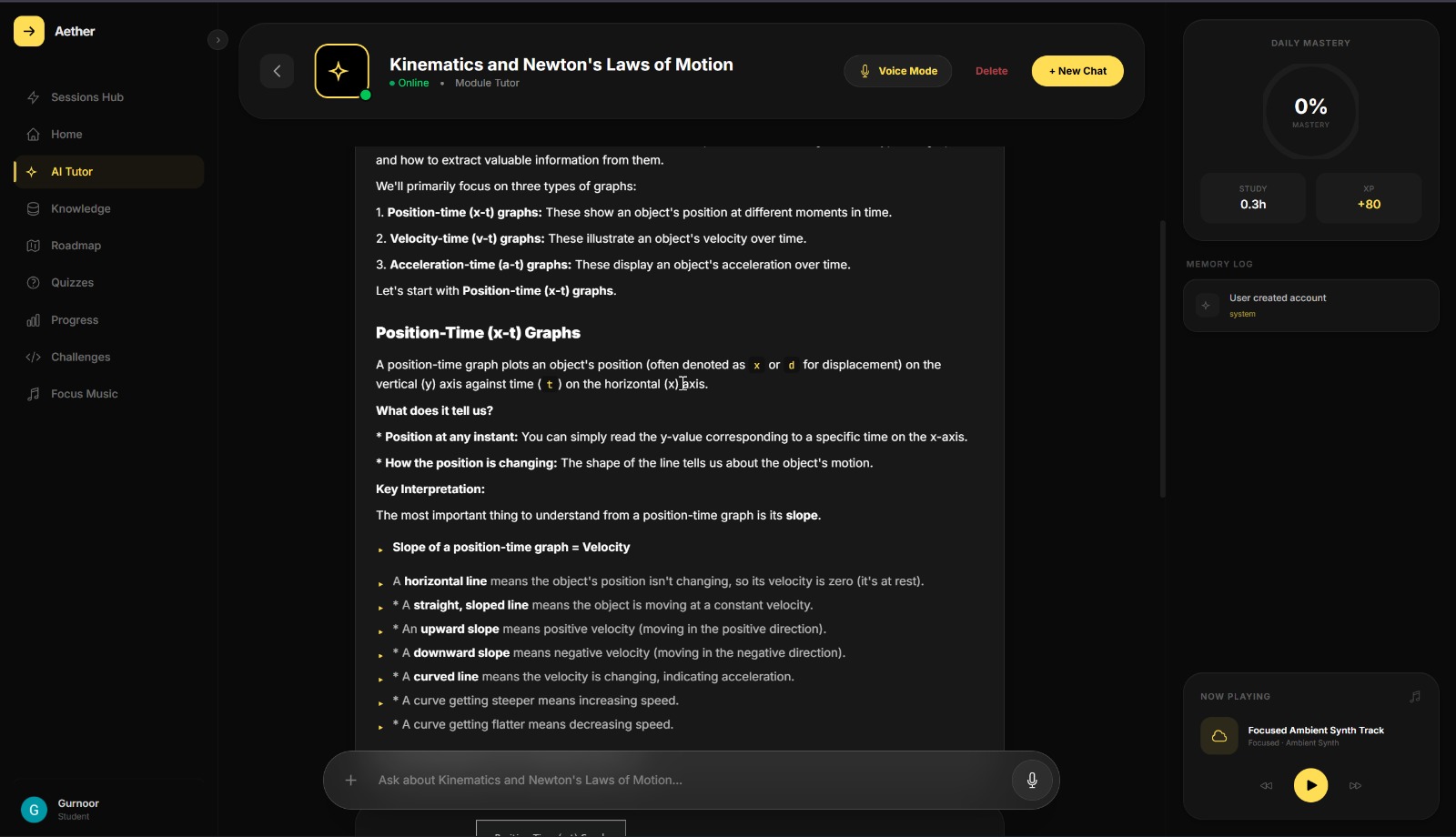
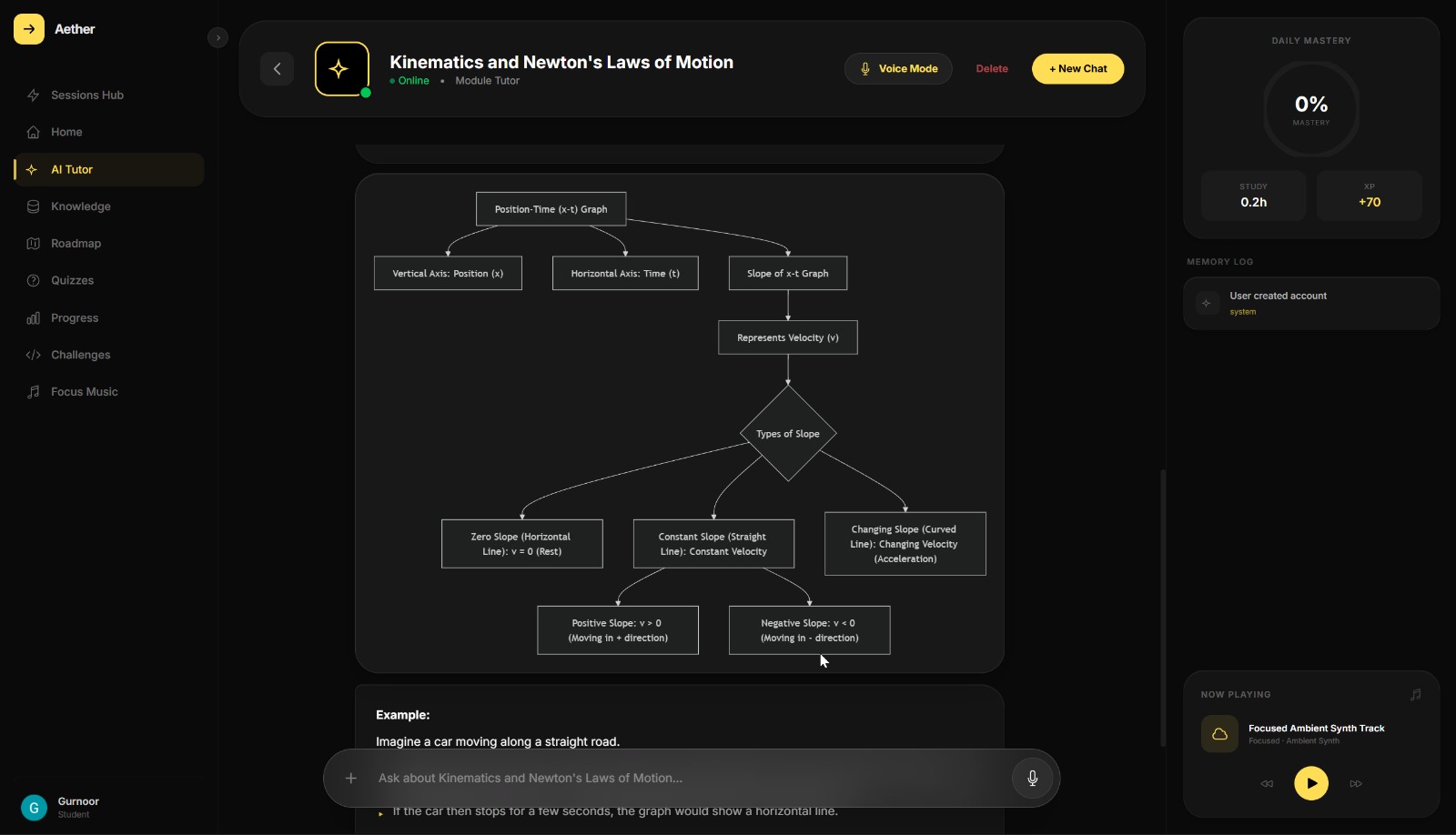
chat
-
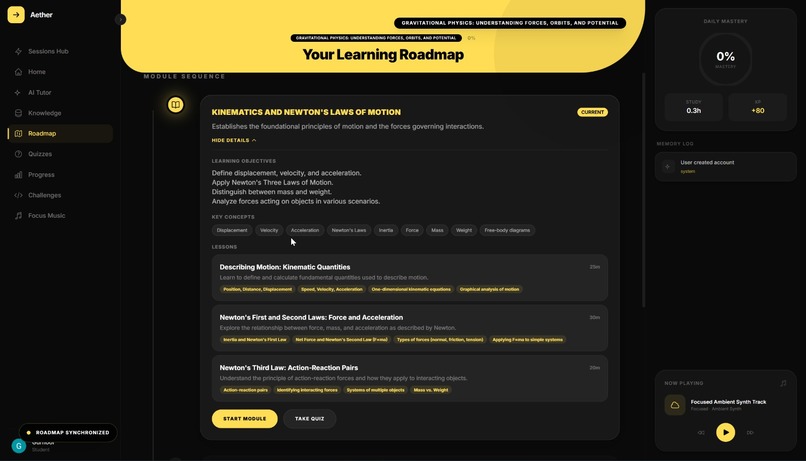
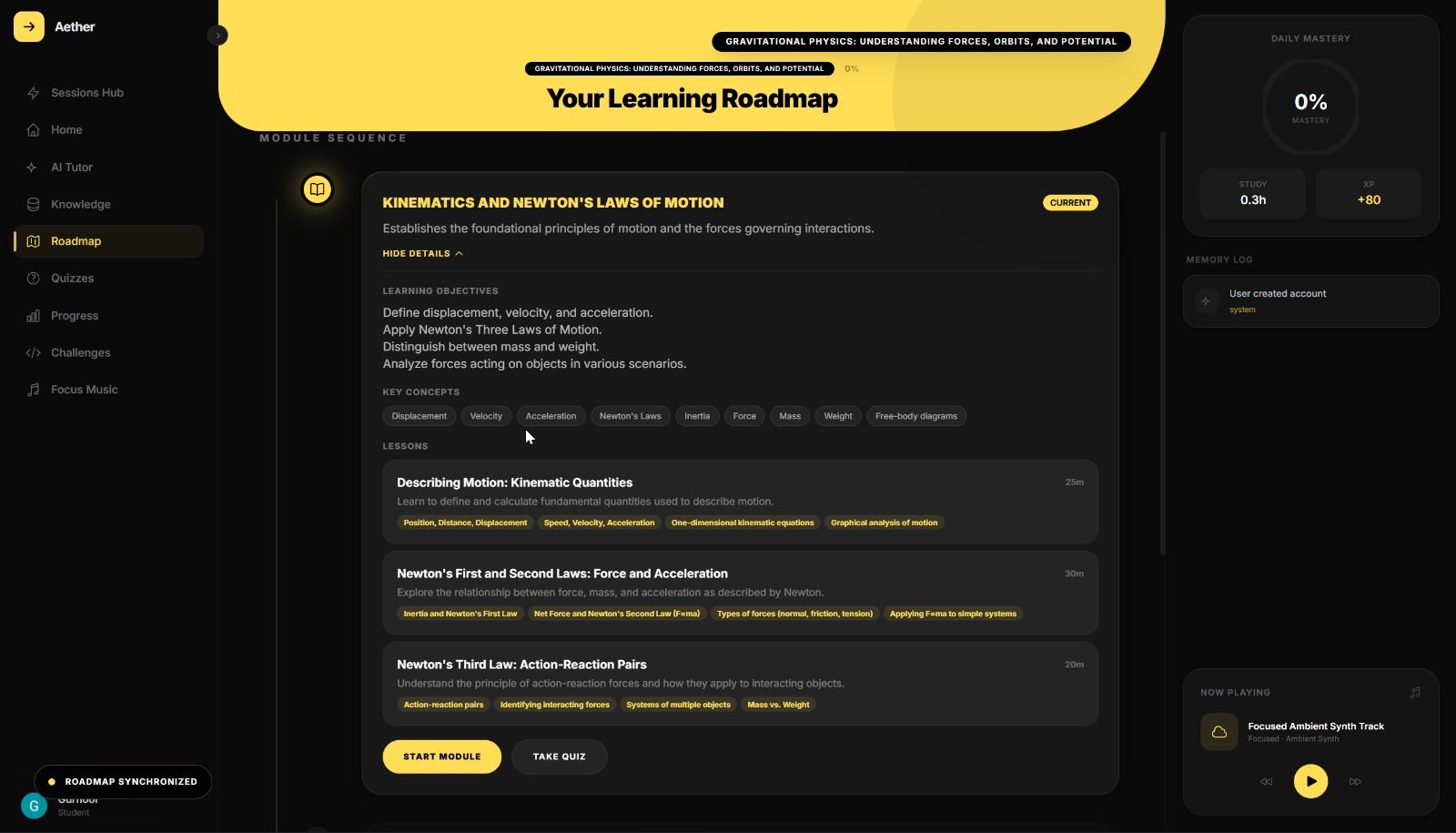
roadmap
-
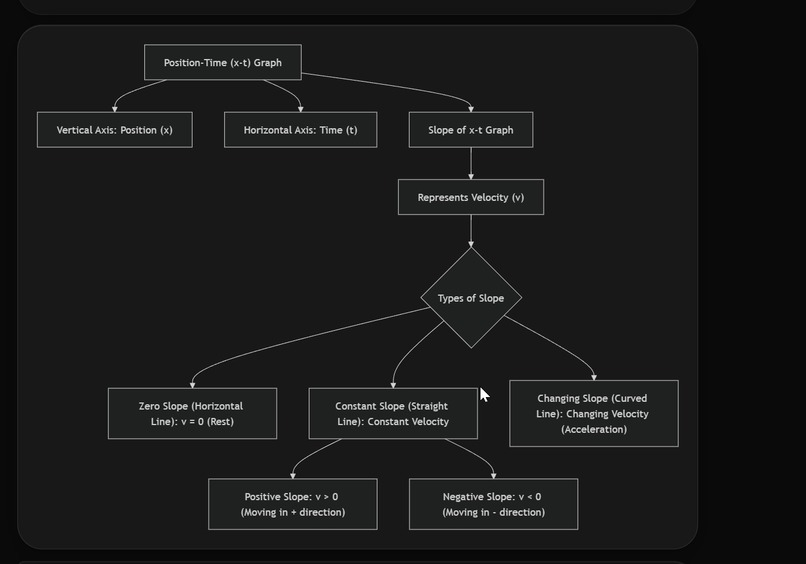
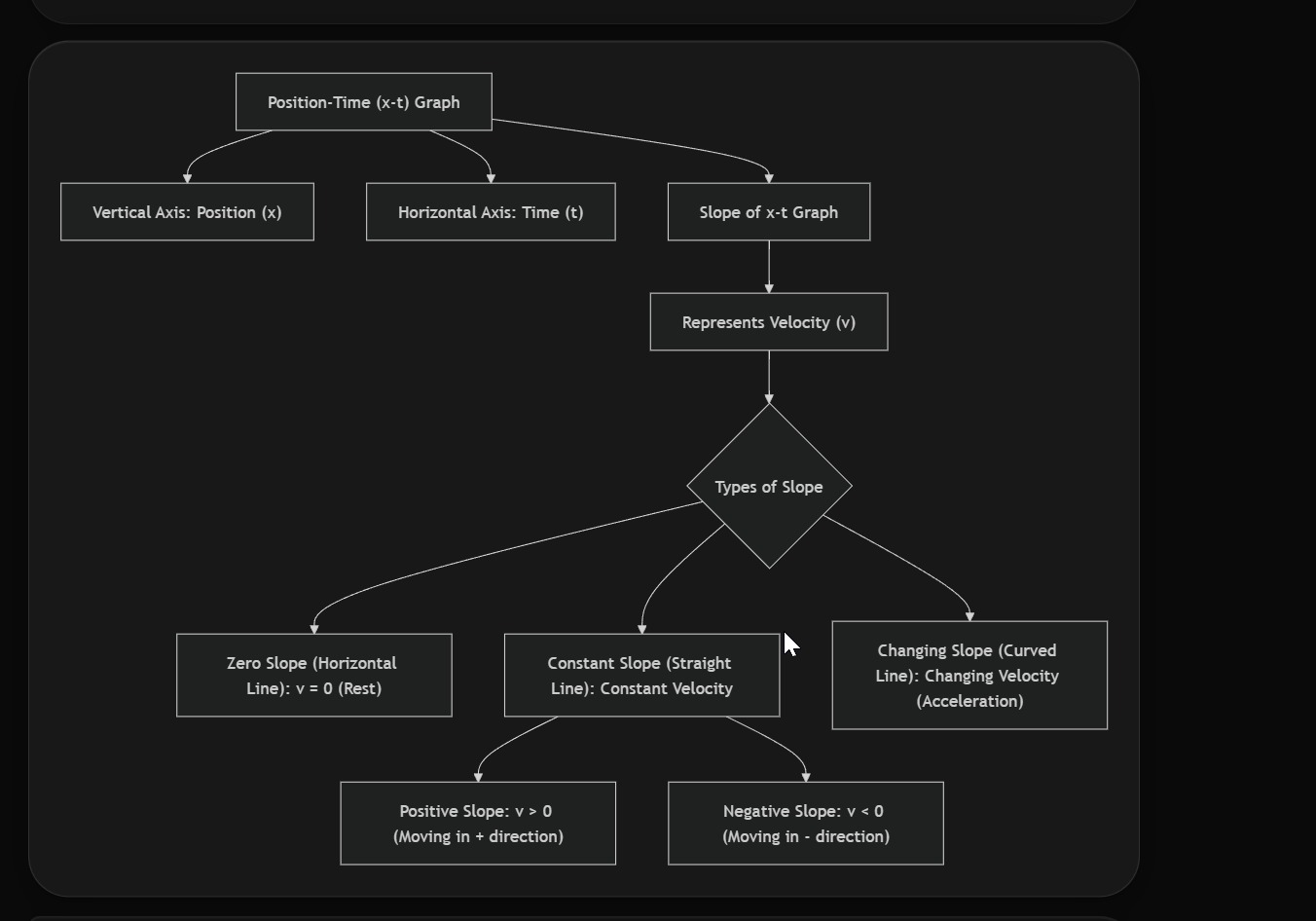
a map generated by Aether
-
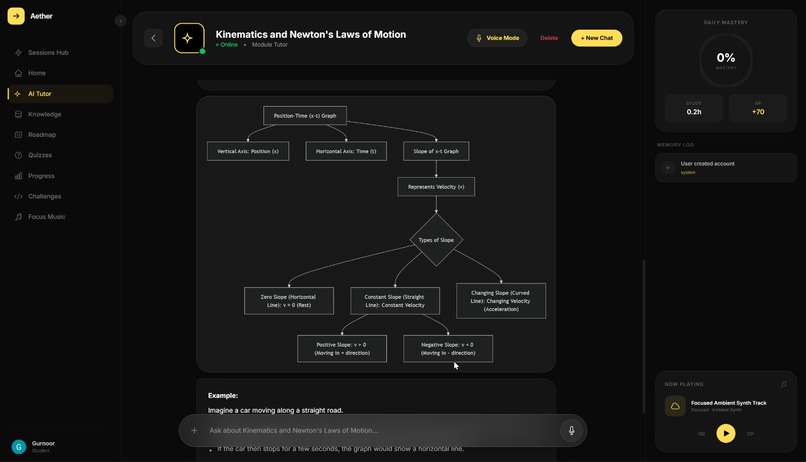
a map generated by Aether
-
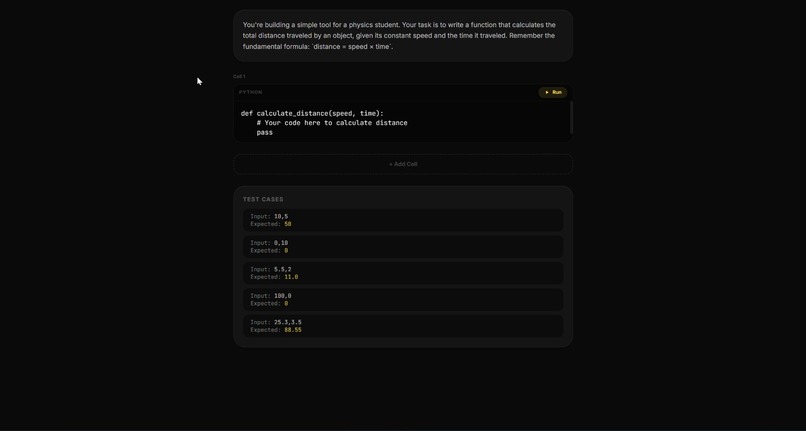
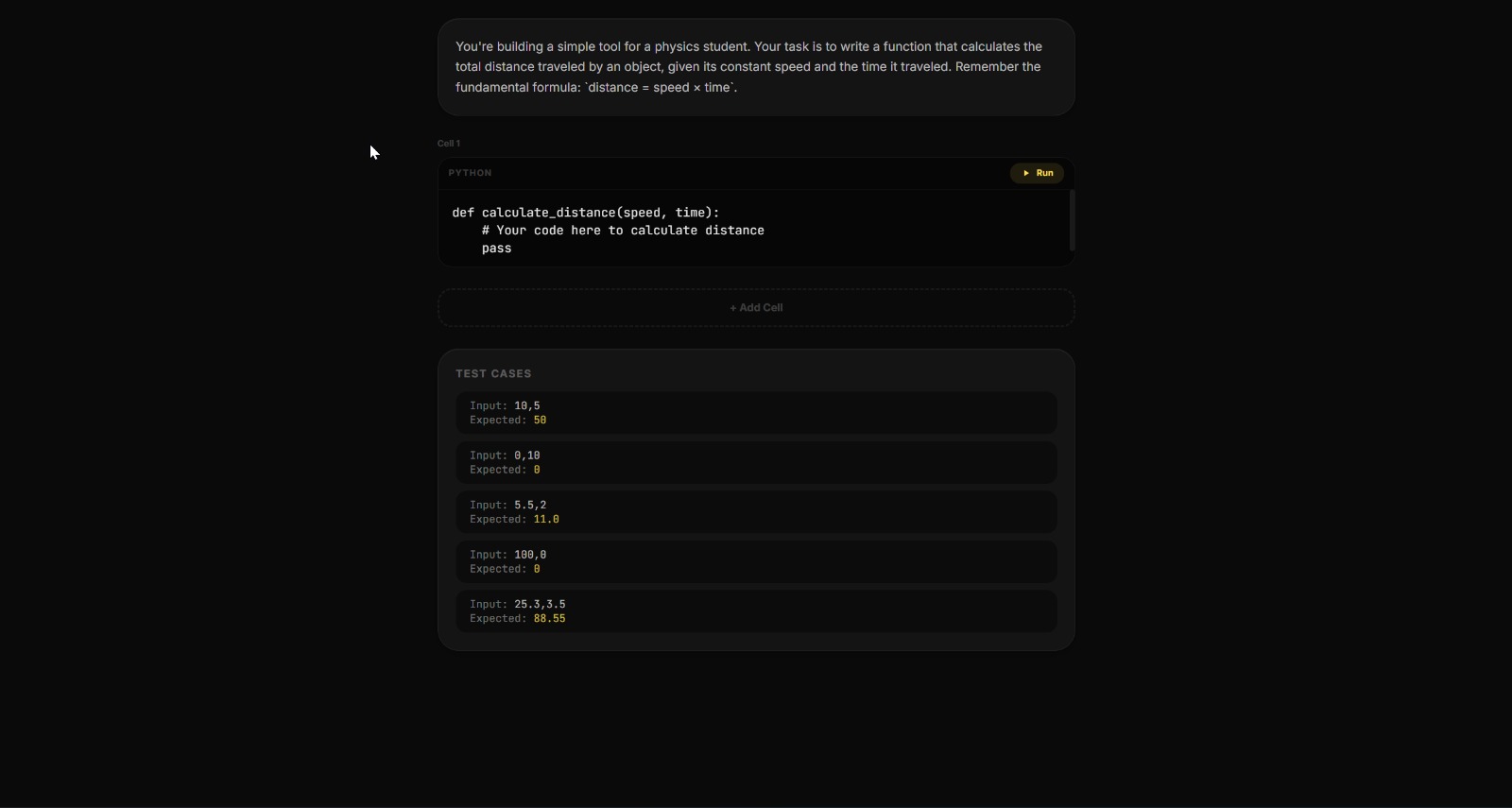
cs challenges
-
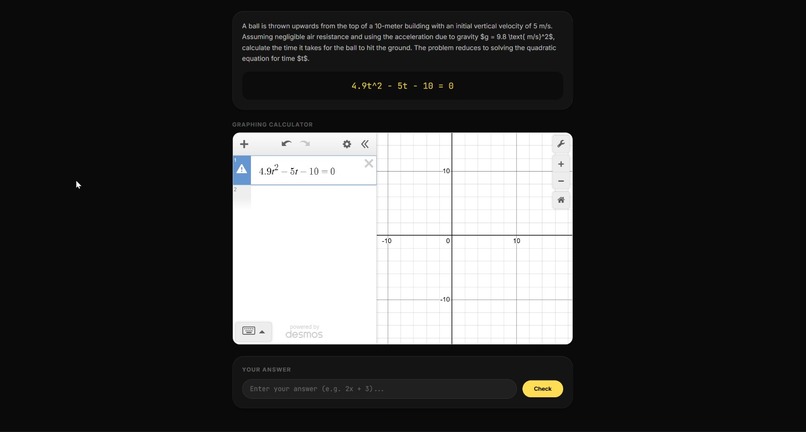
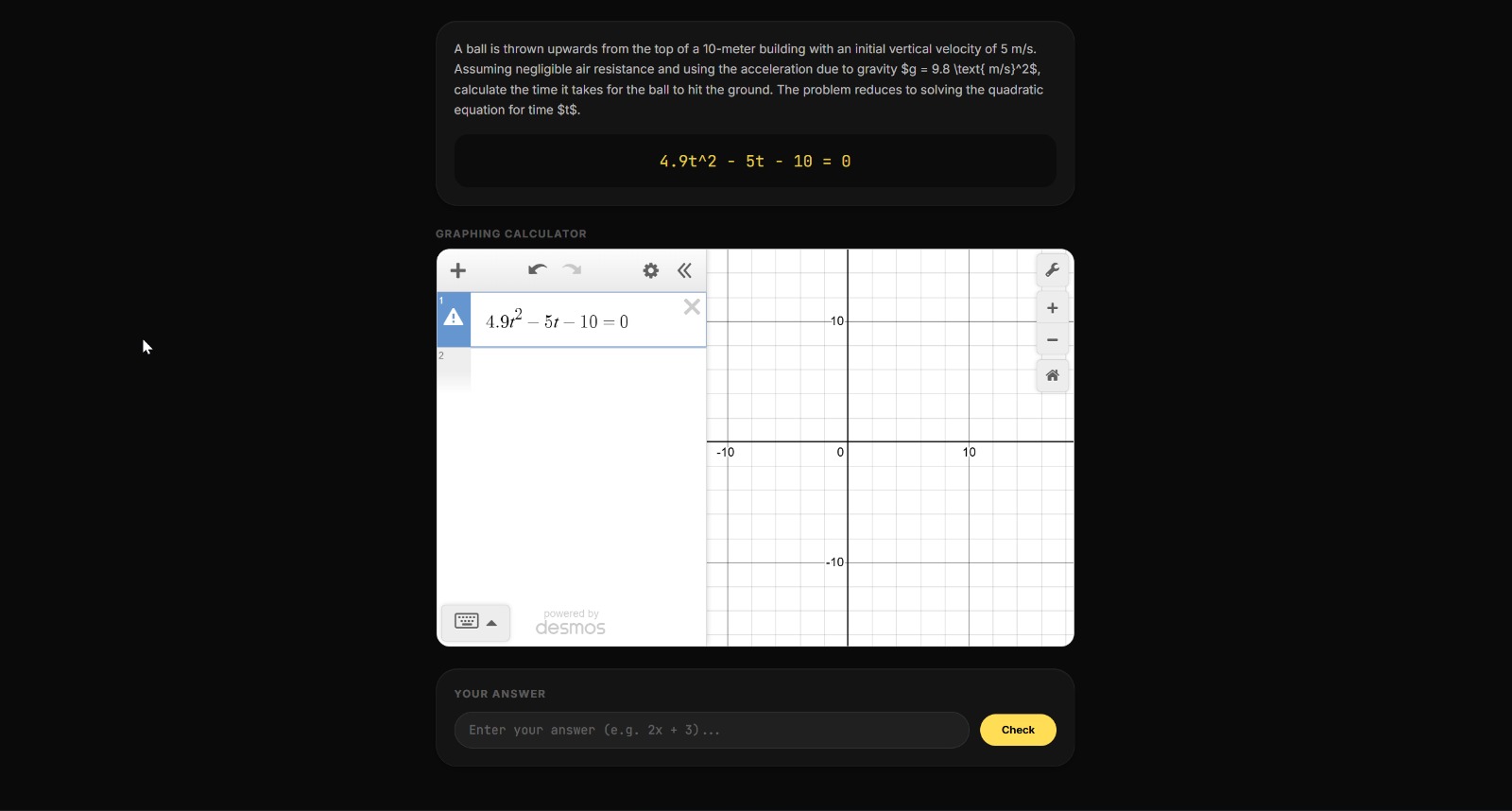
math challenges
-
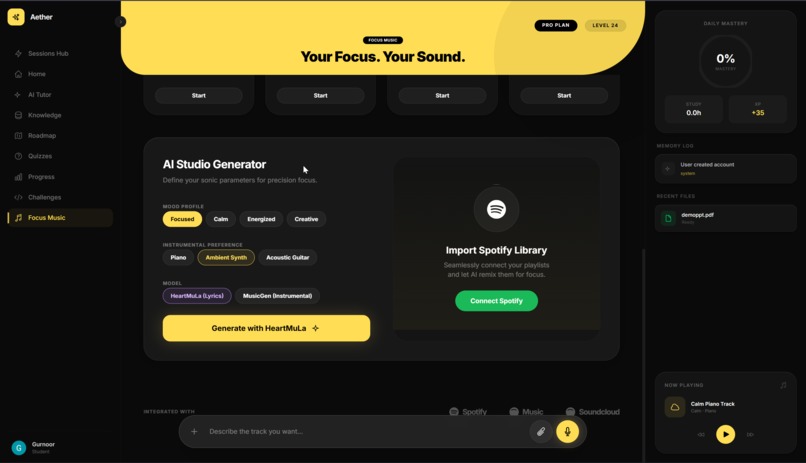
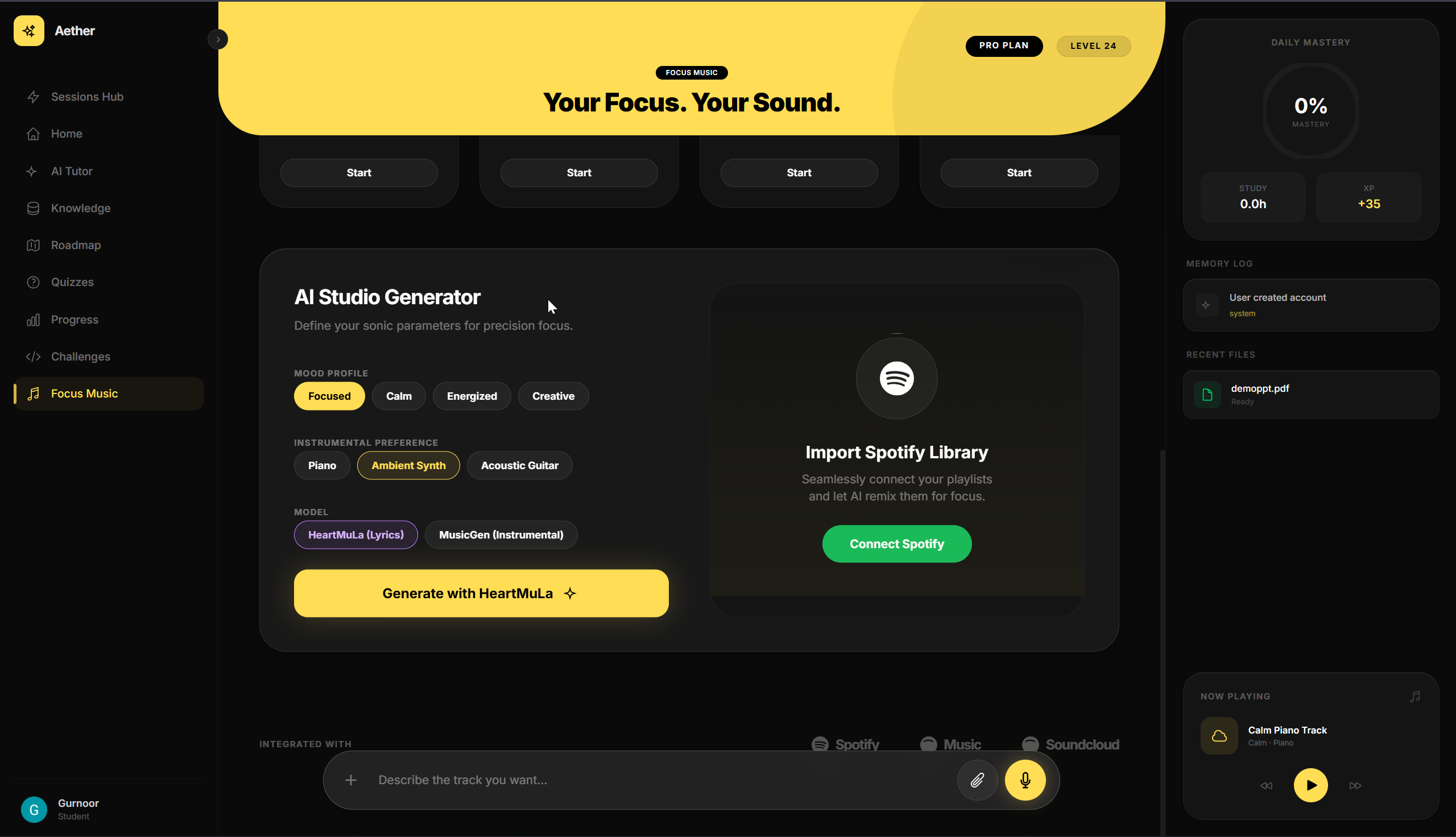
music
-
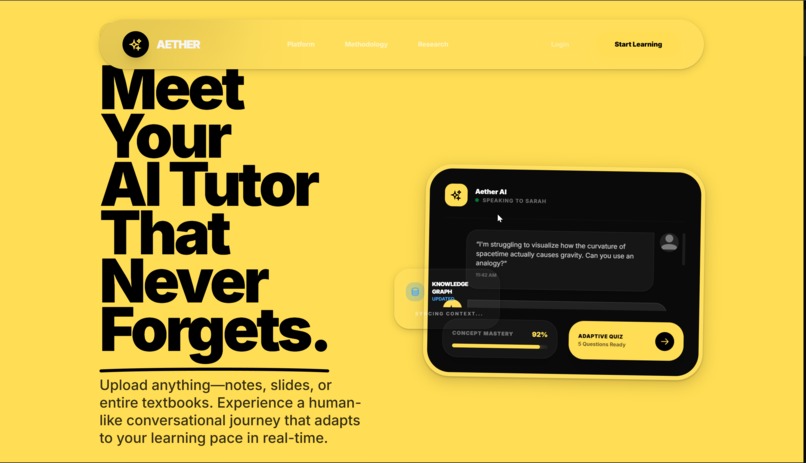
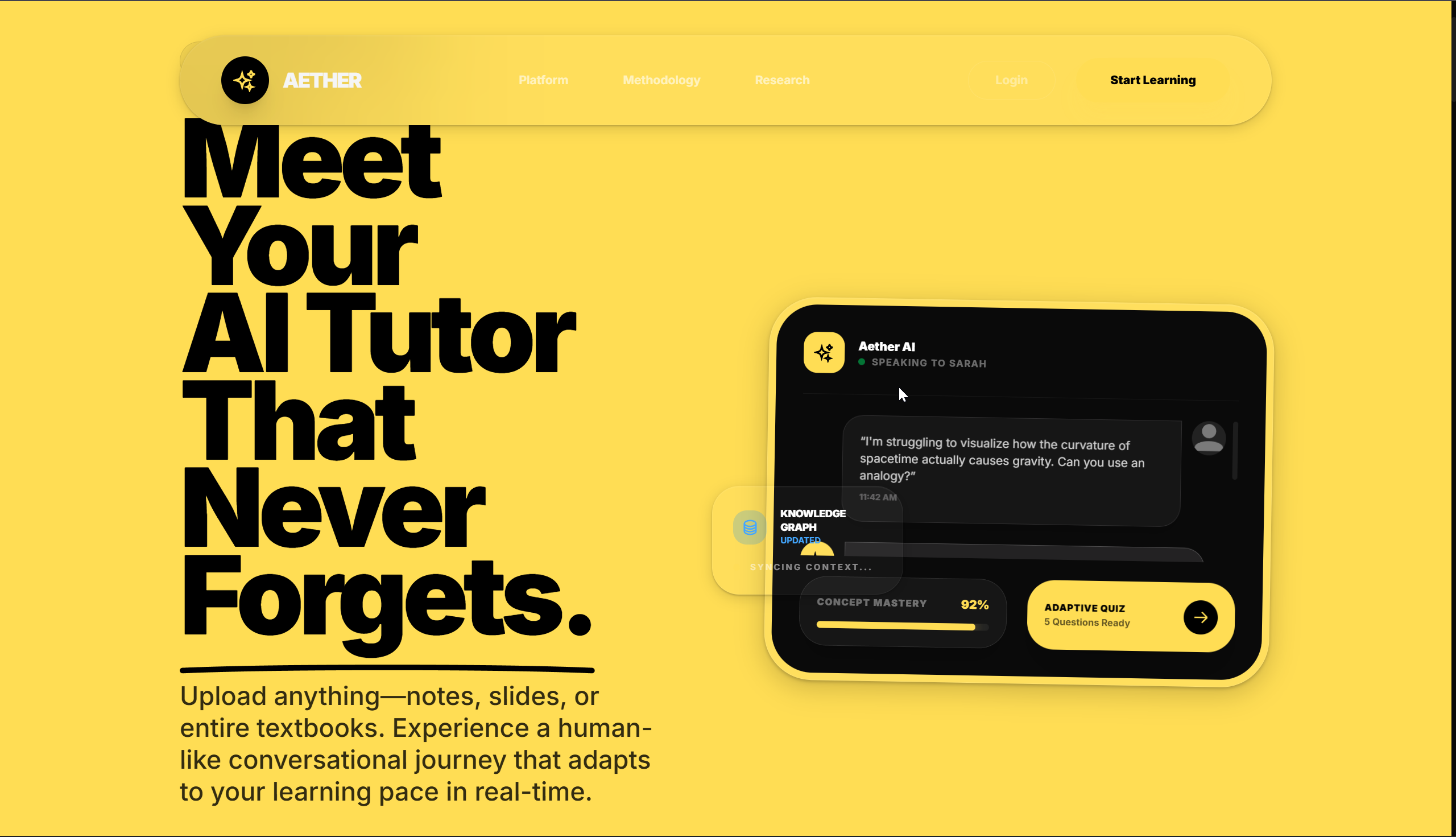
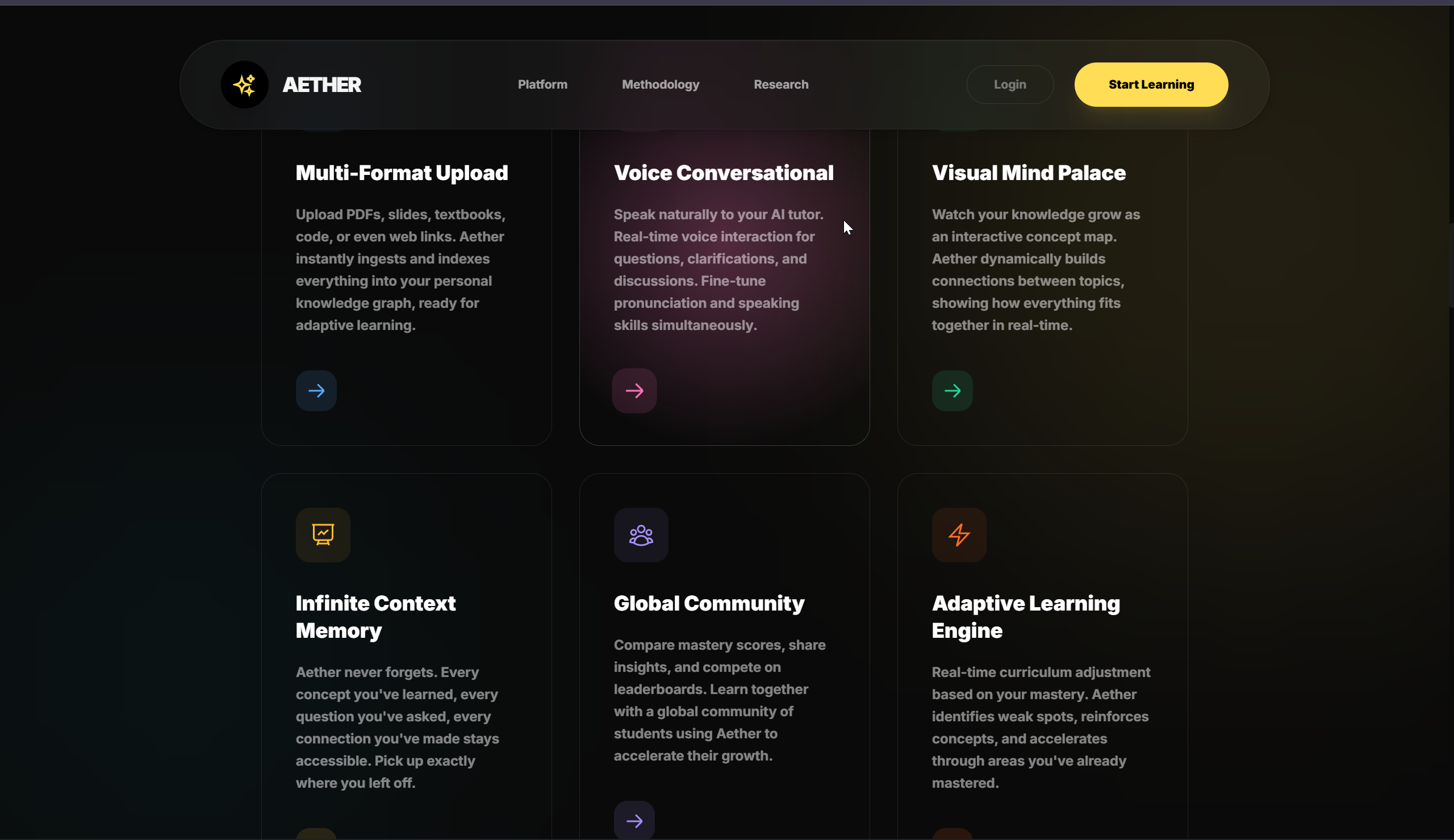
Landing page
-
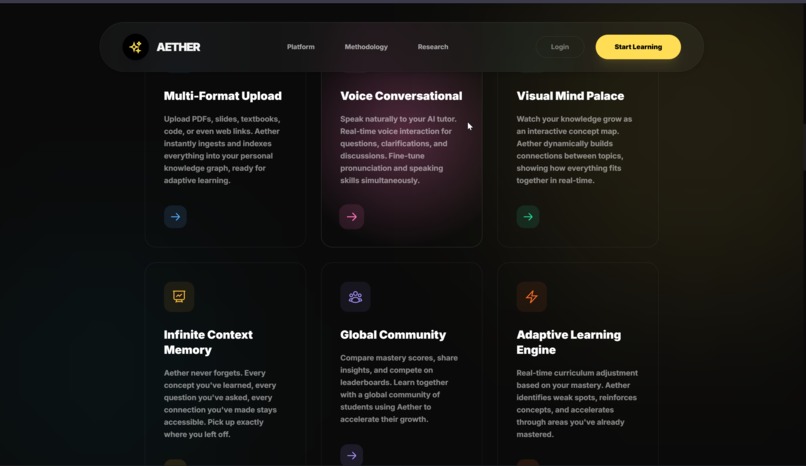
Landing page
Inspiration
Students today have access to more information than ever before, yet learning has become increasingly fragmented. A typical study session involves jumping between PDFs, lecture slides, YouTube videos, notes, flashcards, and AI chatbots that forget previous conversations. Instead of building understanding, students spend valuable time searching for information and repeatedly explaining the same context.
I wanted to build something different.
My vision was an AI tutor that grows alongside the student — one that remembers previous learning sessions, understands personal study materials, adapts to individual needs, and provides continuous guidance instead of isolated answers.
That vision became Aether.
What it does
Aether is a personalized AI learning platform designed to make studying more intelligent, engaging, and continuous.
Students can upload their own learning resources — including PDFs, PowerPoint presentations, images, YouTube videos, and Google Drive documents — which are automatically processed into a searchable knowledge base using Retrieval-Augmented Generation (RAG).
Instead of generating generic responses, Aether retrieves relevant information from the student's own materials before answering. This keeps responses grounded in trusted sources while allowing students to interact naturally with their own knowledge.
Beyond answering questions, Aether becomes a long-term learning companion. It remembers previous sessions, tracks strengths and weaknesses, creates adaptive learning roadmaps, generates personalized quizzes, provides an immersive AI voice tutor, monitors progress, and creates AI-powered focus music tailored to different study environments.
Rather than being another chatbot, Aether is designed to become a personalized learning system that understands the student over time.
How I built it
I built Aether entirely as a solo developer, handling the product design, frontend, backend architecture, AI integrations, and user experience.
The frontend was developed with Next.js, React, TypeScript, and Tailwind CSS. Supabase powers authentication, secure storage, PostgreSQL databases, Row-Level Security, and pgvector-based semantic search.
The core of Aether is its Retrieval-Augmented Generation pipeline. Uploaded documents are processed by extracting text, splitting information into semantic chunks, generating embeddings, and storing them inside pgvector. During conversations, Aether retrieves the most relevant context from the student's own materials before sending it to the language model, allowing responses to remain accurate and personalized.
Streaming AI responses create a more natural conversational experience, while browser-based voice interaction allows students to communicate with their tutor naturally.
I also integrated AI-generated focus music to create personalized study environments based on mood and preferred atmosphere.
Challenges I ran into
Building Aether required combining many independent technologies into one seamless AI learning system.
One of the biggest challenges was designing an end-to-end Retrieval-Augmented Generation pipeline capable of processing multiple document formats while maintaining fast and reliable semantic search.
Another challenge was reducing perceived latency. AI interactions can often feel disconnected, so I focused on streaming responses in real time and creating interactions that feel conversational rather than transactional.
Balancing a large number of features — AI chat, document processing, voice tutoring, quizzes, roadmaps, analytics, and music generation — while maintaining a clean and intuitive interface was another major challenge.
Accomplishments I'm proud of
• Built a complete AI-powered learning platform entirely from scratch.
• Designed and implemented a Retrieval-Augmented Generation pipeline with semantic vector search.
• Created personalized learning roadmaps and adaptive quizzes.
• Developed an immersive AI voice tutor experience.
• Built AI-powered focus music generation for personalized study environments.
• Designed a modern interface focused on simplicity and usability.
• Integrated multiple AI capabilities into one personalized educational platform.
What I learned
Building Aether reinforced that great educational AI is not simply about connecting users to large language models.
The real challenge is creating meaningful personalization.
Students do not need another chatbot that only provides answers. They need an AI system that remembers their context, understands their own learning materials, adapts over time, and actively supports their growth.
Aether represents my vision for the future of personalized education.
What's next for Aether
Future improvements include:
- Real-time conversational voice with interruption support.
- Long-term learning memory across semesters.
- Collaborative classrooms for teachers and students.
- Smarter adaptive learning plans.
- Mobile applications.
- Offline study mode.
- Multi-language tutoring.
- Richer AI-generated study environments.
The long-term goal is to build an AI learning companion that grows with every student throughout their educational journey.
Built With
- css
- deepgram
- embeddings
- gemini
- generation
- heartmula
- javascript
- markdown
- next.js
- node.js
- pgvector
- postgresql
- pyodide
- python
- react
- retrieval-augmented
- search
- shadcn/ui
- speech
- supabase
- tailwind
- typescript
- vector
- vercel
- web


Log in or sign up for Devpost to join the conversation.