Inspiration
Inspired from Avatar movie, the dragon so-called "Toruk". We wanted flying in VR to feel like a relationship, not a vehicle mechanic. A wary creature that accepts a seed and a cheek stroke creates an adventure beyond pressing a launch button. That became a short, seated rescue: earn Veyu's trust and bring the last egg capsule home.
What it does
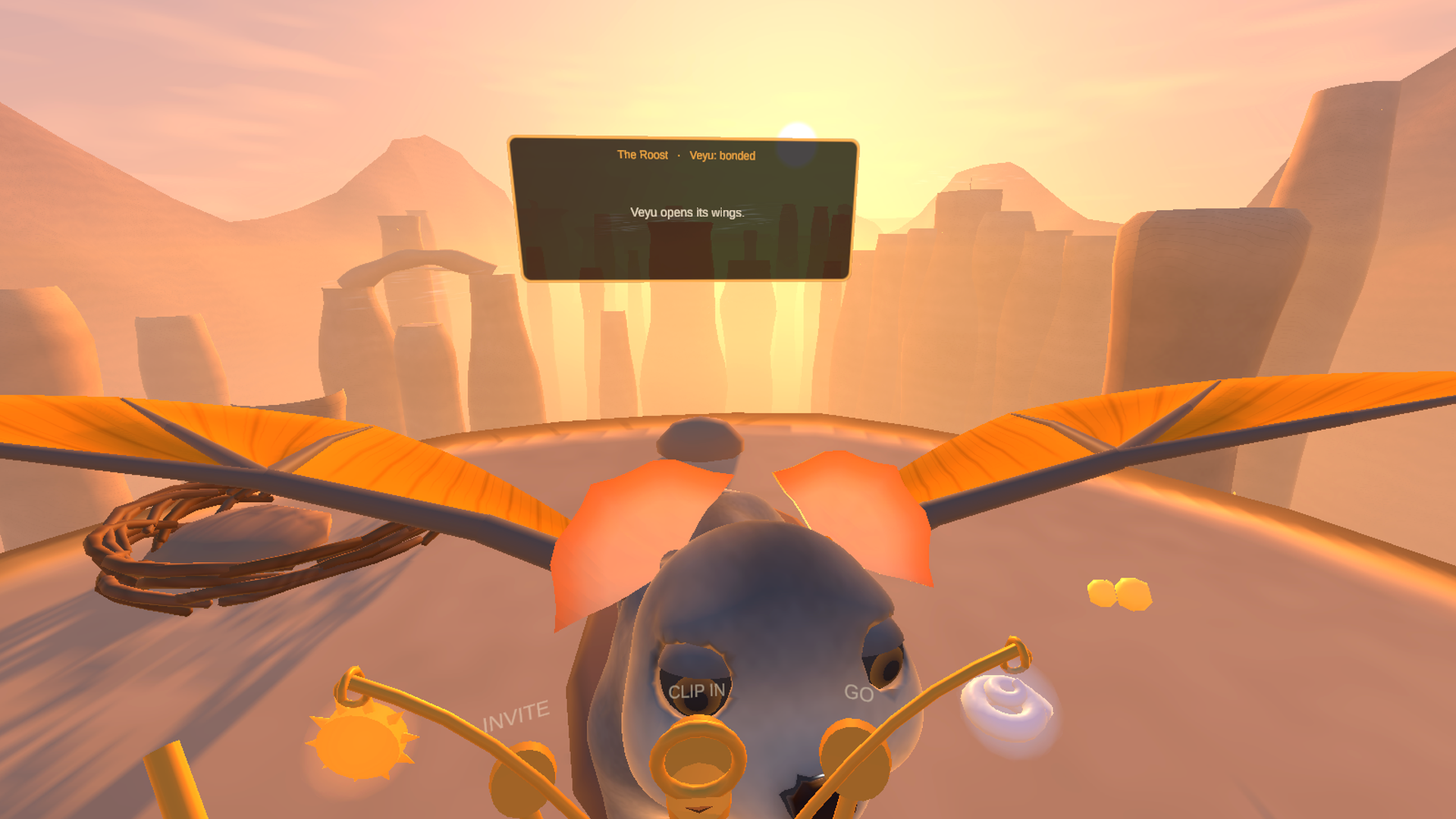
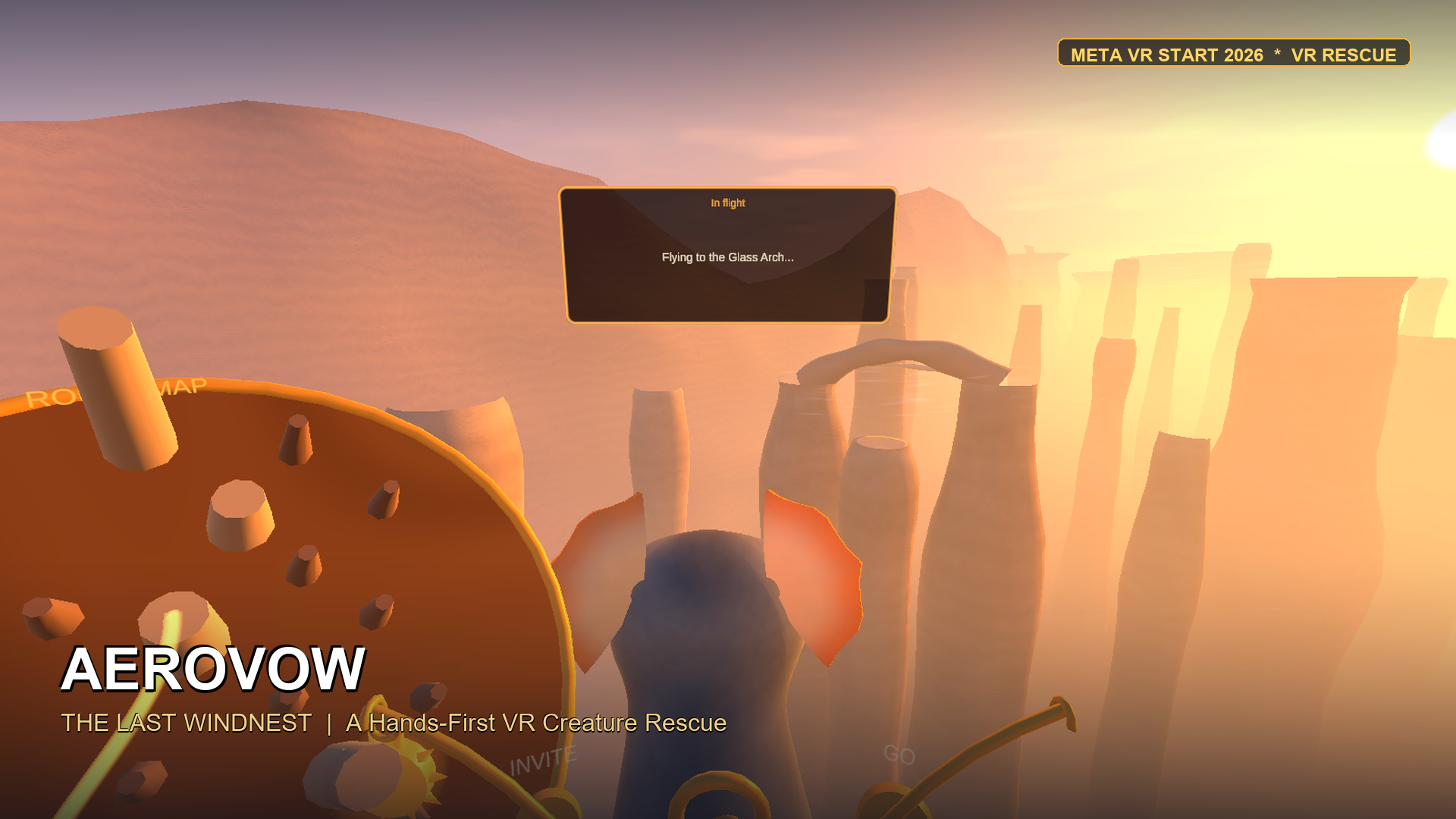
AeroVow is a 7–9 minute, hands-first creature-bonding rescue for Meta Quest. Players offer Veyu a seed, pet it, clip into its saddle, choose a charm and route, solve a wind-sensitive counterweight rescue, and return the egg home. Pinch, poke, ray-pinch, hold-to-confirm, an open-palm invitation, and an INVITE clasp make every action controller-free. Warmth and Echo charms, two outbound routes, and two return paths give the rescue replayable choices. Nest-to-Nest travel is the default comfort mode; Veyu remembers the chosen charm on replay.
How we built it
We built AeroVow in Unity 6000.3.26f1 with URP, OpenXR, XR Hands, C#, and HLSL. One interaction layer drives tracked hands, desktop mouse hands, and scripted test hands. Veyu, the cliffs, props, and 27 sounds were created in code with no third-party assets. Veyu is generated from a signed-distance sculpt into three LOD meshes, a 54-bone rig, blendshapes, and 24 animation clips. We also built deterministic wind, perch saves, synthesized audio, accessibility settings, and automated polish checks.
Challenges we ran into
The hardest problem was making a seated flying adventure comfortable. We never attach the camera to Veyu and made Nest-to-Nest travel the default; optional Guided Glide remains experimental until headset comfort testing is complete. Hand interaction also needed to survive tracking changes, so we added hysteresis, hold-to-confirm actions, a clasp fallback, and safe tracking-loss behavior. Generated creature animation required dedicated checks for planted feet, non-sliding steps, readable wings, and rider clearance.
Accomplishments that we're proud of
We are proud that the entire rescue is playable hands-first, from earning trust through replaying the alternate route. The Windows build passed 50 Unity EditMode checks and an 18-scenario scripted-hand self-test covering route choices, recovery, tracking loss, pause/resume, saves, comfort controls, and replay. We also love the quiet details—the cheek settle, wing unfurl, kneel before mounting, and remembered charm—that make Veyu feel present.
What we learned
We learned that hands-first design needs clear physical intent more than gesture novelty: offering, touching, pulling, turning, and placing work when feedback is immediate and every action has a fallback. Comfort is also core design, not a post-production setting. Desktop automation let us validate game rules repeatedly, but it does not replace Quest testing; real hand tracking, performance, and comfort remain final validation work.
What's next for AeroVow - The Last Windnest
Next we will build and audit the Quest APK, run full hands-only Quest 3 sessions, profile against 72 Hz, and conduct a Guided Glide comfort pass. Then we will use uncoached playtests to refine onboarding, route comprehension, and accessibility. Longer term, we will deepen Veyu's memory, improve the Windglass Cliffs, and add relationship-driven rescue missions while staying short, seated, and hands-first.
