-
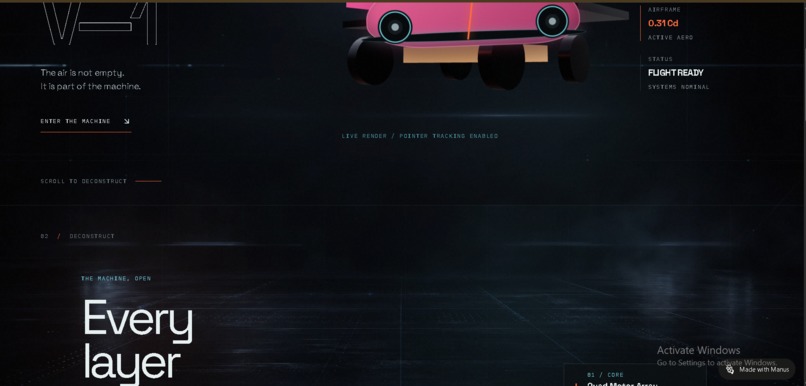
scroll down car all part out flow
-
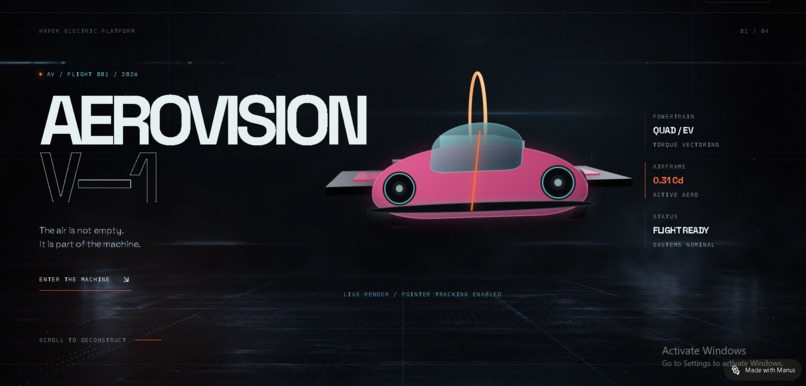
this is forented and 3D SITE ANIMATION
-
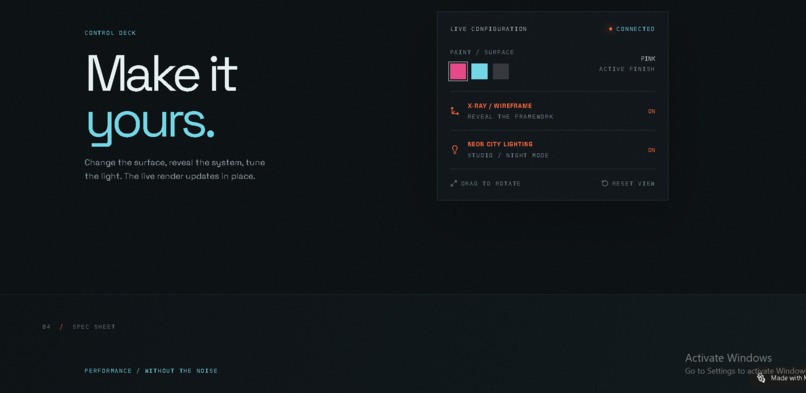
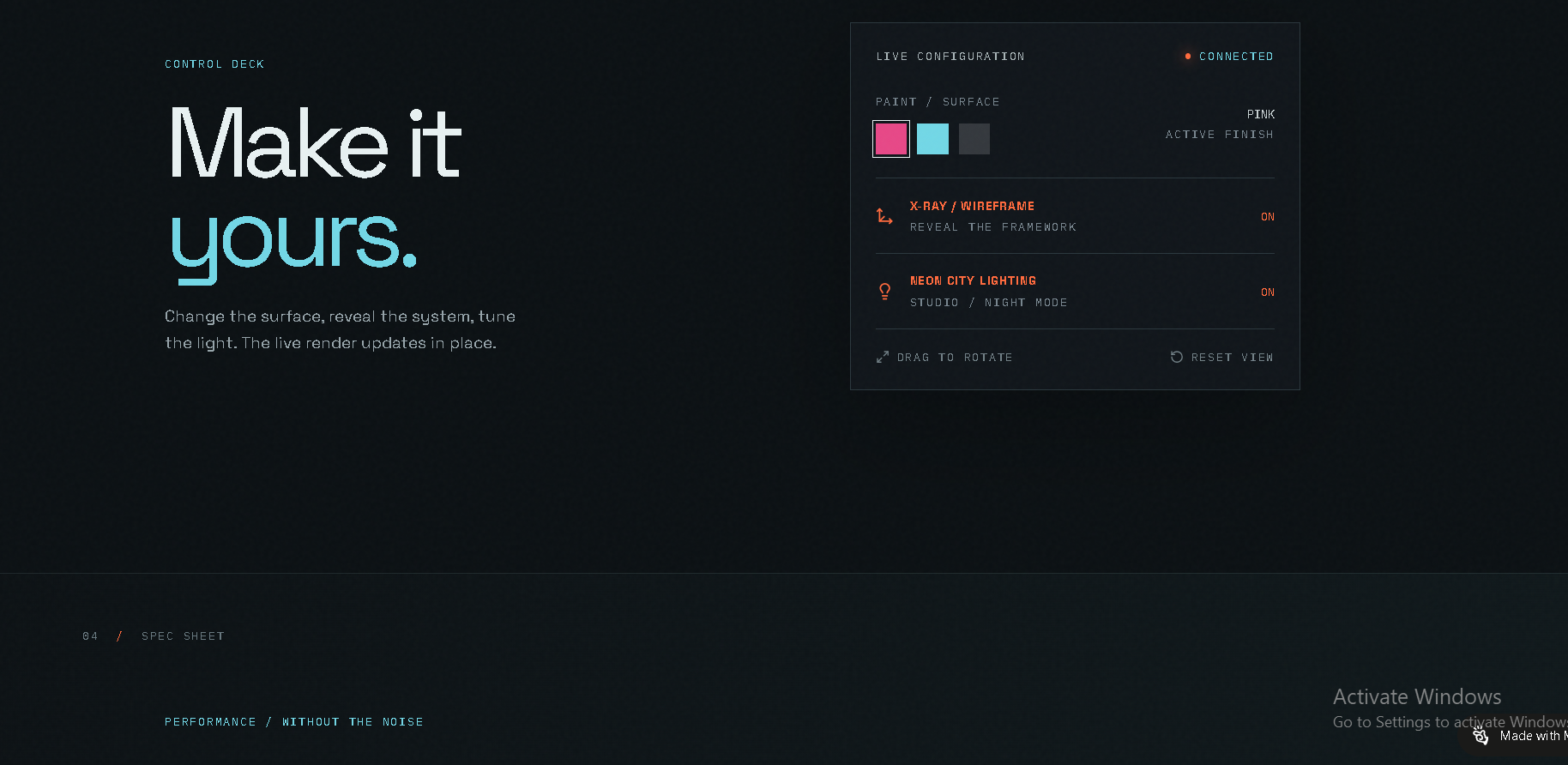
on option 1 x-ray and 2nd meon city lighting two option on and this result all 3D car part in convert in line and all stacture please try
Inspiration
What it does
How we built it
Challenges we ran into
Accomplishments that we're proud of
What we learned
What's next for AeroVision V-1
💡 Inspiration Traditional web product pages are often static, offering flat 2D images or passive videos that fail to capture the tangible awe of high-engineering products. For the 3D Websites Hackathon, we wanted to create an experience that stops users in their tracks—making them say, "Wow."
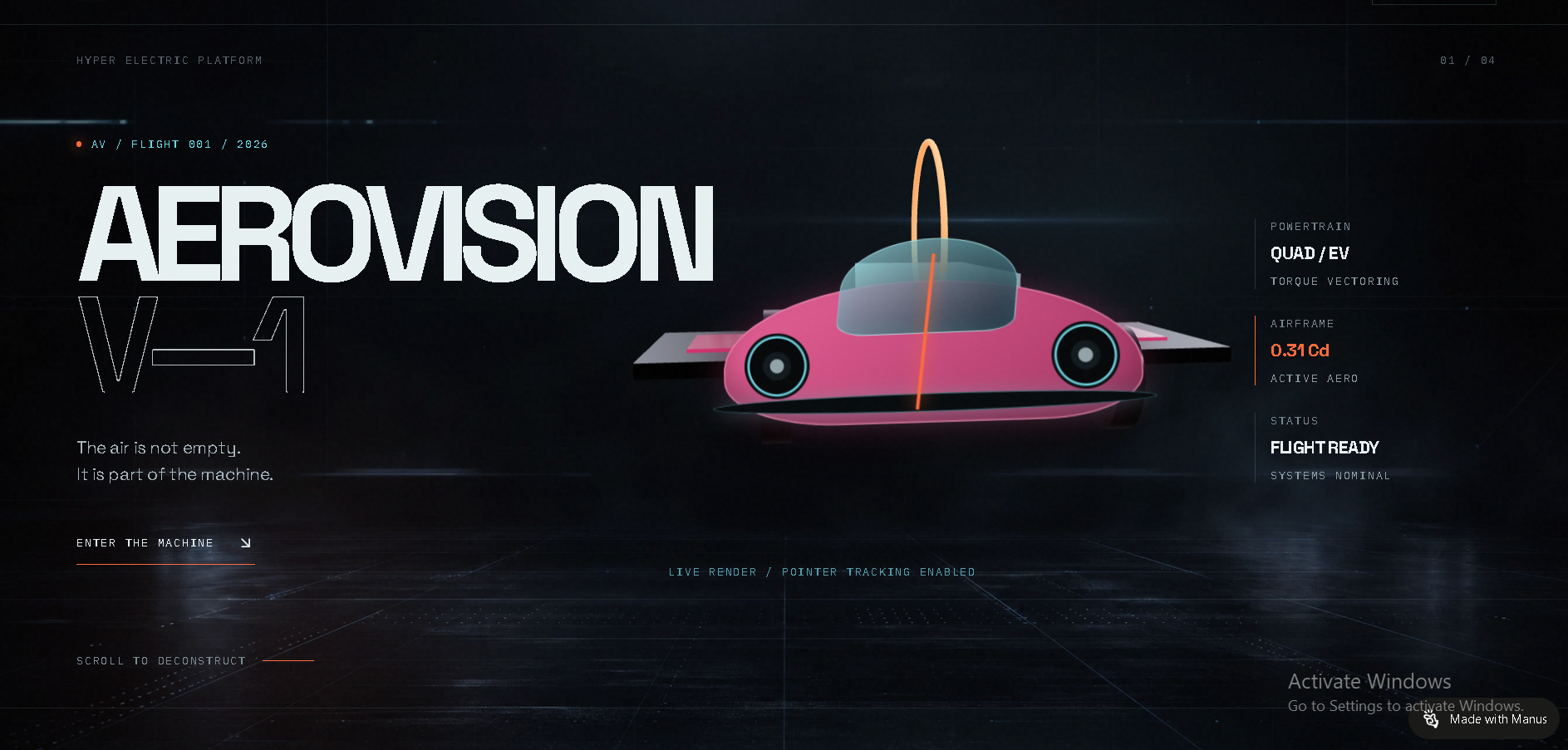
Inspired by next-generation EV prototypes and futuristic aerospace design, AeroVision V-1 blends interactive creative coding with high-fidelity visual aesthetics to allow users to feel, explore, and dismantle a futuristic hypercar directly inside their web browser.
🛠️ What It Does 3D Interactive Hero View: A smooth, 60 FPS floating high-fidelity 3D model that responds dynamically to user cursor movement and parallax interactions.
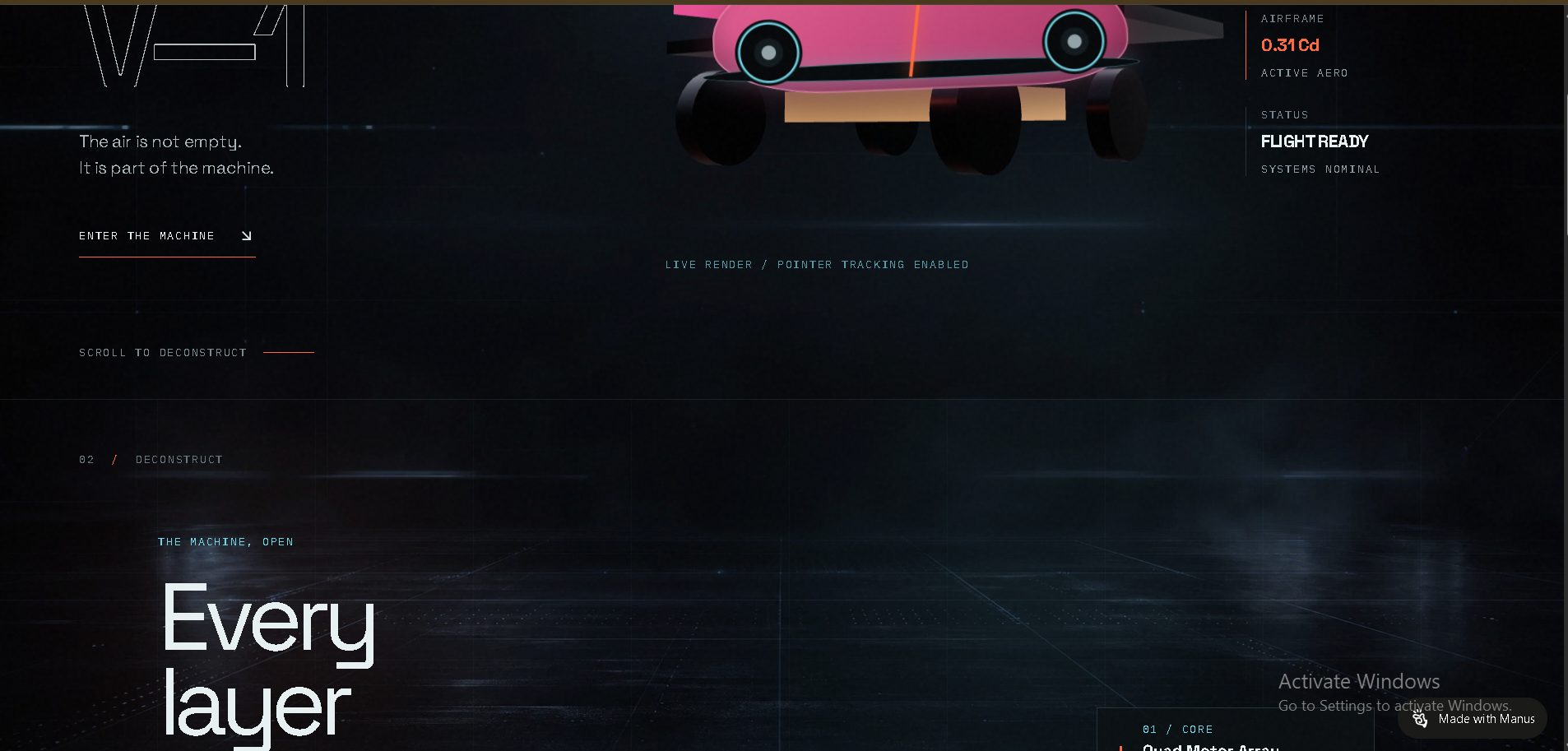
Scroll-Triggered Exploded View: As the user scrolls through the page, the vehicle smoothly deconstructs in mid-air, exposing internal architectural components, battery layouts, and suspension mechanics.
Real-Time Color & Finish Customizer: Users can dynamically tweak body paint finishes and materials in real time with instant reflection and lighting updates.
Futuristic X-Ray / Wireframe Mode: Toggle into a cybernetic wireframe grid to inspect the underlying geometric mesh and aerodynamic contours.
Interactive Hotspots: Clickable spatial UI nodes attached to key engineering components that display detailed performance specs (torque, aerodynamics, power delivery).
Atmospheric Soundscape: Subtle ambient UI feedback and audio cues elevate immersion without overwhelming the visual design.
🏗️ How We Built It Framework: Built on Next.js (App Router) with TypeScript for robust performance, type safety, and optimized client-side rendering.
3D Rendering & Graphics: Powered by Three.js via React Three Fiber (@react-three/fiber) and @react-three/drei for environment lighting, shadows, and GLTF mesh manipulation.
Animations: Seamless scroll transitions driven by GSAP (ScrollTrigger) and UI micro-interactions crafted with Framer Motion.
Styling: Styled with Tailwind CSS featuring custom glassmorphism overlays and dark-mode aesthetic styling.
State Management: Zustand manages global states across 3D canvas objects, color selections, and view modes.
🧠 Challenges We Ran Into 3D Asset Optimization: Balancing high-detail 3D geometry with fast web loading times and smooth 60 FPS performance required extensive material optimization and texture compression.
Next.js SSR Hydration with R3F: Rendering WebGL canvases on top of Next.js dynamic routing required careful handle of dynamic imports (ssr: false) to avoid server-client mismatch errors.
Scroll Syncing: Precisely mapping smooth scroll percentages to 3D camera angles and exploded component offsets required fine-tuning GSAP lerp calculations.
🎉 Accomplishments That We're Proud Of Achieving buttery-smooth 60 FPS animations across devices while maintaining rich studio lighting, contact shadows, and glass refraction.
Creating an intuitve Exploded View mechanic that feels natural and fluid upon scroll.
Designing a sleek, distraction-free UI overlay that elevates the 3D model without cluttering the screen.
📚 What We Learned Advanced techniques in React Three Fiber for manipulating individual mesh groups inside loaded .glb models.
How sound design and camera lerping dramatically improve the feeling of depth and realism on web platforms.
Optimizing complex 3D scenes for web deployment using modern React frameworks.
🔮 What's Next for AeroVision AR Mode (WebXR): Allowing users to place the 1:1 scale AeroVision vehicle in their real-world driveway using smartphone AR.
Audio-Visualizer Integration: Dynamic engine sound synthesis synced to scroll speed.
Multi-Vehicle Garage Selection: Expanding the platform into a full 3D showroom for multiple prototype vehicles.
Built With
- css
- fiber
- framer
- gsap
- motion
- next.js
- react
- tailwind
- three
- three.js
- typescript
- zustand


Log in or sign up for Devpost to join the conversation.