-
-
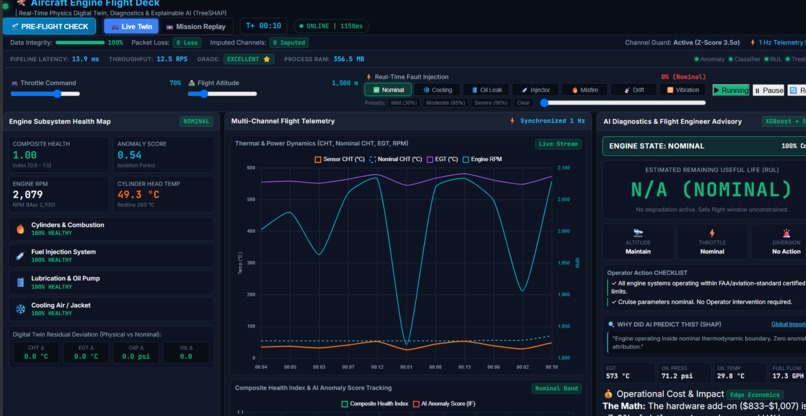
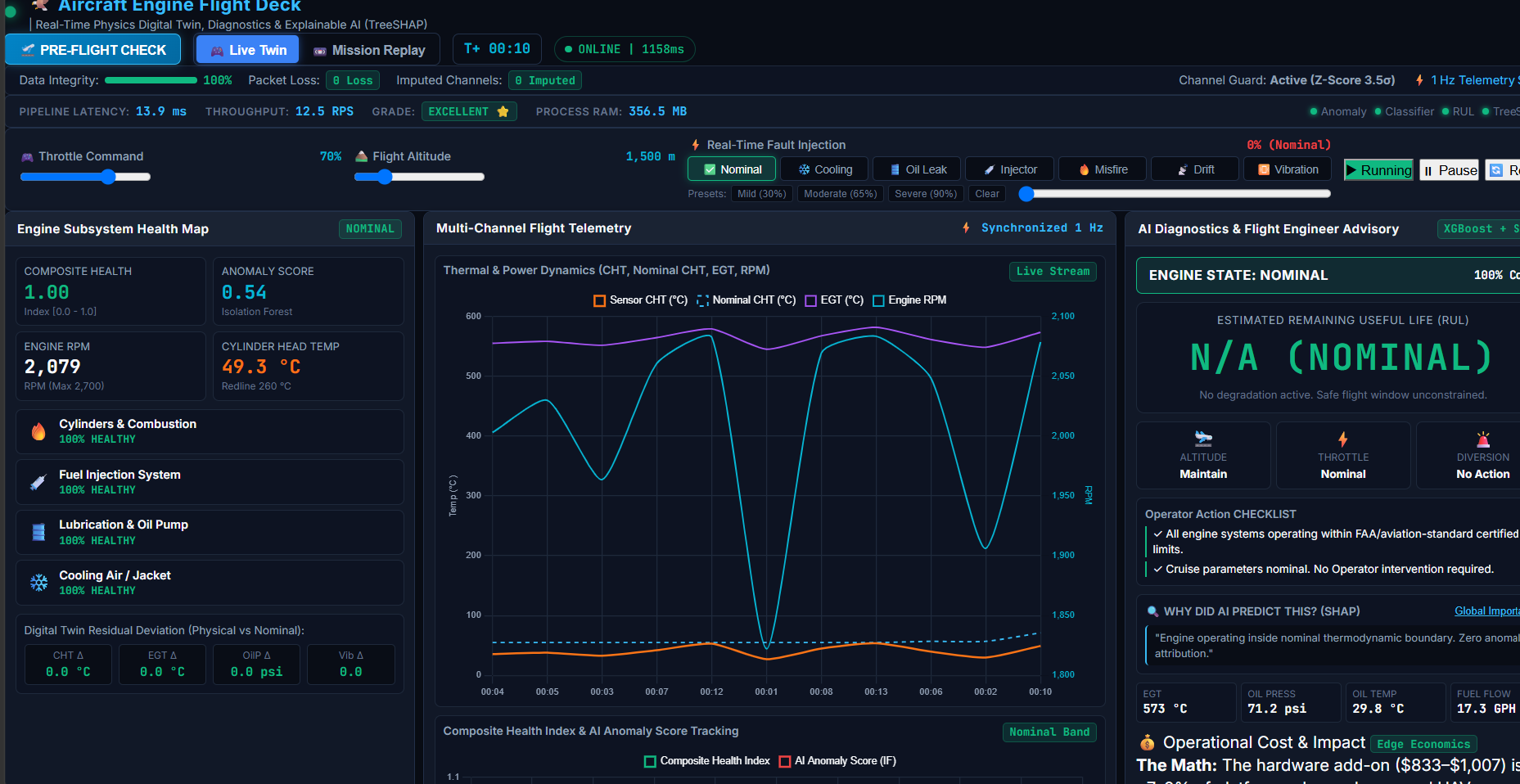
The DashBoard of prototype
-
-
-
-
-
-
-
-
-
-
-
-
💡 Inspiration
General aviation piston engines and long-endurance unmanned aircraft propulsion systems frequently suffer sudden mechanical and thermal degradation in flight with little prior warning. Traditional cockpit monitoring relies on static threshold warning lights that only trigger once a component has already exceeded redline or suffered catastrophic damage.
We built AeroTwin to replace reactive idiot-lights with predictive, physics-informed digital twin intelligence—giving flight operators actionable minutes of remaining useful life to execute controlled diversions instead of panic seconds to react to engine seizure.
⚙️ What it does
AeroTwin is a full-stack, edge-ready digital twin that ingests 14 channels of high-frequency (1 Hz) engine telemetry in real time:
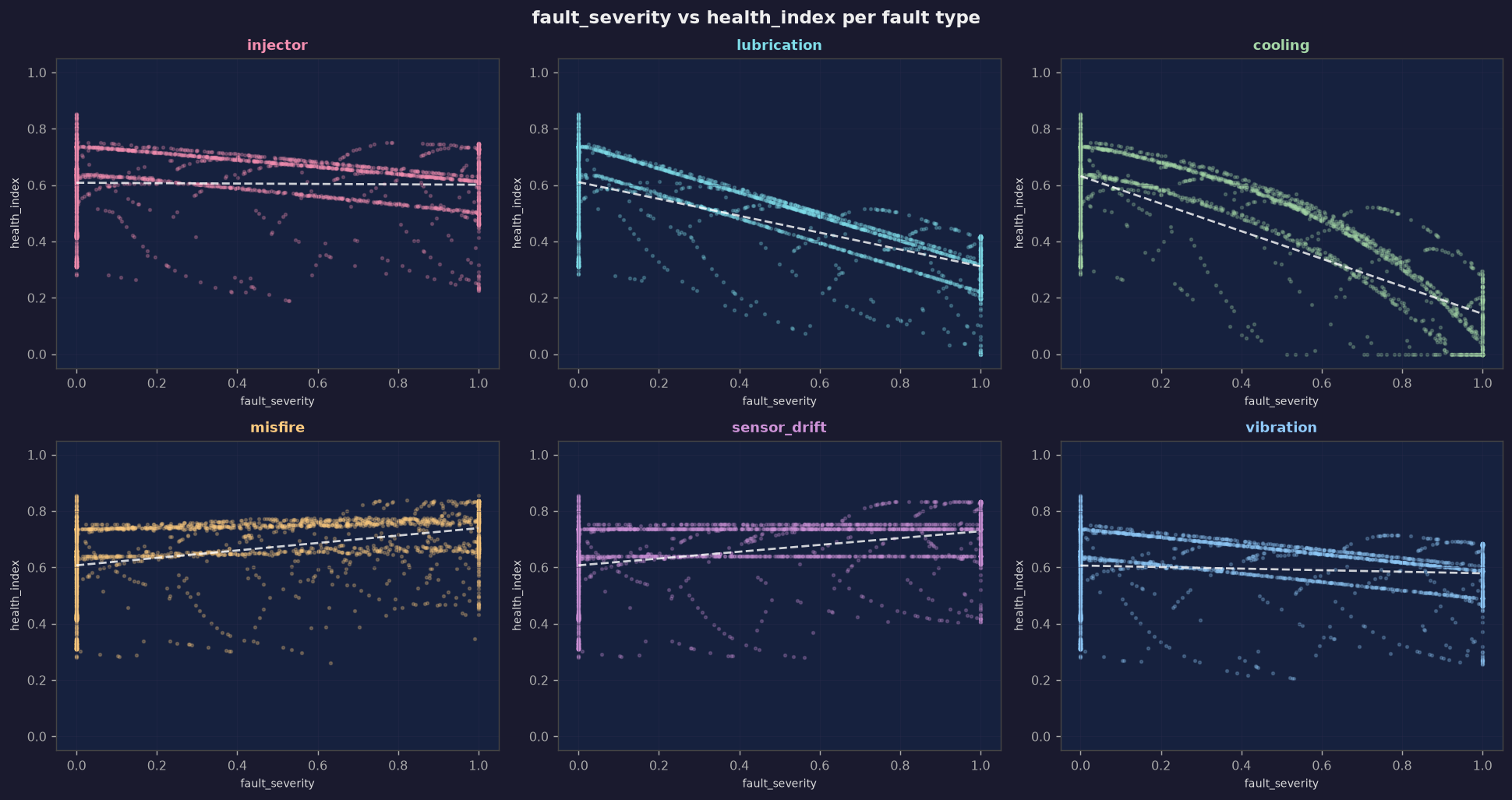
- Real-Time Physics Engine: Runs a continuous thermodynamic baseline modeling combustion heat release, convective fin heat transfer, crank kinematics, lubrication film friction, and atmospheric density lapse ($15^\circ\text{C}$ to $-35^\circ\text{C}$, sea-level to 8,000m).
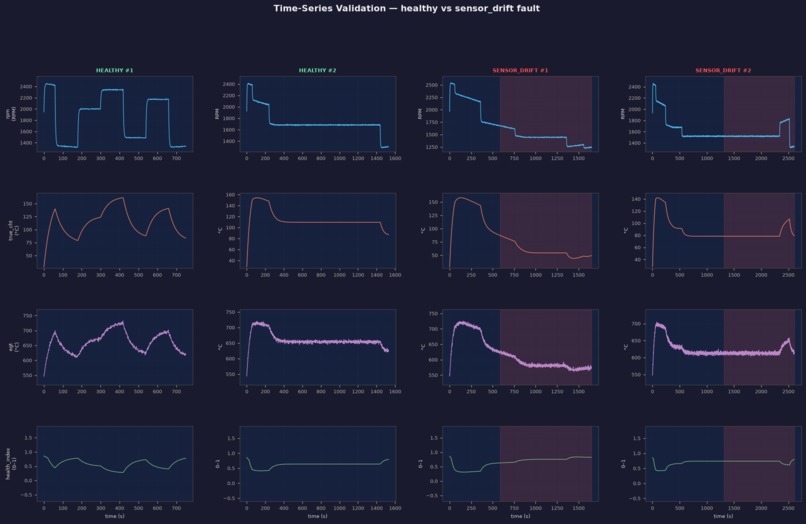
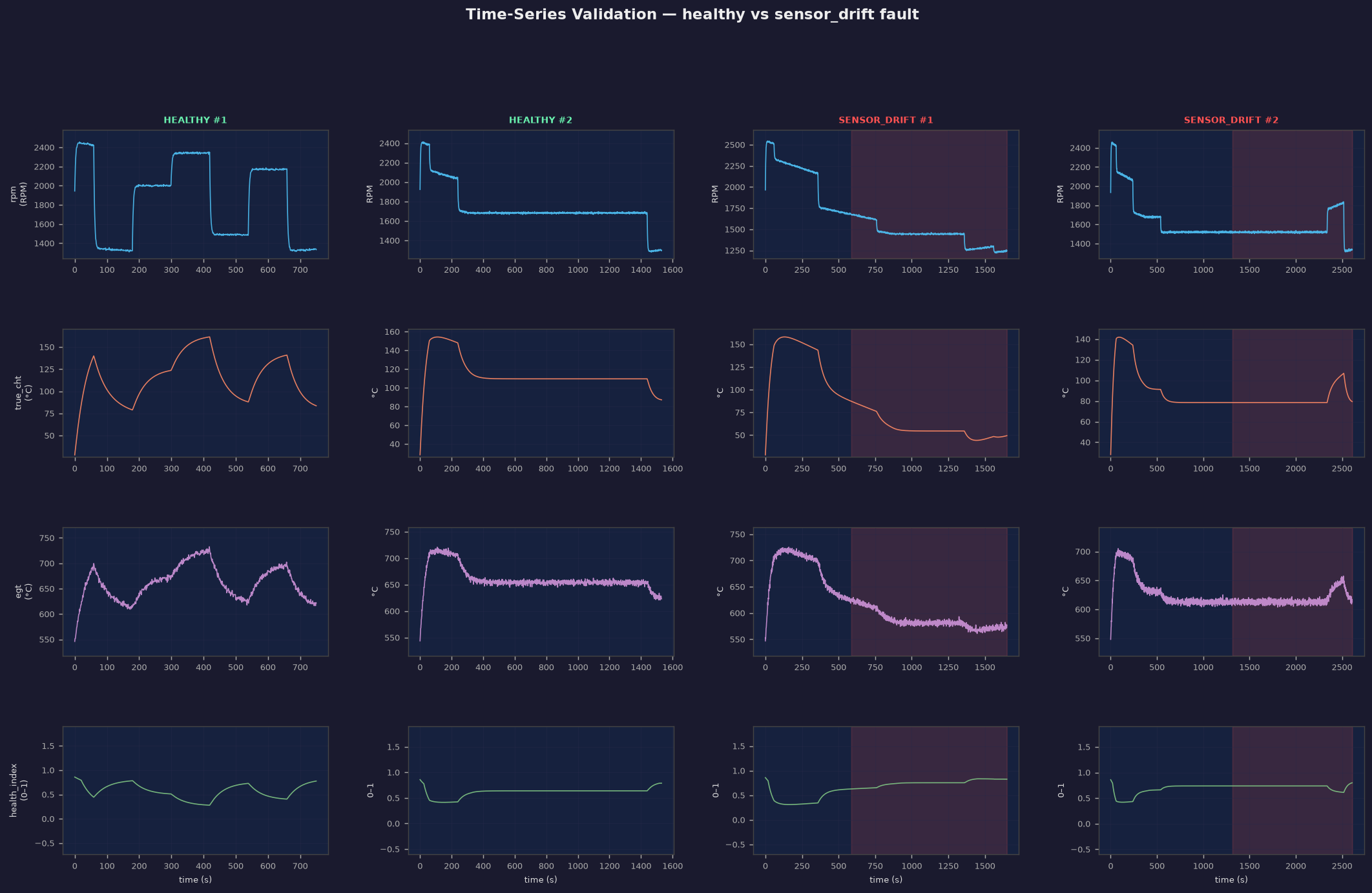
- Sensor Robustness & Data Quality Guard: Outlier rejection, sensor drift detection, and rolling median imputation tested against simulated packet dropouts (up to 30% packet loss).
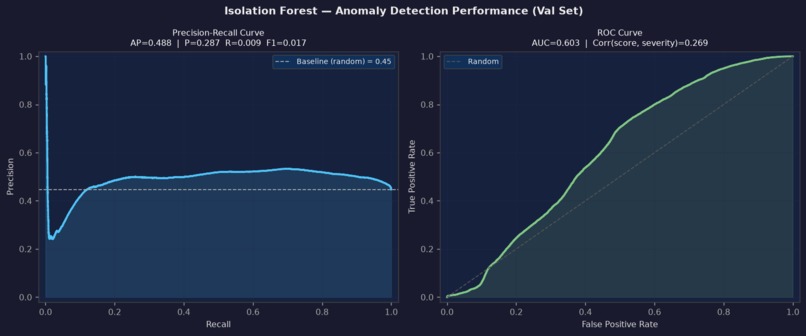
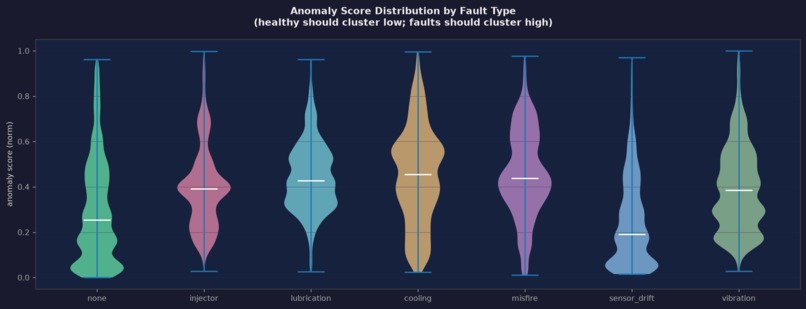
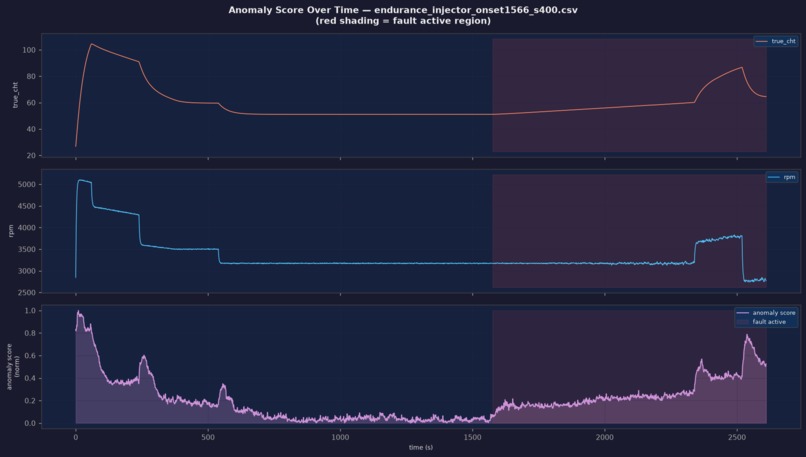
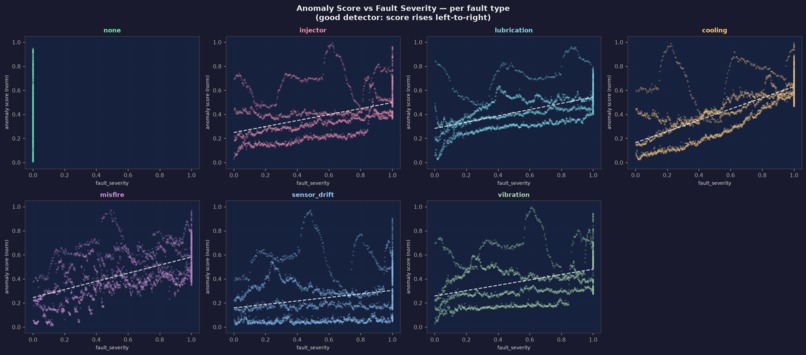
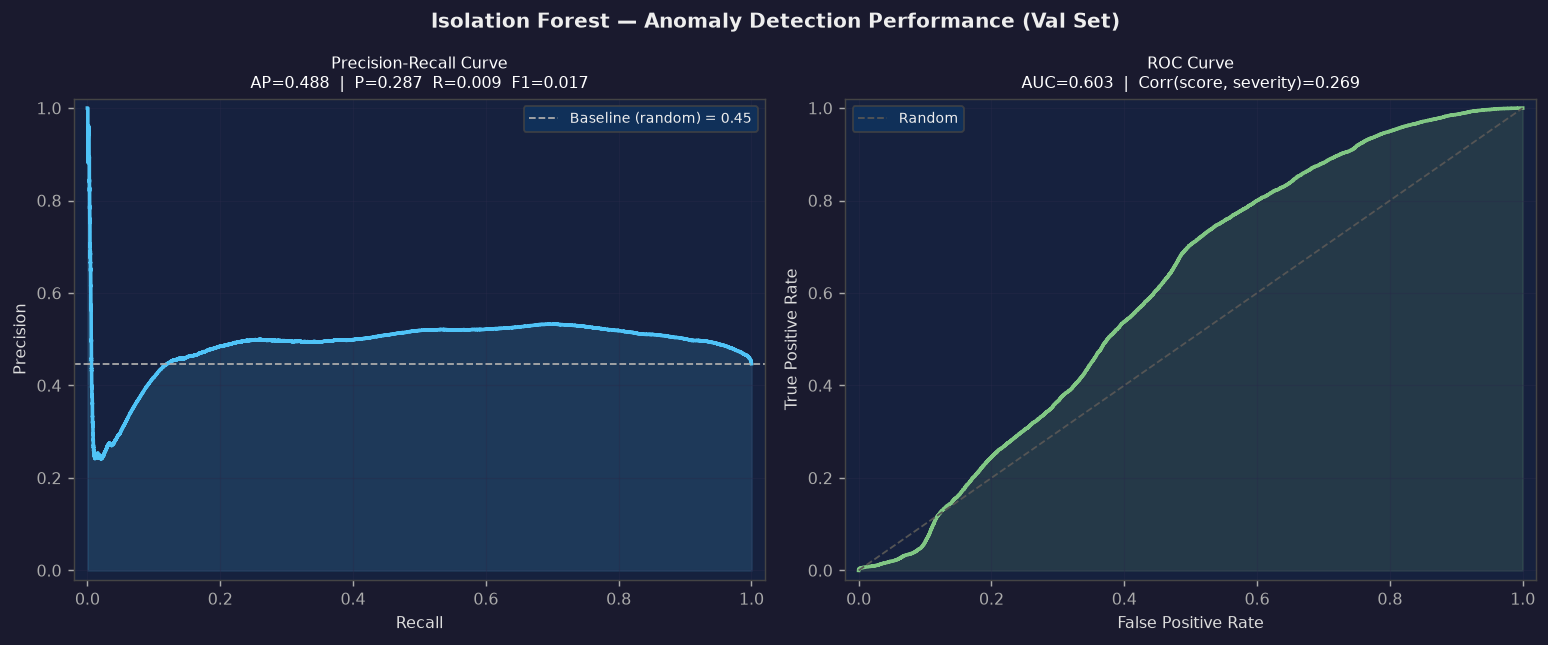
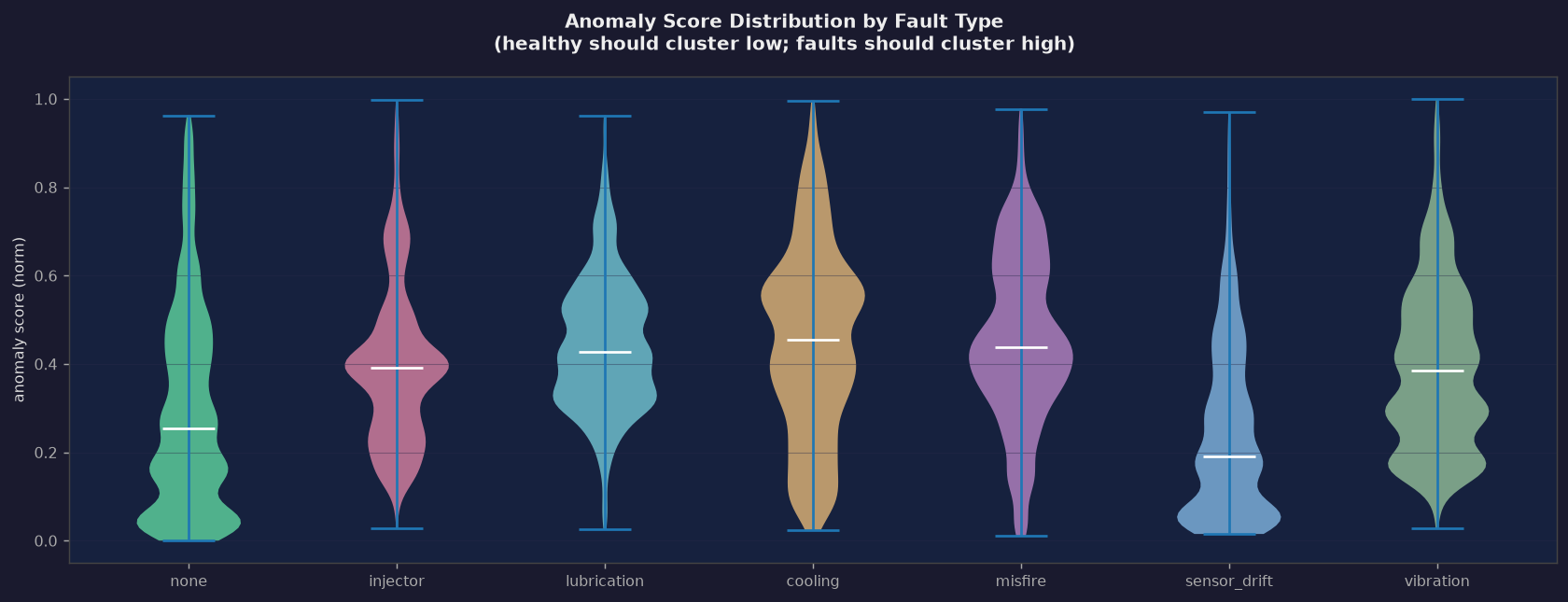
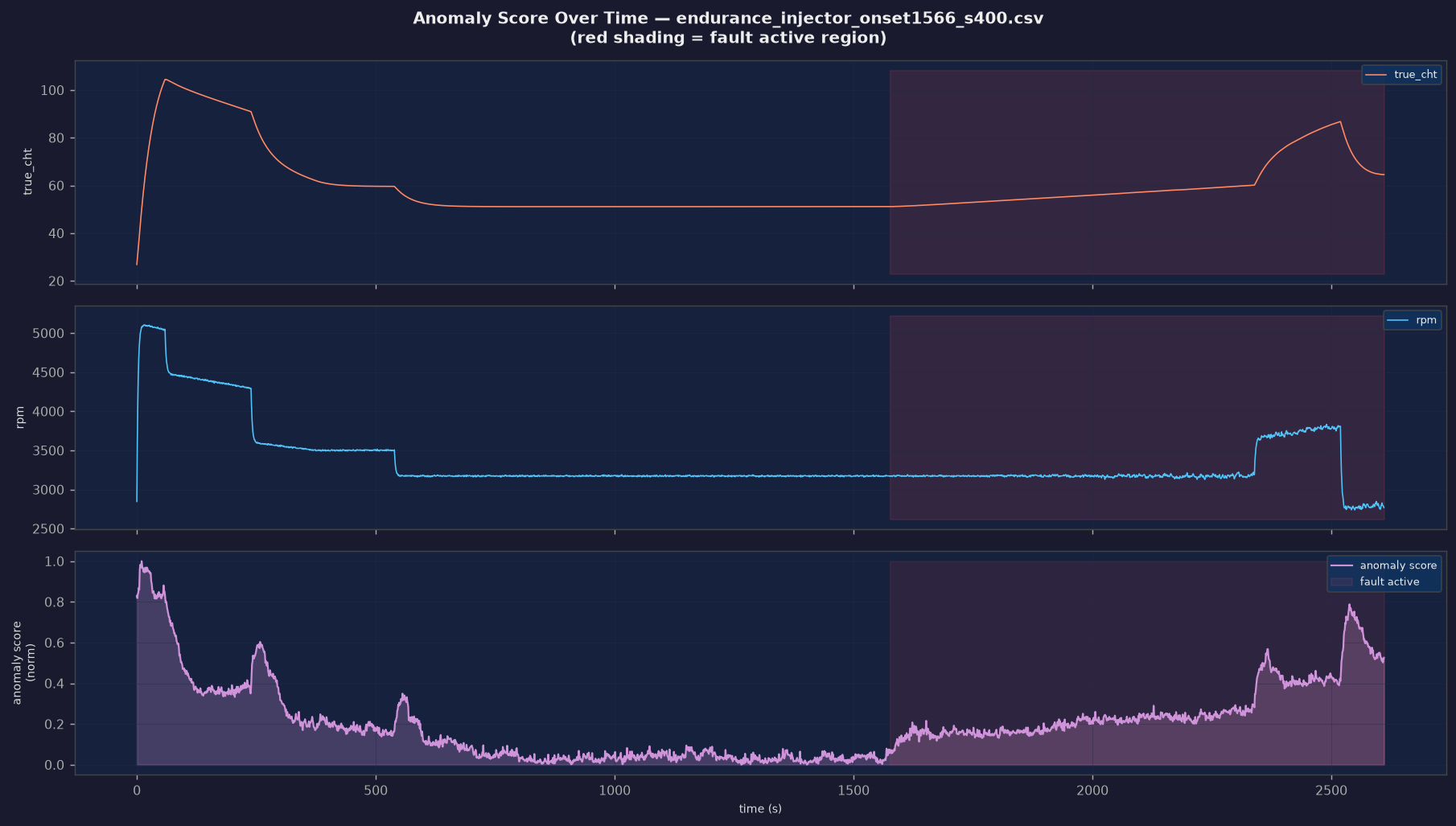
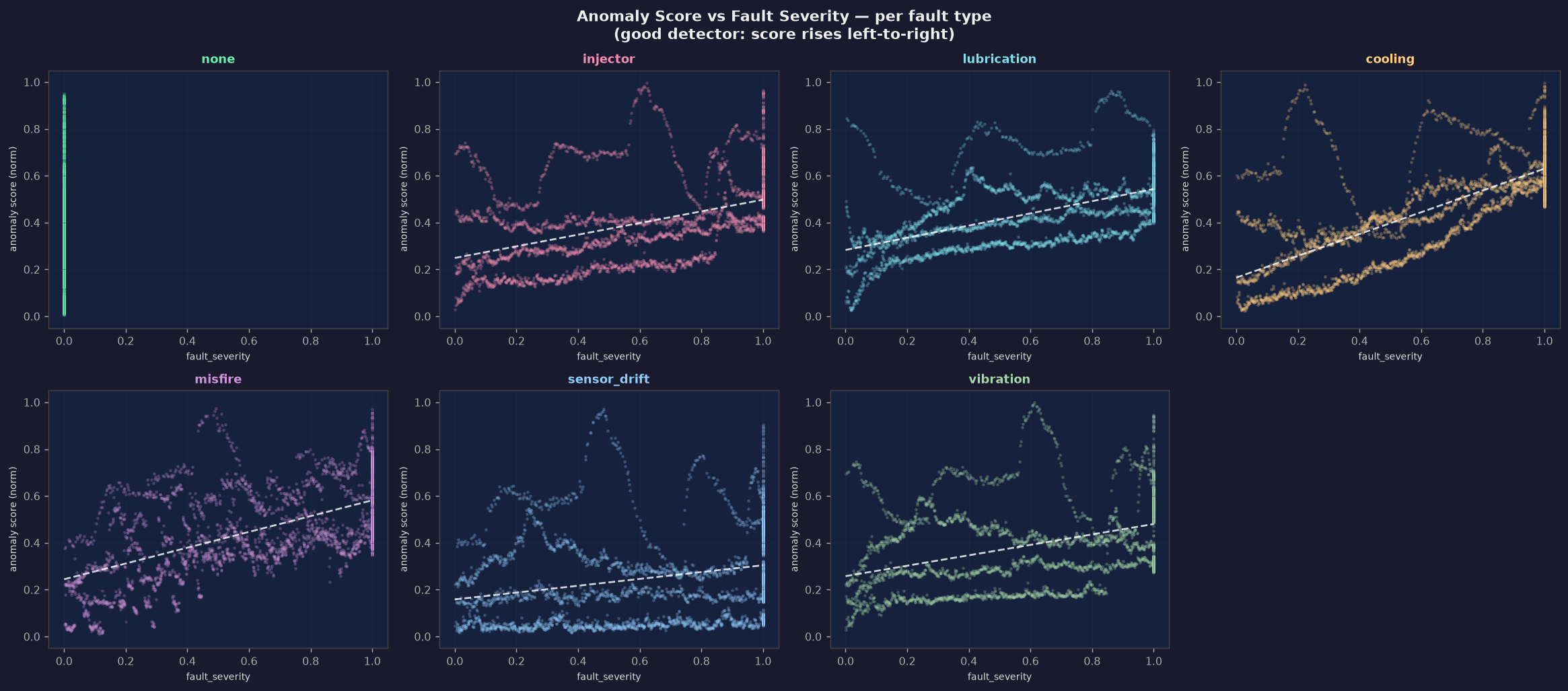
- Unsupervised Anomaly Detection: Isolation Forest identifying multivariate telemetry divergence before threshold exceedance (ROC-AUC
0.7188). - Multi-Class Fault Diagnosis: 150-tree XGBoost classifier identifying 6 distinct failure modes (
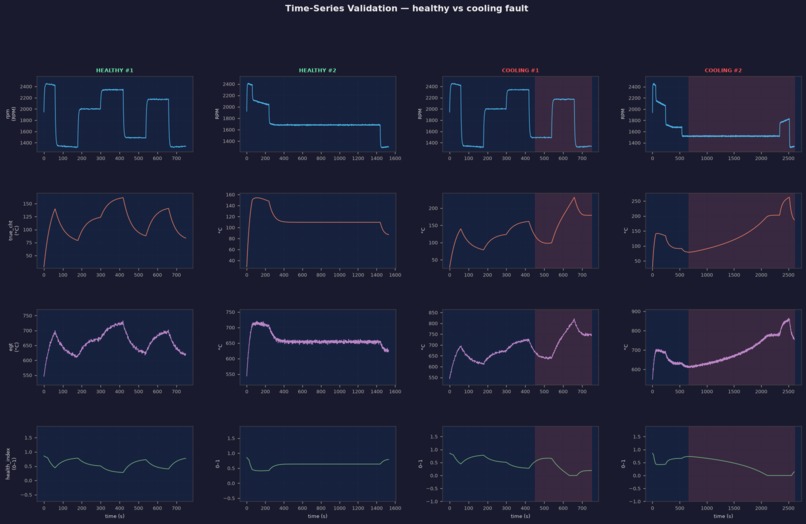
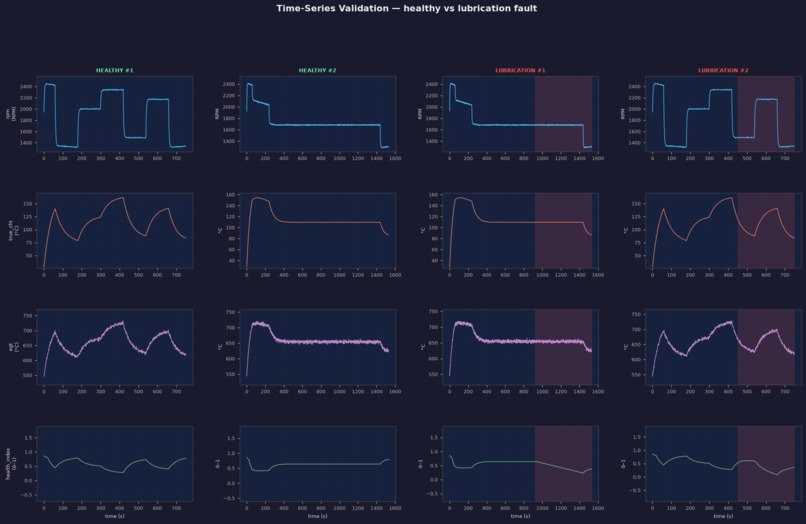
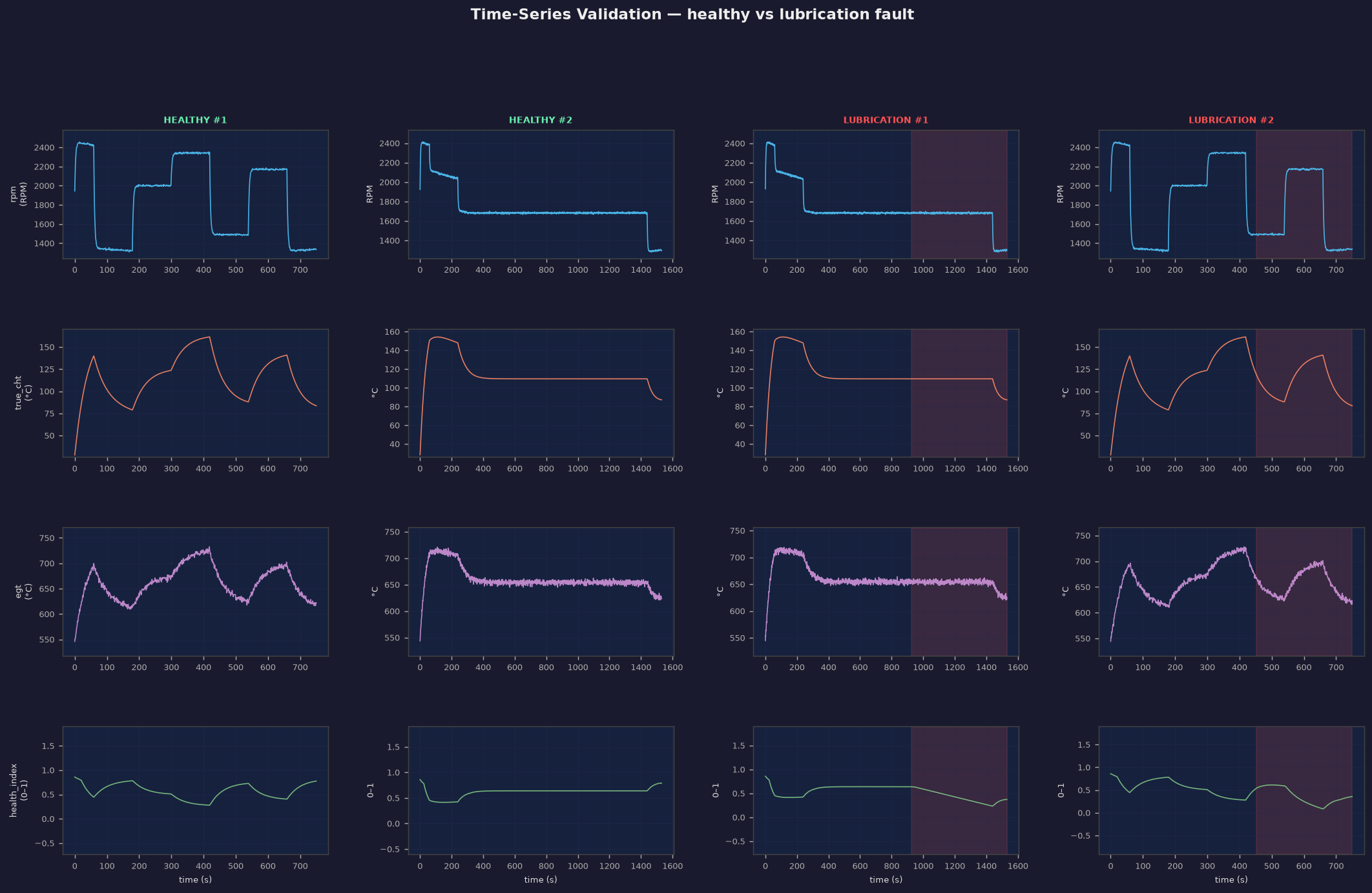
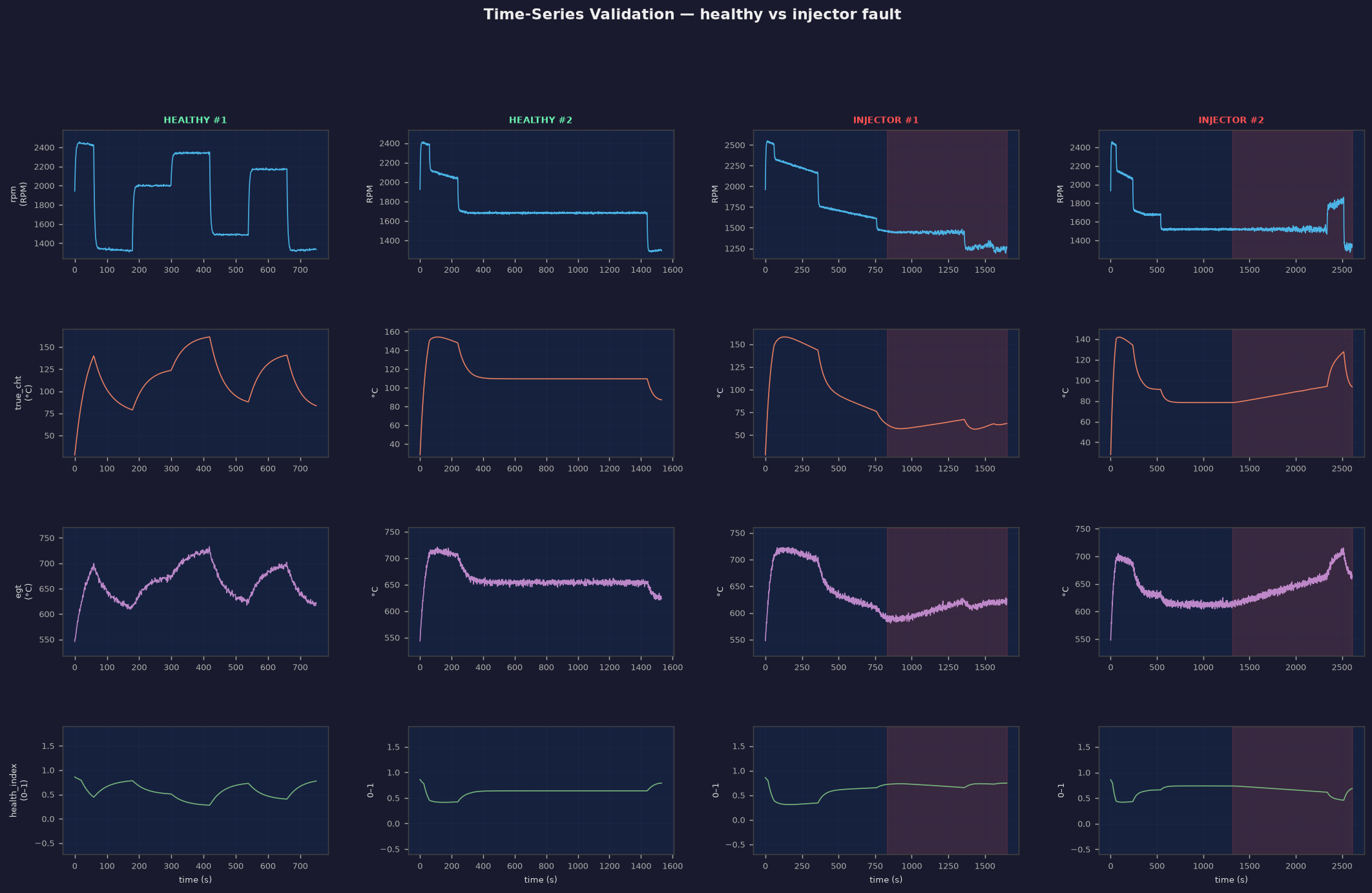
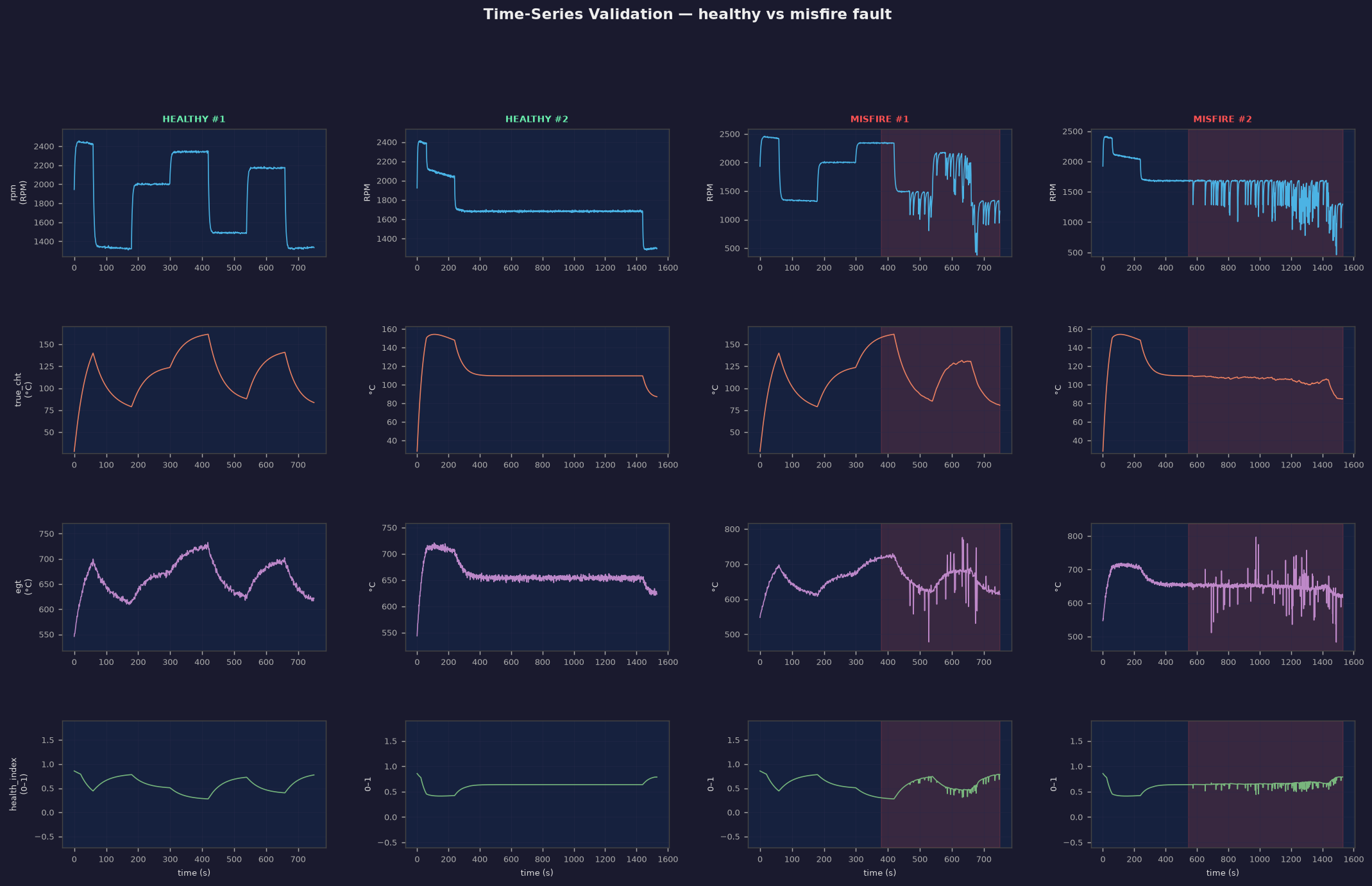
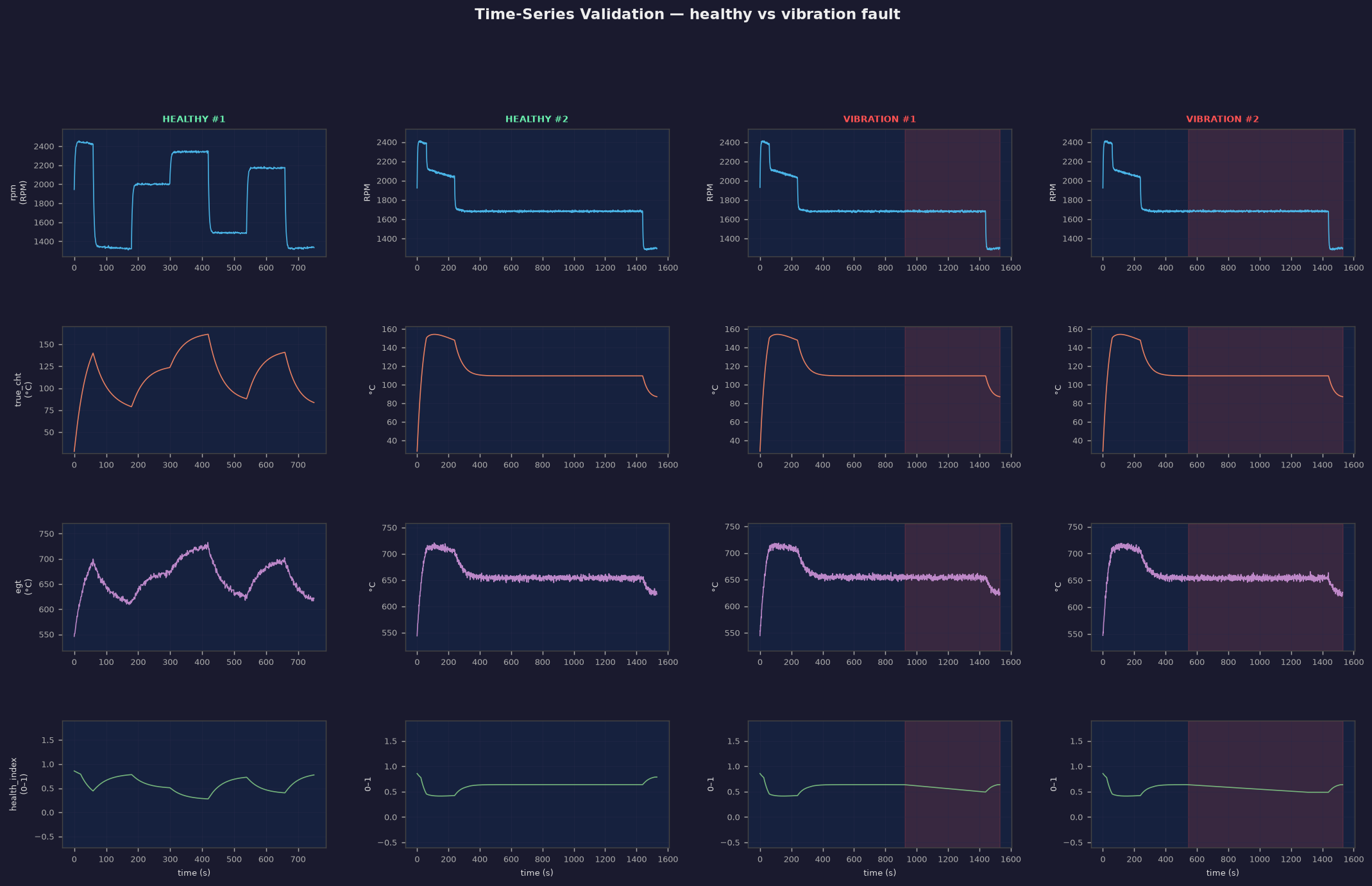
cooling,injector,lubrication,misfire,sensor_drift, andvibration) with 93.68% weighted F1 (94.03% test accuracy). - RUL Countdown Forecasting: XGBoost regressor predicting time-to-failure on active degradation trajectories (MAE: 63.62 seconds).
- Explainable AI (TreeSHAP): Real-time Shapley attribution ranking the top physical sensor drivers behind every diagnosis.
- Flight Engineer Cockpit Advisory: Dynamic checklists, recommended descent profiles, and emergency transponder Squawk 7700 activation gated strictly to critical emergency states.
🛠️ How we built it
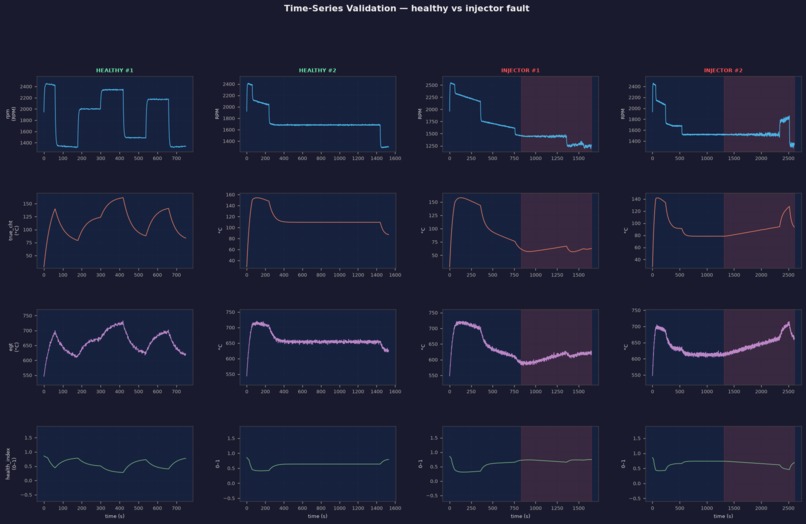
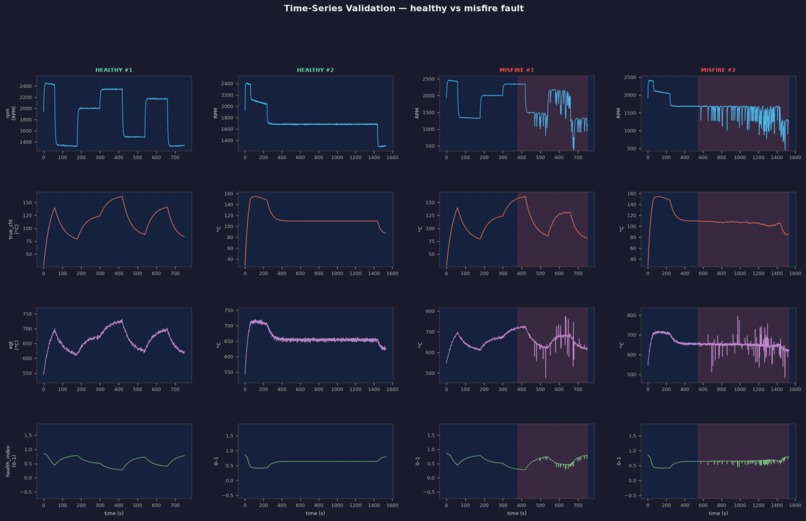
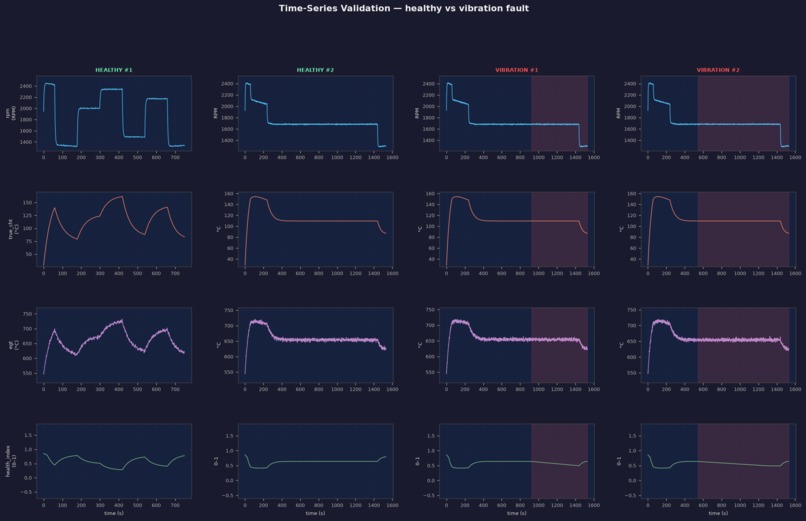
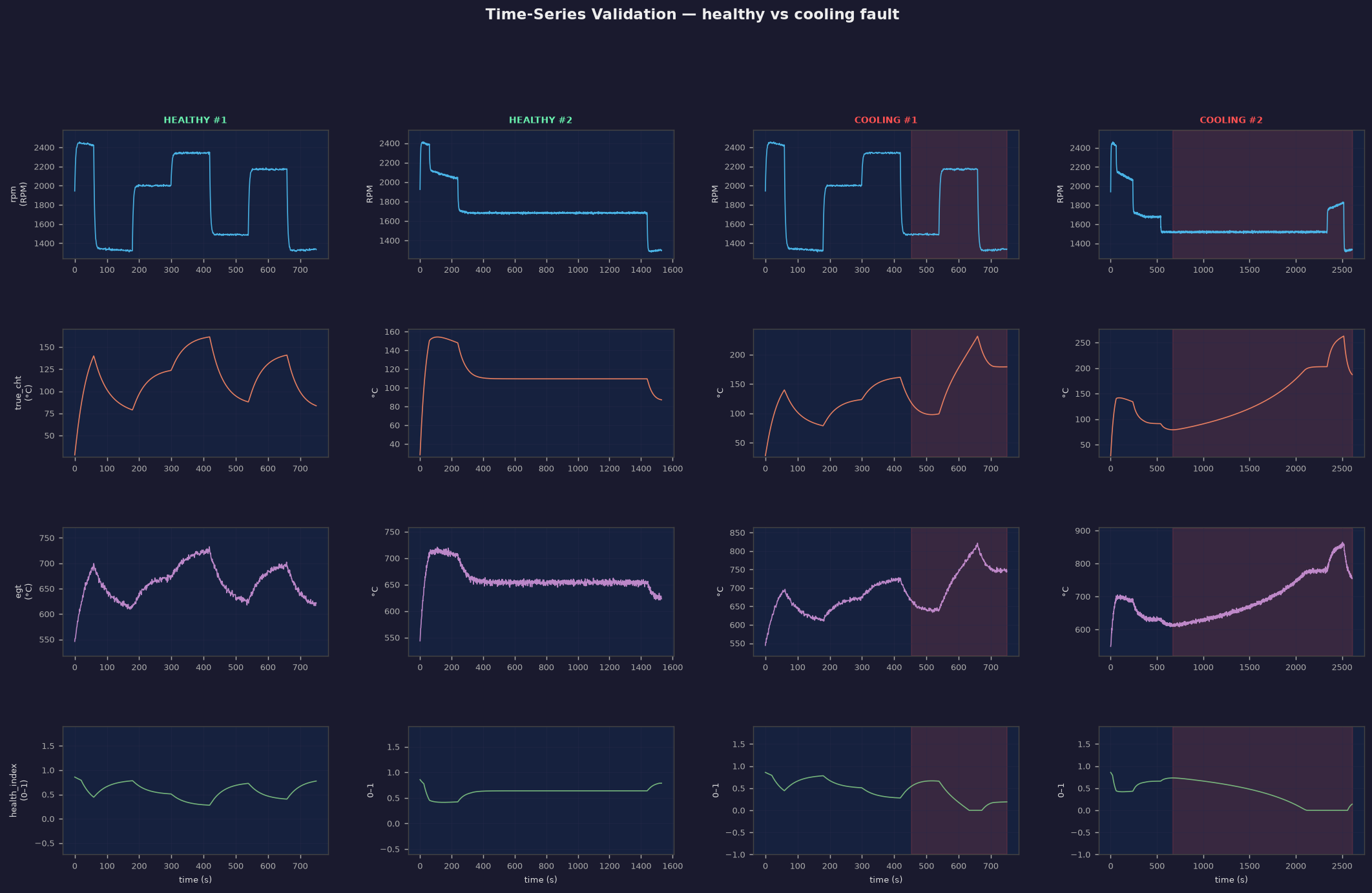
- Thermodynamic Modeling: Built a calibrated 4-cylinder air-cooled piston engine simulator grounded in Rotax 912 physical constants and validated against CMU AirLab ALFA flight benchmarks.
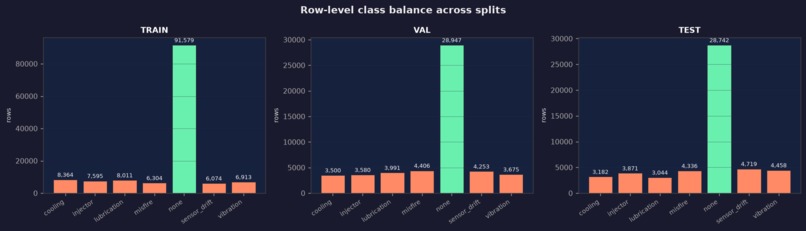
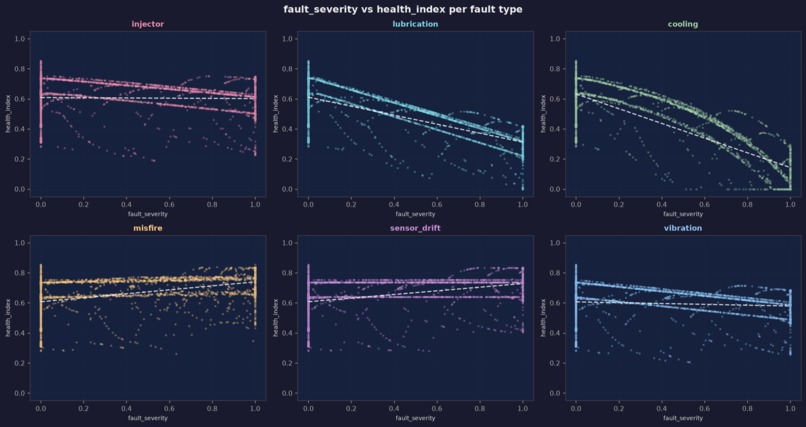
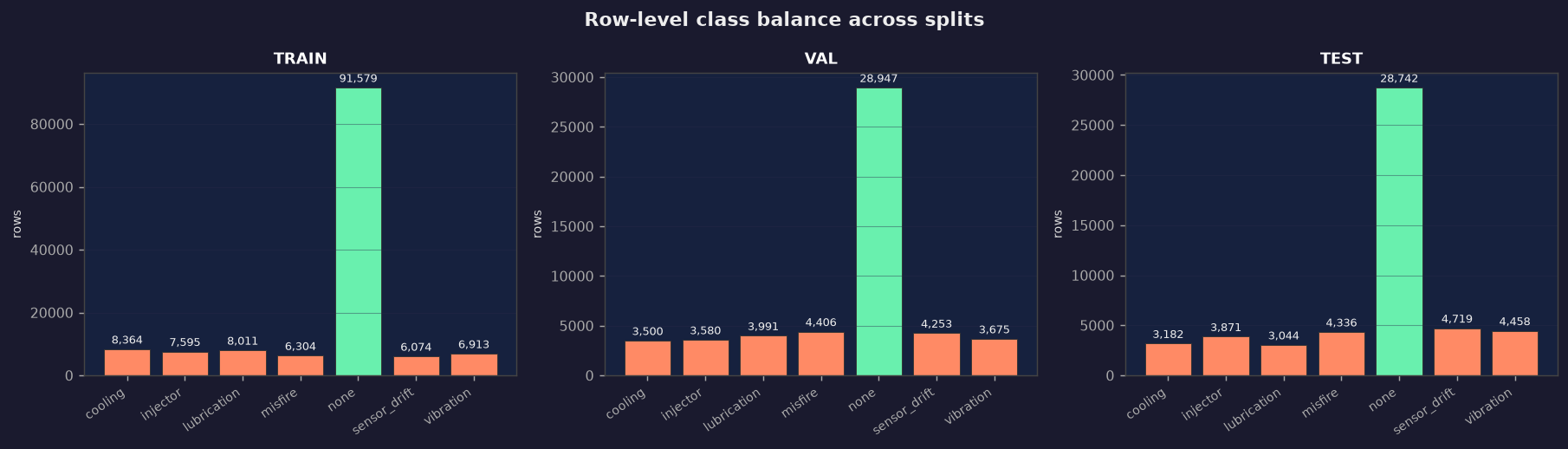
- Feature Engineering & ML Pipeline: Engineered 70 domain-specific physical and rolling statistical features (30s/60s rolling means and standard deviations) across 239,544 rows of mission data.
- High-Performance FastAPI Backend: Asynchronous REST API delivering sub-15ms full-pipeline inference, live interactive session stepping, full mission CSV replays, and 50-run Monte Carlo pre-flight reliability assessments.
- Flight Deck UI: Aerospace-grade dark-mode operator dashboard built with Vanilla CSS design tokens and Chart.js for real-time telemetry streaming and XAI visualization.
📡 Built for Real-World Deployment
- MAVLink v2 Protocol Framing: Telemetry is packaged in standard MAVLink v2 binary format using custom Message ID
50001(56-byte payload for 14 $\times$ float32 channels, 10-byte header, 2-byte CRC) verified with CRC-16 MCRF4XX (0x1021, seed0xFFFF, CRC extra0xA5). - RF Link Telemetry Simulation: Modeled after RFD900x-class 900 MHz FHSS telemetry radios operating at 57,600 baud with Gaussian latency distribution (50 ms mean, 8 ms std dev).
- Edge Compute Onboard Node: Lightweight Isolation Forest inference runs on host CPU in 5.75 ms (estimated ~23.0 ms on an onboard Raspberry Pi 4 Model B Cortex-A72 @ 1.8 GHz), passing 100.0% of frames within the 100 ms 1 Hz telemetry budget.
- Hardware Bill of Materials (BOM): Complete open-source sensor harness and edge compute BOM priced at $833 – $1,057 ($833 – $1,007 base).
- Cost-to-Value Ratio: For typical $12,000 to $100,000+ aircraft platforms, an $833 add-on represents < 1% to 8% of platform value—preventing a single hull loss pays for the system dozens of times over.
🧗 Challenges we ran into
- Physics Calibration Without Proprietary Data: Without access to classified real-world flight logs, we calibrated our reduced-order thermodynamic model against published engine operating envelopes and ALFA benchmark datasets to ensure cross-channel thermal lag and vibration harmonics behaved realistically.
- Deployment Realism: Modeling MAVLink binary serialization, RF channel jitter, and edge compute performance required building rigorous mathematical simulation layers while maintaining strict honesty about simulation boundaries versus physical flight testing.
🏆 Accomplishments that we're proud of
- Achieving 93.68% weighted F1-score across 6 complex failure modes with sub-65-second RUL accuracy.
- Building a full deployment pipeline (MAVLink serialization, RF link modeling, and edge inference) that runs end-to-end in ~5.88 ms.
- Developing a clean, explainable TreeSHAP panel that translates complex gradient-boosted tree decisions into intuitive physical insights for flight operators.
- Delivering a zero-dependency, one-command Docker deployment running live in production on Render.
🧠 What we learned
- Domain Physics Enhances ML: Raw sensor readings alone are noisy, but augmenting the feature space with thermodynamic rolling statistics ($T_{\text{CHT}} - T_{\text{nominal}}$ residuals, rolling variance) dramatically increased classifier confidence and eliminated false positives.
- Explainability Builds Trust: In aviation, an AI recommendation without physical explanation will be ignored by operators. Integrating TreeSHAP directly into the emergency workflow makes the system actionable.
🔭 What's next for AeroTwin
- Hardware-in-the-Loop (HIL) Bench Testing: Running the edge compute node directly on a physical Raspberry Pi 4 paired with hardware RFD900x radio transceivers.
- Dynamometer Engine Integration: Instrumenting a static 4-cylinder engine test stand with the physical thermocouple and pressure transducer harness.
- Flight Trials & Aviation Certification: Non-critical flight test integration progressing toward DO-178C airborne software and DO-254 hardware safety standards.
🌐 Try it out
- Live Web App: https://sih26054-male-uav-digital-twin.onrender.com
- GitHub Repository: https://github.com/Narayan1006/Aircraft-Engine-Flight-Deck
Built With
- css3
- digital-twin
- docker
- edge-computing
- explainable-ai
- fastapi
- html5
- javascript
- machine-learning
- mavlink
- numpy
- pandas
- python
- raspberry-pi
- render
- scikit-learn
- shap
- uvicorn
- xgboost


Log in or sign up for Devpost to join the conversation.