-
-
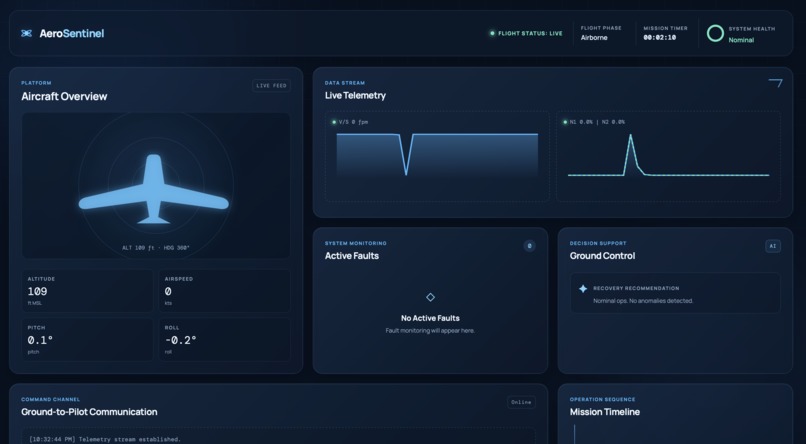
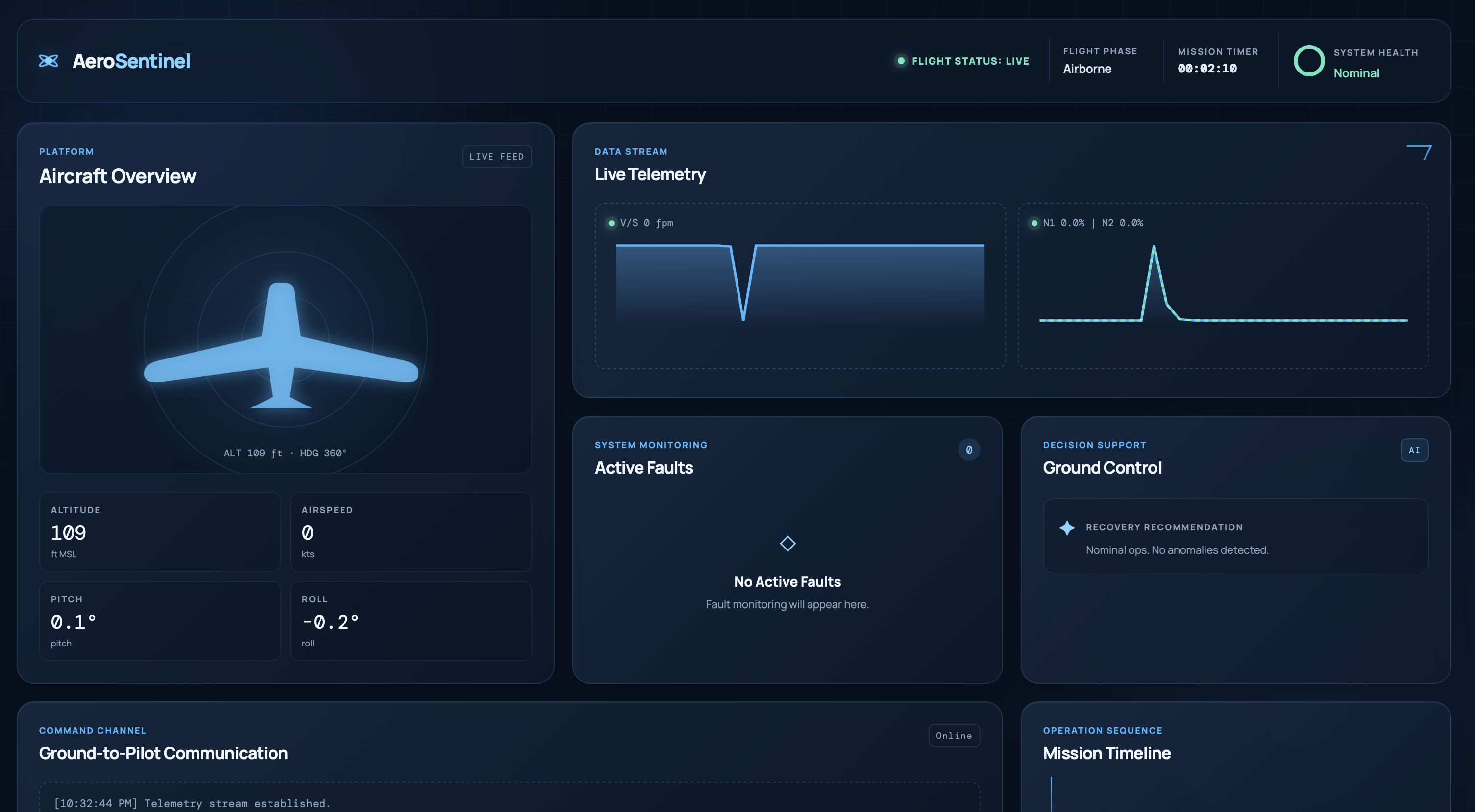
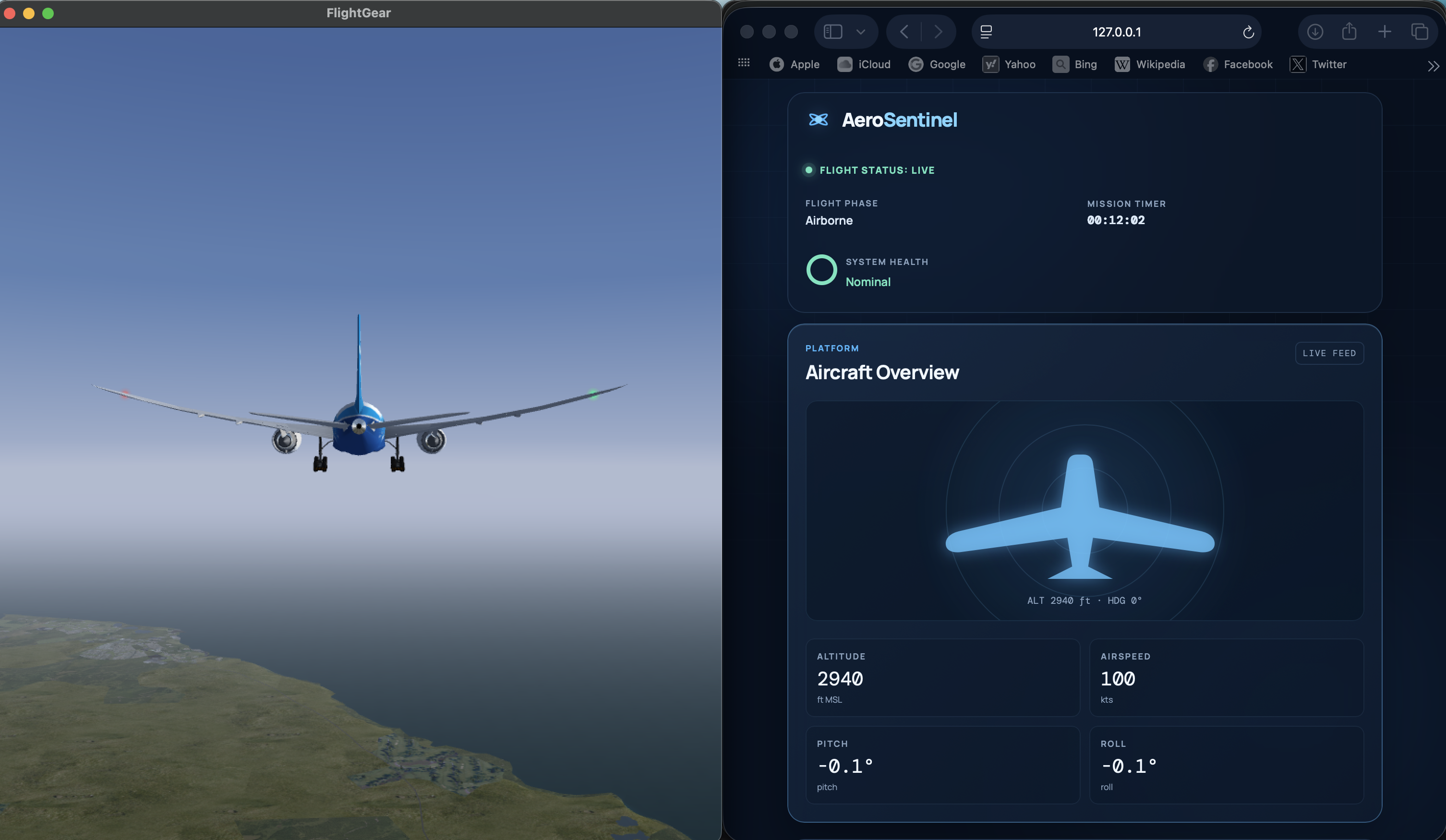
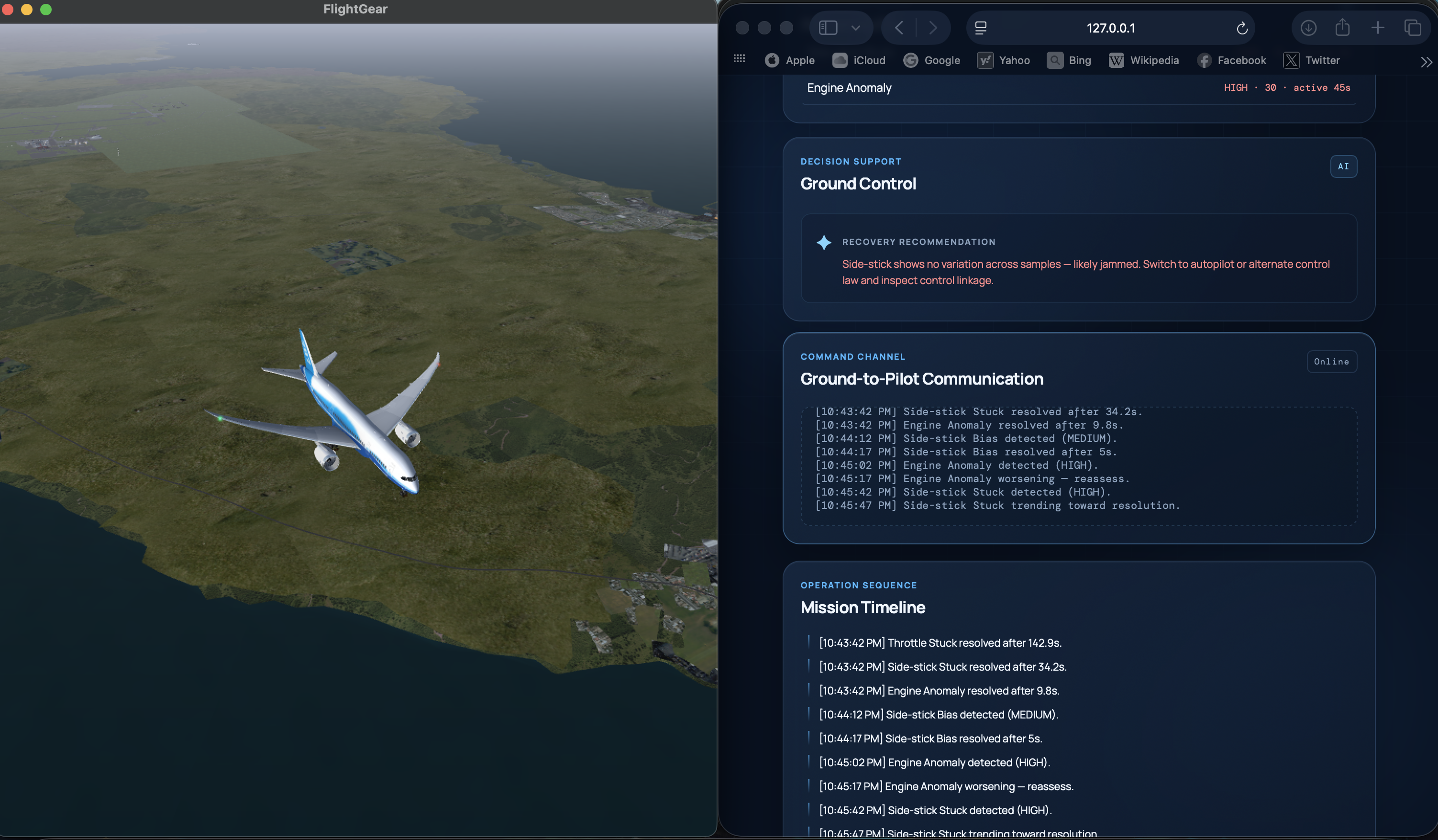
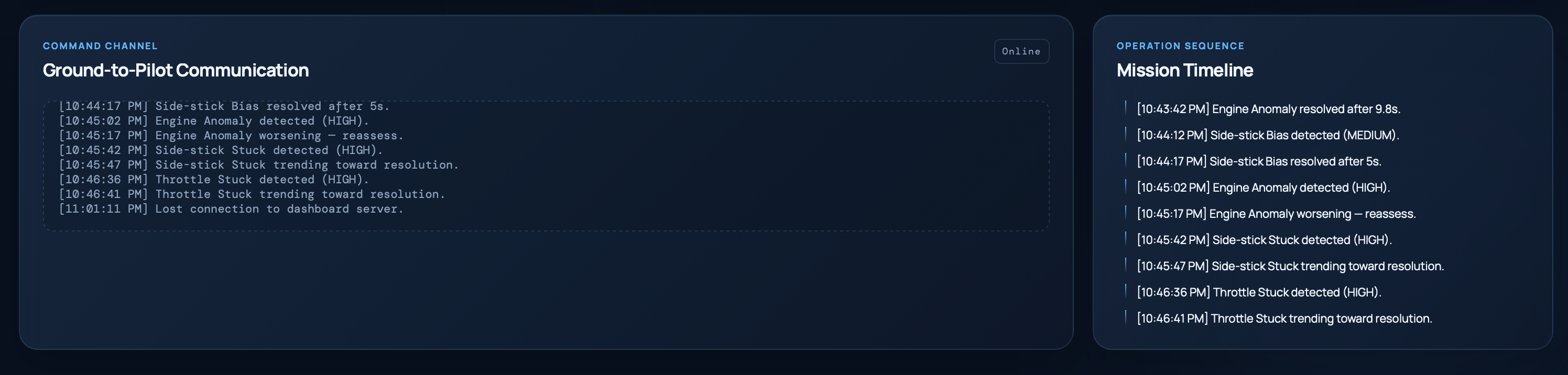
The main dashboard provides a centralized view of aircraft telemetry, mission status, system health, communication logs.
-
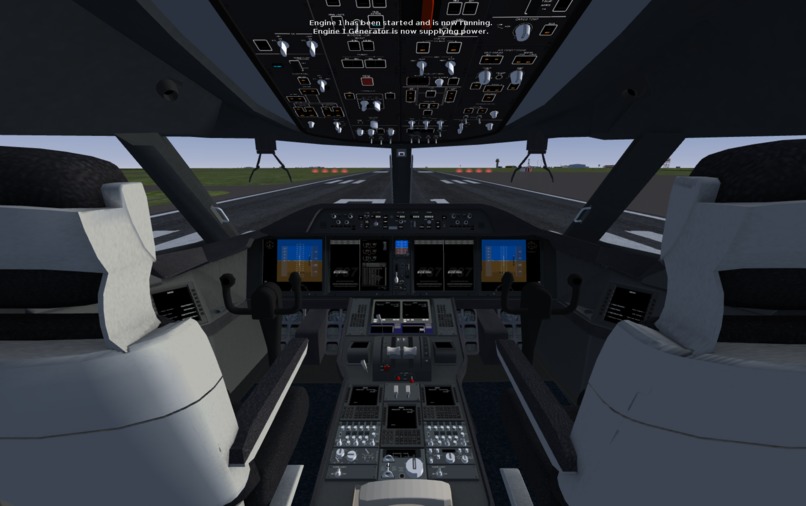
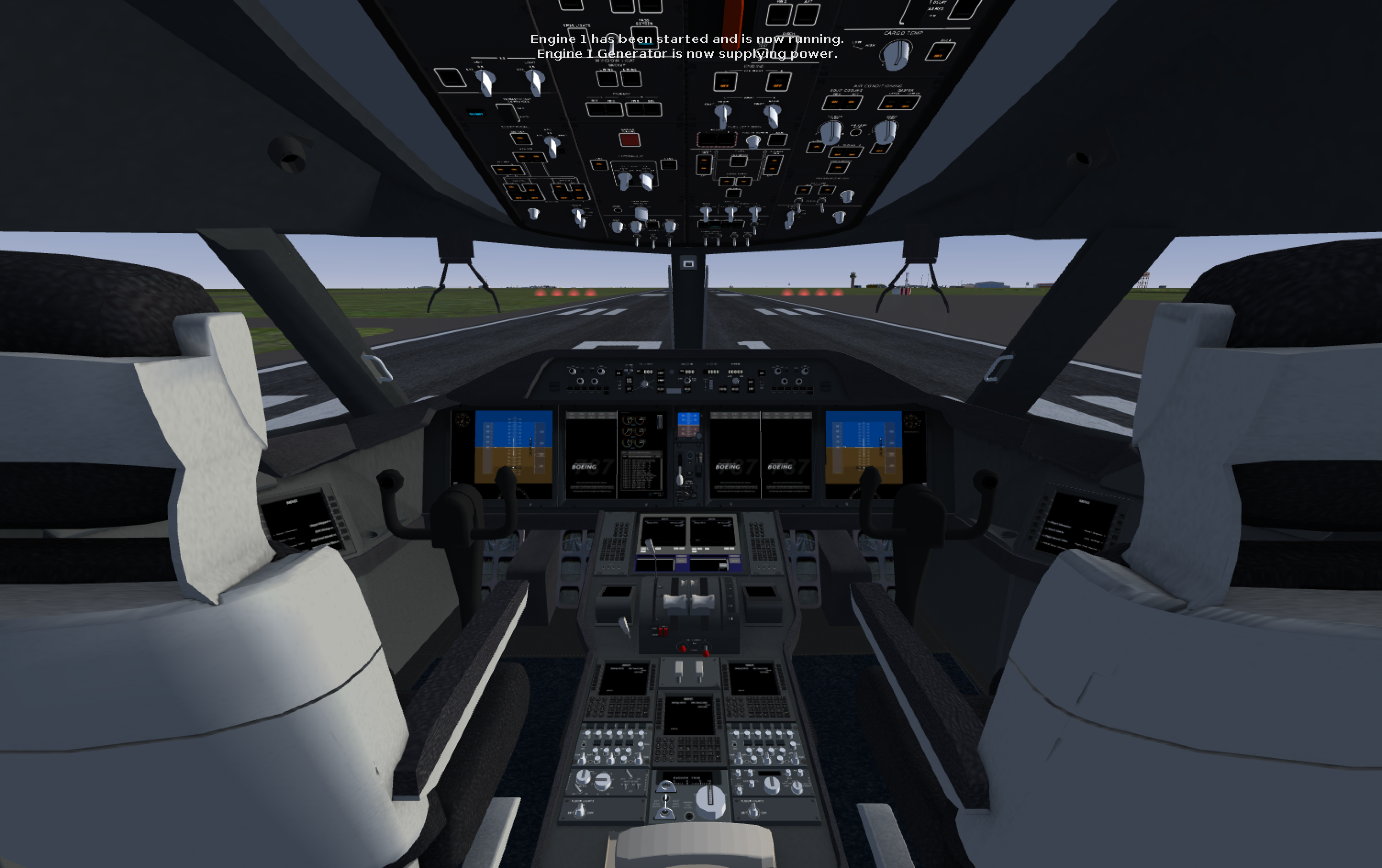
FlightGear serves as the aircraft simulation environment for AeroSentinel.
-
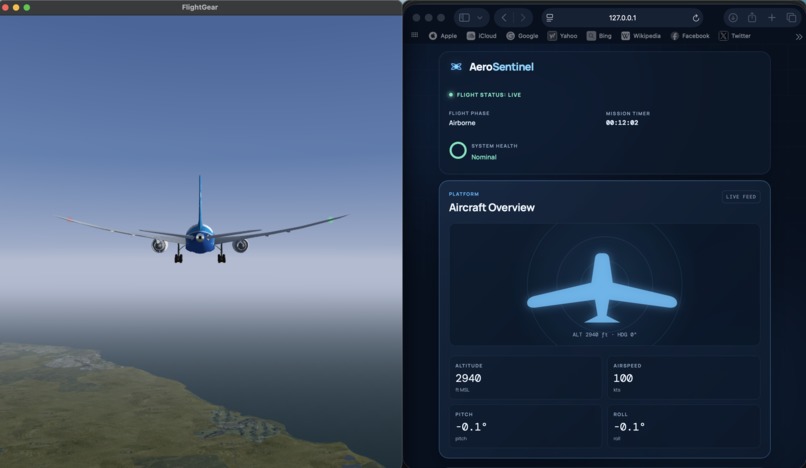
When abnormal aircraft behavior is detected , classifies it the fault, highlights its severity, and updates the operator dashboard.
-
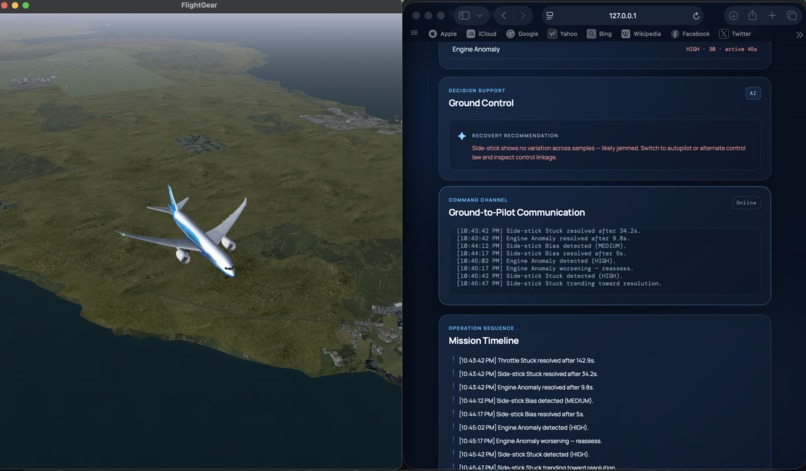
Decision Support Engine generates recovery guidance based on the detected fault enabling ground operators to respond consistently
-
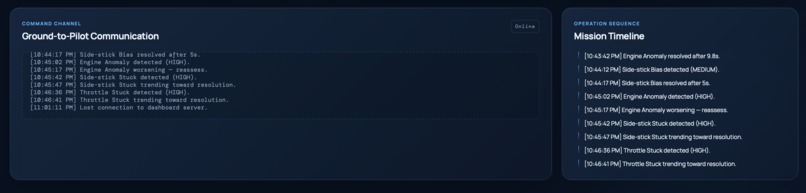
Mission events and communication logs provide a clear chronological history of the current flight.
-
This image is currently processing. Please be patient...

Inspiration
Aircraft continuously generate large volumes of telemetry during flight, making it challenging for ground operators to quickly identify abnormal conditions and determine the appropriate response. I wanted to build a system that transforms raw flight telemetry into meaningful operational insights, helping ground control teams detect faults earlier and improve situational awareness during simulated flight operations.
What it does
AeroSentinel is a Ground Control Decision Support System that integrates with the FlightGear flight simulator to monitor live aircraft telemetry.
This system concentrate on three main parts for faults 1. Side Stick 2. Throttle 3. Engine.
The system continuously receives flight parameters such as altitude, airspeed, pitch, roll, heading, engine values, and control inputs. Incoming telemetry is processed using Kalman Filtering to reduce sensor noise and CUSUM-based analysis to detect persistent abnormalities.
When a fault is detected, AeroSentinel classifies the fault, determines its severity, generates recovery guidance for the operator, updates the mission timeline, records communication logs, and visualizes everything through a real-time Mission Control Dashboard.
How I built it
AeroSentinel was built using Python, Flask, Flask-SocketIO, HTML, CSS, and JavaScript.
FlightGear provides live aircraft telemetry, which is collected by the backend and processed through a modular pipeline consisting of telemetry collection, Kalman filtering, CUSUM-based fault detection, rule-based fault classification, and a decision support engine.
The frontend was designed as a responsive Mission Control Dashboard that updates in real time through WebSockets, allowing operators to monitor aircraft status and system health continuously.
OpenAI Codex was used extensively throughout development as an engineering collaborator for architecture exploration, implementation assistance, debugging, frontend refinement, documentation, and code reviews.
Challenges I ran into
One of the biggest challenges was integrating FlightGear telemetry with a responsive real-time dashboard while maintaining smooth communication between multiple system components.
Another challenge was designing a fault detection pipeline that reliably identified abnormal behavior without producing excessive false alarms. Building a clean and intuitive dashboard that presents large amounts of operational information without overwhelming the user also required multiple design iterations.
Accomplishments that we're proud of
Successfully integrated FlightGear with a live telemetry monitoring system. Built a complete real-time telemetry processing pipeline. Implemented Kalman Filter and CUSUM-based fault detection. Developed a modular Decision Support Engine that generates operational recovery guidance. Designed a professional Mission Control Dashboard with live telemetry, fault monitoring, mission timeline, and communication logs. Delivered a complete end-to-end prototype demonstrating how ground control can monitor and respond to abnormal flight conditions.
What we learned
This project strengthened my understanding of real-time telemetry processing, fault detection algorithms, simulation integration, dashboard design, and modular software architecture.
I also gained valuable experience building safety-oriented software that combines live simulation data with operational decision support while using OpenAI Codex as an engineering partner throughout development.
What's next for AeroSentinel
Future versions of AeroSentinel will focus on predictive fault analysis, richer operational decision support, integration with additional flight simulators and telemetry sources, support for multiple aircraft simultaneously, enhanced visualization, and optional integration of advanced AI models to assist ground operators with more sophisticated reasoning and recovery recommendations while preserving the modular architecture.
Built With
- codex
- css3
- cusum
- filter
- flask
- flask-socketio
- flightgear
- git
- github
- html5
- javascript
- kalman
- openai
- python
- tcp
- websockets

Log in or sign up for Devpost to join the conversation.