Inspiration
Airlines lose millions of dollars each year due to cold-chain failures that occur during ground handling, tarmac delays, and warehouse dwell times. The incorrect handling of passive cool pallets in air transport is a critical weak point in global cold chains, often caused by environmental exposure, infrastructure limitations, and procedural errors.
Core Problem: The “Broken Link” in Air Freight
While warehouses and trucks maintain strict climate control, the tarmac and aircraft cargo holds frequently do not. This creates a dangerous “broken link” where passive packaging — which relies solely on insulation and phase-change materials — is pushed beyond its validated limits.
1. Tarmac Exposure & Ground Handling Risks
The journey between the refrigerated warehouse and the aircraft is the most vulnerable stage of the entire supply chain.
Technical & Human Deficiencies
Passive systems depend heavily on human precision, which is often insufficient. Key issues include inadequate pre-conditioning of shippers, lack of real-time visibility (most operations still use passive data loggers that only reveal problems after delivery), and preventable human errors such as leaving warehouse doors open, improper loading, or insufficient training for handling sensitive pharmaceutical and biological cargo.
What it does
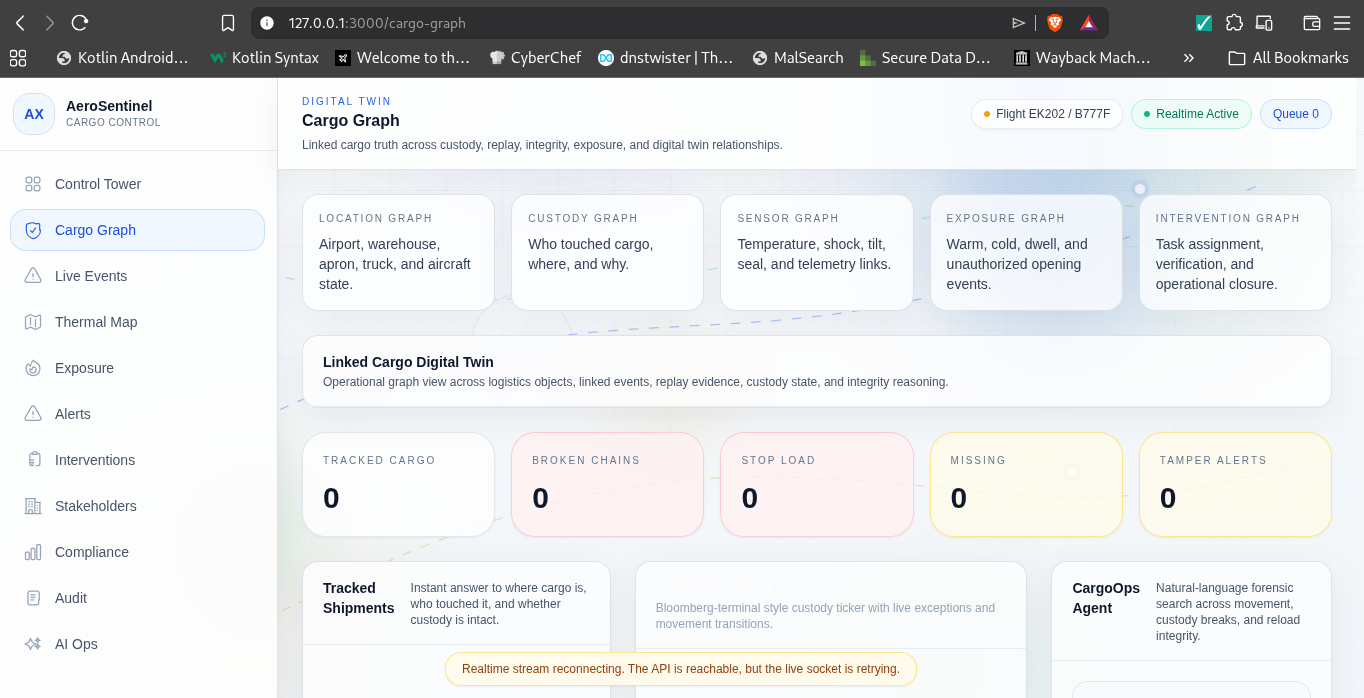
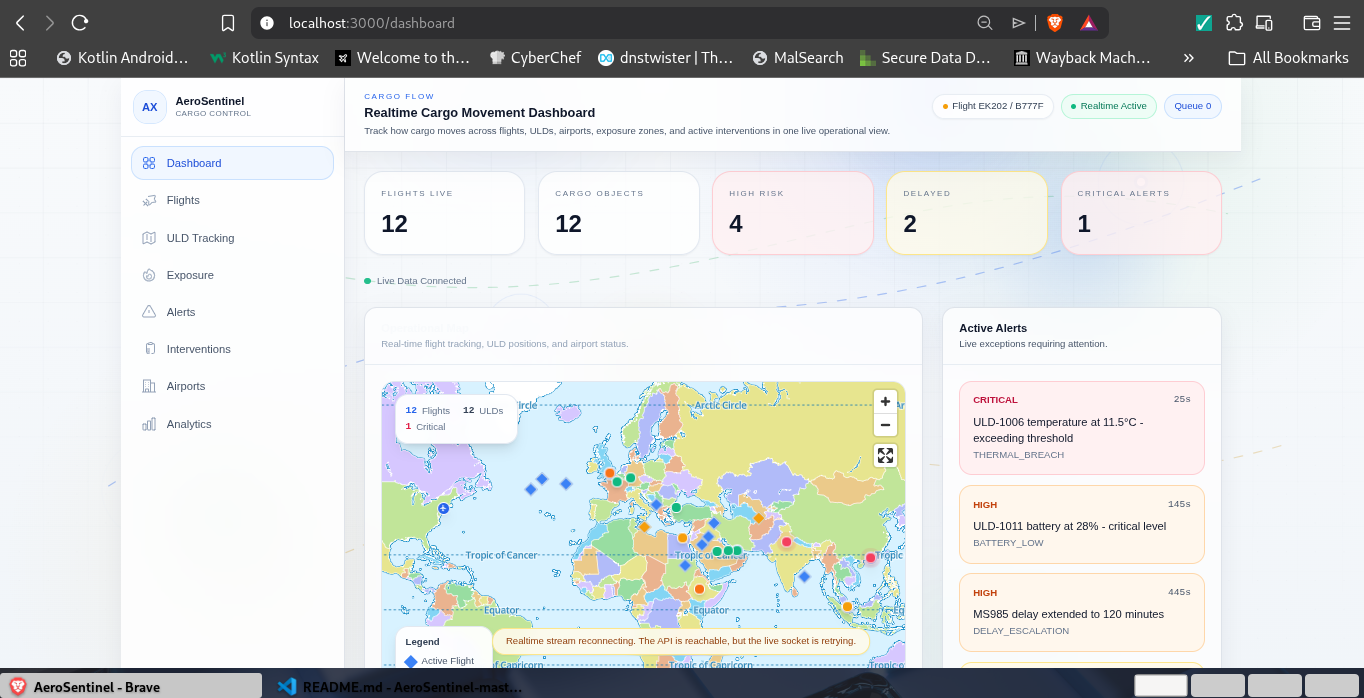
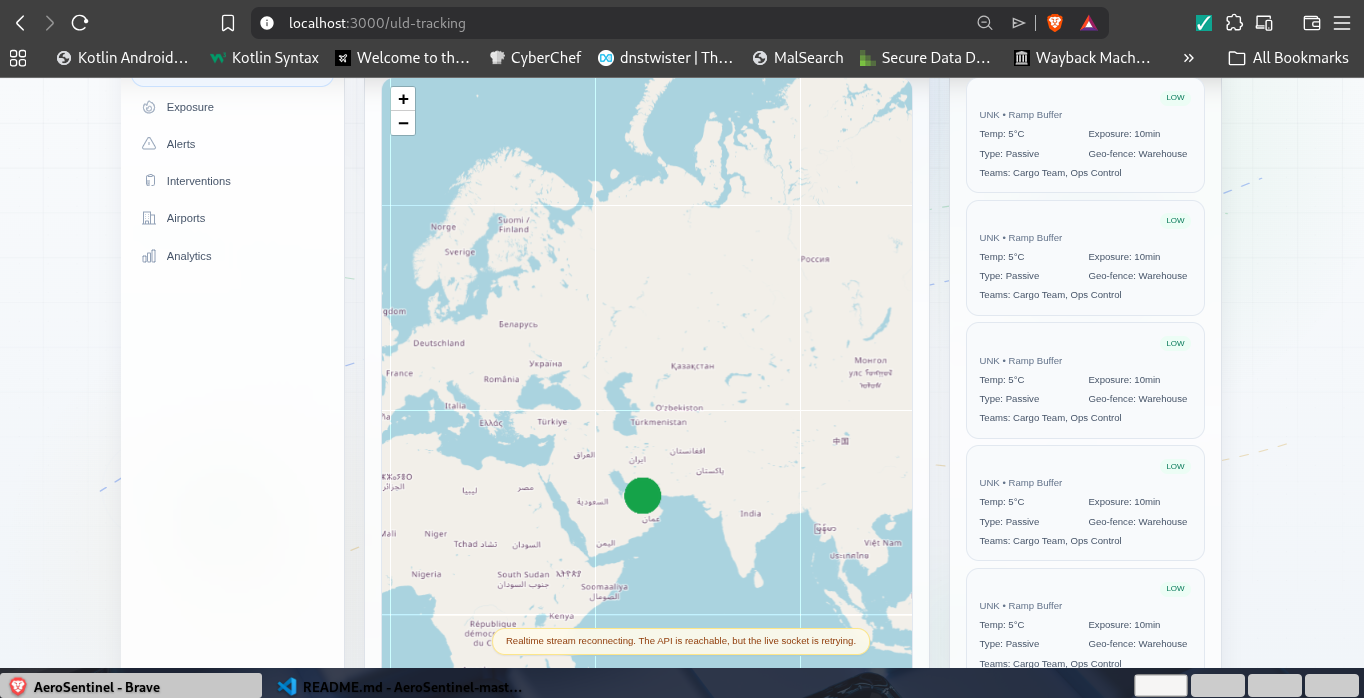
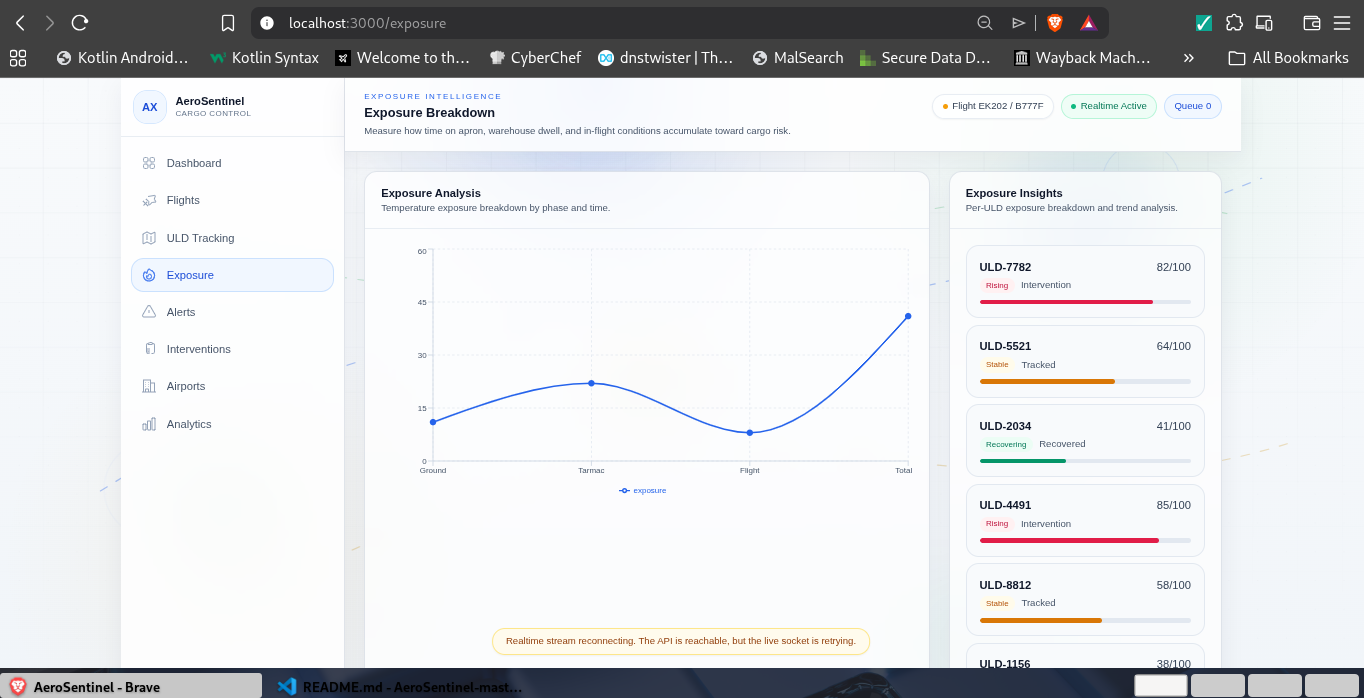
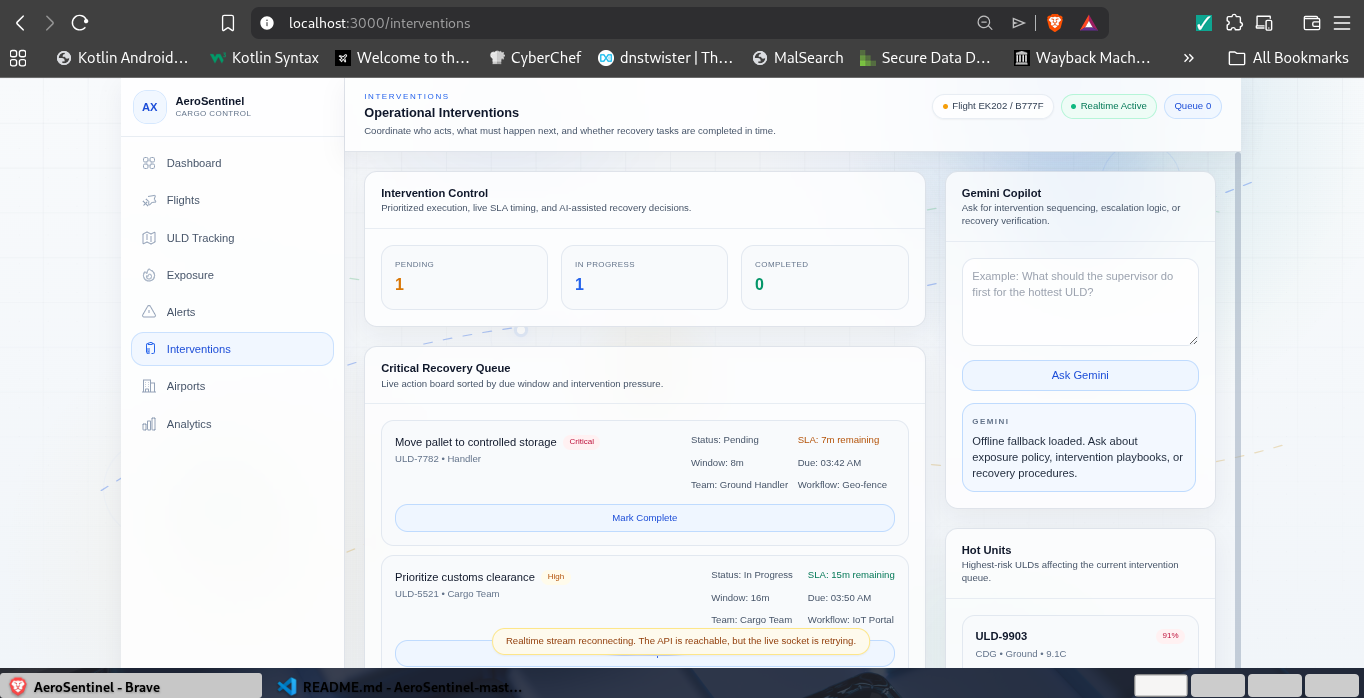
AeroSentinel is a shared cargo operating layer that delivers complete end-to-end visibility and control over temperature-sensitive ULDs. It tracks cumulative exposure across tarmac, ground delays, transfers, and in-flight phases for every ULD. The platform scores predicted breach risk using real-time telemetry, weather data, and operational context. It automatically generates role-based interventions with clear SLA deadlines and full execution tracking. By connecting ground handlers, cargo teams, supervisors, and cool-chain specialists in one shared loop, it maintains a complete audit history of telemetry, interventions, notifications, and drift events. All updates stream in real time to a responsive, tablet-first multi-page operations UI, while Redis operational state is continuously verified against the ONE Record digital twin through a BullMQ reconciliation queue.
How we built it
AeroSentinel is built on a two-layer architecture that balances speed with regulatory compliance.
Layer 1: Real-Time Operational State
Redis serves as the fast source of truth for all operational data. APIs are optimized for low-latency reads, and Socket.IO streams incremental updates directly to the frontend. The UI never queries ONE Record directly — it always reads from the high-performance Redis-backed layer.
Layer 2: ONE Record Digital Twin
This layer implements a NE:ONE-compatible JSON-LD graph-oriented logistics object model. It uses OAuth2 client-credentials authentication with Redis token caching and maintains eventual consistency through asynchronous synchronization and a BullMQ-based reconciliation queue.
End-to-End Data Flow
IoT Sensors → MQTT → Ingestion API → Exposure Engine → Risk Engine → Intervention Engine → Verification Queue → ONE Record Sync → Digital Twin.
- AI Operational Intelligence – Predictive thermal risk scoring, intervention recommendations, and cargo operations copilot
- Webhooks, email, SMS (Twilio), and real-time dashboard notifications
Challenges we ran into
Connecting NE:ONE with the original OneExplorer codebase proved difficult at first. However, this challenge became a valuable learning opportunity as I worked through the integration step by step.
Accomplishments that we're proud of
This was my first Aviation hackathon, and it was an incredibly rewarding experience. I gained deep insights into cold-chain logistics directly from industry experts. I successfully set up 1NeoConnect both locally and in the cloud, enabling me to retrieve real cargo data at scale. I built custom scripts that could fetch thousands of records in seconds and learned how to efficiently query large datasets. I also mastered ontology specifications and delivered a functional system that provides airlines with the critical, actionable information they need to protect temperature-sensitive shipments.
What we learned
I learned how to set up and integrate 1NeoConnect, explored the various IATA specifications used across the airline industry, and gained a practical understanding of airport cargo operations, their workflows, and the real-world challenges they face daily. I also deepened my knowledge of queue systems by integrating BullMQ for reliable background processing and reconciliation.
What's next for AeroSentinel
We plan to integrate additional sensor data that affects ULDs, such as shock and vibration monitoring, and demonstrate real-time communication with Ground Handling Support (GHS) systems. Looking ahead, we aim to partner with airlines to deliver advanced analytics that can help them prevent losses and save billions of dollars through smarter cold-chain management.
Below is the end to end prototype (though unedited) : https://drive.google.com/file/d/1oyL_eTT2e3CNbzGPZQKTQYS4E8RObFLy/view?usp=sharing
Built With
- 1neo-connect
- docker
- node.js
- python
- typescript
- vite



Log in or sign up for Devpost to join the conversation.