-
-
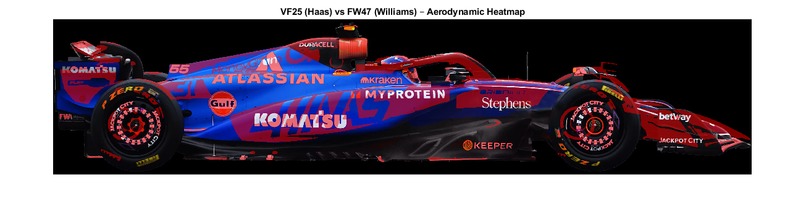
Aerodynamics Difference Between VF25 Vs FW47
-
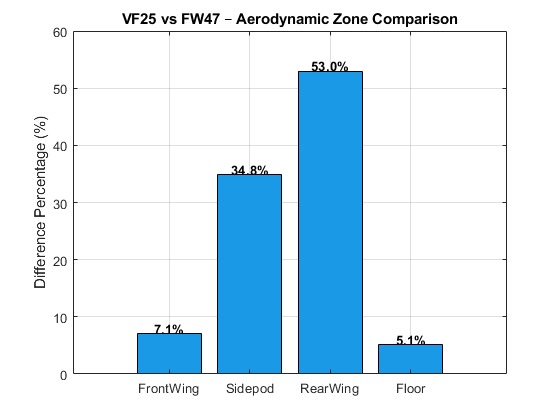
VF25 vs FW47 Aerodynamics Zone Comparision
-
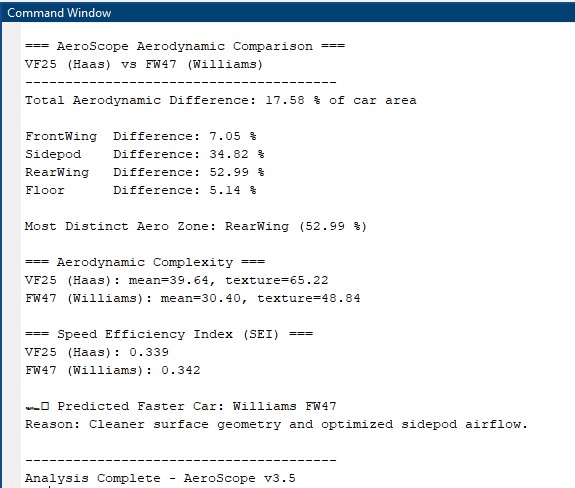
Final Output
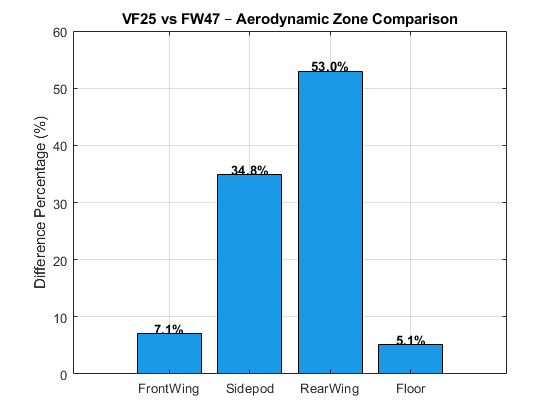
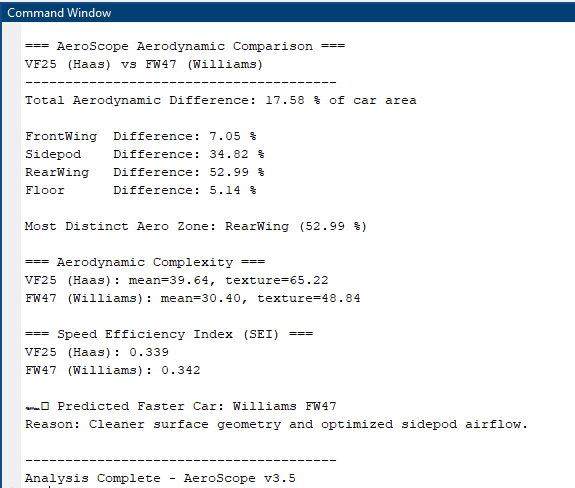
AeroScope was born out of a passion for Formula 1 engineering and curiosity about how teams design their cars differently to chase every millisecond of performance. Watching F1 races, we noticed how even small aerodynamic updates could completely change a car’s speed — and that inspired us to build a tool that could see those differences scientifically.
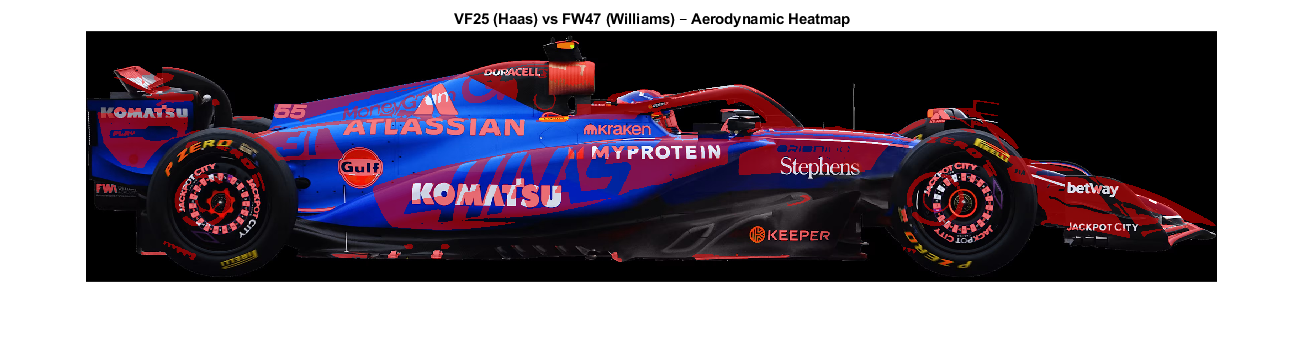
Using MATLAB, we developed AeroScope: a visual intelligence system that compares two F1 cars (like the Haas VF25 and Williams FW47) and identifies aerodynamic design differences using image processing. The system calculates which regions — front wing, sidepod, rear wing, or floor — have the biggest variation, and even predicts which car has a more efficient aerodynamic profile.
How We Built It: We used MATLAB’s image processing toolbox to handle high-resolution side-view car images, filtered out noise, and computed pixel-level differences. Then, we classified those differences into aerodynamic zones and visualized them with heatmaps and bar charts. Finally, we introduced a “Speed Efficiency Index” to estimate which car might perform better aerodynamically.
What We Learned: This project taught us how computer vision and engineering can work together to analyze performance without even touching a wind tunnel. We learned about data normalization, thresholding, and aerodynamic concepts like downforce, drag, and floor effect — and how small visual differences can represent huge performance changes on track.
Challenges Faced: The hardest part was cleaning the image data — shadows, reflections, and tires often caused false differences. We also had to fine-tune the detection threshold so the model focused only on relevant body parts. Balancing accuracy with speed in MATLAB under a strict hackathon time limit was another challenge, but also what made it exciting.
In the end, AeroScope isn’t just a code project — it’s a glimpse into the future of digital motorsport analysis, where AI and engineering meet to make race cars faster, smarter, and more efficient.


Log in or sign up for Devpost to join the conversation.