-
-
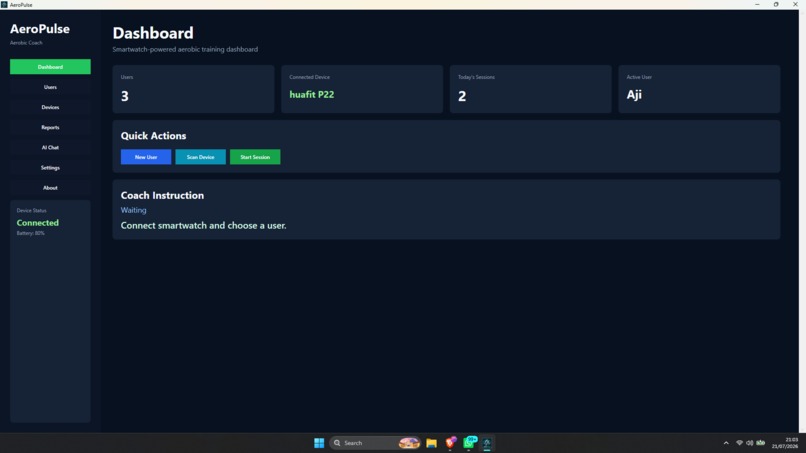
Home Dashboard
-
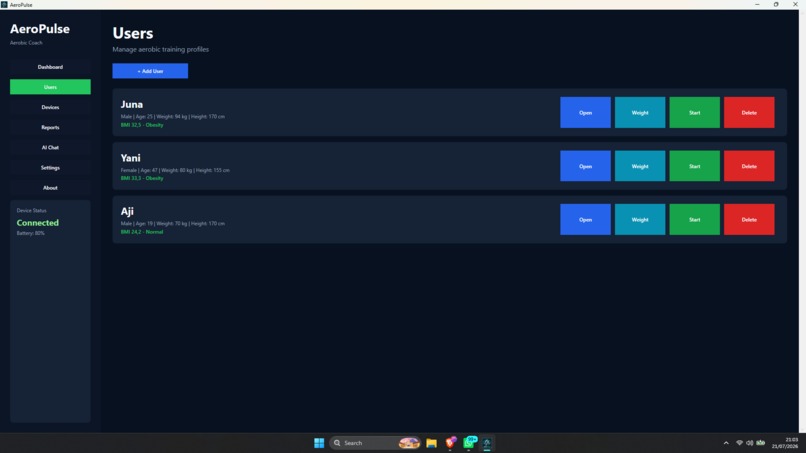
Users
-
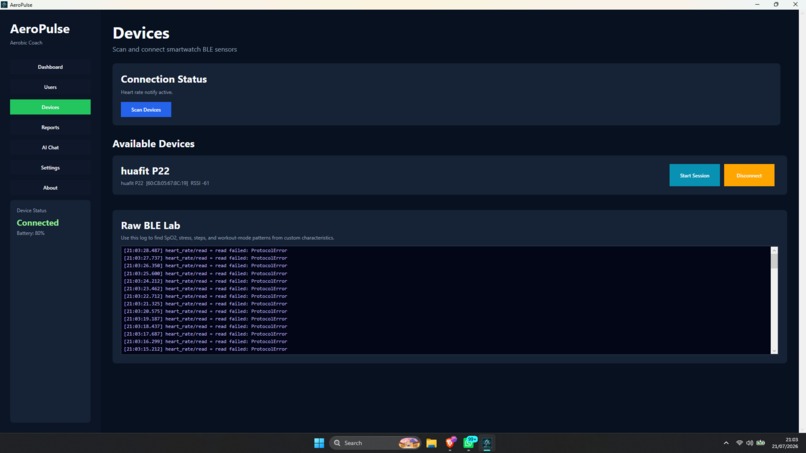
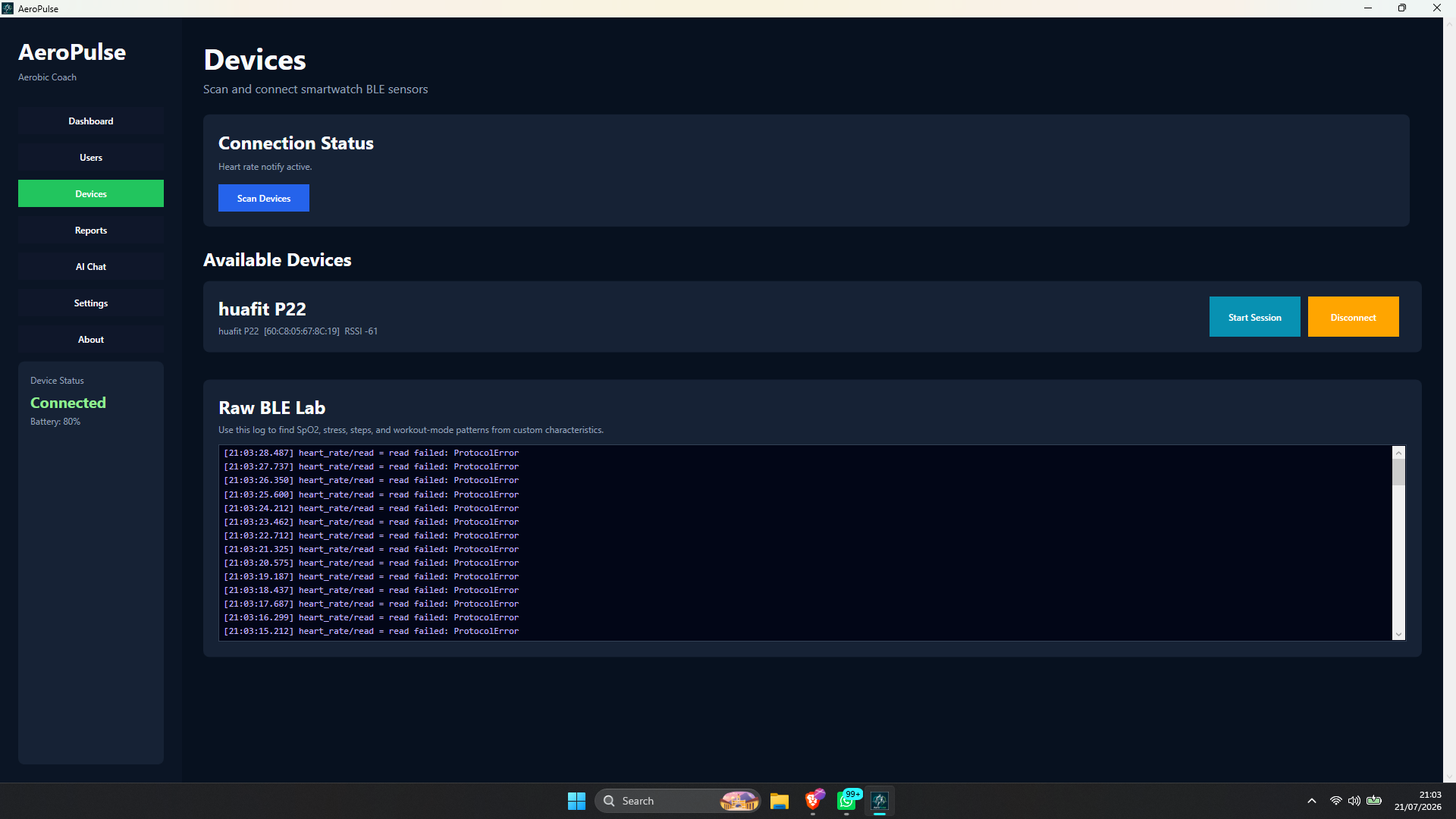
Connect Devices
-
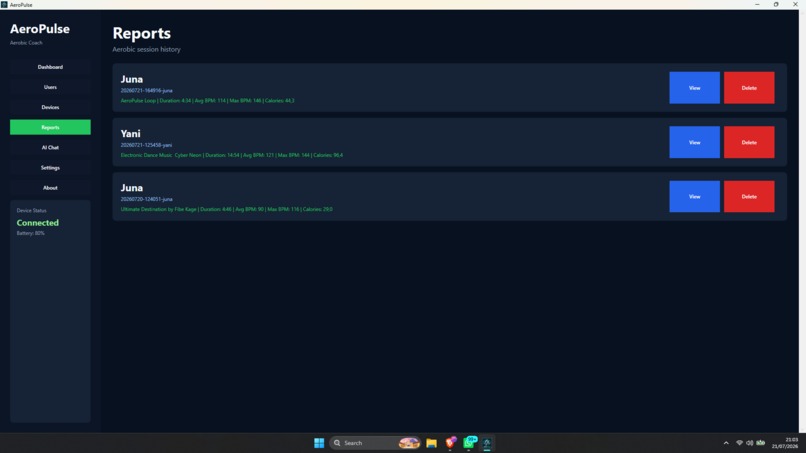
Reports Session
-
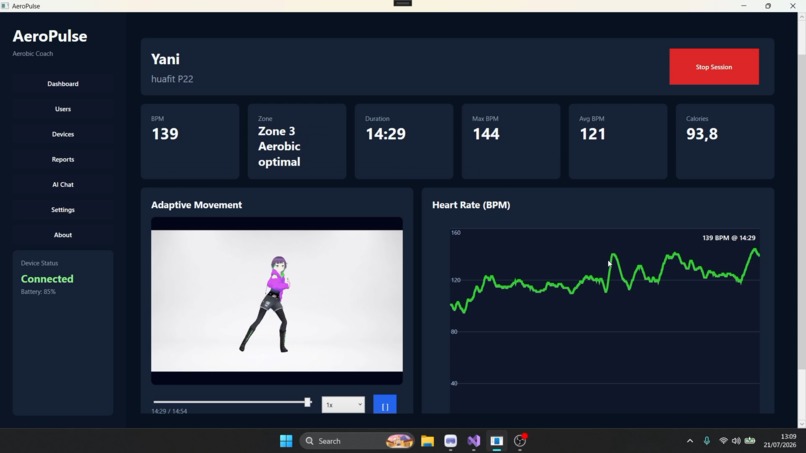
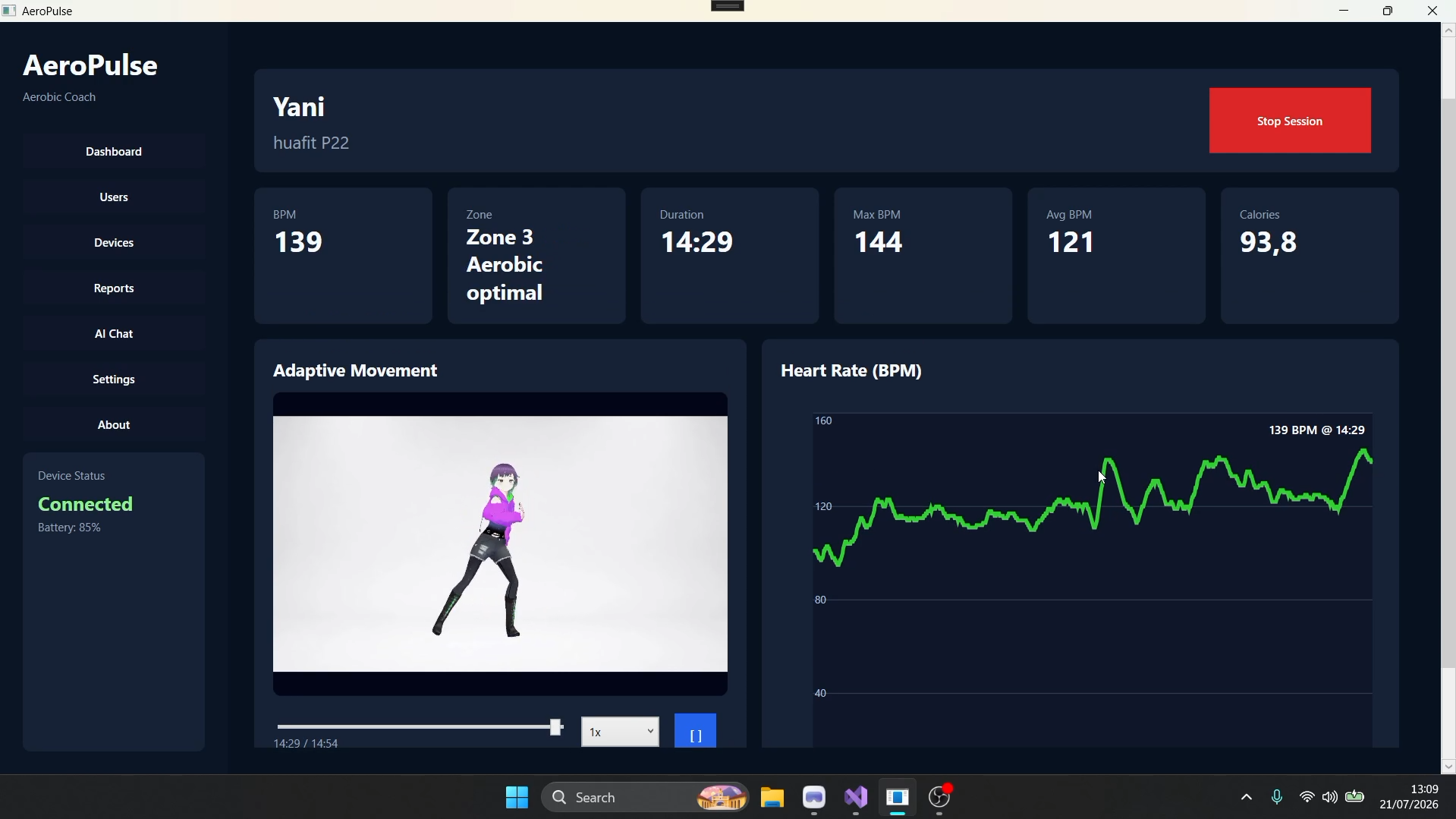
Training Session
-
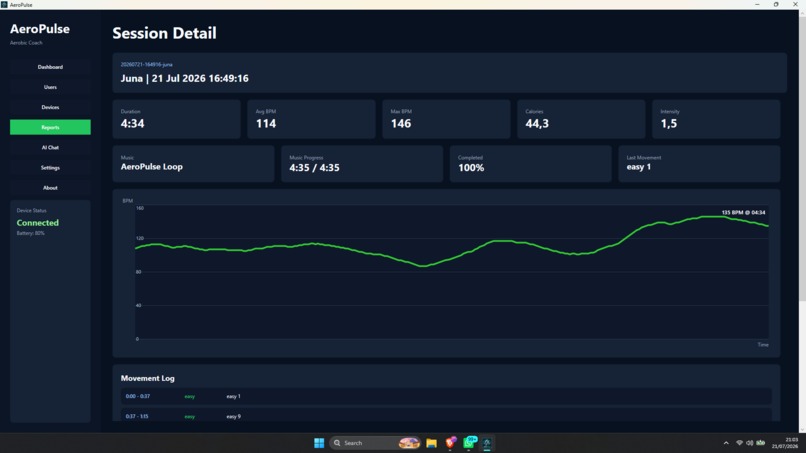
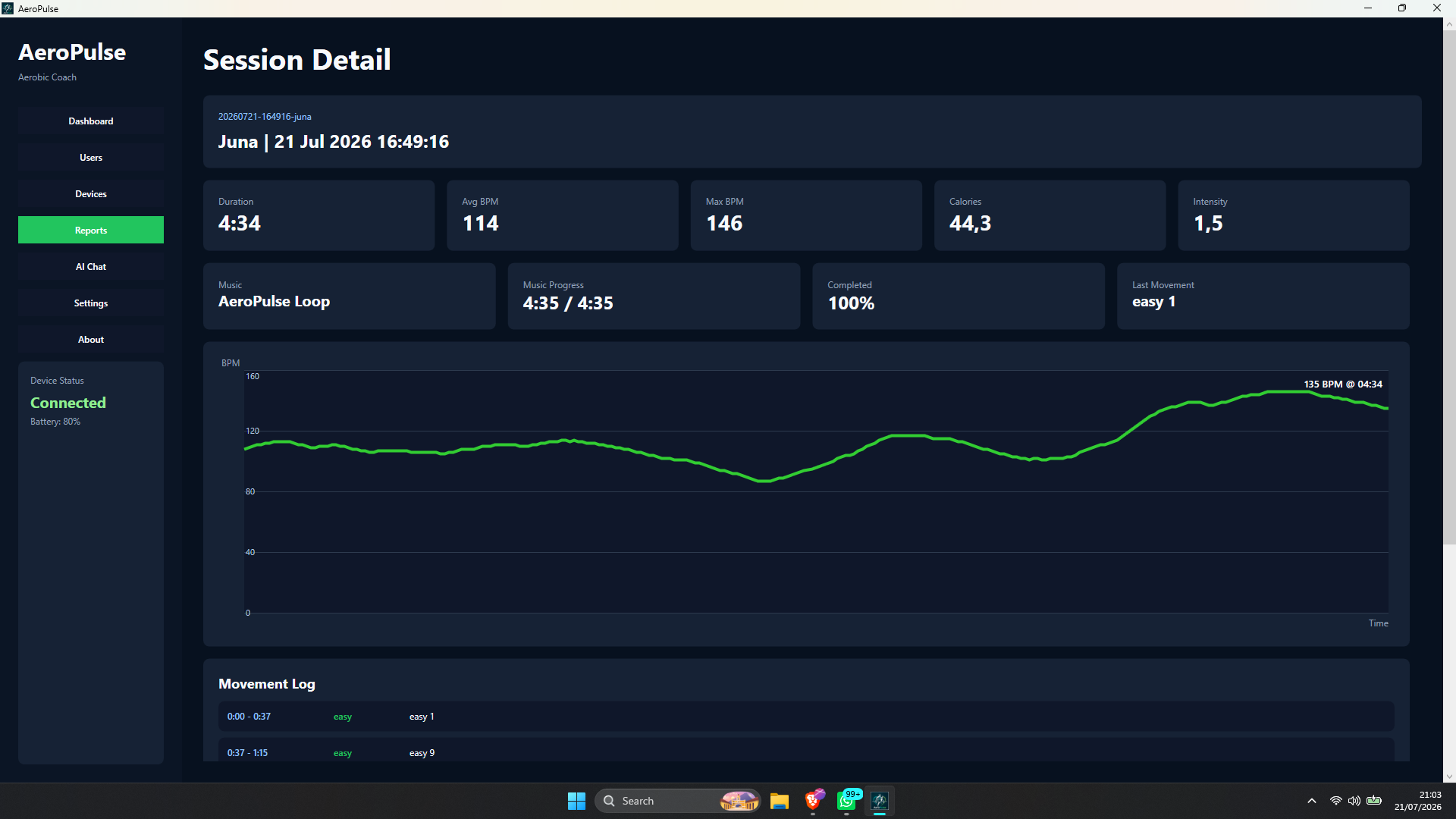
Session Details Reports
-
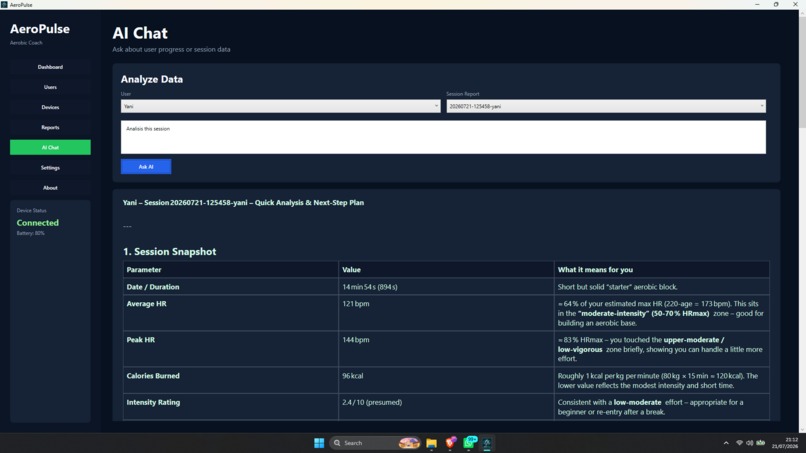
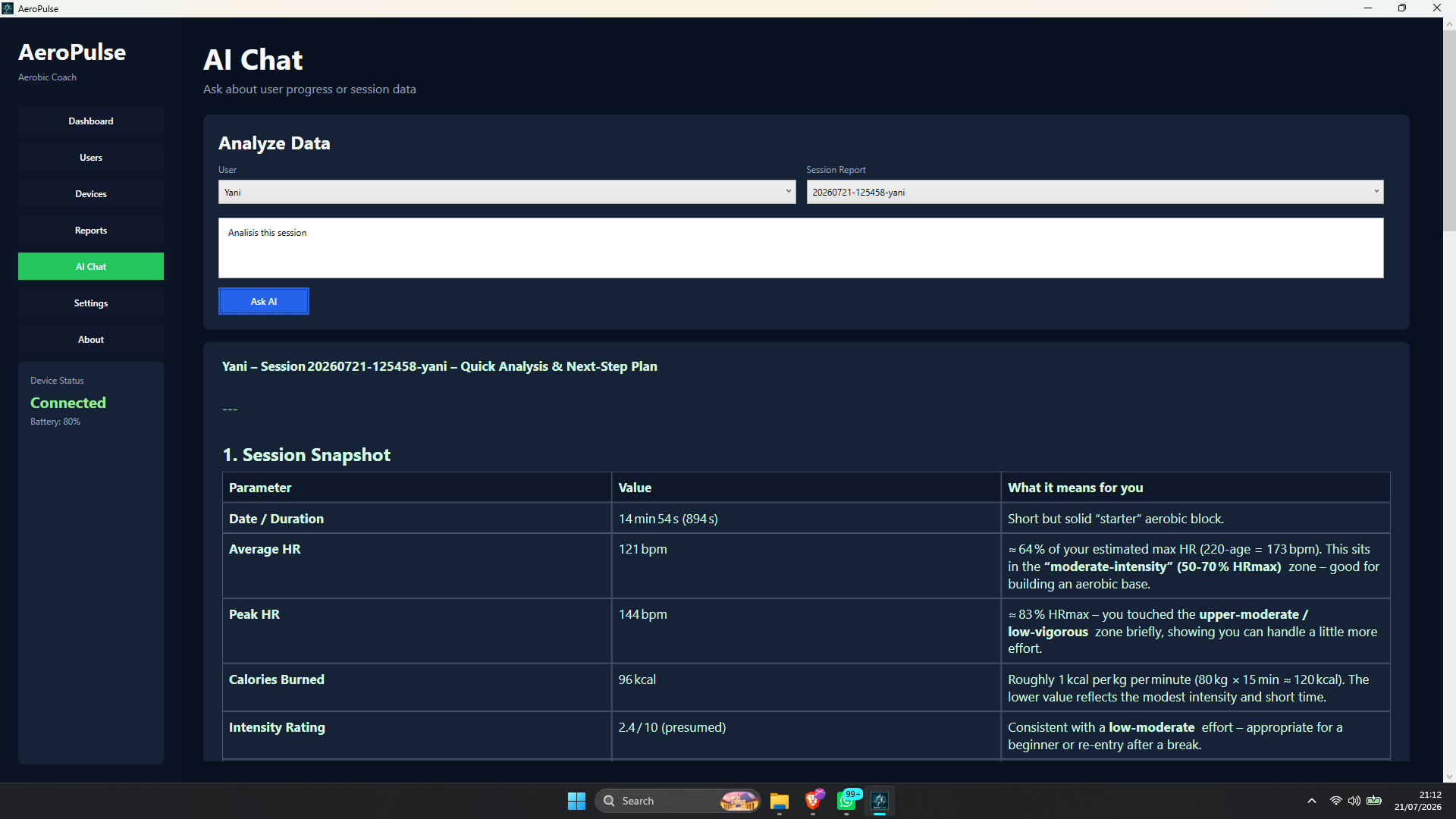
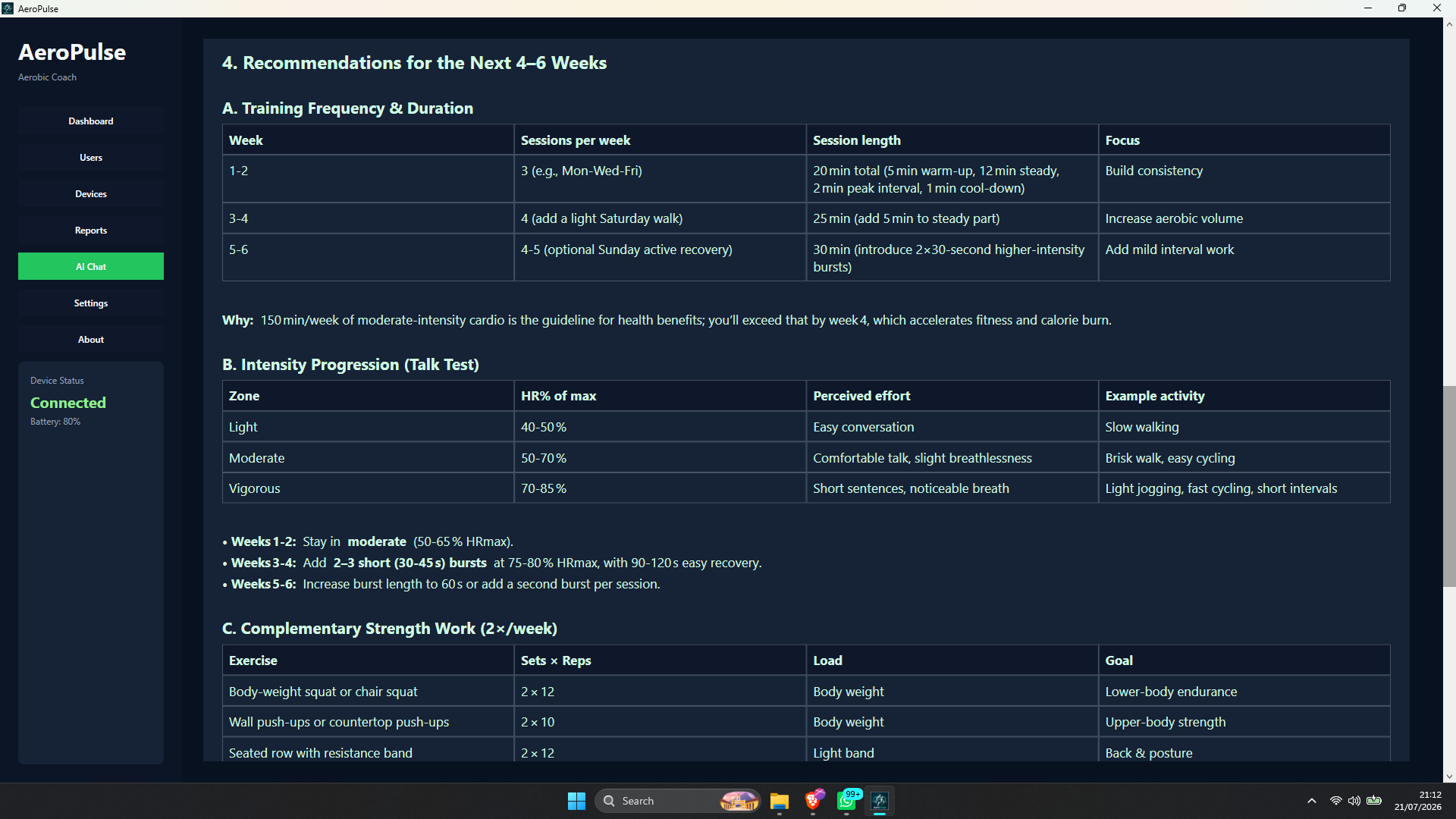
AI Chat 1
-
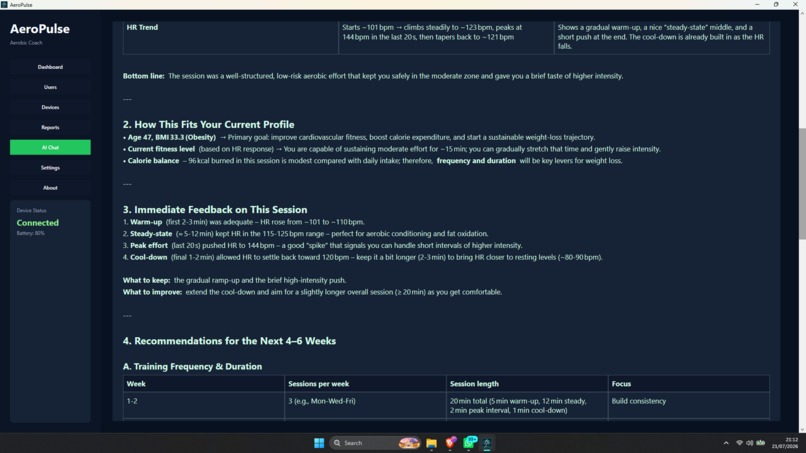
AI Chat 2
-
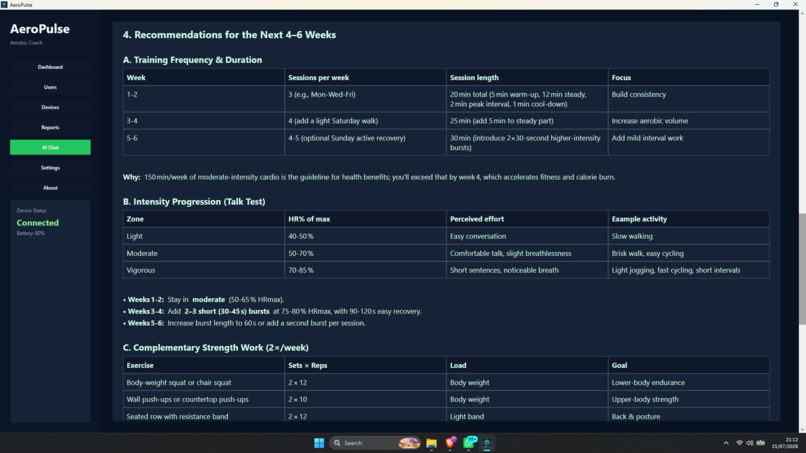
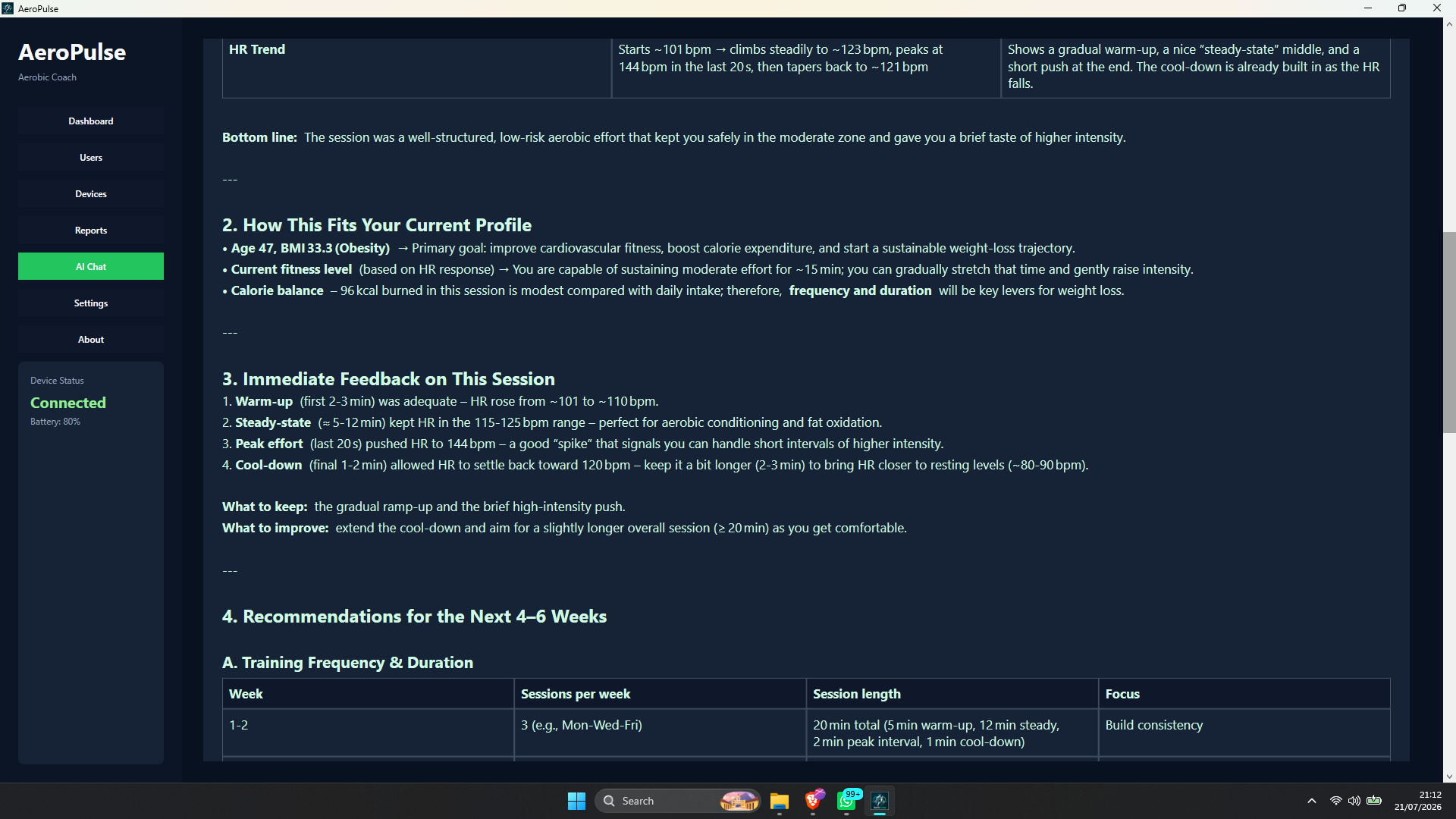
AI Chat 3
-
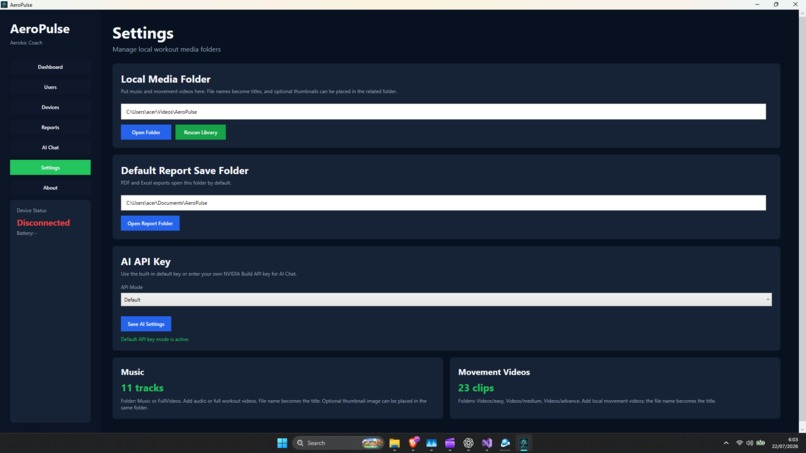
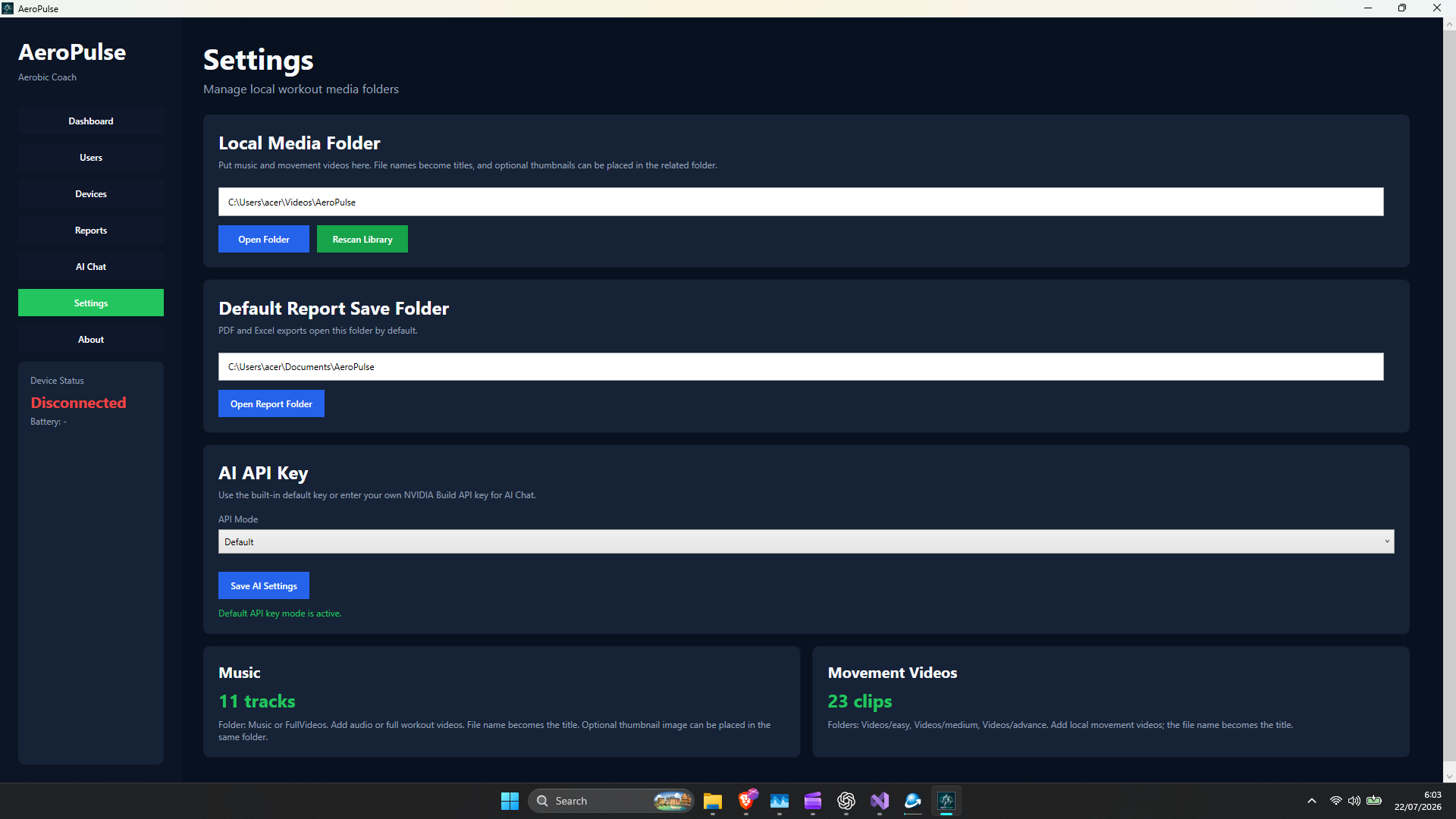
Settings
-
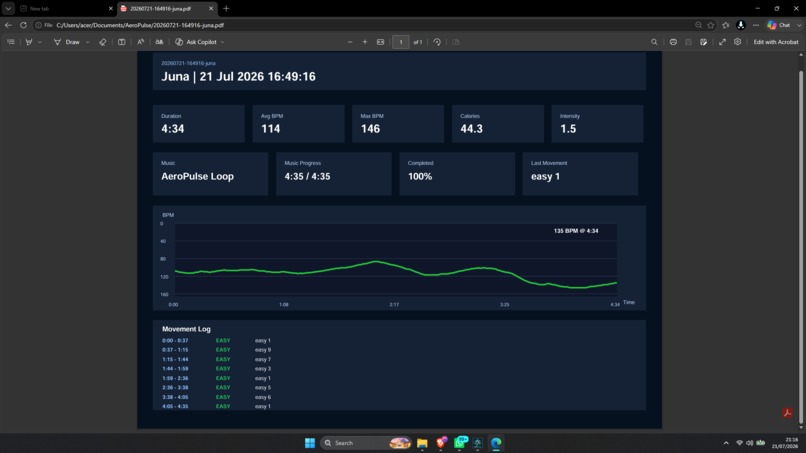
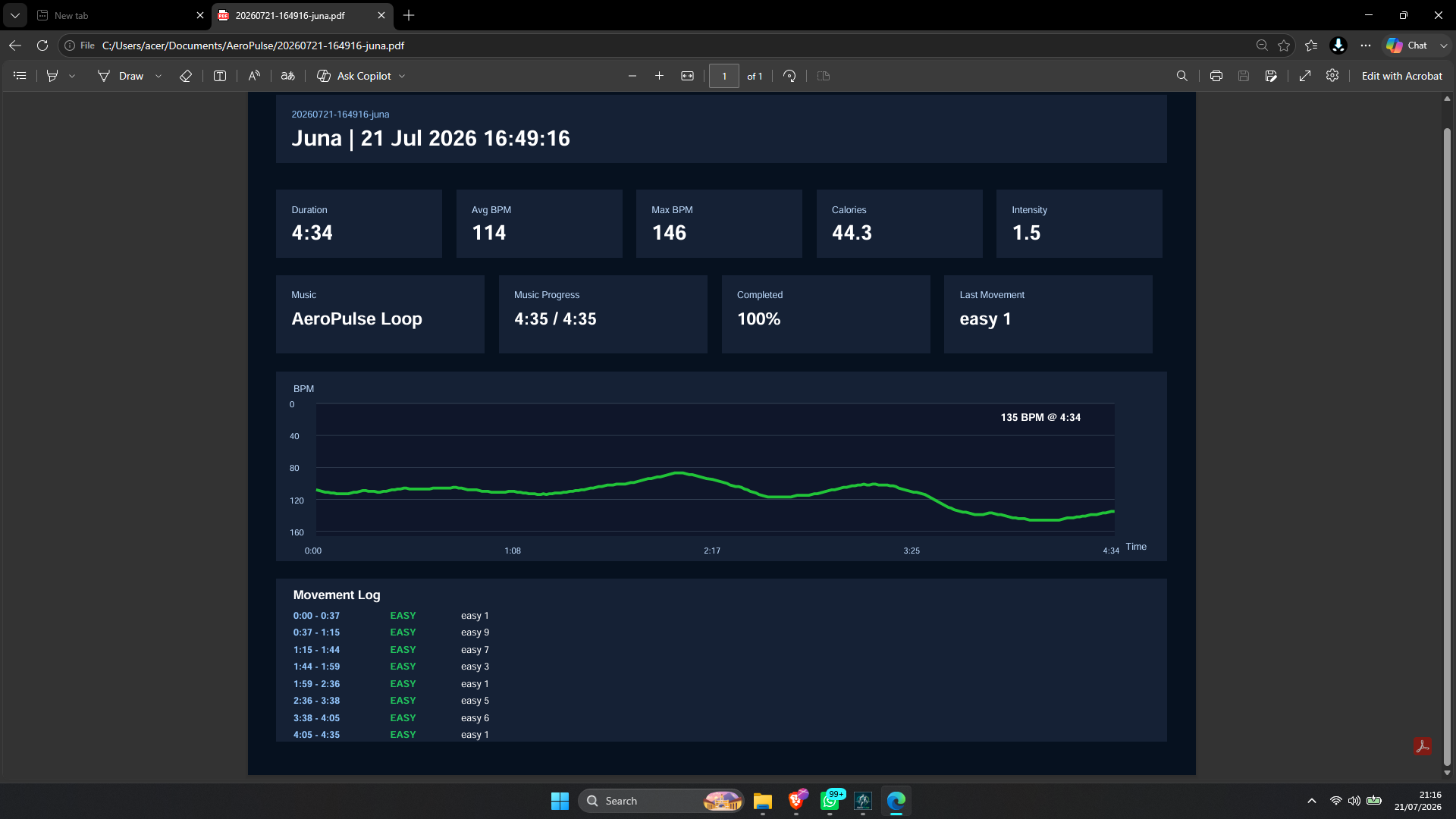
Sample Exported PDF Report
-
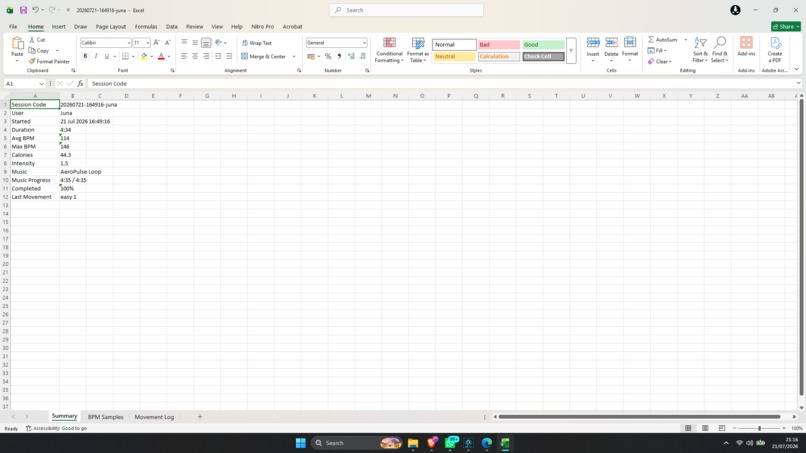
Sample Exported Excel Report - Summary
-
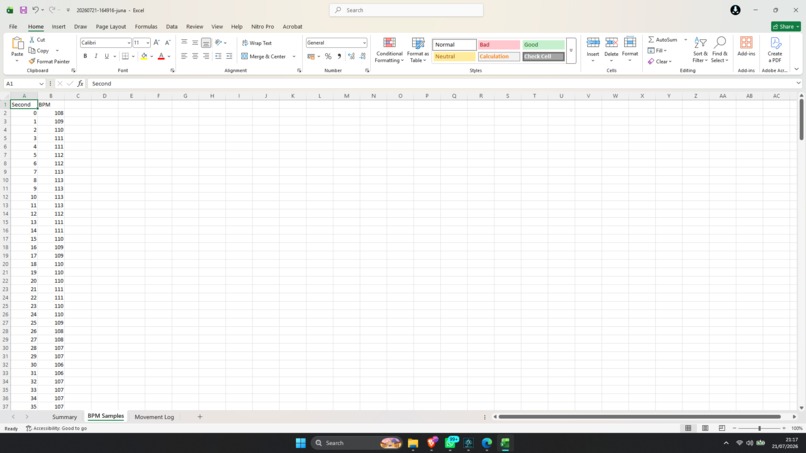
Sample Exported Excel Report - BPM Samples
-
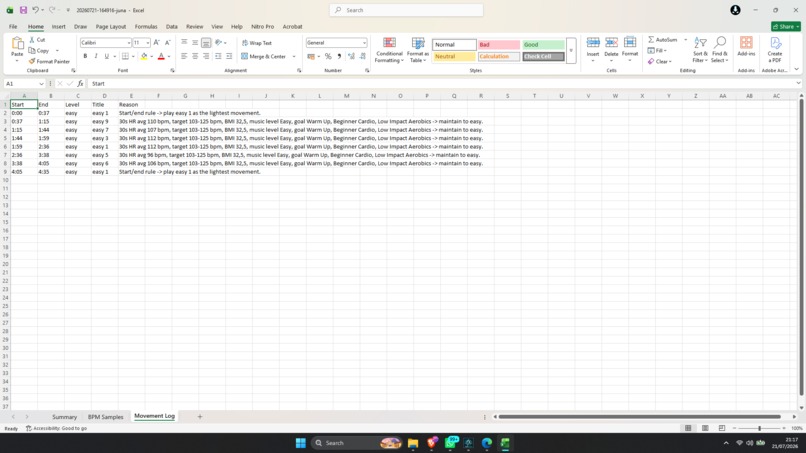
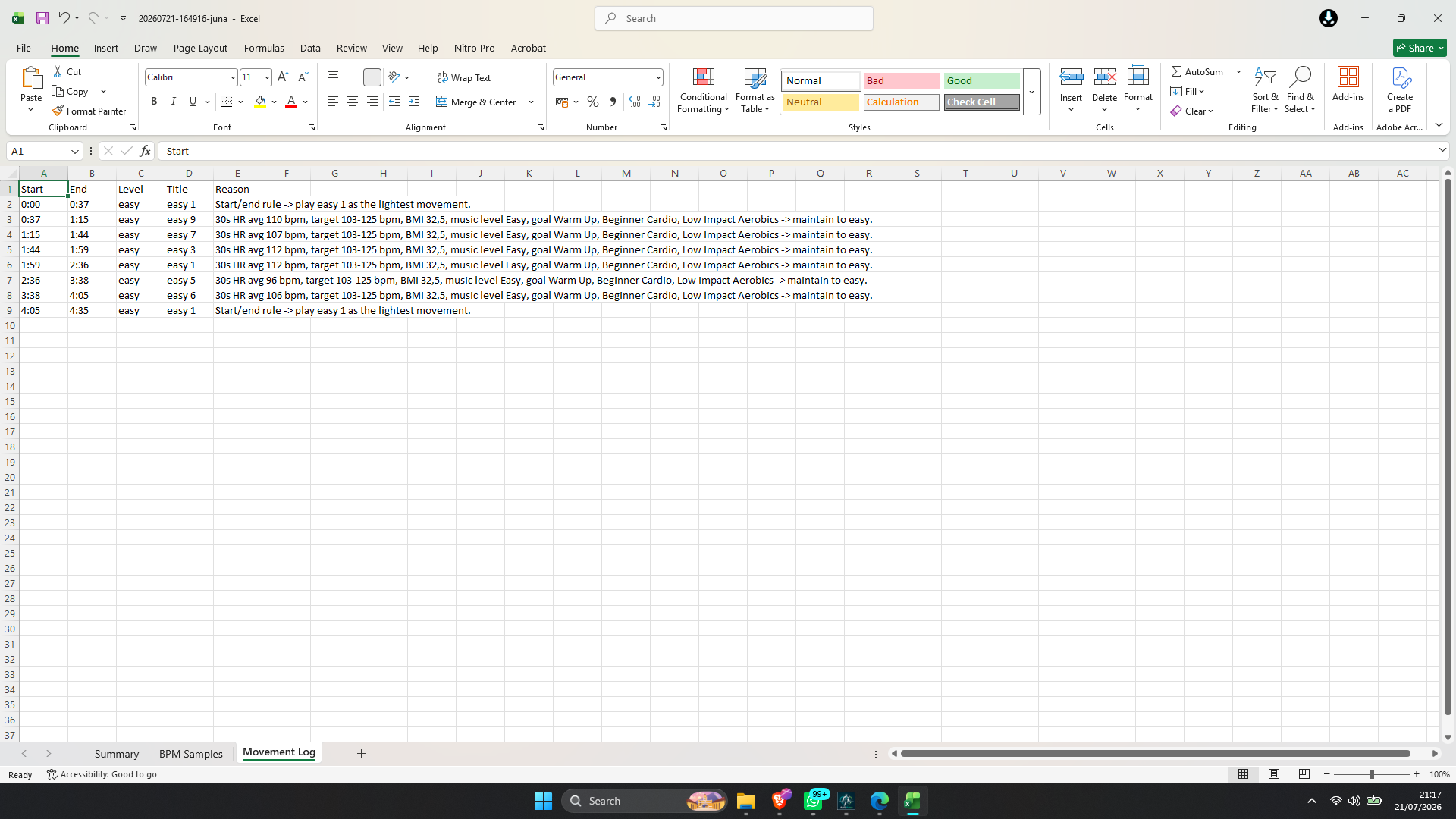
Sample Exported Excel Report - Movement Log
-
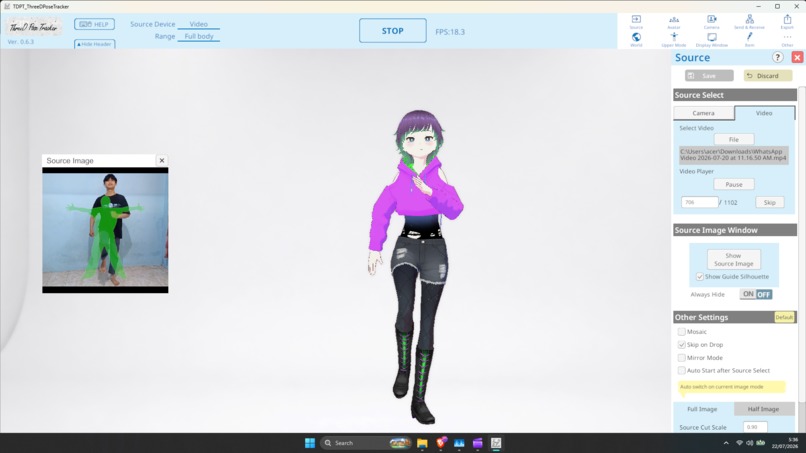
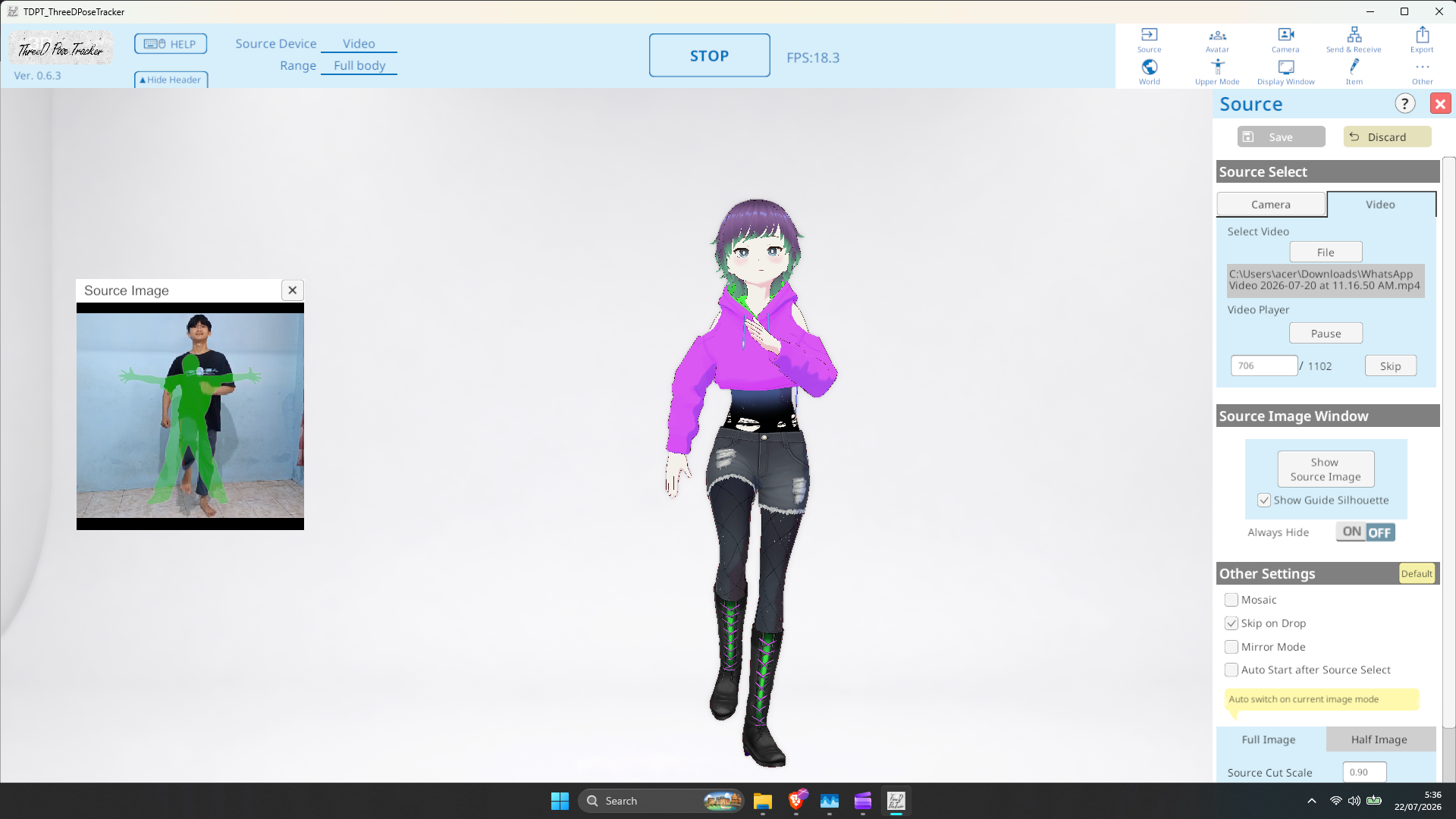
Human Motion 3D Capture from Video





Inspiration
AeroPulse was born from a personal experience that is very close to my heart.
In 2020, my mother suffered an accident after slipping in the bathroom, which resulted in nerve-related health problems. For nearly three years, she regularly visited the doctor and underwent treatment until her condition gradually improved. However, the symptoms occasionally returned, requiring follow-up medical checkups. During every visit, her doctor consistently emphasized that, in addition to maintaining a healthy diet, regular physical activity such as aerobic exercise was one of the best ways to support her recovery and maintain her overall health. Unfortunately, following that advice was not always easy.
My mother actually enjoys aerobic exercise. She used to join community exercise sessions with her friends, but over time those activities became less frequent—sometimes only once a month, and occasionally skipped altogether because no one was available to join or remind her. As a result, what should have been a consistent healthy habit became increasingly irregular.
As I looked into this issue more deeply, I realized that my mother's situation was far from unique.
According to the Indonesian Ministry of Health's Free Health Check Program (Cek Kesehatan Gratis) at the end of 2025, approximately 3.4 million adults were categorized as having insufficient physical activity. The Ministry of Health also recommends that people spend at least 30 minutes each day engaging in physical activity, as this simple habit can provide significant long-term health benefits.
When I joined this hackathon, I wanted to build something that could genuinely make a difference for the people around me. Naturally, I started by solving a problem that I witnessed every day at home.
At first, my goal was simply to create an application that would allow my mother to exercise independently at home without having to wait for community workout sessions. However, the more I explored the problem, the more I realized that millions of people face the same challenge.
Most aerobic workout applications today rely on static exercise videos that provide the exact same experience for everyone. In reality, every person has different physical conditions, fitness levels, ages, workout goals, and heart-rate responses. As a result, many people exercise without knowing whether they are training within a safe heart-rate zone or unintentionally pushing themselves beyond healthy limits.
That led me to ask a simple question:
What if an aerobic workout application could understand each user's body in real time and adapt the workout like a personal fitness coach?
That idea eventually evolved into AeroPulse, an AI-powered desktop aerobic coaching application that combines live heart-rate monitoring through a smartwatch, adaptive workout guidance, comprehensive workout reports, and AI-driven fitness analysis. By continuously understanding each user's physical condition, AeroPulse can personalize every workout session, making exercise safer, more effective, and far less repetitive.
AeroPulse also includes an AI Fitness Assistant that acts as a personal fitness companion. Users can ask questions about their workout progress, receive personalized evaluations based on their exercise history, get recommendations for appropriate workout intensity, and obtain practical advice for maintaining a healthier daily lifestyle. Whether it's improving eating habits, building consistent exercise routines, or making healthier everyday choices, the AI Assistant helps users not only during workouts but also throughout their long-term health journey.
Some people may think that my reason for building AeroPulse is too personal because it all started with my desire to help my mother. However, I truly believe there are many people who share similar goals—to become healthier, improve their fitness, lose weight, recover from physical conditions, or simply exercise more safely according to their own body's needs.
That's why AeroPulse is not built just for my mother. I want it to be accessible to everyone, regardless of age, body weight, fitness level, or background. My hope is simple: if AeroPulse can help more people become physically active, exercise safely, and build healthier lifestyles, then the purpose behind creating this application will have been fulfilled.
Adaptive Fitness Starts with Your Heart.
What it does
AeroPulse transforms conventional aerobic exercise into a personalized fitness experience.
The app connects to a smartwatch via Bluetooth Low Energy (BLE) and continuously monitors the user's heart rate during workout sessions. Instead of following a fixed sequence of movements, AeroPulse adjusts its exercise recommendations based on real-time heart rate data, BMI, workout progress, and the user's fitness goals.
How Adaptive Coaching Works
Unlike traditional workout applications that always play the same exercise sequence, AeroPulse continuously analyzes several factors throughout the workout, including:
- Current heart rate
- Heart rate percentage relative to the user's maximum heart rate
- Body Mass Index (BMI)
- Selected workout goal
- Session progress (warm-up, main workout, cooldown)
These values are processed by AeroPulse's rule-based adaptive engine to determine whether the next movement should be Easy, Medium, or Advanced. The system then automatically selects the next exercise video from the local library while avoiding immediate repetition, creating a workout experience that feels dynamic and personalized.
For a detailed explanation of the adaptive algorithm, formulas, and decision rules, please see the Appendix below.
Key Features
- Real-Time Heart Rate Monitoring using Bluetooth Low Energy (BLE)
- AI-Powered Fitness Analysis with personalized workout recommendations
- Adaptive Aerobic Coaching based on real-time heart rate, BMI, and workout progress
- Workout History & Performance Analytics with interactive BPM graphs
- Export Workout Reports to PDF and Excel
- Share Workout Reports instantly via Email or WhatsApp
- Multi-User Profile Management with automatic BMI calculation
- Offline Workout Media Library with locally stored exercise videos and music
- AI Fitness Assistant for workout analysis, progress evaluation, and healthy lifestyle guidance
Unlike many fitness applications that rely on online streaming, AeroPulse uses locally stored workout videos and music, allowing users to exercise even without an internet connection. Internet access is only required when using the AI assistant.
How we built it
AeroPulse was developed as a native Windows desktop application using:
- C#
- WPF
- .NET 8
- Windows Bluetooth Low Energy APIs
- Local JSON storage
- OpenAI-compatible API
- PDF & Excel export generation
The application communicates with Bluetooth Low Energy smartwatches through the standard BLE Heart Rate Service, enabling real-time heart-rate monitoring during workouts.
The system consists of several integrated modules:
- User Profile Management
- BMI Calculator
- Device Manager
- Adaptive Workout Engine
- Real-Time BPM Monitoring
- Workout Reports
- AI Fitness Chat
- Local Media Library
To provide intelligent recommendations, AeroPulse integrates an OpenAI-compatible API that analyzes workout history and generates personalized fitness suggestions based on each user's performance.
Challenges we ran into
One of the biggest challenges was integrating Bluetooth Low Energy wearable devices.
Although the BLE Heart Rate Service is standardized, many commercial smartwatches do not expose this service publicly. Instead, they use proprietary BLE protocols or vendor-specific APIs that are undocumented or inaccessible to third-party developers.
During development, we tested multiple smartwatch models, but many restricted access to real-time heart-rate data. To ensure a stable and reliable experience within the hackathon timeframe, the current version officially supports the Huafit P22, which exposes the standard BLE Heart Rate Service required by AeroPulse.
Additional challenges included:
- Building a reliable BLE connection manager
- Filtering invalid heart-rate readings
- Designing an adaptive workout engine based on live BPM
- Generating dynamic PDF reports with scalable layouts
- Keeping API keys secure while preparing public releases
- Create a feature to send reports via email and WhatsApp
Accomplishments that we're proud of
We are proud that AeroPulse became much more than a simple workout application.
Some of our biggest accomplishments include:
- Real-time Bluetooth Low Energy heart-rate monitoring
- AI-powered fitness assistant for workout analysis
- Adaptive aerobic coaching driven by live heart-rate data
- Detailed PDF and Excel workout reports
- Fully offline workout experience using local media
- Multi-user profile management
- Successful integration with the Huafit P22 smartwatch
- Secure API key management for public GitHub releases
- Send reports via email and WhatsApp
Most importantly, we demonstrated how AI and wearable technology can work together to create a safer, smarter, and more personalized fitness experience.
What we learned
Building AeroPulse taught us that creating an AI-powered health application involves much more than integrating an AI model.
We gained hands-on experience in:
- Bluetooth Low Energy communication
- Desktop application development full using Codex
- Real-time data visualization
- Optimizing artificial intelligence for application development and bug fixing
- AI integration using OpenAI-compatible APIs
- Report generation and document automation
We also learned that interoperability remains one of the biggest challenges in the wearable ecosystem, as many manufacturers rely on proprietary communication protocols instead of open BLE standards.
What's next for AeroPulse
This hackathon version officially supports the Huafit P22 smartwatch, chosen because it provides access to the standard BLE Heart Rate Service required for reliable monitoring.
In future versions, we plan to expand AeroPulse into a complete AI-powered fitness platform by adding:
- Support for additional smartwatch brands and wearable devices
- Integration with proprietary BLE protocols when possible
- Support for official wearable SDKs and APIs
- Android and iOS companion applications
- Cloud synchronization across devices
- AI-generated personalized workout plans
- Nutrition planning and healthy lifestyle recommendations
- Long-term fitness analytics
- Multi-language support
- Support for additional exercise categories beyond aerobic workouts
Our long-term vision is to make AeroPulse compatible with a wide range of wearable devices, allowing more people to benefit from intelligent, heart-rate-driven fitness coaching.
Adaptive Fitness Starts with Your Heart.
Appendix: Adaptive Exercise Formula
AeroPulse uses a rule-based adaptive exercise model to recommend the next movement intensity during a workout. The system considers the user's age, BMI, heart-rate response, workout goal, and session progress.
1. Maximum Heart Rate
The estimated maximum heart rate is calculated using the Tanaka formula:
$$ HR_{max} = 208 - (0.7 \times age) $$
2. Heart Rate Percentage
The current workout intensity is estimated from the average heart rate:
$$ HR\% = \frac{HR_{avg}}{HR_{max}} \times 100 $$
3. Body Mass Index
BMI is calculated using body weight and height:
$$ BMI = \frac{weight_{kg}}{(height_{m})^2} $$
4. Adaptive Score
The application calculates an adaptive score to decide whether the next movement should be easy, medium, or advanced:
$$ AdaptiveScore = (0.55 \times HRFactor) + (0.20 \times BMIFactor) + (0.15 \times GoalFactor) + (0.10 \times ProgressFactor) $$
5. Decision Rule
$$ \begin{aligned} AdaptiveScore &\geq 0.5 \rightarrow Advanced \ 0.0 \leq AdaptiveScore &< 0.5 \rightarrow Medium \ AdaptiveScore &< 0.0 \rightarrow Easy \end{aligned} $$
Factor Interpretation
- (HRFactor) represents whether the user's heart rate is below, inside, or above the target aerobic zone.
- (BMIFactor) adjusts intensity based on BMI category.
- (GoalFactor) adjusts movement intensity based on the selected workout goal.
- (ProgressFactor) reduces intensity during warm-up and cooldown periods.
Simplified Workflow
User profile + live BPM + music/session progress
↓
Calculate HRmax, HR%, BMI
↓
Calculate AdaptiveScore
↓
Choose Easy / Medium / Advanced movement
↓
Pick a local movement video without immediate repetition
Built With
- .net8
- c#
- chatgpt
- codex
- json
- visual-studio
- wpf


Log in or sign up for Devpost to join the conversation.