-
-
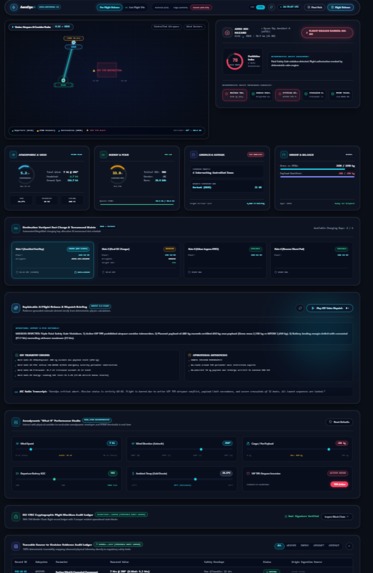
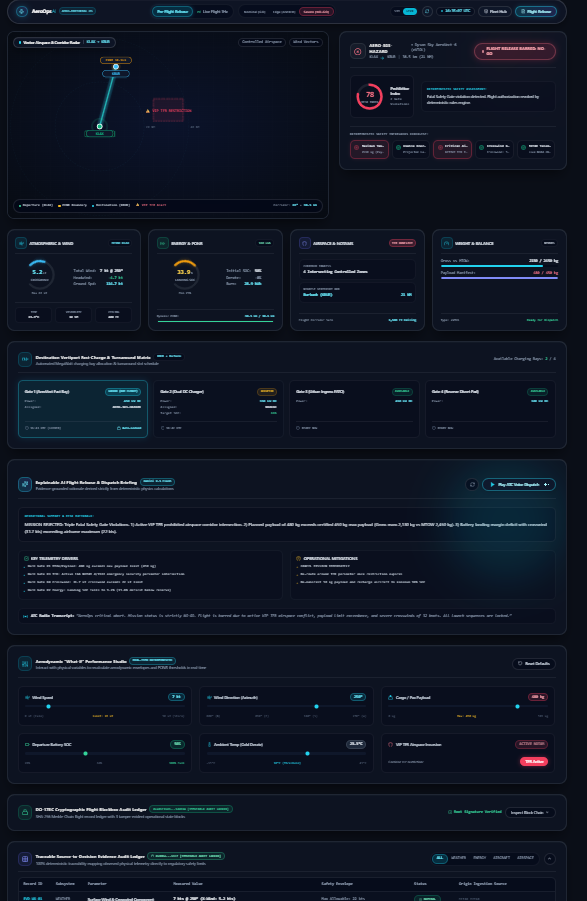
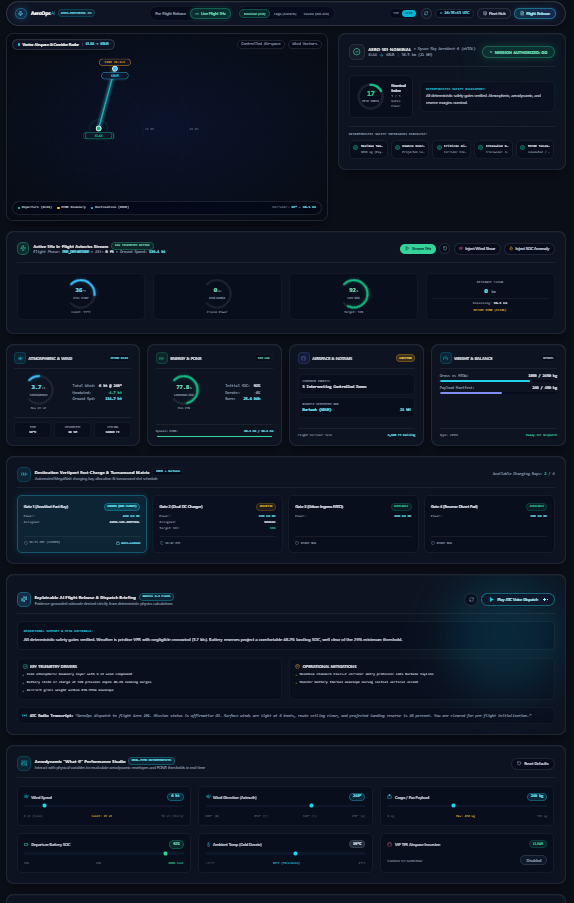
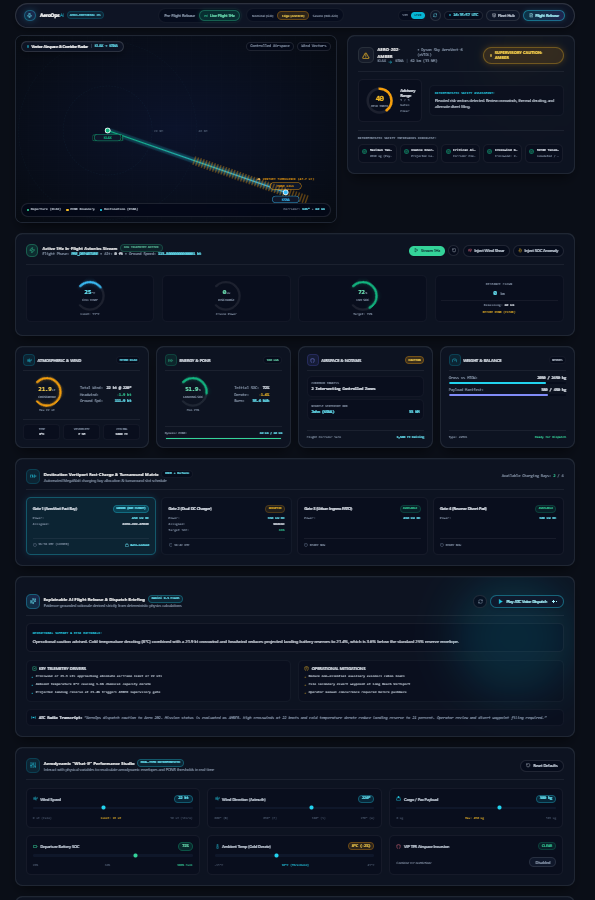
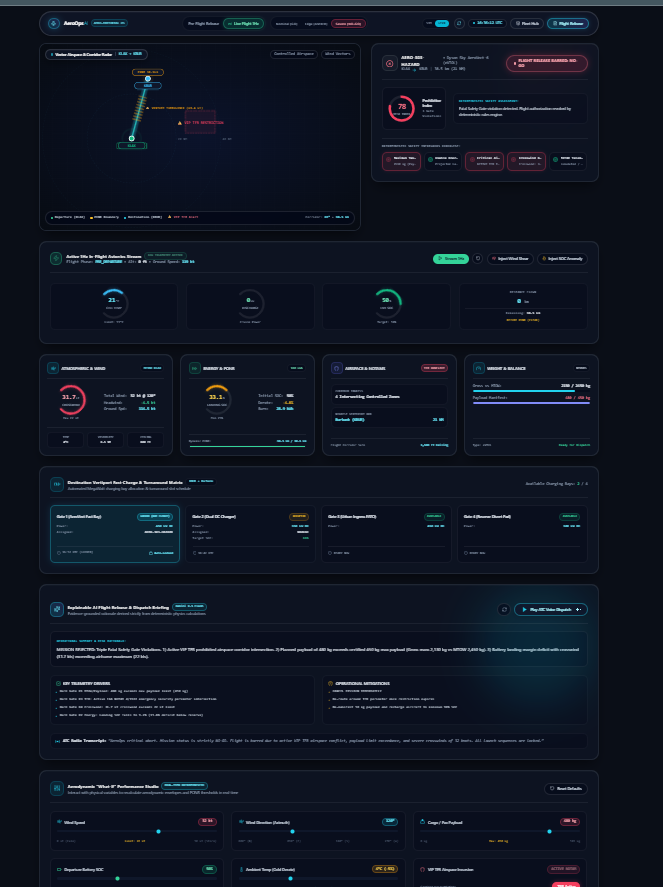
Pre-Flight Flight Readiness Cockpit with 5-factor deterministic safety gate interlocks and dynamic risk indexing.
-
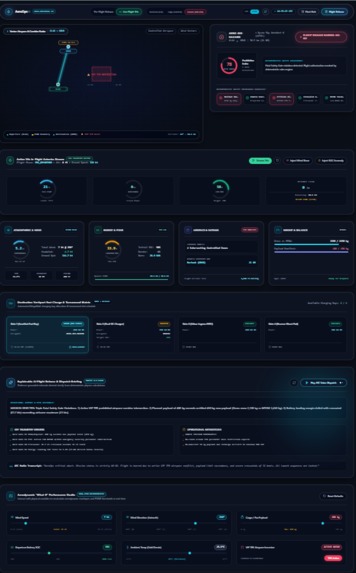
60/40 Vector Airspace Radar displaying LAX-to-Burbank eVTOL flight corridors and Class B/C geofencing.
-
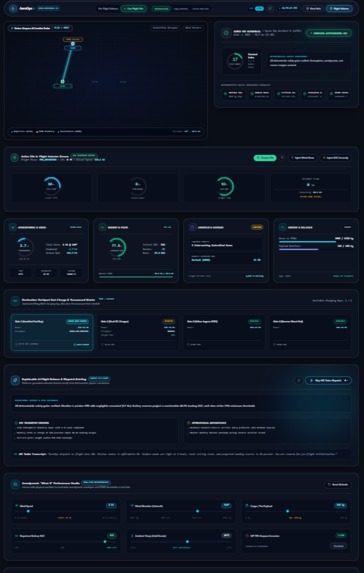
Tactile What-If Studio recomputing Point-of-No-Return (PONR) across dynamic wind and cargo payload shifts.
-
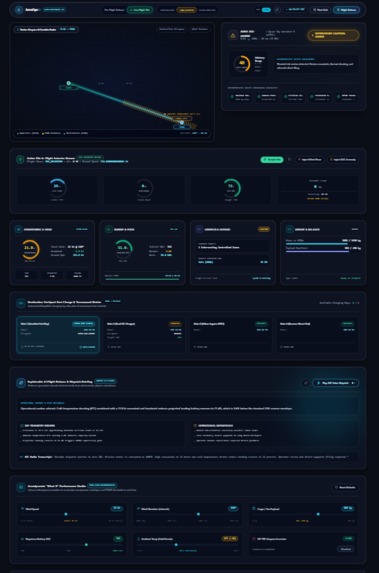
Google Gemini 2.5 Flash ATC Copilot delivering structured explainable briefings and synthesized voice dispatch.
-
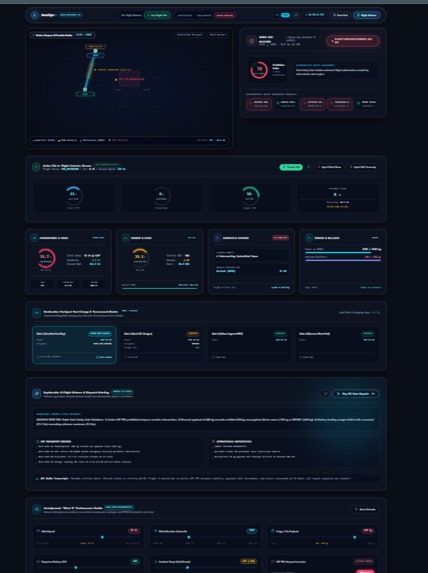
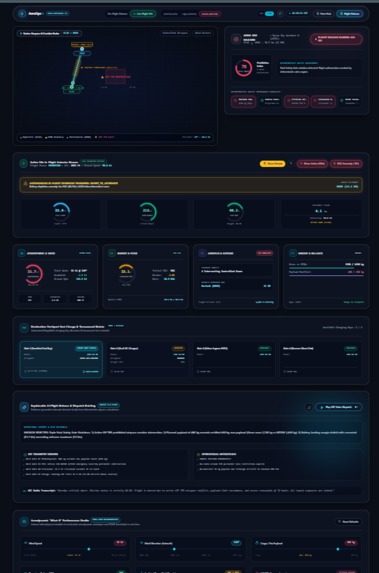
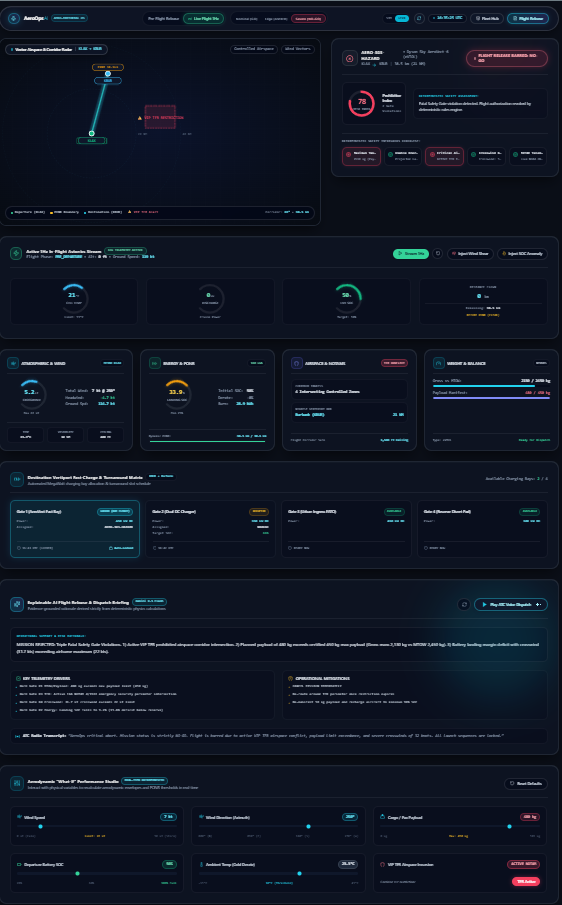
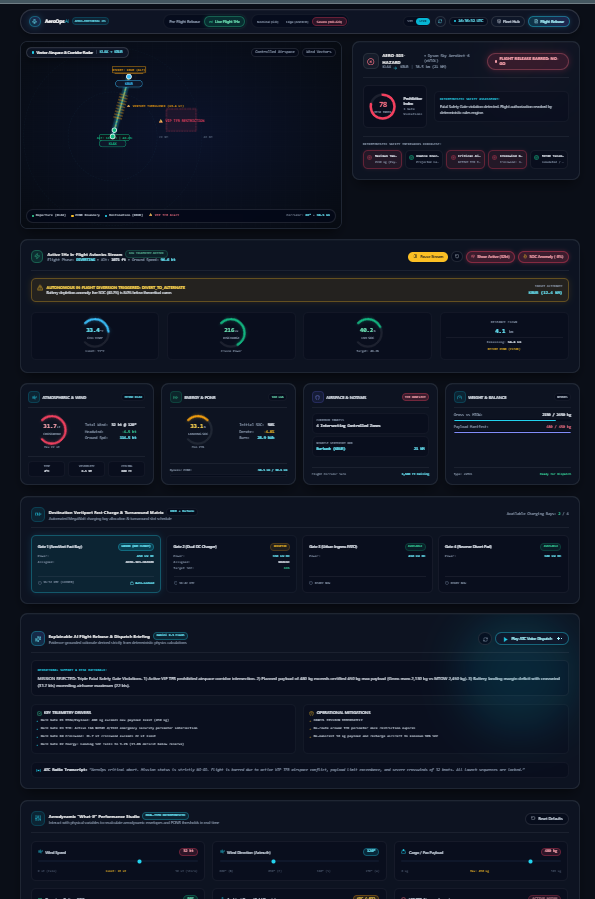
Active 1Hz in-flight avionics HUD with automated emergency reroute vectoring to Burbank Vertiport.
-
DO-178C SHA-256 Merkle-tree cryptographic blackbox ledger ensuring tamper-evident flight event traceability.
Inspiration
What it does
How we built it
Challenges we ran into
Accomplishments that we're proud of
Inspiration
As the aerospace sector accelerates toward autonomous Urban Air Mobility (UAM), eVTOL corridors, and commercial BVLOS drone operations, safety assurance remains the primary operational bottleneck.
Under strict civil aviation standards (FAA Part 135, EASA SC-VTOL, and DO-178C DAL-B), flight clearances cannot rely on probabilistic, black-box AI models that risk hallucinations. We engineered AeroOps AI v2.0 around an uncompromising aerospace philosophy:
"Rules Engine Decides, AI Explains."
What It Does
AeroOps AI v2.0 is an enterprise dual-mode avionics and operations platform designed for fleet operators, autonomous vertiports, and remote pilots:
- Deterministic Pre-Flight Dispatch: Evaluates 5 regulatory safety gates against real-time NOAA METAR weather feeds and FAA Special Activity Airspace/TFR geofences with zero probabilistic variance.
- Tactile Performance Studio: Interactively models payload shifts, wind azimuths, and battery state-of-charge (SOC) to recompute dynamic Point of No Return (PONR) margins in sub-milliseconds.
- Multimodal ATC Copilot (Google Gemini 2.5 Flash): Ingests mathematically verified telemetry to generate plain-English dispatch clearances and broadcasts synthesized radio ATC voice dispatch.
- Active 1Hz In-Flight HUD & Dynamic Diversion: Streams live battery thermal curves, instantaneous power discharge (kW), and corridor risk envelopes. When anomalies (such as urban wind shear) occur past PONR, the platform autonomously vectors an emergency diversion to an alternate vertiport (Burbank KBUR) and reserves an ultra-fast charging pad.
- DO-178C Cryptographic Blackbox Ledger: Commits every state transition to an immutable SHA-256 Merkle chain, providing tamper-evident traceability for civil aviation regulators and insurers.
How We Built It
- Frontend & Architecture: Next.js 15, React 19, TypeScript, and Tailwind CSS styled with an obsidian glassmorphic UI.
- Avionics Core: Custom 2D vector aerodynamic power solvers, circular wind decomposition algorithms, and spatial polygon intersection logic.
- AI & Voice: Google Gemini 2.5 Flash API for telemetry explanation and Web Speech API for synthesized ATC voice audio.
- Audit & Compliance: SHA-256 Merkle-tree cryptographic blackbox logging.
- Testing Matrix: 39 unit/physics tests and 16 end-to-end integration verifications passing with zero build warnings.
Challenges We Overcame
- Strict Architecture Separation: Decoupling the deterministic safety kernel from probabilistic GenAI so that Gemini explains data without compromising flight-critical safety gates.
- Dynamic Aerodynamic Derating: Modeling battery temperature derating curves and transition power spikes for eVTOL flight profiles in real time.
- Real-Time Vectoring: Recalculating instantaneous diversion routes during simulated in-flight anomalies while maintaining cryptographic state integrity.
Accomplishments We're Proud Of
- 100% deterministic safety gate interlock execution with automated test coverage.
- Full integration of real-time Google Gemini 2.5 Flash explainability with radio ATC voice synthesis.
- Responsive, luxury glassmorphic operations console featuring 1Hz live telemetry streaming.
What We Learned
- How to design safety-critical autonomous systems adhering to DO-178C traceability requirements.
- Bridging LLM explainability with strict avionics mathematical validation.
What's Next for AeroOps AI
- Direct hardware-in-the-loop (HIL) integration via MAVLink and PX4 autopilots.
- Multi-agent vertiport fleet mesh scheduling across metropolitan airspace.
- Automated generation of formal DO-178C / DO-254 compliance documentation. ## What we learned
What's next for AeroOps AI v2.0
Built With
- avionics
- evtol
- google-gemini-2.5-flash
- next.js
- node.js
- react
- sha-256
- tailwind-css
- typescript
- web-speech-api

Log in or sign up for Devpost to join the conversation.