-
-
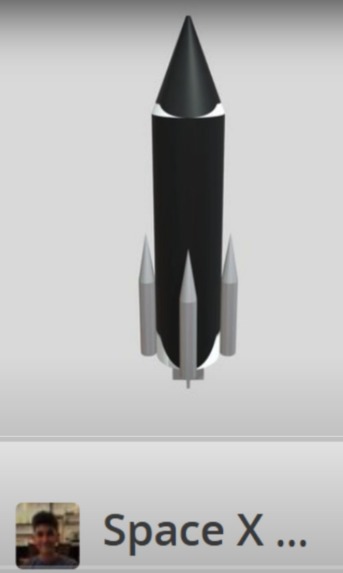
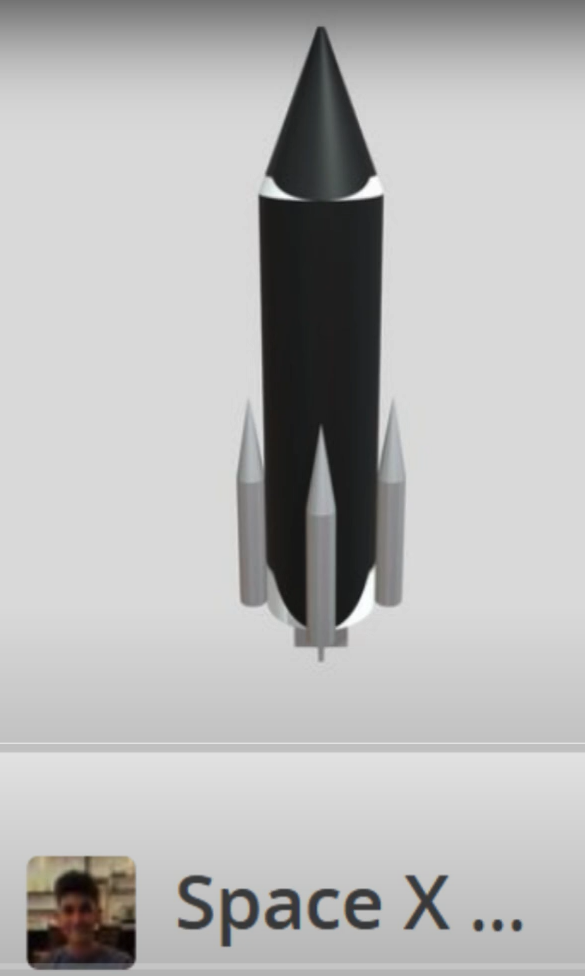
Our Rocket
-
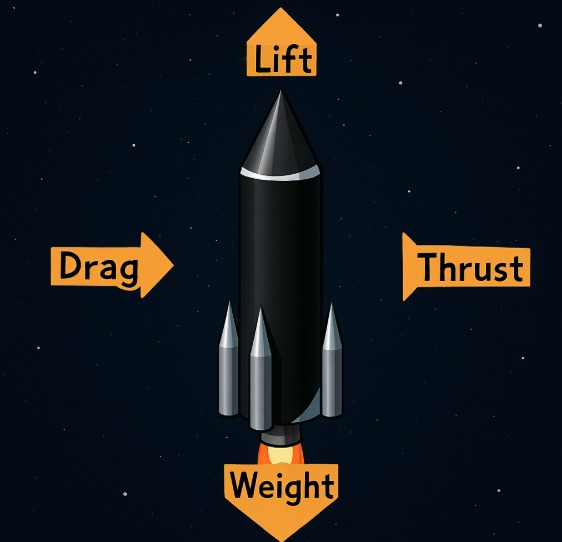
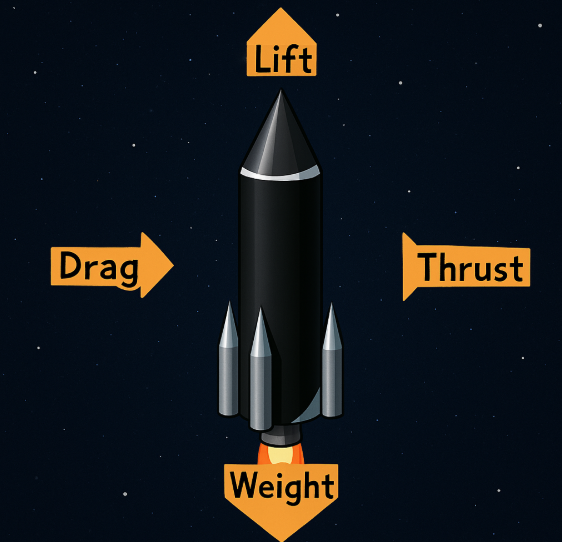
Diagram with Aerodynamics
-
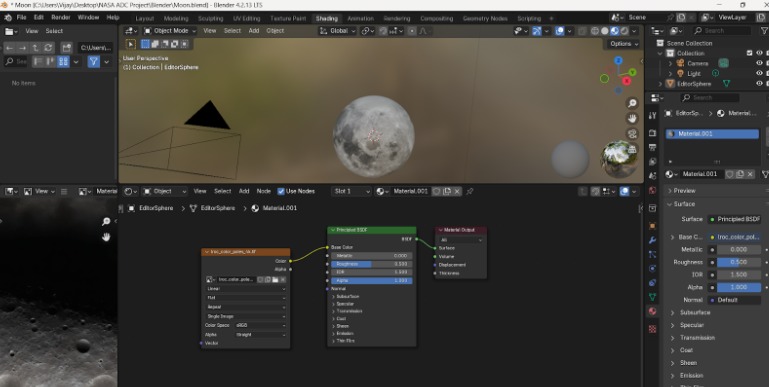
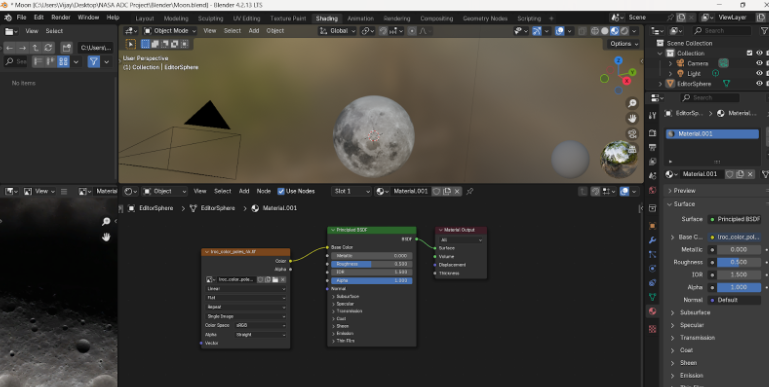
Our Moon Model
-
Our File Structure
-

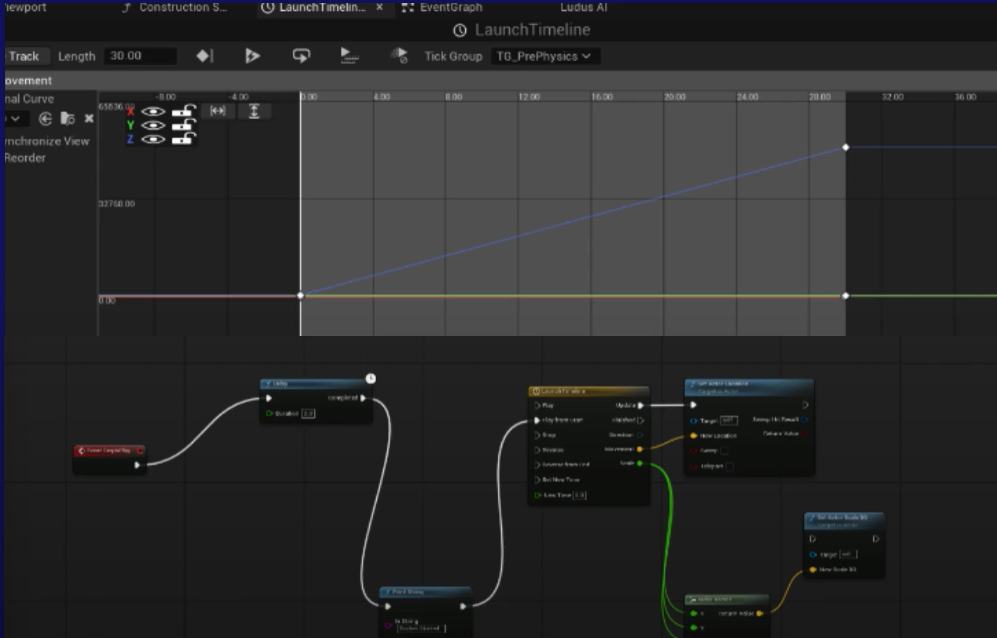
Our Blueprint Part 1
-
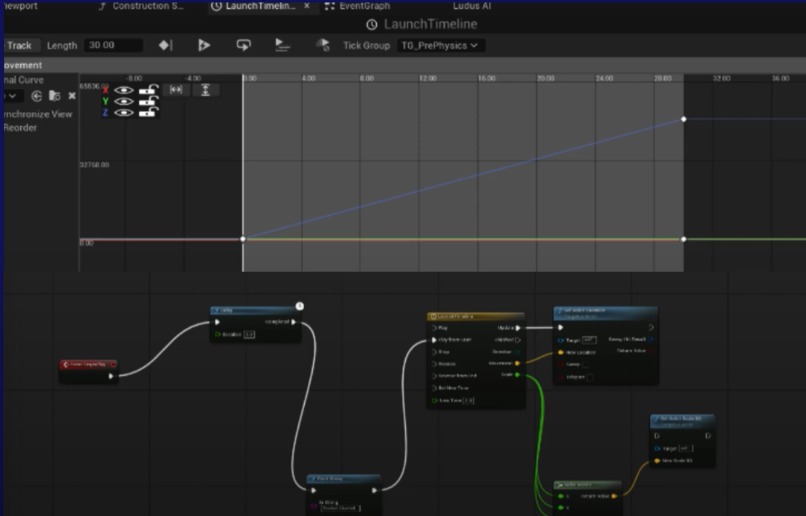
Our Blueprint Part 2
-
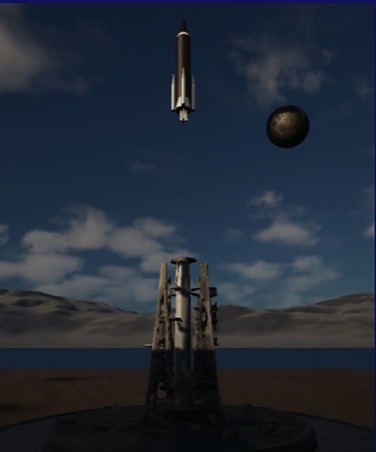
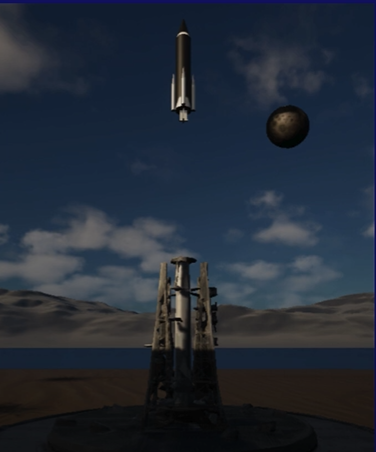
Our Results!

About the Project
Inspiration
We were inspired by the precision of real aerospace engineering workflows. Before a single rocket ever leaves the launchpad, engineers rely on CAD models, aerodynamic optimization, and simulations to validate designs. We wanted to recreate that same pipeline — from OnShape CAD modeling to Unreal Engine launch simulation — and prove that student projects can reflect real-world aerospace rigor.
What it does
AERONAV: Rocket Launch Simulator models a launch vehicle in CAD, refines it for aerodynamic balance, and simulates its ascent in Unreal Engine Blueprints. The project demonstrates how engineering accuracy translates directly into navigation stability. Our simulation incorporates thrust, drag, and gravity, showing how design decisions in CAD influence launch trajectories.
How we built it
- OnShape CAD: Designed the rocket body with careful proportions, streamlined nose cone, and optimized fins.
- Aerodynamics: Applied drag reduction principles, where drag force is modeled as
$$ F_d = \tfrac{1}{2} \rho v^2 C_d A $$
and iteratively adjusted body shape to reduce $C_d$.
- Blender: Smoothed surfaces, adjusted geometry, and prepared for engine import.
- Unreal Engine (Blueprints): Integrated thrust, velocity, and gravity for a launch sequence, preserving CAD fidelity in simulation.
Challenges we ran into
- Maintaining CAD accuracy when importing into Unreal without scaling errors.
- Balancing visual fidelity with aerodynamic realism — ensuring the rocket wasn’t just “game-like.”
- Stabilizing physics in Blueprints so the rocket launched realistically.
- Optimizing performance for smooth simulation despite complex models.
- Iterating under time limits while sticking to real engineering principles.
Accomplishments that we're proud of
- Built a complete CAD-to-simulation pipeline that mirrors real aerospace workflows.
- Created a launch simulation that feels both accurate and immersive.
- Successfully demonstrated aerodynamic optimization inside a hackathon-style project.
- Developed a model flexible enough to test scaling and design variations.
What we learned
- How CAD modeling decisions directly affect aerodynamics and navigation stability.
- The importance of scaling and unit consistency across OnShape, Blender, and Unreal.
- How to use Unreal Engine Blueprints to model thrust, drag, and gravity realistically.
- That engineering rigor can be maintained even in fast-paced project environments.
What's next for AERONAV: Rocket Launch Simulator
- Extend simulation to orbital trajectories, docking, and re-entry.
- Add environmental factors such as wind, turbulence, and weather effects.
- Build a mission control dashboard to connect telemetry back to CAD models.
- Explore modular rocket stages with variable payloads.
- Integrate VR/AR for immersive astronaut training experiences.
Built With
- blender
- canva
- onshape
- unreal-engine


Log in or sign up for Devpost to join the conversation.