-
-
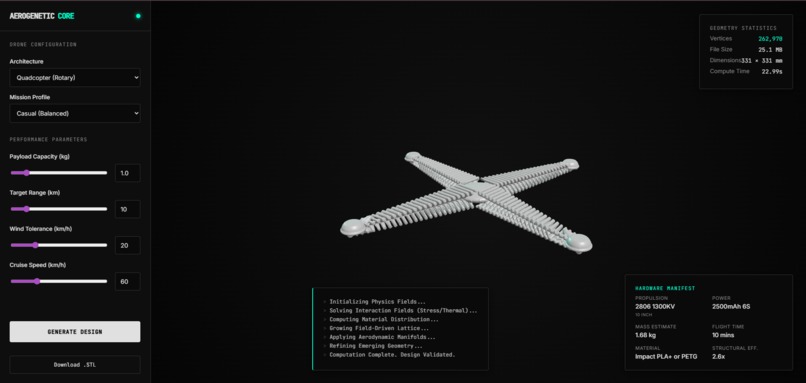
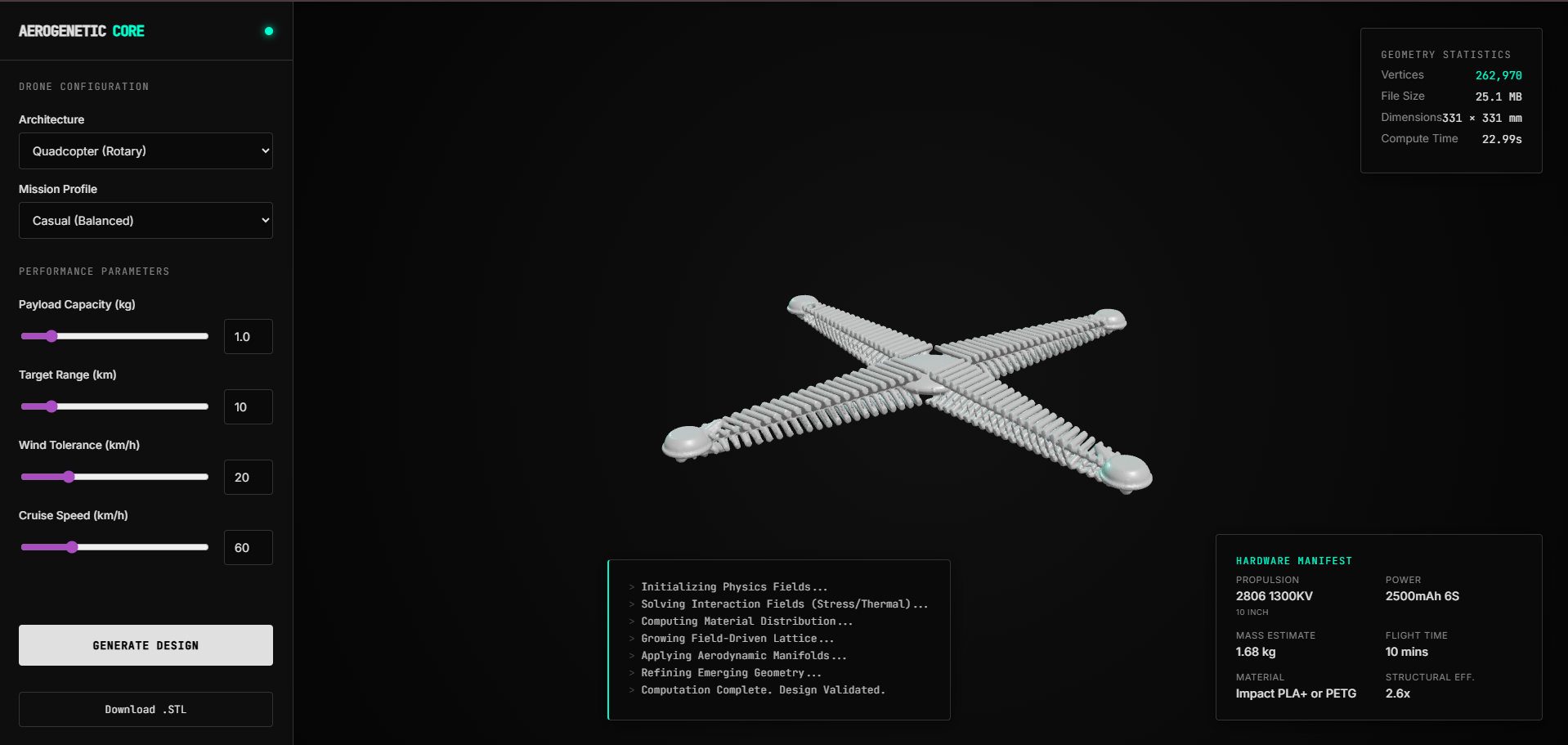
Drone(Casual)
-
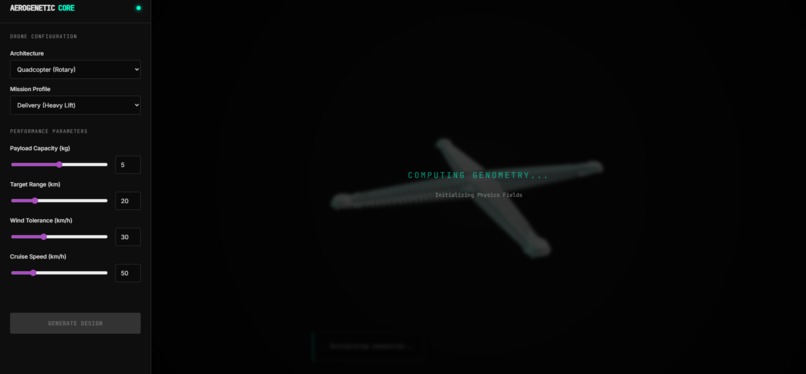
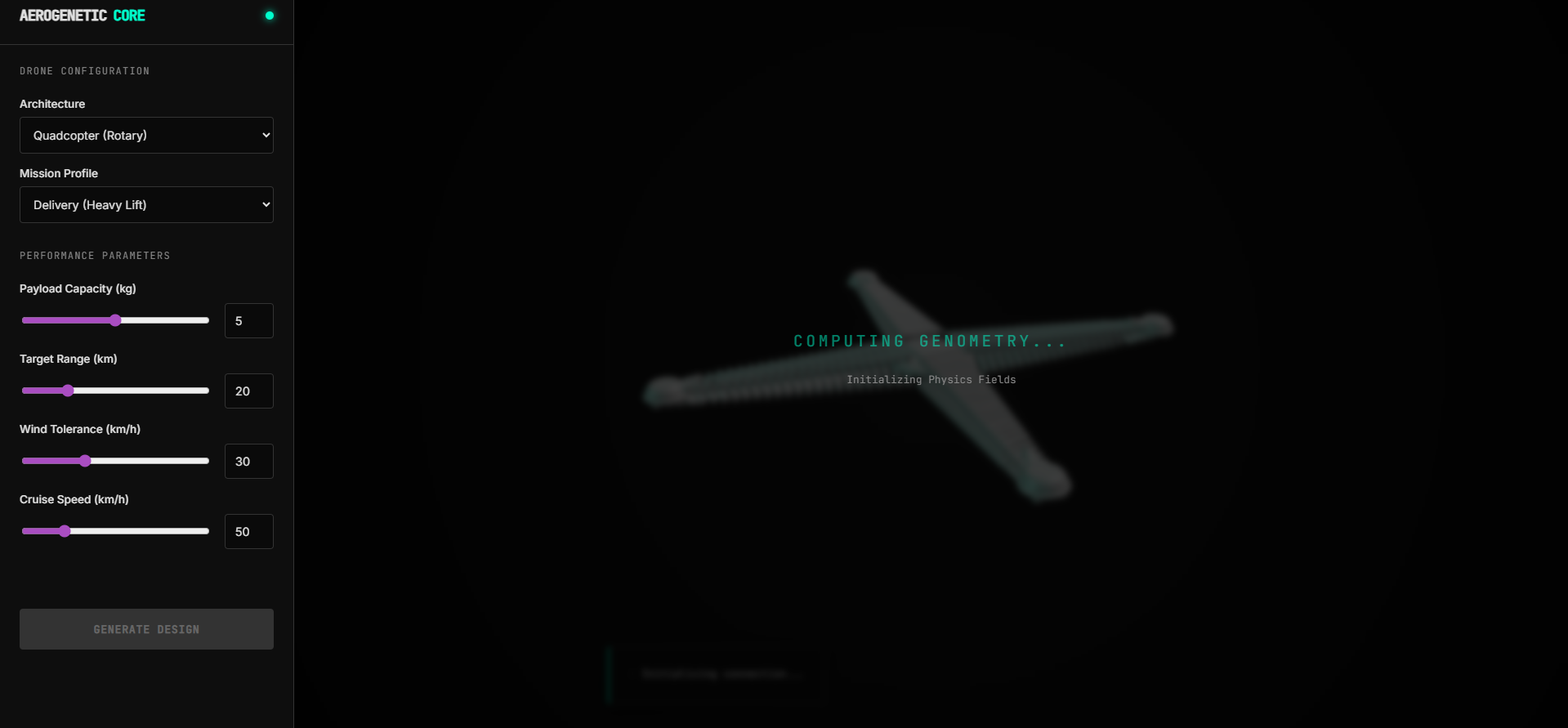
Processing
-
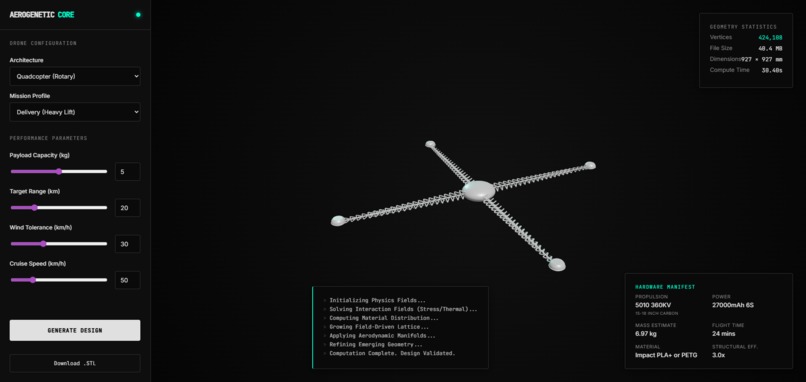
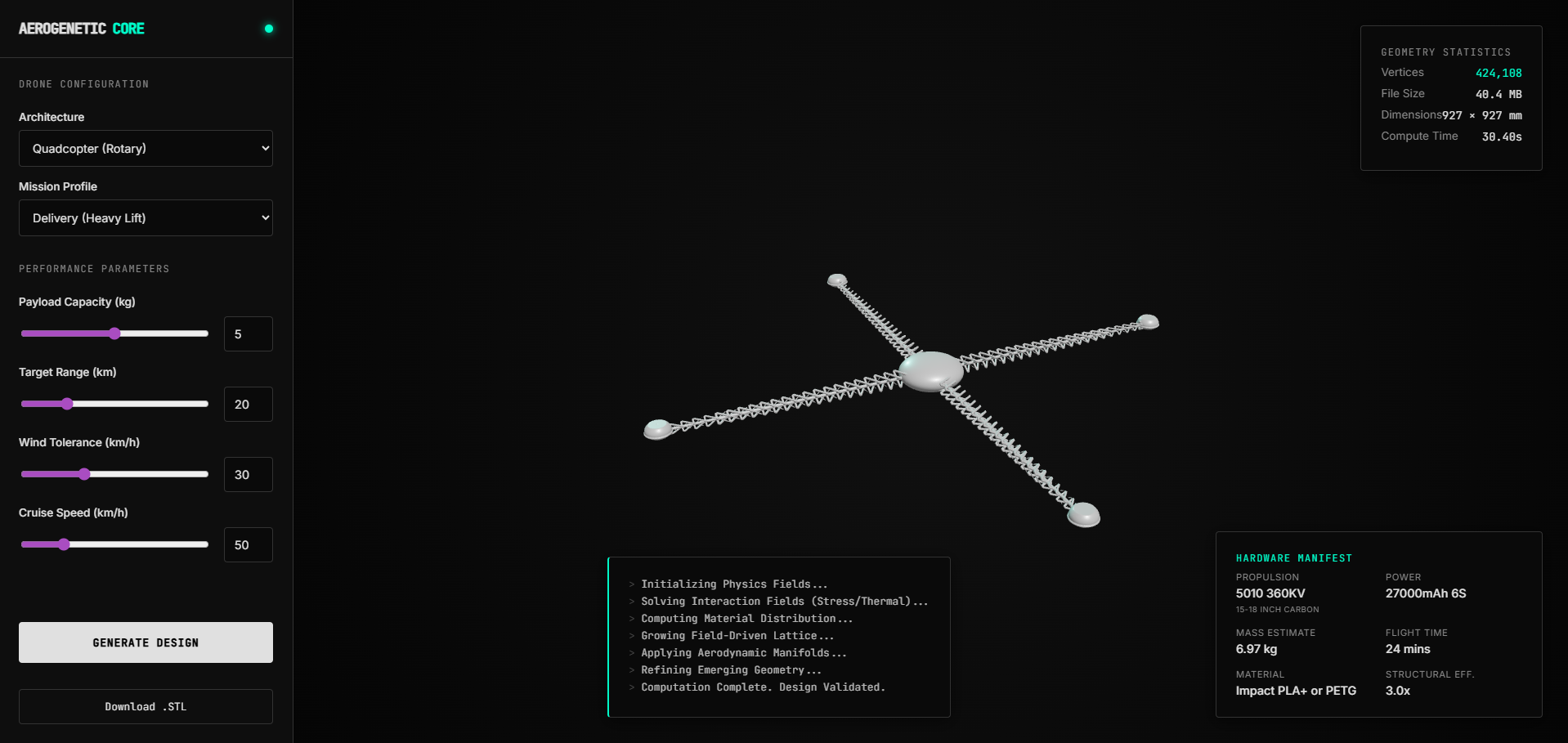
Drone(delivery)
-
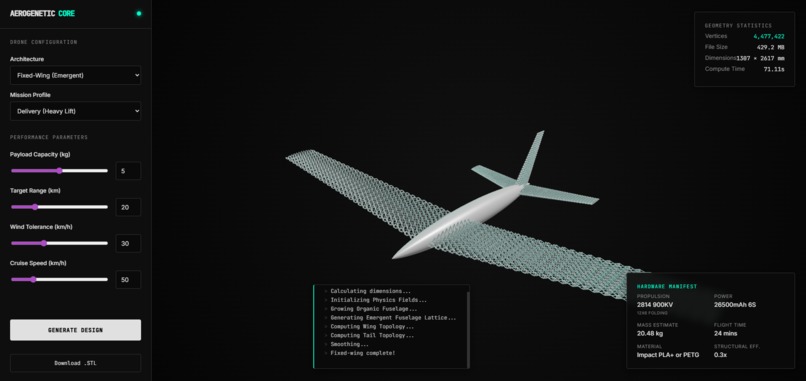
Fixed wing(internals)
-
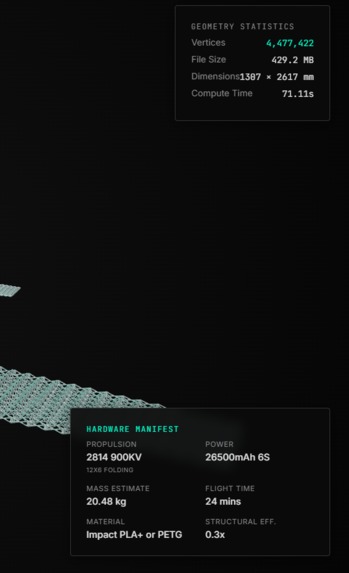
Drone Electronics/materials configuration
Inspiration
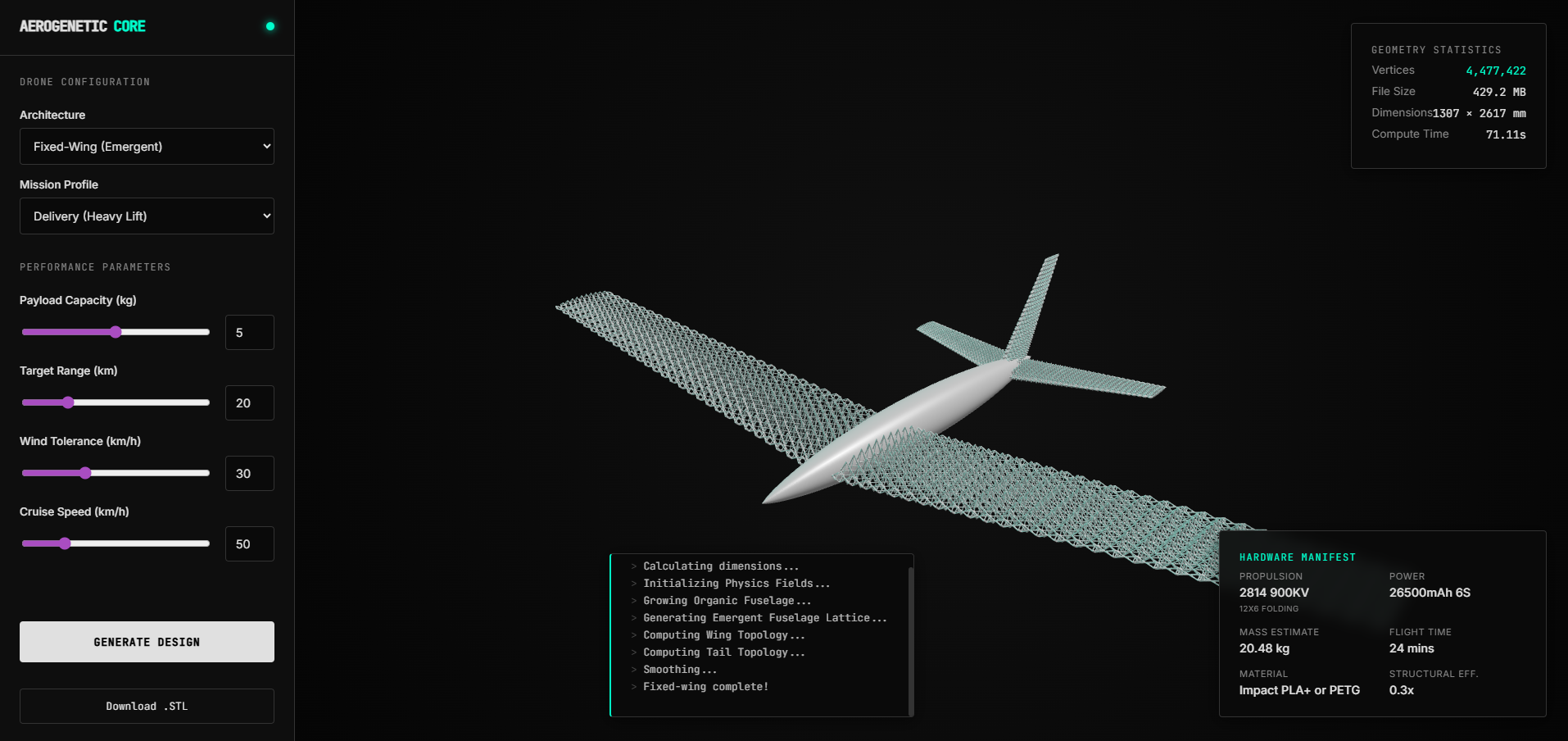
AeroGenetic began with the frustration of how long it takes to design a custom drone airframe for a specific mission. Even reaching a first usable iteration can take weeks of manual work balancing aerodynamics, structure, weight, and manufacturability. In time-critical or emergency scenarios, this delay becomes a major limitation. The goal was to compress this timeline by letting mission requirements directly drive the design.
What it does
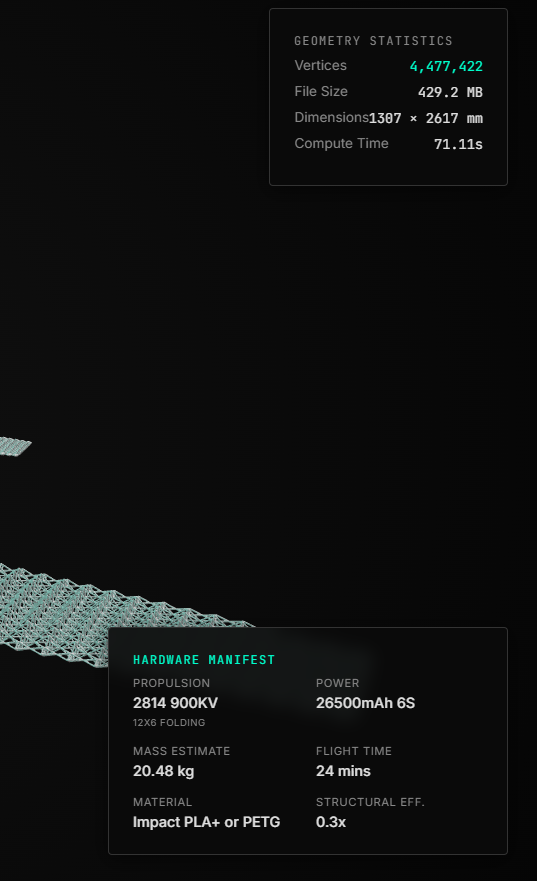
AeroGenetic is a ** physics-based computational engine** that generates mission-specific drone airframes from inputs such as payload, range, and maneuverability. Instead of manual CAD workflows, the system produces computed , manufacturable 3D geometries that adapt structurally and aerodynamically to defined load cases.
How we built it
The engine is built in C# using a voxel-based geometry kernel to ensure reliable, 3D-printable outputs. Mission parameters are translated into aerodynamic and structural constraints evaluated across multiple load cases such as hover, forward flight, maneuvers, and crash conditions. Geometry and internal lattice structures are then generated and modulated directly by these physics-driven fields.
Gemini 3 was used as a reasoning and iteration assistant, helping explore architectural trade-offs, sanity-check physics assumptions, and refine complex design logic. Gemeni 3 helped us in engineering, physics modeling, geometry generation, and implementation too.
Challenges we ran into
Major challenges included rewriting the engine architecture mid-development, learning voxel and field-driven geometry without formal references, and managing the tight coupling between physics, materials, and geometry. Validating designs without relying on traditional CAD or simulation tools also required careful incremental testing.
Accomplishments that we're proud of
- Rebuilding the engine on a robust voxel-based backend
- Generating watertight, 3D-printable airframes directly from mission inputs
- Implementing multi-load-case physics to drive real structural decisions
- Creating a usable web-based engineering interface
What we learned
This project emphasized the importance of physics-first design, disciplined architecture, and being willing to discard working systems in favor of stronger foundations. It also highlighted how structured reasoning tools like Gemini 3 can accelerate exploration without replacing hands-on engineering.
What's next for AEROGENETIC
Next steps include expanding emergent design logic for fixed-wing platforms, increasing aerodynamic and structural fidelity, adding more material and manufacturing constraints, and validating generated designs through real-world fabrication and flight testing.
Built With
- .net
- and-geometry-generation-picogk-(voxel-geometry-kernel)-?-watertight-voxel-based-geometry-and-stl-export-antigravity-?-computational-design-and-emergent-geometry-experimentation-asp.net-core-?-local-web-server-and-backend-api-web-technologies-(html
- antigravity
- asp.net-core
- c#
- css
- gemini
- geometry-generation-picogk-(voxel-geometry-kernel)-?-watertight-voxel-based-geometry-and-stl-export-asp.net-core-?-local-web-server-and-backend-api-web-technologies-(html
- html
- javascript
- physics-modeling
- picogk

Log in or sign up for Devpost to join the conversation.