Inspiration
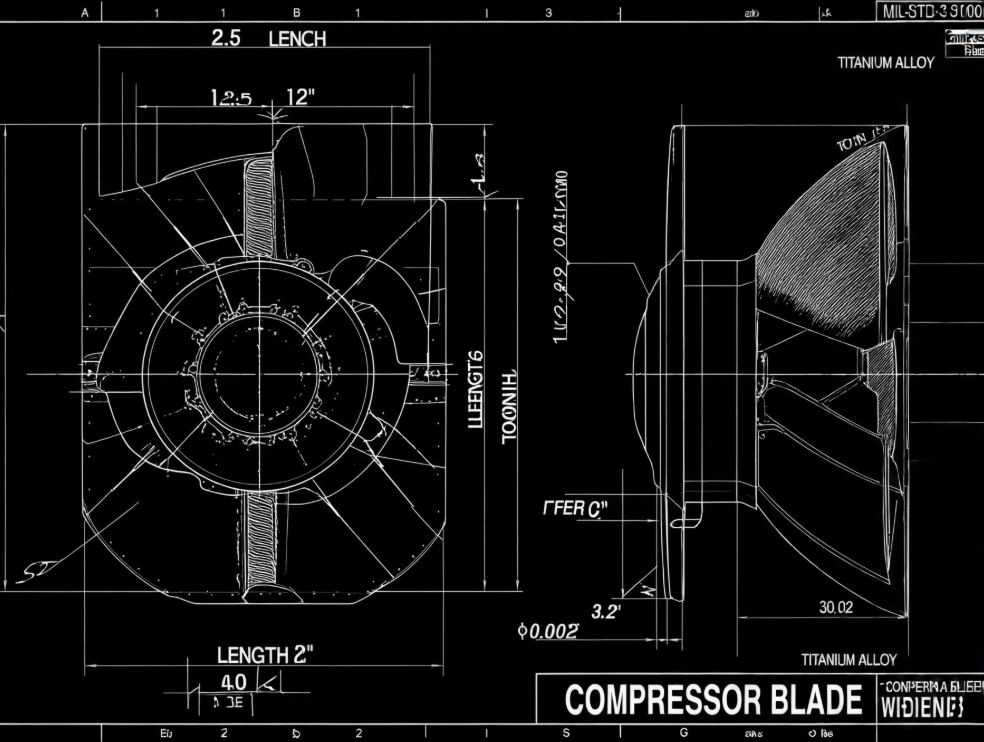
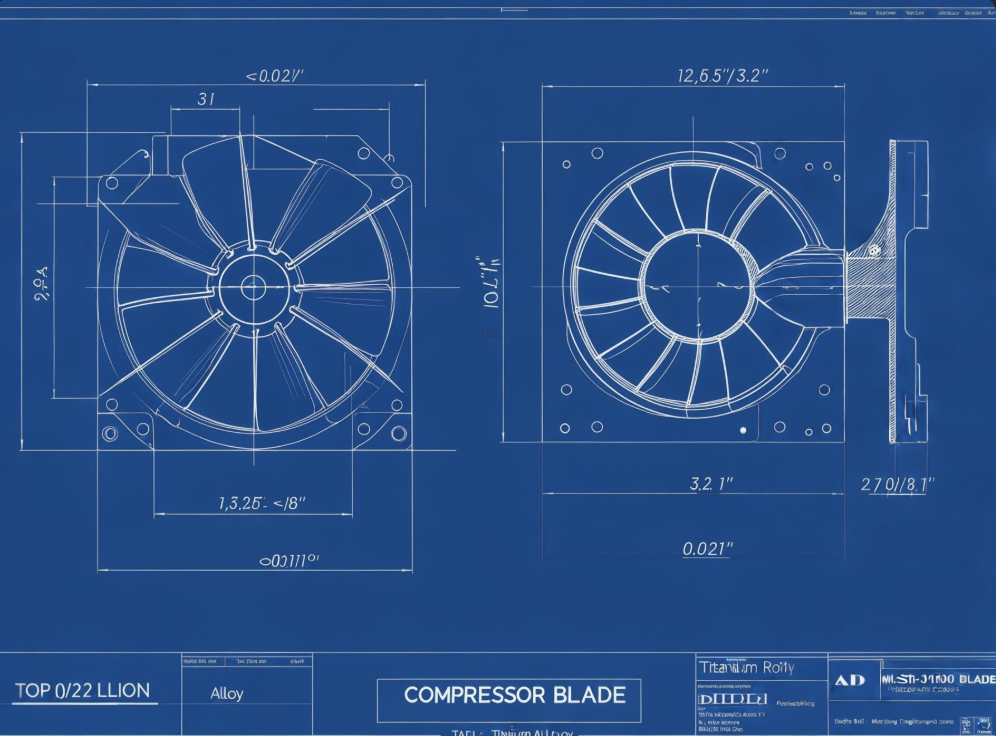
Aerospace manufacturers still rely on outdated 2D blueprints for critical aircraft parts—especially for legacy jets like the F-16 and B-52, which were built in the 1960s and 1970s. No CAD models. No 3D visualizations. No streamlined way to modernize these critical assets.
During my DoD fellowship, I watched engineers flip through binders of outdated schematics, frustrated by the time and expertise needed to convert them into 3D models for prototyping and repairs. The DoD, Lockheed Martin, and Boeing spend millions just to convert outdated PDFs into usable 3D models and be mission-ready.
I saw an opportunity to fix one of aerospace’s biggest bottlenecks by applying state-of-the-art generative AI and visual computing. What if an AI system could instantly reconstruct a 3D model from old blueprints? What if we could automate an entire workflow that takes weeks in seconds, saving millions of dollars and engineering hours?
That’s what I built. AeroForge 3D.
What it does
AeroForge 3D is an AI-powered system that transforms legacy 2D blueprints into photorealistic, engineering-accurate 3D models in seconds.
🔹 Defense & Aerospace-Grade Precision → Our system processes military blueprints and ensures compliance with aerospace manufacturing standards (MIL-STD-31000).
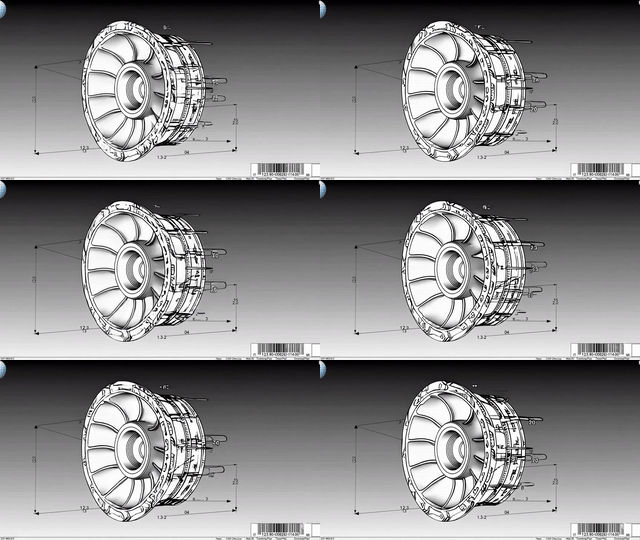
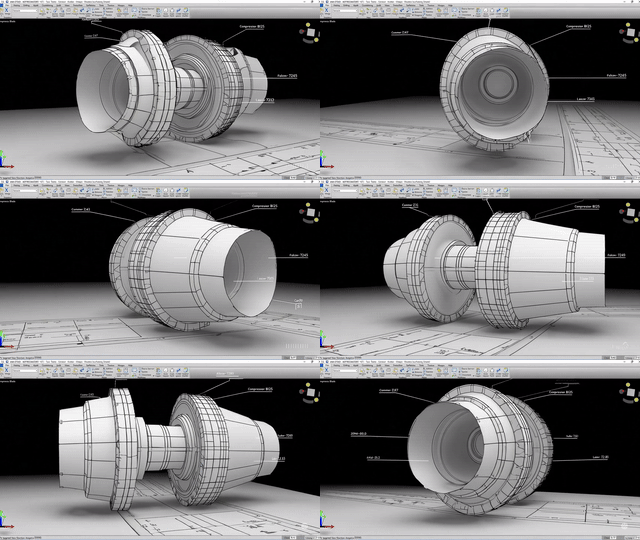
🔹 Seamless AI-Powered 2D-to-3D Conversion → Extracts key technical details from PDFs and reconstructs them into high-fidelity, immersive 3D renderings.
🔹 Rapid Prototyping & Upgrades → Engineers can visualize multiple design variations instantly, leading to faster, more informed decision-making.
🔹 Mission-Readiness at Scale → Instead of weeks of painstaking CAD modeling, our AI does it in seconds—allowing defense contractors to be proactive, not reactive.
This is more than just automation. It’s a new way to engineer, visualize, and modernize aerospace technology.
How we built it
I combined OCR, AI-powered text processing, OpenAI’s GPT-4o, Sora, Perplexity AI’s Sonar, and Luma AI’s Dream Machine to create a seamless pipeline from blueprint to 3D model.
Here’s how I approached the problem, broken down into steps.
1️⃣ Extracting Data from Legacy Blueprints
• Used PyMuPDF for OCR (Optical Character Recognition) to extract dimensions, materials, and annotations from technical PDFs.
• Parsed structured text with Perplexity AI’s Sonar to generate engineering-grade structured JSON.
2️⃣ Generating the Perfect 3D Prompt
• Used OpenAI’s GPT-4o to analyze extracted blueprint data and generate a military-grade Sora prompt with MIL-STD-31000 compliance.
• Made sure that the prompt had geometric accuracy, correct material definitions, and compliance verification before visualization.
3️⃣ Creating a 2D Aerospace Visualization
• Passed the processed blueprint data into Sora, generating a 2D visualization of the aircraft part.
• Once the 2D image was technically accurate, we proceeded to 3D reconstruction.
4️⃣ Bringing It to Life in 3D with Luma AI
• Used Luma AI’s Python SDK and REST API to convert the Sora-generated 2D image into a photorealistic 3D rendering.
• Leveraged Luma AI’s Dream Machine (Ray-2 model) to create cinematic, immersive 3D animations.
• Applied keyframe-based camera motions to showcase part assembly and integration into real-world aircraft.
5️⃣ Guaranteeing Engineering-Grade Usability
• AI cross-references generated models against aerospace manufacturing standards to ensure compliance.
• Engineers can export AI-generated models for further refinement in CAD, AR, or VR environments.
Challenges we ran into
🚨 Parsing Legacy Blueprints – Since aerospace PDFs vary in format, it makes OCR tricky. I fine-tuned AI parsing to extract dimensions, tolerances, and materials with precision.
🚨 Ensuring MIL-STD-31000 Compliance – Unlike CAD, my AI had to validate structural integrity and tolerances. I built custom validation logic to ensure military compliance.
🚨 Balancing Realism & Accuracy – Luma’s AI creates stunning renders, but I optimized prompt engineering to keep dimensions engineering-grade while maintaining cinematic quality.
🚨 Optimizing for Speed– Processing high-res PDFs, images, and videos needed fast, scalable API calls to handle real-world defense workloads efficiently.
🚨 Pivoting from Sora API – Since Sora lacks an API, I initially tried Playwright & direct requests but pivoted to perfecting the Sora prompt for seamless integration with Luma AI.
🚨 Building This Solo – After checking into TreeHacks on Friday, I realized I had all the tools necessary to solve this aerospace and defense problem. Working solo meant extra effort, but I took full advantage of the resources and mentorship available at the hackathon to bring this vision to life.
Accomplishments that we're proud of
✅ Automating a Process That Normally Takes Weeks → What used to take weeks of CAD work and engineering hours now happens in seconds.
✅ Seamless AI Pipeline from 2D to 3D → Successfully integrated OCR, structured data extraction, AI-powered prompt generation, and cinematic 3D rendering.
✅ Military & Commercial Applications → This isn’t just for the DoD. It has massive commercial potential for aerospace manufacturers, airlines, and engineering firms. Also (I just learned) for the oil and refinery industry! This problem is surprisingly common.
✅ Game-Changing Visual AI for Engineering → We’re proving that generative AI isn’t just for art—it’s revolutionizing how critical systems are designed, upgraded, and maintained.
What we learned
💡 AI can bridge the gap between legacy engineering and modern 3D visualization.
💡 Generative AI can serve mission-critical roles beyond entertainment. Luma AI’s Dream Machine isn’t just generating cool videos—it’s reshaping aerospace workflows.
💡 Aerospace & defense need automation, and they need it fast. Millions are wasted every year on manual blueprint conversion—our AI solution is an immediate cost-saver.
💡 CAD isn’t enough. CAD doesn’t automate compliance verification or enhance real-time visualization—our AI does.
What's next for AeroForge 3D
🚀 AR & VR Integration → Engineers can inspect, modify, and interact with AI-generated 3D models in real-time.
🚀 Automated Compliance Checks → AI-driven MIL-STD-31000 validation ensures defense-grade accuracy.
🚀 Beyond Defense → Expanding to commercial aerospace for faster prototyping and modernization.
🚀 Interactive & Editable Models → Users can tweak AI-generated designs, test integrity, and refine structures.
🚀 Seamless CAD & Manufacturing Integration → Direct CAD exports and real-time AI-assisted prototyping.
🚀 Revolutionizing Aerospace → AeroForge 3D streamlines engineering from blueprint to battlefield.

Log in or sign up for Devpost to join the conversation.