-
-
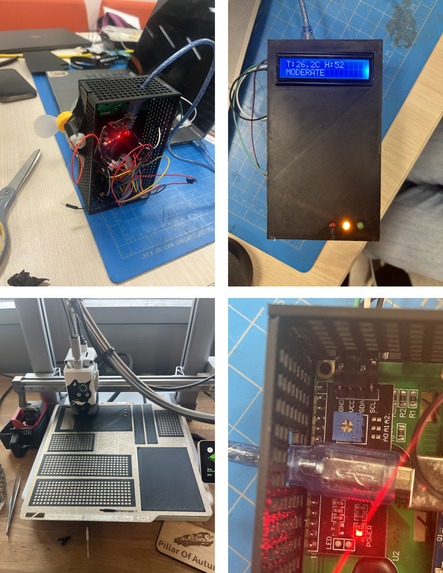
DataHacks 2026 Fabrication Pictures
-
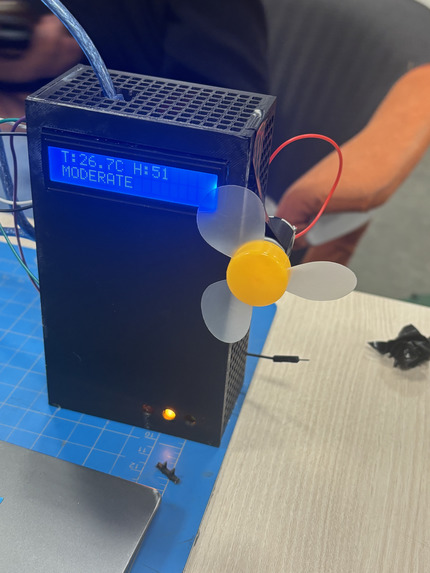
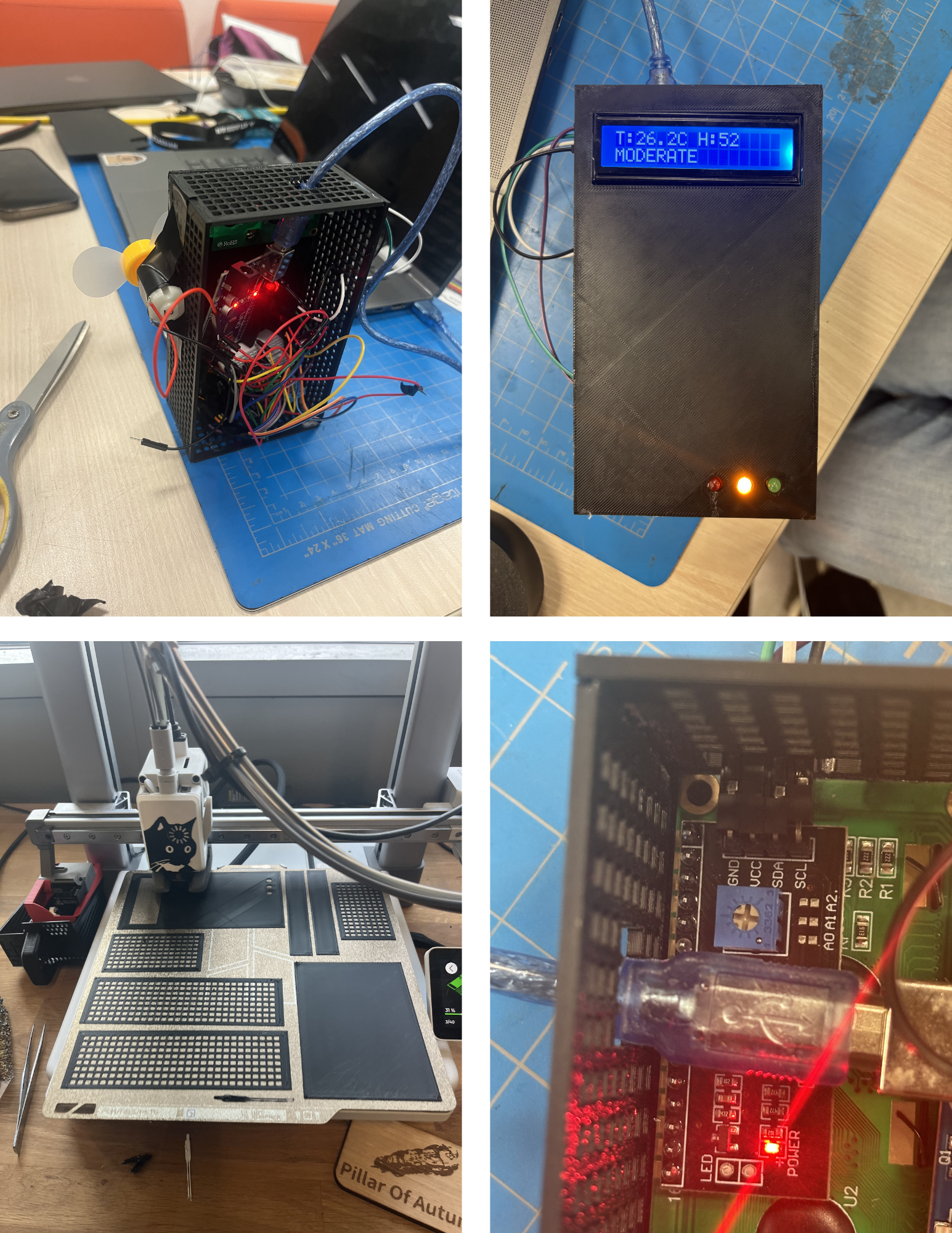
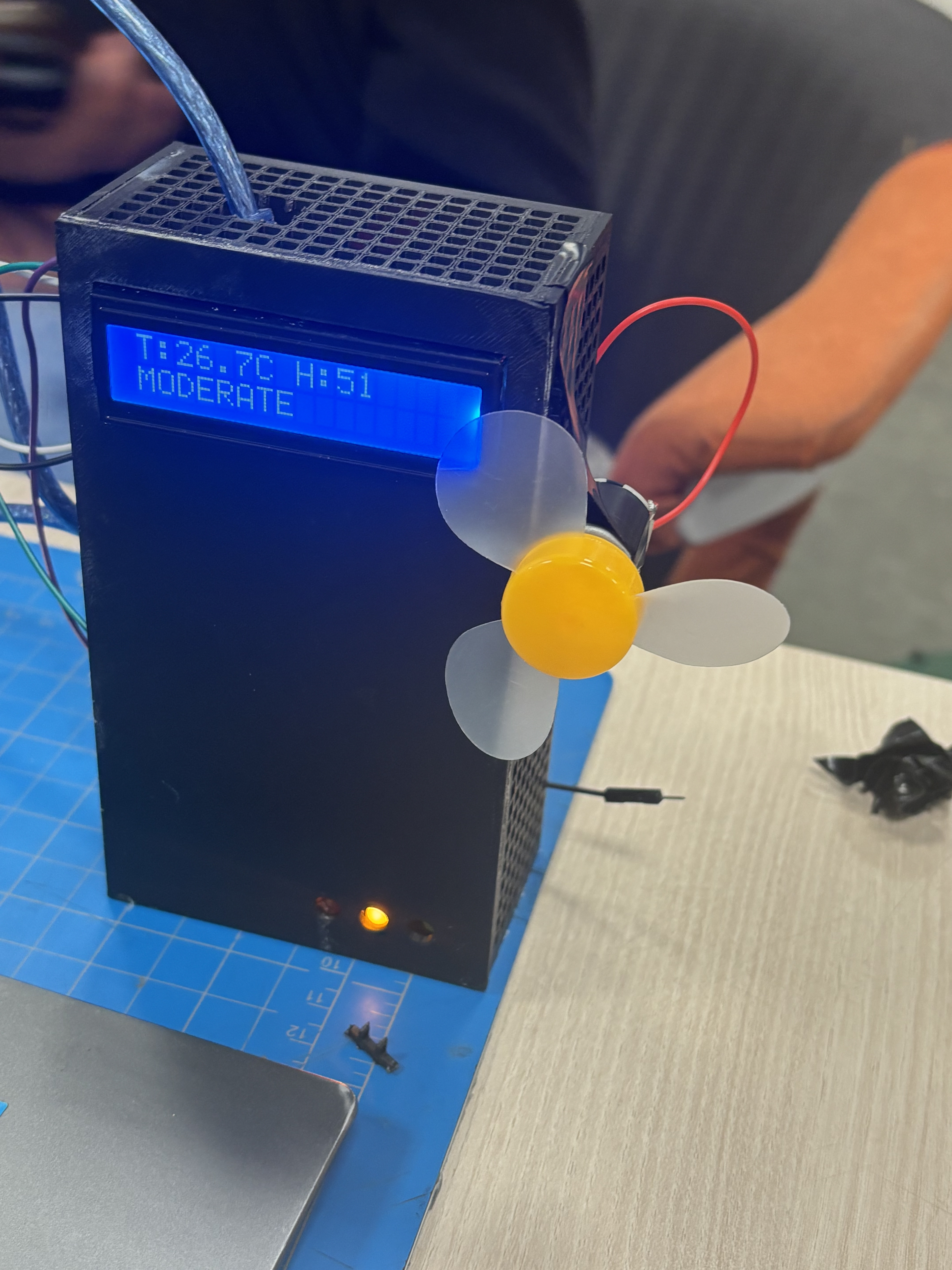
Mold risk detector with fan module
-
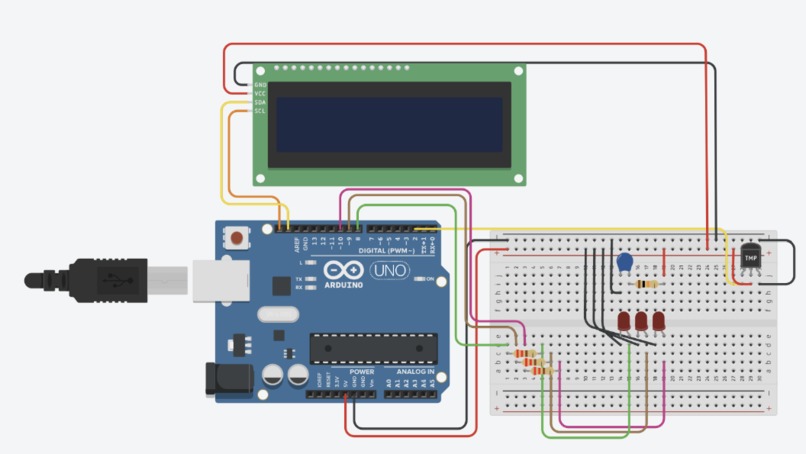
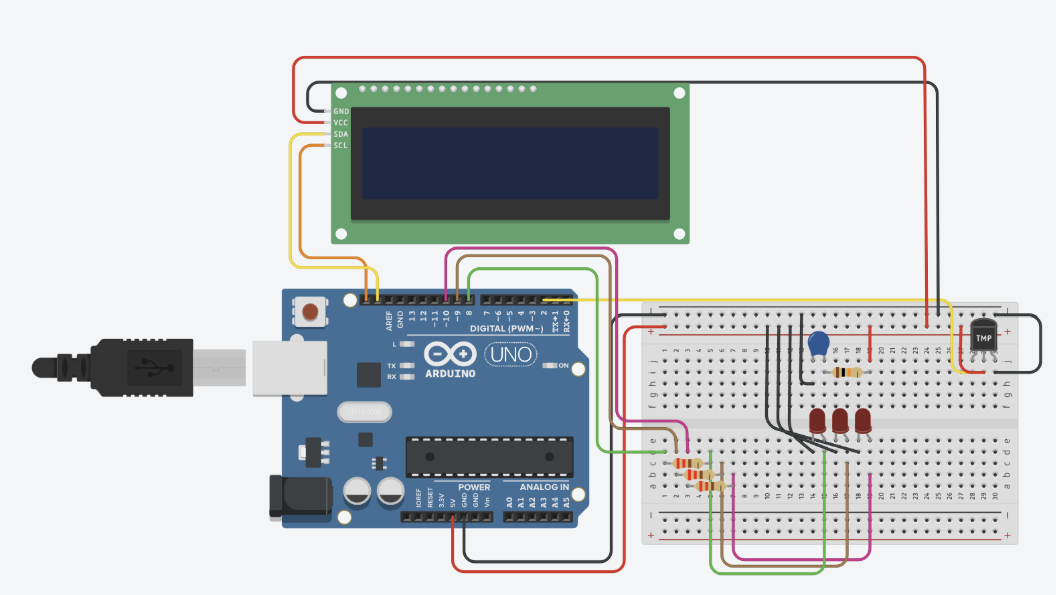
Electronics Schematic
-
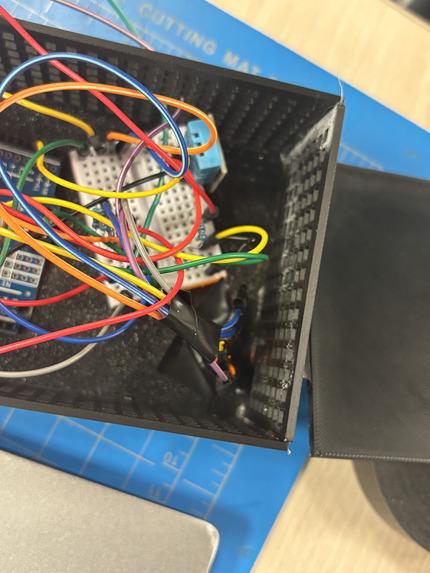
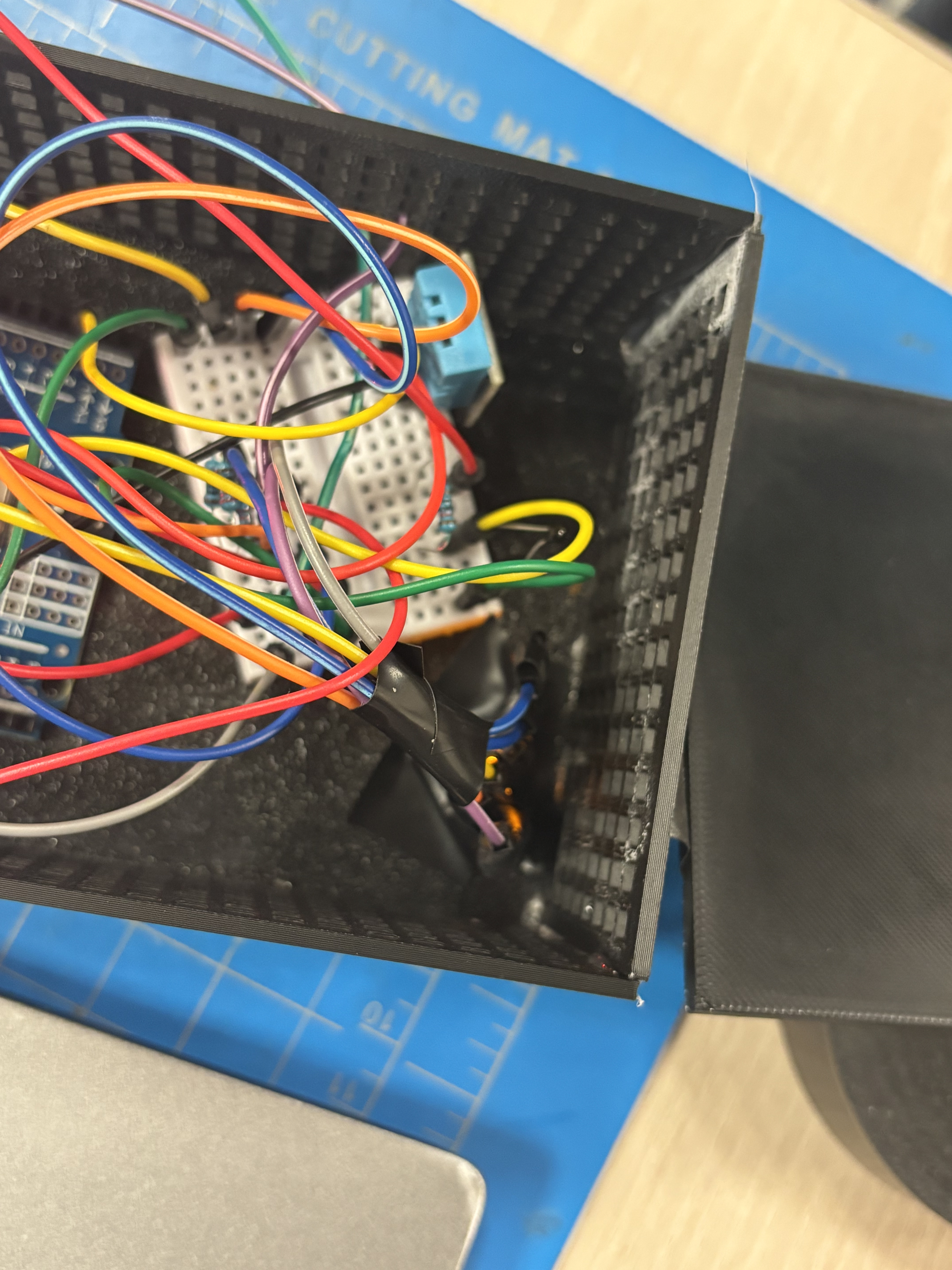
Hardware inside fixture
-
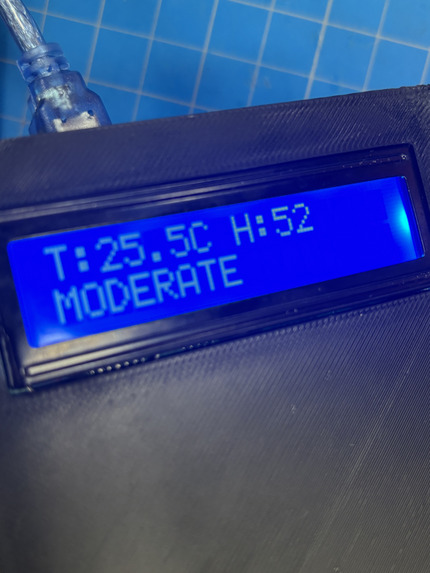
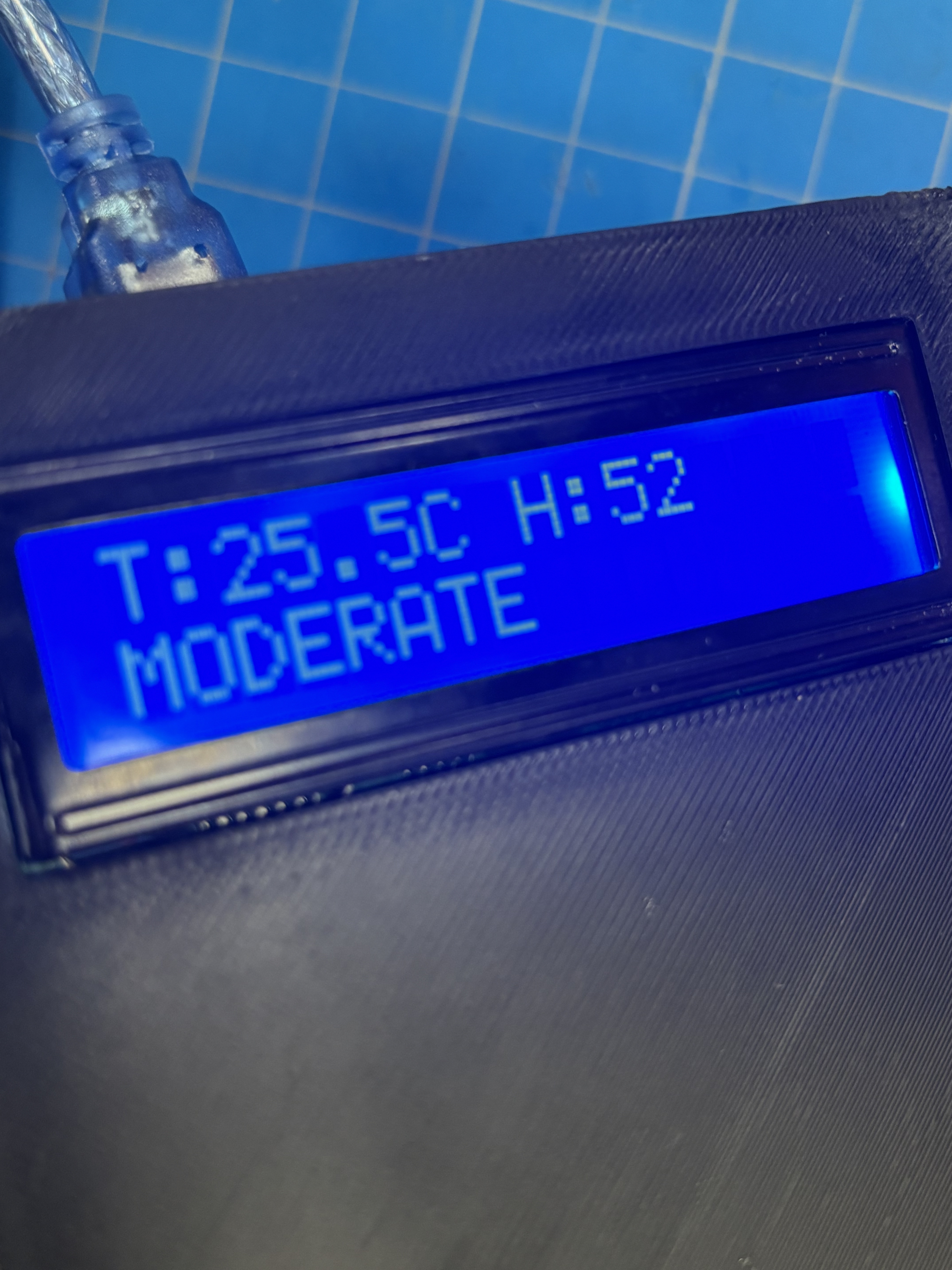
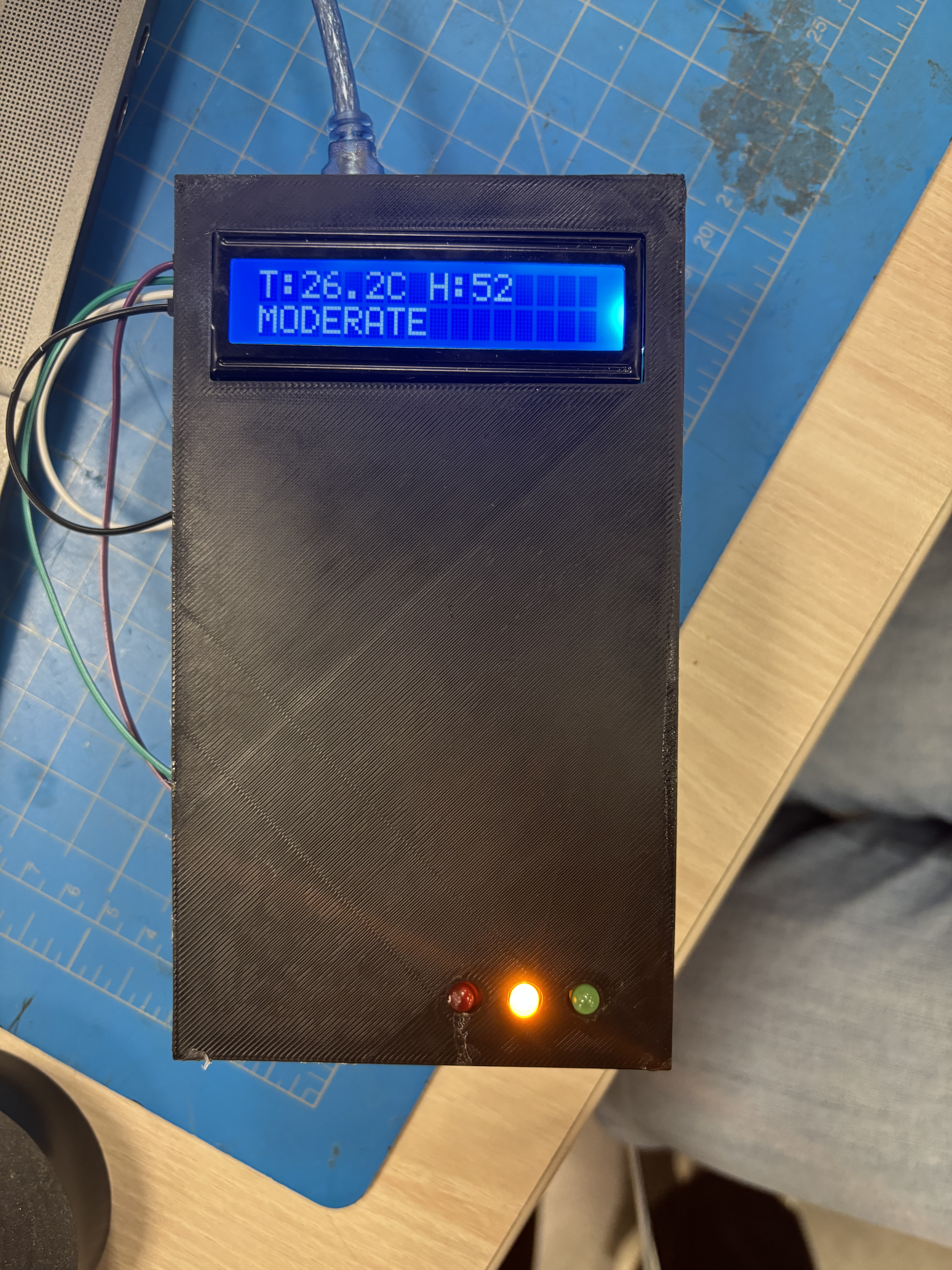
LCD Display with numerical data and risk magnitude
-
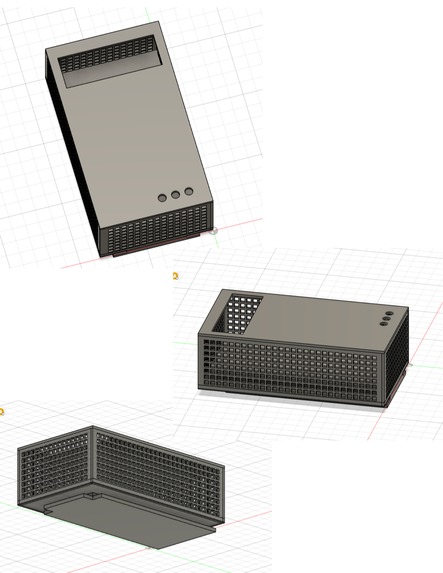
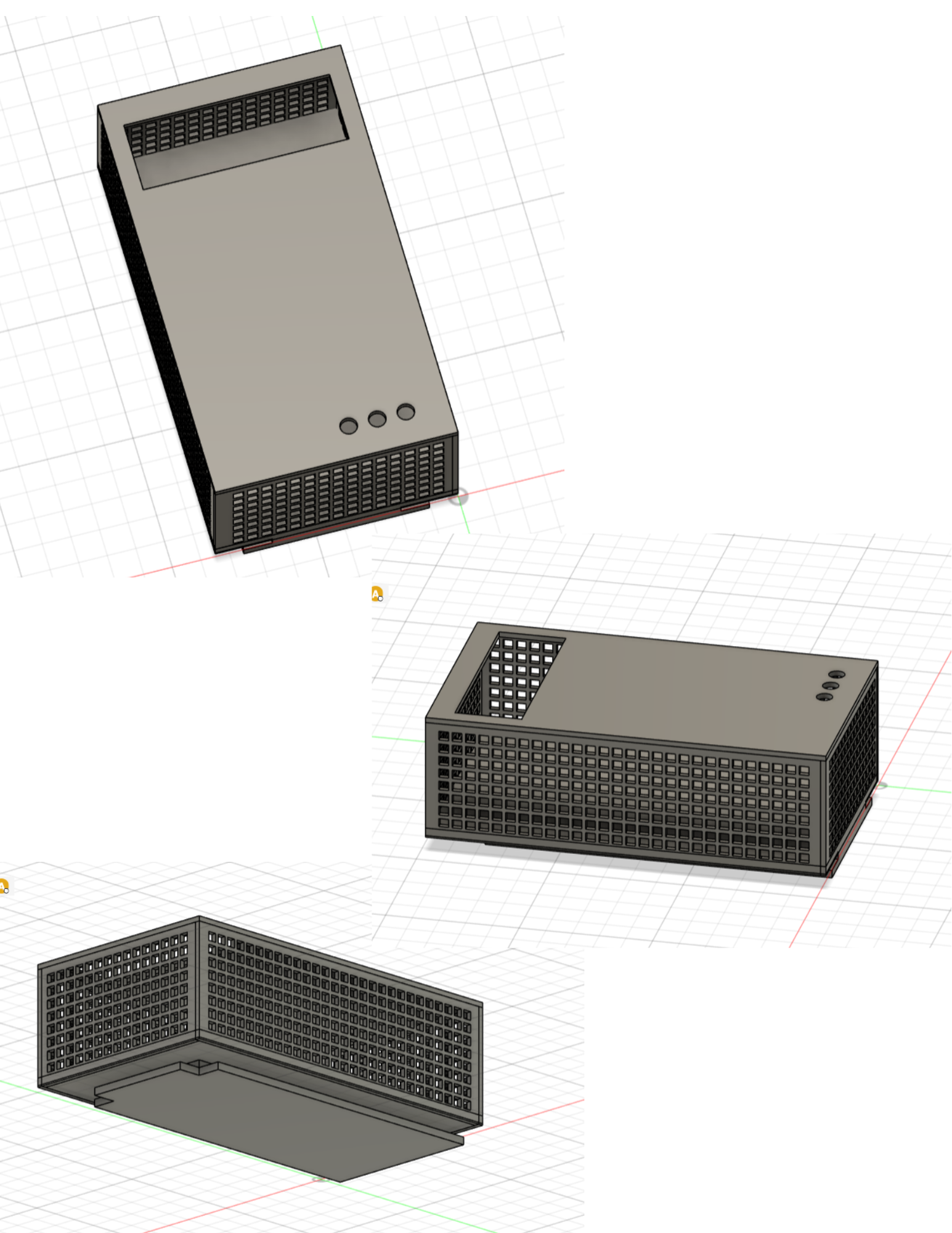
CAD Pictures
-
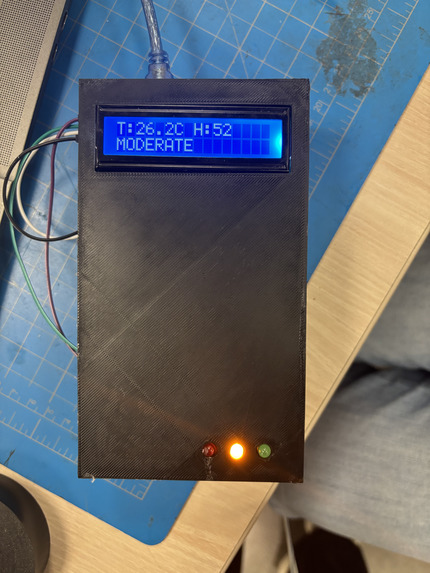
Fully assembled mold risk detector
Inspiration
Our team was inspired to take action against the mold in some of our dorm rooms, specifically windowsills, refrigerators, kitchens, and bathrooms. Concerned for our health and others', we wanted to make a device that alerts when the humidity and temperature create prime mold growing conditions. This device also attempts to reduce general mold damage on infrastructure and eliminate microclimate mold conditions before HVAC systems need to be activated to do so.
What it does
Our device has two sensors: a DHT11 Humidity and Temperature Module and a Thermistor. The DHT11 sensor measures ambient air humidity and temperature data while the thermistor measures surface temperature. An algorithm measures the calculates low, moderate, and high risk based off of collected humidity and temperature values from both sensors and activates a green, yellow, or red LED light depending on the risk factor.
How we built it
We started by measuring the dimensions of the given hardware kit, which includes an Arduino Uno Q, a battery, wires, colored LEDs, and a temperature and humidity module. We 3D printed a box with many airways in the side panels to allow accurate sensor readings. The back has a sliding mechanism for easy installation and removal if it were to be set on a wall. Each panel was printed separately and glued together. We used AI to help create the code.
Challenges we ran into
It was difficult to create the code that ran and had the output we wanted, mostly due to software complications. We had to consolidate systems and cut off certain features that would have been nice to implement but not worth the complexity of the system.
Accomplishments that we're proud of
The CAD process was very quick and our 3D print was one of the first ones to be done. Consolidating our electrical systems into the compact, portable fixture that we created was also an amazing achievement and served to be one of the strengths of our design.
What we learned
We gained familiarity the Arduino Uno Q interface and received strong practice in interfacing multiple systems across one another to create one complex, integrated system capable of achieving multiple objectives as one.
What's next for AeroCure
We would love to implement a fan module that communicates with the temperature and humidity sensors. The fan module blows air to create a disturbance, eliminating ideal mold conditions and the need to activate a power hungry HVAC system to promote circulation. Additionally, we would love to establish communication between AeroCure and local HVAC systems so that they work together in an energy efficient manner and cut unnecessary energy usage from power hungry HVAC systems. Additionally, we plan to create a machine learning model with impulse AI that is able to recognize trends for certain mold-optimal conditions. Currently, we aren’t able to do this due to lack of dataset. We were able to find "'indoor air quality" datasets online, but ideally we want to know whether specific humidity and temperatures correlates with certain mold growth. We also want to have an online GUI to save and plot data, and eventually use it to train our own system.
Built With
- arduino
- bambu
- claude
- perplexity


Log in or sign up for Devpost to join the conversation.