Inspiration
AERO-QUANTUM 2099 was inspired by a simple question:
What if a 3D website wasn't just something you looked at, but something you could actually operate?
We wanted to move beyond the typical 3D portfolio experience where users rotate a model and leave. Instead, we imagined a futuristic aerospace mission-control system where the 3D spacecraft is the interface itself.
What We Built
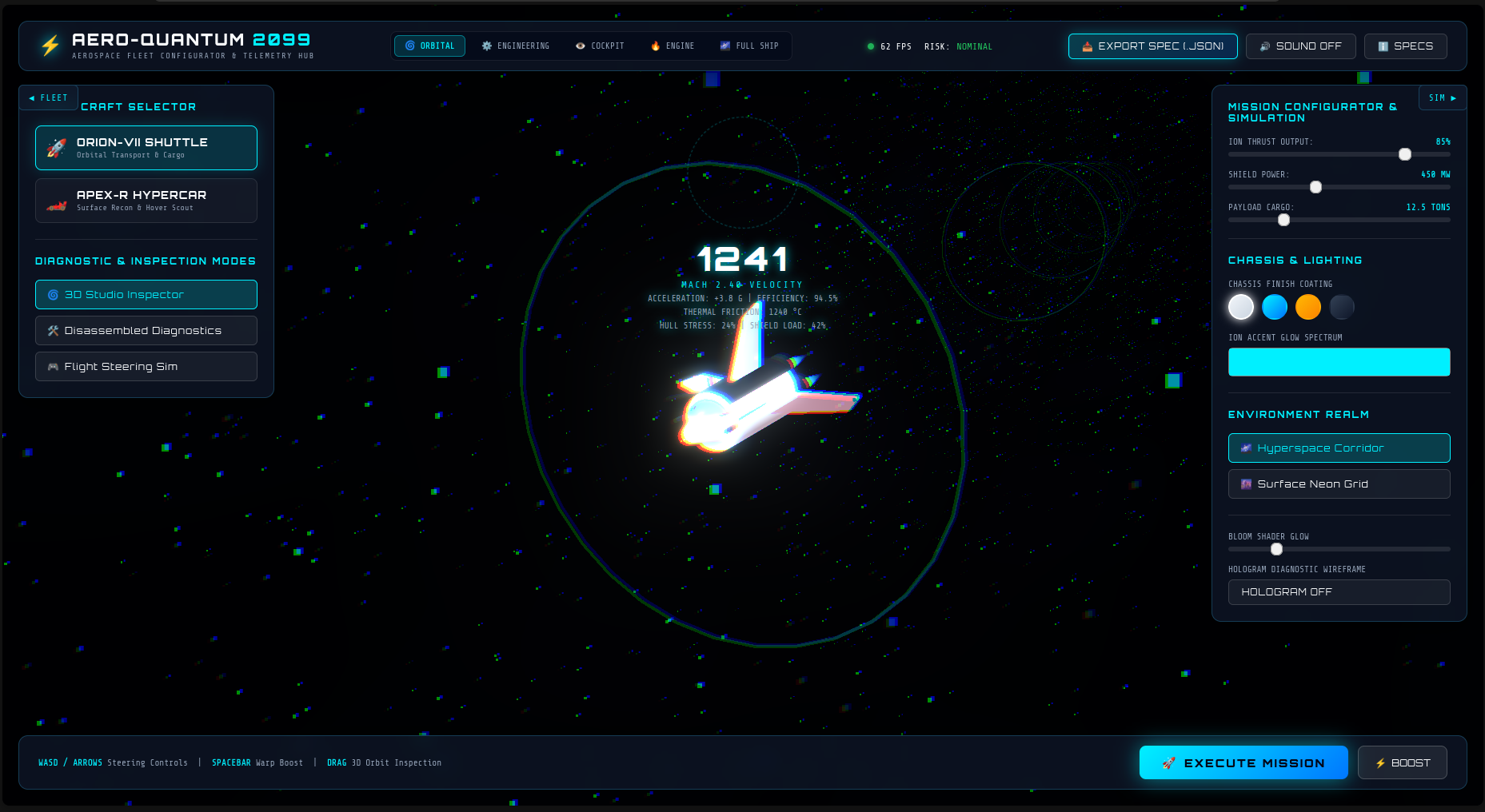
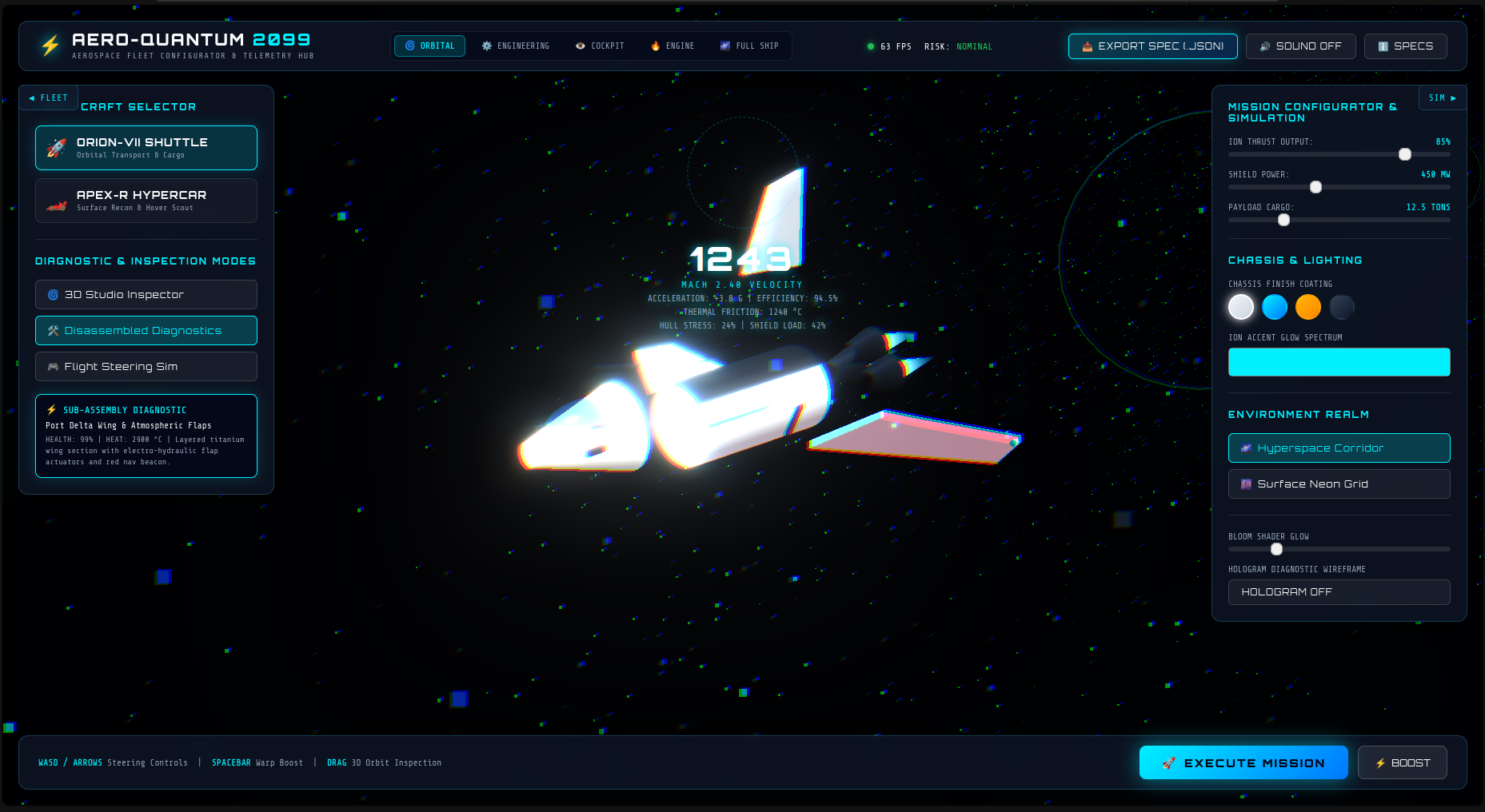
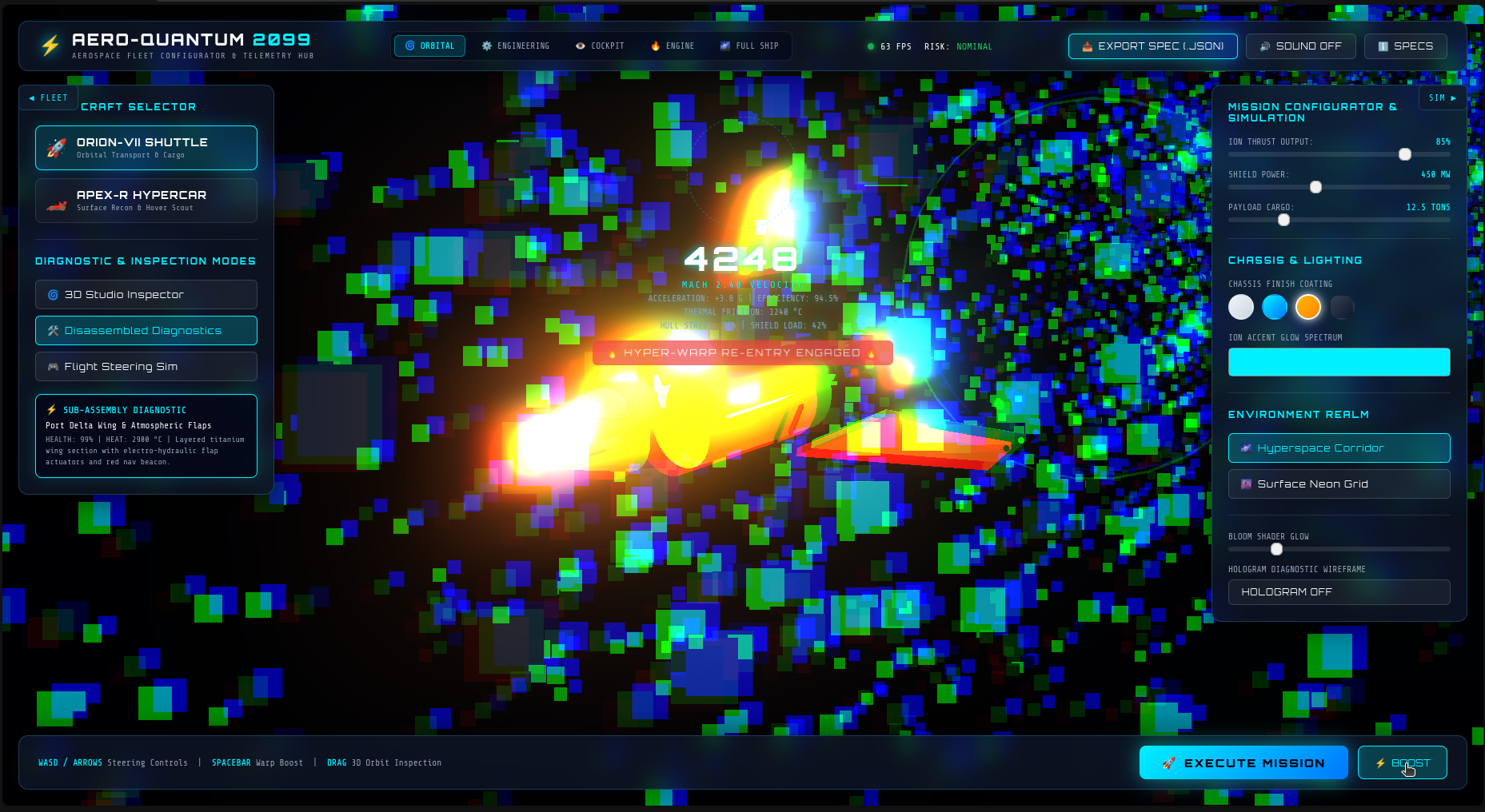
AERO-QUANTUM 2099 is an immersive 3D aerospace mission simulator and engineering configurator.
Users can:
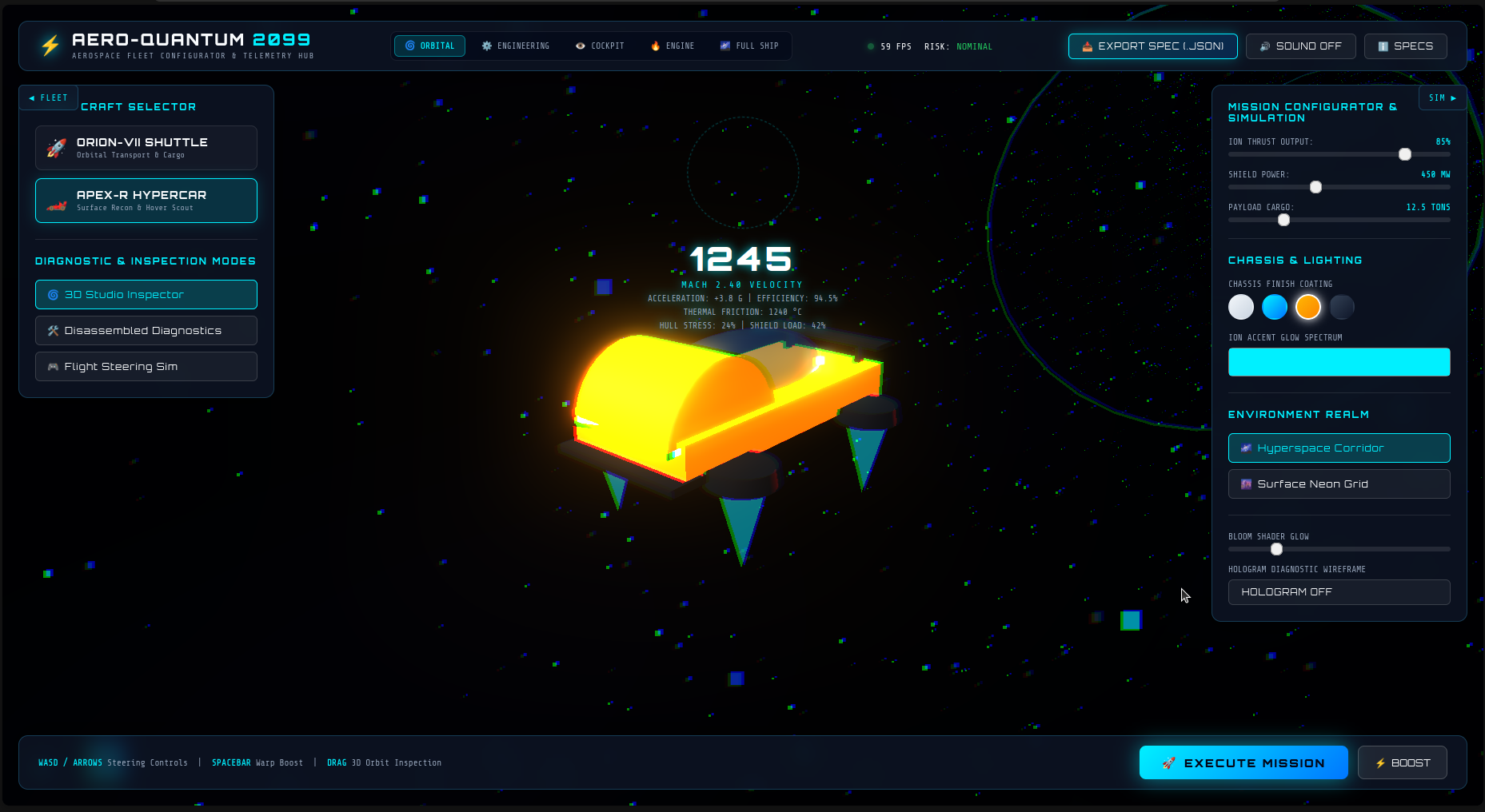
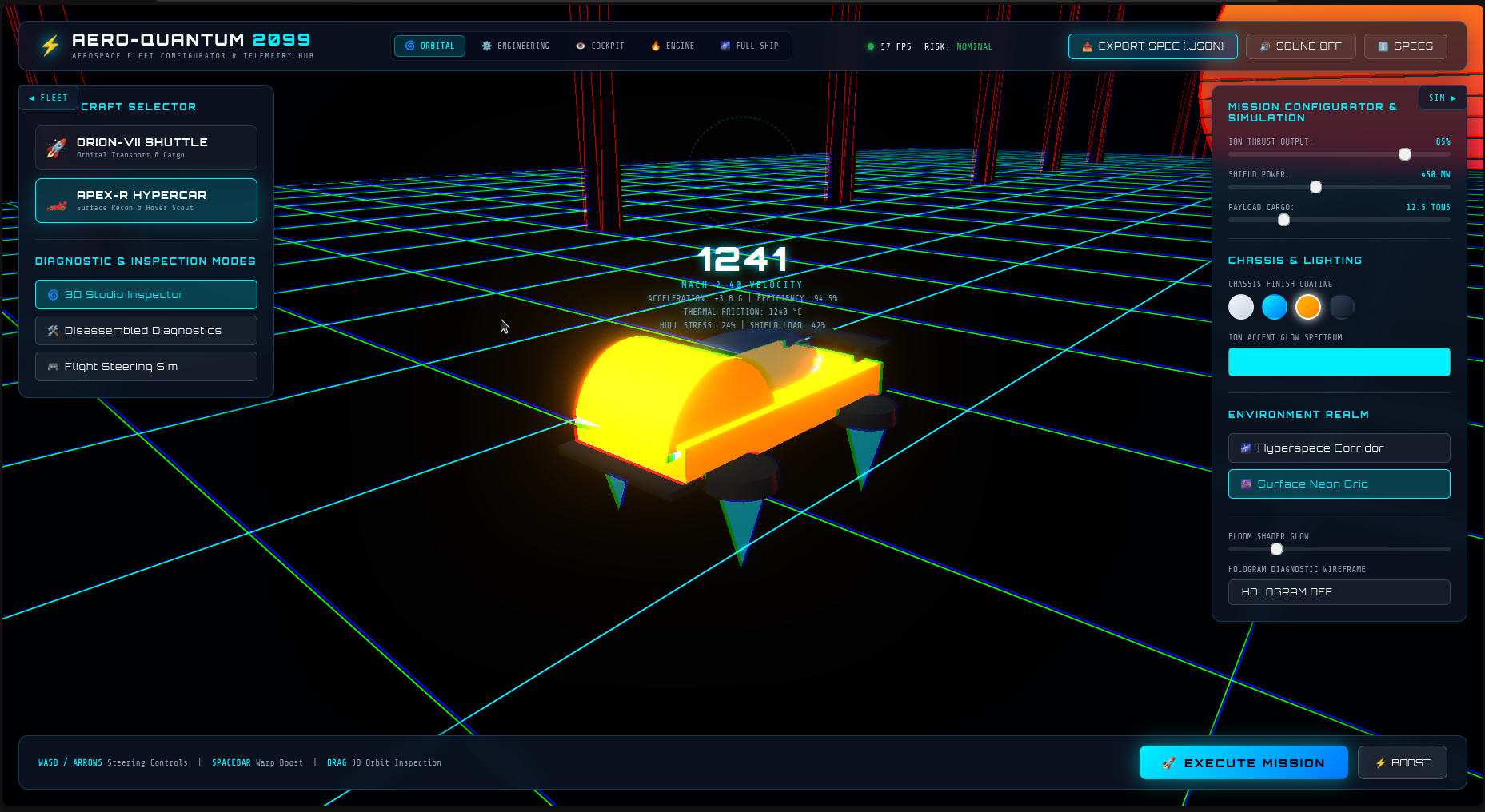
- Explore the Orion-VII Orbital Shuttle and Apex-R Cyber Hypercar in an interactive 3D environment.
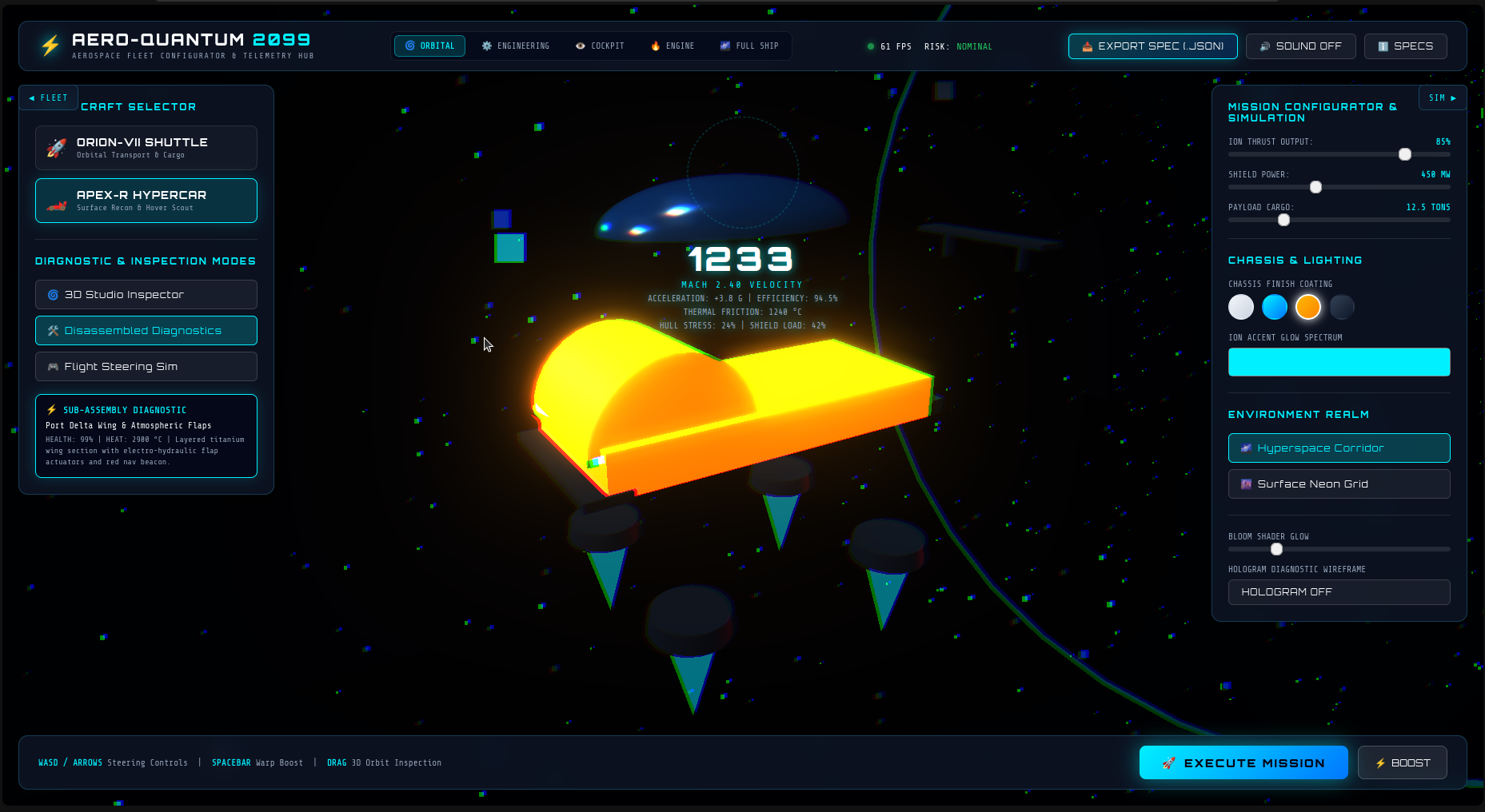
- Switch between different craft.
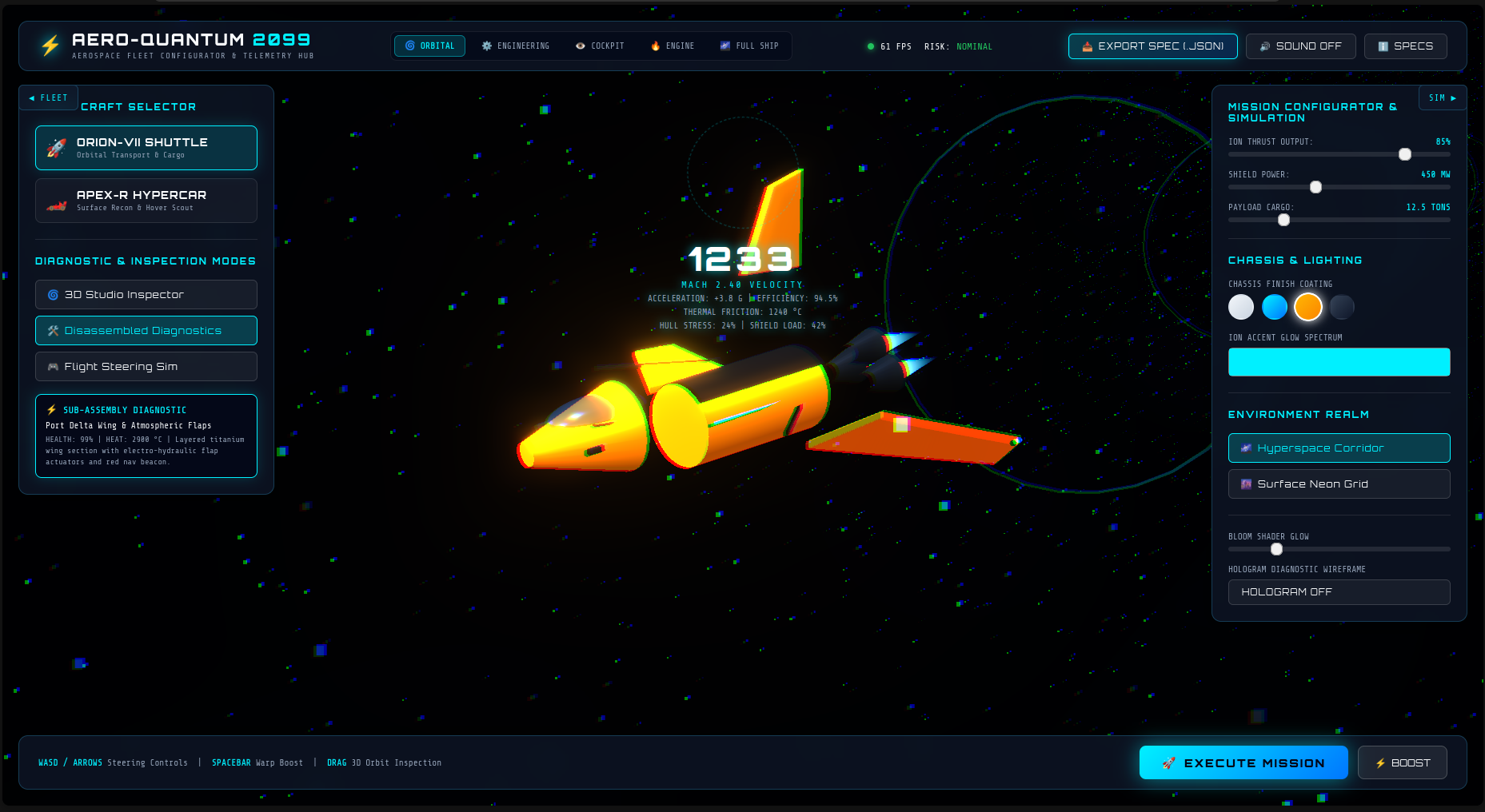
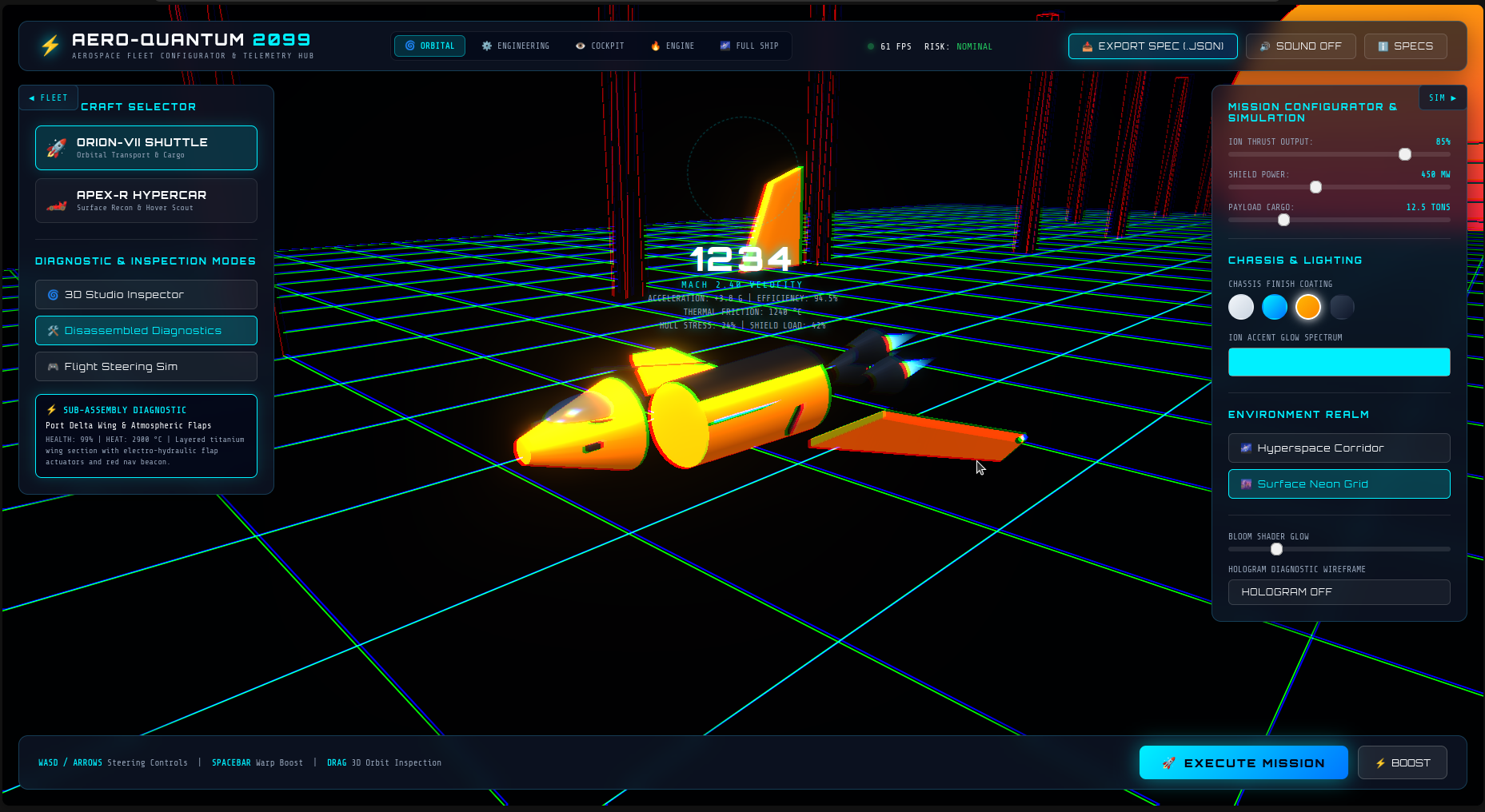
- Enter a disassembled diagnostics mode and inspect individual components.
- Adjust Ion Thrust Output, Shield Deflector Power, and Payload Cargo.
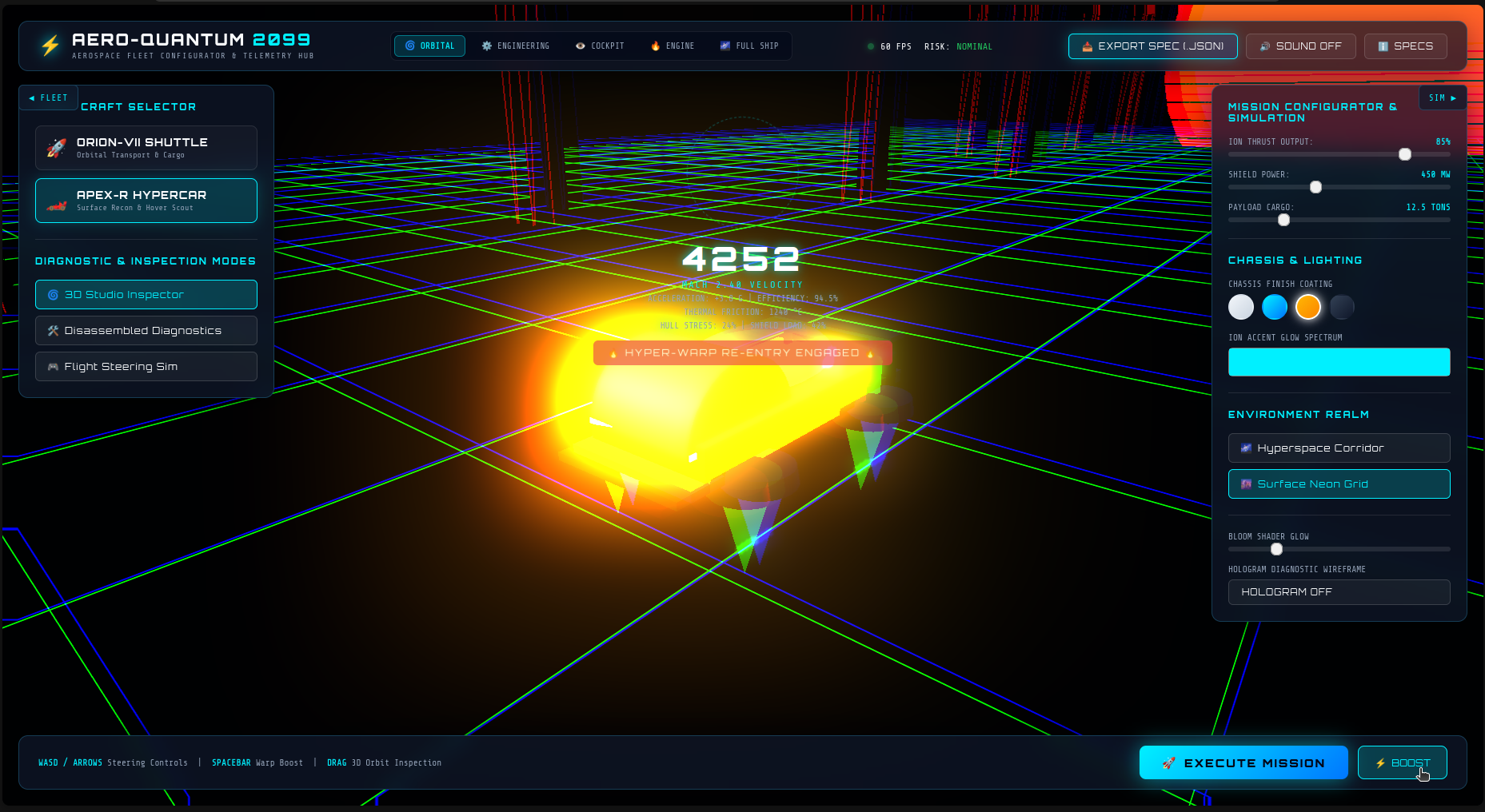
- See telemetry dynamically respond to their engineering decisions.
- Monitor velocity, thermal load, component health, and system performance.
- Export their configured mission specification as a JSON file.
The goal was to make every interaction feel connected to the 3D world rather than placing a conventional dashboard on top of a 3D model.
The Experience
The spacecraft is the centerpiece of the interface.
Cinematic lighting, atmospheric effects, bloom, technical HUD elements, and responsive camera movement create the feeling of operating an advanced aerospace system.
The engineering controls aren't just visual sliders. They drive the simulation's telemetry, allowing users to experiment with different configurations and understand the consequences of their decisions.
The diagnostics mode takes this further by separating the craft into its major assemblies and exposing their simulated health and telemetry.
How We Built It
The project is built as a client-side WebGL experience using:
- Three.js for the 3D environment, rendering, geometry, interaction, and effects.
- JavaScript for the application logic and simulation.
- GSAP for smooth interface and animation transitions.
- Vite for development and production builds.
- Procedural 3D geometry for the spacecraft and vehicle systems.
We deliberately kept the experience client-side so that the entire interactive simulation can run directly in the browser without requiring a backend.
Challenges
The biggest challenge was balancing visual ambition with usability and performance.
A 3D website can easily become a collection of impressive effects that looks good but is difficult to use. We therefore focused on making the 3D scene the primary interface while keeping the engineering controls understandable.
Another challenge was creating detailed spacecraft geometry and convincing lighting while maintaining a responsive browser experience.
We also had to make sure that interactions such as diagnostics, vehicle switching, telemetry updates, and configuration changes remained synchronized with the 3D scene.
What We Learned
We learned that creating a strong 3D web experience isn't just about adding more polygons, shaders, or effects.
The most important part is creating a reason for the user to interact with the 3D world.
That became the core principle behind AERO-QUANTUM 2099:
Don't just view the machine. Operate it.
What's Next
AERO-QUANTUM 2099 is designed as a foundation for a larger browser-based aerospace simulation experience.
Future iterations could expand the mission system, introduce more spacecraft systems, deeper engineering scenarios, and more complex mission outcomes.
Built With
- css
- gsap
- html
- javascript
- three.js
- vite
- webgl

Log in or sign up for Devpost to join the conversation.