-
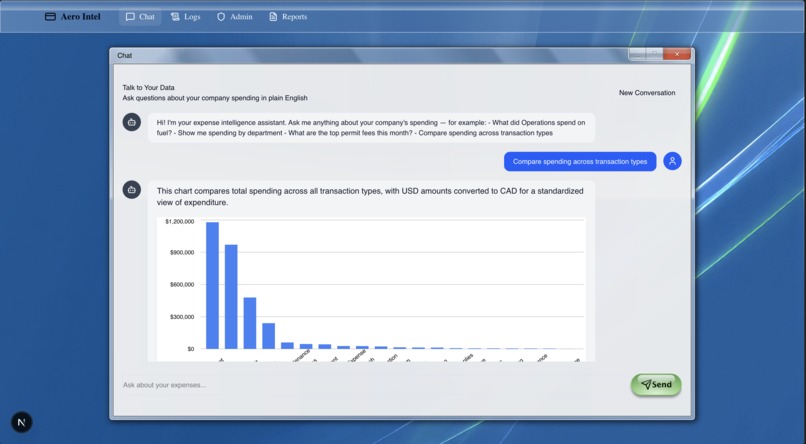
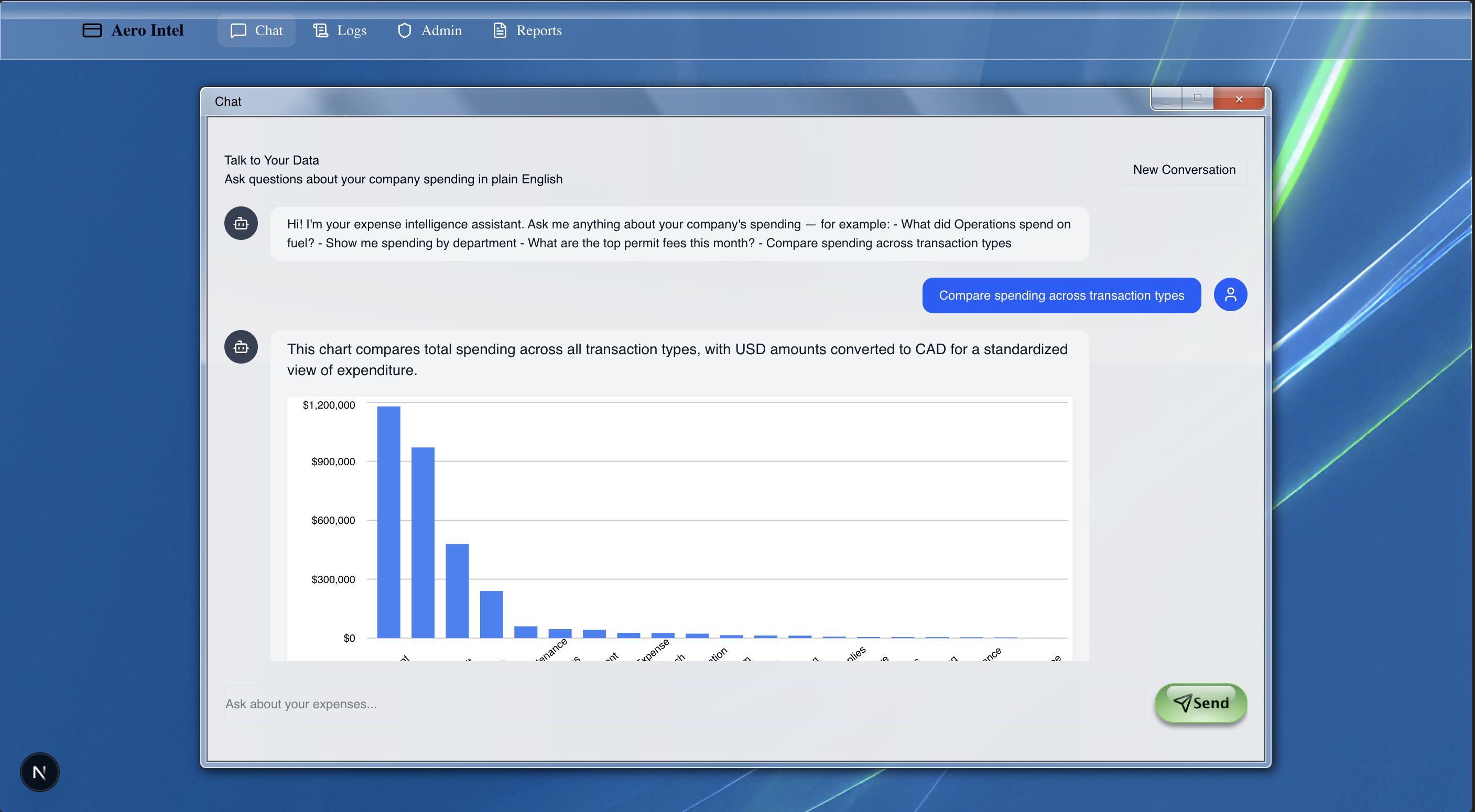
Chat
-
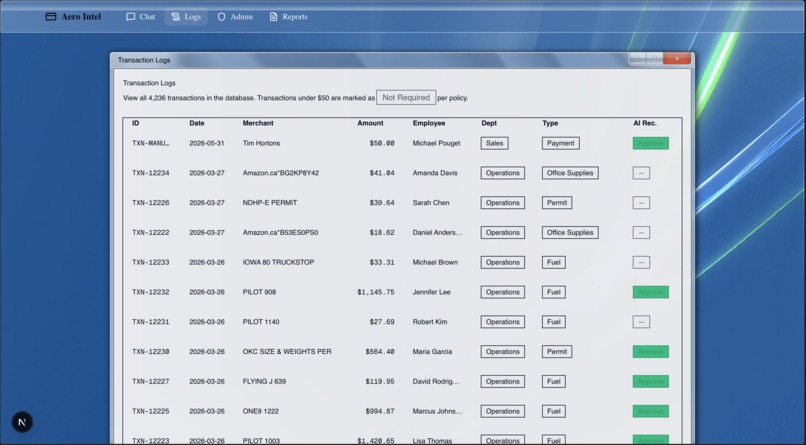
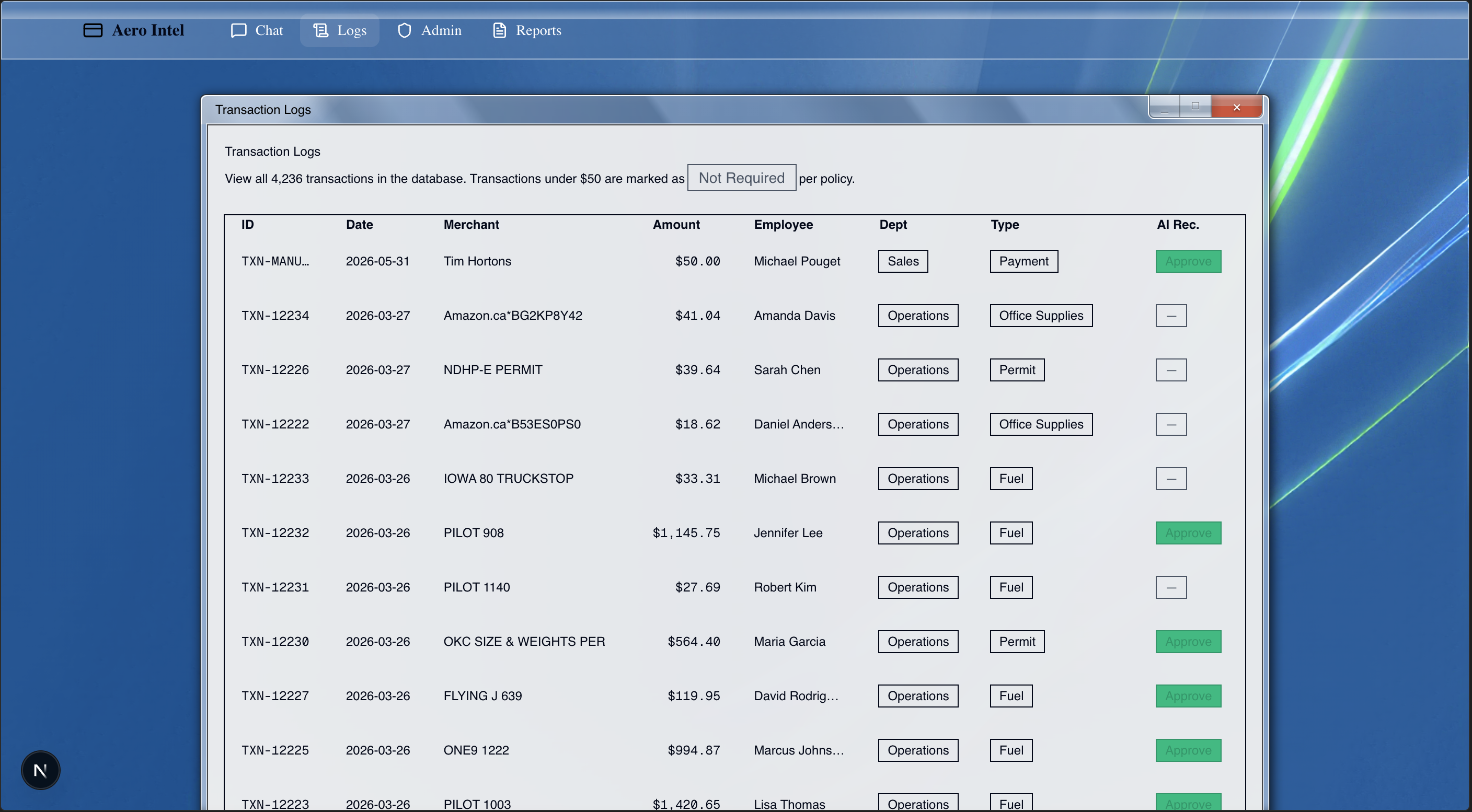
Logs
-
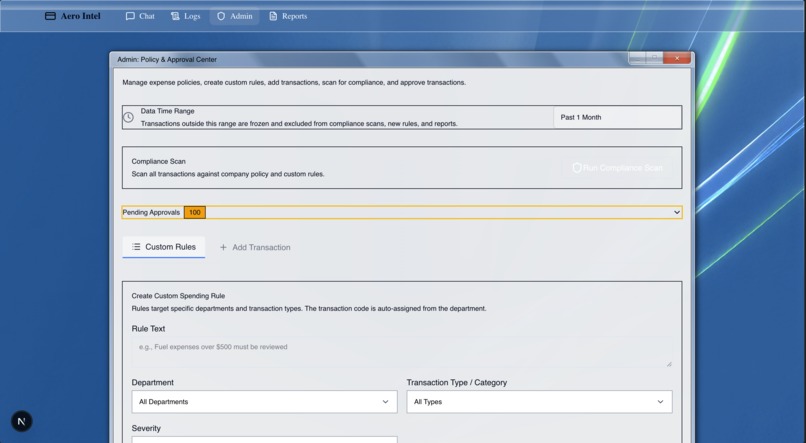
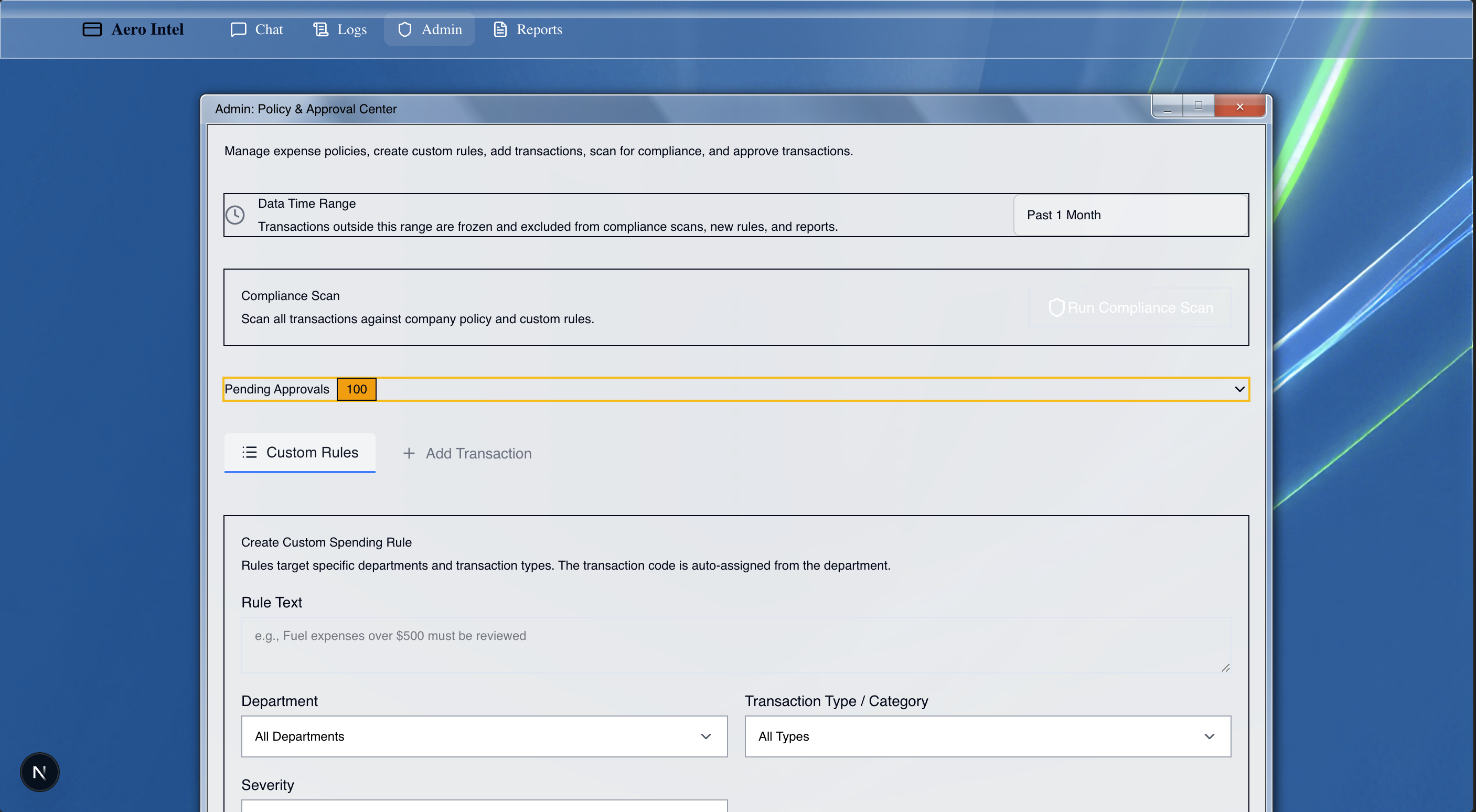
Admin (Adding Transactions, Adding Rules, Approving or Declining Transactions)
-
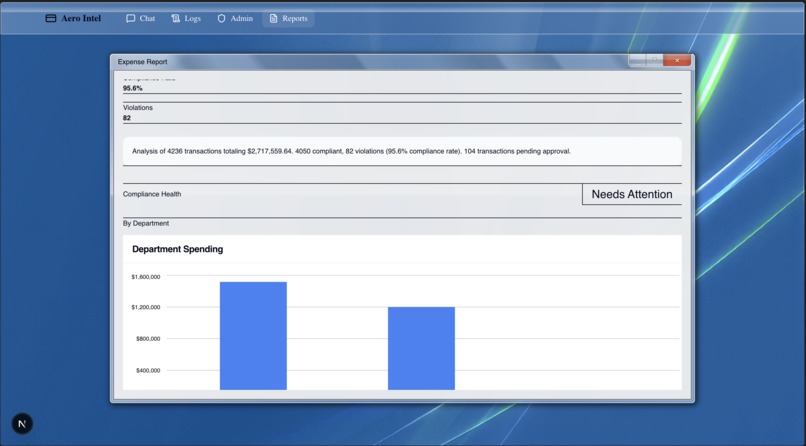
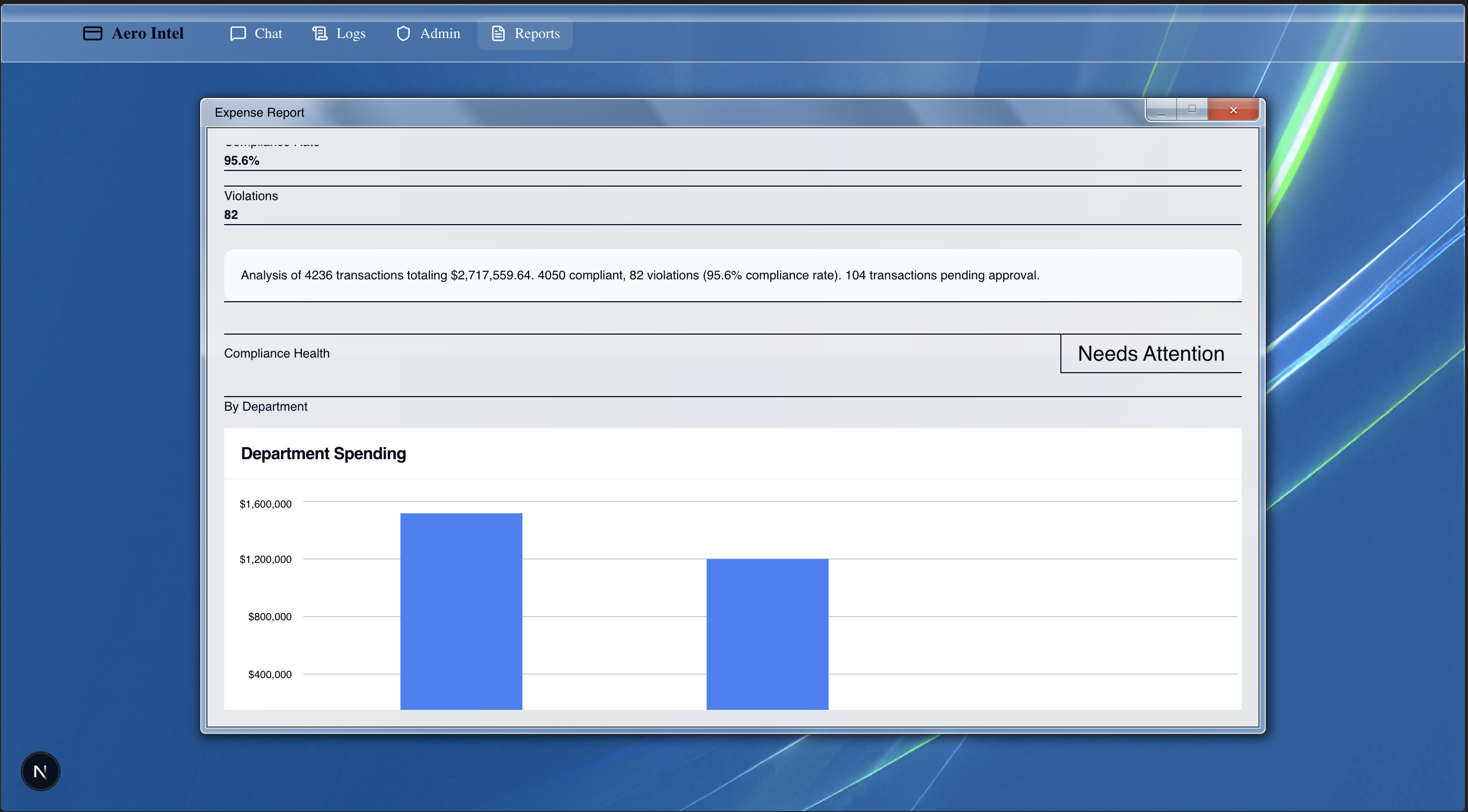
Report
Try it out: https://mpc-hacks-2026.vercel.app
Check out our repo: https://github.com/Mikachupichu/MPC-Hacks-2026
Inspiration
We chose to tackle Brim's challenge, which involved creating an intelligent application that can manage employees' financial transactions. Michael had experience integrating AI into applications and wished to take his skills to the next level by learning to integrate agentic, multi-step workflows. Emy took care of the UI design and followed the aesthetic theme of MPC Hacks 2026 by using the Frutiger Aero theme; the aim was to bring back that nostalgic desktop feeling of the Windows Vista and 7 era.
What it does
Aero Intel is a centralized expense intelligence platform that simplifies how businesses track transactions and manage policy compliance. It features three main capabilities:
- Interactive Data Queries: Users can ask questions about company spending in plain English, such as asking what a specific department spent on a category, and receive immediate interactive summaries and charts.
- Automated Policy Compliance: The application evaluates transaction records against custom company rules, automatically identifying the context behind different charges. Company policies can be set in plain English —no need to know how to code.
- Approval Workspace: A dedicated dashboard aggregates pending transaction requests and active rules into a single view, allowing administrators to process expense approvals efficiently. An agent automatically analyses pending transactions and recommends a course of action.
How we built it
The application is built on a decoupled architecture designed to keep the interface fast and responsive:
- Frontend: Built with Next.js, React, TypeScript, Tailwind CSS, and Tremor. The interface is specifically styled to match the classic 2007 Windows Aero theme, using sharp input elements and structured layouts over a fixed desktop backdrop. Tremor is used to provide interactive charts generated on the fly from JSON data received from the backend.
- Backend: Multiple agents powered by Gemini 3.1 Flash-Lite to process natural language queries and handle transaction data analysis at high speeds. LangGraph is used to organize the system into nodes, thus enabling flexible, multi-step agentic workflows through structured Retrieval-Augmented Generation (e.g. generating complex reports with interactive charts from transaction data). We coded it in Python using FastAPI to increase processing speeds. As a result, the application is extremely responsive; even agentic tasks are blazingly fast.
- Data Management: All transaction ledgers, corporate policies, and user filters are managed through an organized MongoDB document database structure that feeds data directly to our agents and application.
Challenges we ran into
We faced several tight constraints and technical hurdles during development. To start, simply brainstorming and figuring out the best way to bring this idea to reality took us approximately six hours, forcing us to execute our plans quickly under strict hackathon deadlines.
On the technical side, we encountered and spent time fixing numerous bugs across both the frontend and backend. We also had to learn to use new tools like Tremor, LangGraph and Tailwind CSS.
We initially considered using vector search to organize and fetch transactions from the database, but the provided transaction data lacked clarity in its descriptions. Instead, we shifted our strategy to strictly organize and fetch the transactions based on explicitly set categories.
Accomplishments that we're proud of
- Building a structured RAG Agentic Workflow: Despite its simplicity, we are proud to have built a robust, agent-oriented backend architecture using graph nodes. This was a completely new experience. Moreover, the agents and the backend system are incredibly fast and retrieve data by generating MongoDB aggregation pipelines to ground their outputs.
- Faithful Visual Design: We are very proud of the user interface. Replicating the translucent glass panel aesthetic while keeping the form fields flat and legible captures the exact nostalgia we were aiming for.
What we learned
This project taught us a lot about UI design, chart generation, graph architectures and AI agents. Building such a complex project within 24 hours was an invaluable learning experience.
Built With
- fastapi
- gemini-3.1-flash-lite
- langgraph
- mongodb-atlas
- next.js
- python
- react
- shadcn/ui
- tailwind-css
- tremor
- typescript

Log in or sign up for Devpost to join the conversation.