-
-
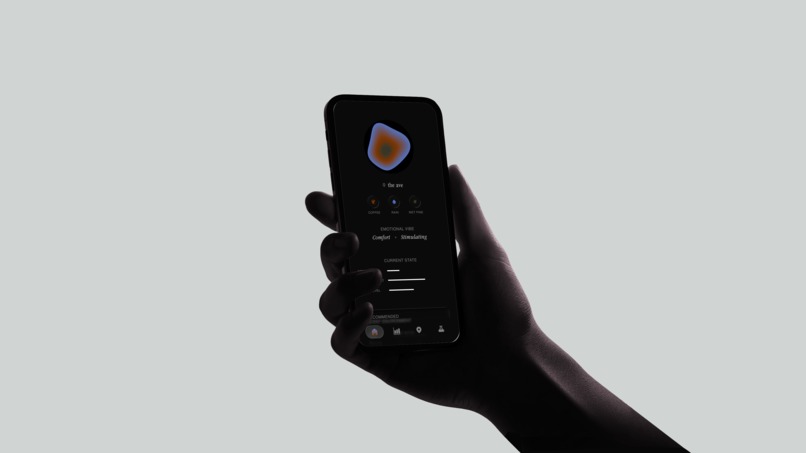
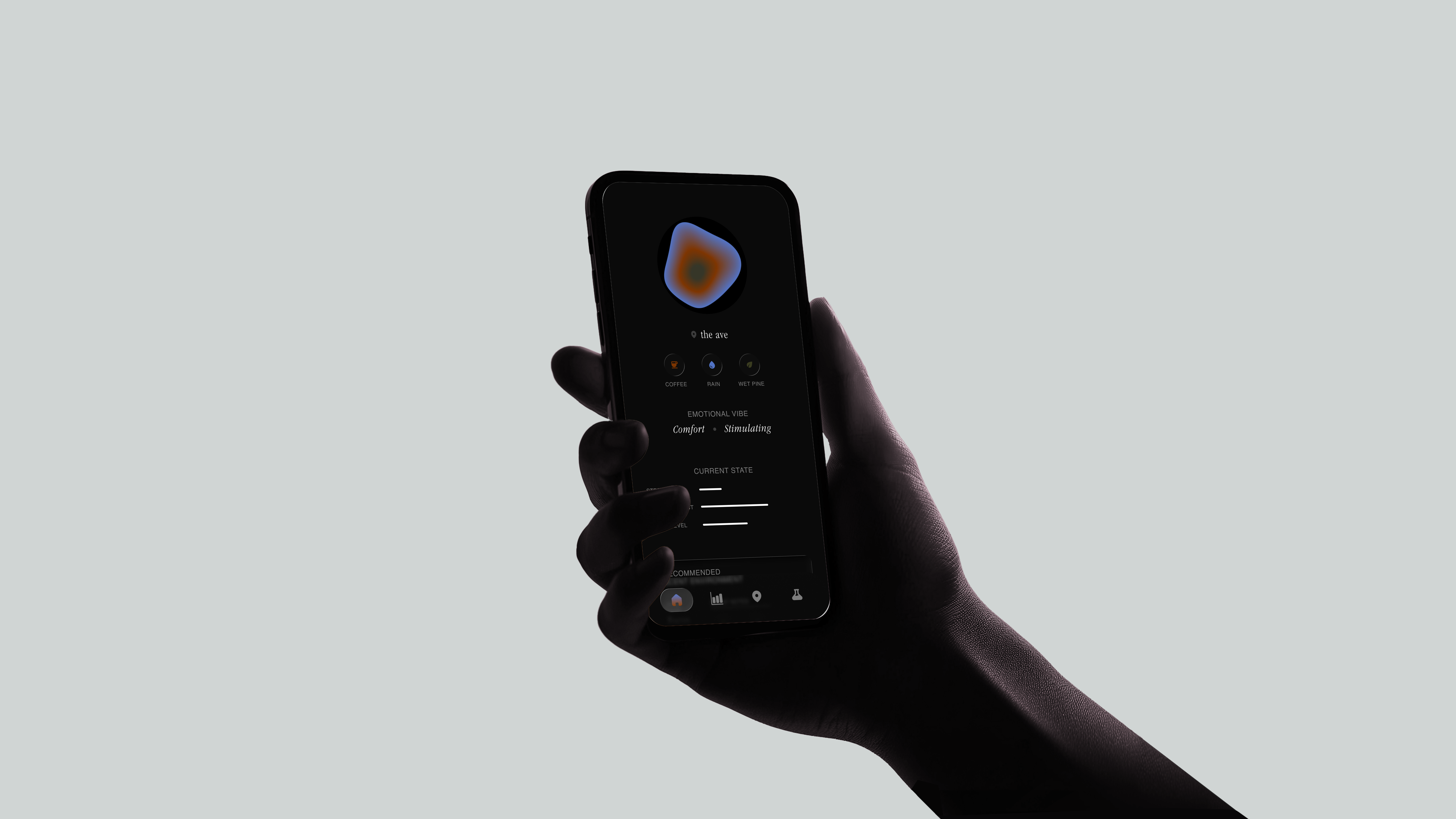
Current scent environment
-
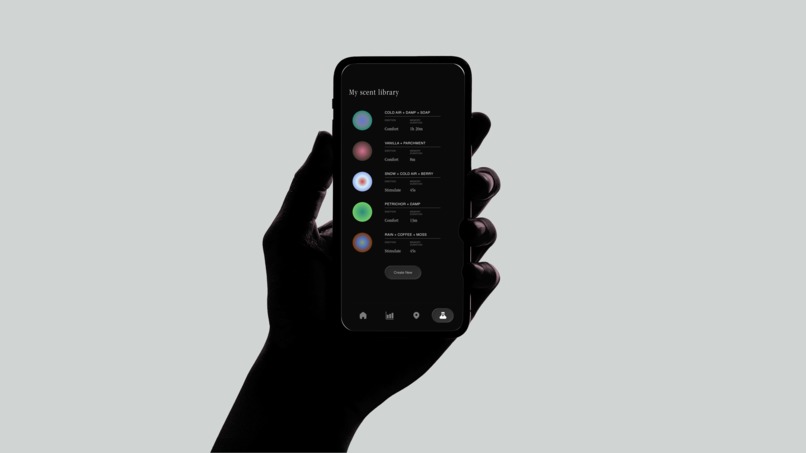
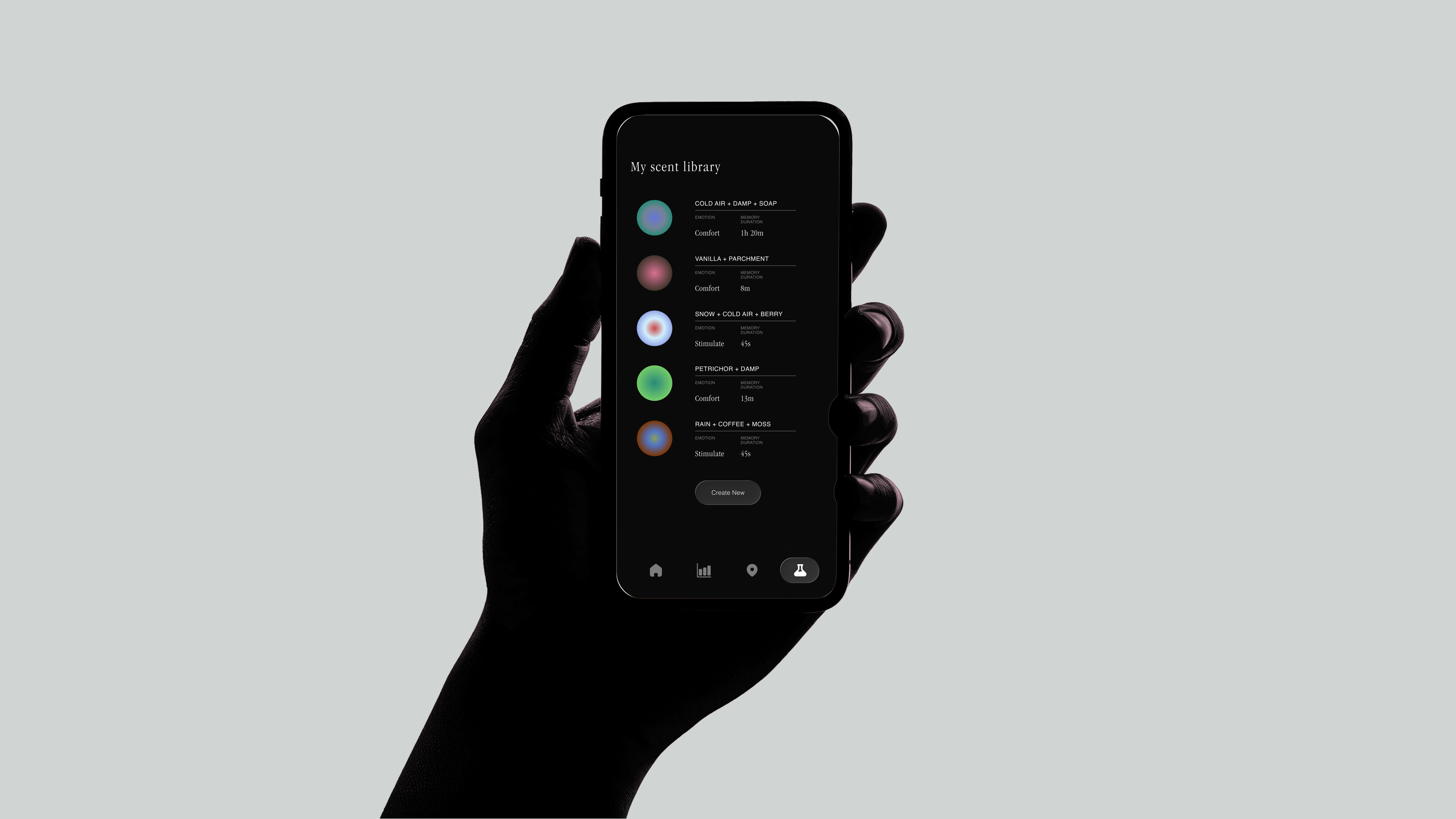
Scent library collection
-
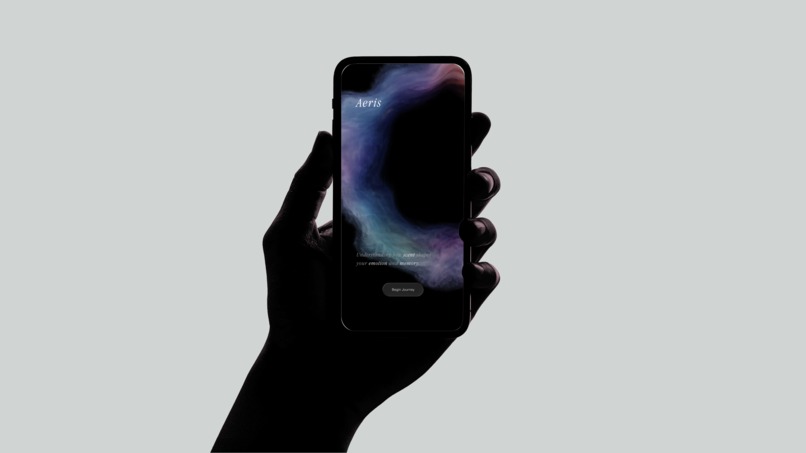
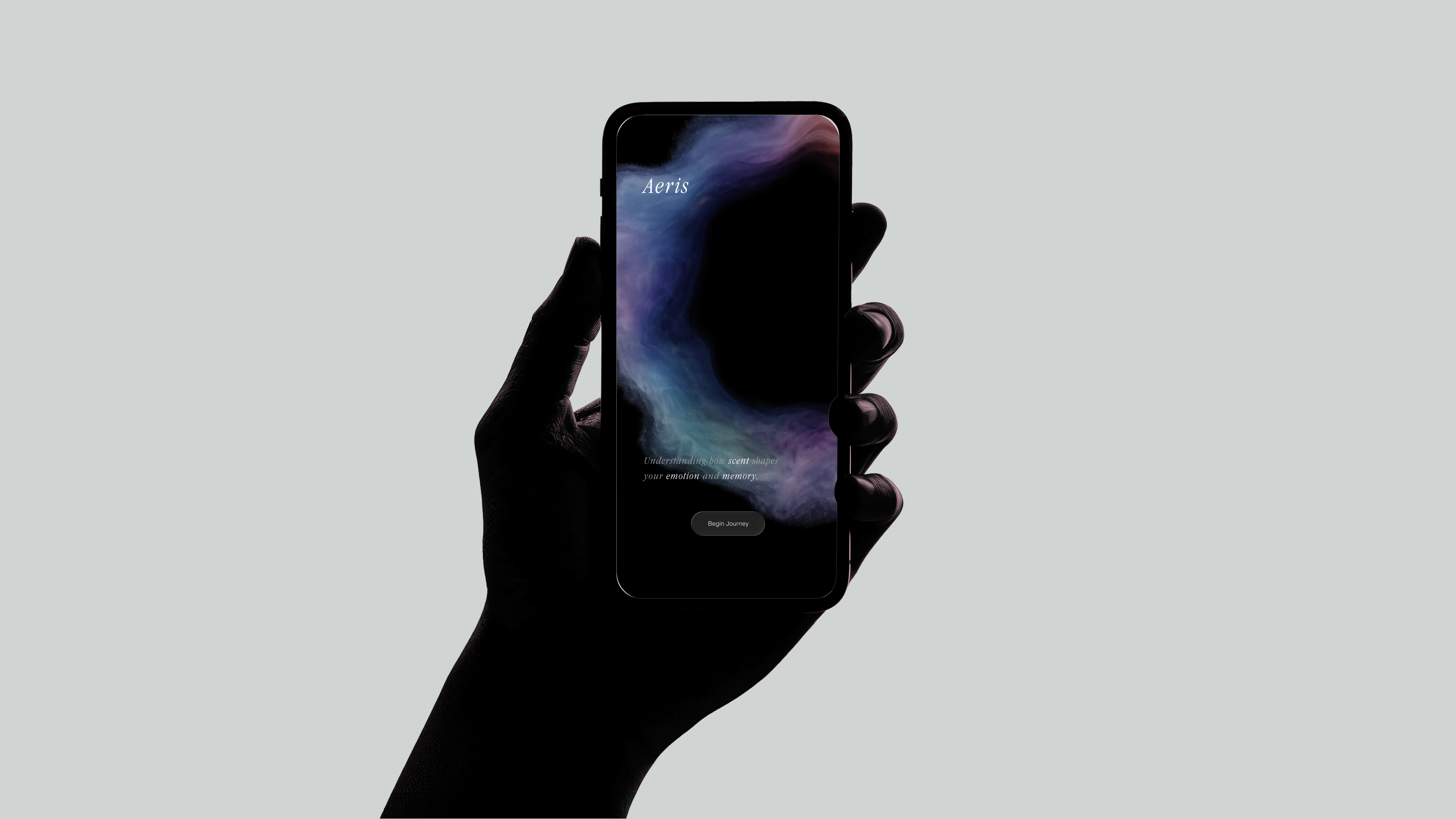
Aeris Homepage
Inspiration
We experience smells constantly, but we rarely pay attention to them. Walking to class, passing a café, or stepping outside after rain, every place has its own scent atmosphere. Even when unnoticed, scent influences our mood and memory. To explore this idea, I conducted a small experiment called “A Day in Scent,” recording the scents I encountered throughout a day along with the emotions they triggered and how long they stayed in memory. This revealed patterns between scent, emotion, and environment, which inspired the design of Aeris.
What I learned
Scent is an invisible but powerful layer of our environment. By tracking scent encounters and visualizing emotional responses, it becomes possible to see patterns in how places influence mood and memory. This project explores how quantified self approaches could extend beyond health metrics into sensory experiences.
How I built it
I designed Aeris, a speculative mobile interface that helps users understand their scent environment. The system includes: a Home screen that visualizes the current scent atmosphere an Insight report showing emotional patterns over time a Scent landscape map where users share scent experiences a Scent creation tool for designing personalized scent blends
Challenges
The biggest challenge was designing for something that is invisible and subjective. Scent cannot be easily captured or quantified, and emotional responses vary widely between individuals. Balancing data visualization with the atmospheric quality of scent was also an important design challenge.
Built With
- aftereffect
- figma


Log in or sign up for Devpost to join the conversation.