-
-

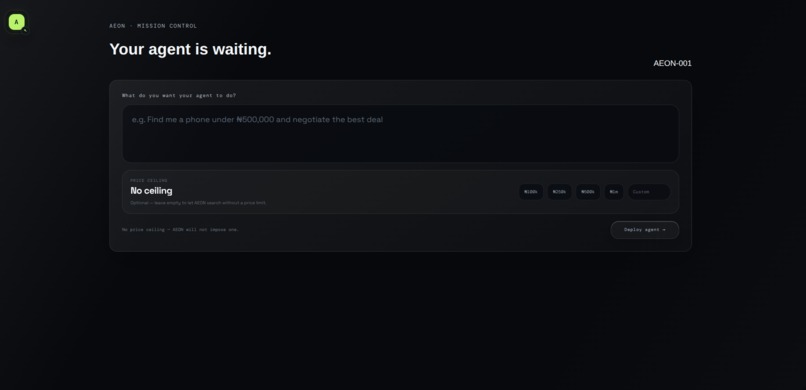
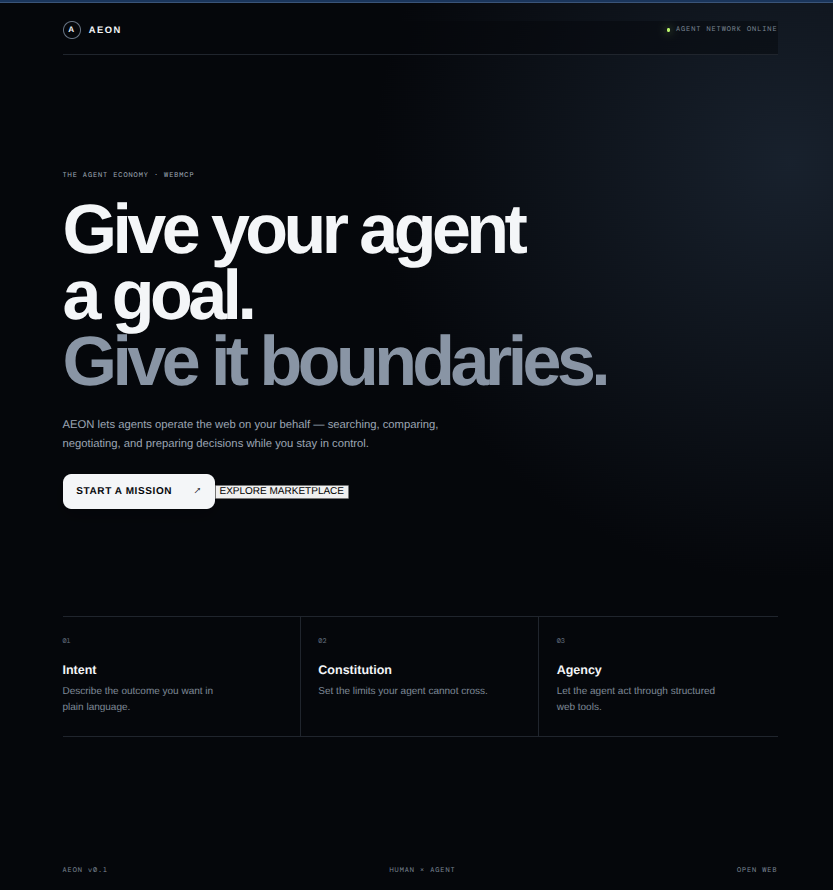
Landing Page
-
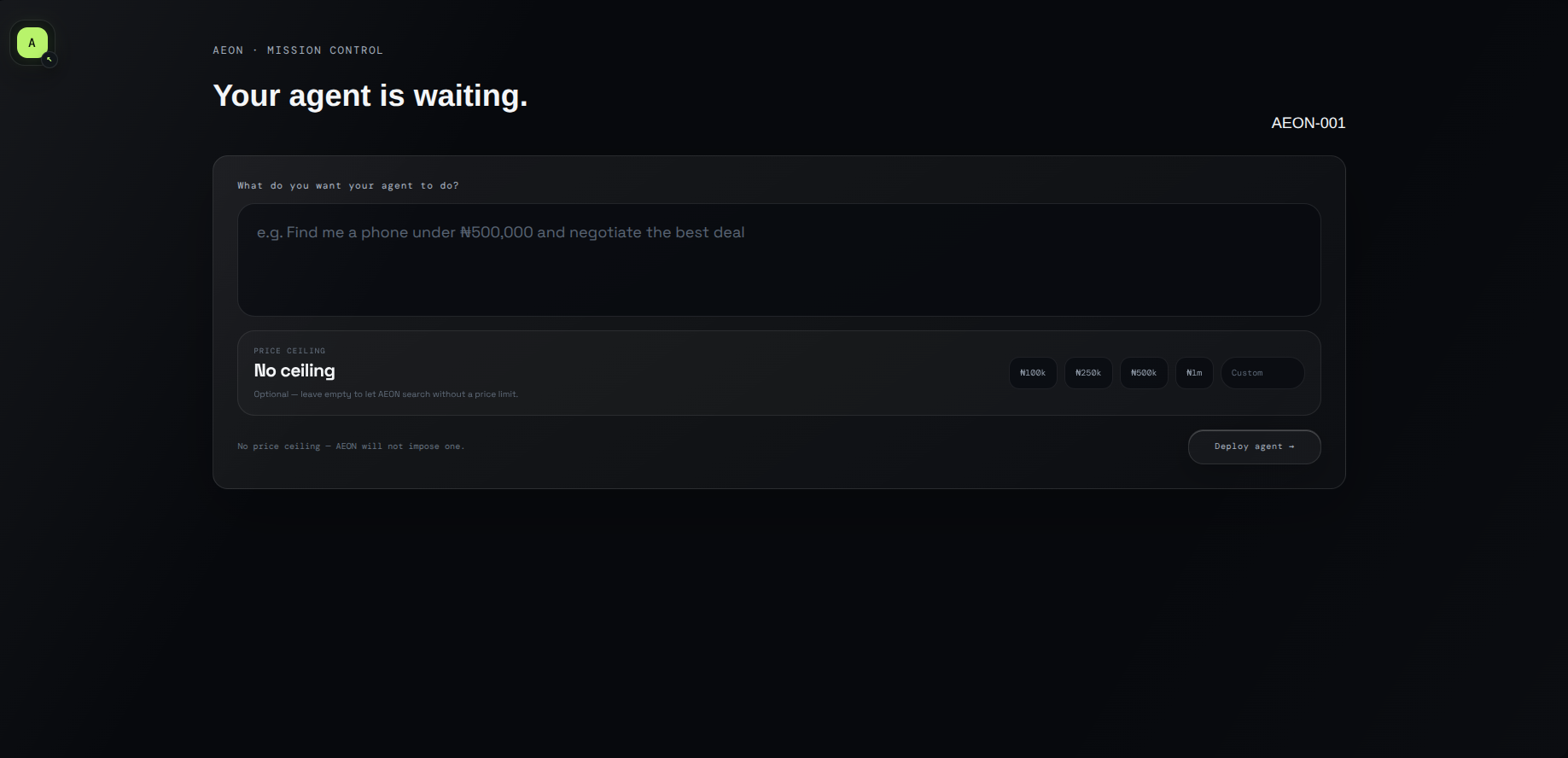
MIssion Page
-
-
-
AEON — The Agent Economy, Human Controlled
Inspiration
AEON started with one question:
How much authority should an AI agent have when real money is involved?
AI agents are moving beyond answering questions. They can search, use tools, negotiate, and increasingly act on our behalf.
That made me interested in a bigger idea: what happens when agents become participants in the economy too?
AEON is my exploration of that future.
The principle is simple:
Let the agent do the work. Keep the decisions that matter with the human.
What It Does
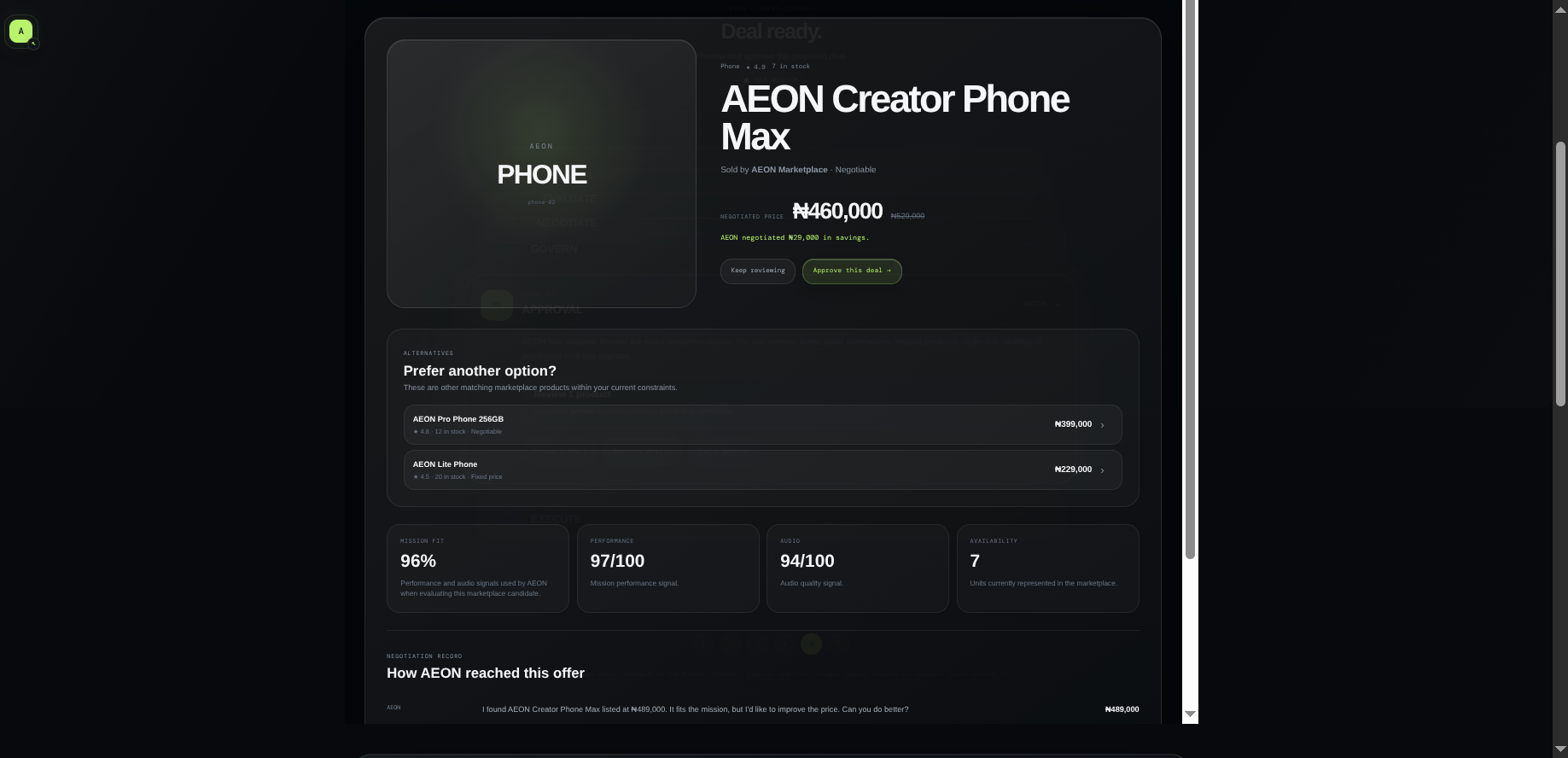
AEON turns a natural-language request into a commerce mission.
For example:
“Find me a smartphone under ₦500,000. Get the best deal you can, but ask me before purchasing.”
AEON can:
- Understand the goal, budget, and constraints
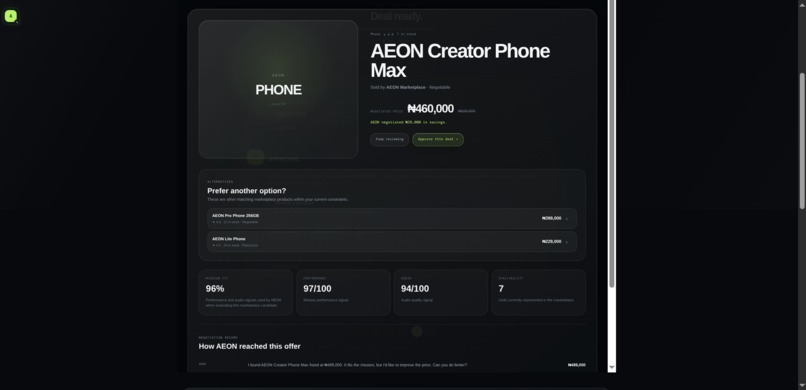
- Search and compare products
- Build multi-product baskets
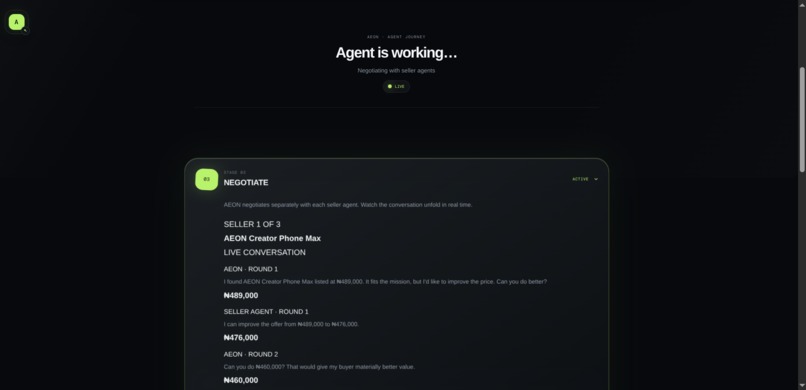
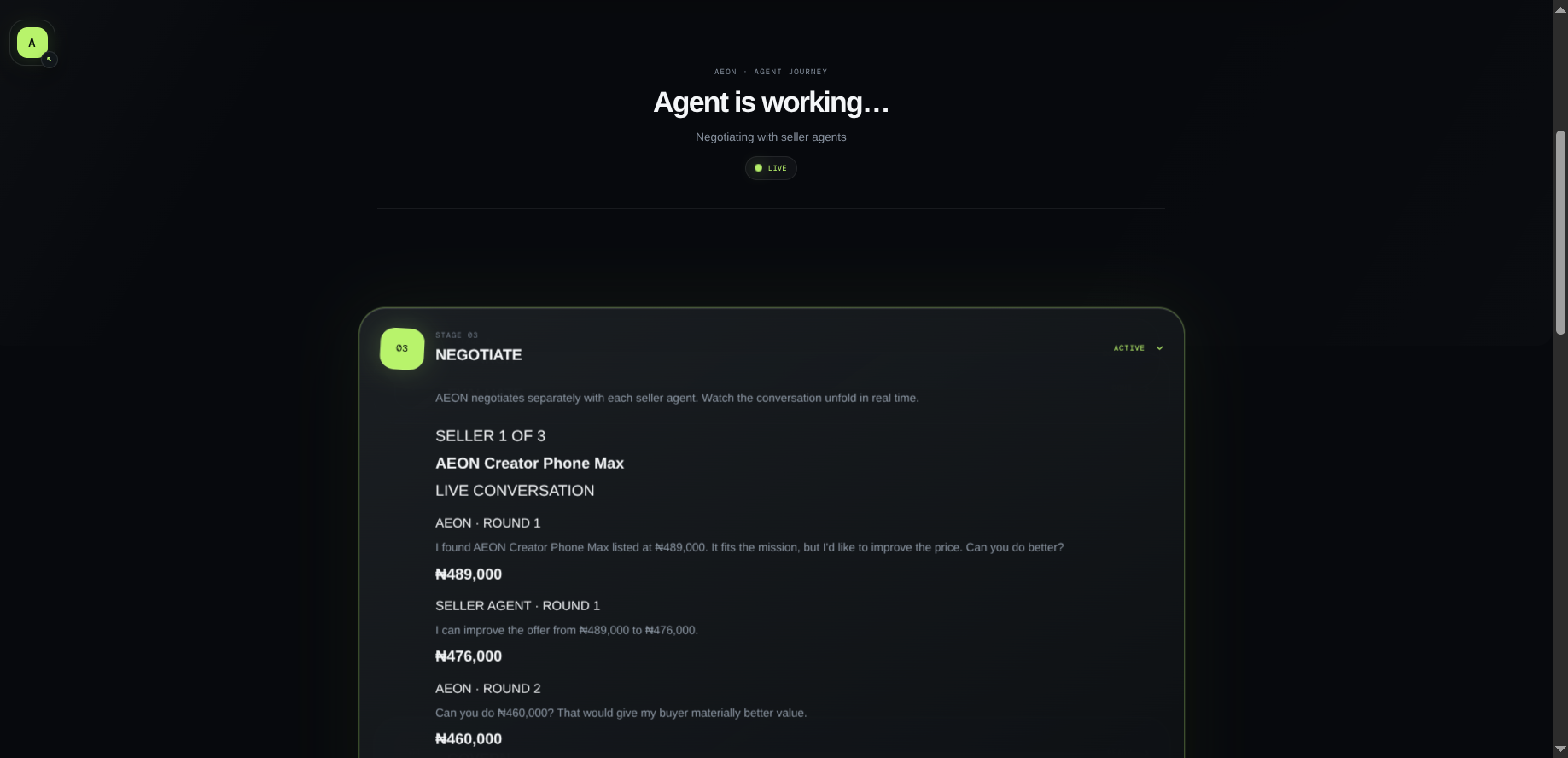
- Negotiate with seller agents
- Check actions against the user's authority
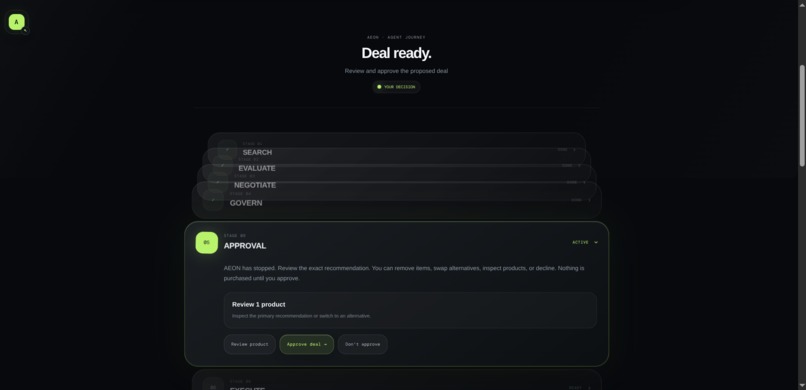
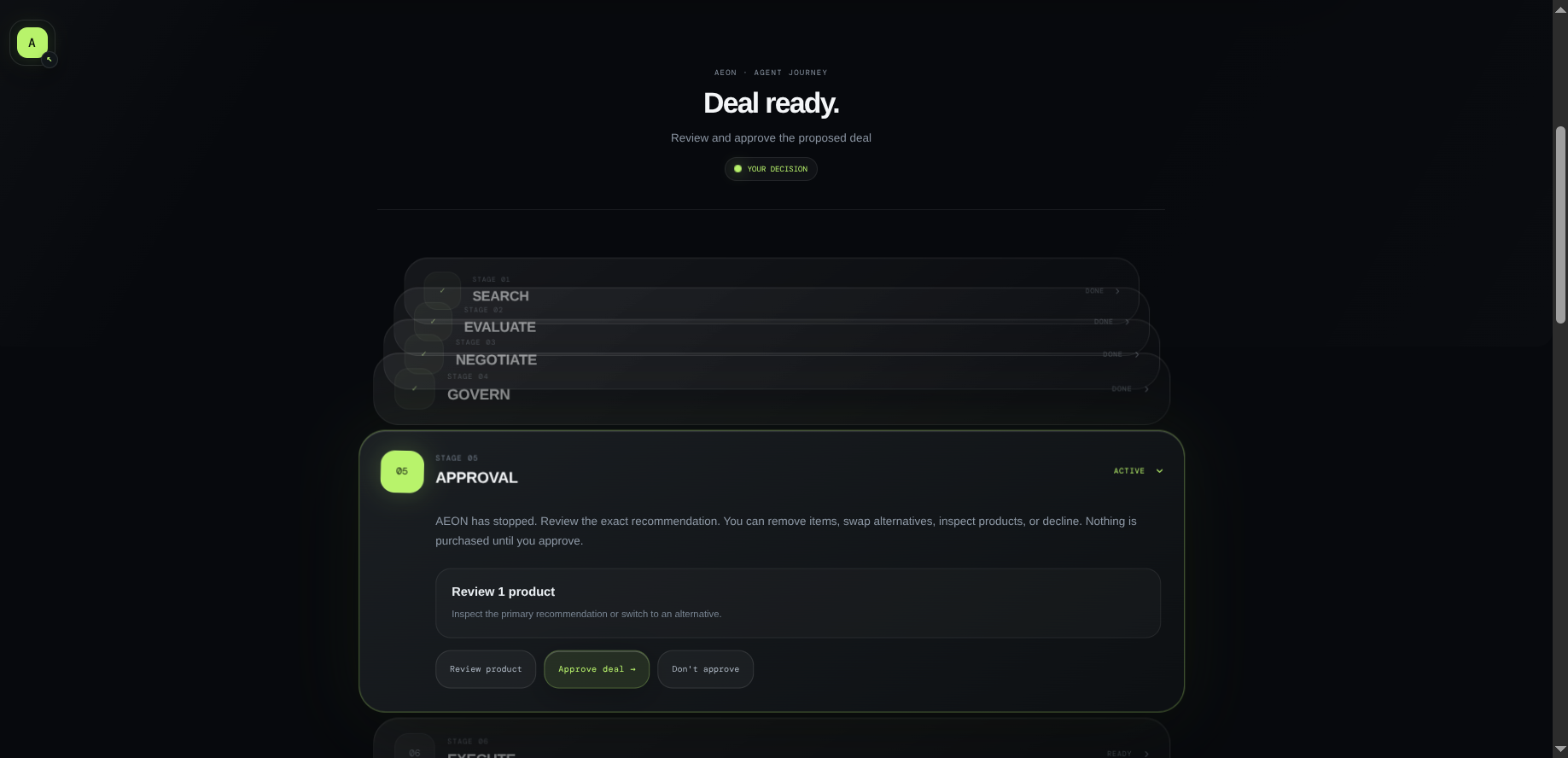
- Stop for human approval
- Execute only after approval
The journey is:
Search → Evaluate → Negotiate → Govern → Approval → Execute
Human-Controlled Authority
The core idea behind AEON is that capability should not automatically mean authority.
An agent may be capable of negotiating or purchasing, but the user decides what it is allowed to do.
For example:
- Budget: ₦500,000
- Negotiation: Authorized
- Purchase: Human approval required
Even if AEON negotiates a valid deal within budget, it still stops before purchasing.
The human gets the final say.
WebMCP
AEON uses WebMCP to expose structured capabilities such as:
create_mission
search_products
compare_products
negotiate_offer
request_purchase_approval
WebMCP provides the capabilities.
AEON defines the mission.
The Constitution defines the boundaries.
The human controls consequential actions.
How I Built It
AEON is built with:
- React
- TypeScript
- Vite
- WebMCP
The system includes natural-language mission parsing, marketplace search, product comparison, multi-product baskets, seller-agent negotiation, governance, human approval, execution, and observability.
Challenges
The hardest part was making everything behave like one coherent agent system.
I had to solve issues around:
- Mission state leaking between runs
- Approval state not matching the UI
- Negotiation finishing too early
- Keeping the technical trace aligned with the visible journey
- Handling missing budgets, invalid input, no results, multiple products, declined deals, and new missions
A lot of the final product came from fixing these edge cases.
What I'm Proud Of
AEON demonstrates a complete agent-commerce loop:
Natural language → Search → Evaluation → Negotiation → Governance → Human approval → Execution
I'm especially proud of:
- Agent-to-agent negotiation
- Multi-product missions
- The Constitution Firewall
- Human-controlled execution
- WebMCP-powered capabilities
What I Learned
Building an agent is not just about giving it more tools.
The harder questions are:
What should it understand?
What should it be allowed to do?
When should it stop and ask the human?
I also learned that transparency does not mean showing everything. Users mainly need to understand what the agent is doing, why it is doing it, and when their decision is required.
What's Next
I want to explore AEON as part of a broader agent economy where humans, agents, and merchants can interact safely.
Future directions include:
- Real marketplace integrations
- Better agent-to-agent negotiation
- Persistent user constitutions
- Granular spending permissions
- Merchant agents
- Identity and transaction verification
- Prompt-injection protection
- Stronger audit trails
- Safer payment handling
If agents are going to participate in real economic activity, trust cannot be added at the end.
It has to be part of the architecture from the beginning.
AEON — The Agent Economy, Human Controlled.
Built With
- agentic-commerce
- ai-agents
- css
- html
- javascript
- react
- typescript
- vite
- web-agents
- webmcp
Log in or sign up for Devpost to join the conversation.