What is AEO ?
AEO stands for Authorized Economic Operator. It is a status granted by customs authorities to businesses that meet defined standards for compliance, reliable management, and supply-chain security. It forms part of the World Customs Organization’s framework for making international trade both safer and more efficient.
-What does customs assess?
Requirements vary by country and type of authorization, but common areas include:
Compliance: a satisfactory history of following customs requirements. Internal controls and records: accurate, traceable business information and procedures for detecting errors. Financial soundness: the ability to meet financial commitments and maintain necessary controls. Security: protection of goods, premises, transport, and information. Employees and business partners: appropriate training and management of supply-chain risks.
-What benefits do businesses receive?
Depending on the programme, benefits can include fewer physical inspections and document checks, priority treatment when selected for inspection, and easier access to simplified customs procedures. These measures can improve predictability, but AEO does not guarantee that every shipment will clear immediately or avoid inspection.
Benefits can also extend internationally through Mutual Recognition Agreements, under which partner customs authorities recognize qualifying AEOs and provide specified advantages. Recognition depends on the agreement and its eligibility requirements; it is not automatic worldwide.
-How does a business become certified?
The business prepares an application and supporting evidence. Customs then assesses whether its procedures actually work, using document review, interviews, and operational checks. For example, a written training policy alone may be insufficient: reviewers also need evidence that training occurred. Certification therefore assesses operational capability as well as paperwork.
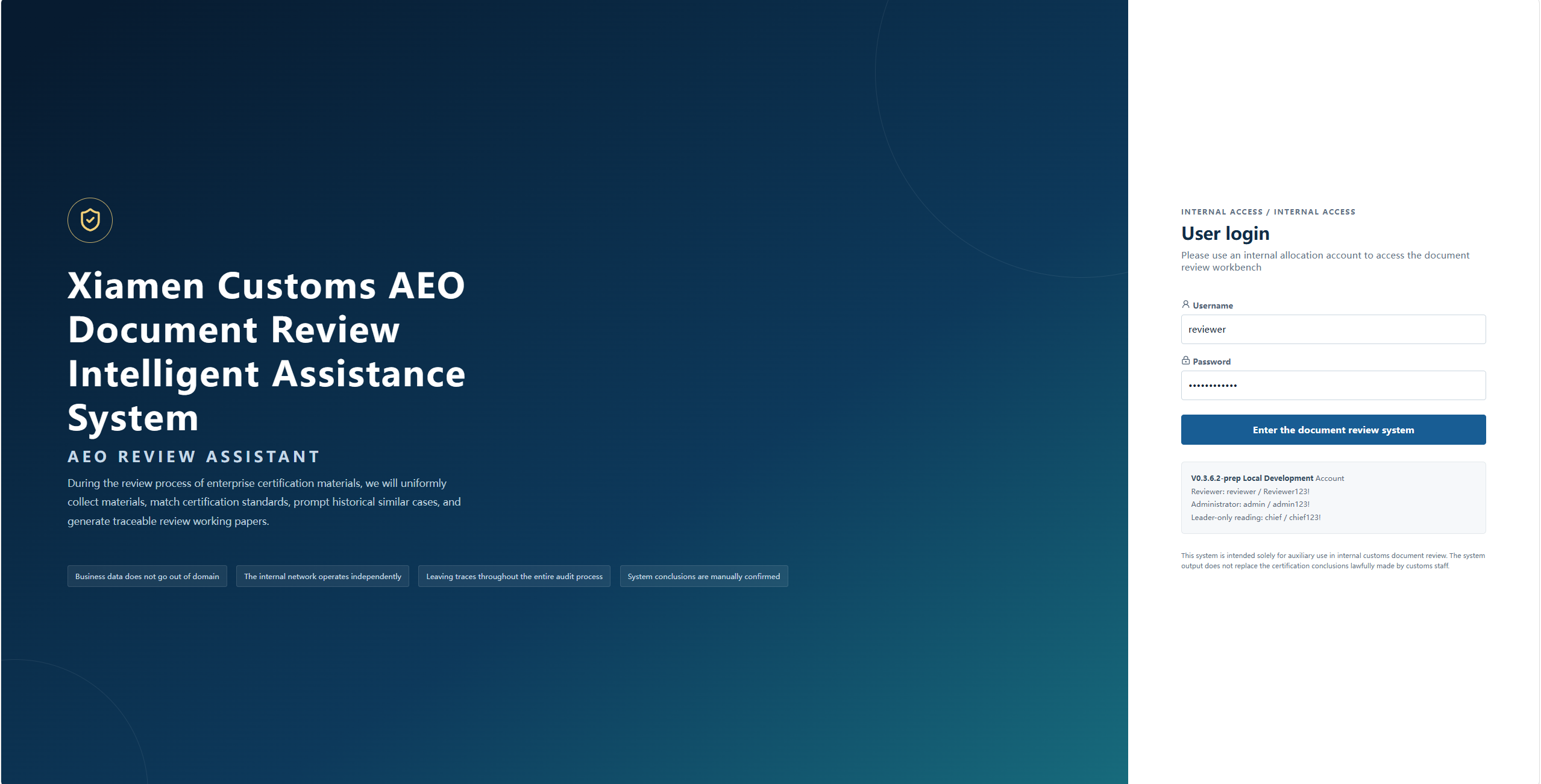
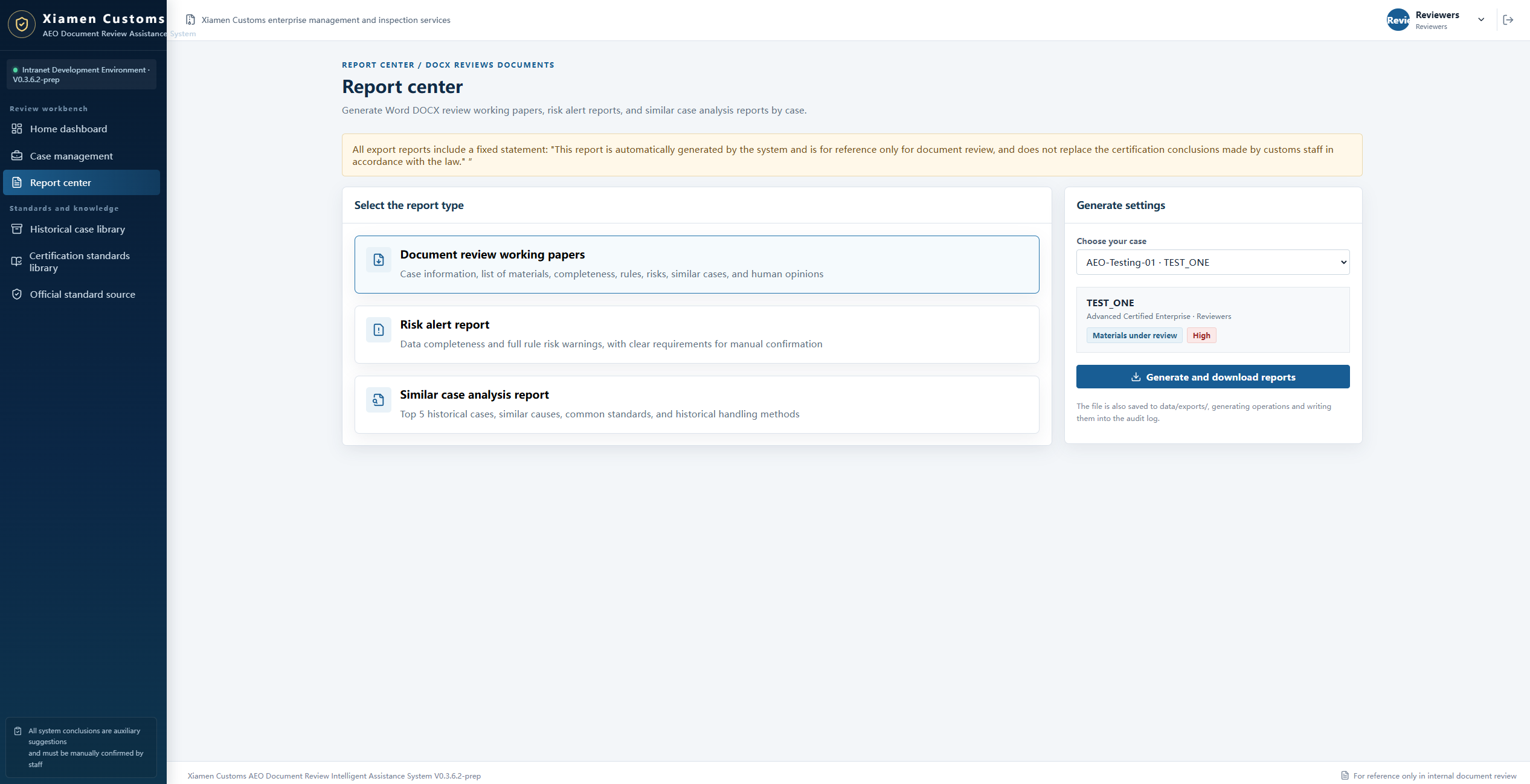
AEO Checker supports preparation: organizing evidence, identifying potential gaps, and highlighting issues for human review.
Inspiration
When I was a freshman in high school in China, my homeroom teacher told us a story about his uncle, who operated a large citrus-export business in our hometown.
That year, his uncle secured a major order from an overseas supermarket chain and needed to deliver the shipment before the peak Christmas sales season. However, shortly before customs clearance, the company’s documentation was found to be incomplete. The shipment was sent for additional inspection, and the company was required to submit dozens of documents from different departments within only a few days. These documents included warehouse surveillance records, supply-chain risk assessments, and numerous import and export documents.
Because the materials were scattered across paper files and different departments, my teacher’s uncle and his employees spent several days and nights searching for, organizing, and supplementing the required documents. They were delayed by only 48 hours, but those 48 hours caused them to miss the most important sales window of the year.
At the time, my teacher wanted us to remember a simple lesson: people should be punctual and prepared, because the real world does not always give latecomers a second chance.
Years later, when I learned about AEO procedures through my work with customs professionals in Xiamen, I realized that the problem was not simply that the company had failed to prepare on time. The deeper problem was that the process itself was highly complex. The standards were extensive, the evidence was scattered, and traditional manual review could turn document preparation into a time-consuming black hole.
That realization became the starting point for AEO Checker. We want honest citrus traders, small and medium-sized businesses, and growing companies to avoid losing important business opportunities simply because their documentation is difficult to organize or the review process is unpredictable.
In a world that increasingly depends on international trade and cooperation, our goal is simple: use technology to give time back to businesses and production.
What it does
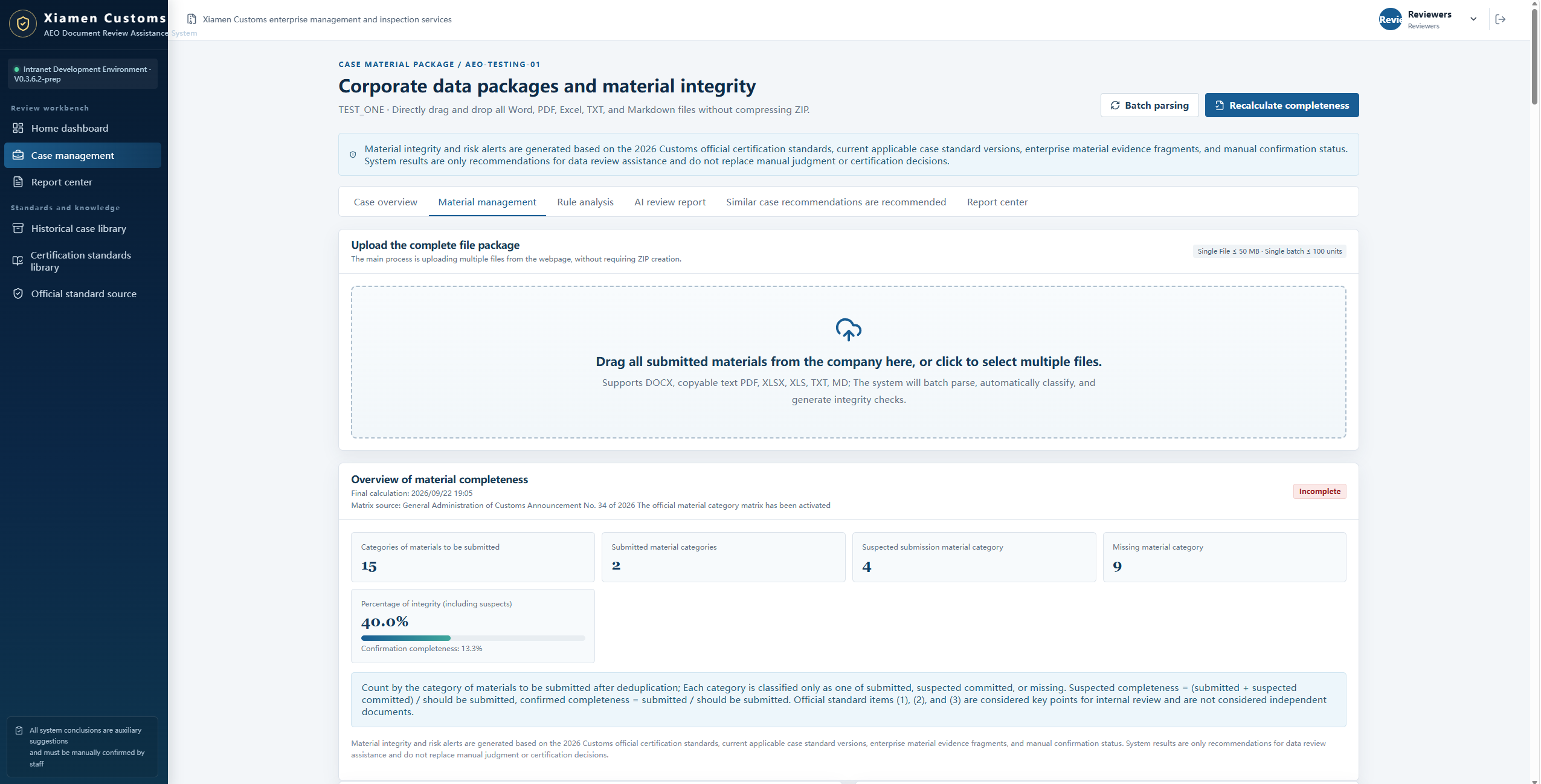
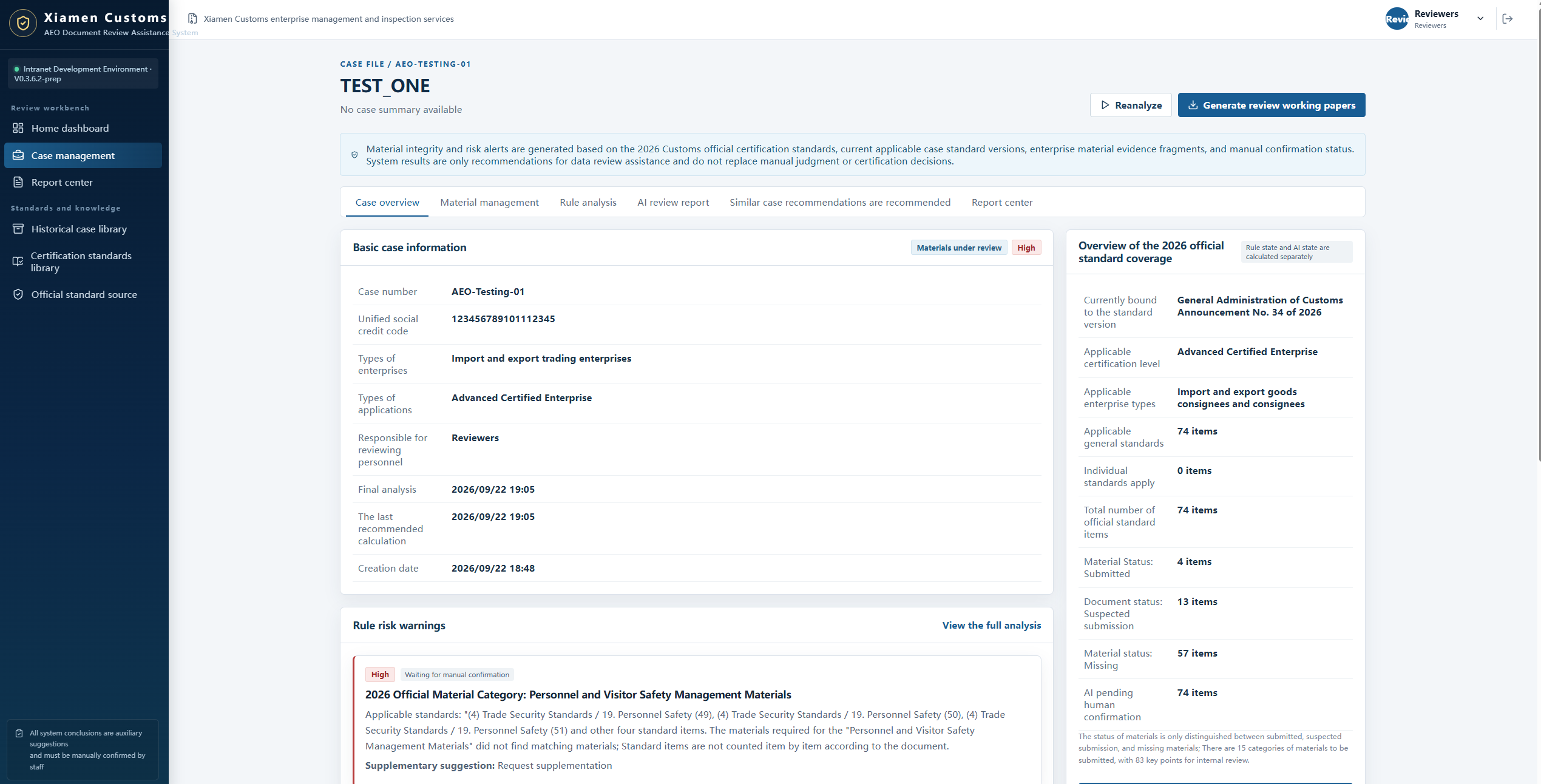
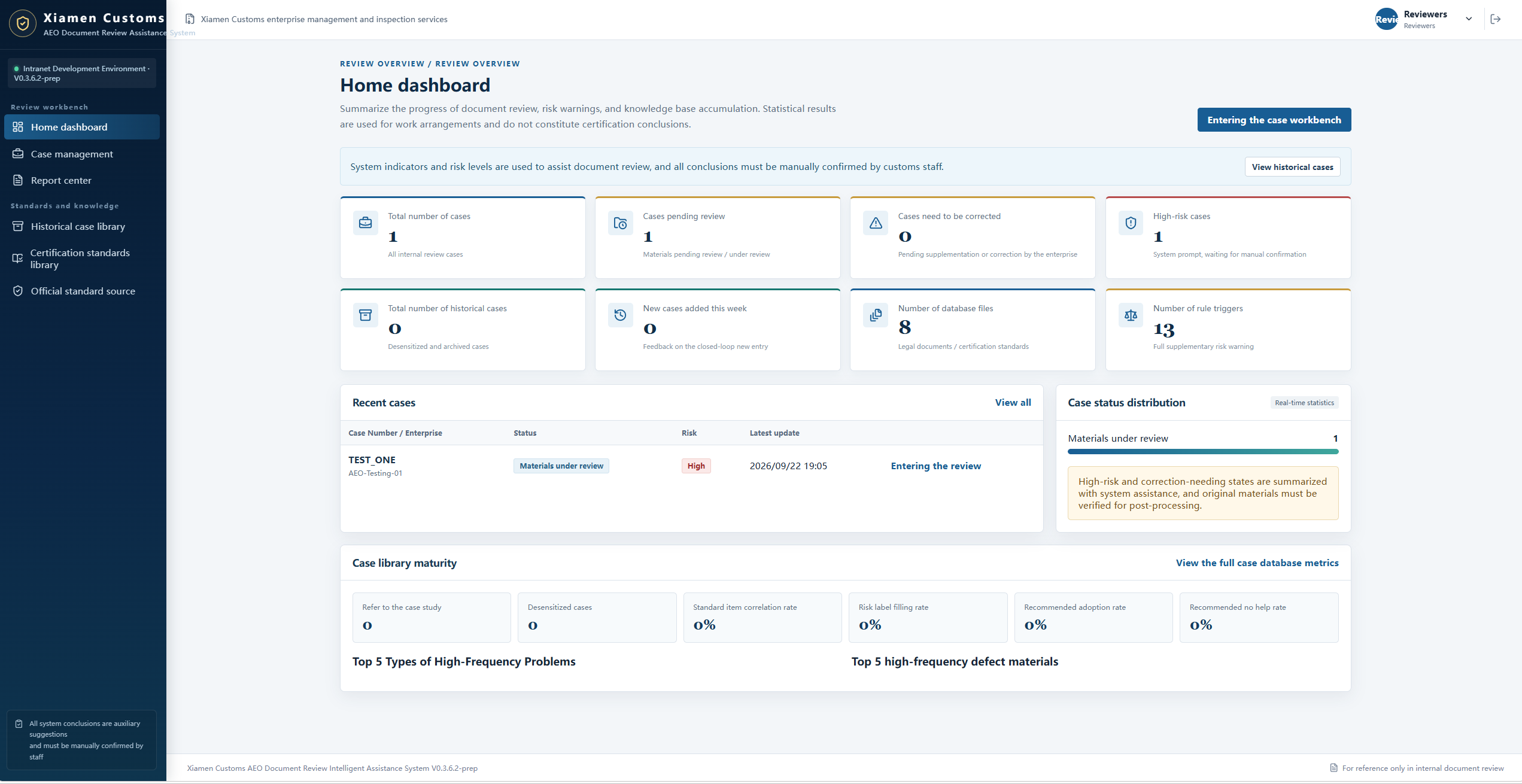
AEO Checker is an enterprise-facing document preparation and review assistant for businesses preparing for AEO certification.
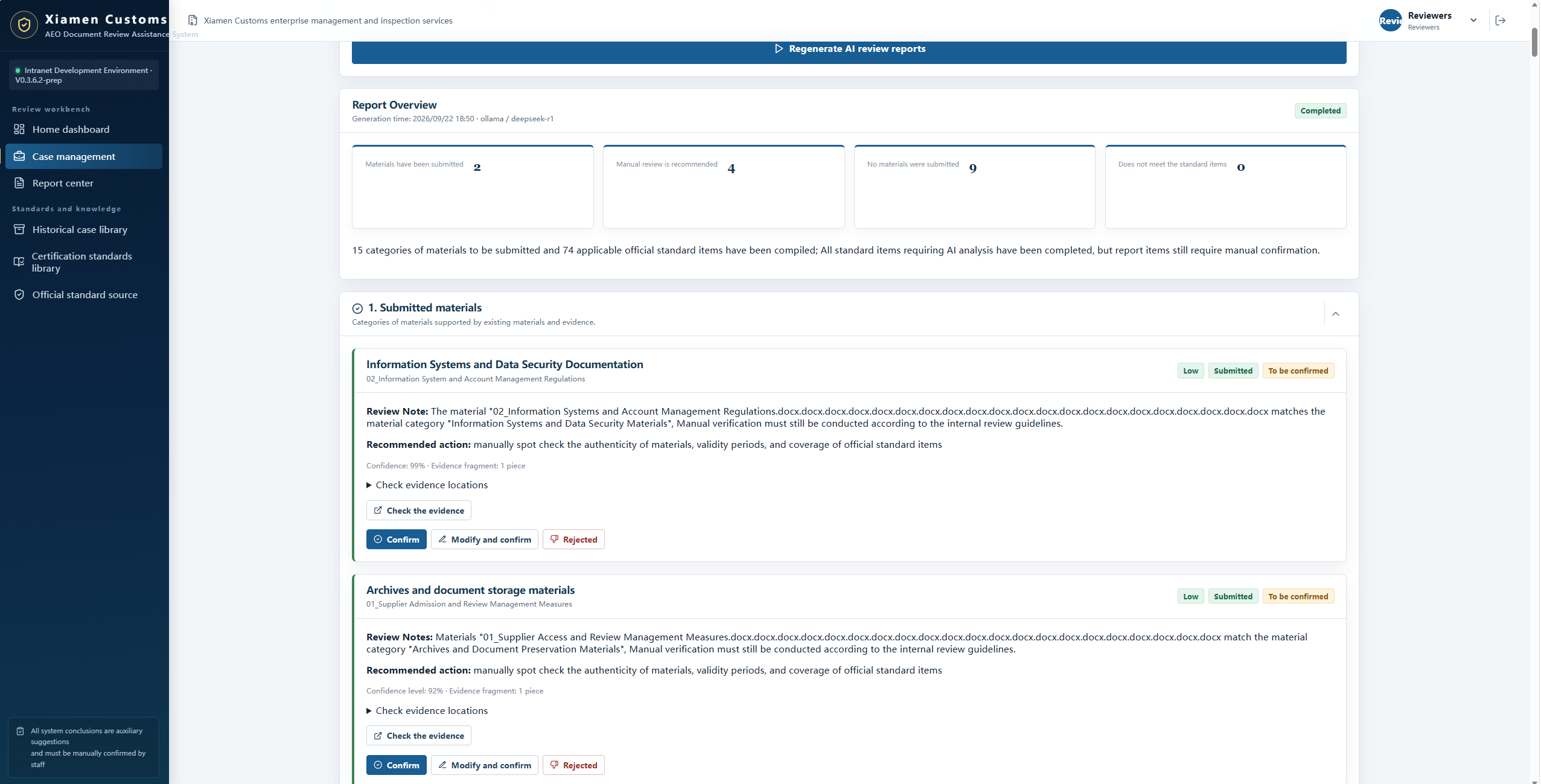
The system analyzes the documents submitted by a company against a maintained and version-controlled library of AEO standards. It breaks broad requirements into smaller standard items, identifies the evidence relevant to each item, and helps companies determine:
which documents or records may be missing; which materials appear incomplete or inconsistent; which findings require human review; which evidence does not clearly support a specific standard; and where the company should improve its documentation before formal submission.
AEO Checker combines deterministic rule checks with a local AI model. Rule-based checks are used for structured and explainable tasks, such as checking required fields, dates, document types, and evidence relationships. The local model assists with more complex language analysis, such as identifying whether different documents describe the same process or whether a document contains potential risk signals.
The system does not make the final certification decision. Instead, it gives businesses a clearer preparation process and allows human reviewers to verify the evidence behind every important finding.
We are also developing a separate customs-facing version called AEO Examiner. While AEO Checker is designed to help businesses prepare their materials, AEO Examiner is designed to assist customs professionals in reviewing AEO documentation. This version is currently undergoing pilot testing and evaluation. Both products are built around the same principle: AI should improve the organization and traceability of evidence while preserving professional and human judgment.
How we built it
We built AEO Checker as a small, interdisciplinary team.
I led the backend and system architecture. My close friend Aimer, who unfortunately could not attend this competition, led the frontend development. Our university teammates James, Ryan, and Hopson have contributed to product planning, testing, research, and future development.
On September 8, we shared our ideas with customs professionals at a trade-promotion event in Xiamen. Their feedback and encouragement helped us better understand the practical difficulties faced by both companies and reviewers. The standards and review logic used in our prototype are grounded in official AEO materials and the practical feedback we received during this process.
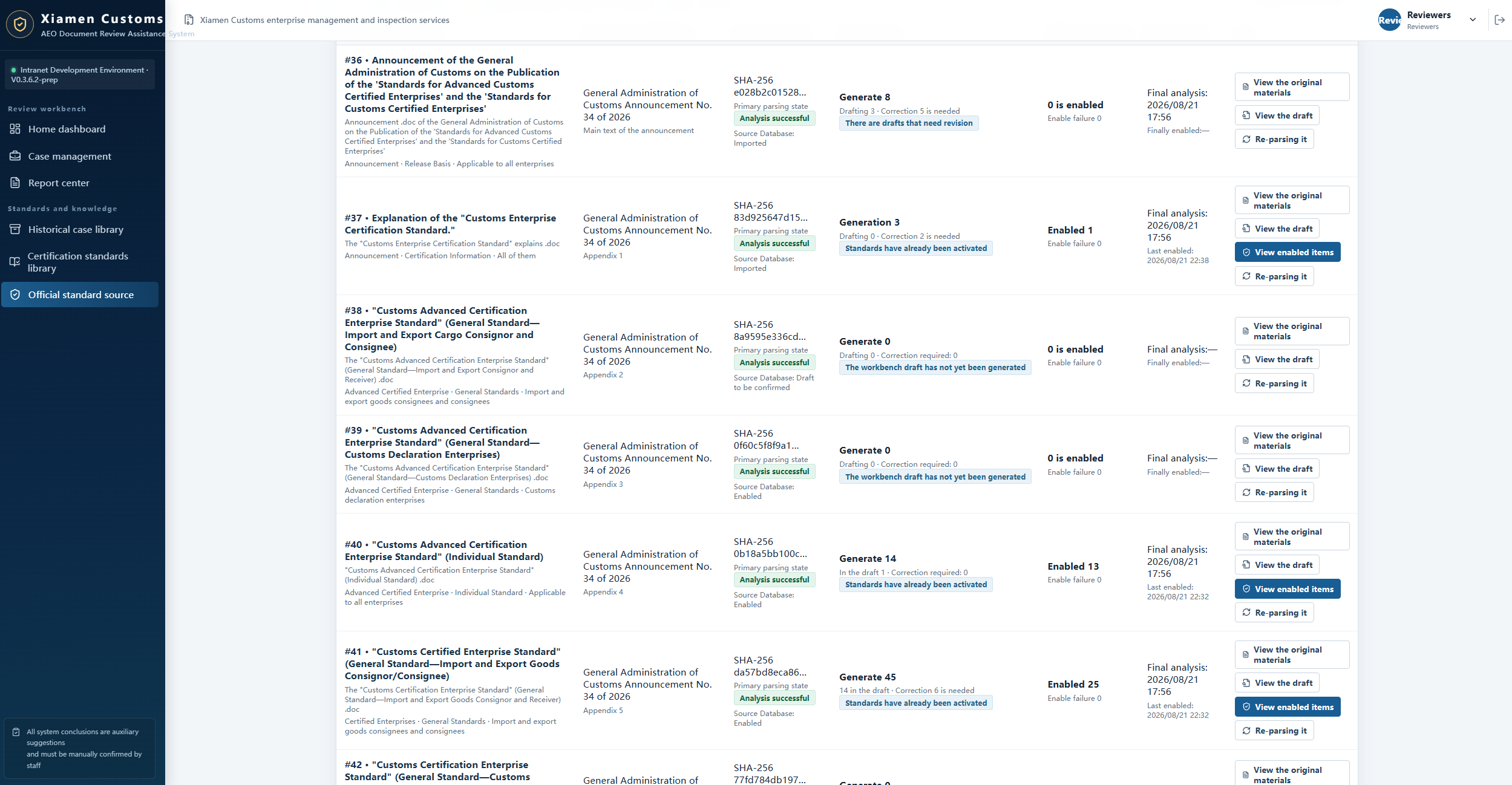
We designed the system around a structured database instead of treating every document as an isolated text file. The main data relationships include:
-AEO standards and their version history; -individual standard items and their required evidence; -company submissions and uploaded documents; -extracted evidence from each document; -links between evidence and applicable standards; -detected gaps, inconsistencies, and risk findings; -human review decisions and follow-up actions.
This structure allows the system to answer not only “What does this document say?” but also “Which AEO requirement does it support?”, “What evidence is still missing?”, and “Why was this item sent for human review?”
Our architecture combines document processing, a persistent relational database, a rule-based evaluation layer, and local language-model assistance. We intentionally separate deterministic checks from AI-assisted interpretation. This makes the system more explainable and reduces the risk of allowing a language model to invent evidence or make unsupported certification decisions.
Because AEO documents may contain sensitive business and supply-chain information, we are also exploring local and controlled deployment options. Keeping the analysis environment close to the enterprise data can reduce unnecessary exposure of confidential materials.
Challenges we ran into
One of our biggest challenges was matching a large number of documents to a large number of standards. When a company submits many files, one-to-one text matching is not enough. The same requirement may be described differently across a policy, a warehouse record, a supplier assessment, and an import or export document.
The problem becomes more difficult when a company submits a document in an unexpected format or uses language that does not directly correspond to the wording of the standard. In those cases, the system must distinguish between a truly missing requirement and a requirement that is present but expressed indirectly.
We also faced challenges in working with language models. Our team is still gaining experience in model evaluation, prompt design, retrieval, and fine-tuning decisions. We need to determine when a lightweight local model is sufficient, when a rule-based method is safer, and when a finding must be transferred to a human reviewer.
Hardware limitations are another challenge. More capable models require more computing resources, but enterprise users may not always have access to high-end machines. Designing an accurate and secure system that can operate under limited hardware conditions remains an important part of our future work.
Accomplishments that we're proud of
We developed a lightweight prototype that combines structured standard-item matching with local AI-assisted document analysis.
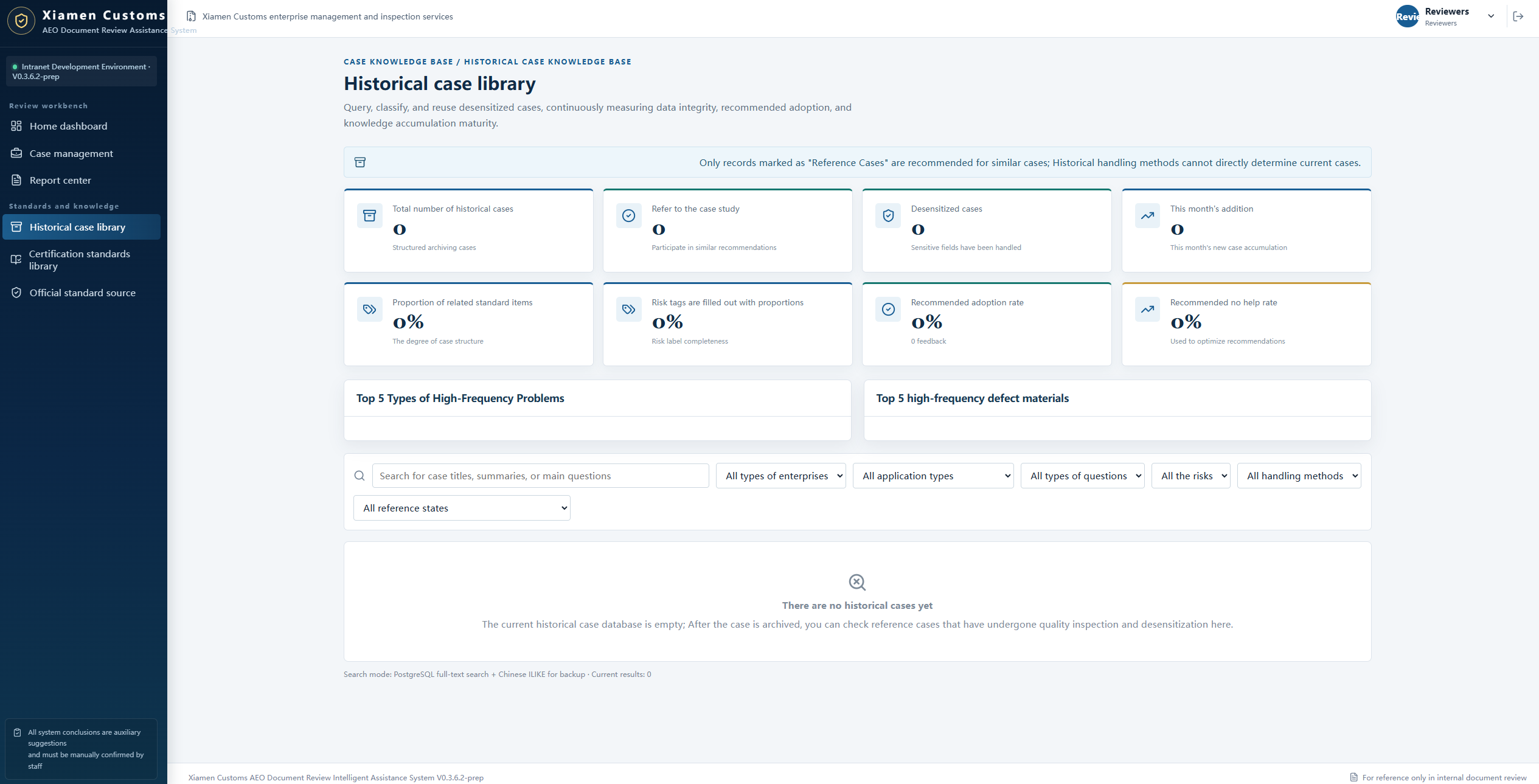
One of our most important accomplishments is the creation of a continuously maintainable AEO standards dictionary. Instead of treating the AEO framework as one large and rigid document, we decompose it into smaller standard items that can be updated, combined, and linked to different types of evidence.
The system can then search through submitted materials, match relevant evidence to these standard items, identify potential gaps, and route uncertain cases for human review. This makes the process more modular and easier to update when standards or business requirements change.
We have also established a preliminary testing workflow using enterprise-style materials from a food-trading business in Xiamen. These tests helped us identify practical weaknesses in document matching, evidence traceability, and risk classification. The results have been encouraging, while also showing us where further validation is necessary.
We are not saying that AI can replace customs professionals. Our accomplishment is building a foundation that allows standards, documents, evidence, and human decisions to be connected in one traceable workflow.
What we learned
This project taught us that entrepreneurship requires looking beyond traditional assumptions. A problem that appears to be an individual company’s failure to prepare may actually reveal a broader weakness in the way information is organized and reviewed.
We also learned that building an AI product requires thinking about long-term sustainability. It is not enough to ask whether a model can produce an answer today. We must also ask whether the system can remain accurate, auditable, secure, and useful as AI technology develops.
This is especially important for AEO-related applications. Sensitive customs and supply-chain documents require controlled data handling, evidence traceability, and professional accountability. For that reason, we believe that AI will be most valuable here as an assistant that organizes evidence and highlights risks, rather than as an uncontrolled autonomous decision-maker.
During the gold rush, it wasn’t the miners who made money—it was the people selling them jeans. As a new wave of entrepreneurship emerges, we are not simply looking to follow the same path as other founders, but to build products that serve them.
What's next for AEO Checker
Our next step is to improve the accuracy of standard-item matching, strengthen evidence traceability, and make the system more practical for small and medium-sized businesses with limited technical resources.
We also plan to continue developing the customs-facing AEO Examiner and conduct more controlled testing with professionals. The enterprise version and the customs version serve different users, but they share the same technical foundation and commitment to human review.
In the longer term, we want to apply the same framework of a structured standards dictionary combined with AI-assisted analysis to other areas of enterprise compliance and international trade. Potential directions include ESG documentation, carbon-emissions reporting, supply-chain due diligence, and other standards that require companies to organize large amounts of evidence.
Our vision is to build software that turns complex standards into understandable, traceable, and actionable workflows, so that businesses can spend less time searching through documents and more time creating value.
Built With
- document-processing
- local-language-models
- python
- relational-databases
- rule-based-evaluation
- web-application-development


Log in or sign up for Devpost to join the conversation.