-
-
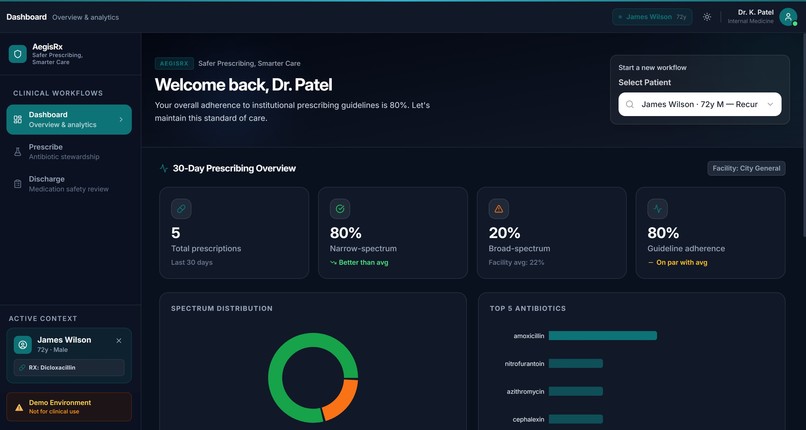
Home UI
-
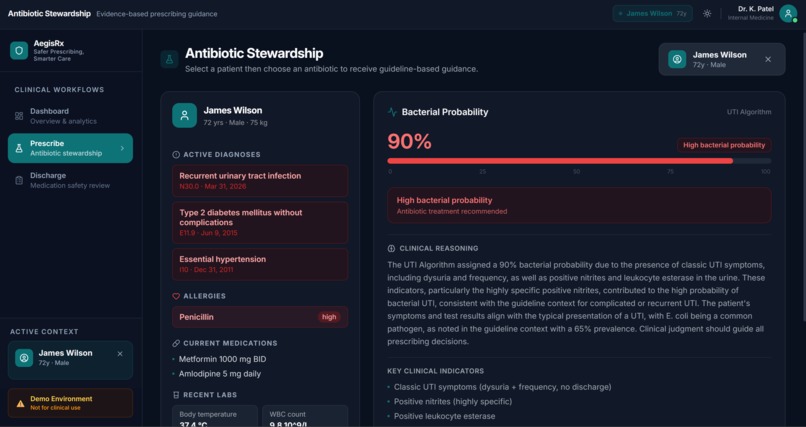
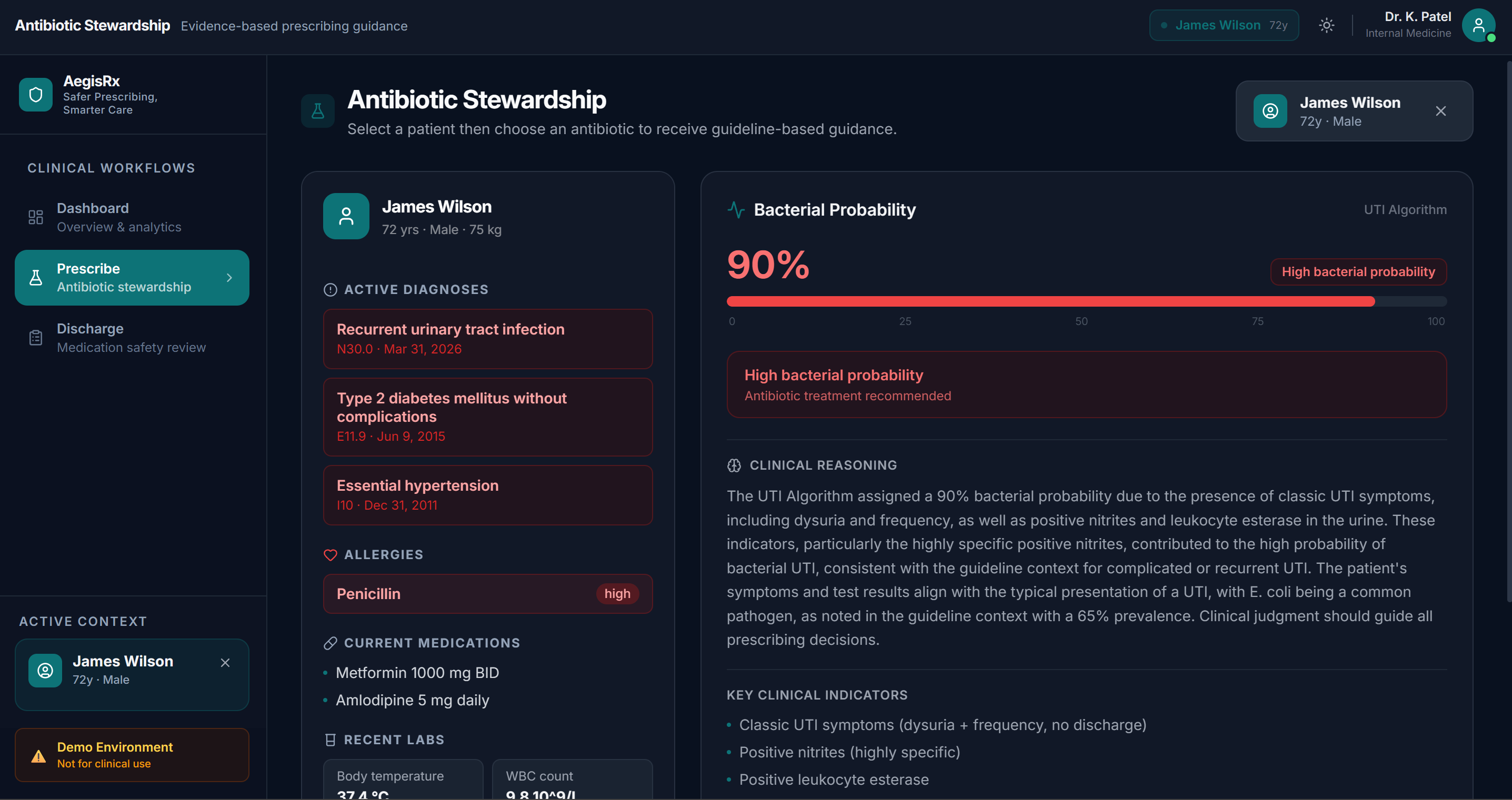
Prescribe UI
-
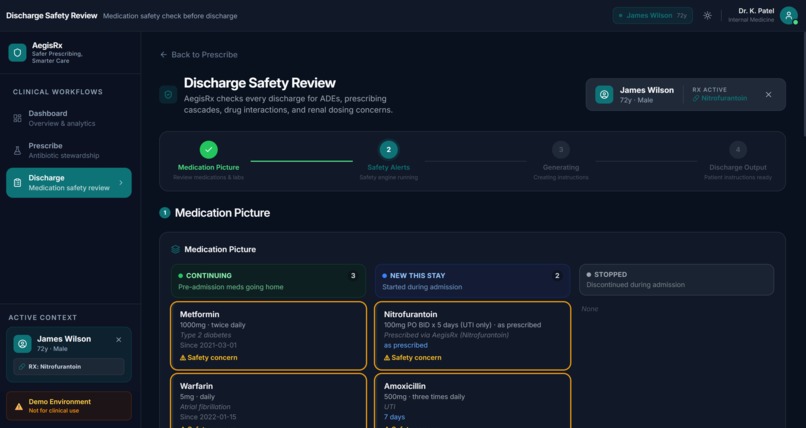
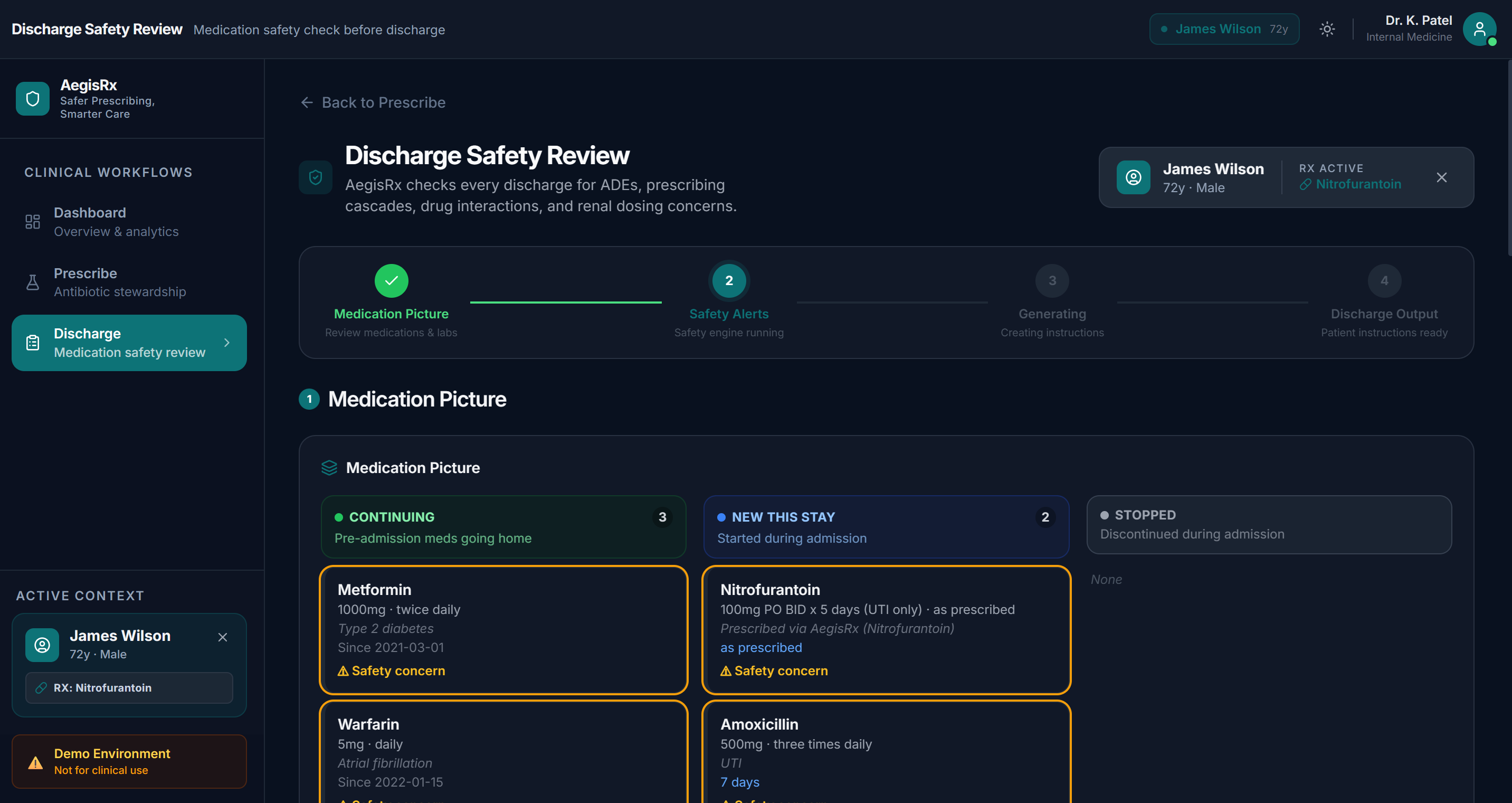
medication picture
-
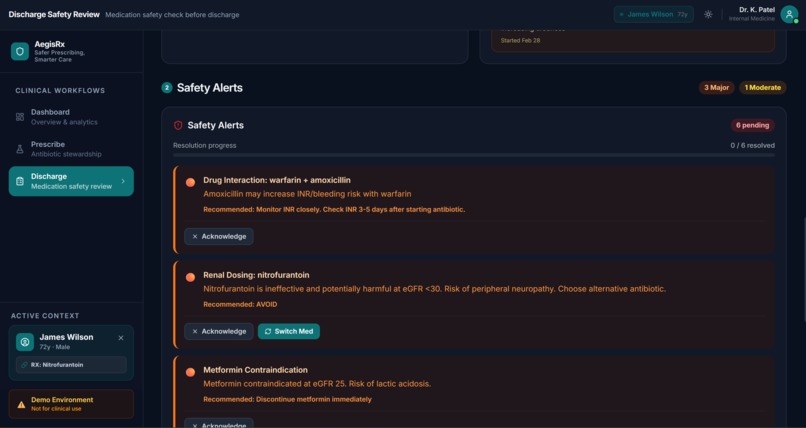
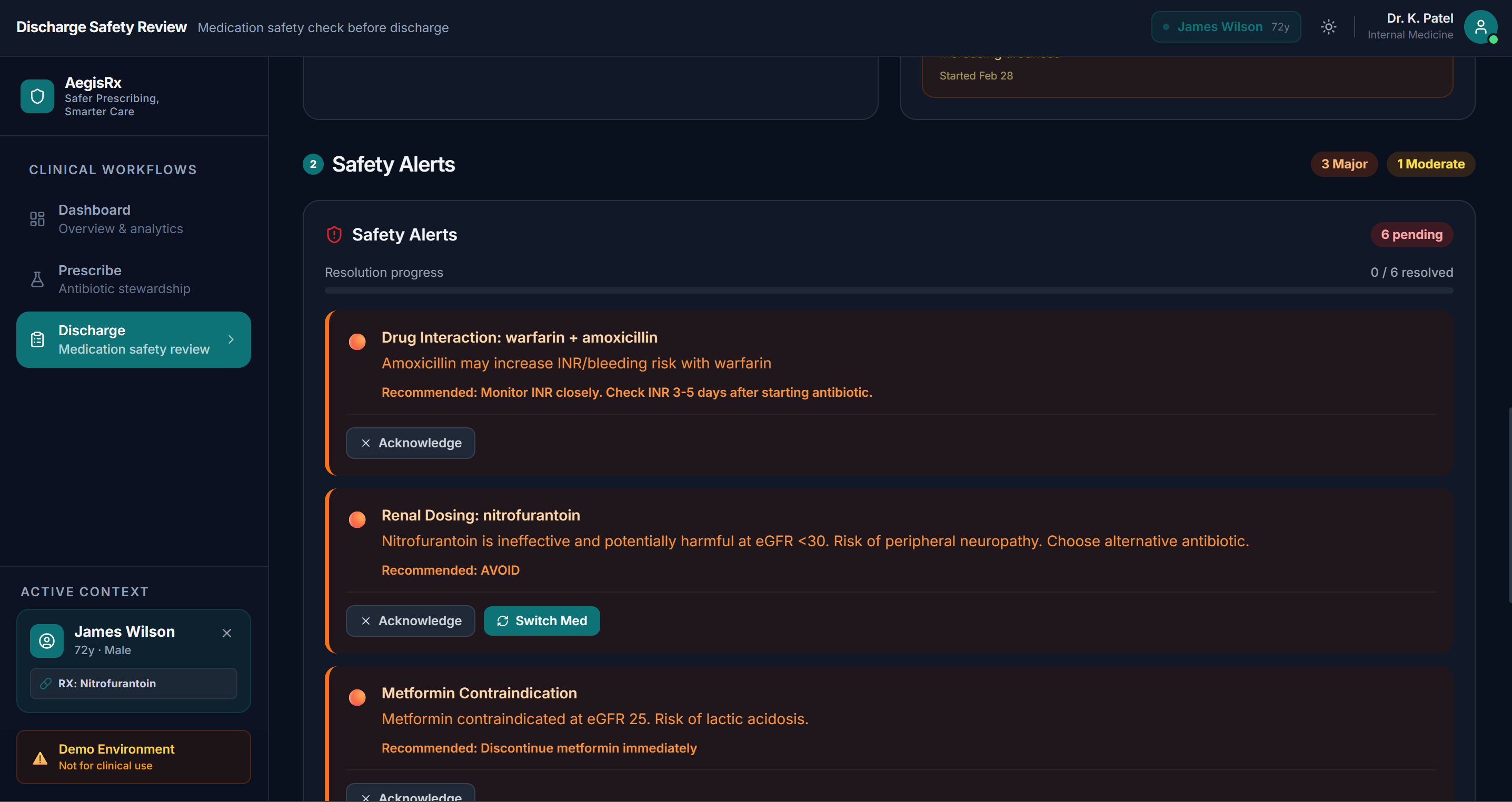
Safety Alerts
-
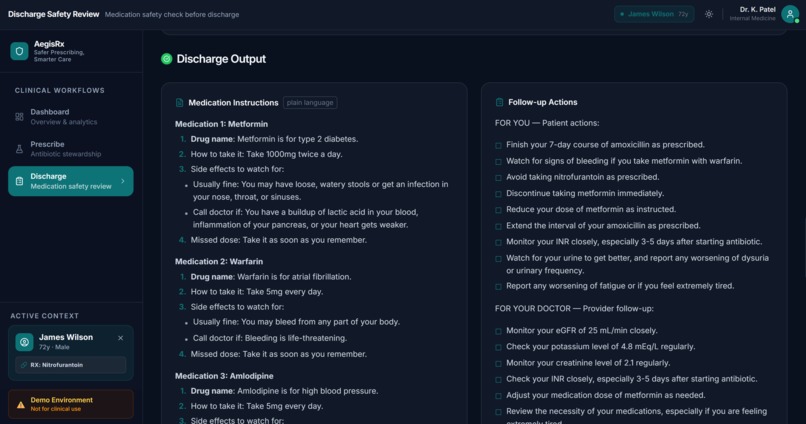
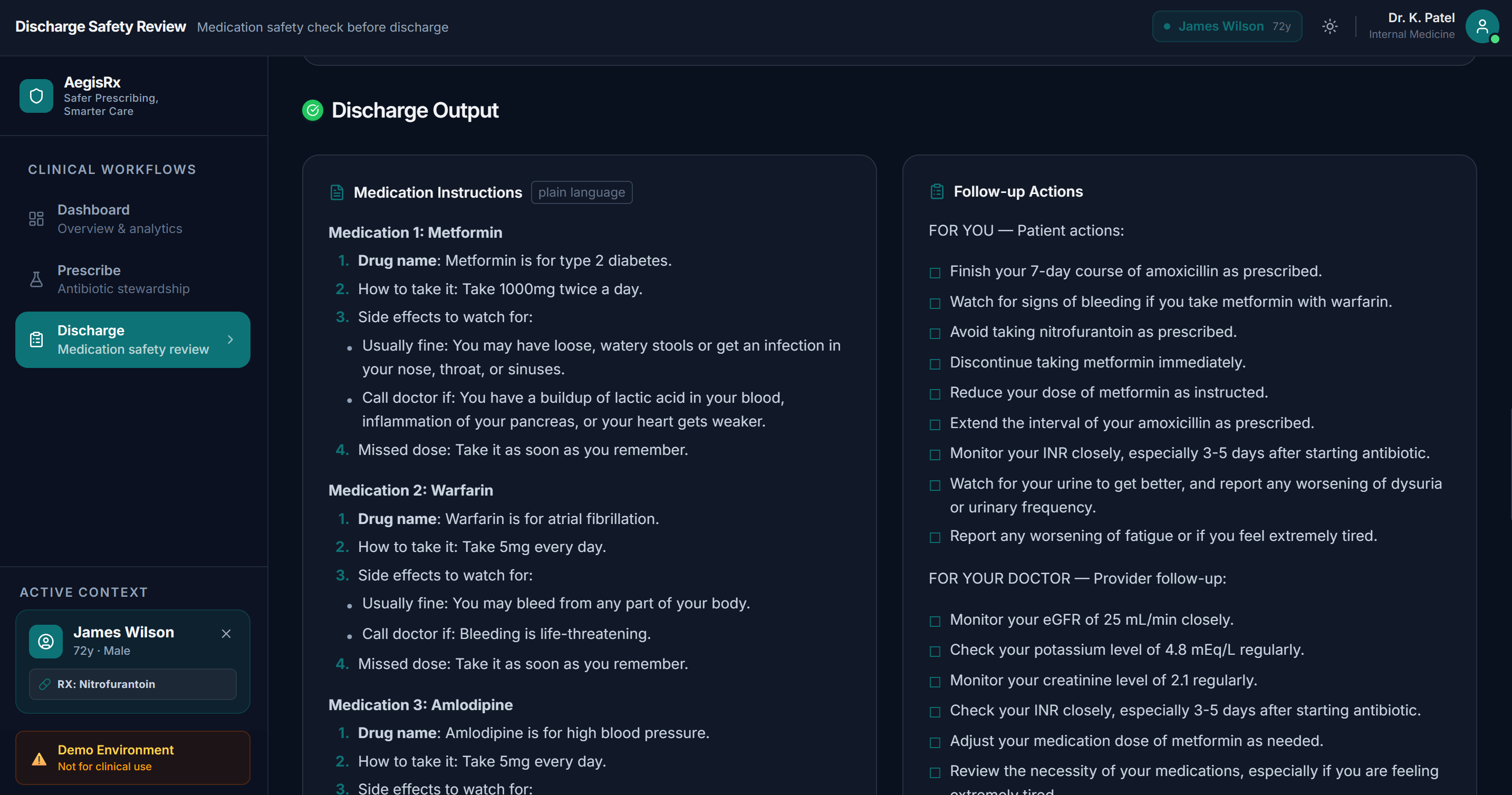
Discharge output
-
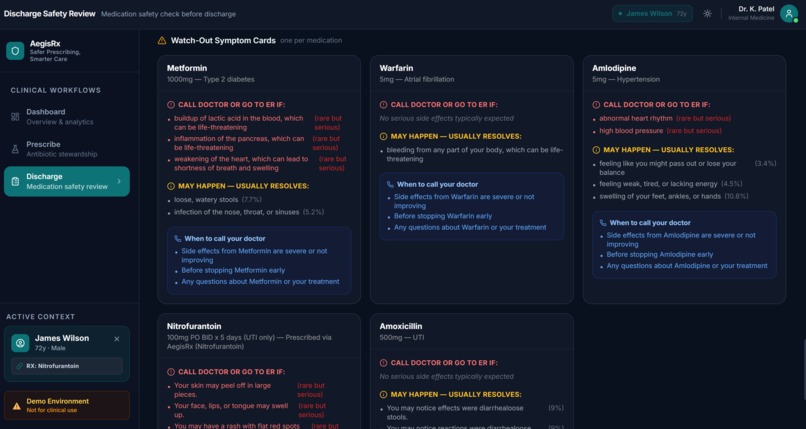
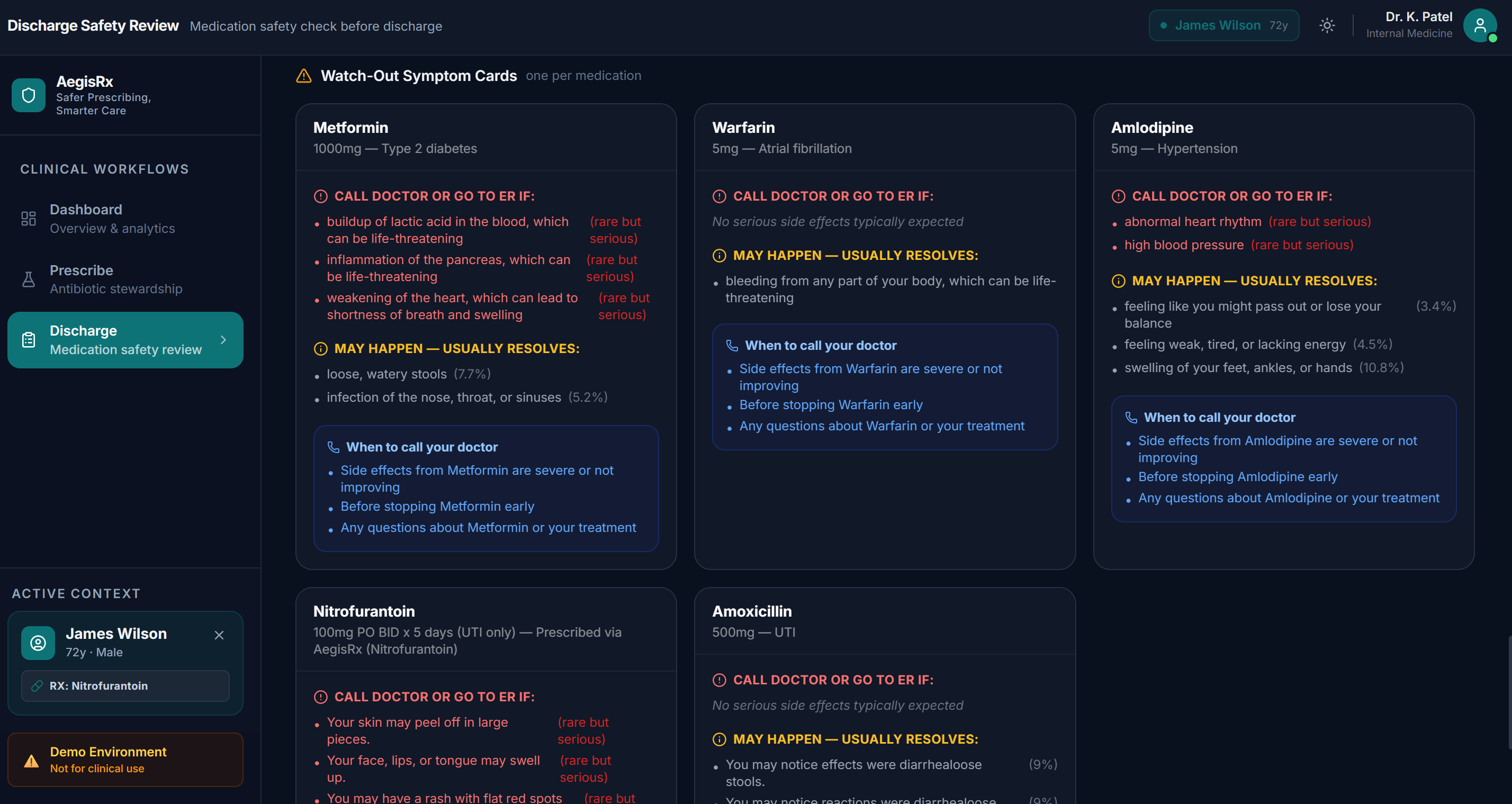
Watch out Sympton cards
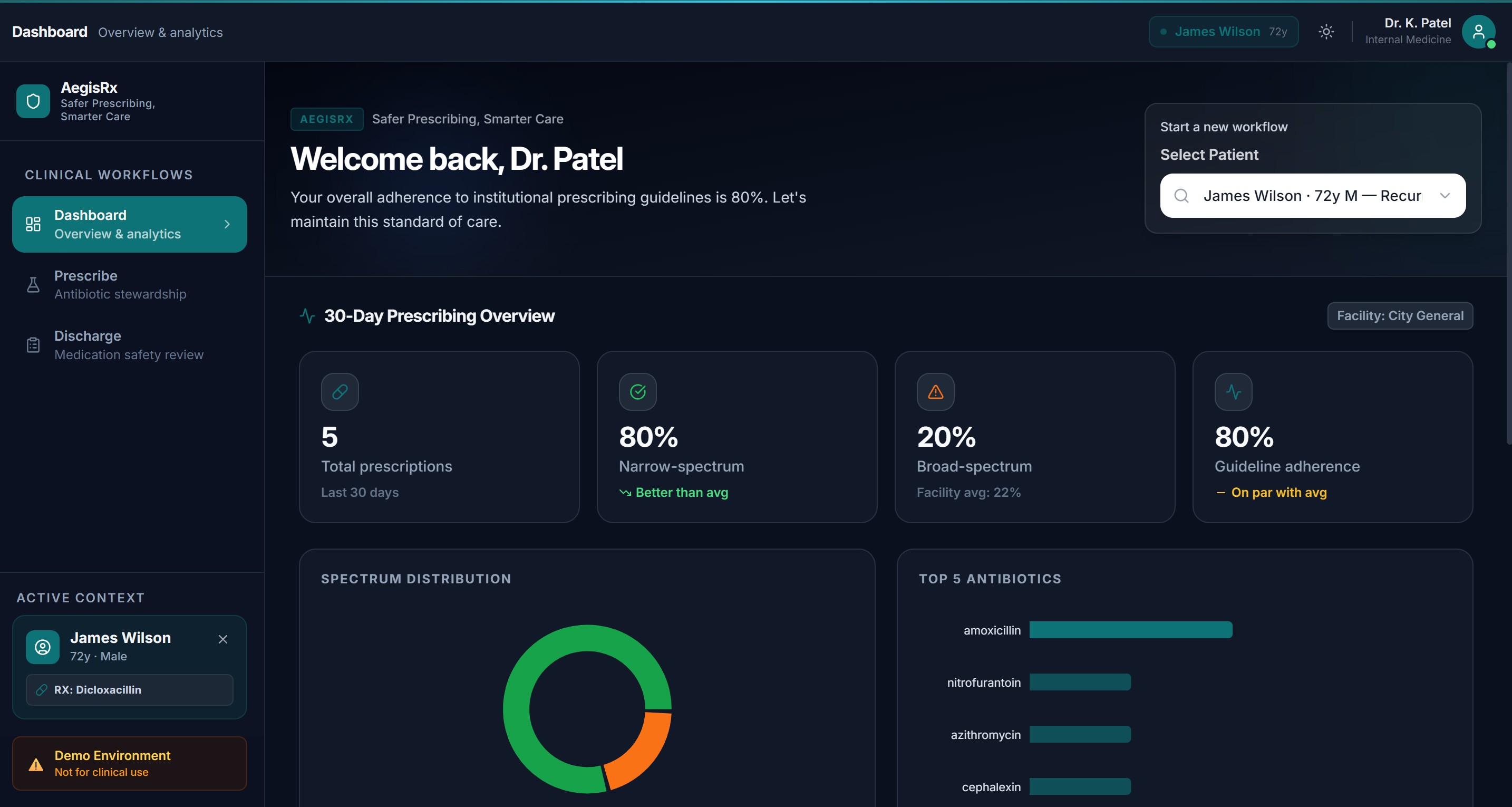
AegisRx — Safer Prescribing, Smarter Care
Inspiration
We believe prescribing should never rely on memory again. In real clinical workflows, allergies, drug interactions, prior antibiotic exposure, resistance patterns, and patient history are often scattered across different screens and systems instead of being surfaced together at the exact moment a clinician needs them. That gap creates risk. AegisRx was built to close that gap by turning fragmented clinical data into one unified, decision-ready prescribing workflow inside the systems clinicians already use.
What it does
AegisRx is a clinical decision-support system for safer, evidence-based antibiotic prescribing. It helps physicians evaluate patient-specific risk, understand whether an infection is likely bacterial, review local resistance patterns, check allergies and drug interactions, and receive explainable recommendations before prescribing. It also extends safety beyond the prescription itself by supporting discharge medication review and medication safety checks. To fit real clinical workflows, we added a Smart Launcher so AegisRx can open like a plugin within the EHR, and we implemented a write-back feature so the medication selected in AegisRx can be stored directly back into the patient record.
How we built it
We built AegisRx with a React + Vite frontend, a Node.js + Express backend, and SQLite for structured clinical and medication data. On top of that foundation, we developed multiple clinical intelligence layers: rule-based scoring engines, an antibiotic recommendation engine, allergy and drug–drug interaction checking, discharge safety logic, and grounded AI explanations powered by Groq. We also integrated FHIR to support interoperability with modern healthcare systems and real-world patient data. Finally, we extended the workflow with Smart Launcher support for EHR embedding and a write-back mechanism that closes the loop from recommendation to documentation.
Challenges we ran into
One of the biggest challenges was making medication safety logic useful in real time. In healthcare, it is easy to generate alerts, but much harder to generate the right alerts. A system that flags everything does not improve safety; it creates alert fatigue. We had to design our interaction and warning logic so that it prioritized meaningful clinical risks and stayed understandable within a fast prescribing workflow. Another major challenge was bringing multiple signals together into one coherent decision flow. Patient history, allergies, current medications, resistance data, and prior antibiotic use all needed to inform the recommendation without overwhelming the clinician. We also had to ensure that the AI remained grounded in structured clinical logic, so the explanations added trust and clarity rather than acting like unsupported black-box output. Integrating Smart Launcher and write-back functionality added another layer of complexity, because it pushed us to think not just about recommendations, but about how those recommendations actually fit into real EHR workflows.
Accomplishments that we're proud of
We are especially proud that AegisRx goes beyond being a standalone hackathon demo. With FHIR integration, Smart Launcher support, and write-back capability, it is designed with real interoperability standards and real clinical workflow constraints in mind. Instead of stopping at “here is a recommendation,” AegisRx supports a full loop: launch from the EHR, analyze the patient context, generate safer prescribing guidance, and store the final medication decision back into the health record. That makes the project feel much closer to something that could be adopted in practice, not just presented as a concept.
What we learned
We learned that the core problem in healthcare is often not the absence of data, but the absence of unified, actionable context. We also learned that trust is everything in clinical decision support. A tool becomes valuable not just because it is intelligent, but because it is explainable, fits naturally into workflow, and helps clinicians move faster without losing confidence. Most importantly, we learned that the best healthcare AI systems do not try to replace clinicians. They support them with the right information, at the right time, in the right place.
What’s next for AegisRx
Our next step is to expand AegisRx beyond antibiotics into a broader prescribing intelligence platform. We want to support more diseases, more medication classes, and more realistic prescribing scenarios across care settings. We also plan to add multi-drug prescribing support, since many real patients are treated with multiple medications at once. Beyond that, we want to introduce food–drug interaction and dietary allergy intelligence, allowing the system to flag safety issues tied not only to medications, but also to patient-specific dietary risks. Over time, our goal is for AegisRx to evolve from an antibiotic stewardship tool into a comprehensive, explainable, interoperable prescribing intelligence layer for safer care.


Log in or sign up for Devpost to join the conversation.