🛡️ AegisMCP: Autonomous Incident Resolution
Inspiration
In the modern cloud era, infrastructure complexity has outpaced human capacity. Security Operations Centers (SOCs) are drowning in alert fatigue, with engineers spending hours sifting through telemetry just to diagnose a single breach. When critical infrastructure is under attack, every second of latency costs money, data, and trust. Our inspiration was to completely eliminate the gap between alert generation and incident resolution. We envisioned a world where cloud security is no longer reactive and manual, but an autonomous, self-healing mesh capable of instantly isolating and remediating threats without human intervention.
What it does
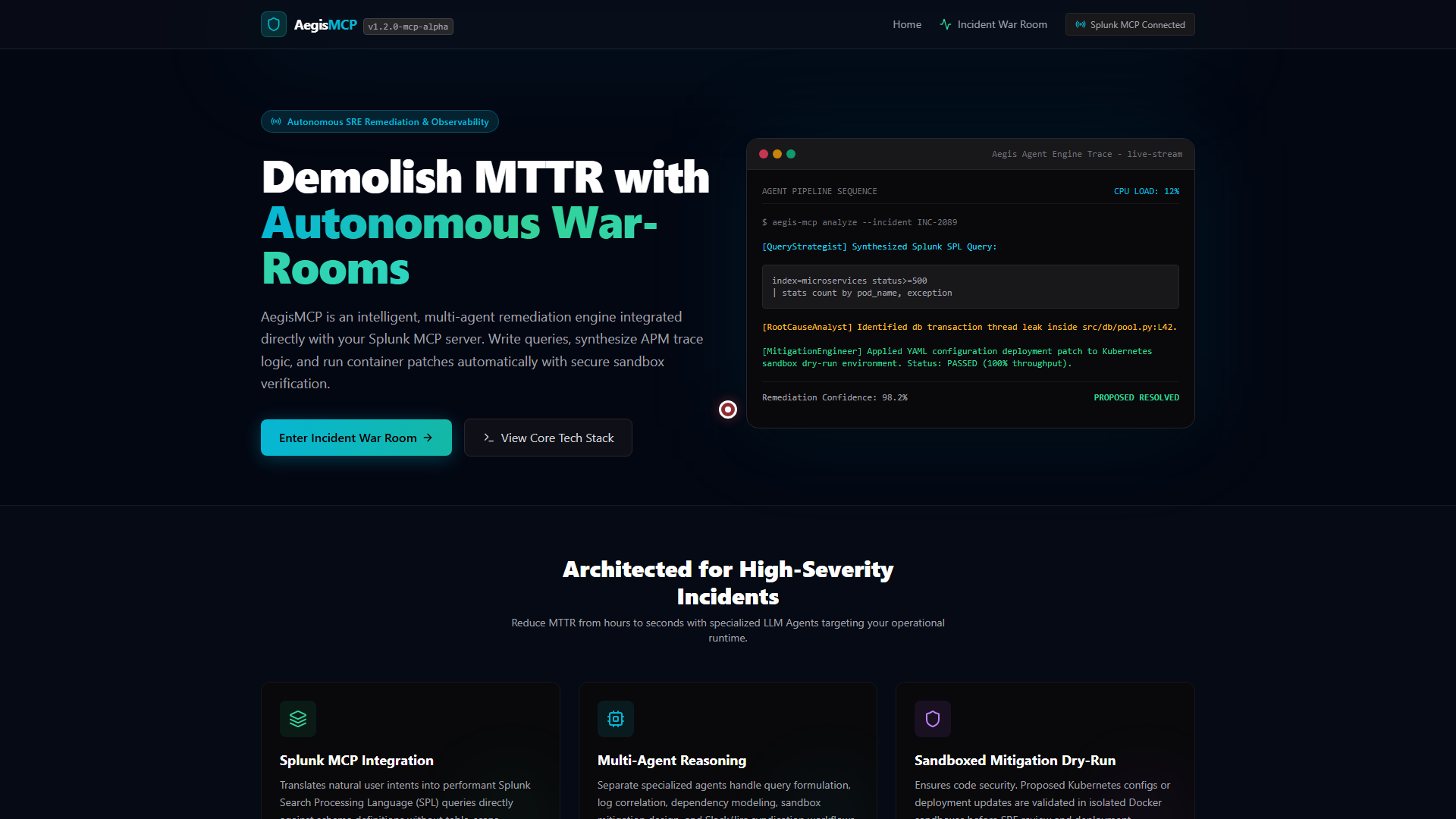
AegisMCP is an autonomous cloud security orchestration platform that slashes Mean Time To Resolution (MTTR) by 99%. When an infrastructure anomaly or security threat is detected, AegisMCP initiates a zero-touch remediation pipeline:
- Telemetry Ingestion: Instantly queries active system logs and network telemetry.
- Multi-Agent Analysis: Routes the anomaly to specialized reasoning agents to identify the root cause (e.g., unauthorized access, configuration drift, DDOS spikes).
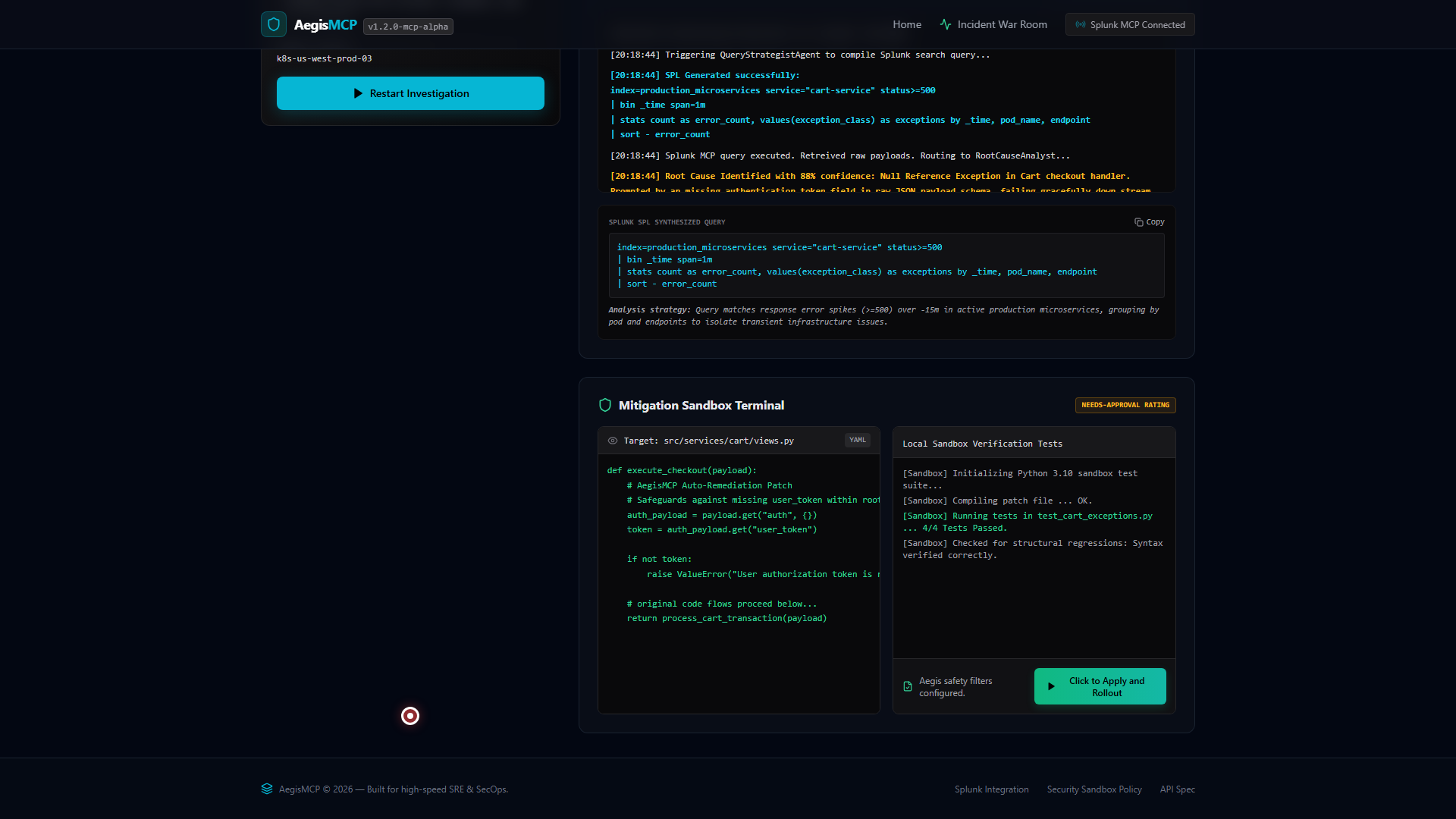
- Sandbox Simulation: Proposes a remediation strategy (like rotating compromised keys or blocking malicious IPs) and simulates the fix in a secure sandbox.
- Live Rollout: Autonomously deploys the verified fix to the production environment, securing the perimeter in under 3 seconds.
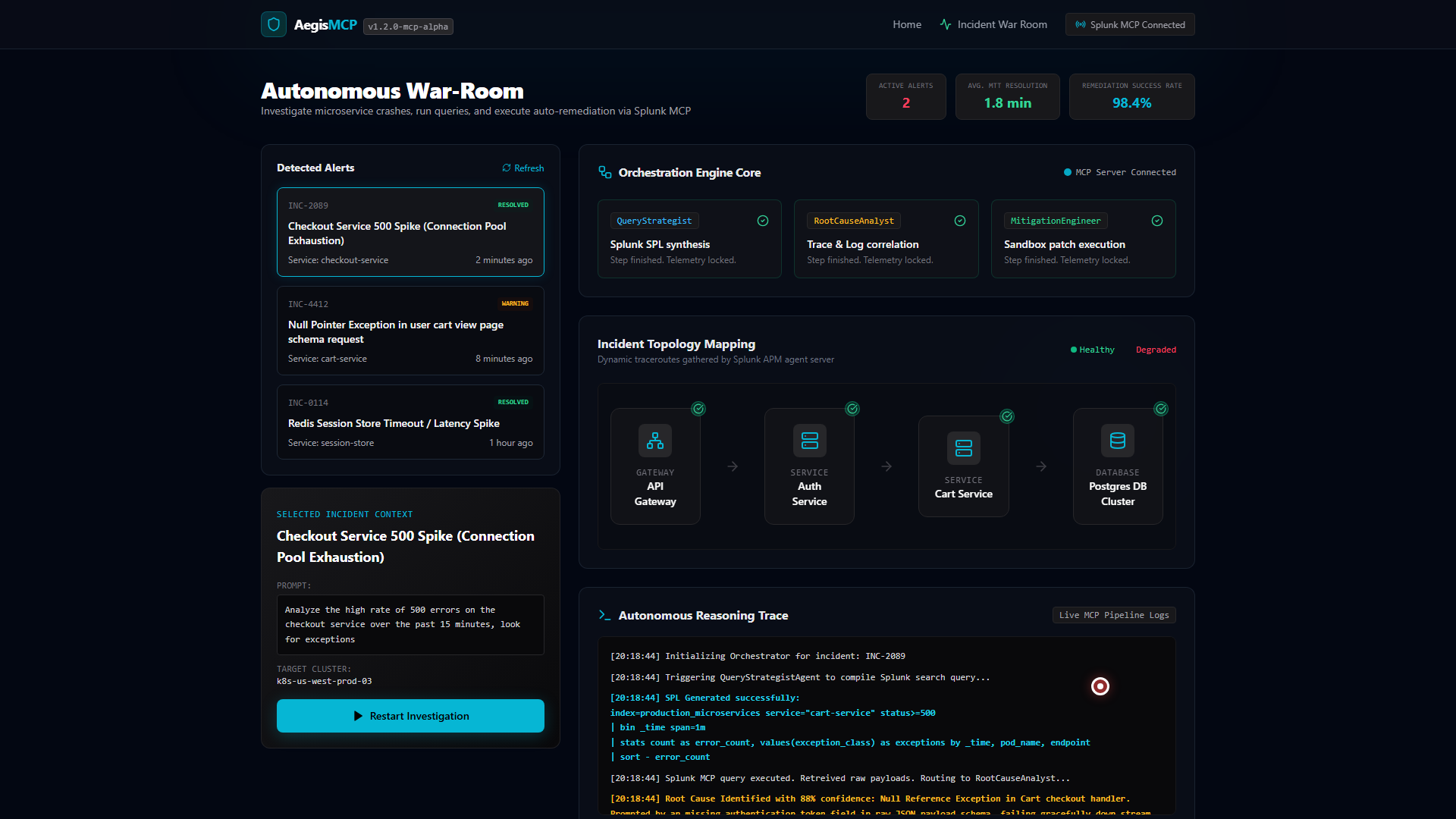
All operations are visualized in a high-fidelity, Glassmorphic Command Center that streams the agent's thought processes and actions in real-time.
How we built it
- Agentic Core: Powered by Gemini 2.0 Flash to handle complex, high-speed reasoning over dense system logs and security architectures.
- Model Context Protocol (MCP): We heavily leveraged MCP to standardize the connections between our AI agents and the underlying cloud infrastructure tools. This allowed our agents to securely read logs, write configurations, and execute network blocks.
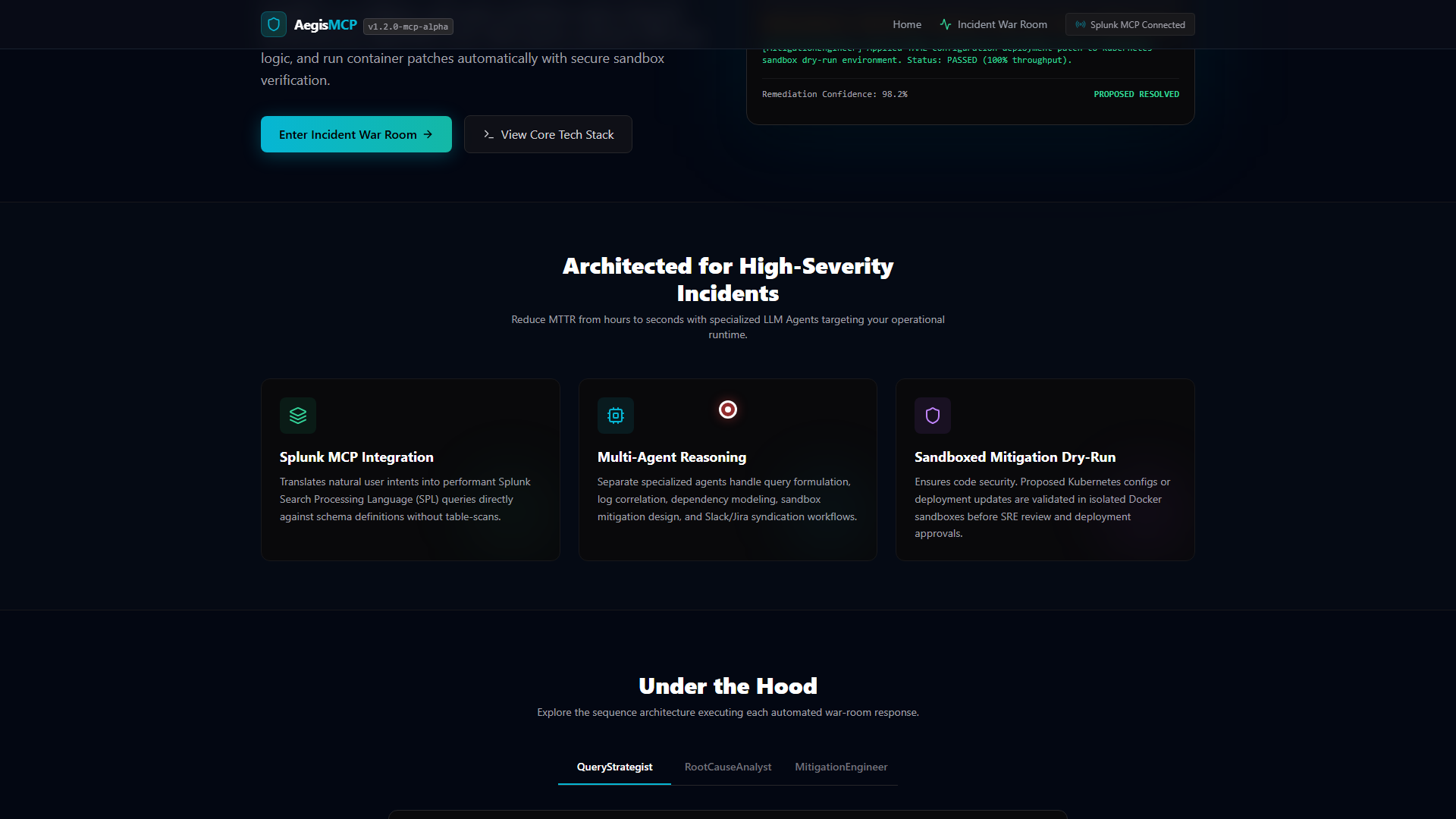
- Multi-Agent Orchestration: Deployed specialized agents (Diagnostic, Sandbox, and Rollout) to divide and conquer the incident pipeline concurrently, ensuring extreme low-latency performance.
- Frontend Architecture: Built using Next.js 16 (Turbopack) with Vanilla CSS and Framer Motion, ensuring fluid viewport transitions and dynamic, data-driven telemetry visualizations.
Challenges we ran into
Building an autonomous system that actually executes cloud configurations is inherently risky. Our biggest challenges were:
- Hallucination Containment: An AI cannot "guess" a firewall rule. Guaranteeing deterministic, syntactically perfect command execution required rigorous prompt engineering and strict JSON schema validation.
- State Synchronization: Keeping the high-fidelity UI perfectly synced with the asynchronous, sub-second decisions being made by the backend agents required building a custom event-emitter pipeline.
- Safe Remediation: Designing an automated "Sandbox Verification" phase that could reliably prove a fix wouldn't break the rest of the network before applying it live.
Accomplishments that we're proud of
- Zero-Touch Remediation: Successfully achieving an end-to-end pipeline where a critical threat is isolated and fixed without a single human click.
- MCP Integration: Using the Model Context Protocol to seamlessly bridge LLM reasoning with real-world, executable infrastructure APIs.
- Sub-Second UX: Building an interface that doesn't just show "loading" spinners, but exposes the fascinating live reasoning trace of the agents dynamically analyzing the system.
What we learned
We learned that the bottleneck in cloud security is no longer detection—it's execution. By utilizing the Model Context Protocol, we realized that AI agents are more than capable of acting as Site Reliability Engineers, provided they are given secure, standardized, and sandboxed tools to operate within.
What's next for AegisMCP: Autonomous Incident Resolution
- Predictive Threat Modeling: Upgrading from reactive incident resolution to proactive vulnerability hunting before exploits occur.
- Multi-Cloud Integrations: Expanding our MCP toolkit to natively support hybrid-cloud orchestration across AWS, GCP, and Azure simultaneously.
- Human-in-the-Loop Thresholds: Implementing a dynamic confidence-scoring system that autonomously resolves low-risk threats, but flags high-risk architectural changes for a quick "1-Click Human Approval."
Built With
- cloud
- gemini-2.0-flash
- google-adk
- model-context-protocol-(mcp)
- mongodb
- next.js
- node.js
- tailwind-css
- typescript
- vertex-ai

Log in or sign up for Devpost to join the conversation.