-
-
-
-
-
-

QR to access the project

Inspiration
Modern defense systems face an increasing threat from autonomous drone swarms. These attacks are fast, distributed, and often include decoys, making it extremely difficult for operators to decide where to allocate limited defensive resources in real time.
We were inspired by the gap between raw detection systems and actionable decision-making tools. Most systems can detect threats, but very few can interpret, prioritize, and explain decisions under uncertainty.
AegisGrid was built to bridge that gap.
What it does
AegisGrid simulates a real-time drone swarm attack and provides:
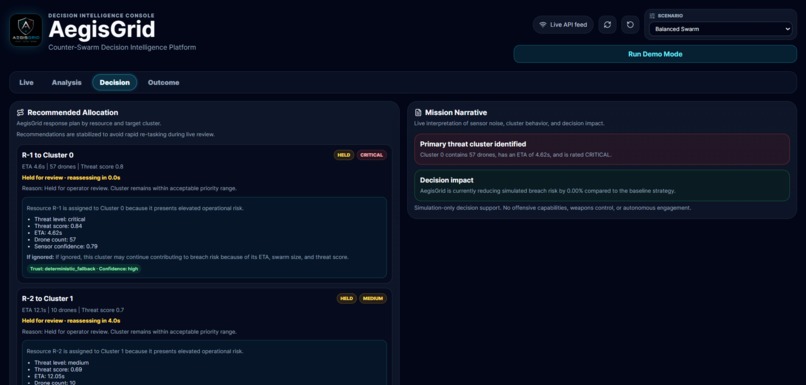
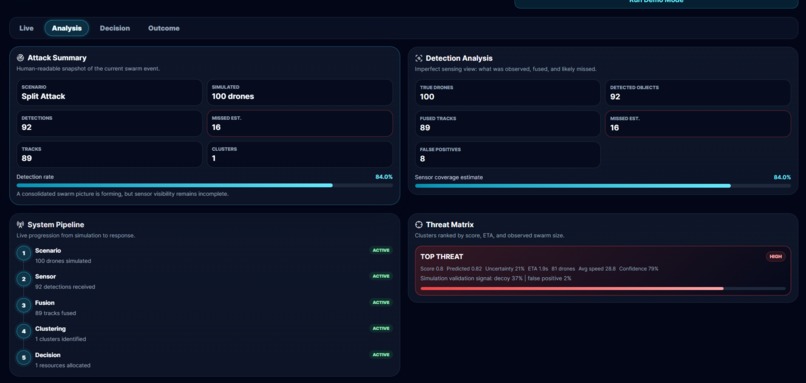
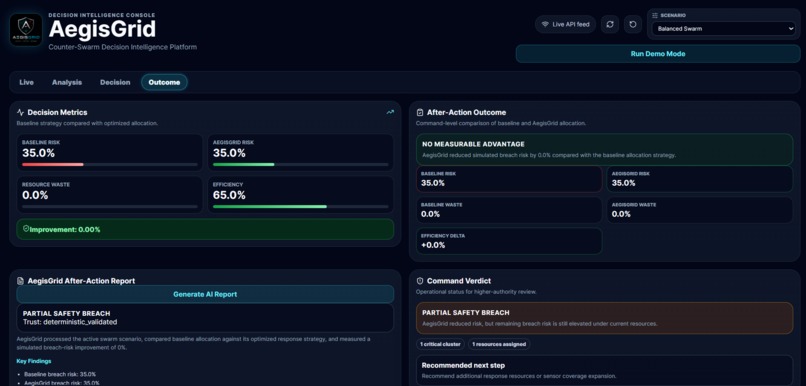
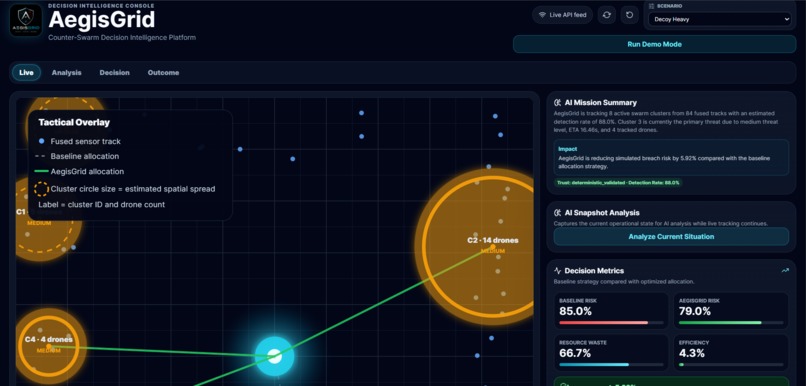
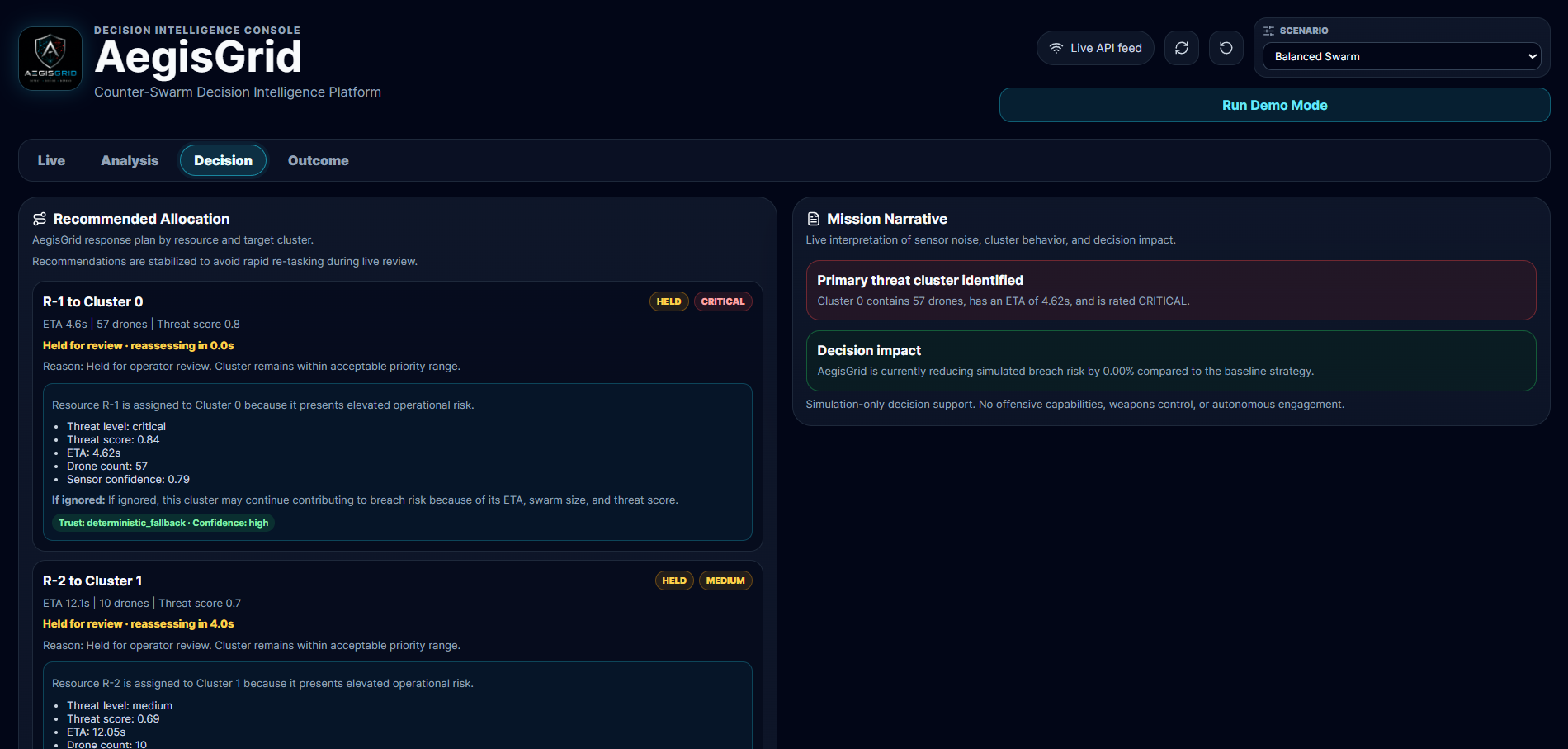
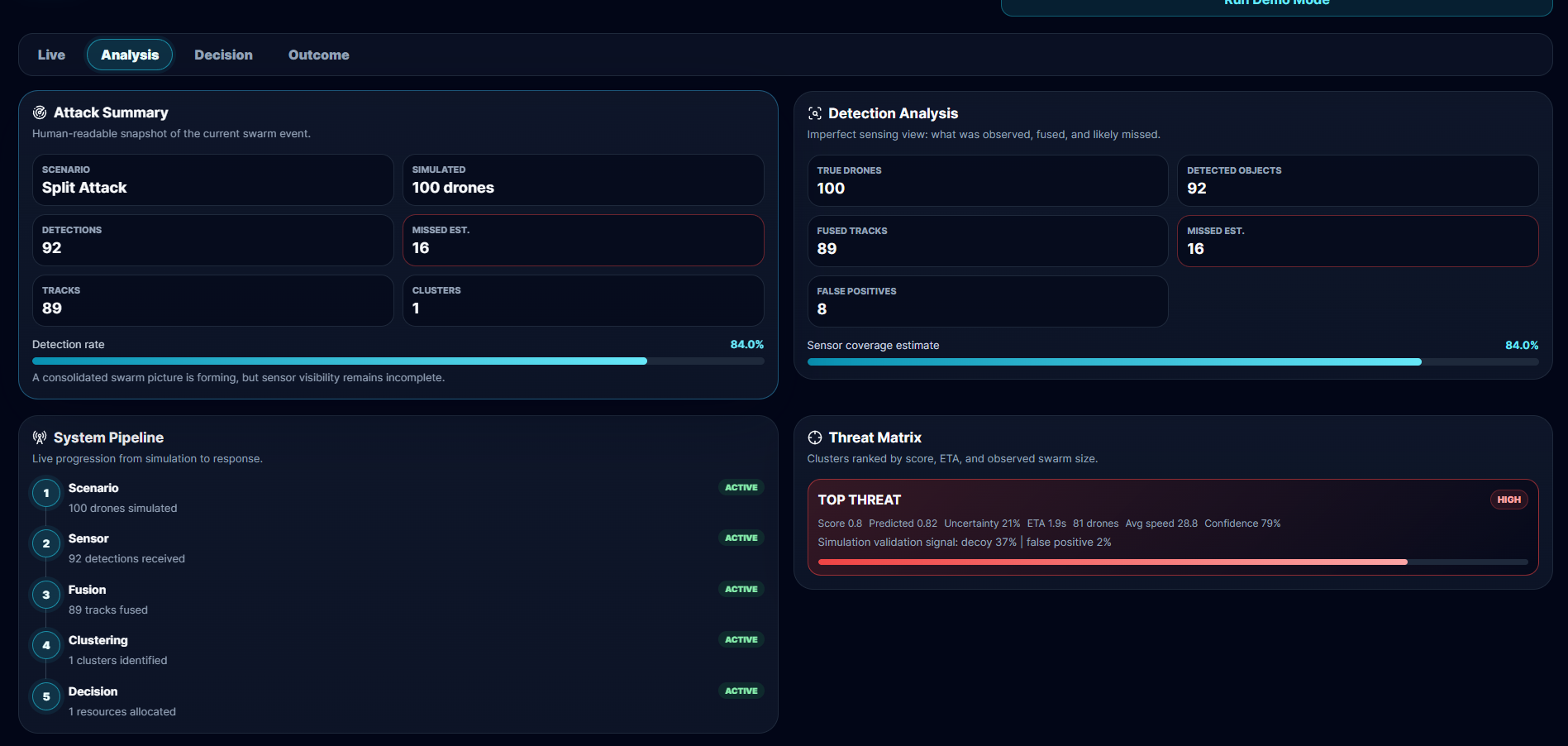
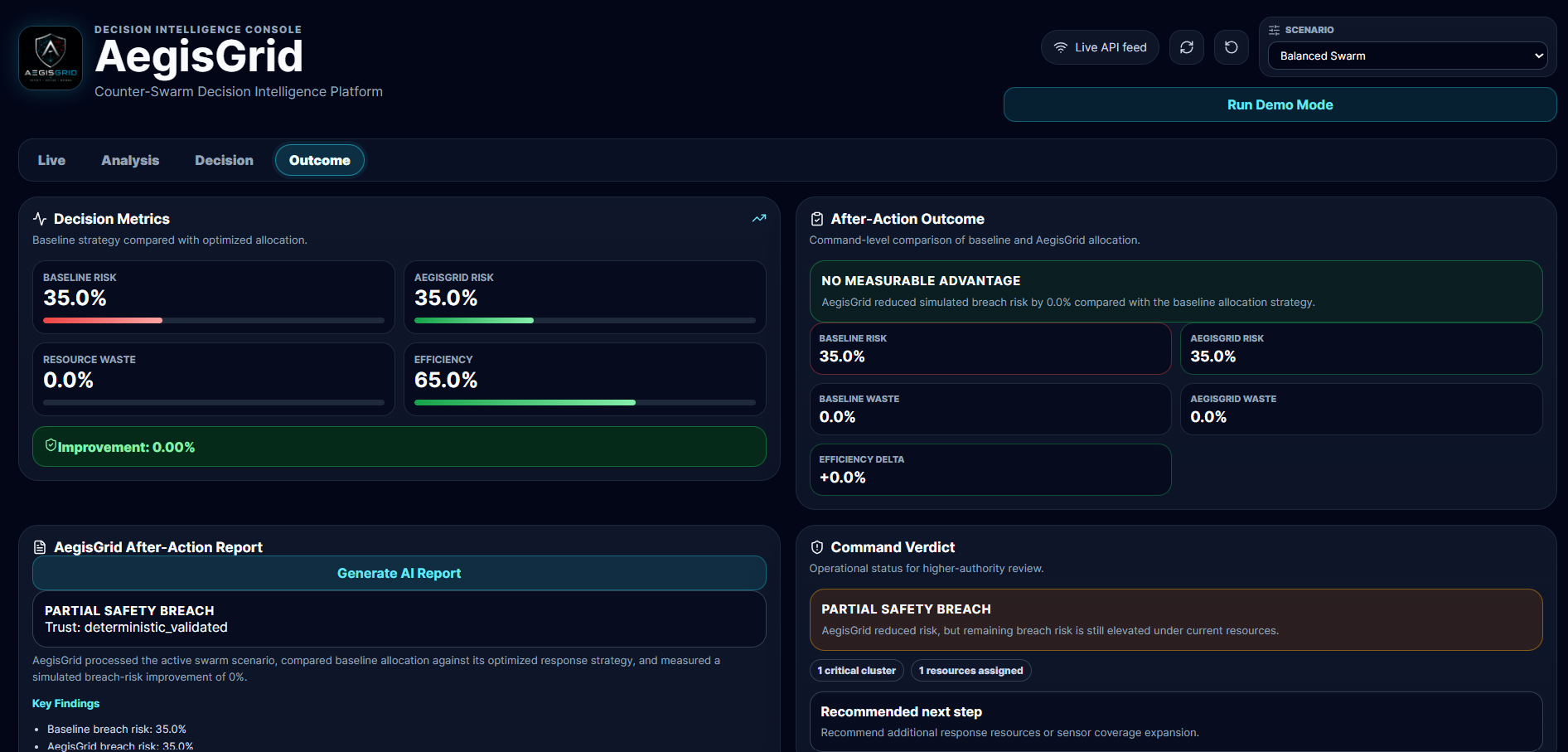
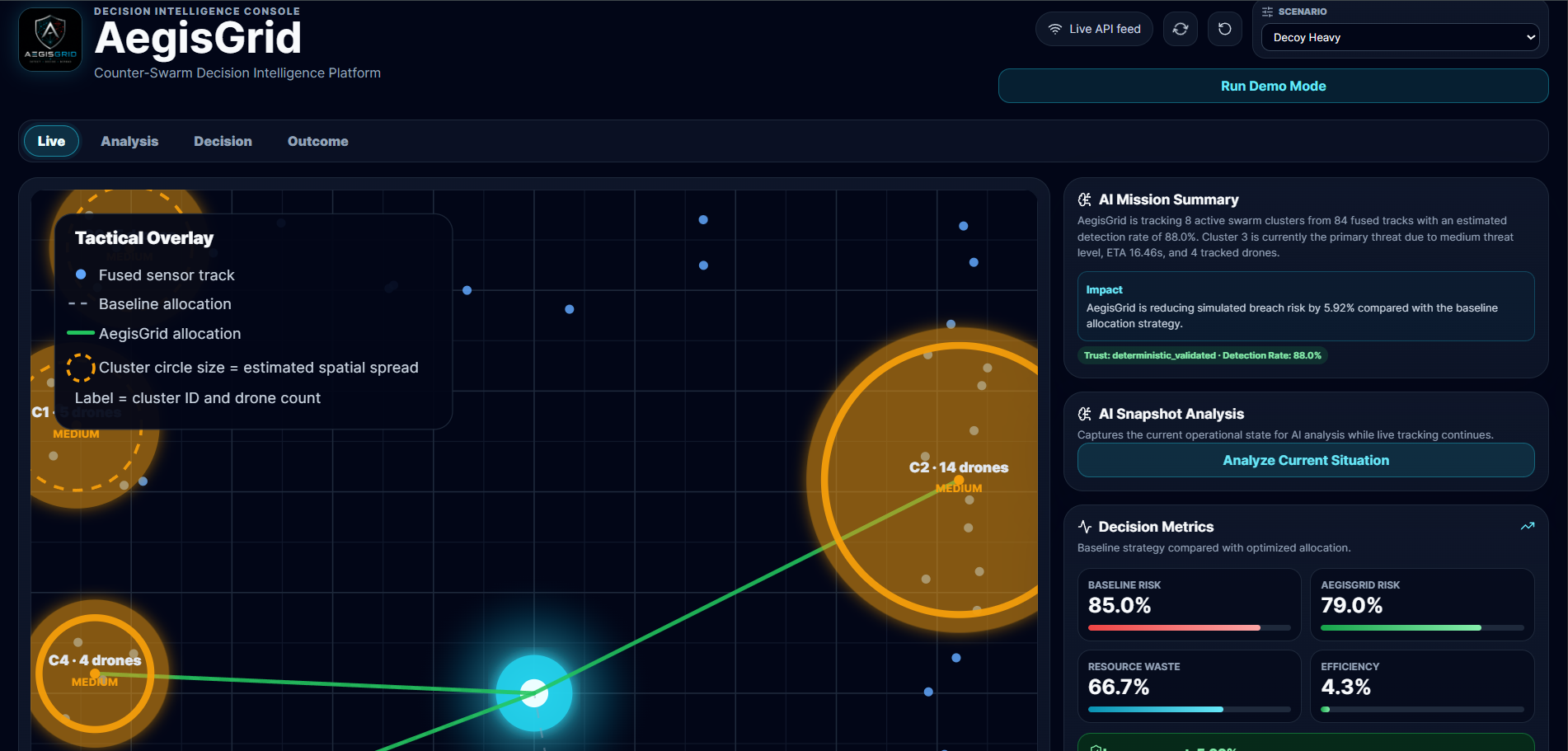
Dynamic clustering of incoming drones Threat scoring based on multiple parameters (ETA, density, confidence, trajectory) Optimized resource allocation (AegisGrid vs baseline strategy) Real-time evaluation metrics (breach risk, efficiency, waste)
Additionally, it integrates an AI intelligence layer that:
Interprets the current situation via snapshot analysis Generates explainable, evidence-backed insights Produces after-action reports for strategic review
This allows the system to rank threats under competing constraints.
How we built it
The system is built as a full-stack simulation platform:
Backend (FastAPI) Drone simulation engine Sensor detection with noise and false positives Track fusion and clustering Threat scoring and classification Decision allocation (baseline vs optimized) Evaluation metrics pipeline Frontend (React + Vite) Real-time swarm visualization Scenario controls and telemetry panels Metrics comparison dashboards Decision and allocation panels AI Layer (OpenRouter API) Snapshot-based analysis (/ai/analyze-snapshot) After-action report generation (/ai/after-action)
A key architectural decision was to separate AI from the real-time decision loop, ensuring:
Deterministic performance No latency impact Reliable and explainable outputs
Challenges we ran into
Real-time vs AI latency conflict Initial attempts to run AI continuously caused system slowdowns and instability. Dynamic UI overload Rapidly changing data made it difficult for users to interpret results. Trust in AI outputs Ensuring AI responses were grounded in actual system data required structured prompts and validation layers. Simulation realism Balancing performance with realistic swarm behavior and sensor noise was non-trivial.
Accomplishments that we're proud of
Built a complete end-to-end defense simulation pipeline Designed a hybrid architecture combining deterministic logic with AI intelligence Achieved clear, measurable improvement over baseline strategies Implemented explainable AI outputs grounded in real system metrics Delivered a clean, interactive, and demo-ready interface
What we learned
Real-world systems prioritize reliability over complexity AI is most effective when used as an interpretation layer, not a control layer Visualization and pacing are critical for understanding high-frequency data System architecture decisions matter more than adding feature
What's next for AegisGrid
Integrating real-world sensor feeds (radar, RF, vision) to move from simulation to operational environments Extending the system to support multi-zone and distributed defense networks, enabling coordinated responses across multiple protected areas Incorporating human-in-the-loop decision workflows, allowing operators to validate, override, and refine AI-assisted recommendations Developing scenario replay and training modules for defense personnel, enabling post-mission analysis and preparedness simulations Enhancing robustness with uncertainty modeling and adversarial behavior handling (e.g., stealth drones, coordinated decoy strategies


Log in or sign up for Devpost to join the conversation.